
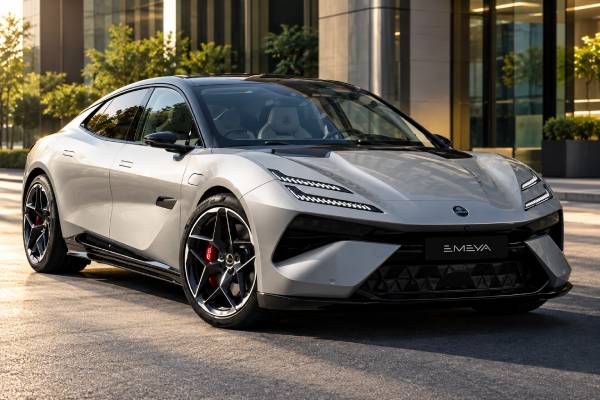
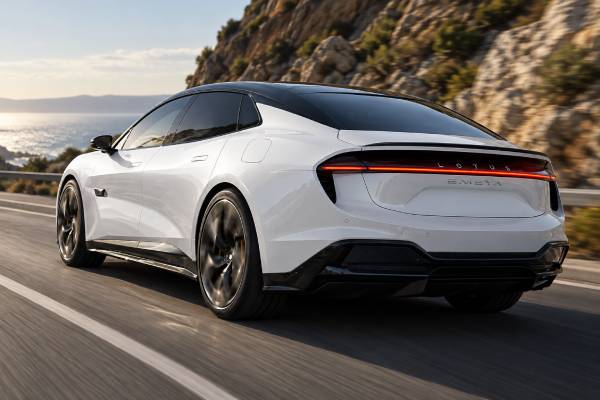
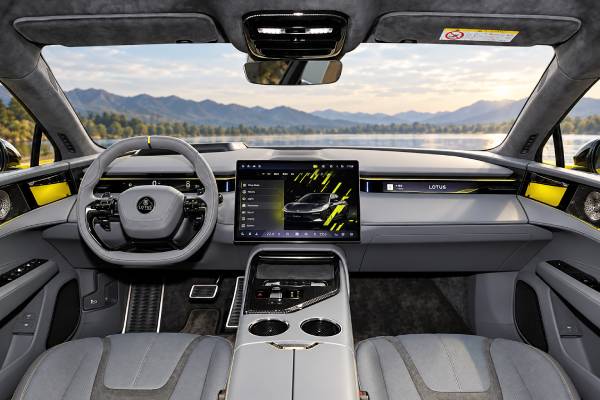
The Lotus Emeya L+ Platinum Edition turns the 450 kW long-range China-market Emeya into a factory appearance and brake package rather than a more powerful derivative. Its mechanical core remains the L+: 603 hp, 710 Nm, dual-motor all-wheel drive, a 102 kWh battery, roughly 4.15-second 0–100 km/h performance, and a 650 km CLTC rating. What changes is the presentation. Lotus used Akoya-inspired white paint, championship-style gold accents, an amber-toned interior, white Alcantara headlining, and a six-piston brake configuration for the L+ Platinum version, which launched at RMB 698,000. That combination makes originality more important than on a normal L+, because replacing a damaged wheel, caliper finish, trim piece, or interior surface with a standard part can preserve function while erasing the special-edition identity. This guide explains the Platinum package separately from the drivetrain, then covers technical specifications, brake and tire inspection, charging, finish care, and the documentation checks that matter when buying one used or importing it.
Table of Contents
- What the L+ Platinum Package Adds
- Platinum Edition Technical Data
- Six-Piston Brakes, Wheels, and Road Feel
- Range and Charging With the 450 kW Drivetrain
- Caring for White, Gold, and Amber Finishes
- Ownership, Service, and Software
- Authenticating and Buying a Platinum L+
What the L+ Platinum Package Adds
The L+ Platinum is best understood as a factory-curated design and braking specification. It does not gain the R+ powertrain, so buyers should expect the 450 kW L+ driving experience with a more distinctive exterior/interior treatment and the six-piston caliper package associated with this version.
Lotus presented the Platinum cars around the 2024 Chengdu show period, drawing inspiration from the black-and-white chequered flag and from championship trophies. On the L+ version, the most obvious cue is the Akoya white body color. The paint was described as taking its tone from Akoya pearls rather than from a flat fleet-white reference, which is important when assessing repairs: a panel can look “white” and still be visibly wrong next to the factory finish.
Gold elements provide the second layer. Exterior accent strips, badging, and caliper color were used to add a trophy-like contrast against the white body. Inside, amber upholstery and a white Alcantara headliner created a warmer, lighter atmosphere than the black performance themes used on some R+ specials. Those materials change how the car ages. Light headlining shows marks readily, amber leather can reveal dye transfer, and gold finishes can be dulled by abrasive cleaners.
The L+ Platinum’s price also helps explain its role. The published launch figure was RMB 698,000, only modestly above the regular L+ at RMB 668,000. The premium bought a coordinated factory theme and six-piston braking hardware rather than a jump in power. For a used buyer, that means it can be a relatively accessible special edition, but only if the special parts are still present.
Do not identify the car by color alone. White regular Emeyas can exist, and aftermarket gold calipers or badges are easy to add. The Platinum identity should appear in the VIN-linked factory specification, purchase documents, and equipment record. A seller who cannot show that chain is selling a white L+ with cosmetic claims, not necessarily a documented Platinum Edition.
Platinum Edition Technical Data
Under the appearance package, the L+ Platinum remains a dual-motor BEV with single-speed reduction gearing and the long-range 450 kW calibration. Its 650 km CLTC figure belongs to the powertrain and certification package, while the six-piston brakes and Platinum trim are the edition-specific hardware buyers should verify.
| Specification | Value |
|---|---|
| Combined output | 450 kW (603 hp; 612 metric PS) |
| Combined torque | 710 Nm |
| Motors | Dual electric motors, front and rear |
| Drive type | All-wheel drive |
| Transmission | Single-speed reduction gearing |
| Battery capacity | 102 kWh |
| Battery type | Ternary lithium/NMC in Chinese catalog data |
| High-voltage architecture | 800-volt class |
| Item | Published value |
|---|---|
| 0–100 km/h | 4.15 seconds |
| Top speed | 250 km/h (155 mph) |
| CLTC range | 650 km (404 mi) |
| Launch price | RMB 698,000 |
| Seating | Five-seat configuration |
| Model-year introduction | 2024 China-market special version |
| Feature | Factory theme |
|---|---|
| Exterior color concept | Akoya-inspired white |
| Exterior detailing | Gold accent elements and badging |
| Brake package | Six-piston caliper version for L+ Platinum |
| Caliper finish | Gold-themed presentation |
| Cabin color | Amber-toned interior |
| Headliner | White Alcantara theme |
| Measurement | Value |
|---|---|
| Length | 5,139 mm |
| Width | 2,005 mm |
| Height | 1,464 mm in China-market listings |
| Wheelbase | 3,069 mm |
| Front track | 1,712 mm |
| Rear track | 1,694 mm |
| System | Detail |
|---|---|
| DC architecture | 800-volt high-power charging |
| China infrastructure context | Lotus promoted 480 kW flash-charging stations |
| Fast-charge listings | Short high-power charge windows published for the early Emeya range |
| Battery thermal management | Active liquid/vehicle-controlled thermal system |
| Preconditioning | Supported through vehicle control and route-planning functions |
| AC charging | Supported for routine home/destination use |
| Feature | Configuration |
|---|---|
| Suspension | Electronically controlled air suspension |
| Adaptive damping | Electronic control |
| Active aerodynamics | Front grille plus active rear devices and wing |
| Infotainment | Lotus Hyper OS |
| Updates | Over-the-air capability |
| ADAS compute | NVIDIA DRIVE Orin-based architecture |
Six-Piston Brakes, Wheels, and Road Feel
The six-piston brake package is one of the most useful ways to distinguish the L+ Platinum from a purely cosmetic white-and-gold conversion. It also deserves careful inspection because brake hardware, wheel finish, and tire condition are expensive parts of the car’s visual and dynamic identity.
A six-piston fixed caliper distributes clamping force across multiple pistons and can support a large pad area. That does not automatically mean shorter stopping distances in every situation; tire grip, rotor size, temperature, brake control, and road surface still determine the result. On the Platinum, the practical benefit is consistent high-performance braking combined with a gold finish that ties into the edition’s exterior theme.
Inspect the calipers before the car is washed. Brake dust can hide chips, discoloration, and heat marks. Compare the gold tone front-to-front and look for evidence that a caliper has been repainted after repair. A fresh, unusually bright caliper on one side can be a clue. Ask for invoices if any unit was rebuilt or replaced, because matching function is more important than matching paint alone.
Rotor condition should be judged on both faces. Feel for a pronounced outer lip, look for scoring and heat spots, and check whether the swept area is even. Regenerative braking can leave a lightly used car with corrosion, while repeated high-speed use can cause thermal wear. A low odometer does not resolve which pattern applies.
Wheel inspection is equally important. Platinum buyers often care about appearance, so curb damage may have been refinished several times. Look at spoke edges, rim barrels, lug areas, and any aerodynamic or carbon inserts. A cosmetic repair is not necessarily a problem, but poor straightening can create vibration. During the road test, hold a steady speed on smooth pavement and feel for steering or seat vibration that rises and falls with speed.
Tire choice changes both comfort and range. Use the factory-approved size and load rating, and avoid mixing tire families. The L+ drivetrain is not as explosive as the R+, but 710 Nm is still enough to expose weak wet-weather grip. The Platinum’s visual specification should never take priority over correct tire engineering.
Range and Charging With the 450 kW Drivetrain
The Platinum Edition keeps the regular L+ range advantage because it does not add the 675 kW R+ powertrain. Its 650 km CLTC certification is therefore a meaningful part of the model identity, even though real-world distance will be lower in demanding conditions.
A buyer comparing this car with the R+ Platinum should recognize that the visual themes overlap while the energy behavior does not. The L+ uses the lower-output dual-motor calibration and single-speed gearing. That reduces peak performance but helps the car use its 102 kWh battery more efficiently. For highway travel, that trade can save more time than the faster model’s acceleration because it may reduce the frequency of charging stops.
The CLTC number should remain in context. Cold weather, high speed, headwind, large wheels, heavy cabin heating, and repeated hard acceleration can all cut range. Rather than trying to reproduce 650 km, establish a realistic consumption figure for your normal routes. The car’s trip computer becomes more useful after several representative journeys than it is on a dealer forecourt after short test drives.
Fast charging is where the platform can recover time. The 800-volt architecture was designed for high power, and Lotus promoted very high-output charging infrastructure in China. Peak numbers matter less than the shape of the charging session. A warm battery arriving at a low state of charge can accept power much more effectively than a cold pack plugged in at 60%.
Before buying, perform at least an AC charging test and ideally a DC session. Watch for repeated handshake failures, unexpected charge interruptions, errors at the port, or a connector that does not lock/release cleanly. If the car is to be exported, verify the connector and protocol compatibility with destination-market infrastructure before purchase.
Daily use is simplest when the owner can charge at home or work. Set a routine charge target that covers normal travel, then raise it before long trips. That keeps the car ready without spending unnecessary time at maximum state of charge. If range estimation seems erratic, reset the judgment with several normal drives rather than assuming the battery is at fault.
Caring for White, Gold, and Amber Finishes
The Platinum color scheme looks clean only when each material is treated according to what it is. The safest maintenance approach is conservative: wash gently, minimize abrasive correction, and avoid using the same chemical on paint, gold-toned trim, leather, and Alcantara simply because it is convenient.
Akoya-inspired white can hide light dust but exposes tar, iron contamination, and mismatched body repairs. After washing, inspect the paint in both sunlight and cool indoor light. A repaired panel may match under one light source and shift warmer or grayer under another. If paintwork is needed, photograph the original panel next to adjacent surfaces before repair so the body shop has a visual reference beyond a paint code.
Gold accents should not be polished automatically. Some may be painted, coated, anodized, or otherwise finished surfaces rather than solid metal. An aggressive metal polish can permanently change gloss or remove a thin decorative layer. Clean with a product confirmed safe for the substrate and use soft tools around edges and badges.
Amber upholstery needs protection from dye transfer. Dark jeans, belts, and bags can mark lighter leather or synthetic surfaces, especially on seat bolsters. Remove fresh transfer gently rather than waiting until it requires stronger chemicals. Test any cleaner in an inconspicuous location and follow Lotus material-care guidance.
White Alcantara is the most unforgiving area. Vacuum with a soft attachment and lift the fibers gently rather than scrubbing. For a stain, blot and work from the outside toward the center. Saturating the headliner can affect adhesive or create water marks. If the roof lining has been heavily soiled, a specialist familiar with Alcantara is safer than repeated home cleaning.
Paint-protection film can be valuable on the nose and sills, but installation quality matters around gold trim and complex edges. Keep records of when film was applied and what panels are covered. If an installer has to remove bespoke trim to wrap an edge, insist that clips and fasteners are replaced correctly rather than reused after damage.
Ownership, Service, and Software
The L+ Platinum needs ordinary EV mechanical care plus unusual attention to edition-specific components. The best maintenance file will therefore combine service invoices with photographs and part records for cosmetic work.
Air suspension should be checked after overnight parking. Uneven ride height, repeated compressor operation, or a chassis warning deserves diagnosis before it becomes a stranded-car problem. Because the suspension and active aero are electronically coordinated, a fault code can influence behavior even when the car still feels acceptable during a short drive.
Tires should be measured across their full tread width at every service. A heavy EV can wear the inside shoulder while the outer tread still looks healthy. Keep alignment printouts, especially after pothole impacts or wheel repairs. The Platinum’s visual emphasis can encourage owners to repair a damaged wheel cosmetically while ignoring the alignment event that caused the impact.
The 12-volt battery deserves regular testing on a car that may spend time displayed or stored. A weak low-voltage supply can create spurious warnings, interrupt software updates, or prevent the high-voltage system from waking. Traction-battery state of charge does not guarantee that the 12-volt system is healthy.
Software support is another ownership item. Confirm the installed Hyper OS version, complete official campaigns, and note any change in charging, assistance, or infotainment behavior after updates. For imported cars, determine whether the destination Lotus network can access the Chinese-market VIN and whether connected services remain available.
Keep cleaning and repair products out of the service compartment unless they are secured. A leaking bottle can damage light interior materials and electronics. It sounds mundane, but preserving a special-edition cabin often depends on avoiding preventable everyday damage rather than on expensive restoration later.
Authenticating and Buying a Platinum L+
A genuine Platinum L+ should be verifiable on paper before the buyer starts debating paint condition. Factory identity, six-piston brake specification, original color/interior theme, and the 450 kW drivetrain should all agree across the VIN record, purchase documents, and physical car.
Begin with the model designation. Confirm the original Chinese sales invoice or order sheet shows the L+ Platinum/white-gold special version rather than a normal L+. Then check the drivetrain: 450 kW, 710 Nm, 650 km CLTC. A 675 kW car is an R-family derivative, regardless of similar white-and-gold trim.
Inspect all edition cues together. Akoya white paint, gold exterior details, gold six-piston calipers, amber cabin materials, and white Alcantara should form a coherent factory specification. One or two features can be replicated aftermarket; the complete documented package is harder to fake.
Use the road test to judge the normal L+ systems rather than being distracted by the special appearance. The car should accelerate smoothly, hold a straight line under power, brake without vibration, and maintain ride height without warnings. Test all cameras, assistance features, climate zones, seat functions, charge-port operation, and software controls.
For an imported example, obtain answers to five questions before paying a deposit:
- Can a Lotus service center in the destination market read and program this VIN?
- Does the charging connector/protocol work with local AC and DC infrastructure?
- Which app, navigation, OTA, and data services remain functional outside China?
- Can Platinum-specific wheels, calipers, trim, and interior materials be ordered if damaged?
- Will the insurer recognize the special edition and its replacement value?
Price defects according to whether they are ordinary or identity-related. A tire set, 12-volt battery, or alignment is routine. Recreating an Akoya paint match, replacing a gold trim piece, finding an original wheel, or restoring a white Alcantara headliner can be much harder. The more an item contributes to the Platinum theme, the more documentation and repair quality matter.
The L+ Platinum is compelling because it keeps the range-oriented drivetrain while adding visual rarity and a stronger brake package. It is not the car for someone who wants the maximum Emeya acceleration figure; it is for a buyer who prefers the 450 kW balance and wants a factory special rather than an aftermarket personalization project. Choose originality over superficial perfection, and the edition will remain recognizable long after its launch colors stop being new.
Platinum-specific parts change the economics of apparently minor damage. A standard L+ wheel, caliper finish, headliner material, or exterior trim piece may physically fit, yet substituting it can dilute the factory package that makes the Platinum Edition identifiable. Before approving repairs, ask the workshop to photograph the damaged part and its label, then record the replacement part number and finish. Keep the removed component when practical and legal. This creates a provenance trail and makes it possible for a later buyer to understand whether the car remains factory-correct rather than judging from photographs alone.
Cleaning should follow a deliberate sequence because the pale and metallic surfaces show different kinds of abuse. Pre-rinse bodywork thoroughly, use clean wash media, and avoid aggressive alkaline cleaners on gold-finished details unless the product is explicitly suitable. Brake dust should not be allowed to bake onto the special wheels or calipers, but harsh wheel acid can be worse than the contamination. Inside, vacuum grit before wiping the white Alcantara-style headliner or light trim, and test any cleaner in a hidden area. Rubbing one stained spot repeatedly can change the nap and create a permanent visual patch even when the stain disappears.
The stronger six-piston brake package should be inspected as performance hardware rather than as decoration. Check pad thickness on both sides of each front disc, look for scoring or lip formation, and compare the two front calipers for color consistency. A freshly repainted caliper can hide cosmetic damage or heat history. If the car has sat for long periods, surface corrosion on iron discs may clear with careful use, but vibration, deep pitting, or persistent roughness needs professional assessment. Brake-fluid age also matters because low annual mileage does not stop fluid from absorbing moisture.
For storage, avoid treating the Platinum as a static display piece. Keep tire pressures correct, move the car enough to prevent long-term flat spotting when appropriate, maintain the 12-volt system using Lotus-approved procedures, and follow manufacturer guidance for a sensible traction-battery state of charge. Inspect the cabin periodically for condensation, especially around the panoramic roof, doors, liftback seals, and luggage floor. White and amber materials can reveal water staining early; catching a leak before electronics or adhesives are affected is much cheaper than cosmetic restoration later.
A specialist-value insurance policy may be worthwhile if the market recognizes the edition above a normal L+. Document the Akoya-inspired white finish, gold exterior elements, amber cabin, headliner, brake hardware, wheel specification, and original purchase paperwork with dated photographs. Ask how the insurer handles unavailable trim after an accident and whether a cash settlement, specialist repair, or factory part backorder changes the claim. The goal is not to inflate value, but to ensure the policy describes the car that actually exists.
When comparing two Platinum cars, originality should outrank superficial freshness. A carefully used example with minor stone chips, complete records, and untouched factory materials can be a safer purchase than a visually perfect car that has been repainted or retrimmed without documentation. The special edition’s appeal comes from Lotus’s coordinated color-and-material specification paired with the range-oriented 450 kW drivetrain. Preserve that combination and the car remains easy to explain; alter it piecemeal and its identity becomes harder to prove.
References
* 路特斯以“稀缺性”赛道美学,呈现成都车展最具含「金」量展台 2024 * 路特斯 EMEYA 繁花暗黑版 / 白金版纯电轿跑上市,售价 69.8 万元起 – IT之家 2024 * 莲花 EMEYA 2026 * 纯电超跑轿车路特斯EMEYA繁花正式上市 2024 * Lotus Emeya – The Fully Electric Hyper-GT | Lotus Cars 2026 * Lotus Emeya | How it Drives | Lotus Cars 2026
Disclaimer
This guide is for informational purposes only and is not a substitute for professional diagnosis, repair, detailing advice, or a specialist inspection. Specifications, torque values, maintenance intervals, software functions, procedures, and brake requirements can vary by VIN, market, equipment, and build date, so verify all technical work against official Lotus documentation for the exact vehicle. If the article was helpful, please share it on Facebook, X/Twitter, or your preferred community to support our work.