

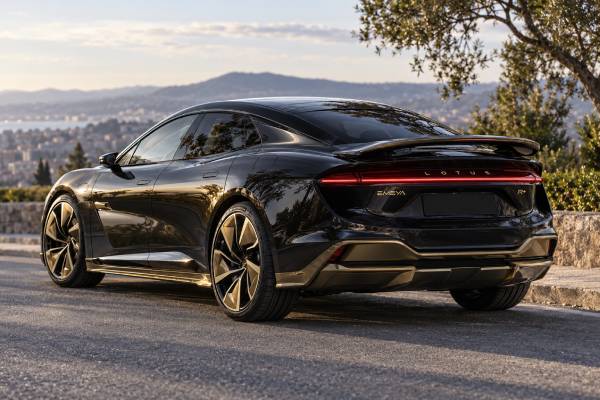
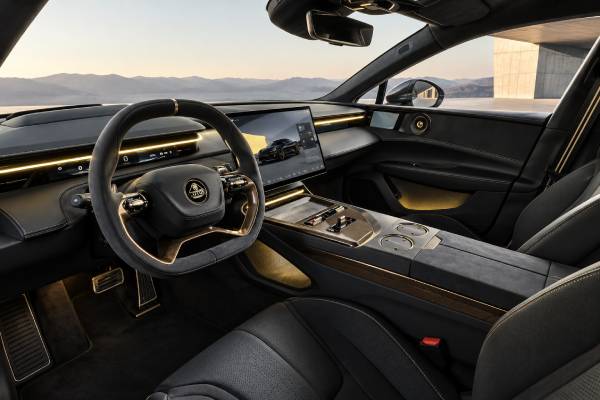
The Lotus Emeya R+ Black Gold Edition is the most visually explicit link between the electric Hyper-GT and Lotus’s black-and-gold racing era. Launched in China at RMB 1.18 million, it combines the 675 kW, 985 Nm R+ drivetrain with matte dark paint, black-gold carbon-fiber details, 22-inch wheels with gold-themed carbon inserts, gold six-piston brake calipers, special badging, striped belts, gold stitching, and an executive four-seat cabin. Its catalog range is 480 km CLTC, shorter than the regular R+’s 520 km figure, so the edition should be identified by its complete specification rather than by power alone. It is also important not to confuse it with the more expensive Type 79 Advanced Bespoke. Both use Lotus’s black-and-gold heritage, but they are separate factory products with different positioning and documentation. This guide treats the Black Gold as a performance EV and a preservation-sensitive special edition, covering its hardware, charging behavior, matte/carbon care, four-seat equipment, and the authenticity checks that should come before any collector premium is paid.
Table of Contents
- Black-Gold Heritage Without the Type 79 Confusion
- Factory Black Gold Details
- Black Gold Edition Specifications
- Why the Range Rating Is 480 km CLTC
- Matte Paint, Carbon, and Gold Care
- Four-Seat Cabin and Performance Maintenance
- Authenticity, Inspection, and Purchase
Black-Gold Heritage Without the Type 79 Confusion
The Black Gold Edition celebrates a broad period of Lotus racing identity rather than claiming to be the Type 79 bespoke car. That distinction is essential for collectors, because Lotus used black and gold on multiple famous race cars, including the Type 72 and Type 79, and the 2024 Emeya range contained both an R+ Black Gold Edition and a separate Type 79 Advanced Bespoke model.
The historic association is powerful. Black-and-gold Lotus Formula 1 cars became visual shorthand for a period when the company was winning championships and pushing aerodynamic ideas forward. Type 72 helped define the early 1970s, while Type 79 became synonymous with the refinement of ground effect later in the decade. Modern marketing sometimes references the “black-gold dynasty” collectively, which is more accurate for this R+ special than pretending every gold accent is a literal Type 79 replica detail.
The Black Gold road car uses that history as a design system. Its matte dark body creates the base, then gold accents identify aero elements, wheels, calipers, badging, stitching, and cabin details. The effect is intentionally more dramatic than the standard R+, but the vehicle remains mechanically rooted in the normal 675 kW R+ architecture rather than receiving a separate motor or battery.
That matters when judging value. The premium is attached to factory execution and rarity, not to a different acceleration figure. A modified regular R+ can be made black and gold, but it does not become the factory edition. Conversely, a genuine Black Gold car with a repainted wheel or replaced trim piece may still be authentic if the repair is documented and correct. Authentication should therefore be evidence-based, not based on visual impression alone.
The best way to think about the model is as an R+ whose appearance package carries meaningful historical intent. Buyers who only want the 2.78-second performance can choose a regular R+. Buyers who specifically want the black-gold story should demand original documentation and should budget for more careful cosmetic preservation.
Factory Black Gold Details
The edition is identifiable because its exterior and interior details form a coordinated package. No single gold part proves authenticity; the combination of matte paint, carbon treatment, wheel design, brake finish, badging, seat/cabin configuration, and factory paperwork does.
Published launch material describes a dedicated matte dark or “stardust” black finish. Matte paint behaves differently from gloss clearcoat. It is designed to scatter light evenly rather than produce a polished reflection, so localized polishing can create a permanent shiny patch. That makes paint-condition inspection more about uniform sheen and contamination than about swirl removal.
The wheels are another major cue. Period descriptions identify 22-inch low-drag five-spoke designs with gold-themed carbon-fiber inserts. Inspect inserts individually for chips, lifting edges, resin damage, or replacements. A wheel can be structurally straight while one decorative insert is damaged, and replacement of a special insert may be more difficult than repairing ordinary curb rash.
Gold six-piston brake calipers sit behind the wheels. Their finish is part of the theme, but the hardware is also functional. Check for heat discoloration, chips from wheel removal, uneven brake dust, and evidence of repainting. If one caliper looks much fresher than the others, ask why. A rebuilt or replaced unit is not automatically negative, but its history should be documented.
Other exterior cues include gold badging and gold accents within carbon/aero details. Inside, the car was described with gold stitching, black-and-gold striped seat belts, gold trim pieces, and black-gold carbon-fiber decoration. Four-seat executive packaging is also associated with the special version in period reports.
Because so many cues are cosmetic, the original order sheet is decisive. Photograph or scan it and match major items against the car. A complete special-edition set should feel coherent rather than assembled: the same gold tone, similar finish quality, correct placement, and consistent aging across components.
Black Gold Edition Specifications
Mechanically, the Black Gold Edition is a 675 kW R+ with a 102 kWh battery and a two-speed rear drive unit. Its 480 km CLTC certification and four-seat/special-equipment package distinguish it from the regular 520 km R+ in Chinese catalog data.
| Specification | Value |
|---|---|
| Combined peak power | 675 kW (about 905 hp; 918 metric PS) |
| Combined torque | 985 Nm |
| Front motor | 225 kW in early Chinese data |
| Rear motor | 450 kW in early Chinese data |
| Drive | All-wheel drive |
| Rear transmission | Two-speed |
| Battery capacity | 102 kWh |
| High-voltage architecture | 800-volt class |
| Measure | Figure |
|---|---|
| 0–100 km/h | 2.78 seconds |
| Top speed | 256 km/h |
| CLTC range | 480 km (298 mi) |
| Published launch price | RMB 1.18 million |
| Energy type | Battery electric |
| Body | Five-door liftback / Hyper-GT |
| Item | Factory description |
|---|---|
| Paint theme | Dedicated matte dark/black finish |
| Wheels | 22-inch design with gold-themed carbon-fiber inserts |
| Front brake calipers | Gold six-piston presentation |
| Exterior carbon | Black-gold carbon-fiber detail treatment |
| Cabin stitching | Gold contrast stitching |
| Seat belts | Black/gold stripe theme |
| Seating | Executive four-seat layout cited in period launch coverage |
| Measurement | Value |
|---|---|
| Length | 5,139 mm |
| Width | 2,005 mm |
| Height | 1,464 mm in Chinese specification data |
| Wheelbase | 3,069 mm |
| Front track | 1,712 mm |
| Rear track | 1,694 mm |
| System | Detail |
|---|---|
| Voltage platform | 800-volt class |
| DC charging | High-power fast charging |
| China network context | Lotus promoted 480 kW-class flash charging |
| Battery temperature control | Active thermal management |
| Preconditioning | Supported through vehicle systems |
| AC charging | Supported for routine charging |
| Feature | Configuration |
|---|---|
| Suspension | Electronically controlled air suspension |
| Damping | Adaptive |
| Active aerodynamics | Front grille, rear aero elements, deployable wing |
| Rear steering | High-spec platform feature; verify exact VIN equipment |
| Operating system | Lotus Hyper OS with OTA capability |
| ADAS compute | NVIDIA DRIVE Orin-based architecture |
Why the Range Rating Is 480 km CLTC
The Black Gold Edition’s 480 km CLTC number should not be “corrected” to the regular R+’s 520 km just because the powertrain is similar. Official configuration is a package, and wheel, tire, aerodynamic, mass, and certification details can change the rated result.
The 22-inch wheel package is an obvious contributor to energy use. Larger wheels generally carry heavier rotating components and are often paired with wider, grippier tires. Those tires can create more rolling resistance than an efficiency-focused setup. Decorative aero elements and equipment mass can also affect the certified configuration even if the difference feels small in isolation.
Real range depends even more on use. At urban speeds, regeneration can recover energy and aerodynamic drag is modest. At sustained high speed, drag dominates and the 675 kW drivetrain makes it easy to spend energy rapidly. Cold weather adds cabin and battery heating demands. A Black Gold owner should therefore plan road trips from measured consumption, not from the symbolic 480 km number.
The lower rating does not make the car poor at touring because fast charging can reduce stop time. Arrive at a capable charger with the pack preconditioned and at a lower state of charge, and the 800-volt system can accept substantial power. Starting a session at 70% merely to test the “peak” is unlikely to show what the architecture can do.
A used buyer should compare charging behavior over time. Ask for invoices or app records if available, but also perform a live session. Stable communication, sensible thermal behavior, and a normal taper are more important than one momentary peak value. If the car is imported, confirm that the local network supports its physical connector and charging protocol.
Because the edition may spend long periods stored, inspect battery state-of-charge habits in context. A collector car kept permanently at 100% for display has not necessarily had an easier battery life than a regularly used car charged moderately. Service diagnostics and actual behavior are better evidence than low mileage.
Matte Paint, Carbon, and Gold Care
The Black Gold Edition can be damaged by well-intentioned detailing faster than by normal driving. Matte paint must not be polished like gloss paint, carbon inserts require edge protection, and gold-finished parts should be cleaned according to their actual coating rather than treated as bare metal.
Wash matte paint with products intended for matte or satin surfaces. Avoid waxes or polishing oils that increase gloss. If bird droppings or insect residue lands on the surface, soften and remove it promptly rather than rubbing. A shiny spot created by abrasion cannot usually be blended invisibly by conventional polishing because the uniform low-gloss texture is the finish.
Paint-protection film can be useful, but choose film designed to preserve the intended matte appearance. A gloss film changes the character of the car, while a low-quality satin film can alter color or produce uneven sheen between wrapped and unwrapped panels. Record where film is installed and photograph panel condition before application.
Carbon-fiber inserts on the wheels are vulnerable to curb impacts and careless tire work. Tell the tire shop about the special inserts before wheel removal. Use equipment that will not clamp or pry against decorated surfaces. After mounting, inspect each insert and the wheel barrel before leaving the shop so any new damage is documented immediately.
Gold calipers collect brake dust. Use a pH-appropriate wheel cleaner and soft brush rather than aggressive acid. High heat can alter finishes, so a color change after hard driving may not be simple dirt. If refinishing is needed, match the factory color and logos instead of selecting a generic gold powder coat.
Inside, clean gold trim and black-gold carbon gently. Seat-belt webbing should not be saturated with chemicals that could affect fibers. If a striped belt is frayed or contaminated, replacement with the correct factory item is preferable to cosmetic dye or stitching repair because the belt is a safety component.
Four-Seat Cabin and Performance Maintenance
The Black Gold car combines an executive rear cabin with extreme performance, so maintenance must cover both powered luxury equipment and high-load chassis components. Low mileage can hide failures in either category.
Operate each rear seat through its full adjustment range. Check heating, ventilation, massage, memory, controls, and any rear display or console functions fitted. Listen for slow motors or clicking mechanisms. A seat that moves only after repeated commands may fail completely later, and special-edition trim around the mechanism can make access more delicate.
Inspect the 12-volt battery condition carefully. Executive-seat motors, screens, audio, climate, and connected systems can place demands on the low-voltage network while the car is stationary. A weak 12-volt battery can create apparently unrelated warnings across the vehicle. Test it rather than assuming the traction battery keeps everything healthy automatically.
On the performance side, check tire inner edges, wheel balance, and alignment records. The 22-inch wheels are valuable, and a repaired rim should be checked for runout. Uneven tire wear can indicate alignment drift after a pothole strike even when the wheel face was restored perfectly.
The six-piston brakes need periodic friction use because regeneration can reduce disc cleaning during gentle driving. After storage, inspect corrosion before aggressive use. After hard use, look for heat spotting and pad transfer. A high-output car with a quiet collector life can alternate between underused brakes and occasional very high-energy stops, which is a demanding combination.
Air suspension and active aero should be scanned for stored faults. Check overnight ride height and watch the wing/aero systems complete their self-tests. Underbody inspection matters because the car is long and low; damaged aero panels or battery protection should not be dismissed as normal scraping.
Service history should include software as well as hardware. Record OTA versions, dealer campaigns, charging updates, and any replacement control modules. The Black Gold Edition’s visual rarity will not compensate for a car whose core chassis or charging systems are poorly supported.
Authenticity, Inspection, and Purchase
A Black Gold Edition is worth a premium only when it is demonstrably the factory product. Start with paperwork, then confirm the complete visual package, then inspect the underlying R+ as a 905 hp EV. Reversing that order makes it easy to become impressed by performance before resolving authenticity.
Match VIN, registration, original invoice, and factory configuration. Look for the Black Gold designation and the expected 480 km CLTC catalog identity. A regular 520 km R+ wrapped in matte black with gold wheels should not be priced as the edition unless documentation proves otherwise.
Inspect the exterior in diffuse daylight. Matte panels should have even sheen. Gold accents should match in tone, and carbon weave/finish should be consistent. Compare all four wheels and check the special inserts. Photograph calipers and badges. If any component was replaced, ask for the old part or invoice where available.
Inside, confirm gold stitching, black/gold belts, special carbon, rear seating layout, and trim. Test every powered rear function. Look for evidence of trim disassembly such as damaged clips, uneven gaps, or missing fasteners. Special-edition interiors become expensive when ordinary service work is performed carelessly.
Then complete the technical inspection:
- Save a full diagnostic scan before codes are cleared.
- Check high-voltage battery, drive-unit, thermal, charging, air-suspension, rear-steer, and aero modules.
- Inspect the battery enclosure and underbody on a lift.
- Measure tire tread across the full width and check wheel runout.
- Inspect brake discs and pads, including signs of heat or corrosion.
- Road-test from cold, then test stronger acceleration and braking when warm.
- Perform AC and preferably DC charging checks.
- Verify software, connected services, and service support in the car’s current country.
Do not assume rarity makes any price reasonable. Modern EV collector markets are still developing, and software support, battery confidence, regional demand, and brand strategy can affect values. The safer reason to buy is that the combination of R+ performance and black-gold Lotus identity genuinely appeals to you. Protect the factory finish, keep every repair traceable, and resist irreversible modifications. Those practices preserve both the car and the story buyers are paying for.
Provenance for a Black Gold Edition should be visual as well as documentary. Create a dated photo set of every gold-accented exterior piece, each wheel insert, all four brake calipers, badging, carbon surfaces, striped belts, gold stitching, cabin trim, and the four-seat rear area. Store those images with the order sheet and invoices. If a later repair changes one component, the before-and-after record shows what was present rather than forcing a future buyer to infer originality from internet photographs.
Replacement cost is where the edition differs most from a mechanically similar regular R+. A curb strike that damages a special 22-inch wheel or carbon insert can cost far more than ordinary rash. A chipped gold caliper finish may require careful refinishing to preserve color consistency. Matte paint can turn a small scratch into a panel-level repair because conventional spot polishing changes sheen. Before purchase, obtain real quotations for the visibly vulnerable items rather than assuming normal Emeya parts pricing applies.
Storage also needs to respect matte surfaces. Do not use a tight, dusty cover that moves across the paint, and do not apply conventional wax or polishing compounds unless the finish manufacturer explicitly approves them. Clean bird contamination, insects, road tar, and mineral deposits promptly with matte-safe methods because aggressive correction later may not be possible. If paint-protection film is fitted, document its brand, installation date, coverage, and whether the product is intended to preserve the original matte appearance. A glossy patch of unsuitable film can visually alter the factory design even while protecting the paint underneath.
The wheels deserve their own handling procedure at tire shops. Photograph them before work, ask for protected clamping and suitable tools, and make sure technicians understand that decorative carbon inserts and gold finishes are not normal alloy-wheel surfaces. After tire replacement, check every insert and valve area before leaving. Keep balancing-weight placement tidy and record any wheel that required unusually large correction, because repeated balance problems can point to a bent rim rather than an imperfect tire.
The Black Gold story should also be kept separate from Type 79 documentation. The Type 79 Advanced Bespoke is another black-and-gold Emeya, but it is a different product with its own pricing and bespoke execution. A sales advertisement that casually calls the Black Gold car a “Type 79 edition” may simply be imprecise; a seller who uses that claim to justify value should produce the corresponding factory paperwork. Correct model naming protects both buyer and seller from paying for a history the car was never assigned.
If the car is insured for special-edition value, provide the insurer with the same evidence used for authentication. Ask whether unavailable carbon, wheels, belts, or trim would be repaired, replaced, or cash-settled after a loss, and whether the policy allows a Lotus-authorized or specialist repairer. Collector appeal is partly cosmetic, so an otherwise minor accident can affect value if rare finishes cannot be restored convincingly. The correct policy is one that recognizes that distinction before a claim occurs.
The most convincing Black Gold examples will age consistently. A small amount of honest use across paint, wheels, leather/Alcantara, and controls is less concerning than one suspiciously new component surrounded by older materials with no invoice explaining the change. Inspect the car as a complete artifact: mechanical health determines whether it can be enjoyed, while coherent original details determine whether the special-edition premium remains justified.
References
* 纯电超跑轿车路特斯EMEYA繁花正式上市 2024 * 路特斯以“稀缺性”赛道美学,呈现成都车展最具含「金」量展台 2024 * 〖图〗售118万 路特斯EMEYA繁花R+黑金版官图_汽车之家 2024 * 〖图〗EMEYA 2024款 EMEYA R+ 黑金版报价_图片_莲花跑车_汽车之家 2026 * Lotus Emeya – The Fully Electric Hyper-GT | Lotus Cars 2026 * Lotus Type 79 – Lotus Cars Media Site 2026
Disclaimer
This article is for informational purposes, not a substitute for professional diagnosis, repair, detailing advice, or a VIN-specific pre-purchase inspection. Specifications, torque values, service intervals, software functions, finishes, and procedures can vary by VIN, market, and equipment; confirm all work against official Lotus documentation. If this guide was useful, please share it on Facebook, X/Twitter, or another enthusiast community to support our work.