
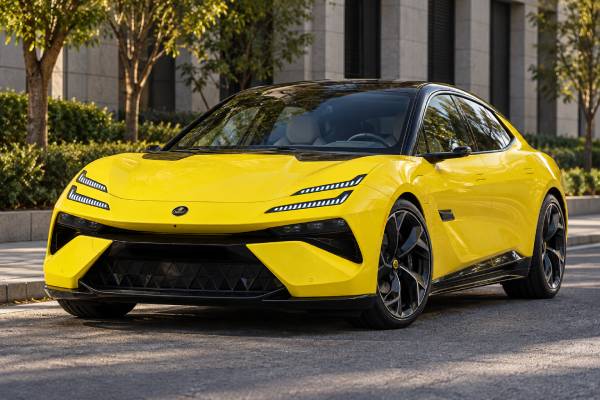
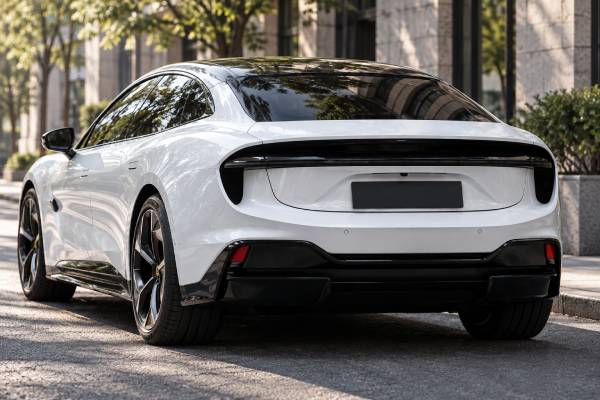
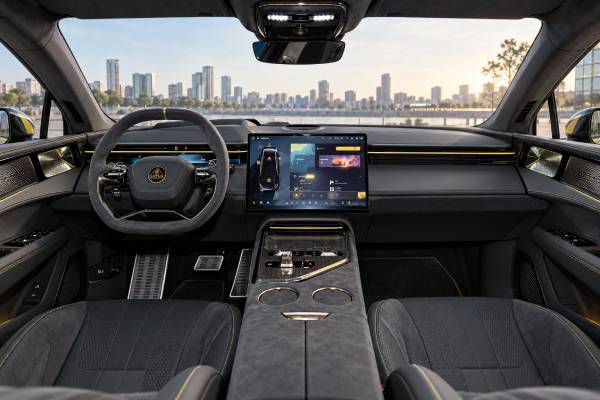
The 2024 Lotus Emeya Type 79 Advanced Bespoke combines the fastest early Emeya powertrain with one of Lotus’s most recognizable racing references: the black-and-gold Type 79 that helped define the ground-effect era of Formula 1. That connection is more than a color story, because the road car’s active aerodynamics, high-speed stability, and engineering-led design give the tribute a credible technical foundation. The Chinese-market Type 79 bespoke car was listed with the 675 kW dual-motor system, 985 Nm of torque, a 102 kWh battery, and a 520 km CLTC range rating, while Chapman Bespoke supplied the heritage-led appearance and exclusivity. Buyers should therefore evaluate two things separately: whether the EV and chassis systems are healthy, and whether the factory Type 79 specification remains complete and correctly documented. This guide focuses on that split, explaining the heritage, technical layout, charging behavior, preservation needs, and the checks that matter before paying a collector-car premium for a modern electric tribute.
Table of Contents
- Type 79 Heritage in a Modern GT
- Bespoke Details and Factory Identity
- Type 79 Engineering Data
- How the 905 hp Driveline Behaves
- Charging, Range, and Long-Distance Use
- Care for Black-Gold Finishes
- Pre-Purchase Checks and Value
Type 79 Heritage in a Modern GT
The name matters because the original Lotus Type 79 was not merely a successful black-and-gold racing car; it was one of the machines that made ground effect a central part of Formula 1 design. The Emeya tribute works best when viewed through that engineering history rather than as nostalgia applied to an unrelated luxury sedan.
The 1978 Type 79 refined the underbody aerodynamic concepts developed on the Type 78. Lotus used shaped underfloors and sealing skirts to create low pressure beneath the car, generating downforce without relying only on large drag-producing wings. Mario Andretti won the 1978 Drivers’ Championship and Lotus secured the Constructors’ Championship. The visual identity became inseparable from the technical achievement: black bodywork, gold accents, and a low, purposeful profile represented a period when aerodynamic thinking was changing quickly.
The Emeya is obviously a very different machine. It is a five-door battery-electric grand tourer weighing several times as much as the racing car and designed to carry passengers in climate-controlled comfort. Yet its active aerodynamic philosophy makes the tribute more coherent than a simple livery exercise. The Emeya uses an active front grille to balance cooling and drag, active aerodynamic surfaces at the rear, and a deployable wing. The goal is not to reproduce skirt-sealed ground effect, but to let the body change its aerodynamic behavior according to speed and demand.
That is the right way to read the Type 79 Advanced Bespoke: not as a replica and not as a claim that a luxury EV behaves like a 1970s Formula 1 car. It is a factory interpretation of the same idea that aerodynamic management should serve performance. The black-and-gold treatment provides the historic visual cue while modern electronics, battery packaging, and active systems provide the functional layer.
For a buyer, this history also raises the standard for originality. Repainted gold accents, aftermarket stripes, replica badges, or ordinary carbon parts colored to resemble the factory package can make a car look convincing in photos. They do not make it an authentic Chapman Bespoke Type 79. Provenance must start with the VIN, order specification, delivery documents, and factory equipment rather than appearance alone.
Bespoke Details and Factory Identity
The Type 79 car’s value is concentrated in the way Lotus translated its black-and-gold racing identity into a factory road-car specification. Condition matters, but correct condition matters more: a repaired original component with documented factory-level work can be preferable to a visually perfect substitute that changes what the car actually is.
The Chinese Type 79 Advanced Bespoke was publicly positioned above the regular R+ and Black Gold variants, with a published price of RMB 1.3088 million at the 2024 Beijing show period. That price gap is a useful reminder that the car was sold as a bespoke product rather than as the standard high-output trim with a few accessories. Anyone shopping today should ask the seller to show the original configuration sheet and purchase documents that establish the car’s exact Chapman Bespoke status.
Black finishes expose body defects differently from lighter colors. Strong directional light can reveal polishing haze, sanding marks, overspray, mismatched clearcoat texture, or repaired panels. Gold detailing adds another comparison point: inspect left-to-right symmetry, color tone, edge quality, and the interface between carbon-fiber or painted components and their surrounding trim. If a gold piece has been replaced, verify the part source and whether the finish matches the factory treatment under daylight, not only showroom lighting.
Carbon components deserve special attention because cosmetic damage can hide impact history. Look for cloudy resin, edge chips, weave distortion, cracked clearcoat, or repairs near mounting points. A panel that has been refinished may be perfectly serviceable, but the work should be documented. On a special edition, uncertainty about a high-value carbon or bespoke component affects both purchase price and future resale confidence.
The cabin should be inspected with the same methodical approach. Confirm trim materials, stitching, seat configuration, plaques, decorative accents, headliner, steering-wheel finish, and any model-specific emblems against the original order. Operate every electric adjustment and screen. A special-edition car often spends long periods parked or displayed, which can allow a weak 12-volt battery, sticky mechanisms, or software faults to remain unnoticed because the mileage is low.
Finally, preserve the delivery set. Keys, manuals, charging cables, accessory cases, build literature, event materials, and even original protective items can become part of the provenance package. They are not mechanically necessary, but they help demonstrate that the car has remained intact rather than assembled from pieces later.
Type 79 Engineering Data
This Type 79 is a high-output BEV, not a unique propulsion derivative. It uses the 675 kW Emeya dual-motor AWD architecture, the 102 kWh battery, and the performance rear drive unit with two ratios. The China-market catalog figure associated with the Type 79 is 520 km CLTC, which is different from the 480 km ratings attached to some other special high-output versions.
| Specification | Type 79 value |
|---|---|
| Powertrain | Dual-motor battery-electric AWD |
| Peak system output | 675 kW (about 905 hp) |
| Peak system torque | 985 Nm (727 lb-ft) |
| Front motor | 225 kW published for the early China high-output layout |
| Rear motor | 450 kW published for the early China high-output layout |
| Rear drive unit | Two-speed transmission |
| Battery capacity | 102 kWh |
| System architecture | 800-volt class |
| Measure | Published figure |
|---|---|
| 0–100 km/h | 2.78 seconds |
| Top speed | 256 km/h (159 mph) |
| CLTC range | 520 km (323 mi) |
| Drive type | All-wheel drive |
| Vehicle class | Large electric Hyper-GT / liftback |
| Item | Specification or function |
|---|---|
| DC fast charging | High-power 800-volt charging architecture |
| Original launch peak reference | 350 kW-class DC capability |
| Quoted 10–80% target | About 18 minutes in suitable conditions |
| AC charging | Onboard AC charging supported; market connector varies |
| Battery conditioning | Thermal management and navigation-linked preconditioning functions |
| Charging-port position | Rear-side body location |
| Dimension | Value |
|---|---|
| Length | 5,139 mm (202.3 in) |
| Width | 2,005 mm (78.9 in) excluding mirrors |
| Wheelbase | 3,069 mm (120.8 in) |
| Height | About 1,464 mm in China-market listings |
| Front track | 1,712 mm |
| Rear track | 1,694 mm |
| System | Configuration |
|---|---|
| Primary suspension | Electronically controlled air suspension |
| Damper control | Adaptive electronic control |
| Rear steering | Available/fitted according to the high-spec market configuration |
| Active aero | Active grille, rear aerodynamic elements, deployable rear wing |
| Brake system | Large high-performance disc brakes; exact caliper package should be verified by VIN |
| Wheel packages | Large staggered performance wheel/tire fitments depending on order |
| Feature | Platform detail |
|---|---|
| Operating system | Lotus Hyper OS |
| Updates | Over-the-air software capability |
| Processing | Dual NVIDIA DRIVE Orin systems cited at launch |
| Surround sensing | 34 sensors cited by Lotus for the Emeya platform |
| Head-up display | Large projected HUD system |
| Audio availability | KEF premium audio system with immersive-audio capability |
How the 905 hp Driveline Behaves
The two-speed rear drive unit is the defining mechanical feature of the 905 hp Emeya family. It lets Lotus combine extreme launch performance with strong high-speed capability, so a test drive should include more than one acceleration run and should pay attention to driveline smoothness as the car changes operating conditions.
From rest, the first ratio multiplies rear-motor torque strongly enough to deliver the quoted 2.78-second 0–100 km/h time under suitable conditions. The front motor contributes traction and system output, while electronic control allocates torque according to grip and drive mode. At higher speed, the second ratio helps maintain performance without forcing the rear motor to remain in an inefficient or excessively high-speed operating region. The result is a car that continues to accelerate where many single-speed EVs begin to feel less urgent.
During inspection, full power should arrive cleanly. A momentary reduction because the battery is cold, state of charge is low, or traction control is intervening is not automatically a fault, but repeated warnings, harsh mechanical clunks, or inconsistent power delivery deserve diagnosis. Test with enough battery charge to make the result meaningful and note ambient temperature. A high-performance EV may deliberately limit output when the pack or motors are outside their preferred thermal window.
The chassis has to control considerable mass and very wide tires. That makes tire condition central to the driving experience. Mixed tire models, uneven tread depth, old rubber, or a damaged wheel can create steering behavior that a seller may describe as “normal for a powerful car.” It is not. The Emeya should track precisely and remain composed over a range of surfaces. Persistent vibration, tramlining that is extreme rather than mild, or a steering wheel that sits off-center suggests alignment or hardware work is needed.
The brakes also deserve repeated use. Regeneration can handle much everyday deceleration, so physical discs may corrode on lightly driven cars. Conversely, enthusiastic use can create heat wear that mileage alone does not reveal. After a few firm stops, check for vibration, pulsing, pulling, or a hot smell from one corner. Compare wheel temperatures carefully after the drive; a dragging brake can show itself as one wheel becoming noticeably hotter.
Driving modes should be tested for real differences in response, damping, ride height behavior, and stability-control strategy. If changing modes produces warnings or no perceptible chassis response, scan the car rather than assuming the difference is subtle. On this model, software and active hardware are part of the performance specification, not accessories.
Charging, Range, and Long-Distance Use
The Type 79’s 520 km CLTC rating is useful for identifying the exact Chinese catalog version, but it is not a promise of 520 km at motorway speed. Long-distance planning should be based on recent consumption in the conditions you expect to encounter and on the charging network’s ability to deliver high voltage and current.
The 102 kWh pack gives the car meaningful touring capacity, yet the 675 kW drivetrain, wide tires, low temperatures, and sustained high speed can all raise consumption. Climate control and battery heating add another winter load. The correct comparison is therefore not “rated range versus achieved range” in isolation; it is energy consumption at a known speed, temperature, wheel setup, and route profile.
High-power charging can make up for range losses when infrastructure is suitable. Lotus’s early launch material quoted roughly 18 minutes for 10–80% charging under favorable conditions. That figure assumes the battery arrives at the charger warm enough to accept high power and that the charger itself can provide what the vehicle requests. If the car starts a session cold, nearly full, or on a limited charger, the observed peak may be much lower while everything is functioning normally.
For buyers, a DC charging test is more informative than a photo of a past charger receipt. Observe whether the port opens properly, the connector locks, the session initializes without repeated failures, pack temperature management activates normally, and the state-of-charge display updates logically. If the vehicle has recently received major software updates, ask whether any charging behavior changed afterward and whether all campaigns were completed successfully.
On routine days, there is little reason to target 100% unless the trip requires it. Charging to a moderate daily limit and reserving 100% for departure can reduce the time the pack spends at its highest state of charge. Likewise, do not intentionally run the pack very low before every fast charge just to see a dramatic number. The battery management system is designed to manage charging, but sensible habits reduce unnecessary stress and make the car easier to use.
Long-distance owners should also think about tires and wheel alignment as energy variables. A small alignment error on wide tires can consume energy and shorten tire life at the same time. If range suddenly worsens without a weather or driving explanation, check pressures, tread wear, brake drag, roof or cargo changes, and software/thermal behavior before assuming the battery has degraded.
Care for Black-Gold Finishes
Preserving the Type 79 means avoiding cosmetic shortcuts. Black paint, gold details, carbon fiber, and large wheels all show poor repair work quickly, so the safest strategy is gentle maintenance backed by documentation rather than repeated aggressive correction.
Wash the body with clean tools and abundant lubrication. Dark finishes reveal swirl marks because fine scratches scatter light strongly, and machine polishing removes material each time it is used to chase perfection. A professional detailer should measure the paint, identify previously refinished panels, and understand any special bespoke layers before compounding. If paint-protection film is fitted, record its brand, installation date, and panel coverage. Old film can discolor or leave adhesive, so replacement should be planned rather than delayed until removal becomes difficult.
Gold-colored trim can be more sensitive than ordinary painted plastic or bare metal. Do not assume a household metal polish is appropriate. Clean first with a mild product suited to the confirmed substrate. If a piece is scratched, ask Lotus or the supplying bespoke channel whether refinishing is possible before sanding or polishing it. Matching color and gloss across multiple gold elements is harder than repairing a single isolated item.
Carbon-fiber surfaces should be inspected for clearcoat health. UV exposure, chips, or moisture intrusion around damaged edges can change appearance. Surface clearcoat defects are different from structural cracking; a specialist can often distinguish them by light, magnification, and tapping or imaging methods where necessary. Avoid drilling carbon panels for accessories because the modification may be irreversible and can create stress concentrations.
For storage, keep the car dry, ventilated, and away from persistent direct sun if possible. Maintain the 12-volt system according to Lotus guidance and leave the traction battery at a sensible storage state of charge rather than full. Move the car periodically, use the friction brakes enough to keep surfaces clean, and monitor tire pressure. If the vehicle sits for months, consider tire cradles or periodic repositioning to reduce flat spotting.
Every intervention should leave a paper trail. Keep service invoices, alignment sheets, tire dates, wheel-repair records, paint measurements, software campaign documentation, and photographs before and after bespoke work. A future buyer will care not only that the car looks correct but how it remained correct.
Pre-Purchase Checks and Value
A Type 79 Advanced Bespoke is worth a premium only when the identity, condition, and equipment that created the premium are still present. The most sensible purchase process therefore starts with documentation, moves to physical originality, and ends with a full EV/chassis inspection rather than beginning with mileage or acceleration figures.
First, match the VIN across the physical vehicle, electronic modules, registration, order sheet, and service history. Confirm that the car was delivered as the Type 79 Advanced Bespoke and not converted later. Check the original market, because imported cars may have different connectivity, charging interfaces, navigation services, warranty status, or software support. A car that functions perfectly in its home market can become awkward if core connected services are unavailable after export.
Second, inspect the black-and-gold presentation in daylight. Compare both sides of the car, look at panel gaps, wheel finishes, carbon weave, badge positioning, and the transition between decorative elements. Search underneath for scrapes or repairs around battery protection and suspension mounting areas. A low, long car can collect underside damage without obvious marks on the upper body.
Third, scan the vehicle electronically. Record active and stored faults before anyone clears them. Confirm battery state-of-health information where the diagnostic system makes it available, high-voltage isolation status, thermal-system operation, ride-height sensors, damping control, rear steering, driver-assistance sensors, cameras, and charge-port modules. A warning-free dashboard is not a substitute for module history.
Fourth, road-test from cold. Listen for air-suspension compressor behavior, suspension knocks, wheel-bearing hum, brake noise, and driveline clunks. Test strong acceleration only after tires and temperatures are appropriate. Then perform repeated moderate braking and a controlled fast stop where safe. The steering should remain centered and the car should not wander under power.
Finally, price future work before negotiating. A worn tire set is predictable; bespoke trim, damaged carbon, an unusual wheel finish, or advanced chassis hardware may not be. Obtain estimates from facilities capable of working on the exact car. Collector pricing can tempt buyers to treat any flaw as either catastrophic or irrelevant. Neither is useful. Convert each flaw into a repair path, cost, and effect on provenance.
The Type 79 makes the most sense for an owner who wants the engineering and speed of the 675 kW Emeya but also values Lotus history enough to preserve the factory interpretation. It is less rational for someone who plans heavy modification or who only wants the fastest acceleration for the lowest price; a regular R-family car can deliver the drivetrain without the same originality burden. Buy the tribute for what it is, keep it documented, and its historical theme will remain legible long after the first novelty of 2.78-second launches fades.
A Type 79 buyer should also plan for transport and storage as part of preservation, not as an afterthought. If the car is moved on a transporter, photograph the wheel faces, splitter edges, sill areas, rear diffuser, and loading points before collection. Confirm that tie-down methods do not bear against carbon trim or suspension links. For seasonal storage, leave the traction battery at a moderate state of charge rather than habitually full, keep the 12-volt system supported according to Lotus guidance, and avoid covers that can polish or mark delicate black-and-gold surfaces. These small procedures protect both condition and the evidence trail that matters on a factory-bespoke car.
Keep a parts record that is more detailed than a normal service file. Record the part number, finish, supplier invoice, and reason whenever a wheel, carbon element, badge, belt, or trim piece is replaced. The car’s value proposition depends on a specific Lotus interpretation of Type 79 history, so a later owner should be able to tell the difference between an original component, a correct factory replacement, and an aftermarket approximation without guessing.
References
* Lotus Type 79 – Lotus Cars Media Site 2026 * Lotus Emeya – The Fully Electric Hyper-GT | Lotus Cars 2026 * Lotus Emeya – Explore Models | Lotus Cars 2026 * Lotus Emeya | How it Drives | Lotus Cars 2026 * Lotus unveils Emeya, its first Hyper-GT – Lotus Cars Media Site 2023 * Lotus believes processing power is the new horsepower – and Emeya built on NVIDIA DRIVE is a thoroughbred – Lotus Cars Media Site 2023
Disclaimer
This article is for informational purposes only and is not a substitute for professional diagnosis, repair, or a specialist pre-purchase inspection. Specifications, torque values, maintenance intervals, software features, and repair procedures can differ by VIN, market, build date, and installed equipment, so confirm them in the official Lotus documentation for the exact car. If you found the guide helpful, please share it on Facebook, X/Twitter, or your preferred enthusiast community to support our work.