
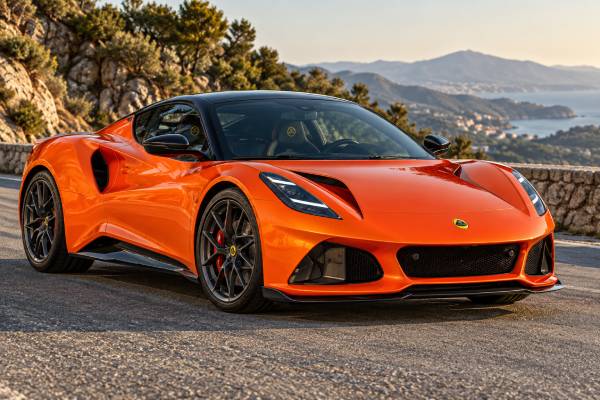
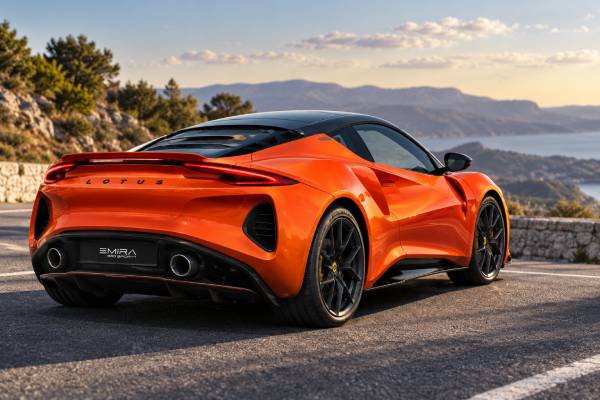
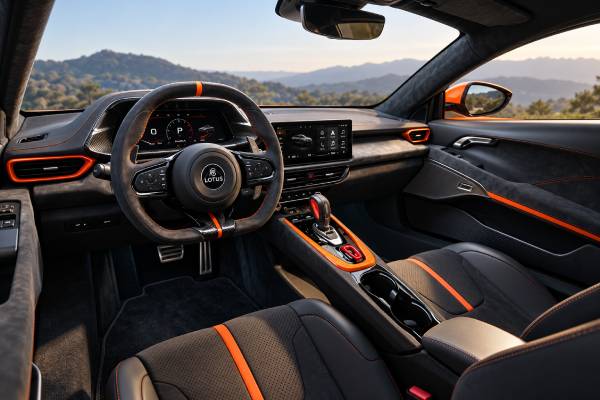
The 2026 Lotus Emira 420 Sport is the most developed factory version of the four-cylinder Type 131 so far, combining a 416 bhp tune of the 2.0-litre AMG-derived engine with new aerodynamic work, a 5 mm lower chassis and an optional lightweight handling package. Its headline figures—0-62 mph in 3.9 seconds and 186 mph—tell only part of the story. Lotus also changed the way air reaches the radiators, brakes and exhaust-valve area, added seven aero revisions and offered Multimatic two-way adjustable dampers, Cup 2 tyres, a titanium exhaust, carbon-fibre tailgate and lithium-ion battery as a coordinated package. Those details make the 420 Sport a different buying proposition from a Turbo SE with a small power increase. It is aimed at owners who will notice thermal consistency, aero balance and chassis adjustability as much as straight-line speed. This guide focuses on the exact hardware, how the lightweight package changes the car, sensible track and road care, and the checks to make before ordering or buying one.
Table of Contents
- The engineering mission behind the 420 Sport
- 420 Sport specifications and performance
- Seven aero changes and cooling gains
- Lotus Lightweight Handling Pack explained
- Road manners, track use, and chassis setup
- Maintenance and inspection priorities
- Buying, options, and comparison with other Emiras
The engineering mission behind the 420 Sport
The 420 Sport is not simply a Turbo SE with another engine map. Lotus used the higher-output M139 calibration as one part of a wider program that adds functional aerodynamic pieces, more cooling airflow, a lower chassis and an optional 25 kg weight reduction to make the four-cylinder Emira faster and more consistent under sustained use.
Lotus unveiled the model in May 2026 as the lightest and most powerful Emira. Market pages rate the engine at 416 bhp, while global material uses the 420 Sport name and metric power conventions. The important owner-facing numbers are 500 Nm of torque, an eight-speed dual-clutch transmission, 3.9 seconds from 0-62 mph and a 186 mph maximum speed. The car therefore gains only a modest amount of peak power over the 400 bhp Turbo SE, but the supporting changes are much broader.
The body sits 5 mm lower, and Lotus developed seven aerodynamic revisions rather than adding decorative trim. The package includes a more aggressive front splitter, reworked front air intakes, front wheel-arch vents, extended side sills, revised side intakes, a louvred tailgate treatment and a rear aero element. Lotus says the changes add 25 kg of downforce while maintaining the standard Emira drag level, a useful claim because extra downforce often comes with a high-speed drag penalty.
Cooling was part of the aero work from the beginning. Lotus quotes 30% more airflow to the exhaust-valve cooling area and 15% more flow to the outboard radiators on its customer page, while launch technical material also describes improved central-radiator and brake airflow. Removable number-plate and brake-duct blanking elements allow further airflow management for circuit use where regulations and conditions permit.
The optional Lotus Lightweight Handling Pack then attacks mass and chassis control as a system. Two-way adjustable Multimatic dampers and Michelin Pilot Sport Cup 2 tyres are paired with a titanium exhaust, carbon-fibre louvred tailgate, lithium-ion battery and track-data functionality. The weight reduction is up to 25 kg against the reference specification, not 25 kg from any random 420 Sport configuration.
That distinction is critical when shopping. A car can be a genuine 420 Sport without the complete Lightweight Handling Pack, and the full weight-saving claim applies to the pack-equipped configuration. Buyers should therefore ask for the build sheet rather than assuming every photographed car with aero parts includes all the lightweight components.
420 Sport specifications and performance
The 420 Sport takes the familiar four-cylinder Emira architecture to its highest factory tune while keeping rear-wheel drive and the eight-speed DCT. The tables below separate the standard model’s verified data from features tied to the optional lightweight package.
| Item | 420 Sport specification |
|---|---|
| Engine family | M139 |
| Configuration | Turbocharged inline-four petrol |
| Displacement | 1,991 cc / 2.0 L |
| Maximum power | 416 bhp |
| Maximum torque | 500 Nm / 369 lb-ft |
| Transmission | 8-speed dual-clutch |
| Driven wheels | Rear-wheel drive |
| 0-62 mph / 0-100 km/h | 3.9 seconds |
| Maximum speed | 186 mph / 299 km/h |
| Item | 420 Sport detail |
|---|---|
| Chassis height | 5 mm lower than the referenced standard Emira setup |
| Aero revisions | 7 model-specific changes |
| Added downforce | 25 kg |
| Drag effect | Standard Emira drag level maintained |
| Outboard radiator airflow | 15% increase |
| Exhaust-valve cooling airflow | 30% increase |
| Brake cooling | Improved, with removable duct blanking provision |
| Component | Function or saving |
|---|---|
| Multimatic dampers | Two-way adjustable |
| Tyres | Michelin Pilot Sport Cup 2 |
| Titanium exhaust | 6.5 kg weight saving |
| Carbon-fibre louvred tailgate | 4 kg saving versus standard glass panel |
| Lithium-ion battery | 12 kg saving versus conventional lead-acid unit |
| Package weight reduction | Up to 25 kg |
| Track data feature | Lotus Track Performance |
| Area | Model-specific treatment |
|---|---|
| Front lower edge | More aggressive front splitter |
| Front cooling | Revised front air intakes |
| Front wheel area | Wheel-arch vents |
| Body side | Extended side sills |
| Powertrain intake area | Revised side intakes |
| Rear deck | Louvred tailgate treatment |
| Total model-specific aero changes | 7 |
| Feature | Availability or purpose |
|---|---|
| Lotus Lightweight Handling Pack | Optional road-to-track package |
| Carbon Fibre Pack | Optional lightweight visual and material upgrade |
| Removable roof | Optional open-air roof panel |
| Lotus Track Performance | Track-data analysis included with the handling package |
| Brake-duct blanking panel | Removable for increased track cooling airflow |
| Number-plate panel provision | Removable to increase radiator inflow where appropriate |
| Part | Published saving |
|---|---|
| Titanium exhaust | 6.5 kg / 14.3 lb |
| Carbon-fibre tailgate | 4 kg / 8.8 lb |
| Lithium-ion battery | 12 kg / 26.5 lb |
| Subtotal of published component savings | 22.5 kg / 49.6 lb |
| Complete Lightweight Handling Pack claim | Up to 25 kg / 55.1 lb |
The specification is deliberately presented without inferred body dimensions or brake measurements that Lotus has not published specifically for the 420 Sport. The 5 mm chassis lowering, airflow percentages, performance data and pack-component savings above are the model-specific figures Lotus states for this version.
Seven aero changes and cooling gains
The 420 Sport’s aero package is valuable because it manages pressure and airflow for both grip and heat rejection. The practical takeaway is that damage or incorrect removal of its splitters, vents, blanking panels and underbody pieces can affect cooling as well as appearance.
At the front, the more aggressive splitter and revised intakes control how air is divided around and through the nose. Wheel-arch vents help relieve pressure generated by rotating tyres, while the extended side-sill treatment manages flow along the body. Revised side intakes feed the mid-mounted powertrain area, and the louvred rear treatment gives hot air another route out of the engine bay.
Lotus’s 25 kg downforce claim is especially notable because the company says it is achieved without increasing the standard Emira drag level. Downforce at speed can improve stability and tyre loading, but it also depends on the complete aero system. A damaged front splitter or missing undertray fastener is therefore not merely cosmetic on this model.
Cooling numbers make the functional intent clearer. Lotus states that airflow to the exhaust-valve cooling region rises by 30% and flow to the outboard radiators by 15%. Launch information also describes increased flow to the central radiator and improved brake cooling. The exact percentages matter less to an owner than the design lesson: external openings, ducts and exits form a connected thermal system.
Track preparation should include inspecting those openings. Leaves, rubber debris and insects can block radiator faces, while an incorrectly fitted number plate can interfere with a designed inlet. The model includes removable number-plate and brake-duct blanking elements for higher-demand use, but owners should follow Lotus instructions and local road rules rather than improvising with removed panels.
Brake cooling deserves particular attention because repeated stops can push disc and pad temperatures far beyond road use. More airflow can slow temperature rise and speed recovery between braking zones, but it does not eliminate fluid boiling, pad wear or disc cracking. The car still needs suitable fluid, healthy pads and cooldown management.
Aero parts are also vulnerable because the car is lower than a regular Emira. Approach ramps diagonally where safe, avoid dropping a wheel off a kerb and inspect the splitter after contact. If a part is replaced, use the correct profile and mounting because a visually similar aftermarket piece can change the airflow balance Lotus developed.
The optional carbon-fibre tailgate makes the rear airflow discussion even more important. It replaces the standard glass panel with a louvred carbon assembly, saving 4 kg high in the car. That reduces mass and changes the engine-bay cover construction at the same time. Check hinges, latches, seals and carbon surfaces during inspection; a poorly repaired lightweight panel can erase both the functional and cosmetic benefits.
Lotus Lightweight Handling Pack explained
The Lightweight Handling Pack is best viewed as a coordinated road-to-track system, not a list of unrelated accessories. Its dampers, tyres and mass-saving components work together to reduce inertia and give the owner more control over chassis response, while the track-data feature supports repeatable setup work.
Multimatic two-way adjustable dampers are the biggest change in how an owner can tune the car. Two-way adjustment generally means separate control over two damping parameters, allowing a knowledgeable driver or technician to alter response for road or circuit conditions. The key is to record every adjustment. Randomly turning adjusters until the car “feels stiffer” can create poor balance and reduce grip.
Start from Lotus’s recommended baseline and make one change at a time. Record settings, tyre pressures, ambient temperature and driver feedback. If the car develops unusual diagonal behavior, excessive bouncing or a sudden mismatch front to rear, return to the known baseline before assuming a component has failed.
Michelin Pilot Sport Cup 2 tyres are another defining element. They offer high dry grip and steering precision when warm, but they demand more judgment in cold temperatures and standing water than a normal all-season-oriented road tyre. They are not a substitute for weather awareness. Check tread depth and temperature conditions before a trip and consider a more road-focused wheel-and-tyre setup if the car is used through wet or cold seasons.
The titanium exhaust saves 6.5 kg and brings heat resistance as well as lower mass. Inspect its mounts and joints for damage, especially after track use or an underbody strike. Titanium behaves differently from conventional steel during repair, so damaged components should be assessed by a specialist rather than welded casually.
The carbon-fibre tailgate removes 4 kg compared with the glass panel and takes weight from a relatively high position. The lithium-ion battery saves another 12 kg. Together with the exhaust, those published component savings add to 22.5 kg, while Lotus quotes up to 25 kg for the complete package. The remaining difference reflects the total package specification rather than a mathematical error owners should try to “find” by removing random trim.
Lithium-ion battery care differs from conventional lead-acid habits. Use a charger or maintainer approved for the installed battery chemistry and follow Lotus storage guidance. Applying the wrong charger profile can damage an expensive battery. If the car will be stored in extreme temperatures or for an extended period, consult the handbook rather than relying on generic lithium advice.
Lotus Track Performance can help turn track days into measured development rather than guesswork. Use data to compare consistency, braking points and setup changes, but do not chase lap time at the expense of mechanical sympathy. A stable series of laps with controlled temperatures is more useful for setup than one fast lap followed by overheating or heavily degraded tyres.
Road manners, track use, and chassis setup
Despite its name, the 420 Sport remains a road-legal Emira and should be set up for the driver’s real mix of road and track use. The sharpest damper setting and most aggressive tyre pressure are not automatically fastest or safest, especially on uneven public roads.
The 5 mm lower chassis reduces ride height enough to matter at ramps and speed humps without turning the car into a circuit-only machine. On the road, compliance keeps tyres in contact with imperfect surfaces. If adjustable dampers are fitted, a slightly softer road setting can provide more grip and confidence than an unnecessarily firm one that causes the car to skip over bumps.
Steering remains one of the platform’s strengths because the Emira uses electro-hydraulic assistance. The driver receives more texture and buildup of effort than in many electric systems, which is useful when a high-grip Cup 2 tyre approaches its limit. That feedback should remain smooth. Notches, inconsistent weight or unexpected noise call for inspection.
The DCT suits circuit use because it reduces interruption during shifts and lets the driver keep both hands on the wheel. Use manual paddle control when consistent gear selection matters and let the gearbox cool between demanding sessions. The 2026 Emira family already benefited from revised DCT calibration and coolant routing before the 420 Sport’s further cooling work, so the model starts from the most developed version of the four-cylinder thermal package.
Tyre pressure is a process, not a single magic number. Begin with the handbook or Lotus track guidance, measure pressures before running and again immediately after a session, then adjust toward the target for the actual conditions. Left and right sides may heat differently on a circuit. Record changes instead of repeatedly bleeding air without notes.
Brake cooldown matters as much as warm-up. Avoid sitting stationary with the brake pedal clamped hard immediately after a very hot session if safe paddock practice allows otherwise, because localized heat can transfer through pads. Complete a cooldown lap, park safely, and inspect before the next run. Never touch discs or calipers to judge temperature.
Wheel and suspension fasteners should be checked using official procedures and torque values. Adjustable dampers and track tyres make owners more likely to work on the car themselves, but that does not make generic internet torque charts acceptable. If ride height, alignment or damper settings are changed, measure and record the resulting geometry.
On public roads, the 420 Sport still needs restraint. Cup 2 tyres can aquaplane when conditions are poor, the front aero parts are vulnerable to standing water and debris, and 500 Nm can overwhelm rear traction if applied abruptly. Stability systems help manage mistakes but do not alter the physics of cold rubber or deep water.
Maintenance and inspection priorities
Maintenance should focus on the systems the 420 Sport asks to work hardest: cooling airflow, brakes, tyres, adjustable suspension, DCT fluid health and lightweight components. Because 2026 cars are still new, establishing a meticulous baseline now is more valuable than waiting for age-related faults to appear.
Keep the engine and transmission on the exact Lotus fluid schedule. The M139 is highly tuned in this application, and the DCT shares the job of managing 500 Nm. Use specified oil and transmission fluid only, document brand and approval on invoices, and investigate level loss rather than treating top-ups as routine.
Inspect radiator and duct openings often if the car is tracked. Rubber pickup can accumulate behind grilles, while grass and leaves can obstruct low-mounted heat exchangers. Clean with methods that will not flatten fins. After a trip through debris, check undertrays and brake ducts for missing fasteners or impact damage.
The aero hardware deserves its own inspection line. Examine the front splitter, wheel-arch vents, extended sills, side intakes and rear louvres for cracks or loose fixings. A small crack can grow at speed. If protective film is installed, make sure its edges are not lifting into an intake or trapping dirt against a sensitive finish.
For pack-equipped cars, inspect Multimatic dampers for leaks and damage and keep an accurate setup sheet. If one corner begins to feel different, verify adjuster positions before replacing parts. A car returned from a workshop with mismatched settings can feel “broken” even when the dampers are healthy.
Cup 2 tyres should be checked after every track day for chunking, heat damage and shoulder wear. Tread depth alone does not tell the whole story after repeated heat cycles. If grip falls substantially even though visible tread remains, age and thermal history may be the reason. Keep road-safety margins ahead of lap-time ambitions.
The lithium-ion battery requires the correct maintenance charger. Do not connect a conventional desulfation program intended for lead-acid batteries. Confirm the battery type before charging, especially if a previous owner has changed it. Electrical system health is important because low voltage can create misleading control-module warnings.
Titanium exhaust hardware and the carbon tailgate should be treated as specialist components. Check exhaust mounts after underbody impacts and inspect the carbon panel for delamination, cracks or poorly repaired edges. Cosmetic clear-coat damage is different from structural damage; a carbon specialist can distinguish them.
Brake servicing should account for real use. Track cars can consume pads rapidly and age fluid through heat even when road mileage is low. Measure pad thickness, inspect drill holes and disc surfaces, and follow the official minimum dimensions. Replace components based on condition and Lotus limits, not solely the odometer.
A pre- and post-track diagnostic scan can be useful when performed by someone who understands which codes are transient and which require action. Save reports rather than automatically clearing them. A history of repeated temperature or pressure faults can reveal a developing issue even if no warning is present during a later inspection.
Buying, options, and comparison with other Emiras
A 420 Sport purchase should begin with the build sheet because the model’s most important hardware is option-dependent. Confirm whether the car has the Lightweight Handling Pack, carbon package, removable roof and other factory equipment before using advertised weight or chassis claims to compare prices.
For the Lightweight Handling Pack, visually identify the titanium exhaust, carbon louvred tailgate and correct battery, then confirm the Multimatic dampers and Cup 2 tyres. Tyres are consumables and may legitimately have been replaced with another road tyre, so absence of Cup 2s does not by itself prove the car was never pack-equipped. Documentation is stronger evidence.
Inspect the aero surfaces carefully. A front splitter that has repeatedly contacted ramps may be cracked underneath while looking presentable from standing height. Wheel-arch vents, side intakes and louvres should be secure. If an aero part has been replaced, ask for the invoice and part number so you know it matches the 420 Sport design.
Track use is not automatically a reason to reject the car. This model was explicitly engineered for higher-performance use, and a careful owner may service a tracked car more thoroughly than a lightly driven one. The concern is undocumented track use combined with old brake fluid, overheated tyres, damaged wheels or no record of post-event inspection.
The 400 bhp Turbo SE is the closest alternative. It gives up 16 bhp, the 420 Sport’s aero development, lower chassis and optional 25 kg lightweight package, but it still provides Sport suspension, launch control, high-performance two-piece brakes and a very similar DCT powertrain concept. If the car will spend almost all its time on public roads, the SE may deliver most of the usable performance at lower cost.
The 360 bhp Turbo is a different proposition. It is the sensible four-cylinder entry model for someone who wants the Emira chassis and DCT without prioritizing maximum output or track hardware. Its slower 0-62 time is rarely a limitation on ordinary roads, and its simpler specification can reduce replacement-cost exposure.
The V6 SE remains the emotional alternative. Its supercharged 3.5-litre engine and available manual gearbox offer a sound and interaction the 420 Sport cannot imitate. A driver deciding between them should make the transmission choice first. If a clutch pedal is essential, no amount of aero or DCT speed makes the 420 Sport the right answer.
The 420 Sport is for the buyer who sees the engineering package as a system: 416 bhp, 500 Nm, aero cooling, lower ride height, adjustable dampers and meaningful mass reduction. Buying it only for the badge risks paying for capability that will never be used. Buying it because those details solve real track-day or fast-road priorities makes far more sense.
As with any new performance model, avoid assuming that rarity will excuse poor condition. Verify recall and campaign status by VIN, inspect paint and underbody protection, test every electrical feature, and obtain a professional inspection if the car is used or modified. A factory-standard example with a clear setup history is especially valuable because it gives the next owner a known baseline from which to make intelligent adjustments.
References
- Emira 420 Sport: the lightest and most powerful Emira yet | Lotus Cars News 2026
- Lotus Emira 420 Sport | Lotus Cars 2026
- Lotus Emira – Reserve Now | Lotus Cars 2026
- Models | Lotus Press | Emira 2026
- Lotus Emira Handbook for Drivers | Lotus Cars 2026
- Check for Recalls: Vehicle, Car Seat, Tire, Equipment | NHTSA 2026
Disclaimer
This article provides general information and is not a substitute for professional inspection, diagnosis or repair. Specifications, adjustment ranges, torque settings, service intervals and procedures can vary by VIN, market and fitted options; verify the exact 420 Sport against current Lotus owner and workshop documentation before servicing, setting up or modifying the car.
If the guide helps with a 420 Sport decision or setup discussion, share it with another Lotus owner or enthusiast who can use the information.