
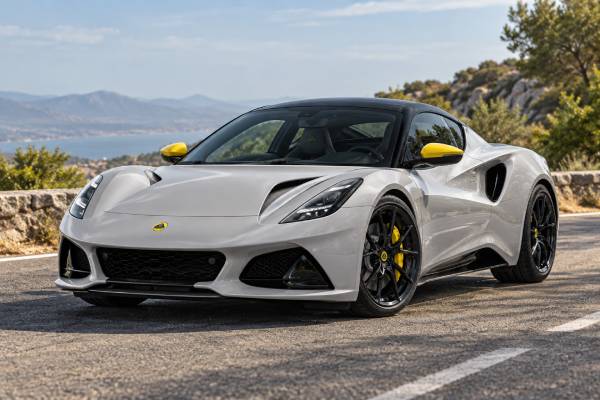
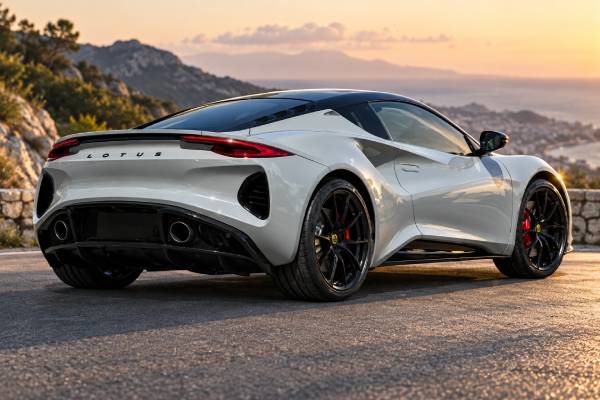
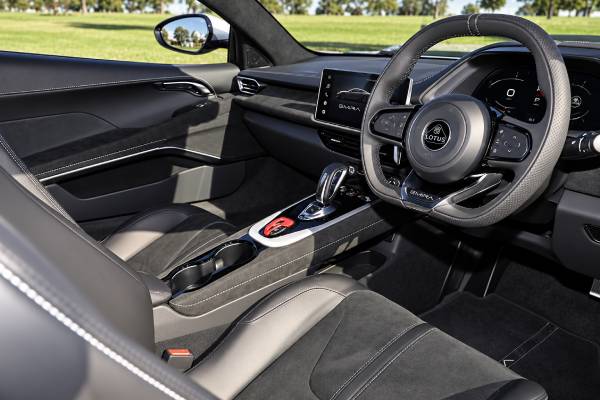
The Lotus Emira V6 SE is the modern Emira for drivers who still want a supercharged six-cylinder engine and the option of a conventional manual gearbox. Its 3.5-litre 2GR-FE-based V6 produces 400 hp, sits behind the cabin in Lotus’s bonded-aluminium sports-car architecture, and can be paired with a six-speed manual and limited-slip differential or, in applicable markets, an automatic transmission. The 2026 V6 SE is also more than a renamed earlier V6: Lotus revised the manual gearbox mounting, damper calibration, wheel alignment, cooling layout and standard equipment as part of the updated range. That combination makes production year and exact transmission especially important when comparing cars. The V6 SE is not the quickest Emira in every acceleration measure, but it is the version most closely tied to the classic Lotus formula of mechanical steering feel, low mass, a manual shift and an engine whose response is not filtered through turbo boost. This guide separates those engineering qualities from the styling package and covers the specifications, upkeep and buying checks that matter in real ownership.
Table of Contents
- Why the V6 SE exists
- V6 SE technical specifications
- Manual versus automatic transmission
- Steering, suspension, and road behavior
- Maintenance and long-term care
- Pre-purchase inspection checklist
- Who should choose the V6 SE
Why the V6 SE exists
The V6 SE preserves the Emira’s supercharged, six-cylinder branch while updating its chassis and equipment for the 2026 range. Its defining choice is the availability of a six-speed manual with a limited-slip differential, giving buyers an experience the DCT-only four-cylinder cars cannot reproduce.
Lotus introduced the V6 SE alongside the 360 hp Turbo in June 2025. The engine remains the familiar 3,456 cc supercharged V6 producing 400 hp, but the surrounding package received detailed changes. Lotus added a new compression mount for the manual gearbox, with the stated aim of improving shift precision. Damper calibration and wheel alignment were optimized, while the broader Emira range received revised coolant routing, air-conditioning calibration and a higher thermostat opening temperature.
The “SE” badge also denotes a richer standard specification. Lotus announced Zinc Grey as the launch paint, model-specific V6 SE badging, an Extended Black Pack, forged 20-inch wheels, red brake calipers, Alcantara trim and sport pedals. Customers could choose from a broad palette of body colors, interior themes, caliper finishes and wheel designs. These details make the car easy to personalize, but they should not distract from the mechanical distinction: the V6 SE’s main reason to exist is the combination of supercharged response and traditional transmission choice.
Supercharging changes the way the engine delivers its power. A mechanically driven compressor provides boost without waiting for exhaust gas to spin a turbine, so throttle response feels more directly connected to pedal movement. The engine does not have the broad 480 Nm plateau of the Turbo SE, but it offers a linear build in speed and a soundtrack that is central to the V6 car’s appeal.
The 2026 update also preserved electro-hydraulic steering rather than moving to a fully electric system. That decision is important because steering feedback is one of the Emira’s strongest dynamic qualities. The V6 SE therefore represents continuity and refinement rather than a wholesale reinvention: Lotus kept the engine, steering concept and aluminium chassis, then improved mounting, calibration and equipment around them.
V6 SE technical specifications
The V6 SE combines Toyota-derived 2GR-FE architecture with Lotus-specific supercharging, calibration and chassis integration. Its core dimensions and braking hardware follow the Emira platform, while transmission choice can change torque figures and driving character.
| Item | V6 SE specification |
|---|---|
| Engine family | 2GR-FE |
| Configuration | Supercharged V6 petrol |
| Displacement | 3,456 cc / 3.5 L |
| Supercharger | Edelbrock 1740 |
| Maximum power | 400 hp / 298 kW |
| Manual-transmission torque | 420 Nm / 310 lb-ft |
| Automatic-transmission torque | 430 Nm / 317 lb-ft |
| Engine location | Mid-mounted behind cabin |
| Item | Specification |
|---|---|
| Manual transmission | 6-speed |
| Manual differential | Mechanical limited-slip differential |
| Automatic option | Available in applicable markets |
| Driven wheels | Rear-wheel drive |
| 0-62 mph / 0-100 km/h | 4.3 seconds |
| Maximum speed | 180 mph / 290 km/h |
| Drive modes | Tour and Sport |
| Item | Specification |
|---|---|
| Front suspension | Double wishbone |
| Rear suspension | Double wishbone |
| Steering | Electro-hydraulic power assistance |
| Front discs | 370 x 32 mm |
| Rear discs | 350 x 32 mm |
| Brake calipers | AP Racing four-piston |
| Brake hoses | Braided |
| 2026 chassis work | Revised damper calibration and wheel alignment |
| Measurement | Specification |
|---|---|
| Length | 4,413 mm / 173.7 in |
| Width including mirrors | 2,092 mm / 82.4 in |
| Width with mirrors folded | 1,895 mm / 74.6 in |
| Height | 1,226 mm / 48.3 in |
| Wheelbase | 2,575 mm / 101.4 in |
| Front track | 1,626 mm / 64.0 in |
| Rear track | 1,608 mm / 63.3 in |
| Item | Specification |
|---|---|
| Front tyre size | 245/35 R20 |
| Rear tyre size | 295/30 R20 |
| Wheel diameter | 20 in front and rear |
| Rear luggage compartment | 151 L / 5.3 cu ft |
| Cabin luggage space | 208 L / 7.3 cu ft |
| Fuel tank | 52.5 L / 13.9 US gal |
| Area | 2026 V6 SE launch specification |
|---|---|
| Wheels | 20-inch forged alloy |
| Brake-caliper launch color | Red |
| Exterior treatment | Extended Black Pack |
| Interior material | Alcantara available in launch specification |
| Pedals | Sport pedals |
| Safety assistance | AEB, lane-departure warning, blind-spot warning, traffic-sign recognition, fatigue detection |
The transmission torque difference is important when reading used listings. A seller may quote 430 Nm for every V6 because that is the higher number, but official technical material distinguishes manual and automatic applications. Horsepower stays at 400; the gearbox and calibration determine the relevant torque figure.
Manual versus automatic transmission
The manual is the V6 SE’s clearest point of differentiation, while the automatic suits buyers who want the sound and response of the supercharged V6 without operating a clutch. The choice affects far more than acceleration because it changes driver workload, differential hardware and the sensations that define every journey.
The six-speed manual uses a visible linkage mechanism in the cabin, turning each shift into part of the car’s theatre. In 2026, Lotus introduced a new compression mounting arrangement for the gearbox to improve precision. That factory change is meaningful when comparing a V6 SE with an earlier V6 First Edition or base V6: the familiar transmission is retained, but its mounting and calibration context evolved.
A healthy manual shift should feel deliberate rather than vague. Test every gear when cold and again when fully warm. First-to-second shifts can naturally require more care at low temperature in many performance gearboxes, but persistent graunching, refusal to select a gear or a lever that moves excessively under load needs investigation. Clutch engagement should be progressive, with no sustained slip under hard acceleration in a high gear.
The mechanical limited-slip differential on the manual car adds another layer of control at the rear axle. Its purpose is to manage torque distribution when the two rear wheels have different traction. On the road, that contributes to confident drive out of bends without requiring the driver to notice the differential working. Clunks, binding or unusual noises during tight low-speed turns should be diagnosed rather than described as normal LSD behavior.
The automatic changes the emphasis. It removes the clutch pedal and can make congested driving much easier while retaining the V6’s supercharged delivery. Buyers should still test low-speed engagement, kickdown, manual command response and behavior after the fluid is fully warm. Any warning messages, flare between shifts or harsh engagement deserve a diagnostic scan and specialist assessment.
Transmission choice also affects driver-assistance availability in some markets. Lotus states that adaptive cruise control within the Extended Co-Driver Pack is available for automatic cars, illustrating how option content can be tied to powertrain. A buyer who wants specific electronic assistance should therefore verify the build sheet rather than assuming every V6 SE can be equipped identically.
For resale, neither transmission should be treated as universally superior. Manual cars often attract enthusiasts because the four-cylinder Emiras do not offer a clutch pedal, but an automatic with good history may be the better personal car for someone who drives in traffic or shares the vehicle. The right comparison is between two use cases, not simply two acceleration times.
Steering, suspension, and road behavior
The V6 SE’s dynamic strength comes from steering and chassis communication rather than electronic complexity. Double wishbones at both ends, hydraulic-assisted steering and Lotus-specific damper and alignment work make tyre condition and geometry especially visible to the driver.
Electro-hydraulic steering is unusual in a market dominated by electric racks. The hydraulic assistance gives the wheel a natural buildup of effort and transmits small changes in road surface. That feedback also means faults are easy to notice. Assistance that becomes suddenly heavy, pump noise, fluid leaks or a steering wheel that does not self-center properly should be inspected.
Lotus revised damper calibration and wheel alignment for the 2026 V6 SE. The stated objective was to improve ride and handling while retaining Tour and Sport settings within the range. Because Lotus has offered different chassis configurations, a buyer should identify the exact suspension on the VIN. A seller’s description of “sport suspension” is not enough evidence, particularly after previous owners may have changed springs or dampers.
Alignment matters because the tyres are wide and relatively low profile. On a straight, flat road the car should track consistently, though road camber can influence steering. Uneven wear on the inner edge of the front or rear tyres is a reason to measure geometry. Replacing tyres without correcting alignment simply consumes another expensive set.
The standard brake dimensions give the V6 SE substantial road capacity: 370 mm front and 350 mm rear discs with AP Racing four-piston calipers. The system should produce a firm, repeatable pedal. Vibration during braking can come from uneven pad deposits, disc runout or damaged components. Inspect before replacing parts because the correct remedy depends on the cause.
The V6 engine adds mass behind the cabin compared with the four-cylinder installation, and its delivery changes how the driver uses the chassis. The supercharger gives immediate response, so throttle modulation in a bend feels linear. There is less need to anticipate boost than in a turbo car, but rear-wheel drive and 400 hp still require progressive inputs on cold or wet tyres.
A removable roof became available across selected current Emira models, including the V6 SE. If inspecting a car with that option, check the panel, seals, latches and storage arrangement carefully. Water marks, wind noise and damaged sealing surfaces are easier to address before purchase, and removable panels should be secured exactly as the handbook specifies.
For touring, the Emira is far more civilized than older Lotus road cars but remains a low sports car. Visibility, seat comfort and ride should be evaluated personally. The rear luggage compartment and behind-seat storage can handle a weekend for two with soft bags, yet heat and awkward shapes make thoughtful packing more important than the nominal liter figures suggest.
Maintenance and long-term care
V6 SE maintenance should preserve three things: lubrication, cooling and mechanical adjustment. The engine family has a long history, but Lotus’s supercharger installation, mid-engined packaging and service requirements make generic Toyota maintenance advice inappropriate for this car.
Use the exact engine-oil grade and specification listed for the VIN and market. Check the level according to the Lotus procedure and investigate unusual consumption or leaks. A supercharged sports car that spends time at high rpm can place more thermal load on oil than a normal road vehicle using related engine architecture, so use pattern matters when planning maintenance.
Cooling is equally important. Lotus’s 2026 range update rerouted coolant lines for improved flow to the transmission oil cooler and main radiator and raised the thermostat opening temperature from 65°C to 75°C. Those changes were range-wide development work rather than evidence that owners should alter earlier cars themselves. Any retrofit or repair should follow factory documentation.
Inspect visible hose connections, the expansion tank, front heat exchangers and underbody coolant routing for damage or residue. The front radiator openings can collect debris. Clean them carefully without bending fins. Repeated coolant loss, overheating warnings or cabin smells require diagnosis; simply topping up can hide a leak until it becomes more serious.
Manual cars add clutch and linkage observations to routine ownership. Note any change in bite point, pedal feel or shift precision. A clutch that begins slipping under high load will not improve with adjustment, while a suddenly imprecise shifter may point to linkage, mounting or wear that should be inspected. Avoid resting a hand on the gear lever or holding the car on the clutch at junctions unnecessarily.
Brake fluid absorbs moisture over time, so calendar age matters even on a low-mileage car. Follow Lotus’s service schedule and consider use severity. Track days increase temperatures and can justify more frequent inspection of pads, discs and fluid. Wheel-speed sensors and magnetic rings should also be kept clean during service, consistent with Lotus service guidance intended to prevent contamination-related warning signals.
Tyres require both age and wear checks. The V6 SE’s performance depends on a matched set with appropriate load and speed ratings. Measure across the tread, not only the outer shoulder, and inspect the inner sidewalls for damage. If the car has been stored, look for flat spotting and pressure loss before blaming vibration on wheel balance.
Battery condition can influence modern vehicle electronics. A car used only on weekends may benefit from an approved maintainer. If multiple unrelated warning messages appear after a long storage period, test battery voltage and health before assuming several systems failed at once. Do not erase codes before recording them, because stored information can help identify the original cause.
Use a specialist familiar with bonded aluminium and composite bodywork for accident repairs. Traditional steel-body pulling and welding assumptions do not transfer directly. If the car has suffered a substantial impact, documentation of the repair method and parts used is valuable both for safety confidence and future resale.
Pre-purchase inspection checklist
A V6 SE purchase should start with identity and history, then move to the clutch or automatic transmission, cooling system, tyres, brakes and body structure. A clean-looking car can still hide expensive consumables or track damage, while a properly used car with complete records can be an excellent buy.
First confirm the VIN against registration, build information and service invoices. Ask a Lotus retailer to check both safety recalls and manufacturer campaigns. Public recall tools are useful for cross-checking, but not every service campaign appears as a public safety recall. Confirm that software and service actions relevant to the exact build have been completed.
Inspect the body outside in diffuse daylight. Look for color or texture differences across composite panels, overspray on seals, disturbed fasteners and edges where protective film may hide paint damage. Underneath, check the front lip, floor, jacking areas and rear diffuser for scraping or cracks. A low car can receive significant underbody impact without obvious damage at eye level.
Check wheel condition on the inner as well as outer faces. A repaired rim may run true, but poor repairs can leave vibration or structural concerns. Read tyre date codes, confirm a matched specification and examine inner shoulders. If the car has a history of aggressive alignment or track use, request a current geometry report.
For a manual car, insist on a cold start if possible. Operate the clutch through its full travel, select reverse and first cleanly, and listen for abnormal release-bearing or gearbox noise. Once warm, accelerate firmly in a taller gear to check for clutch slip. Evaluate every shift rather than focusing only on the attractive exposed linkage.
On an automatic, test smooth take-up, reverse, part-throttle shifts and a firm acceleration once warm. Any transmission warning should be diagnosed before purchase. Do not accept a promise that “a software reset” will solve a symptom unless the update and repair are documented.
The engine should start cleanly, idle steadily and show no persistent warning lights. Normal exhaust condensation is different from continuing smoke after warm-up. After the test drive, look for fresh oil or coolant and listen for fans cycling as expected. The supercharger will produce characteristic sound, but grinding, rattling or sudden changes deserve specialist attention.
Check brake discs for scoring, cracks and a large wear lip, then measure pad thickness. Test the parking brake and make several progressively firmer stops where safe. The car should remain stable and the pedal should be consistent. A steering shake under braking needs diagnosis, especially if the seller attributes it casually to “Lotus brakes.”
Finally, test cabin systems. Operate climate control, seat adjustment, windows, cameras, infotainment, phone connectivity and driver-assistance functions. For cars with a removable roof, inspect the complete panel and sealing system. Small electrical or trim issues may not affect the drive home, but they are negotiating points and are easier to document before ownership transfers.
Who should choose the V6 SE
Choose the V6 SE if engine response, sound and manual involvement matter more than winning every performance statistic. It is the Emira that best preserves a traditional mechanical sports-car experience while adding the comfort and safety equipment expected from the later Type 131 range.
Against the 360 hp Turbo, the V6 SE feels more ceremonial. The Turbo’s DCT and broad torque make it extremely effective with less effort, whereas the manual V6 turns acceleration into a sequence of clutch, lever and throttle actions. Drivers who commute in congestion may prefer the Turbo; drivers who plan Sunday mornings around a quiet road may find the V6’s slower process more rewarding.
Against the Turbo SE, the same distinction becomes sharper. The four-cylinder SE offers 400 bhp, 480 Nm, a 4.0-second 0-100 km/h claim and standard performance hardware. On paper it is the more aggressive machine. The V6 SE responds with supercharger immediacy, six cylinders and the manual option. Buying one while secretly wishing it shifted like a DCT—or buying the DCT while wishing for a clutch pedal—usually leads to dissatisfaction.
The 420 Sport extends the four-cylinder formula with more power, aero development and optional lightweight hardware. It is the better match for a buyer chasing the most evolved current Emira performance package. The V6 SE is compelling for the opposite reason: it deliberately keeps a configuration that is becoming rare in new mid-engined sports cars.
Specification should still follow use. A car driven mainly on imperfect public roads does not automatically benefit from the firmest chassis or most track-focused tyre. Comfort, weather, storage and passenger needs matter. The V6 SE can tour effectively, but it remains wide, low and limited in luggage shape, so a real test of garage access and packing needs is worthwhile.
From an ownership perspective, provenance beats novelty. A correctly serviced manual car with healthy clutch, aligned chassis, matched tyres and complete campaign history is more desirable than one chosen solely for paint or a rare option. The same principle applies to automatics. Mechanical condition is the foundation; options decorate it.
The V6 SE’s lasting appeal is therefore easy to define. It combines 400 hp with a supercharged response curve, hydraulic-assisted steering and the possibility of a manual gearbox at a time when most new performance cars are moving toward turbocharging, automated shifts or electrification. For the buyer who values those traits specifically, its character cannot be recreated simply by choosing a faster Emira.
References
- Lotus introduces 2026 Emira V6 SE and Emira Turbo 2025
- Models | Lotus Press | Emira 2026
- Lotus Emira: the most accomplished Lotus ever made 2021
- Lotus Emira – Reserve Now | Lotus Cars 2026
- Lotus Emira Handbook for Drivers | Lotus Cars 2026
- Check for Recalls: Vehicle, Car Seat, Tire, Equipment | NHTSA 2026
Disclaimer
This material is intended for general information and does not substitute for a qualified inspection, diagnosis or repair. Specifications, service intervals, tightening torques and procedures can vary with VIN, market, transmission and equipment, so consult the official Lotus documentation for the exact V6 SE before carrying out maintenance.
If this V6 SE guide answers a question for you, consider passing it to another Lotus enthusiast who is comparing cars or planning a purchase.