
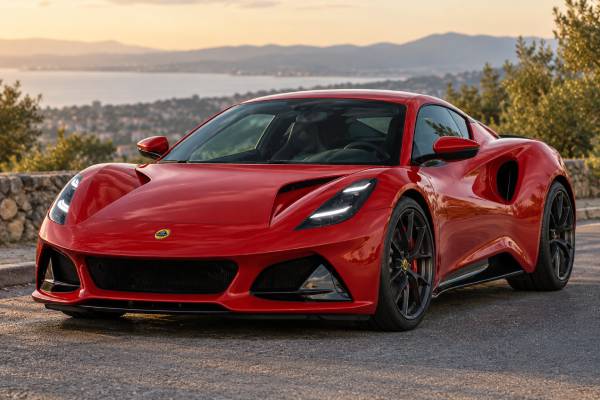
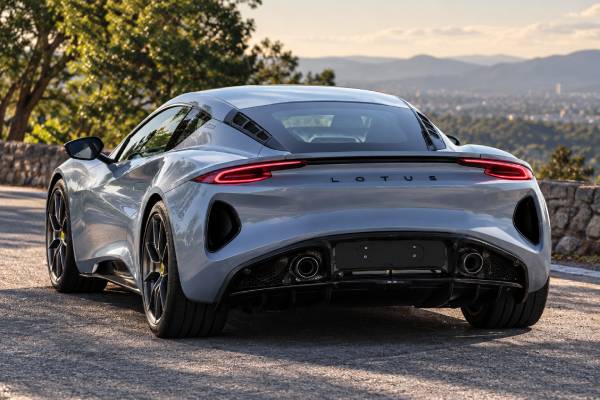
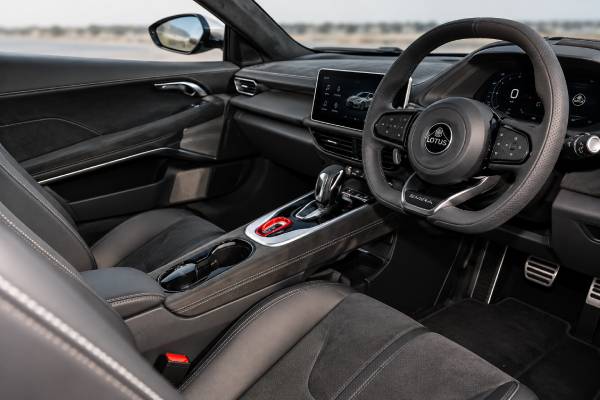
The Lotus Emira Turbo SE is where the four-cylinder Emira stops being merely the automatic alternative and becomes a performance specification in its own right. Its AMG-derived M139 2.0-litre engine is tuned to 400 bhp, torque rises to 480 Nm, and the defining package combines the eight-speed dual-clutch transmission with Sport suspension, launch control and uprated two-piece brakes. The result is a factory configuration aimed at owners who want repeatable acceleration and sharper chassis response without giving up the Emira’s hydraulic-assisted steering or mid-engined balance. Lotus continued developing the package for the 2026 range, revising DCT calibration and coolant routing while retaining the Turbo SE’s 400 bhp position between the 360 bhp Turbo and the newer 420 Sport. That makes build date, options and service history particularly important when shopping used. The sections below focus on what the SE hardware actually changes, the verified specifications, how to look after the higher-output four-cylinder drivetrain, and how to judge whether an SE is worth the premium over the standard Turbo.
Table of Contents
- What the Turbo SE package adds
- Turbo SE specifications and dimensions
- Brakes, Sport suspension, and launch control
- Managing 400 hp through the M139 and DCT
- Service, tyres, fluids, and track-day care
- Used-car inspection and value versus other Emiras
What the Turbo SE package adds
The Turbo SE is more than a software-only power increase. Lotus paired its 400 bhp and 480 Nm calibration with a performance-focused chassis specification that includes Sport suspension, launch control and uprated cross-drilled, ventilated two-piece brake discs, making the SE the original flagship of the four-cylinder Emira line.
When Lotus announced the revised line-up in March 2025, the company described a 40 bhp increase over the earlier 360 bhp four-cylinder and a 50 Nm torque increase. The 0-100 km/h figure fell to 4.0 seconds, while later 2026 technical material lists a maximum speed of 181 mph / 291 km/h. Those figures put the SE close to the V6 in headline power while giving it a different delivery: the turbo engine produces a broad wall of torque and the DCT keeps the engine in the productive part of the rev range with very little interruption.
The standard Lotus Drivers Pack is central to the model’s identity. It brings the firmer Sport suspension calibration, launch control and the uprated brake package rather than leaving those elements to a buyer’s option choices. Lotus also specified 20-inch V-spoke forged wheels in Satin Grey, red brake calipers and model-specific details on the launch configuration, along with visual changes such as black branding and tailpipes. Market packages can change, so those items should be confirmed on the exact VIN rather than assumed from an advertisement.
This matters in the used market because a standard 360 hp Turbo can be modified to look similar. Wheels, badges and black trim are easy to copy. The stronger evidence is the VIN/build data, correct engine calibration, factory brake hardware and chassis specification. A buyer should resist paying an SE premium for a car whose identity depends on cosmetic changes or an aftermarket ECU tune.
The 2026 model-year engineering updates then refined the four-cylinder platform beneath that package. Lotus rerouted coolant lines for improved flow to the transmission oil cooler and main radiator, changed the thermostat strategy and recalibrated the DCT. The changes were described as improvements to cooling efficiency, weight and shift behavior. They do not change the basic 400 bhp specification, but they can make a later car preferable to a buyer who values the newest factory development.
Turbo SE specifications and dimensions
The Turbo SE’s numbers show where it differs from the standard Turbo and where the two cars share hardware. Engine output, torque, acceleration and performance equipment change; the fundamental aluminium structure, double-wishbone layout and core dimensions remain Emira traits.
| Item | Turbo SE specification |
|---|---|
| Engine family | M139 |
| Engine type | Turbocharged inline-four petrol |
| Displacement | 1,991 cc / 2.0 L |
| Valvetrain | 4 valves per cylinder with variable valve timing |
| Turbocharger | Single twin-scroll |
| Fuel delivery | Direct injection plus port injection |
| Maximum power | 400 bhp / 294 kW |
| Maximum torque | 480 Nm / 354 lb-ft |
| Item | Specification |
|---|---|
| Transmission | 8-speed dual-clutch |
| Drive | Rear-wheel drive |
| 0-62 mph / 0-100 km/h | 4.0 seconds |
| Maximum speed | 181 mph / 291 km/h |
| Launch control | Standard with Turbo SE performance package |
| Manual shift control | Steering-wheel paddles |
| Item | Specification |
|---|---|
| Structure | Bonded extruded-aluminium sports-car architecture |
| Front suspension | Double wishbone |
| Rear suspension | Double wishbone |
| SE suspension tune | Sport |
| Steering assistance | Electro-hydraulic |
| Front disc diameter | 370 mm |
| Rear disc diameter | 350 mm |
| Calipers | AP Racing four-piston |
| SE brake feature | Uprated cross-drilled, ventilated two-piece discs |
| Measurement | Specification |
|---|---|
| Length | 4,413 mm / 173.7 in |
| Width including mirrors | 2,092 mm / 82.4 in |
| Width, mirrors folded | 1,895 mm / 74.6 in |
| Height | 1,226 mm / 48.3 in |
| Wheelbase | 2,575 mm / 101.4 in |
| Front track | 1,626 mm / 64.0 in |
| Rear track | 1,608 mm / 63.3 in |
| Position | Factory size |
|---|---|
| Front wheel | 20 in |
| Rear wheel | 20 in |
| Front tyre | 245/35 R20 |
| Rear tyre | 295/30 R20 |
| Launch wheel design | V-spoke forged alloy, Satin Grey |
| Item | Specification |
|---|---|
| Seating capacity | 2 |
| Rear luggage compartment | 151 L / 5.3 cu ft |
| Cabin luggage space | 208 L / 7.3 cu ft |
| Fuel tank | 52.5 L / 13.9 US gal |
| Door count | 2 |
A buyer comparing brochures should note that Lotus has described some figures differently as the model evolved. For example, early Turbo SE launch material quoted roughly 180 mph / 290 km/h, while later 2026 technical data gives 181 mph / 291 km/h. That small difference is best understood as a specification update, not evidence that every individual car was physically modified. Use the data appropriate to the production period being inspected.
Brakes, Sport suspension, and launch control
The Turbo SE earns much of its extra value in the parts that repeatedly handle speed, not just in the engine map. Sport suspension, two-piece brake discs and launch control make sense together because they target response, heat management and repeatable acceleration rather than a single dyno number.
Sport suspension is the firmer road calibration within the conventional Emira chassis family. It does not turn the car into a race car, and it does not remove the need for compliant tyre sidewalls or correct alignment. Instead, it tightens body control and transient response. On smooth, fast roads that can make the car feel more immediate. On broken urban surfaces the same calibration can transmit more impact into the cabin, which is why prospective owners should drive an SE on the roads they actually use rather than relying on a brief route around a dealership.
The two-piece brake construction is a more tangible performance upgrade. A separate friction ring and hat can reduce unsprung mass and manage thermal expansion differently from a one-piece disc. Cross-drilling and ventilation help with heat and gas management but do not make the discs immune to cracking or wear. Inspect around drill holes, both disc faces and the outer edge. Hairline surface marks and heat coloration need context; cracks that propagate, deep scoring or a disc below its service limit require action.
Brake consumables can be expensive, so condition is part of the purchase price. A seller may advertise the premium brake package as a benefit while the discs and pads are near replacement. Obtain measured pad thickness and disc condition during a pre-purchase inspection, particularly if the car has been used on track.
Launch control is another feature that should be understood rather than demonstrated repeatedly. It gives the DCT and engine electronics a coordinated strategy for maximum acceleration from rest. Occasional factory-intended use is not inherently abusive, but repeated launches add heat and load to tyres, driveline components and clutch packs. There is little reason to perform multiple launches during a buying test. Instead, confirm that the system is available without warnings and use service history and diagnostic checks to assess the car.
The forged wheels reduce mass compared with many cast designs and are worth checking closely. Look at inner barrels for bends, impact marks and poor previous repairs. Wide, low-profile tyres leave little sidewall to protect the wheel from potholes. Correct wheel balance and straight rims are important because vibration at motorway speed can otherwise be blamed incorrectly on alignment or suspension.
Tyres should match in type and be appropriate to the car’s intended use. Mixing significantly different compounds front to rear can disrupt the balance Lotus tuned into the chassis. Check inside shoulders, which are harder to see, and note age as well as tread depth. A low-mileage SE can still need tyres because of hardening, flat spotting or storage damage.
Managing 400 hp through the M139 and DCT
The 400 bhp M139 and eight-speed DCT work best when treated as one integrated system. Engine calibration, boost response, gearbox logic and cooling were developed together, so modifications to one part can affect temperatures, shift quality and torque management elsewhere.
With 480 Nm available, the SE has stronger in-gear acceleration than the 360 hp Turbo. The DCT can keep boost available across shifts, making the car feel relentlessly quick rather than peaky. In automatic driving, the software chooses ratios according to throttle demand and mode; with paddles, the driver can hold a gear for corner entry and exit. A healthy gearbox should respond consistently once warm and should not require the driver to work around unexplained hesitation or clunks.
The 2026 DCT recalibration is relevant because Lotus specifically cited faster changes, better quality and smoother interaction with the engine. When comparing early and later cars, a difference in low-speed behavior may therefore be normal calibration evolution. What is not normal is a warning message, repeated failure to engage, severe shuddering or a sudden deterioration after the system is hot.
Cooling deserves equal attention. Lotus rerouted coolant lines to improve flow toward the DCT oil cooler and main radiator, changed air-conditioning calibration and raised the thermostat opening temperature from 65°C to 75°C as part of the 2026 update. Those details show how closely cabin climate, engine thermal management and transmission cooling can interact in a compact mid-engined installation.
Owners who use the SE on circuit should build temperature management into their driving. A cool-down lap after a hard session lets airflow continue through radiators and brakes while load falls. Returning immediately to the paddock after the hottest lap and switching everything off removes that airflow at the moment heat soak is highest. The exact post-session procedure should still follow the handbook and any track guidance from Lotus.
Fuel must meet the octane requirement for the market. Higher output makes detonation control and charge temperature more consequential, and a tuned car can be even more sensitive. Do not assume that a calibration sold for another vehicle using an M139 is suitable for the Emira. Intake routing, exhaust back pressure, gearbox torque limits, cooling and certification are application-specific.
Aftermarket ECU or transmission software should be disclosed by the seller. Ask who supplied it, when it was installed and whether the original calibration can be restored. A diagnostic scan can help identify stored faults, but a clean scan alone does not prove stock software. For a car still under manufacturer coverage, modification history can also affect warranty discussions.
Service, tyres, fluids, and track-day care
Turbo SE maintenance should protect thermal capacity and chassis consistency: correct fluids, healthy cooling hardware, matched tyres, measured brake wear and current software are more important than cosmetic detailing. Follow the Lotus schedule for the exact model year rather than borrowing intervals from AMG road cars or earlier Emiras.
Engine oil should meet Lotus’s specified viscosity and approval. A 400 bhp turbo engine places substantial demands on oil during repeated high-load use, so track cars deserve closer monitoring of level and condition. Check the level as instructed in the handbook, not by a generic procedure. If the car consumes an unusual amount or shows persistent contamination, diagnose the cause rather than simply topping up.
The DCT requires its own approved fluid and service process. Avoid generic flush machines and additives unless Lotus service information specifically calls for them. If shift behavior changes, first establish battery condition, software status, fault codes, fluid condition and operating temperature. Replacing parts without that sequence can turn a calibration or voltage problem into an expensive parts exercise.
Cooling-system inspection should include the expansion tank, hose connections, underbody lines, radiator faces and ducting. The low front of the car makes radiator openings vulnerable to leaves and road debris. Clean carefully so fins are not flattened. Any repeated coolant-level loss, sweet smell or dried residue around joints deserves a pressure test.
Brake fluid is particularly important on a car sold with performance hardware. Moisture lowers boiling performance over time, so fluid age matters even if mileage is low. Track use can justify service sooner than normal road intervals, but the decision should be based on the official schedule and use pattern rather than an invented universal interval. Pads should be measured on inner and outer positions because wear can differ.
Wheel-speed sensors and magnetic rings also deserve routine cleanliness. Lotus issued service information instructing that these areas be cleaned at every service because dirt can affect the signal and create warning lights. If ABS, stability-control or related warnings appear, inspect and diagnose the sensing system instead of automatically replacing hubs or control units.
Before a track day, record cold tyre pressures and inspect all four tyres closely. After sessions, monitor hot pressures, look for pickup or shoulder damage and allow the car to cool before making road-pressure decisions. Check wheel fasteners to the official torque specification with a calibrated wrench. The correct number must come from Lotus service data for the specific wheel, not an internet value from a different Emira configuration.
After track use, inspect brake discs, pads, undertrays and fluid traces. A kerb strike can damage a wheel or alignment even if the body looks untouched. If the steering wheel no longer sits centered or the car begins pulling under braking, measure geometry before wearing through another set of expensive tyres.
Storage is simpler but still important. Keep the battery supported with an approved maintainer if the car will sit, maintain tyre pressures and avoid leaving the car damp. Low battery voltage can trigger multiple electronic warnings, while long periods on underinflated tyres can create flat spots that mimic wheel-balance problems.
Used-car inspection and value versus other Emiras
A good Turbo SE should prove its identity and its condition independently: verify the VIN/build specification first, then assess the powertrain, performance hardware and history. The model is worth its premium when the buyer actually values the factory Sport suspension, brake package, launch control and 400 bhp calibration, not simply because the badge sits higher in the range.
Start by confirming that the car is a genuine Turbo SE. The factory build record matters more than wheels or badges. Check for the correct two-piece brake hardware and the expected suspension specification, then compare optional equipment with the order documentation. If the car has aftermarket wheels or brakes, ask for the original parts because returning to stock later can be costly.
A cold start can reveal faults hidden by pre-warming. The engine should settle without persistent warning lamps or abnormal mechanical noise. During the road test, use light throttle first, then progressive load once fully warm. Watch for boost interruptions, misfires, smoke, inconsistent DCT response or temperature warnings. Test reverse and slow maneuvering as well as fast shifts; a dual-clutch system can feel perfect at speed while showing problems during clutch take-up.
Inspect the front radiators and lower body for impact damage. The Emira sits low, and splitters, undertrays and ducts can contact ramps or kerbs. Missing fasteners or distorted ducting can affect more than appearance because airflow management contributes to cooling. On a car that has seen circuit use, look especially closely at wheel barrels, tyre shoulders and brake surfaces.
Service history should show both scheduled maintenance and campaign work. Selected early four-cylinder Emiras were subject to a transmission-control software service campaign, while 2026 production introduced further factory calibration changes. Ask a Lotus retailer to check the VIN for open campaigns. A public recall search should also be performed in the country where the car is registered.
Against the 360 bhp Turbo, the SE makes sense for an owner who would otherwise spend money trying to add the same character. The extra 40 bhp and 50 Nm are only part of the difference; the factory suspension and brake package are harder to reproduce cleanly while preserving provenance. For a driver who mainly tours on rough roads, however, the standard Turbo’s softer positioning may be the more satisfying choice.
Against the V6 SE, the decision is about interaction. The V6 offers the supercharged 3.5-litre engine and the possibility of a six-speed manual, while the Turbo SE offers faster automated shifting and a broad turbo torque curve. A buyer who dreams about a clutch pedal will not be made happier by a quicker 0-100 km/h time. Conversely, someone who drives in traffic or wants consistent paddle shifts may prefer the SE every day.
The 420 Sport changes the top of the four-cylinder range again. It adds more power, new aerodynamic work and available lightweight hardware, so buyers focused on the most developed factory four-cylinder package may naturally move upward. That does not erase the Turbo SE’s appeal. It remains the point where 400 bhp, DCT speed and a purposeful road chassis come together without requiring the newest aero-focused model.
Condition should settle close choices. A well-documented SE on correct tyres with smooth DCT behavior and healthy brakes is preferable to a neglected higher-spec car. Pay attention to consumables because replacing forged wheels, premium tyres and two-piece brake components can quickly erase an apparent purchase-price saving. The best example is one whose history shows that its performance equipment was maintained with the same seriousness with which it was used.
For a nearly new example, compare the original order sheet with the car in front of you. Dealer-installed protection, replacement tyres or cosmetic accessories may be perfectly legitimate, but they should not be confused with factory SE equipment. Keeping purchase paperwork, alignment records and brake measurements gives the next owner a much clearer picture of how the car has been maintained.
References
- Models | Lotus Press | Emira 2026
- Lotus reveals revised Emira line-up | Lotus Cars News 2025
- Lotus introduces 2026 Emira V6 SE and Emira Turbo 2025
- Lotus Emira – Reserve Now | Lotus Cars 2026
- Lotus Emira Handbook for Drivers | Lotus Cars 2026
- Check for Recalls: Vehicle, Car Seat, Tire, Equipment | NHTSA 2026
Disclaimer
This article is an informational guide, not a replacement for professional diagnosis, inspection or repair. Specifications, service intervals, torque values and procedures can differ by VIN, market, production date and equipment; use the official Lotus workshop and owner information for the exact vehicle before servicing or modifying it.
Share this guide with another Lotus shopper or owner if it helps them evaluate an Emira Turbo SE more carefully.