
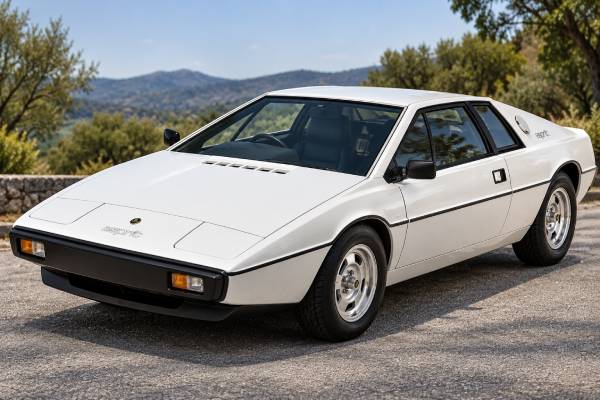
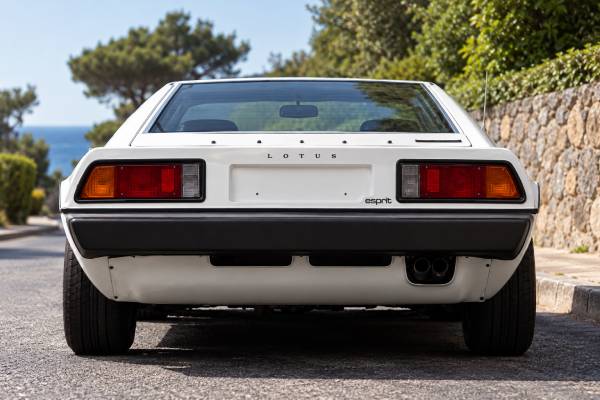
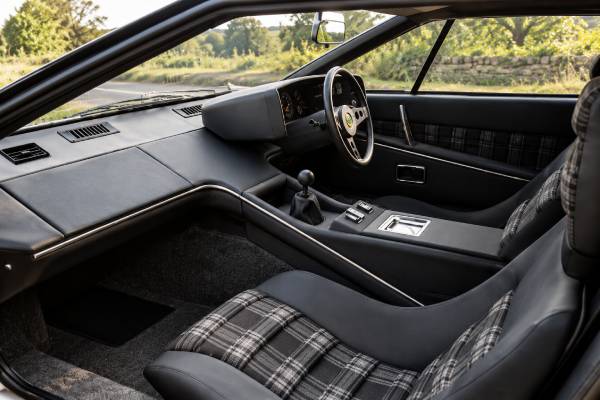
The Lotus Esprit S1 is the purest expression of the original Giugiaro wedge: light, low, mechanically direct, and far more delicate than its dramatic shape suggests. Produced from 1976 into 1978, the Type 79 combined a glassfibre body, steel backbone chassis, mid-mounted Lotus Type 907 twin-cam four-cylinder engine, and Citroën five-speed transaxle. European cars were quoted at 160 bhp, while Federal-market cars used different emissions equipment and lower-output tuning, so market specification matters when checking any surviving example. The S1 is not the fastest Esprit, but its unassisted steering, low mass, narrow period tires, and uncluttered body make it one of the most distinctive to drive and one of the hardest to restore correctly. This guide focuses on the 1976–1978 S1 assignment scope, explains the engineering behind it, separates useful specifications from conflicting published figures, and shows what matters most when maintaining, inspecting, or buying one today.
Table of Contents
- S1 identity and model scope
- Type 79 specifications and layout
- How the 907 and Citroën driveline work
- Steering, chassis, and road character
- Maintenance that protects an S1
- How to inspect and buy one
- Originality, restoration, and ownership
S1 identity and model scope
The S1 is the first production Esprit, internally Type 79, and the assignment’s 1976–1978 span covers the original Giugiaro-bodied car before the S2 revisions became established. The important buying point is that “S1” describes a distinct early specification, not simply any flat-sided 1970s Esprit.
Giorgetto Giugiaro’s Italdesign concept appeared in 1972, but the production Esprit took several years of engineering work before customer production began in 1976. Its body retained the concept’s sharply folded surfaces, steeply raked glass, pop-up headlamps, and low nose. Underneath, Lotus stayed with its familiar steel backbone chassis philosophy and bonded a glassfibre body around a compact two-seat cabin.
Early S1s are easy to romanticize because of the 1977 James Bond film The Spy Who Loved Me, yet the road car is more interesting than the film connection. It arrived when a 2.0-litre four-cylinder engine producing 160 bhp was an unusually high specific output for a road car, and it put that engine behind the occupants in a package weighing roughly 900 kg in commonly quoted period trim. The result was a car built around response rather than brute force.
Production figures are not perfectly consistent across later sources. Period-oriented enthusiast references commonly give 718 S1 cars, while Lotus’s current heritage page lists a higher S1 volume and a 1976–1977 production period. That is a good example of why identity should be checked from chassis number, build records, market equipment, and physical specification rather than a single web table. Cars registered in 1978 can still be genuine S1s even though calendar-production summaries often describe the S2 transition differently.
Original S1 details have collector value because many cars were updated when they were simply used exotics rather than preservation pieces. Items worth documenting include the Wolfrace-style wheels, early bumpers, rear treatment, interior fabrics and trim, switchgear, mirrors, lighting hardware, glass, and correct engine-bay arrangement. A car that looks cosmetically sharper but carries many later substitutions can be less significant than an honest, mechanically sound example retaining difficult-to-source early components.
Type 79 specifications and layout
The S1 is a petrol, naturally aspirated ICE sports car with a longitudinal mid-mounted 1,973 cc Type 907 inline-four and a five-speed manual transaxle driving the rear wheels. Its engineering priorities are light weight, a low centre of gravity, direct steering, and compact packaging rather than refinement or low-speed torque.
Published S1 figures vary by market and by source, especially curb weight, acceleration, and top speed. The tables below therefore use well-supported European-specification values and identify test-style figures as such instead of presenting every published number as equally authoritative.
| Specification | Value |
|---|---|
| Engine | Lotus Type 907 inline-four |
| Location | Longitudinal, mid-mounted |
| Displacement | 1,973 cc (2.0 L) |
| Construction | Aluminium-alloy block and cylinder head |
| Valvetrain | DOHC, 16 valves |
| Bore × stroke | 95.2 × 69.2 mm |
| Compression ratio | 9.5:1, European specification |
| Induction | Naturally aspirated |
| Fuel system | Twin Dell’Orto DHLA carburettors, European specification |
| Maximum power | 160 bhp (119 kW) at 6,200 rpm |
| Maximum torque | 190 Nm (140 lb-ft) at 4,900 rpm |
Federal-market engines were rated lower and used different carburation/emissions arrangements, so a U.S.-specification S1 should not be judged against the 160 bhp European figure without checking how it is configured. Conversely, a Federal car converted later to European-style carburation is not automatically equivalent to a factory European car in specification or provenance.
| Specification | Value |
|---|---|
| Transmission | Five-speed manual transaxle |
| Transaxle family | Citroën/Maserati-derived C35 layout |
| Drive | Rear-wheel drive |
| Clutch | Hydraulically operated single dry plate |
| Gear synchronization | Synchromesh on all forward gears |
| Fifth gear | Overdrive ratio |
The transaxle was chosen because Lotus needed a compact unit capable of handling more torque than the Europa’s Renault gearbox. It also shaped the S1’s rear suspension and inboard brake packaging. Gear linkage distance from the cabin means shift feel is never modern-short, but excessive baulking, graunching, or refusal to engage a gear is not simply “Lotus character.”
| Measure | Value | Condition |
|---|---|---|
| 0–60 mph | About 8.1–8.6 seconds | Period-test range commonly reported |
| Top speed | About 124 mph (200 km/h) | Period-test figure |
| Maximum power | 160 bhp at 6,200 rpm | European factory rating |
| Maximum torque | 140 lb-ft (190 Nm) at 4,900 rpm | European factory rating |
The performance story is more nuanced than the headline numbers. The 907 likes revs, and the long gearing means the car does not surge from low rpm like a later Turbo Esprit. Once the engine is on cam, however, the low mass keeps acceleration lively and lets the driver carry speed through corners rather than recovering it with torque.
| Specification | Value |
|---|---|
| Body | Two-door, two-seat glassfibre sports coupe |
| Chassis | Steel backbone |
| Length | About 4,191 mm (165.0 in) |
| Width | About 1,861–1,867 mm (73.3–73.5 in) |
| Height | About 1,105–1,111 mm (43.5–43.7 in) |
| Wheelbase | 2,438 mm (96.0 in) |
| Kerb/curb weight | Approximately 898 kg (1,980 lb) in commonly cited period specification |
Different sources quote noticeably different S1 weights. For buying or competition purposes, use the exact vehicle’s documentation and an actual scale rather than treating a web specification as a homologation value.
| Specification | Value |
|---|---|
| Front suspension | Independent unequal-length wishbone arrangement with coil springs, dampers, and anti-roll bar |
| Rear suspension | Trailing-arm/lateral-link arrangement with coil springs and dampers |
| Steering | Unassisted rack and pinion |
| Front brakes | Disc brakes, approximately 9.7 in diameter |
| Rear brakes | Inboard disc brakes, approximately 10.6–10.8 in diameter |
| Factory wheel diameter | 14 in |
| Typical wheel widths | 6 in front, 7 in rear |
How the 907 and Citroën driveline work
The S1’s mechanical personality comes from a high-revving engine, modest torque, and long-legged gearing. It rewards a driver who keeps the Type 907 spinning cleanly rather than asking it to pull hard from low revs in a high gear.
The all-aluminium 907 uses twin overhead camshafts and four valves per cylinder, advanced road-car technology in the mid-1970s. In European form, twin side-draught Dell’Ortos feed the engine. Good setup matters enormously: carburettor balance, ignition condition, valve clearances, compression, and cam timing all affect whether an S1 feels crisp or flat. A car with impressive paint but poorly synchronized carburettors can feel disappointing; a properly set-up one is alert and eager above the midrange.
The installation is canted, helping Lotus package the tall twin-cam engine beneath the low rear deck. Cooling hardware must move heat from the mid-mounted engine to the front radiator through long pipes, which creates more joints, hoses, and opportunities for age-related trouble than a conventional front-engined car. That is why cooling-system condition is a mechanical health issue, not a convenience item.
The Citroën-derived five-speed is a major part of the car’s architecture. It sits behind the engine and sends power to the rear wheels while allowing the engine to remain longitudinal. Its ratios suit the Esprit’s combination of limited torque and high-speed intent, but the linkage is long and the mechanism now may be affected by decades of worn bushes or maladjustment.
On a test drive, the engine should build revs smoothly without a flat spot, detonation, persistent smoke, or an unstable hot idle. The gearbox should select all ratios cleanly once warm. A little period mechanical noise is expected, but a car that jumps out of gear, crunches on gentle shifts, or has a clutch that releases only at the end of pedal travel deserves investigation before purchase.
A healthy S1 is also sensitive to tires. The chassis was developed around narrow, relatively compliant 1970s rubber. Modern replacements in exact sizes are difficult to source, and fitting much wider or stiffer tires can increase steering effort and alter breakaway behaviour. The goal should be safe, high-quality tires that preserve appropriate rolling radius and chassis balance, not simply the largest size that fits beneath the body.
Steering, chassis, and road character
The S1’s strongest dynamic asset is steering feel. Its low front-axle load, unassisted rack, and light overall mass give the driver unusually direct information, especially once the car is moving.
Lotus built the Esprit around a central steel backbone. The glassfibre body provides the shape and cabin structure but should not be confused with a rust-proof car: the early S1 chassis itself was not galvanized in the way later Esprit chassis were. Structural corrosion can therefore exist beneath a body that looks outwardly excellent. That is one reason an inspection on a lift is essential.
At the front, the suspension uses an unequal-length wishbone-style layout with coil springs and dampers. At the rear, the early design relies on trailing and lateral links, with the driveshafts participating in wheel location. The arrangement contributes to the car’s compactness and low unsprung mass but means worn universal joints, hub components, bushes, bearings, and mounts can affect more than comfort.
The brakes are discs at all four wheels, with the rear discs mounted inboard beside the transaxle. Inboard brakes reduce unsprung mass but complicate access. A good system should stop the light car confidently and in a straight line. Pulling, a long pedal, binding after a drive, or fluid contamination is a service issue, not a quaint period trait.
Compared with a later Turbo Esprit, the S1 feels less planted by aerodynamic add-ons and less forceful in a straight line, yet often more delicate and transparent. Its very low seating position exaggerates speed. Visibility is limited, controls are heavy at parking speeds, cabin ventilation is modest, and noise levels are high by modern standards. Those are inherent characteristics; wandering steering, severe vibration, overheating, or fuel smells are faults.
The most rewarding way to drive one is to respect the chassis rather than chase modern performance numbers. Brake early enough to keep the car settled, use the gearbox to maintain engine speed, and feed power in progressively as the corner opens. The modest torque and communicative steering let the driver work with the car instead of relying on electronic aids that did not exist here.
Maintenance that protects an S1
Preventive maintenance is the difference between an S1 that feels special and one that becomes an expensive sequence of recoveries. The priorities are cam-belt history, cooling integrity, fuel-system condition, lubrication, and eliminating age-related play before it damages harder-to-find parts.
The Type 907 is an interference engine, so cam-belt neglect can produce major valve damage. Do not accept “the belt looks fine” as proof of service. A buyer should want dated invoices showing the belt, tensioning checks, and related inspection performed by someone familiar with the engine. If the history is uncertain, budget to establish a fresh baseline before using the car hard.
Cooling deserves the same seriousness. Long coolant pipes, hoses, radiator, header arrangement, fan control, water pump, and pressure cap all have to work together. Look for dried coolant traces, staining, damaged fins, tired hoses, improvised fan wiring, and evidence that the car has been repeatedly run hot. Overheating can turn a small maintenance problem into cylinder-head or gasket work.
Fuel systems on a carburetted mid-engined car also need disciplined inspection. Old hoses, hardened seals, sticking floats, incorrect fuel pressure, and poorly adjusted Dell’Ortos can create both drivability and fire risk. Any fuel odour should be traced rather than accepted. Rubber parts that are decades old should be treated according to condition and material compatibility, not merely mileage.
Oil leaks are common on old British performance engines, but location and rate matter. A light misting is different from oil reaching the exhaust, a falling oil level, or contamination that suggests a deeper issue. Check the engine cold, then again after a full warm-up. Observe oil pressure behaviour using the car’s instruments while recognizing that old gauges and senders themselves can be inaccurate.
A sensible maintenance baseline after purchase includes:
- Confirming the cam-belt service date and tensioning history.
- Changing engine oil and filter with a lubricant selected for the engine’s condition and specialist guidance.
- Pressure-testing and inspecting the cooling system.
- Inspecting every accessible fuel hose and carburettor connection.
- Checking gearbox oil level and condition using the correct specification for the transaxle.
- Flushing old brake fluid and inspecting hoses, calipers, rear inboard discs, and master cylinder.
- Checking wheel bearings, suspension bushes, steering joints, and driveshaft joints.
- Testing charging voltage, grounds, lighting circuits, headlamp lifts, wipers, and cooling fans.
- Verifying tire age as well as tread depth.
Service access can be awkward, and “simple four-cylinder” should not be mistaken for “cheap to repair.” Specialist labour can be substantial because trim removal, restricted access, corrosion, and previous modifications slow work. A complete history from a knowledgeable specialist is therefore worth more than a low odometer reading with long periods of inactivity.
How to inspect and buy one
Buy the best-structured and best-documented S1 you can afford, not the shiniest car. Chassis corrosion, poor glassfibre repairs, incomplete early trim, and neglected mechanical systems can each cost more to correct than cosmetic wear.
Start with identity. Compare chassis numbers, registration documents, engine details, market specification, and any available Lotus build information. Establish whether the car began as an S1 and whether its current specification matches that history. Pay particular attention to cars converted to later bumpers, wheels, mirrors, interiors, engines, or cooling arrangements.
Then inspect the chassis on a lift. The body can conceal serious steel corrosion, especially around suspension pickup points, front structure, and areas exposed to trapped moisture. Look for uneven repairs, fresh undercoating over questionable metal, distorted mountings, and evidence of accident damage. Because the S1 chassis is central to alignment and suspension geometry, corrosion should not be treated as merely cosmetic.
Glassfibre brings a different set of problems. Look across panels in strong oblique light for ripples, star cracking, sinkage, microblistering, mismatched texture, and paint edges that reveal prior repair. A repaired glassfibre shell can be perfectly usable if the work is competent; the concern is hidden crash damage or a cosmetic restoration laid over unstable laminate.
The engine inspection should begin cold. Confirm that the seller has not pre-warmed the car. Listen for abnormal top-end noise, watch the exhaust, and observe how quickly the engine settles. Once warm, confirm stable temperature and fan operation, then restart it hot. Inspect coolant before and after the run, and check for oil/coolant mixing, pressure problems, or fresh leaks.
During the road test, use every gear at moderate load and on overrun. Feel for clutch slip, driveline clunks, wheel-bearing rumble, steering play, brake pull, and suspension knocks. The steering should become light and precise as speed rises. A car that tramlines heavily or requires constant correction may have tire, alignment, bushing, or accident-repair issues.
The cabin is an originality test as much as a comfort check. Correct early upholstery, instrument pieces, switchgear, and trim can be difficult to replace. Inspect the roof lining, seat bolsters, carpets, dash, door cards, window operation, ventilation, wipers, lamps, and headlamp pods. Electrical faults are often individually repairable, but a car with many dead circuits may have suffered piecemeal rewiring.
Finally, evaluate the paperwork as evidence rather than decoration. Look for dated records that connect mileage, ownership, belt service, cooling work, brake overhaul, clutch or gearbox work, chassis repairs, body restoration, and parts purchases. A thick file is useful only if it explains what was actually done.
Originality, restoration, and ownership
An S1 is now best approached as a historic sports car whose originality can be as important as outright performance. Correctness, reversibility of modifications, and documented workmanship usually support long-term value better than chasing later-Esprit power.
Restoration economics are unusual because the body does not rust like steel, but almost everything attached to it can consume time. A respray means careful preparation of old glassfibre, correcting previous repairs, removing trim without breaking scarce pieces, and then realigning doors and fittings. Interior restoration can be harder still if a car has lost the rare early materials and hardware that define an S1.
Mechanical upgrades should be judged by purpose. Improvements that increase safety or reliability without permanently altering the car can make sense: discreet modern hose materials, carefully chosen tires, improved electrical connections, and specialist-recommended internal replacements are examples. Large wheels, nonstandard suspension geometry, poorly engineered cooling changes, or irreversible interior modernization can diminish both driving coherence and historical appeal.
For regular use, build the car’s reliability gradually. Begin with short local drives, monitor fluid levels and temperature, and expand distance only after the cooling, fuel, and charging systems prove stable. Carrying basic tools, appropriate spare fuses and relays, and a plan for specialist recovery is sensible with any 50-year-old exotic.
The S1 is a poor choice for someone who wants modern supercar speed with routine hatchback maintenance. It is a strong choice for an owner who values design purity, analogue steering, mechanical involvement, and the process of keeping an important early Lotus correct. Its most valuable feature is not the Bond connection or a single performance number. It is the way light weight, a responsive four-cylinder engine, direct steering, and a remarkably low body work together as one coherent 1970s idea.
That also shapes the purchase decision. A fully restored car with photographic evidence, correct detail, and known specialist involvement may justify a substantial premium. An apparently cheap car missing early trim or carrying an uncertain chassis can absorb that premium many times over. A usable, honest S1 with some patina but strong structure and documented maintenance is often the most sensible ownership proposition.
References
- Lotus Esprit – James Bond’s choice | Lotus Cars 2026 (Manufacturer heritage page)
- 50 years of the Lotus Esprit | Classic & Sports Car 2025
- Bond’s Fond Absconder – 1976-1980 Lotus Esprit S1 & S2 | The Online Automotive Marketplace | Hemmings, The World’s Largest Collector Car Marketplace 2018
- Lotus Esprit S1 – Ultimate Guide 2016
- Lotus Esprit buyer’s guide – Classics World 2022
- Lotus Esprit Buying Guide – Petrolicious 2017
Disclaimer
This article is for informational purposes and is not a substitute for professional diagnosis, inspection, or repair. Specifications, torque values, service intervals, and procedures can vary by VIN, production date, market, and equipment; verify all work against the official Lotus service documentation for the exact car. If this guide helped you, please consider sharing it on Facebook, X/Twitter, or another enthusiast community to support our work.