
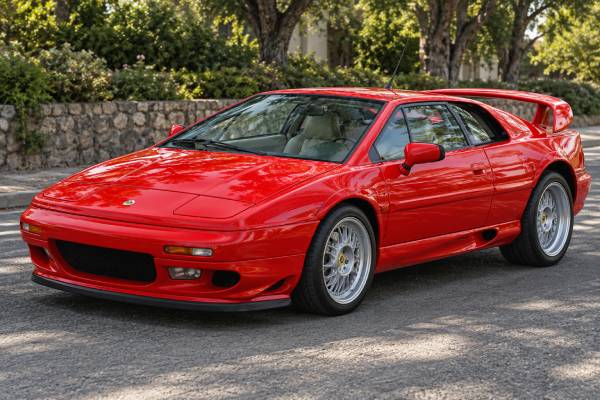
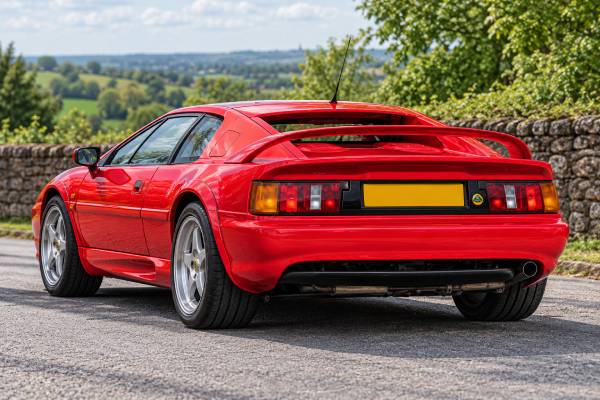
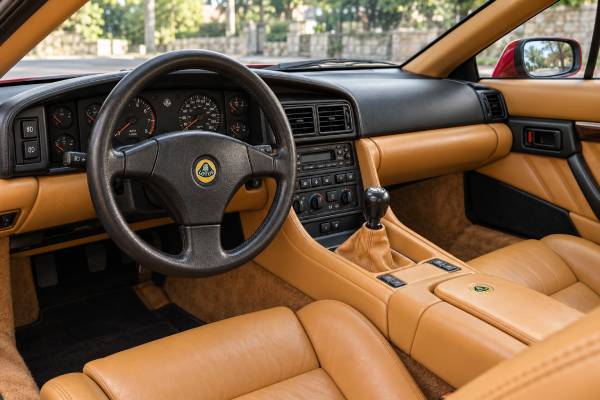
The Lotus Esprit S4s is the late four-cylinder Esprit that combines the everyday refinement of the S4 with much of the hardware and intent of the Sport 300. Introduced for the 1995 model year, it added a revised Type 910S engine, larger turbocharger, stronger clutch, wider OZ Futura wheels, Sport 300-inspired chassis reinforcement and Brembo brakes without turning the car into a stripped homologation special. One specification point needs explaining at the outset: Lotus service-change documentation identifies the S4s engine as 285 bhp, matching this assignment, while many period-style specification summaries and road-car descriptions quote 300 bhp. That difference is retained here rather than silently choosing whichever figure looks more dramatic. Production records also extend into 1997 even though the S4s is commonly described as a 1995–1996 model. This guide separates those dating and power-rating issues, then focuses on the chargecooled engine, chassis setup, market differences and the inspection priorities that matter on an ageing S4s.
Table of Contents
- Where the S4s fits between S4 and Sport 300
- S4s engine, output and core specifications
- Chargecooler, turbo and engine-management health
- Reinforced chassis, OZ wheels and Brembo brakes
- Market differences and 1995–1997 production details
- What a healthy S4s should reveal on the road
- Buying, servicing and preserving an S4s
Where the S4s fits between S4 and Sport 300
The S4s was designed as a bridge: more focused and powerful than the 264 bhp S4, but less uncompromising than the rare Sport 300. Lotus did not simply transplant the Sport 300 package wholesale; it created a separate engine and chassis specification around a road-biased brief.
The standard S4 had already modernised the Esprit with Julian Thomson’s smoother exterior update, power steering and a more contemporary cabin. The S4s retained those usability gains while borrowing visual and dynamic cues from the Sport 300. Non-USA examples received enlarged wheel housings and arch spats, the Sport 300-style rear aerofoil, wider OZ Futura three-piece wheels and revised springs and dampers. Lotus also strengthened the chassis around the rear of the car.
That combination is why the S4s has a character that cannot be reduced to one horsepower number. Its wider torque spread, power-assisted steering, substantial tyres and stronger brakes make it easier to exploit than an early Turbo while still retaining the compact four-cylinder engine that keeps mass concentrated near the centre of the chassis. It represents the mature development of the chargecooled Type 910 road car before the twin-turbo V8 became the headline engine.
Production timing is often simplified in advertisements. Lotus model-change records place the S4s in the 1995 model-year programme, and many buyer guides call it a 1995–1996 model. Production tables attributed to Lotus Esprit World, however, record one S4s in 1994, 331 in 1995, 30 in 1996 and five in 1997, for 367 cars. The assignment’s 1995–1997 span therefore makes sense as a practical production/registration scope, but an individual vehicle should always be identified from its VIN and build record.
Another simplification concerns the name itself. “S4s” is not shorthand for a Sport 300 in an S4 shell. The Sport 300 used its own much more competition-oriented specification, including a different wheel-and-tyre package and limited-slip driveline treatment. The S4s instead aimed to bring much of the Sport 300’s response to a car that could be driven and toured like an S4.
S4s engine, output and core specifications
The S4s retained the 2,174 cc Lotus Type 910S four-cylinder architecture but changed the airflow, turbocharger and engine-management calibration. Lotus service-change documentation lists a 285 bhp S4s engine, while other marque material quotes 300 bhp at 7,000 rpm and 290 lb-ft of torque.
| Item | S4s specification |
|---|---|
| Engine | Lotus Type 910S inline four |
| Construction | Aluminium-alloy block and cylinder head |
| Displacement | 2,174 cc (2.2 L) |
| Bore × stroke | Approximately 95.3 × 76.2 mm (3.75 × 3.00 in) |
| Valvetrain | DOHC, 16 valves, belt-driven camshafts |
| Induction | Garrett T3/60-family turbocharger with water-to-air chargecooler |
| Fuel system | Lotus/Delco electronic multi-point fuel injection |
| Documented rating | 285 bhp in Lotus 1995 model-year change information |
| Common alternate rating | 300 bhp at 7,000 rpm in widely reproduced S4s specifications |
| Peak torque | About 290 lb-ft (393 Nm); quoted rpm varies by source |
The apparent 285-versus-300 bhp conflict should not be “corrected” by converting units. It is not simply 285 hp becoming 300 PS: 285 bhp and 300 bhp are materially different figures. Lotus technical change information is strong evidence for the 285 bhp specification used in this assignment, while other marque and period-derived references clearly present the car as 300 bhp. A build-specific engine-management part number, market specification and original sales documentation are the best way to describe a particular car accurately.
What is consistent across the sources is the hardware direction. The S4s received revised inlet valves and improved port flow, a larger hybrid-style Garrett T3/60 turbo arrangement and an altered ECM programme. The clutch cover was uprated to handle the extra torque. Compared with the S4, the point was not simply a taller peak but stronger usable thrust across a broad section of the rev range.
| Item | Specification |
|---|---|
| Engine position | Longitudinal, mid-mounted |
| Driven wheels | Rear-wheel drive |
| Transmission | 5-speed manual Renault transaxle |
| Clutch | Hydraulic single-plate system with S4s uprated cover |
| Steering | Power-assisted rack and pinion |
| Fuel tank capacity | About 73 L (16 UK gal) |
The Renault transaxle is robust in a sensibly driven car but not indifferent to abuse. Hard standing starts, hurried low-gear changes and incorrect lubricant can damage synchros and bearings. A higher-output engine makes the quality of past ownership especially relevant because the gearbox may have seen much greater shock loading than the odometer suggests.
| Measure | Figure |
|---|---|
| 0–60 mph | About 4.6 seconds |
| 0–100 mph | About 11.4 seconds in 300 bhp-specification references |
| 0–100 km/h | About 4.8 seconds in European specification data |
| Top speed | Published figures range around 160–168 mph (257–270 km/h) |
As with the power rating, the top-speed spread reflects different specification sources and test contexts. A buyer should not force those data into one “correct” number. What matters mechanically is whether the individual car develops boost cleanly, reaches full operating temperature without instability and shows no evidence of clutch slip, detonation or fuel starvation.
Chargecooler, turbo and engine-management health
The S4s makes its performance by controlling intake temperature and boost as a complete system. A weak chargecooler circuit can make an otherwise healthy engine feel flat, and a modified boost system can make a fast car mechanically unsafe even when no dashboard warning appears.
Lotus’s water-to-air chargecooler has a coolant circuit separate from the engine’s primary cooling circuit. Compressed air leaving the turbocharger passes through the chargecooler core before entering the engine, while pumped coolant carries heat away to its own heat exchanger. The design is compact and effective, but circulation must actually occur.
Ageing pump components are a known issue on chargecooled four-cylinder Esprits. A visually perfect chargecooler does not prove that coolant is moving through it. On inspection, verify pump operation, hose condition, fluid level and temperature behaviour. A specialist can confirm circulation and diagnose air locks or restrictions. Consistently hot intake charge encourages the engine-management system to protect the engine and reduces the repeatability of performance.
Turbocharger condition should be assessed with the entire intake and exhaust path. Check for excessive shaft play where inspection permits, abnormal compressor or turbine noise, damaged hoses, oil contamination beyond normal vapour residue and signs of boost-controller modification. The wastegate and its control plumbing must work predictably. A non-standard chip, manual controller or altered actuator needs supporting documentation that explains fuelling and ignition changes, not merely a claimed boost figure.
Fuel delivery is equally important because the S4s runs significant cylinder pressure under load. Old pumps, restricted filters, dirty injectors or degraded wiring can create lean conditions that appear only at high demand. If the car has been stored for long periods, stale fuel and deposits can matter even at low mileage. Any fuel smell in the engine bay should stop the inspection until the leak source is found.
The main engine cooling circuit has a long path to the front-mounted radiator. Radiator deterioration, seized fans, tired hoses or poor bleeding can therefore produce heat problems that are not obvious during a short idle test. Watch coolant temperature through a sufficiently long drive and verify fan operation rather than assuming a stable five-minute idle proves the system.
Timing-belt history deserves documentary evidence. The correct replacement interval depends on the Lotus schedule applicable to the car, and age counts even when mileage is low. A receipt should identify when the belt work was completed and, ideally, what related components were inspected or replaced. On an interference-risk high-performance engine, “the previous owner said it was done” is not enough evidence for immediate hard use.
Reinforced chassis, OZ wheels and Brembo brakes
The S4s chassis package is one of the main reasons to choose it over an ordinary S4. Lotus reinforced the rear structure, revised spring and damper settings, widened the non-USA wheel-and-tyre package and paired the car with the Brembo braking system introduced into the S4 family.
| Item | Specification |
|---|---|
| Front suspension | Independent double wishbones, coil springs, anti-roll bar |
| Rear suspension | Independent transverse links/radius-arm arrangement with coil springs |
| Front wheels | OZ Futura 3-piece, approximately 8.5J × 17 |
| Rear wheels | OZ Futura 3-piece, approximately 10J × 18 |
| Front tyres | 235/40 ZR17 Michelin specification |
| Rear tyres | 285/35 ZR18 Michelin specification |
| Body accommodation | Enlarged wheel housings and arch spats on non-USA cars |
The large split-rim wheels are both dynamic components and valuable S4s identifiers. Check every wheel for impact distortion, rim cracking, seal leakage, corrosion at assembly interfaces and incorrect refurbishment. A polished wheel can still be structurally poor. If different wheels are fitted, determine whether the original OZ set survives and whether the replacements preserve correct width, offset, brake clearance and tyre load capacity.
Tyre age can matter more than tread depth on a low-mileage collector car. The S4s depends on a large front-to-rear size stagger and carefully chosen grip balance. Four tyres with deep tread but very different ages or compounds can make the chassis inconsistent, especially in cold or wet conditions. Inspect date codes and shoulder wear, then compare wear patterns with the alignment history.
| System | S4s feature | Inspection point |
|---|---|---|
| Front brakes | Large ventilated discs with Brembo 4-piston calipers | Seal condition, piston movement, disc runout and pad match |
| Rear brakes | Ventilated rear discs with revised caliper arrangement | Corrosion, parking-brake operation and even application |
| ABS | Electronic anti-lock system | Warning-lamp sequence, pump/system function and fault history |
| Steering | Hydraulic power assistance | Rack leaks, joints, pump noise and consistent assistance |
| Alignment | S4s-specific chassis and wheel package | Four-wheel geometry, even tyre wear and straight tracking |
Brake dimensions are often quoted around 296 mm front and 300 mm rear in later S4/S4s references, but build and market detail should be checked before ordering parts. The safe parts-counter procedure is VIN-based identification, not measuring a photograph or assuming every S4s has identical hardware after three decades of repairs.
Suspension wear shows up in more than rattles. Tired bushes and dampers can make the car tramline, alter toe under load or leave the rear axle feeling unsettled as boost arrives. Power steering adds its own inspection points: look for rack leakage, worn column joints and inconsistent assistance. An S4s should feel precise, not nervous.
Market differences and 1995–1997 production details
Not every S4s was built to the same visible chassis and trim specification. Lotus’s own model-change notes distinguish USA and non-USA cars, so a feature that authenticates a European car may be wrong as a universal test for a North American example.
Non-USA S4s cars received the wider OZ Futura wheel package, revised springs and dampers, reinforced backbone/rear spring-platform changes and the enlarged wheel housings needed for the broad tyres. The same technical notes state that USA S4s cars retained OZ Futura wheels in the previous size with unchanged Goodyear tyres. That is an important warning against using European sales photographs as an authentication checklist for every market.
The cabin also evolved. Model-year records identify larger Caerbont speedometer and tachometer instruments, an analogue clock, revised stitching, footwell lamps and walnut veneer in place of the earlier carbon-look trim. Non-USA S4s cars were specified with Sport 300-style seats. Contemporary descriptions also refer to Sport and Luxury trim treatments, so build records and original sales literature should be consulted before declaring an interior incorrect.
Air conditioning changed during the 1995 model year as Lotus moved to R134a refrigerant and associated compressor, condenser, receiver-drier and hose changes. That production transition matters during service because an early system, a factory R134a system and a later converted system can require different parts and documentation. Inspect labels and invoices rather than charging an unknown system by assumption.
Production figures also show why dating can become confusing. A table attributed to Lotus Esprit World lists 367 S4s cars across calendar production: one in 1994, 331 in 1995, 30 in 1996 and five in 1997. Buyer guides often quote lower totals, such as 332, because they may use market, sales or model-year counts. For provenance, the VIN and factory build record are more dependable than a rounded total from an advertisement.
This market sensitivity extends to emissions equipment and engine calibration. Do not assume that a component seen on a UK car belongs on a U.S. car or vice versa. When originality affects value, use the car’s destination market, build date and VIN as the starting points.
What a healthy S4s should reveal on the road
A healthy S4s should feel cohesive: strong boost without abrupt misfire, a controlled ride despite its large wheels, direct steering and powerful brakes that remain consistent as temperature rises. A test drive is most useful when it is treated as diagnosis rather than a performance demonstration.
Start from cold. Listen to cranking speed and the first seconds after ignition, watch oil-pressure behaviour and note exhaust smoke. Allow the engine to warm with moderate load rather than prolonged stationary idling. During that time, check instruments, ventilation, air conditioning, windows, lamps and warning systems; electrical faults on little-used cars can appear after damp storage.
Once oil and coolant are warm, use progressively more throttle. The turbo should build power smoothly enough that hesitation, severe surge or a sudden cut is obvious. The S4s is capable of very strong acceleration, so full-speed testing is unnecessary on a public road. A short legal pull in an appropriate gear can reveal clutch slip and boost consistency without abusing the gearbox.
Pay attention to the first-to-second shift because Renault transaxle wear often shows there early. A reluctant cold shift can have several causes, including lubricant and linkage condition, but crunching, jumping out of gear or worsening behaviour when hot warrants specialist assessment. Do not mask a gearbox issue by forcing the lever more quickly.
Then separate steering behaviour from tyre behaviour. Wide tyres naturally react to road camber, yet the car should track predictably on a flat surface. Steering effort should change smoothly with speed, and there should be no obvious dead zone, hydraulic groan or kick suggesting worn joints. A steering wheel that sits off-centre together with unusual tyre wear is a strong reason to request an alignment and chassis inspection.
Brake from several moderate speeds before one firmer application. The pedal should stay consistent, the car should stop straight and the ABS warning system should behave normally. Vibration may indicate disc runout or tyre/wheel trouble; pulling can point to caliper or geometry issues. A recently replaced pad set is not proof that the system has been overhauled.
After the drive, leave the engine bay undisturbed for a visual and smell check. Fresh coolant, oil, fuel vapour or power-steering fluid is more informative than an old stain. Recheck fluid levels according to the proper procedure and note whether cooling fans have operated. Heat-soak faults can also reveal themselves during a hot restart, so restart the car after a short stop.
Buying, servicing and preserving an S4s
The best S4s to buy is the one whose identity, market specification and maintenance history explain its current condition. A low odometer reading is less persuasive than evidence that belts, cooling, chargecooling, brakes, tyres, transaxle and fuel systems have been maintained on time.
Start the paperwork review with the VIN, service invoices and ownership history. Cross-check mileage against inspection records, because odometers and instruments can be replaced. Look for repeated attention to the same fault, long unexplained gaps and major modifications without supporting calibration or engineering records. A specialist pre-purchase inspection should include electronic fault checks where available and a long enough road test to expose temperature-related issues.
Body inspection is different from a steel monocoque car. The glassfibre panels will not rust, but they can show stress cracks, star cracks, poor previous repairs and paint microblistering. Panel gaps on a hand-built Esprit do not need to be modern-supercar perfect, yet asymmetry around headlamp pods, doors or rear bodywork can justify closer accident investigation. The steel backbone and suspension mounting areas still deserve underbody inspection.
Parts value deserves its own line in the purchase budget. Correct OZ Futura wheels, S4s trim, original body extensions and brake hardware are harder to replace than routine filters or belts. If a car has been modified, ask for the removed factory parts. Returning a heavily altered example to correct specification can cost more than paying a premium for a complete car.
Once purchased, create a baseline instead of immediately chasing extra power. Verify the timing belt, coolant and chargecooler circuits, fuel hoses, ignition condition, brake fluid, gearbox lubricant specification, tyres and alignment. Only after those systems are known should a dyno session or boost diagnosis be used to assess whether the engine is delivering the expected market-specific output.
Storage habits matter because the S4s is often a second or collector car. Keep the cabin dry, maintain the battery correctly and avoid leaving old fuel for extended periods. Exercise the car long enough to bring the engine, transaxle and brakes to normal temperature rather than repeatedly running it for a few minutes. Tyres should be protected from prolonged deformation, and brake discs should not be left wet before storage.
For cars advertised as producing substantially more than standard power, ask for evidence of how that output was achieved. A dyno chart by itself does not show whether the engine is safe at sustained load. The useful record identifies the turbocharger, injectors or fuel-pressure changes, ECM calibration, wastegate setting, exhaust specification and the person who mapped the car. If the calibration is unknown, returning boost control and fuelling to a documented baseline before hard use is prudent. Compression or leak-down results can also help establish the mechanical starting point, particularly when a high-output claim is paired with no rebuild history.
Insurance and valuation documentation should photograph model-specific items as well as the exterior. Record the OZ wheel markings, rear wing and arch treatment, interior specification, engine-bay hardware and VIN plates while they are present and legible. That evidence is useful after theft, accident repair or a future restoration, and it reduces the chance that a rare component will be replaced with a visually similar S4 or later V8 part without anyone noticing.
Finally, preserve documentation whenever work is done. Record part numbers, photograph unusual original components and keep removed pieces. The S4s sits at an interesting point in Esprit history where regional specifications, model-year changes and published power ratings overlap. A well-documented car lets the next owner understand those details instead of trying to reconstruct them from inconsistent internet specifications.
That nuance is part of the model’s appeal. Whether a particular reference calls it 285 or 300 bhp, the S4s is defined by more than an output line: revised breathing, a larger turbocharger, chargecooling, reinforced chassis, wider wheels, stronger brakes and the road usability of the S4. Maintaining that complete package is the best way to preserve what made the last high-output four-cylinder Esprit so distinctive.
References
* Lotus Esprit – James Bond’s choice | Lotus Cars 2026 (Manufacturer heritage) * Esprit Models 2026 (Model change specification) * Esprit Models 2026 (S4s technical reference) * Lotus Esprit S4s – Ultimate Guide 2016 (Technical overview) * Lotus Esprit S4S | Spotted – PistonHeads UK 2022 (Model context) * Lotus Esprit (1987-2004) buyer’s guide: what to pay and what to look for | Classic & Sports Car 2019 (Buying guide)
Disclaimer
This article is for informational purposes only and is not a diagnosis, repair procedure or substitute for professional inspection. Specifications, service intervals, torque settings and procedures can vary by VIN, market, equipment and production change, so verify the correct Lotus service documentation for the individual vehicle before maintenance or repair. If you found this guide useful, please share it with other Lotus enthusiasts on Facebook, X or a trusted owners’ group.