
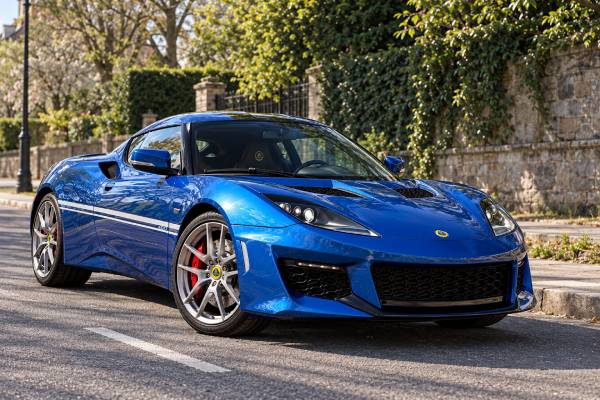
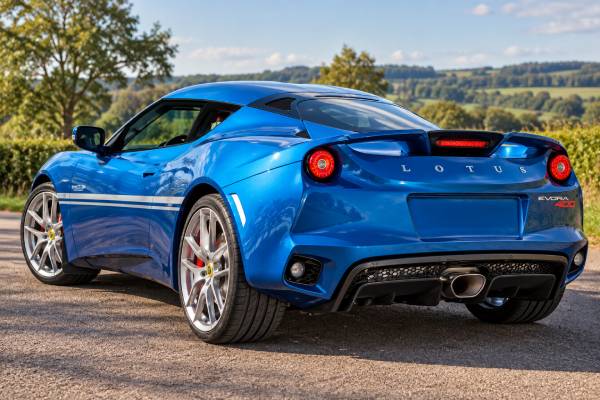
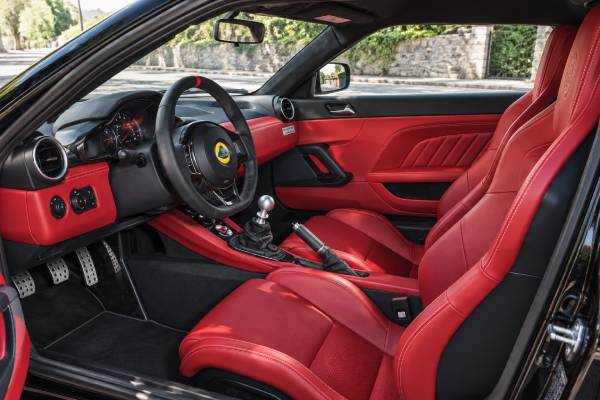
The 2016 Lotus Evora 400 Hethel Edition was created to mark fifty years since Colin Chapman moved Lotus to its purpose-built factory at Hethel, Norfolk, in 1966. It was the first road-car special in the company’s anniversary program and combined standard Evora 400 performance with heritage colors, silver forged wheels, contrasting graphics, distinctive cabin treatments, and a commemorative build plate. Mechanically, it did not receive extra power: the familiar supercharged 3.5-liter V6 still produced 400 hp, backed by either a six-speed manual or six-speed automatic. The interesting part for collectors is production documentation. Lotus’s launch announcement called the Hethel Edition limited but did not state a total; later model-history records list fifteen cars in each of three color schemes, implying a planned scope of forty-five. That later figure should not be misrepresented as an original launch claim. For buyers, the best approach is to authenticate the individual VIN and specification, then evaluate it as both a rare anniversary car and an Evora 400 that still needs normal mechanical care.
Table of Contents
- Why Lotus Created the Hethel Edition
- Heritage Colours, Trim, and Build Identity
- What Is Known About Production Scope
- Evora 400 Hethel Edition Technical Specifications
- What the Anniversary Car Is Like on the Road
- Ownership, Maintenance, and Preservation
- How to Buy a Hethel Edition With Confidence
Why Lotus Created the Hethel Edition
The Hethel Edition was an anniversary car first and a performance derivative second. Lotus launched it in May 2016 to celebrate half a century at the Norfolk site that became the center of the company’s road-car engineering, manufacturing, and test activity.
In 1966 Colin Chapman moved Lotus from Cheshunt to the former RAF base at Hethel. The new facility gave the company room for production, engineering, and a test track built around the old airfield layout. By 2016, cars such as the Esprit, Elise, Exige, and Evora had all become closely associated with that location. The fiftieth anniversary therefore had more substance than a routine model-year celebration: it marked the physical home from which much of modern Lotus history had developed.
Lotus chose the Evora 400 as the first special product in the anniversary program. That made sense because the 400 was then the company’s newest major road-car development. Launched as a heavily revised Evora, it combined a 400 hp supercharged V6 with easier cabin access, a reworked rear structure, stronger brakes, improved aero, and a more modern interior. The Hethel Edition did not alter those mechanical fundamentals. Instead, Lotus used paint, trim, graphics, wheels, and a commemorative plate to connect the contemporary car with the company’s heritage.
| Item | Detail |
|---|---|
| Launch | May 2016 |
| Anniversary | 50 years since Lotus moved to Hethel in 1966 |
| Base model | Lotus Evora 400 |
| Mechanical change | No separate power increase announced |
| Special content | Heritage colors, silver forged wheels, graphics, trim choices, commemorative build plate |
| Role | First in a series of products and events marking the Hethel anniversary |
This distinction helps set expectations today. Someone buying a Hethel Edition for substantially more than a normal 400 is paying for historical context, rarity, original appearance, and documentation—not a faster engine. That means condition of the anniversary-specific items matters unusually much.
Heritage Colours, Trim, and Build Identity
A genuine Hethel Edition should be identifiable by its factory heritage specification rather than by an aftermarket badge alone. Lotus announced three exterior colors—Essex Blue, Motorsport Black, and Racing Green—paired with silver forged wheels, body graphics, special interior combinations, and a commemorative build plate.
The colors were chosen to evoke Lotus history rather than simply follow the standard palette. Essex Blue has obvious period associations for Lotus enthusiasts, Motorsport Black creates a more understated base for the silver details, and Racing Green connects the car to the traditional British competition color. Period descriptions mention silver graphics and forged wheels, while interior choices included black or red leather and Alcantara combinations depending on specification. Brake-caliper colors and graphic details could coordinate with the chosen exterior.
Because the car was built in the era of Lotus Exclusive, it is unwise to assume every genuine Hethel Edition must be visually identical to one press car. Factory options and market equipment can create differences. The commemorative plate and documentary build information therefore become important authentication points, especially after years in which wheels, interiors, stripes, or calipers may have been refurbished.
| Feature | Factory-announced specification | Buying significance |
|---|---|---|
| Exterior colors | Essex Blue, Motorsport Black, Racing Green | Core part of the edition’s heritage identity |
| Wheels | Silver forged wheels | Check finish and originality after refurbishment |
| Graphics | Contrasting heritage-style body graphics | Replacement stripes should match documented originals |
| Interior | Black or red leather/Alcantara combinations | Confirm against VIN-specific build records |
| Build plate | Special commemorative plate | Useful physical identifier but not sufficient alone |
| Engine | Standard Evora 400 output | Do not expect a Hethel-specific ECU or power tune |
The most valuable evidence remains the paperwork. Original dealer invoices, factory build data, delivery photographs, registration history, and service records can establish that a car left Hethel in anniversary specification. Cosmetic pieces can be copied; a consistent historical record is much harder to manufacture.
What Is Known About Production Scope
The Hethel Edition was officially described as limited, but Lotus’s May 2016 launch material did not give a numeric production total. Later Lotus model-history information records fifteen cars in each of the three colors, which points to a planned total of forty-five examples.
Those two statements can coexist without contradiction if they are dated correctly. The original announcement tells us how Lotus presented the model at launch. The later records provide a more specific production allocation. What should be avoided is rewriting the launch release to claim it said “only 45” when it did not.
Low-volume Lotus production can also blur the distinction between planned allocation, orders, completed cars, and cars delivered in a particular market. A later record of fifteen per color is strong evidence of the intended edition structure, but the definitive status of any individual car is still best established by VIN-specific factory or dealer documentation. This matters when sellers use phrases such as “one of 45 worldwide” as a valuation shortcut.
A prospective buyer should ask a more useful sequence of questions: Is this VIN documented as a Hethel Edition? What was its original color and trim? Does it retain the commemorative equipment? Has it been repainted or retrimmed? Are the wheels and graphics correct? Was it delivered into the market the seller claims? Those answers affect value more directly than arguing over a headline production number.
| Evidence | What it supports | What it does not prove by itself |
|---|---|---|
| May 2016 Lotus launch material | The model was a limited anniversary edition in three heritage colors | An exact global production number |
| Later model-history record | 15 cars allocated in each of three colors | That every planned car was necessarily delivered unchanged |
| Commemorative plate | Physical consistency with edition specification | Complete provenance without matching VIN records |
| Original invoice/build sheet | VIN-specific factory configuration | Current condition or originality after later repairs |
| Period photographs | Early color, graphics, wheels, and trim | Mechanical health today |
For collectors, the practical conclusion is simple: use forty-five as a documented later planned scope when supported, not as a magic number that eliminates due diligence. The individual car’s provenance is the asset you actually own.
Color allocation can also matter when assessing rarity within the edition, but it should not be used to invent unsupported sub-production statistics. Later records point to equal allocations of fifteen for Essex Blue, Motorsport Black and Racing Green. That makes each color unusual in absolute terms, yet condition and documentation are still more important than trying to rank one shade above another. A well-preserved Motorsport Black car with complete history can be a stronger purchase than a poorly documented Essex Blue example simply because the latter photographs more dramatically.
Anniversary cars often accumulate replacement memorabilia over time, so separate items fitted at Hethel from later additions. Plaques, decals, branded floor mats, dealer gifts and certificates can all appear convincing in photographs. Match serial information where available, compare invoice descriptions with the car, and ask when each accessory entered the history file. This does not require suspicion; it is simply the same evidence discipline used for any low-volume factory special.
Evora 400 Hethel Edition Technical Specifications
The Hethel Edition uses the normal Evora 400 powertrain and chassis specification. Its special status did not change the 3,456 cc supercharged V6, published 400 hp output, braking system, steering architecture, or basic transmission choices.
The all-aluminum 2GR-FE V6 is mounted transversely behind the cabin and supercharged by an Edelbrock unit. Lotus rated it at 400 hp (406 PS / 298 kW) at 7,000 rpm and 410 Nm (302 lb-ft) at 3,500 rpm. Manual cars use a six-speed sports-ratio gearbox with a low-inertia flywheel and Torsen limited-slip differential. The alternative six-speed automatic uses paddle controls and has a lower maximum speed than the manual.
| Specification | Manual | Automatic |
|---|---|---|
| Engine | 3,456 cc supercharged DOHC V6 | 3,456 cc supercharged DOHC V6 |
| Power | 400 hp / 406 PS / 298 kW at 7,000 rpm | 400 hp / 406 PS / 298 kW at 7,000 rpm |
| Torque | 410 Nm / 302 lb-ft at 3,500 rpm | 410 Nm / 302 lb-ft at 3,500 rpm |
| 0–60 mph | 4.1 sec | 4.1 sec |
| 0–100 km/h | 4.2 sec | 4.2 sec |
| Top speed | 300 km/h / 186 mph | 280 km/h / 174 mph |
| Unladen weight | 1,395 kg / 3,075 lb | 1,425 kg / 3,142 lb |
The 400’s chassis is bonded and extruded aluminum with independent double wishbones, Eibach springs, Bilstein dampers, and hydraulically assisted steering. The brake package uses AP Racing four-piston calipers on two-piece, cross-drilled, ventilated rotors: 370 x 32 mm front and 350 x 32 mm rear. Standard tire sizing in the factory brochure is 235/35 R19 at the front and 285/30 R20 at the rear.
| Item | Specification |
|---|---|
| Chassis | Bonded and extruded aluminum |
| Suspension | Independent double wishbones, Eibach springs, Bilstein dampers |
| Steering | Hydraulic power assistance, 2.86 turns lock-to-lock |
| Front brakes | AP Racing four-piston, 370 x 32 mm two-piece ventilated discs |
| Rear brakes | AP Racing four-piston, 350 x 32 mm two-piece ventilated discs |
| Tires | 235/35 R19 front; 285/30 R20 rear |
| Combined consumption | 9.7 L/100 km / 29.1 mpg UK |
| CO2 | 225 g/km in 2016 brochure data |
| Downforce | 32 kg at 150 mph |
One technical subtlety is the meaning of weight figures. Lotus brochures use defined test conditions such as unladen mass, while later road tests or market documents may quote curb weight differently. Comparing numbers from different sources without checking definitions can create imaginary “special-edition weight savings.” There is no need to do that here: Lotus presented the Hethel Edition as an Evora 400 with commemorative specification, not as a lighter Sport 410-style derivative.
What the Anniversary Car Is Like on the Road
The Hethel Edition’s road character comes from the standard Evora 400, which means its strongest qualities are steering feel, chassis balance, accessible supercharged performance, and better usability than earlier Evoras. The anniversary package changes the sense of occasion, not the fundamental dynamics.
A manual car feels particularly mechanical. The low-inertia flywheel helps the engine respond quickly, and the Torsen differential gives useful traction when accelerating out of tighter bends. The V6 does not need to be kept at the top of the rev range to make progress because peak torque arrives at 3,500 rpm, yet the engine still rewards revs as it approaches its 7,000 rpm power peak. The automatic is less involving but makes the car easier in dense traffic and still delivers quick acceleration.
Steering is one of the reasons to seek a healthy example. Hydraulic assistance passes more texture and buildup through the rim than many electric systems. If a test car feels vague, pulls, tramlines aggressively, or has a crooked steering wheel, investigate tires, pressures, alignment, bushes, ball joints, and accident history before blaming the design.
Ride quality is another Evora strength. The double-wishbone geometry and well-judged spring/damper calibration give control without requiring the brittle response common in some high-performance cars. Old tires can undo that advantage. Even if tread depth appears generous, hard or mismatched rubber changes wet grip, braking, steering progression, and noise. On a low-mileage collector example, date codes may matter more than tread depth.
The anniversary colors also affect how the car is used. Silver wheels and heritage graphics expose curb damage, stone chips, and careless washing more obviously than a generic specification. Owners who intend to tour should consider reversible paint-protection measures and careful detailing rather than avoiding mileage altogether. A properly maintained Lotus benefits from exercise, and service history built around actual time and condition is more meaningful than an odometer kept artificially low.
The 400’s improved access is particularly relevant to an anniversary car that may be driven less often. Earlier Evoras can make occasional owners conscious of climbing over high sills, whereas the revised 400 aperture makes short trips and touring noticeably easier. That usability can encourage the kind of regular exercise a stored performance car needs. When inspecting a low-mileage Hethel Edition, look at sill trim, seat bolsters and door seals: unusual wear can reveal awkward entry, careless storage or replacement parts even when the odometer is modest.
Ownership, Maintenance, and Preservation
Treat the Hethel Edition as two overlapping assets: an Evora 400 that needs disciplined mechanical maintenance and a heritage-specification car whose original cosmetic details should be documented and conserved. Neglecting either side weakens the ownership case.
For the engine, look for regular oil and filter changes, clean coolant history, healthy accessory and supercharger drive components, and no recurring misfire or warning-light record. Inspect the front cooling pack and underside for signs of leaks or impact. A pressure test is reasonable if coolant loss is suspected. The air-conditioning system should work properly; on a low-use car, lack of operation can allow seals to dry and small faults to become expensive.
Manual cars require clutch assessment because replacement access is labor-intensive. Test for slip under load, an inconsistent bite point, judder, and difficult selection once fully warm. Gear-change quality can also be affected by cables and adjustment, so diagnosis should be specific rather than assuming a gearbox failure. On automatic cars, assess engagement and shift quality both cold and hot, use the paddles, and scan for stored transmission faults.
The AP Racing brakes need more than a glance through the wheels. Measure rotor condition, look for cracking or heavy lips, check pad wear evenly on both sides, confirm caliper operation, and verify brake-fluid maintenance. Inspect suspension joints, dampers, wheel bearings, and the underbody on a lift. A four-wheel alignment printout is valuable when there is uneven tire wear or evidence of previous curb or pothole impacts.
| Priority | Check | Why it matters |
|---|---|---|
| Powertrain | Oil, coolant, belts, fault scan, clutch or automatic behavior | Protects the expensive mechanical core |
| Brakes | Rotor condition, pads, calipers, fluid history | Large two-piece components are not cheap consumables |
| Suspension | Bushes, ball joints, dampers, bearings, alignment | Healthy geometry is essential to Evora steering quality |
| Heritage finish | Paint, graphics, silver wheel finish, caliper finish | Edition-specific presentation supports collector value |
| Interior | Original leather/Alcantara, stitching, plate, switchgear | Retrims can erase identifying details |
| Documentation | Build data, invoices, photographs, ownership chain | Supports authenticity more strongly than appearance alone |
Cosmetic restoration deserves restraint. Before repainting a damaged panel or replacing a stripe, record the original color, graphic position, dimensions, and finish. Keep removed parts and samples when practical. If the forged wheels need refurbishment, photograph their existing finish and use a specialist who can reproduce the correct appearance rather than choosing a fashionable new color.
Storage should also be active rather than static. Maintain battery condition, control humidity, keep tires correctly inflated, move or exercise the car enough to prevent flat spotting, and bring fluids to full operating temperature during proper drives rather than repeatedly idling the engine. Mileage alone is not preservation if seals, brakes, tires, and fluids deteriorate from inactivity.
How to Buy a Hethel Edition With Confidence
The best Hethel Edition purchase is a VIN-authenticated car whose anniversary specification, maintenance, and repair history agree with one another. Start with documents, then verify the physical car, and only then decide whether its rarity premium makes sense.
Ask for the original invoice, build sheet or factory information, service book, old registration records, and early photographs. Confirm the VIN on the car and documents. Establish the original exterior color, trim, transmission, seating configuration, and option content. A commemorative plate is desirable but should be treated as one piece of the evidence chain, not as proof by itself.
Inspect the composite body carefully for repaired cracks, inconsistent panel gaps, overspray, disturbed fasteners, and paint differences. A repair is not automatically bad; undocumented or poor repair is the problem. Check that replacement graphics match the original design and that wheel refurbishment has not changed the forged wheels’ intended finish. Inside, inspect seat bolsters, Alcantara, stitching, dashboard surfaces, air-conditioning, infotainment, windows, locks, and every switch.
The mechanical inspection should be performed from cold and include a diagnostic scan plus lift inspection. Check for coolant or oil leakage, listen for accessory-drive and supercharger noises, verify stable temperature, test the clutch or automatic, and assess brake and suspension wear. Drive the car over a variety of surfaces. It should feel composed and precise rather than rattly, nervous, or reluctant to track straight.
Price should follow evidence. A highly original car with a clear chain from delivery, careful servicing, and preserved anniversary details can justify a premium. A repainted or retrimmed car may still be an excellent driver if work is documented and priced accordingly. A seller asking top money while providing only a build plate and a story deserves caution.
The Hethel Edition is appealing precisely because Lotus did not overcomplicate it mechanically. It gives an owner the full Evora 400 driving experience while tying the car to a genuine milestone in the company’s history. Preserve the specific colors, graphics, wheels, trim, and documentation, keep the mechanical systems exercised and serviced, and the anniversary story remains meaningful rather than becoming just another badge on an old sports car.
A sensible ownership file should therefore tell two stories at once. The service side should show fluids, tires, brakes, alignment, battery care and repairs on a time line that makes mechanical sense. The heritage side should show original delivery specification, photographs, plaque details, wheel and graphic condition, and any cosmetic restoration. Keeping those records together prevents a future owner from having to reconstruct why a particular stripe was replaced or why a wheel finish differs slightly from period photographs.
That record-keeping also helps when the car moves between countries. Import registration, emissions compliance, lighting changes or market-specific parts can create differences that are legitimate but confusing years later. If a Hethel Edition has been exported, retain the original components where possible and document every conversion. A rare anniversary model is easiest to value when its history is transparent, even if that history includes normal use and sympathetic repair.
References
- LOTUS EVORA 400 HETHEL EDITION — Lotus media/brochure material, 2016, archived by Lotus Drivers Guide.
- “Hethel Edition” Evora 400 launched — The Lotus Forums archive of Lotus announcement, 2016.
- Meet the Lotus Evora 400 Hethel Edition — Top Gear, 2016.
- Lotus Evora – La 400 Hethel Edition per i 50 anni di storia — Quattroruote, 2016.
- Lotus Evora 400 — Lotus official brochure, 2016, archived by Lotus Drivers Guide.
- Downloads – Lotus Drivers Guide — Lotus Drivers Guide model brochure archive.
Disclaimer
This article is for informational purposes only and is not a substitute for professional diagnosis, inspection, maintenance, or repair. Specifications, torque values, service intervals, procedures, and fitted components can vary by VIN, market, equipment, and individual factory build; verify the exact car against official service documentation from Lotus and qualified specialist advice before ordering parts or carrying out work.
If this Hethel Edition guide was useful, please share it with another Lotus enthusiast or buyer researching the model.