
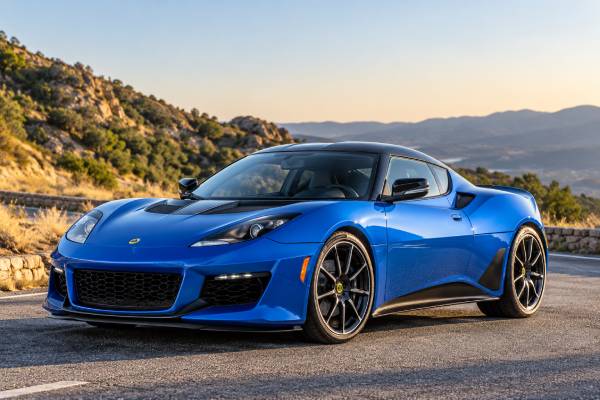
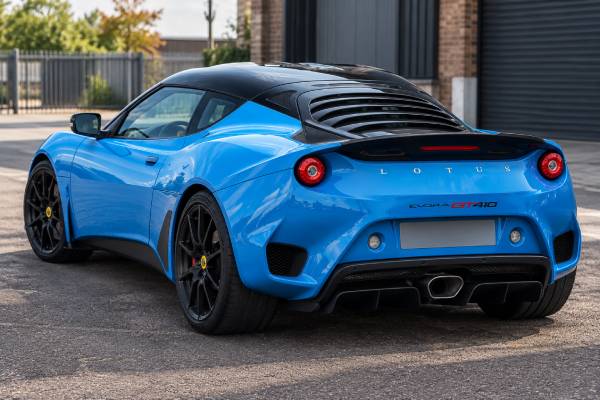
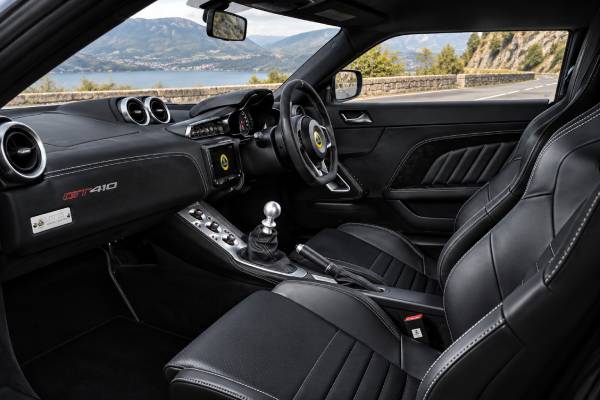
The 2020–2021 Lotus Evora GT410 is the unusual Evora that became more desirable by becoming less extreme. Lotus started with the GT410 Sport’s 410 hp supercharged V6 and bonded-aluminum chassis, then retuned the dampers for road comfort, fitted Michelin Pilot Sport 4S tires, improved rear visibility, added sound insulation, and made useful cabin equipment standard. The result was not a soft grand tourer in the traditional sense. It still used hydraulic steering, double-wishbone suspension, AP Racing brakes, and a mid-mounted 3.5-liter V6, but it was easier to live with on wet roads, rough surfaces, commutes, and longer journeys. Manual and automatic transmissions were offered, with the manual retaining the higher maximum speed. Because the GT410 name was also used for a different China-market specification, used-car research requires care: the 2020–2021 UK/European car covered here is the 410 hp comfort-focused model. This guide explains that exact version, its specification, what changed from the GT410 Sport, and what to examine before purchase.
Table of Contents
- The Comfort-First Evora That Still Drives Like a Lotus
- What Lotus Changed from the GT410 Sport
- Cabin, Visibility, and Everyday Use
- Ownership and Maintenance Priorities
- GT410 Factory Specification and Technical Data
- Why the Ride, Steering, and Tire Package Matter
- Choosing a Used GT410 Without Mixing Markets or Specs
The Comfort-First Evora That Still Drives Like a Lotus
The GT410’s defining feature is not an extra power figure; it is a deliberate shift toward real-road usability. Lotus kept the performance hardware that made the GT410 Sport engaging but changed the parts that most affect everyday comfort: damper calibration, tire choice, sound insulation, rear visibility, and standard cabin equipment.
That sounds modest, yet it changes how often a driver can enjoy the chassis. A very stiff setup on track-oriented tires can feel spectacular on a smooth, dry road and tiresome on broken asphalt or in cold rain. Lotus instead fitted the GT410 with Michelin Pilot Sport 4S tires and a more compliant damper rate. The car remained quick and highly responsive, but it could breathe with rough surfaces rather than constantly asking the driver to tolerate them.
The timing is important. By 2020 the Evora platform was mature, and Lotus was approaching the final years of Type 122 production. Rather than chasing another headline lap time, the company created a version that made sense for owners who wanted one Evora to handle weekend drives, motorway miles, poor weather, and routine errands. It was sold alongside the GT410 Sport rather than replacing it, so buyers effectively had a road-biased and a more track-biased interpretation of the same basic 410 hp car.
The visual presentation changed with that mission. The GT410 used body-colored roof, sills, tailgate, front access panel, and mirror backs instead of emphasizing the black and carbon-look contrast associated with harder-edged variants. V-spoke cast wheels were standard, with 19-inch diameter at the front and 20-inch at the rear. Red AP Racing brake calipers remained a clear reminder that the car had not become a luxury coupe.
Inside, equipment that had previously lived on option lists became part of the everyday specification. Air conditioning, heated seats, cruise control, a reversing camera, rear parking sensors, upgraded infotainment, and additional storage all suited the car’s broader brief. None of those items changes steering feel, but together they make the difference between a car that is saved for a Sunday morning and one that can be used several days a week.
This is why the GT410 should not be dismissed as a detuned GT410 Sport. It is better understood as a different calibration of the same core architecture. For many owners, the softer setup and road-biased tires increase usable performance because the car remains composed when the road is wet, cold, patched, or simply imperfect.
What Lotus Changed from the GT410 Sport
The standard GT410 is best understood by looking at what Lotus deliberately relaxed. It did not remove the responsive chassis, powerful brakes, or supercharged engine; it changed the interface between those parts and ordinary roads.
The first change is damping. Lotus specified a revised damper rate to create a more compliant ride. That does not mean loose body control. A well-damped sports car can use softer initial responses while still controlling pitch, roll, and wheel movement. On broken roads, this often increases confidence because the tires spend more time following the surface rather than skipping across it.
The second change is the standard tire. Michelin Pilot Sport 4S tires have a broader operating window than the Pilot Sport Cup 2 tires associated with the GT410 Sport’s more focused setup. The 4S is better suited to cold temperatures, standing water, and mixed road use. It also gives an owner more freedom to use the car without waiting for ideal weather. The trade-off is less ultimate dry-track grip and a slightly less immediate response at the limit.
Lotus made the difference reversible. The optional Sport Pack added the sports suspension, GT430-style forged wheels, and Cup 2 tires. That means two cars wearing the same GT410 badge can feel meaningfully different. A buyer should inspect the actual wheel, tire, and suspension configuration instead of assuming the car has the standard touring setup.
The rear body also changed in a way owners notice every day. The larger glass area in the tailgate improves rearward visibility. It gives up some of the dramatic louvred appearance associated with more aggressive Evora variants, but it makes lane changes and reversing less dependent on cameras and mirrors.
Additional sound insulation and body-colored exterior pieces complete the change in character. These are not performance modifications, yet they reduce the sense that the driver is operating a stripped track special. The GT410 still sounds purposeful when the exhaust opens and the V6 climbs toward the top of its rev range, but steady-speed travel is less tiring.
There is also a value argument. When new in the UK, the GT410 was priced below the GT410 Sport while including several comfort features as standard. That positioning matters in the used market because a standard GT410 should not automatically be valued as the lesser car. For someone who intends to drive on real roads rather than chase lap times, the touring setup may be the more useful specification.
Cabin, Visibility, and Everyday Use
The GT410 is more usable than the Sport, but it is still an Evora: low, wide-silled, compact inside, and more focused on the driver than on storage. Buyers should evaluate its ergonomics as carefully as its acceleration.
The wider door opening compared with an Elise helps, but occupants still step across a substantial sill and down into the seat. A driver with limited mobility should try repeated entry and exit rather than deciding after one enthusiastic test drive. Seat position, steering-wheel reach, and clutch effort on manual cars also deserve time because small irritations grow on long trips.
The large-glass tailgate is one of the model’s most practical revisions. The mid-mounted engine still limits the view directly behind the car, but the clearer rear opening gives the driver more visual information. The reversing camera and parking sensors then provide a second layer of help in tight spaces. Confirm that both systems function before purchase; low-volume trim and electrical repairs are rarely as inexpensive as they look.
Lotus also addressed small everyday annoyances. Door trims gained integrated armrests and storage bins, while sound insulation reduced tire and road noise. Heated seats, cruise control, air conditioning, satellite navigation, Apple CarPlay, and DAB radio were part of the higher standard equipment level. These features do not turn the cabin into a luxury environment, but they reduce the sense of compromise during routine use.
Rear-seat configuration varies across Evora markets and individual cars, and the small rear positions on 2+2 examples are best treated as occasional seating or extra luggage space. The 160-liter rear luggage compartment is useful for soft bags rather than large rigid cases. Heat from the nearby engine can also make it a poor place for temperature-sensitive items.
Refinement remains relative. The V6 is close behind the occupants, the tires are wide, and the bonded structure transmits more road information than a conventional grand tourer. That is part of the appeal, but a buyer expecting a quiet 911-like motorway car may still find the Evora raw. The GT410 narrows the gap without erasing the car’s identity.
For owners who use the car often, the compromise can be satisfying. It retains the tactile metal gear lever on manual cars, direct steering, and compact dimensions while adding enough convenience to make an unplanned journey realistic. That is the central achievement of this version: daily usability was added around the driving experience instead of replacing it.
Ownership and Maintenance Priorities
A GT410 benefits more from consistent time-based maintenance than from low odometer numbers. Many examples cover little annual mileage, so fluids, belts, tires, batteries, and seals can age even when the car appears scarcely used.
Lotus documentation for the Evora family stresses servicing at the correct intervals and additional attention after demanding track use. A 2020 Lotus press-release initiative described the first scheduled service point for its sports cars as 9,000 miles or one year and reduced UK servicing costs across the Elise, Exige, and Evora ranges. For an individual GT410, however, the owner’s handbook, service schedule, VIN, market, and operating conditions should determine the actual work required.
Oil history is the first thing to check. The supercharged V6 should have regular oil and filter changes with the correct specification even if annual mileage is low. Cars repeatedly used for short trips or track days deserve shorter intervals than lightly used road cars. Ask for invoices showing dates and lubricant details rather than accepting a seller’s statement that it was “serviced when needed.”
Cooling health matters because the engine sits behind the cabin and relies on long coolant runs through the chassis. Check coolant level cold, look for dried residue around joints and the expansion system, confirm the fans operate correctly, and watch temperature during a fully warmed road test. Unexplained coolant loss should be diagnosed before purchase.
The accessory and supercharger drive should be quiet and correctly tensioned. Listen from cold and again after warm-up. A brief normal mechanical sound is different from persistent chirping, grinding, or bearing noise. Belts are age-sensitive components, so replacement history can be more relevant than mileage.
Manual gearboxes should select all gears cleanly, and clutch engagement should be progressive without slip under load. The linkage should feel precise rather than loose. Automatic cars need smooth shifts in normal driving and immediate, repeatable response to paddle commands. Transmission-fluid history is worth documenting on either version.
Brake and clutch fluid should not be ignored because moisture absorption is time based. Track use accelerates the need for fresh high-quality fluid and pad inspection. Also check the inside faces of the large brake discs, not only the visible outer faces.
Battery care is a common issue on rarely used sports cars. A weak battery can generate confusing low-voltage symptoms and strain starting performance. An intelligent maintainer is useful during storage, but a purchase inspection should include an actual battery and charging-system test.
Finally, examine the bonded chassis and composite body with care. The Evora has defined lifting points, and incorrect jacking can damage underbody areas. Front splitters and lower bodywork collect scrapes; cosmetic wear is common, but distorted mounting points or evidence of a larger impact calls for specialist assessment. Chassis repair quality is more important than flawless paint.
GT410 Factory Specification and Technical Data
The 2020–2021 GT410 is an ICE-only, rear-wheel-drive coupe with a transversely mounted, supercharged 3,456 cc V6 behind the cabin. Lotus offered a six-speed manual and a six-speed automatic; both were rated at 410 hp and 410 Nm in the official current-UK specification, but maximum speed and official fuel-consumption figures differ.
| Specification | GT410 |
|---|---|
| Engine | 3.5-liter (3,456 cc) supercharged V6 petrol engine |
| Layout | Mid-engine, rear-wheel drive |
| Maximum power | 410 hp (416 PS) |
| Maximum torque | 410 Nm (295 lb-ft) |
| Transmissions | 6-speed manual or 6-speed automatic |
| Manual differential | Torsen limited-slip differential |
| Specification | Manual | Automatic |
|---|---|---|
| 0–60 mph | 4.1 seconds | 4.1 seconds |
| 0–100 km/h | 4.2 seconds | 4.2 seconds |
| Maximum speed | 298 km/h (186 mph) | 278 km/h (174 mph) |
| Unladen weight | 1,361 kg (3,000 lb) | 1,361 kg (3,000 lb) |
| Power-to-weight ratio | 294 hp/tonne | 292 hp/tonne |
| Test phase | Manual | Automatic |
|---|---|---|
| Low | 16.7 L/100 km | 18.2 L/100 km |
| Medium | 10.7 L/100 km | 11.1 L/100 km |
| High | 9.1 L/100 km | 9.4 L/100 km |
| Extra high | 9.5 L/100 km | 9.6 L/100 km |
| Combined | 10.6 L/100 km (26.7 mpg UK) | 11.0 L/100 km (25.7 mpg UK) |
| CO2 | 245 g/km | 248 g/km |
| Specification | Factory configuration |
|---|---|
| Structure | Bonded and riveted extruded-aluminum chassis with composite body panels |
| Suspension layout | Forged-aluminum double wishbones front and rear |
| Dampers | Bilstein units with GT410 road-oriented calibration |
| Steering | Hydraulically assisted rack and pinion |
| Front brakes | AP Racing 4-piston calipers with 370 mm ventilated discs |
| Rear brakes | AP Racing 4-piston calipers with 350 mm ventilated discs |
| Standard wheels | 19-inch front and 20-inch rear V-spoke cast alloy wheels |
| Standard tires | Michelin Pilot Sport 4S; 235/35 R19 front and 285/30 R20 rear |
| Specification | Value |
|---|---|
| Body style | 2-door mid-engine coupe |
| Length | 4,394 mm (173.0 in) |
| Width | 1,972 mm (77.6 in) |
| Height | 1,223 mm (48.1 in) |
| Wheelbase | 2,575 mm (101.4 in) |
| Rear luggage space | 160 L (5.7 cu ft) |
| Feature | Why it matters |
|---|---|
| Large-glass rear tailgate | Improves rearward visibility compared with more heavily louvred configurations |
| Additional sound insulation | Reduces road noise on longer journeys |
| Heated Sparco sports seats | Add comfort without replacing the supportive sports-seat layout |
| Reversing camera and rear parking sensors | Useful for the low seating position and broad rear bodywork |
| Infotainment | Navigation, Apple CarPlay, and DAB digital radio |
| Optional Sport Pack | Adds sports suspension, GT430-style forged wheels, and Michelin Pilot Cup 2 tires |
The factory figures should be kept tied to the relevant market and test procedure. In particular, do not substitute older NEDC figures from a GT410 Sport brochure or the specifications of the China-market GT410. Even when the badge is identical, the published output and transmission specification can differ.
Why the Ride, Steering, and Tire Package Matter
The GT410’s strongest engineering feature is the way its chassis communicates without needing extreme stiffness. Hydraulic steering, low mass, double wishbones, and carefully chosen tire sidewalls combine to make modest road speeds feel informative rather than dull.
Modern performance cars often gain speed by adding tire width, active dampers, rear steering, electronic differentials, and heavy structural reinforcement. The Evora follows a different path. Its steering assistance is hydraulic, so the rack transmits a large amount of information about surface texture and front-tire loading. The wheel does not merely point the car; it tells the driver how much grip is available.
The softer GT410 damping makes that feedback easier to use on poor surfaces. When a wheel can move over a ridge without disturbing the entire body, the driver receives a cleaner message. Reviews of the 2020 GT410 repeatedly singled out ride quality as a strength, especially on wet or uneven roads where the Sport’s Cup 2 tires and firmer setup are less advantageous.
That does not make alignment unimportant. An Evora can feel nervous, pull under braking, or wear tires badly if ride height or geometry is wrong. Uneven inner-edge wear may be difficult to see with the wheels on the car, so a purchase inspection should include the inside shoulders. Ask whether the car has been aligned after suspension work or frequent track use.
Tire age is just as important as tread depth. Low-mileage GT410s can retain old tires for years, and a hardened performance tire can undermine the exact steering and wet grip the model was designed to provide. Check date codes, look for cracking, and budget for four matched tires if the fitted set is old or mixed.
The AP Racing brakes should feel firm and progressive. Surface corrosion after storage can clear quickly, but grooves, heat checking, a long pedal, or vibration under braking need investigation. The light chassis is kind to brakes compared with a heavier GT, yet repeated circuit use can still consume pads, fluid, and discs quickly.
This is also why test drives should include imperfect roads. A perfectly smooth route will not show whether the dampers control rebound cleanly, whether trim rattles mask suspension noises, or whether the car tramlines because of tire condition. The GT410 was engineered specifically to work well outside ideal conditions, so a rough-road test is part of verifying that it still behaves as intended.
Choosing a Used GT410 Without Mixing Markets or Specs
The first job when buying a GT410 is to identify the exact market version and equipment, because the badge alone is not enough. The 2020–2021 car described here is the 410 hp UK/European comfort-oriented GT410; Lotus also used the GT410 name for a China-market automatic rated at 400 hp, so online listings and specification databases can easily blend the two.
Start with the VIN, registration market, build documentation, and original sales invoice if available. A correct UK/European GT410 should match the broad specification in this article: 410 hp, 410 Nm, manual or automatic availability, road-oriented Bilstein calibration, Pilot Sport 4S tires in standard form, and the comfort equipment that distinguishes it from the GT410 Sport.
Next establish whether a Sport Pack or later modifications changed the car. Forged wheels, Cup 2 tires, or firmer suspension may be factory-approved equipment rather than evidence that a seller is misrepresenting the vehicle. The important point is to know what is fitted before comparing price or driving behavior with another GT410.
A useful pre-purchase inspection should include these priorities:
- Confirm chassis and lifting-point condition underneath the car.
- Measure tire age and wear across the full tread width, including inner shoulders.
- Inspect AP Racing discs and pads for track-related heat wear.
- Start the engine cold, then test again fully warm for stable idle, clean response, and consistent temperature.
- Check clutch and shift quality on a manual, or hot and cold shift quality on an automatic.
- Test air conditioning, heated seats, camera, parking sensors, infotainment, windows, locks, and all warning lamps.
- Review annual service invoices and evidence of fluid, belt, tire, brake, and battery work rather than relying only on mileage.
A car with track use is not automatically a bad buy. The Evora chassis was designed to tolerate hard driving, and an owner who changed fluid frequently, inspected brakes, aligned the suspension, and warmed the car properly may have maintained it exceptionally well. The concern is unrecorded abuse: old tires, heat-damaged brakes, chipped or cracked underbody parts, worn clutch components, and a service history that became sparse once the warranty expired.
By contrast, a very low-mileage garage car is not automatically perfect. Long storage can age tires, discharge batteries, allow brake surfaces to corrode, and postpone time-based servicing. The ideal GT410 feels tight and consistent, has a history that explains its use, and needs little immediate catch-up work.
The manual and automatic satisfy different owners. Choose the manual for the mechanical shift experience, limited-slip differential, and 298 km/h factory maximum speed. Choose the automatic if traffic usability and paddle shifting matter more. Neither choice fixes poor maintenance, so transmission preference should come after structural and mechanical condition.
Most importantly, buy the GT410 for what it is. It is not the lightest or most aerodynamically aggressive Evora, and it was never intended to be. Its value lies in retaining the steering, brakes, engine response, and chassis balance of the late Evora while making those qualities easier to enjoy on ordinary roads. A sound example with the right tires and a complete history can therefore be more satisfying in regular use than a more extreme derivative that spends most of its life waiting for perfect conditions.
References
- Lotus Evora – Drive without Compromise | Lotus Cars 2026 (Manufacturer heritage)
- New Lotus Evora GT410 2020 review | Auto Express 2020 (Independent road test)
- Lotus Evora GT410 review – more refined but no less fun | evo 2020 (Independent road test)
- LOTUS EVORA 400 2018 OWNER’S HANDBOOK MANUAL Pdf Download | ManualsLib 2018 (Owner’s Handbook)
- LOTUS EVORA SERVICE NOTES Pdf Download | ManualsLib 2009 (Service Notes)
- Lotus Slashes Servicing Costs on Elise, Exige and Evora: Now Starts From Just £270 – Group Lotus – Midlands Lotus Owners Club (MLOC) 2020 (Lotus media release copy)
Disclaimer
This article is for general information and does not replace professional diagnosis, inspection, or repair. Specifications, torque values, maintenance intervals, procedures, and equipment can differ by VIN, market, production date, and options. Confirm the requirements for a particular car using current official Lotus service information and its own documentation before carrying out work.
Share this guide with an Evora shopper who needs to distinguish the road-focused GT410 from similarly named market and Sport variants.