
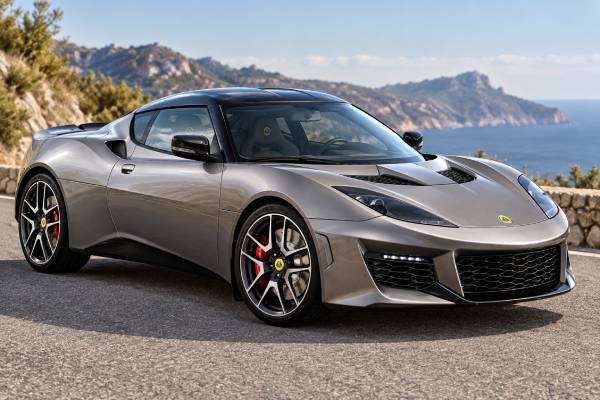
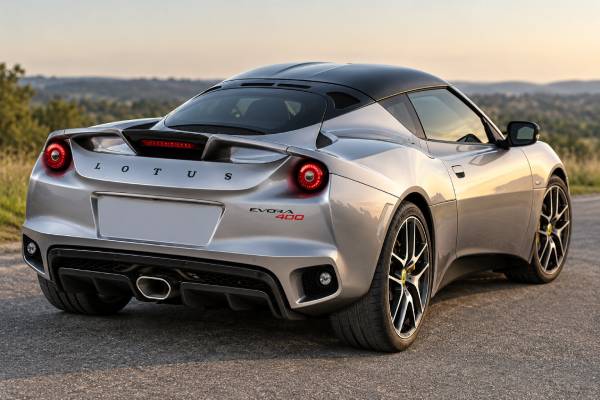
The Lotus Evora 400 was the turning point that transformed the original Evora into a faster, easier-to-use, and more mature Type 122. Revealed in 2015 and reaching customers across different markets during the 2015–2016 rollout, it paired a 400 hp supercharged 3.5-liter V6 with a heavily revised body, lower and narrower door sills, a redesigned cabin, stronger AP Racing brakes, revised aerodynamics, and either a six-speed manual or automatic transmission. It was not simply an Evora S with more boost. Lotus said a majority of the car was new or changed, and the driving experience reflected that broader re-engineering. Buyers today should also recognize that early pre-type-approval figures can differ from later production brochure data, while Federal cars have market-specific safety equipment and recall history. This guide uses later production specifications as the main baseline, flags where market and model-year differences matter, explains the chassis and drivetrain in practical terms, and gives a structured approach to maintenance and pre-purchase inspection for 2015–2018 Evora 400s.
Table of Contents
- Why the Evora 400 Was More Than a Power Upgrade
- Powertrain, Performance, and Transmission Choices
- Chassis, Brakes, Steering, and Aerodynamics
- Cabin Changes and Everyday Usability
- Model Years, Markets, and Recall Checks
- Maintenance Patterns and Common Inspection Areas
- How to Buy a 2015–2018 Evora 400
Why the Evora 400 Was More Than a Power Upgrade
The Evora 400 mattered because Lotus revised the car as a system rather than chasing a headline horsepower number. Power rose to 400 hp, but the larger improvement was the combination of easier access, stronger braking, revised aero, reduced mass in key areas, a new rear body design, and a more polished cabin.
Earlier Evoras were admired for steering and chassis balance but criticized for high, wide sills and awkward entry. The 400 addressed that directly. Lotus reworked the bonded aluminum tub around the door openings, making the sill lower and narrower, and redesigned the doors and interior accordingly. For owners who use the car regularly, that can matter more than a few tenths in an acceleration test.
The exterior also changed substantially. New front and rear styling improved cooling and aerodynamic behavior, while the rear incorporated a more open, visually distinctive treatment. Lotus quoted 32 kg of downforce at 150 mph for the production Evora 400. That is important context because the redesign was not merely aesthetic; it was intended to improve stability as performance increased.
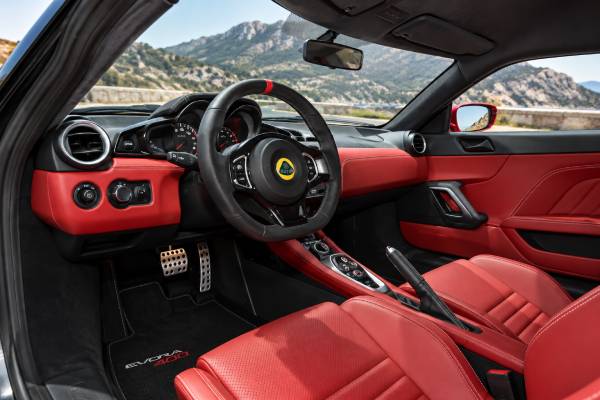
Inside, the dashboard, center console, switchgear presentation, seats, and infotainment integration were revised. The 400 remained a compact mid-engine sports car rather than a luxury GT, but the cabin felt more deliberate and was easier to live with. A 2+2 configuration was standard in the main brochure, while 2+0 specification was also available depending on market and order.
| Area | Evora 400 change | Practical effect |
|---|---|---|
| Engine | 400 hp supercharged V6 | Stronger acceleration and higher performance ceiling |
| Door sills | Lower and narrower structure | Easier entry and exit |
| Brakes | Larger AP Racing system | Greater thermal and stopping capacity |
| Aerodynamics | Reworked front/rear body and aero | 32 kg quoted downforce at 150 mph |
| Cabin | Redesigned dashboard, trim, and controls | Improved daily usability and perceived quality |
| Chassis electronics | Drive, Sport, and Race modes | Adjustable throttle and stability-control behavior |
That broad revision is why the 400 became the foundation for later Hethel, Blue & Orange, Sport 410, GT430, and eventually North American GT derivatives. It is the point where the original Evora architecture gained the performance and usability needed for Lotus’s later high-output development path.
Powertrain, Performance, and Transmission Choices
The Evora 400 uses a supercharged 3,456 cc Toyota-derived 2GR-FE V6 rated at 400 hp and 410 Nm in the production brochure. Manual and automatic cars share the same quoted sprint to 60 mph, but the manual has a significantly higher maximum speed and includes a Torsen limited-slip differential.
The all-aluminum DOHC 24-valve V6 sits transversely behind the cabin and uses an Edelbrock supercharger. Lotus’s production literature lists 400 hp (406 PS / 298 kW) at 7,000 rpm and 410 Nm (302 lb-ft) at 3,500 rpm. The broad torque peak makes the car flexible on the road, while the supercharger gives immediate response without waiting for turbo boost.
The six-speed manual uses sports ratios, a low-inertia flywheel, and a Torsen LSD. Its appeal is directness: throttle response, gear choice, and traction are closely connected to driver input. The optional six-speed automatic uses paddle controls and is easier in heavy traffic. Lotus quoted identical 0–60 and 0–100 km/h times for the two transmissions in its 2016 brochure, but gearing and calibration reduce the automatic’s top speed.
| Measure | Manual | Automatic |
|---|---|---|
| Engine | 3,456 cc supercharged DOHC 24-valve V6 | 3,456 cc supercharged DOHC 24-valve V6 |
| Power | 400 hp / 406 PS / 298 kW at 7,000 rpm | 400 hp / 406 PS / 298 kW at 7,000 rpm |
| Torque | 410 Nm / 302 lb-ft at 3,500 rpm | 410 Nm / 302 lb-ft at 3,500 rpm |
| 0–60 mph | 4.1 sec | 4.1 sec |
| 0–100 km/h | 4.2 sec | 4.2 sec |
| Top speed | 300 km/h / 186 mph | 280 km/h / 174 mph |
| Unladen weight | 1,395 kg / 3,075 lb | 1,425 kg / 3,142 lb |
Fuel-economy figures are less important than maintenance condition on a used performance car, but they help identify the correct production dataset. The 2016 brochure lists 9.7 L/100 km combined for both transmissions and 225 g/km CO2. Earlier March 2015 technical material was published before final type approval and contains figures that differ in some details. When comparing cars or writing an advertisement, use the production documentation appropriate to the market and date rather than combining early launch numbers with later certified data.
| Item | Manual | Automatic |
|---|---|---|
| Combined consumption | 9.7 L/100 km / 29.1 mpg UK | 9.7 L/100 km / 29.1 mpg UK |
| CO2 | 225 g/km | 225 g/km |
| Fuel tank | 60 liters / 15.9 US gal approximately | 60 liters / 15.9 US gal approximately |
| Drive | Rear-wheel drive | Rear-wheel drive |
| Manual differential | Torsen limited-slip | Not applicable |
When test-driving, pay attention to behavior rather than chasing brochure performance. The engine should pull cleanly without hesitation or warning lights, temperature should remain stable, the manual clutch should not slip at high load, and the automatic should engage and shift predictably when both cold and fully warm.
Chassis, Brakes, Steering, and Aerodynamics
The Evora 400 retains the bonded-aluminum, double-wishbone fundamentals that made the original Evora exceptional, but it adds larger brakes and revised aerodynamics suitable for the extra speed. Healthy steering and suspension are therefore central to the car’s value, not secondary details.
The chassis uses bonded and extruded aluminum sections with independent double wishbones at all four corners. Eibach springs and Bilstein dampers provide the production suspension package, while hydraulically assisted steering uses 2.86 turns lock-to-lock. That hydraulic system is one of the car’s signature features because it communicates surface texture and front-tire load more transparently than many later electric systems.
Braking comes from AP Racing four-piston calipers. Front two-piece, cross-drilled, ventilated discs measure 370 x 32 mm; rear discs are 350 x 32 mm. These are serious components with replacement costs to match, so a pre-purchase inspection should measure rotor condition rather than relying on visible pad thickness alone.
Standard wheel sizes are 19 inches front and 20 inches rear. The factory brochure specifies Michelin Pilot Sport tires sized 235/35 R19 and 285/30 R20. Correct tire type, age, and pressure have an outsized influence on how an Evora feels. A car on old, mismatched, or hardened rubber can tramline, understeer unexpectedly, and ride worse even when the suspension itself is sound.
| Component | Specification |
|---|---|
| Chassis | Bonded and extruded aluminum |
| Front suspension | Independent double wishbone |
| Rear suspension | Independent double wishbone |
| Springs / dampers | Eibach / Bilstein |
| Steering | Hydraulic power assistance, 2.86 turns lock-to-lock |
| Front brakes | 370 x 32 mm two-piece ventilated discs, AP Racing four-piston calipers |
| Rear brakes | 350 x 32 mm two-piece ventilated discs, AP Racing four-piston calipers |
| Tires | 235/35 R19 front; 285/30 R20 rear in production brochure |
The Dynamic Performance Management system provides Drive, Sport, and Race settings. These modes alter throttle behavior and the thresholds of traction/stability intervention; they do not replace mechanical grip. On a used car, correct alignment, matched tires, healthy dampers, and free-moving brake components matter more than which mode is selected.
Cabin Changes and Everyday Usability
The Evora 400 is markedly easier to use every day than the earliest Evoras because Lotus redesigned the sill and cabin rather than simply adding convenience options. Entry, seating, visibility aids, and control layout all make the 400 a more realistic frequent-use sports car.
Lower and narrower door sills reduce the gymnastics needed to enter. The seats still sit low, but the opening is less obstructed. That is especially valuable in tight parking spaces where climbing over a high sill without touching the door or steering wheel can be awkward. For buyers comparing an early Evora S with a 400, physically entering both cars can explain the upgrade better than a specification sheet.
The 400’s dashboard and center stack were redesigned, with revised controls and infotainment. Reversing assistance is particularly useful because rear visibility remains limited by the mid-engine layout and body shape. Test the camera, sensors, audio, windows, central locking, air conditioning, interior lighting, and instrument display during a purchase inspection. Electrical faults may be small compared with engine problems, but chasing multiple intermittent cabin issues quickly becomes frustrating.
The 2+2 rear seats are best treated as occasional child seats or luggage space rather than adult accommodation. Some cars were ordered as 2+0. The rear luggage compartment can handle touring bags, though heat from the nearby engine bay makes it a poor place for temperature-sensitive items. Owners who tour should pack deliberately and confirm that rear hatch seals and drainage are in good condition.
Noise levels are higher than in a conventional grand tourer, but the 400 can cover distance comfortably when tires, alignment, seals, and exhaust are standard. Modified exhaust systems may add drama for short trips and fatigue on long motorway runs. Because many used Evoras have been personalized, decide whether the installed parts suit your real use rather than assuming every modification is an upgrade.
Model Years, Markets, and Recall Checks
Model-year and market history matters because the Evora 400 did not arrive everywhere at the same moment, and Federal cars include safety hardware and recall obligations not shared identically with every European example. A VIN-based recall check should be part of any purchase, especially for U.S.-market 2017–2018 cars.
The Evora 400 was revealed in 2015, with production and customer deliveries developing through that year. North American Federal availability followed, with market-specific crash and safety equipment. Later Lotus technical histories note revised front crash structure details and seat-mounted side airbags for Federal cars. Those changes can affect parts ordering and explain differences in trim or weight compared with a UK brochure car.
Two U.S. recall campaigns are especially relevant. NHTSA recall 19V-263 covered certain 2017–2018 Evora vehicles because the driver’s-side toe-board structure could allow excessive femur loads in a specific frontal crash test. The remedy involved adding reinforcement. NHTSA recall 18V-781 covered certain 2018 Evoras for a steering-column cartridge securing screw that may have been tightened incorrectly. A seller saying “Lotus recalls don’t apply to my car” should be checked against the VIN, not accepted on memory.
| NHTSA campaign | Model-year scope described in recall | Issue | Buyer action |
|---|---|---|---|
| 19V-263 | 2017–2018 Evora variants | Driver toe-board stiffness / femur-load compliance | Confirm remedy completion in official VIN records |
| 18V-781 | Certain 2018 Evora vehicles | Steering-column cartridge securing screw torque | Confirm campaign status and repair documentation |
Recall completion does not replace accident inspection. Reinforcement work should look professional, and a car that has also had collision repairs deserves separate structural evaluation. Conversely, the existence of a recall is not evidence that a properly remedied car is defective; it is a reason to verify the remedy.
Production timing also affects advertisements. A car registered in one calendar year may be a different model year, and imports may be described by first-registration date rather than factory model year. Decode the VIN and use factory records when exact year matters for valuation or compliance.
Specification drift also appears in ordinary options. Seating layout, infotainment, wheel finish, trim materials and convenience equipment can differ between cars that are all correctly described as Evora 400s. Market rules can change lighting, restraint systems and emissions hardware as well. When ordering parts, give the supplier the VIN instead of assuming a component shown in a UK brochure fits a Federal or imported car built in the same calendar year.
Maintenance Patterns and Common Inspection Areas
The Evora 400 is mechanically robust when serviced correctly, but neglect can make a low-mileage example expensive. Focus on cooling, clutch or automatic behavior, brakes, suspension, tires, electrical operation, and evidence of underbody or composite-panel damage.
Start with service history rather than mileage. The supercharged V6 needs regular oil and filter changes, clean coolant, appropriate ignition maintenance, and attention to belts and ancillary drive components. Look for recurring warning lights or repeated misfire diagnoses. Inspect for coolant staining and leakage around hoses, pipes, radiator connections, and undertrays. Stable temperature on a long road test matters more than a clean engine bay.
On manual cars, clutch replacement is a significant job. Test full-load acceleration in a high gear for slip, note the bite point, and check for judder. The gearshift should improve as the car warms and should not baulk badly. Cables and adjustment can affect shift quality, so diagnosis should be specific. Automatic cars should engage drive and reverse without excessive delay and shift cleanly in both automatic and paddle modes.
Brake discs can be costly, especially if a car has seen track use. Check rotor faces for cracking, heavy lips, scoring, and heat damage, then measure thickness. Uneven pad wear can reveal caliper issues. Brake fluid should have a documented change history because absorbed moisture lowers boiling performance.
Suspension inspection should include bushes, ball joints, dampers, wheel bearings, and alignment. A healthy Evora 400 should track straight and steer precisely. Uneven inside-edge tire wear, a steering wheel that is not centered, or persistent pulling suggests geometry problems or impact history. Inspect forged or cast wheels for bends and cracks after pothole strikes.
| System | Healthy signs | Warning signs |
|---|---|---|
| Cooling | Stable temperature, dry system, clean documented coolant | Loss of coolant, staining, fan anomalies, overheating history |
| Manual drivetrain | Clean shifts, consistent clutch bite, no slip | High/slipping clutch, severe baulking, cable problems |
| Automatic | Smooth engagement and paddle response cold/hot | Harsh shifts, flares, delayed engagement, fault codes |
| Brakes | Even pad wear, sound rotors, straight stops | Judder, cracks, heavy lips, seized calipers |
| Suspension/steering | Precise steering, even tires, quiet joints | Pulling, knocks, uneven wear, vague response |
| Body/undertray | Consistent gaps, documented repairs, intact aero | Cracks, poor composite repair, damaged undertrays or splitter |
Composite bodywork needs knowledgeable inspection because paint-depth readings do not tell the whole story. Look at panel undersides, mounting points, edges, and fasteners. A properly documented repair can be acceptable; hidden structural damage or poorly bonded repairs are not. Check the front splitter and undertrays for grounding damage because the car sits low.
Finally, age matters. A 2015–2018 car can have old tires despite low miles, a weakened battery, dried seals, stale fluids, and air-conditioning faults caused by infrequent operation. A car driven and serviced annually can be healthier than a showroom queen that moved only for inspections.
How to Buy a 2015–2018 Evora 400
Buy an Evora 400 on condition, documentation, specification, and specialist inspection rather than mileage alone. The best car is one whose history explains what you see: service invoices, tire dates, brake wear, modifications, repairs, recalls, and market equipment should form a coherent picture.
Begin by confirming identity. Match the VIN across the car and documents, establish the original market, decode model year, and check factory specification if available. For a Federal car, run the VIN through official recall records and obtain proof of completed campaigns. For an imported car, verify that lighting, emissions, and safety changes were performed legally and can be serviced where you live.
Decide whether you want manual or automatic before chasing color. The manual offers the limited-slip differential and the most traditional Evora experience, but clutch condition can materially affect purchase cost. The automatic is easier in daily traffic and can be excellent for touring, but its condition and software behavior need proper assessment. Neither should be bought with unresolved transmission symptoms.
Inspect from cold. A seller who pre-warms the car should have a reasonable explanation. Listen to the first start, watch warning lights, check exhaust smoke, and monitor temperature as the drive progresses. Scan every control module rather than relying on the absence of a dashboard light. Put the car on a lift and inspect the chassis, undertrays, cooling pipes, suspension, brakes, tires, and signs of impact.
Review modifications carefully. Exhausts, wheels, suspension changes, ECU calibrations, and cosmetic parts can improve a car for one owner while reducing its suitability for another. Ask for original parts and invoices. Engine tuning on a supercharged car should come with evidence that fueling, cooling, and calibration were handled by a reputable specialist. An undocumented pulley or software change is a reason for extra scrutiny.
Use the road test to judge the whole car. Steering should be communicative and stable, the body should settle quickly after bumps, brakes should stop straight without vibration, and the engine should deliver smooth strong power. Cabin rattles can occur in a hand-built sports car, but loud structural noises or water leaks should not be normalized.
Price the work the car needs before making an offer. Tires, a clutch, two-piece brake discs, dampers, air-conditioning repair, wheel refurbishment, and composite bodywork can turn an apparently cheap Evora into a costly project. A specialist pre-purchase inspection is inexpensive compared with correcting several of those items at once.
The Evora 400 remains compelling because it occupies a rare middle ground. It has the tactile hydraulic steering and low-mass philosophy associated with Lotus, yet it is easier to enter, faster, more stable at speed, and more practical than the early Evora. Later Sport 410 and GT430 derivatives are more extreme, but the 400 is arguably the broadest all-rounder. Find one with honest history, correct market documentation, completed recalls where applicable, and a chassis that still feels precise, and it can be both a serious driver’s car and a usable long-distance Lotus.
For budgeting, build a first-year reserve even after a clean inspection. A fresh alignment, time-based fluid service, battery assessment and replacement of aged tires can establish a known baseline without implying the seller neglected the car. Keep the resulting measurements and invoices; they make later diagnosis easier and show future buyers how the car was maintained. On an Evora 400, disciplined baseline work usually adds more value to the driving experience than cosmetic accessories or additional engine output.
References
- Lotus Evora 400 — Lotus official production brochure, 2016, archived by Lotus Drivers Guide.
- Evora 400 Technical Specification — Lotus pre-type-approval technical specification, March 2015.
- Lotus Evora – Drive without Compromise | Lotus Cars — Lotus Cars model heritage.
- Part 573 Safety Recall Report — 19V-263 — National Highway Traffic Safety Administration, 2019.
- Part 573 Safety Recall Report — 18V-781 — National Highway Traffic Safety Administration, 2018.
- The new Lotus Evora GT for 2020 model year (North America) — Lotus Cars media information, 2019.
Disclaimer
This article is for informational purposes only and is not a substitute for professional diagnosis, inspection, maintenance, or repair. Specifications, torque values, service intervals, procedures, and fitted components can vary by VIN, market, equipment, and individual factory build; verify the exact car against official service documentation from Lotus and qualified specialist advice before ordering parts or carrying out work.
If this Evora 400 guide was useful, please share it with another Lotus owner or buyer researching a 2015–2018 car.