
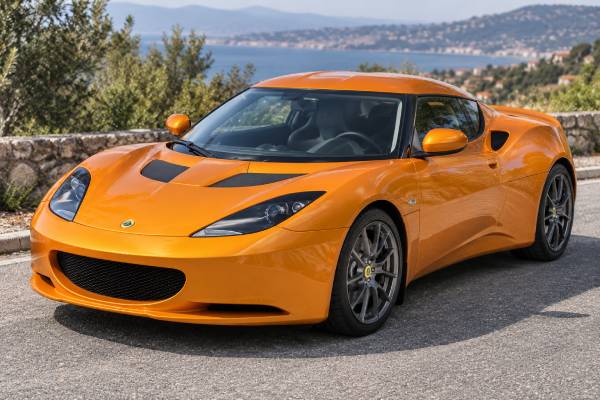
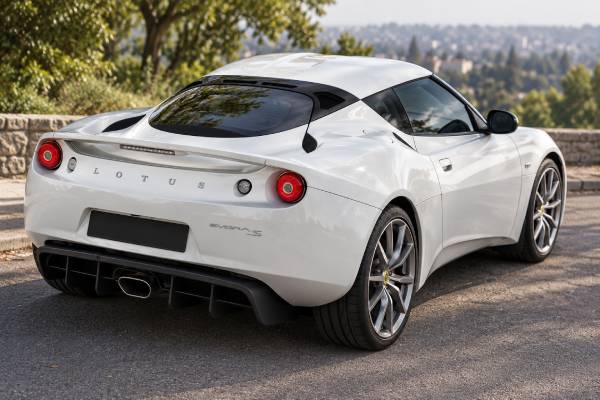
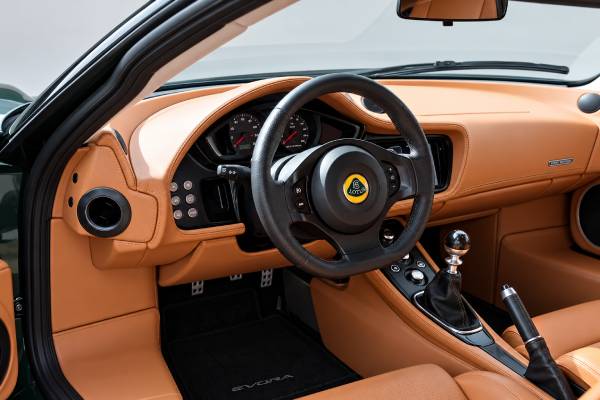
The Lotus Evora First Limited Edition is the version that introduced the Evora to Japanese buyers in 2009, and it is more specific than the name initially suggests. This was a 20-car launch batch based on the naturally aspirated 3.5-liter Type 122, configured as a 2+2 and sold with much of the equipment that otherwise sat in option packs. Its Toyota-derived 2GR-FE V6 makes 280 PS, equivalent to about 276 hp, and drives the rear wheels through a six-speed manual gearbox. The appeal today is therefore twofold: it is an early, unusually well-equipped Evora and a small-volume Japanese-market edition with a clear place in the model’s launch history. Buyers should still judge one primarily as an early Evora, because age, service history, clutch condition, cooling integrity, trim quality, and evidence of careful chassis repair matter more than rarity alone. A good example combines the supple steering and ride that defined the original Evora with useful touring equipment and genuine collector interest.
Table of Contents
- What Makes the First Limited Edition Different
- Japan-Market Type 122 Specifications and Technical Data
- How the Naturally Aspirated Evora Drives
- Equipment, Cabin, and 2+2 Practicality
- Maintenance Priorities for an Early Evora
- Age-Related Problems and Inspection Points
- How to Buy the Right First Limited Edition
What Makes the First Limited Edition Different
The key point is that the First Limited Edition was a Japanese launch specification, not a separate mechanical evolution of the Evora. It used the same naturally aspirated 3.5-liter V6 and six-speed manual layout as the early Type 122, but arrived as a highly equipped 2+2 in a run of only 20 cars.
Lotus unveiled the Evora in 2008 as its first clean-sheet production model since the Elise. The new car was deliberately broader in purpose: it retained a bonded-aluminum chassis and mid-engine layout, yet added easier cabin access, a more compliant grand-touring ride, power-assisted steering, meaningful luggage space, and the possibility of two small rear seats. For Japan, distributor LCI marked the car’s 2009 introduction with the First Limited Edition.
Contemporary Japanese coverage listed the edition at ¥10,593,000 and described it as part of the first production allocation. Equipment included high-power-silver alloy wheels, bi-xenon headlights, body-color door handles, a reversing monitor, ETC hardware, and electrically folding mirrors. Period dealer descriptions also identify the familiar Tech, Premium, and Sport package content, which helps explain why the car sat well above the standard 2+2 on the Japanese price list.
That equipment matters because the earliest Evoras could be quite specification-sensitive. The Sport Pack, for example, was more than a cosmetic bundle: it brought a selectable sport mode, a titanium-finish exhaust outlet and oil-cooling hardware among its features. The Premium and Tech content made the cabin and touring experience closer to what many buyers expected of the Evora’s higher positioning.
The edition’s rarity should be interpreted carefully. A 20-car allocation can make an original, documented example more interesting than an equivalent standard Japanese-market Evora, but the mechanical service burden is still that of an early Evora. A neglected limited edition with poor repairs is not automatically preferable to a meticulously maintained normal car. Provenance adds value only after condition and authenticity are established.
Japan-Market Type 122 Specifications and Technical Data
The First Limited Edition is an ICE sports car with a transversely mounted, naturally aspirated Toyota 2GR-FE V6 behind the cabin, a Lotus-calibrated engine-management system, six-speed manual transaxle, and rear-wheel drive. Japan-market catalog data differs in small ways from some European figures, so the tables below prioritize specifications published for the First Limited Edition itself and clearly established early-Evora technical data.
| Specification | Value |
|---|---|
| Engine | Toyota 2GR-FE, Lotus calibration |
| Layout | 60-degree V6, DOHC, 24 valves |
| Displacement | 3,456 cc (3.5 L) |
| Bore × stroke | 94.0 × 83.0 mm |
| Compression ratio | 10.8:1 |
| Induction | Naturally aspirated |
| Maximum power | 280 PS (206 kW; about 276 hp) at 6,400 rpm |
| Japan-market maximum torque | 350 Nm (258 lb-ft) at 4,660 rpm |
| Fuel | Premium unleaded gasoline |
| Usable fuel capacity | 60 L (15.9 US gal) |
| Specification | Value |
|---|---|
| Transmission | 6-speed manual transaxle |
| Drive type | Rear-wheel drive |
| Engine position | Transverse mid-engine |
| Chassis | Bonded and riveted aluminum structure |
| Body | Composite panels over aluminum chassis |
| Front suspension | Independent double wishbone |
| Rear suspension | Independent double wishbone |
| Steering | Hydraulically assisted rack and pinion |
| Brakes | Ventilated discs front and rear; four-piston performance calipers on early Evora specification |
| Specification | Value | Condition |
|---|---|---|
| 0–100 km/h | About 5.1 seconds | Early naturally aspirated Evora factory figure |
| Top speed | 261 km/h (162 mph) | Early naturally aspirated manual specification |
| Power-to-weight character | Lightweight GT rather than high-output supercar | Performance relies on chassis efficiency and gearing |
| Seating | 2+2, four positions | Rear seats best suited to children or short trips |
| Specification | Value |
|---|---|
| Body style | 2-door coupe |
| Overall length | 4,370 mm (172.0 in) |
| Overall width | 1,850 mm (72.8 in) |
| Overall height | 1,230 mm (48.4 in) |
| Wheelbase | 2,575 mm (101.4 in) |
| Front track | 1,560 mm (61.4 in) |
| Rear track | 1,555 mm (61.2 in) |
| Japan-market listed vehicle mass | 1,390 kg (3,064 lb) |
| Position | Factory size | Practical note |
|---|---|---|
| Front tires | 225/40 ZR18 | Keep axle pairs matched for compound and wear |
| Rear tires | 255/35 ZR19 | Staggered rear diameter and width |
| Wheel layout | 18-inch front / 19-inch rear | First Limited Edition used silver-finish alloy wheels |
| Original tire development | Lotus-specific performance fitment | Correct load, speed rating, and geometry matter to steering feel |
| Item | Value or requirement |
|---|---|
| Engine oil refill including filter | 6.1 L on naturally aspirated Evora service data |
| Fuel system | 60 L fabricated stainless-steel tank mounted ahead of the engine bay |
| Timing drive | Chain-driven camshafts; no routine timing-belt replacement |
| Coolant | OAT-type coolant specified in period Lotus documentation; verify exact approved product for the car |
| Tire pressures | Use the placard/handbook values for the fitted tire specification, not generic Evora internet figures |
One important caution is that early Evora data can be market-dependent. European sources commonly quote 342 Nm for the original naturally aspirated engine, while Japanese catalog data for the First Limited Edition lists 350 Nm. Likewise, homologated dimensions and masses can differ with measurement rules and market equipment. For a Japanese-market car, its registration documents, VIN-specific Lotus information, and original Japanese literature should take priority over a generic global specification sheet.
How the Naturally Aspirated Evora Drives
The First Limited Edition is at its best when judged by steering, balance, ride quality, and throttle response rather than by headline acceleration. Its 276-hp-equivalent output is modest beside later supercharged Evoras, but the original car has a clean, progressive delivery that suits the chassis exceptionally well.
The 2GR-FE is an unusual part of the Lotus formula because the base engine came from Toyota rather than being a bespoke exotic unit. Lotus changed the application around it: intake, exhaust, management, packaging, cooling, and throttle response were integrated for a mid-engine sports car. The result is a V6 that starts and idles with ordinary-car civility but becomes increasingly energetic above the midrange. There is no supercharger to fill in the torque curve, so the manual gearbox is part of the experience. Keeping the engine in its stronger upper range makes the car feel more alive without demanding extreme road speeds.
The six-speed manual is therefore central to whether a particular car feels good. Early examples have a cable-operated shift mechanism, and wear, adjustment, cable condition, or previous repairs can make one car feel markedly better than another. A test drive should include slow first-to-second changes when cold, fast but sympathetic upshifts after the oil is warm, and several downshifts to check synchro behavior. A vague or reluctant shift should not automatically be dismissed as “normal Lotus character.”
The chassis is where the Evora remains distinctive. Double-wishbone suspension at both ends gives Lotus substantial control over wheel motion, while the relatively tall tire sidewalls by modern sports-car standards help the suspension breathe over broken surfaces. The hydraulic steering adds some assistance without removing the texture that tells the driver what the front tires are doing. That combination is why an early Evora can feel both more comfortable and more communicative than many stiffer rivals.
Its limits also arrive in a friendly way. The mid-engine mass is concentrated near the center of the car, but the wheelbase is long enough to give stability. On correct tires and healthy dampers, the Evora changes direction cleanly without the nervousness sometimes associated with short-wheelbase mid-engine cars. The goal is not a dramatic rear-drive attitude; it is confidence, precision, and the ability to carry speed with small steering inputs.
A prospective buyer should therefore be suspicious of an example that tramlines badly, refuses to settle after bumps, pulls under braking, or has noticeably different steering effort left to right. Those symptoms may reflect tire choice, alignment, worn joints, damaged wheels, tired dampers, or previous impact repair rather than an inherent trait of the model.
Equipment, Cabin, and 2+2 Practicality
The First Limited Edition’s main everyday advantage is that it started with a generous launch specification. For an early Evora, that can make it much easier to live with than a sparsely optioned car, provided the aging electronics and trim remain functional.
The Japanese launch equipment is useful to verify because it also helps establish authenticity. Period information identifies bi-xenon lighting, body-color door handles, reversing-camera equipment, ETC, and power-folding mirrors. Dealer documentation for surviving cars commonly shows Tech, Premium, and Sport package equipment as part of the edition. Exact head-unit hardware may have been replaced over the years, especially navigation and Japanese-market electronics that aged quickly, so originality should be judged with period documentation rather than by expecting every car to retain obsolete media equipment.
The cabin is wider and easier to enter than an Elise, but it is still a low sports car with broad sills and a compact windshield opening. The front seats provide a low hip point and good support. Rear seating is more accurately thought of as flexible space than adult accommodation: children can use it, small passengers can manage short trips, and folded or unused rear seats become useful secure storage. That versatility is one reason the 2+2 specification is desirable even for owners who rarely carry four people.
Luggage space behind the engine is another genuine touring advantage, though heat is a consideration. The rear compartment can become warm after sustained driving, so heat-sensitive luggage, electronics, food, or adhesives should not be packed there without thought. Soft bags also work better than rigid suitcases because the opening and compartment shape reward flexible packing.
Age changes the cabin ownership experience more than the basic design does. Check every switch, the HVAC blower at all speeds, air-conditioning temperature, window operation, central locking, mirror adjustment and folding, headlamp functions, camera display, parking aids if fitted, and both 12-volt outlets. Also look at the door seals, roof lining, leather, dashboard surfaces, and adhesive-bonded trim. A car can be mechanically sound yet require surprisingly expensive time and labor to correct a collection of small interior faults.
Because this edition was expensive when new, buyers sometimes assume every surviving example should be cosmetically perfect. That is unrealistic for a 2009–2010 sports car, but complete originality still matters. A neatly retrimmed seat is less concerning than missing edition-specific equipment, unexplained wiring modifications, or a changed interior whose history cannot be documented.
Maintenance Priorities for an Early Evora
The most important maintenance strategy is preventive rather than reactive: keep fluids current, investigate cooling or oil leaks early, preserve correct chassis alignment, and budget for access-intensive jobs before they become urgent. The Toyota engine is a strong foundation, but the Evora installation around it still needs specialist familiarity.
Annual servicing is sensible even for low-mileage cars. Short journeys and storage can be harder on oil, batteries, brakes, seals, and air-conditioning systems than steady use. Service records should show more than repeated engine-oil changes; look for brake-fluid replacement, coolant history, gearbox oil work when appropriate, spark-plug servicing, accessory-belt attention, and evidence that age-sensitive hoses and fasteners were inspected.
The clutch deserves special attention because replacement is labor intensive. Pedal weight alone is not a reliable diagnosis, so test for slip under high load in a tall gear, inconsistent engagement, judder, noises when the pedal is pressed, and difficulty selecting gears when stationary. If the clutch has been replaced, an invoice showing who did the work and what else was renewed is worth more than a seller’s verbal claim.
Cooling-system condition also matters. The radiator sits at the front while the engine is at the rear, so long coolant pipes run through the car. Inspect for staining, dampness, deteriorated hose connections, a sweet smell after driving, unstable coolant level, or fans that do not behave normally in traffic. The system should hold temperature predictably rather than relying on the dashboard gauge to reveal a late-stage problem.
Engine-oil level should be checked correctly and regularly. The V6’s 6.1-liter refill quantity on naturally aspirated service data is not an invitation to pour in a fixed amount without measurement; drain conditions, filter change, and remaining oil all affect the final level. Follow the handbook procedure and use the dipstick. Overfilling is not safer than running low.
Tires are part of maintenance, not merely a consumable purchase. The Evora’s steering calibration is sensitive to tire construction and geometry. Four premium tires in the correct sizes, sensible age, even wear, and matched axle pairs are preferable to a mixture chosen solely by price. Unusual inner-edge wear should prompt an alignment and suspension inspection rather than simply another set of tires.
Finally, keep the battery healthy. Low voltage can create misleading electrical symptoms, especially in an older car that is driven infrequently. A quality maintainer is useful for stored cars, but a weak battery should still be replaced rather than permanently disguised by charging.
Age-Related Problems and Inspection Points
A First Limited Edition should be inspected as both an early-production Evora and a low-volume special. The highest-value inspection work is finding evidence of water entry, poor body or chassis repairs, worn shift/clutch components, tired suspension, and neglected electrical faults before purchase.
Start with the aluminum chassis. The bonded structure is a core strength, but it changes the rules after accident damage. Bent, drilled, overheated, badly bonded, or crudely repaired structural aluminum is not equivalent to a conventional steel panel that can simply be pulled straight and welded. Look underneath for disturbed fasteners, fresh sealant, crushed jacking areas, mismatched undertrays, scraped suspension pickup zones, and repairs that do not match factory workmanship. If there is meaningful accident history, a Lotus specialist should assess it.
The composite exterior panels do not rust, but that does not mean the body is maintenance-free. Inspect for cracks around mounting points, stress marks, poor panel gaps, blistering, mismatched paint texture, and evidence of previous refinishing. Stone chips on the nose are normal; widespread cracking or poorly supported panels are not.
Water leaks can age an interior quickly. Feel carpets and lower trim rather than relying on a visual glance, and look for condensation, musty smells, tide marks, corrosion on seat hardware, or suspiciously new carpet sections. Door and window sealing should also be checked with the glass fully closed. A minor leak that was ignored for years can create more secondary electrical and trim damage than the original seal problem.
On the drivetrain, listen from cold. Brief mechanical noise is different from persistent knocking, bearing rumble, exhaust leaks, or accessory-drive squeal. Once warm, the engine should pull cleanly and idle consistently. Diagnostic warning lights should illuminate during the self-check and then extinguish normally; a seller who has recently cleared codes may leave readiness monitors incomplete, so an independent scan is useful.
The brakes should feel firm and progressive. A car stored for long periods may have corroded disc surfaces, sticky calipers, hardened tires, or seized parking-brake mechanisms even with low mileage. Low mileage is therefore not automatically a positive. In many cases, regular exercised use with documented maintenance is preferable to years of static storage.
For edition authenticity, compare the VIN, Japanese registration history, original invoice or dealer documents, specification, and equipment. A missing plaque is not necessarily proof of anything because special-edition identification practices differ, but the provenance should form a coherent story. The strongest cars have documentation that connects the physical car to its original First Limited Edition sale rather than relying solely on an advertisement written years later.
How to Buy the Right First Limited Edition
Buy condition and documentation first, then rarity. The best First Limited Edition is an original or sympathetically maintained car with verifiable Japanese-market provenance, a healthy clutch and gearbox, dry cabin, straight chassis, quality tires, and service records from people who understand the Evora.
A useful buying process is to separate the decision into three layers. First, confirm identity: check the VIN, Type 122/ABA-122 documentation, 2+2 configuration, initial registration, and evidence that the car was one of the Japanese First Limited Edition allocation. Second, confirm mechanical condition with a specialist inspection and diagnostic scan. Third, assess originality and cosmetic quality after the expensive fundamentals are known.
Documentation should answer practical questions. When was the clutch last assessed or replaced? Has the cooling system had age-related work? Are the dampers, ball joints, bushings, and wheel bearings original? When were the tires manufactured? Has the car had paint or structural repair? Does the air conditioning work correctly? Are both keys present? Are old service invoices available, not just stamps? A seller who can answer those points with paperwork reduces uncertainty more effectively than one who emphasizes scarcity.
Modifications need context rather than automatic rejection. A modern head unit, improved reversing camera, carefully installed exhaust, or service-oriented upgrade can make the car more usable. The concern is irreversible cutting, uncertain wiring, poorly engineered suspension changes, aggressive wheel fitments, deleted emissions equipment, or modifications that make it difficult to establish the original edition specification. Original parts supplied with the car are a bonus.
Price should reflect the combination of rarity and future expenditure. A cheaper car needing a clutch, four tires, air-conditioning work, dampers, paint correction, and interior repairs can absorb a large amount of money before it reaches the standard of a more expensive maintained example. Conversely, a concours-looking car with stale tires and no service history may be the riskier purchase.
The First Limited Edition makes the strongest case for itself as an early Evora with a story, not as a speculative object. Its naturally aspirated V6 is responsive, the manual gearbox keeps the driver involved, the hydraulic steering is rich in feedback, and the 2+2 body gives it real touring flexibility. Add the 20-car Japanese launch status and unusually complete equipment, and it becomes a distinctive way to own the purest version of the Evora idea. Preserve that character, document maintenance carefully, and resist changes that cannot be reversed.
References
- Lotus • Heritage Timeline 2026
- ロータス エヴォーラ 限定車…ファーストリミテッドエディション | レスポンス(Response.jp) 2009
- エヴォーラ|価格・スペック・燃費|自動車カタログ|Motor-Fan[モーターファン] 2026
- Specs: LOTUS EVORA (FIRST LIMITED EDITION – 122) – Fuel, Clearance & Import Cost Uganda 2026
- Lotus – Evora – Workshop Manual – (2009) 2009 (Service Manual)
- LOTUS EVORA 2011 OWNER’S HANDBOOK MANUAL Pdf Download | ManualsLib 2011 (Owner’s Manual)
Disclaimer
This article is for informational purposes only and is not a substitute for professional diagnosis, inspection, or repair. Specifications, torque values, service intervals, fluids, equipment, and procedures can vary by VIN, market, production date, and installed options. Verify all maintenance and repair information against the official Lotus service documentation for the specific vehicle before work begins.
If this guide was useful, please consider sharing it on Facebook, X/Twitter, or another enthusiast community to support our work.