
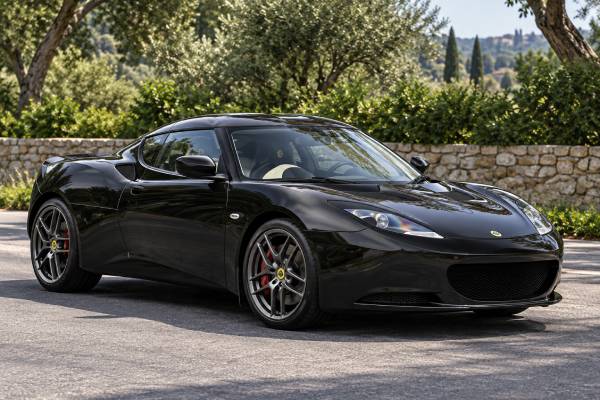
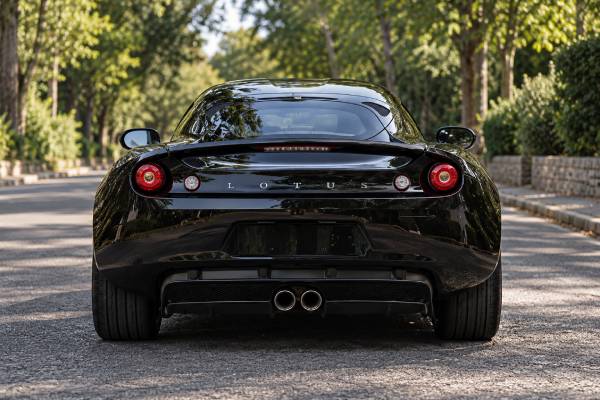
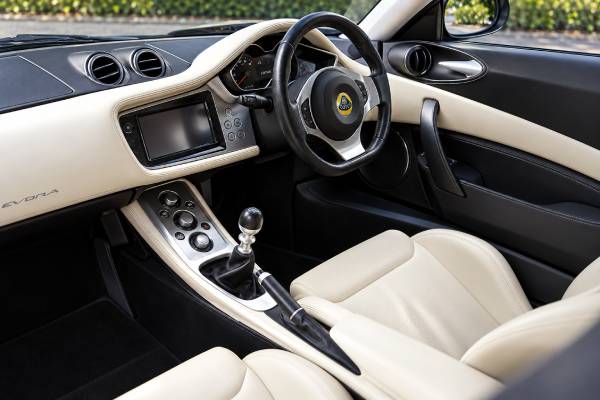
The Lotus Evora Launch Edition is the first fully specified production version of the Type 122 sold to European customers, and its identity is unusually well documented. Lotus designated the first 450 cars as Launch Editions for the 2010 model year, with customer deliveries starting in May 2009. Every one combined the naturally aspirated 3.5-liter Toyota-derived V6 with 2+2 seating and the Tech, Premium, and Sport packs, then added equipment such as bi-xenon lighting, upgraded Alpine audio, a reversing camera, power-fold mirrors, and a commemorative cabin plaque. Mechanically, it remained the original 280 PS, or roughly 276 hp, Evora: rear-wheel drive, six-speed manual transmission, hydraulic steering, forged-aluminum double wishbones, and the bonded-aluminum chassis that made the car feel much lighter on the road than its grand-touring brief suggested. Today, specification completeness matters, but condition matters more. Early Evoras can reward careful ownership with exceptional ride and steering, while neglected examples can accumulate expensive clutch, shift-cable, air-conditioning, trim, water-ingress, and chassis-repair concerns.
Table of Contents
- How to Identify a Genuine Launch Edition
- Original Evora Hardware and Technical Data
- What the Tech, Premium, and Sport Packs Added
- Why the Early Evora Chassis Still Stands Out
- Service Strategy for a 2009–2010 Launch Edition
- Early-Car Faults and Pre-Purchase Checkpoints
- Collector Car, Driver’s Car, or Both?
How to Identify a Genuine Launch Edition
A genuine Launch Edition should make sense as a complete early-production package, not just as an Evora wearing a seller-applied label. Lotus stated that the first 450 cars would receive the Launch Edition specification and a unique commemorative build plate, so provenance and equipment should support each other.
The starting point is the factory release for the 2010 model year. It lists 2+2 seating, Tech Pack, Premium Pack, Sport Pack, high-power silver cast alloy wheels, bi-xenon headlamps, Alpine IMPRINT audio, reversing camera, and electric power-fold mirrors as the core Launch Edition content. Ardent Red and British Racing Green were offered as standard paint colors, while other colors from the range remained available at extra cost. That means a Launch Edition does not have to be red or green to be authentic.
The build plate is useful evidence, but a plate on its own is not enough. Early cars are now old enough that trim pieces can be swapped, plaques can be removed during repair, and individual options can be retrofitted. A better authentication chain includes the VIN, original order or invoice, factory or dealer build information, early registration history, service book, and physical equipment.
There is another common source of confusion: the close-ratio manual gearbox. Lotus listed a sports-ratio six-speed manual as a separate cost option. The Sport Pack itself included a switchable sport mode, higher rpm limit, more permissive traction-control calibration, sports diffuser, titanium exhaust tailpipe, cross-drilled brake discs, black calipers, and an engine oil cooler. Therefore, a Launch Edition can be correctly specified without the optional sports-ratio gearbox.
The 2009–2010 year description also needs context. Lotus called these cars 2010 model-year Evoras, but deliveries began in Europe during 2009, so registrations span both calendar years. A 2009 first registration is not evidence that the car predates the Launch Edition program; it is exactly what should be expected for the earliest cars.
Original Evora Hardware and Technical Data
The Launch Edition is a naturally aspirated ICE sports car with a transverse 3.5-liter V6 mounted behind the cabin, a six-speed manual transaxle, and rear-wheel drive. Its engineering emphasis is chassis response and low mass rather than forced-induction output, and the factory Launch Edition package did not alter the engine’s rated 280 PS and 342 Nm.
| Specification | Value |
|---|---|
| Engine family | Toyota 2GR-FE V6 with Lotus calibration |
| Displacement | 3,456 cc (3.5 L) |
| Induction | Naturally aspirated |
| Valve timing | Dual variable valve timing |
| Maximum power | 280 PS (206 kW; about 276 hp) |
| Maximum torque | 342 Nm (252 lb-ft) |
| Transmission | 6-speed manual |
| Optional transmission | Sports-ratio 6-speed manual |
| Drive | Rear-wheel drive |
| Differential | Open bevel-gear differential with Bosch electronic differential-lock function |
| Measure | Factory figure |
|---|---|
| 0–100 km/h | Just over 5 seconds in the original launch release |
| Top speed | Over 260 km/h (over 161 mph) in the original launch release |
| Combined fuel consumption | 8.7 L/100 km (32.5 mpg UK) |
| Urban fuel consumption | 12.4 L/100 km (22.8 mpg UK) |
| Extra-urban fuel consumption | 6.5 L/100 km (43.5 mpg UK) |
| CO₂ emissions | 205 g/km |
| Specification | Value |
|---|---|
| Front suspension | Forged-aluminum unequal-length double wishbones |
| Rear suspension | Forged-aluminum unequal-length double wishbones |
| Dampers | Bilstein monotube gas dampers |
| Springs | Eibach coaxial coil springs |
| Anti-roll bars | Front and rear |
| Steering | Hydraulically assisted rack and pinion |
| Front brake discs | 350 × 32 mm ventilated; cross-drilled with Sport Pack |
| Rear brake discs | 332 × 26 mm ventilated; cross-drilled with Sport Pack |
| Brake calipers | AP Racing four-piston fixed aluminum-alloy calipers |
| Brake electronics | Bosch ABS, Hydraulic Brake Assist, and Electronic Brake Distribution |
| Specification | Value |
|---|---|
| Body structure | Bonded aluminum safety tub with composite outer panels |
| Body style | 2-door mid-engine coupe |
| Launch Edition seating | 2+2, four seating positions |
| Overall length | 4,350 mm (171.3 in) |
| Width excluding mirrors | 1,848 mm (72.8 in) |
| Width including mirrors | 1,972 mm (77.6 in) |
| Overall height | 1,229 mm (48.4 in) |
| Wheelbase | 2,575 mm (101.4 in) |
| Position or item | Specification |
|---|---|
| Front wheel diameter | 18 in |
| Rear wheel diameter | 19 in |
| Launch Edition wheel finish | High-power silver cast alloy |
| Front tires | 225/40 ZR18 |
| Rear tires | 255/35 ZR19 |
| Original development tire | Yokohama Advan Sport LTS specification |
| Later handbook cold pressure reference | 2.3 bar front / 2.5 bar rear for standard road tires; verify against the car’s placard and fitted tire specification |
| Item | Specification or interval |
|---|---|
| Routine service interval | 9,000 miles (15,000 km) or 12 months, whichever occurs first |
| Engine oil refill with filter | 6.1 L for the naturally aspirated Evora |
| Engine timing drive | Chain driven |
| Coolant type | OAT extended-life coolant in period Lotus documentation |
| Coolant change interval | 4 years in period handbook data |
| Fuel system | Port injection with Lotus electronic control |
| Fuel requirement | Premium unleaded recommended; follow market-specific handbook octane guidance |
These figures describe the early naturally aspirated Evora and factory Launch Edition package, but owners should still use VIN- and market-specific documentation when servicing a real car. Lotus revised components during the Evora’s production life, and later handbook data should not be used to assume that every early part number, fluid, cable, or calibration remained unchanged.
What the Tech, Premium, and Sport Packs Added
The Launch Edition’s defining feature is not extra horsepower; it is that Lotus bundled three option packs and several desirable standalone options into the first customer cars. Understanding those packs is the easiest way to judge whether an example still reflects its original specification.
Tech Pack: the everyday-use hardware
The Tech Pack was aimed at making the Evora usable as a modern road car rather than a stripped weekend toy. The 2009 specification included an upgraded Alpine multimedia system, seven-inch display, portable satellite navigation, Bluetooth telephone connection, USB and iPod interfaces, cruise control, rear parking sensors, and tire-pressure monitoring. Launch Editions also received the upgraded Alpine/Lotus IMPRINT sound system and a reversing camera.
Much of that electronics package is now technologically dated. A sympathetic modern head unit can improve usability considerably, but originality-conscious buyers should ask whether the removed factory equipment comes with the car. More important than period navigation is whether the wiring has been altered neatly and reversibly. Crimped household connectors, cut looms, unexplained amplifiers, battery drains, or a camera that works intermittently can turn a simple modernization into a diagnostic problem.
Premium Pack: trim rather than performance
The Premium Pack upgraded the environment occupants touched and saw. It added leather to the center console, armrest, door pockets, lower door areas, footwell side panels, and tailgate insert, along with accent lighting, upgraded mats, an Evora dashboard logo, and a choice of leather colors.
Those surfaces are now useful condition indicators. Heavily scuffed sill leather, cracked seat bolsters, separated trim, or mismatched recoloring can reveal how the car has been used and repaired. Wear is not unusual on an early Evora because entering and exiting the low cabin naturally brushes several trim areas. The question is whether the deterioration is honest and repairable or part of broader neglect.
Sport Pack: the most important dynamic option
The Sport Pack changed the driver’s interface more than the other packages. Its switchable sport mode sharpened throttle response, raised the rpm limit, and increased the yaw and slip thresholds before traction control intervened. It also brought a sports diffuser, titanium exhaust tailpipe, cross-drilled discs, black calipers, and engine oil-cooling hardware.
One subtle point is worth repeating: the sports-ratio gearbox remained a separate option. When comparing two Launch Editions, establish which gearbox each car actually has rather than assuming all fully loaded early cars share identical ratios. On a test drive, gearing changes the impression of the naturally aspirated V6 more than a small equipment difference does.
Why the Early Evora Chassis Still Stands Out
The Launch Edition’s lasting appeal comes from the way its steering and suspension communicate at normal road speeds. It does not need the power of later supercharged versions to make the underlying Type 122 architecture feel special.
The bonded-aluminum tub provides a stiff platform without requiring a heavy steel monocoque. At each corner, forged-aluminum double wishbones control wheel movement, while Bilstein monotube dampers and Eibach springs were selected around road compliance rather than showroom stiffness. The result is unusually disciplined body control over crests and compressions without the sharp vertical impacts common in many modern performance cars.
Hydraulic steering is equally central. The system supplies assistance for parking and touring but preserves a natural buildup of weight as the front tires load. A healthy Evora does not need constant correction on a normal road. It should track cleanly, turn in without a dead zone, and communicate surface changes without shaking the wheel out of the driver’s hands.
The 280 PS V6 complements that balance because its response is linear. There is no sudden supercharger torque rise, and the engine encourages progressive throttle application from the middle of a corner. Acceleration is quick rather than brutal. The original factory material described 0–100 km/h in just over five seconds and more than 260 km/h at the top end; real enjoyment arrives well before either number is relevant.
Brake feel should also be a strength. The AP Racing four-piston calipers and large ventilated discs provide ample thermal capacity for fast road use. On a Launch Edition, cross-drilled discs and black calipers are part of the Sport Pack specification. Pulsation, a long pedal, one wheel running markedly hotter than the others, or steering pull under braking warrants investigation rather than being dismissed as age.
The easiest way to assess the chassis is to drive on imperfect roads. A good car flows over a rough surface and settles quickly after a major bump. Repeated bouncing, clunks, steering kickback, or heavy tramlining point toward tires, alignment, bushings, dampers, joints, wheels, or previous accident damage. That test reveals more about an Evora than a short burst of straight-line acceleration.
Service Strategy for a 2009–2010 Launch Edition
A Launch Edition benefits most from regular, documented maintenance by someone familiar with early Evoras. The core Toyota V6 has a strong reputation, but the car’s mid-engine packaging, long hydraulic and cooling runs, bonded structure, and early-production details make specialist knowledge valuable.
The factory routine interval was 9,000 miles or 12 months, whichever came first. That annual time limit remains sensible for cars that now cover very low mileage. Engine oil accumulates moisture and combustion by-products; brake fluid absorbs water; rubber seals age; batteries sulfate; and air-conditioning seals can suffer from long periods of inactivity.
Clutch and shift quality deserve a baseline at every service. The cable-operated gear linkage was revised during the model’s life, and early cars can develop stiffness, noise, vagueness, or poor selection. Adjustment may help, but access-intensive cable replacement is possible. A heavy or inconsistent clutch should be diagnosed properly because hydraulic issues, release components, clutch wear, heat effects, and linkage behavior can overlap in the driver’s description.
Cooling maintenance is equally important. The engine is at the rear and heat exchangers are at the front, so the system depends on long pipes, sound connections, correct bleeding, functioning fans, and unobstructed airflow. A coolant smell, changing reservoir level, dried residue around joints, or unstable temperature in traffic should be investigated immediately. The handbook’s four-year coolant interval is a useful maximum reference for the period specification, not a reason to ignore evidence of contamination or previous incorrect coolant.
The Sport Pack’s oil cooler should be visually inspected along with its associated lines and fittings. The naturally aspirated car does not share every oil-system concern of the supercharged S, so recall information for the Evora S should not automatically be applied to a Launch Edition. The correct approach is to inspect the hardware actually fitted to the VIN and confirm any applicable campaigns or service actions individually.
Brake service should include more than pad thickness. Check disc condition, flexible hoses, fluid age, caliper operation, parking-brake function, and corrosion caused by storage. Cars used for occasional track work require shorter inspection intervals. Lotus itself advised more intensive preparation and servicing when the Evora was used on a circuit.
Finally, keep a maintenance file. In a low-production early car, invoices showing dates, mileage, fluid specifications, part numbers, alignment settings, tire dates, and specialist observations materially improve future diagnosis and resale confidence.
Early-Car Faults and Pre-Purchase Checkpoints
The smartest pre-purchase inspection focuses on known early-car weak points before cosmetics. Gear cables, clutch operation, water sealing, air conditioning, door hardware, interior trim, suspension noises, and evidence of impact repair can each change the real cost of a seemingly attractive Launch Edition.
Start the inspection cold. Confirm that warning lamps perform their normal self-check, the V6 starts promptly, and no unexplained mechanical noise persists as the idle settles. Scan the car for stored faults and look for signs that codes were recently cleared. Service history should be continuous enough to explain long periods of low mileage or storage.
Drive the manual gearbox through every ratio. Early shift cables are a well-known concern, and the lever should not feel as though it is fighting the gate. Check reverse engagement, fast second-to-third shifts after warming, and low-speed first-to-second changes. A poor shift can be an adjustment issue, but the labor involved in accessing cables means it should be priced realistically.
Clutch behavior needs a separate test. Use progressive full-throttle load in a higher gear once the car is fully warm to check for slip, then assess take-up from a standstill for judder or inconsistent engagement. Listen for release-bearing noise with the pedal up and down. Do not accept a vague claim that a difficult clutch is simply normal for a Lotus.
Next, inspect the cabin for water. Feel beneath mats, look at lower carpet edges, check door and window seals, and smell for dampness. Early Evoras generated service attention for water ingress and door-related issues. Water that reached connectors or remained trapped for years can create electrical symptoms long after the original leak is repaired.
Run the air conditioning at idle and while driving. Early condensers were vulnerable, and a system that has merely been re-gassed without repairing a leak may work briefly during a sale. Cooling should remain consistent, the blower should operate at all speeds, and condensate should drain outside rather than into the cabin.
Inspect the bonded chassis and bolt-on structures underneath. Composite outer panels cannot rust, but impact damage still matters. Look for disturbed sealant, crushed lift points, mismatched fasteners, non-factory drilling, distorted undertrays, or suspension pickups that do not look symmetrical. Aluminum repair requires the right methods; conventional body-shop improvisation can permanently compromise the structure.
Tires provide a quick chassis clue. Uneven inner-edge wear, four different tire models, old date codes, or cheap replacements are reasons to investigate alignment and ownership standards. The Evora’s steering character depends heavily on correct tires and geometry, so poor rubber can make a sound car feel much worse than it is.
Collector Car, Driver’s Car, or Both?
The Launch Edition works best as a driver’s car with collectible provenance rather than a car preserved solely because it was among the first 450. Its strongest value case is the combination of documented early-production status, complete original specification, and the exceptionally communicative chassis Lotus launched in 2009.
For a collector-minded buyer, the most desirable examples are likely to retain the commemorative plate, original color and trim combination, factory option hardware, books, keys, order paperwork, service invoices, and a traceable ownership story. Original wheels matter, and having any removed factory audio equipment or reversible parts can help even if the car uses a newer head unit day to day.
For a driver, maintenance condition should outweigh untouched originality. Fresh premium tires, correctly set geometry, a crisp gearshift, strong air conditioning, healthy dampers, clean brake fluid, and a dependable battery make the car far more enjoyable than an all-original example that has been static for years. Sensible reversible updates are not automatically a negative if they solve real usability problems without cutting the car apart.
When comparing prices, calculate the next two years of work before deciding which car is cheaper. A clutch job, shift cables, four correct tires, air-conditioning repair, worn trim, brake discs, and suspension refresh can collectively erase a large purchase-price saving. A strong pre-purchase inspection is inexpensive compared with correcting several deferred jobs at once.
The Launch Edition is also historically easy to understand. Lotus built it to put fully equipped cars into customers’ hands at the start of Evora production, then allowed later buyers to choose a more individualized specification. That makes surviving examples a snapshot of how Lotus wanted its new 2+2 to be experienced: comfortable enough to tour, practical enough to use, yet still governed by steering feel, damping quality, low mass, and driver involvement.
If those priorities match what you want, the early Launch Edition remains compelling. It is slower than the supercharged cars that followed and less polished than later Evoras, but it captures the original engineering brief without the extra layer of forced induction. Find one whose history proves that owners maintained the car rather than merely admired its rarity, and the first Evora can still feel remarkably contemporary where it matters most—from the steering wheel, brake pedal, and seat of the driver.
References
- The 2010 Model Year Lotus Evora Range Specification and Pricing (EU and Switzerland) 2009 (Factory Press Information)
- Lotus • Heritage Timeline 2026
- Evora ‘Launch Edition’ – PistonHeads UK 2009
- Lotus Evora Launch Edition 2010 Price & Specs | CarsGuide 2026
- LOTUS EVORA 2011 OWNER’S HANDBOOK MANUAL Pdf Download | ManualsLib 2011 (Owner’s Manual)
- Lotus Evora buying checkpoints | evo 2013
Disclaimer
This article is for informational purposes only and does not replace professional diagnosis, inspection, or repair. Specifications, torque values, fluids, service intervals, components, and procedures can vary by VIN, market, production date, and equipment. Confirm all work against the official Lotus service documentation and the exact build specification of the vehicle being serviced.
If you found this guide useful, please consider sharing it on Facebook, X/Twitter, or with a Lotus enthusiast community to help support our work.