
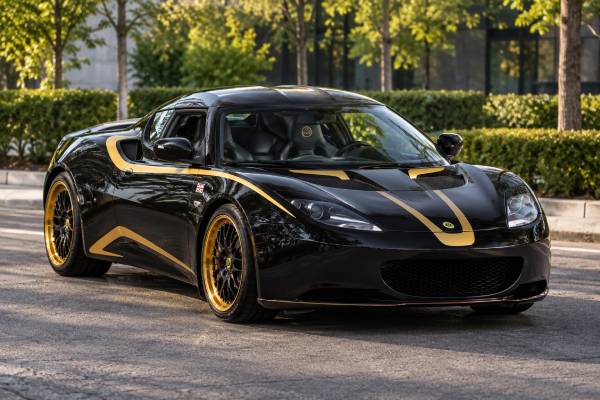
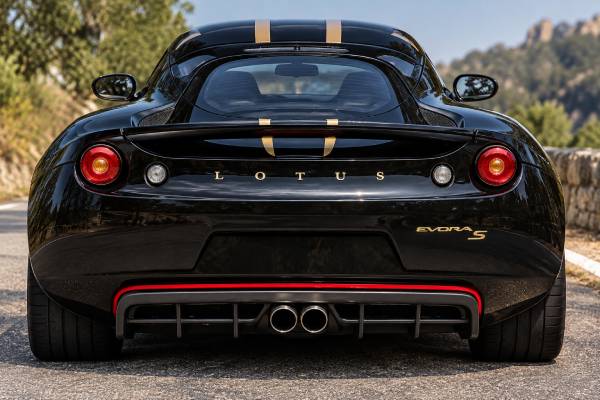
The Lotus Evora S GP Edition is one of the most visually distinctive versions of the original Type 122 Evora, pairing the supercharged Evora S powertrain with a black, gold, and red scheme inspired by Lotus Renault GP. Underneath the special paint and trim, it remains a serious mid-engined sports car: a supercharged 3.5-liter Toyota-derived 2GR-FE V6, a close-ratio six-speed manual, hydraulic steering, double-wishbone suspension, and AP Racing brakes. The important complication is rarity. Contemporary UK launch coverage spoke of only three cars, while Lotus model-history records later documented seven 2011-model-year European special-paint cars and 18 2012-model-year Federal cars. That makes provenance more important than a simple production-number claim. This guide separates GP-specific details from ordinary Evora S specifications, explains the engineering that matters on the road, identifies service and recall issues worth checking, and gives buyers a practical framework for authenticating and evaluating a surviving example.
Table of Contents
- GP Edition identity and production history
- Supercharged 2GR-FE V6 and induction system
- Performance, driveline, chassis, and brakes
- What the GP Edition actually changed
- Maintenance priorities and service data
- Known issues, recalls, and inspection points
- Buying and authenticity guide
GP Edition identity and production history
The Evora S GP Edition is best understood as a factory special-edition presentation of the existing supercharged Evora S rather than a separate high-output mechanical derivative. Its defining features are the Lotus Renault GP-inspired colors, unique trim treatment, high equipment level, and limited production across 2011-model-year European and 2012-model-year Federal specifications.
The edition appeared in autumn 2011, when Lotus was heavily promoting its Formula 1 association and the black-and-gold visual language that recalled both the contemporary Lotus Renault GP cars and classic Team Lotus liveries. Contemporary British reporting described a run of three cars for the UK market, which explains why “only three made” is still repeated in advertisements and enthusiast discussions. Lotus model-history information preserved by marque technical communities gives the wider picture: seven special-edition paint versions based on the 2011-model-year European supercharged car, followed by 18 2012-model-year cars for Federal markets.
| Item | Verified detail |
|---|---|
| Model | Lotus Evora S GP Edition, Type 122 |
| Model years represented | 2011 European specification; 2012 Federal specification |
| Production record | 7 European 2011MY special-paint cars plus 18 Federal 2012MY cars in Lotus model-history data |
| Contemporary UK launch claim | Three cars offered in the initial UK announcement |
| Base vehicle | Supercharged Evora S |
| Engine | 2GR-FE 3.5-liter V6 with Harrop HTV1320 supercharger |
| Transmission | Six-speed manual, rear-wheel drive |
| Theme | Motorsport Black body, gold striping/badging and wheels, Total Red accents |
The model-year split matters because Lotus made running changes to the Evora range. Federal cars also carried market-specific emissions, restraint, lighting, and certification equipment. A 2012 U.S.- or Canadian-market GP should not be judged against every detail of a 2011 UK car. The GP identity sits on top of the relevant market’s Evora S specification, so original documentation is especially valuable.
For collectors, the strongest description is therefore not “three built” or even simply “25 built,” but “a GP Edition supported by factory-era configuration evidence.” The known Lotus model-history record gives a useful total framework, while the car in front of you still needs to prove what it is.
Supercharged 2GR-FE V6 and induction system
The GP Edition uses the same 3,456 cc supercharged 2GR-FE V6 as the standard Evora S, rated at 350 PS, equivalent to 345 hp, at 7,000 rpm and 400 Nm (295 lb-ft) at 4,500 rpm. The important engineering change from the naturally aspirated Evora is not merely boost pressure; Lotus revised the fuel, cooling, clutch, flywheel, exhaust, and calibration package to make the added output usable in a mid-engined road car.
The Toyota 2GR-FE is an aluminum 60-degree V6 with dual overhead camshafts, four valves per cylinder, chain-driven camshafts, and variable valve timing. Lotus installed the engine transversely behind the cabin. For the Evora S, a Harrop HTV1320 positive-displacement supercharger supplies the additional airflow. The supercharged installation also uses higher-flow injectors, an uprated fuel pump, revised spark plugs, and twin front-mounted engine-oil coolers.
| Specification | Data |
|---|---|
| Engine code | Toyota 2GR-FE, Lotus application |
| Configuration | Transverse mid-mounted 60-degree V6, DOHC, 24 valves |
| Displacement | 3,456 cc (3.5 L / 210.9 cu in) |
| Induction | Harrop HTV1320 supercharger |
| Fuel delivery | Electronic port fuel injection |
| Maximum power | 350 PS / 257.5 kW / 345 hp at 7,000 rpm |
| Maximum torque | 400 Nm / 295 lb-ft at 4,500 rpm |
| Camshaft drive | Timing chains |
| Spark plugs | Denso FK20HR11 iridium in Lotus service data |
| Engine position / driven wheels | Mid-engine / rear-wheel drive |
The timing-chain design removes the scheduled belt replacement concern found on some older exotic cars, but it does not make the engine maintenance-free. Oil quality, oil level, cooling-system condition, auxiliary-drive components, ignition components, and the supercharger drive still matter. The Evora S also holds substantially more oil when the front coolers and long lines are counted than the naturally aspirated car, which is important when reading capacity specifications.
The exhaust is part of the car’s character as well as its output strategy. The Evora S introduced an active silencer arrangement with a vacuum-operated bypass valve. The Sport button sharpens throttle behavior, changes stability-control thresholds, raises the instantaneous rev limit in relevant conditions, and activates the more vocal exhaust mode. On a GP Edition, that standard Evora S system should function cleanly rather than being dismissed as a decorative feature.
Performance, driveline, chassis, and brakes
Performance is essentially standard Evora S performance: Lotus quoted 0–60 mph in 4.6 seconds, 0–100 km/h in 4.8 seconds, and about 277 km/h (172 mph) maximum speed for the early supercharged manual. The GP Edition’s significance lies in combining that pace with the Evora’s unusually communicative steering and compliant double-wishbone chassis, not in adding another layer of engine tuning.
A close-ratio six-speed manual is central to the package. Lotus made the sports-ratio gearbox standard on the Evora S and paired it with a lower-inertia flywheel and heavy-duty clutch. That distinguishes the S mechanically from many early naturally aspirated Evoras, for which transmission choices and ratios varied by specification. The GP Edition is therefore a three-pedal car in its original form, despite later Evora S variants becoming available with IPS automatic transmission.
| Item | Specification |
|---|---|
| Transmission | Six-speed close-ratio manual |
| Drive | Rear-wheel drive |
| Clutch | Heavy-duty clutch fitted to Evora S specification |
| 0–60 mph | 4.6 seconds |
| 0–100 km/h | 4.8 seconds |
| Maximum speed | 277 km/h (172 mph) in Lotus Evora S technical data |
| European combined consumption, standard wheels | 10.0 L/100 km (23.5 mpg US / 28.2 mpg Imp) |
| European CO2, standard wheels | 235 g/km |
| European combined consumption, 19/20-in option | 10.2 L/100 km (23.1 mpg US / 27.7 mpg Imp) |
| European CO2, 19/20-in option | 239 g/km |
Fuel-consumption and CO2 figures are test-cycle and wheel-specification dependent, and Federal-market labeling should be read from the car’s own certification information. They are useful here mainly to show that the 19/20-inch wheel package carried its own homologated figures in early European Evora S technical data.
The Evora’s bonded and riveted aluminum structure is the foundation for its steering accuracy and relatively low mass. Suspension is independent by forged aluminum double wishbones at all four corners, with Bilstein dampers and Eibach springs. Lotus revised wishbones and the rear anti-roll bar for the S. Hydraulic power assistance preserves steering texture that is often filtered out by later electric systems.
Braking is by AP Racing four-piston aluminum calipers, with large ventilated discs. On supercharged cars, cross-drilled discs and black-painted calipers were standard in the early S specification. Electronic stability control is integrated into Lotus DPM, but the calibration is intended to support rather than smother the chassis.
| Specification | Data |
|---|---|
| Chassis | Bonded aluminum structure with composite body panels |
| Suspension | Independent forged-aluminum double wishbones; Bilstein dampers; Eibach springs |
| Steering | Lotus-tuned hydraulic power-assisted rack-and-pinion |
| Brake calipers | AP Racing four-piston aluminum, front and rear |
| Brake discs | 350 mm (13.8 in) front; 332 mm (13.1 in) rear |
| GP wheel format | Forged 19-in front / 20-in rear design wheels, gold finish |
| Tire size | 235/35 ZR19 front; 275/30 ZR20 rear |
| Length | 4,361 mm (171.7 in) |
| Width | 1,848 mm (72.8 in), excluding mirrors |
| Wheelbase | 2,575 mm (101.4 in) |
| Fuel tank | 60 L (15.9 US gal) |
What the GP Edition actually changed
The GP package changed appearance, trim, and equipment far more than mechanical specification. Its value comes from a coordinated factory configuration: Motorsport Black paint, inset gold graphics, red accents, gold-finished wheels, special interior materials, and a generous set of Evora options that made the car visually and materially distinct from an ordinary S.
Lotus model-history data identifies the main body color as Motorsport Black, paint code C152, with inset Gold stripes using code C164 and Total Red mirror pods using code C154. Gold badging, gold-finished wheels, and Union Jack decals above the side repeaters completed the exterior theme. The treatment deliberately echoed the black-and-gold Grand Prix image without turning the road car into a mechanically homologated racing derivative.
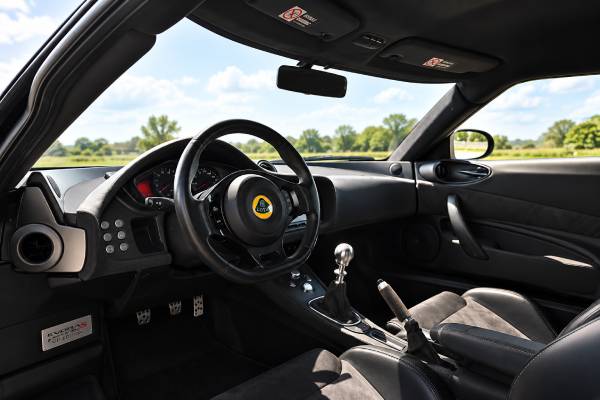
The initial UK sales announcement added Premium Pack with SuedeTex and custom red stitching, a SuedeTex base trim package, Tech Pack, reversing camera, and forged Diamond Cut Design wheels in 19-inch front and 20-inch rear sizes. Lotus model-history data further describes premium sport trim, black aluminum dash-panel trim, and matching darker steering-wheel and console finishers.
| Area | GP Edition detail |
|---|---|
| Main exterior | Motorsport Black C152 |
| Striping / graphics | Inset gold striping; Lotus model-history data identifies Gold C164 |
| Red accents | Total Red C154 mirror pods and other market/build-specific red detailing |
| Badges | Gold-colored badging |
| Wheels | Forged 19/20-inch design wheels in gold finish |
| Exterior identifiers | Union Jack decals above side repeaters on documented configuration |
| Interior | Premium sport/SuedeTex treatment with red stitching; dark trim finishers |
| Convenience equipment | Tech Pack and reversing camera in the initial GP specification |
This distinction is important when shopping. A standard Evora S can be repainted black, fitted with gold wheels, and striped convincingly. That may create an attractive tribute, but it does not create a factory GP Edition. Conversely, a genuine GP may have lost original decals, wheels, trim pieces, or paint through accident repair or cosmetic refurbishment. Authenticity and originality are therefore separate questions.
Market-year differences also require restraint. The later 2012 Federal cabin specification evolved from the earlier European arrangement, so not every authentic car will present identical leather/SuedeTex combinations or minor trim details. Comparing a U.S. car against photographs of one of the three UK launch cars can lead to false conclusions. Build provenance should always outrank a generic photo checklist.
Maintenance priorities and service data
A GP Edition needs the same disciplined maintenance as any early Evora S, with added attention to the supercharged car’s oil-cooling circuit and the cost of rare cosmetic parts. Service history by date is as important as mileage because many GP cars now cover relatively few miles per year.
Lotus service information specifies routine maintenance at the first occurrence of 9,000 miles (15,000 km) or 12 months under normal conditions. Severe use, including repeated high rpm, short cold journeys, dusty operation, or sustained hard driving, justifies shorter oil-service intervals. Low annual mileage is not a reason to skip time-based fluid changes.
The supercharged engine’s oil capacity causes frequent confusion. Lotus service data states a 10.1-liter dry system capacity for the Evora S, while also explaining that roughly 4 liters reside in the front-mounted oil coolers and associated lines and are not drained during a routine service. That means a normal oil change should never be filled blindly to the full dry-system number. Correct procedure and dipstick level matter more than a headline capacity.
| Service item | Reference |
|---|---|
| Routine service interval | 15,000 km (9,000 mi) or 12 months, whichever occurs first |
| Engine oil system, dry | 10.1 L (10.7 US qt) on supercharged cars including front cooler circuit |
| Oil cooler note | About 4 L remains in front cooler/lines and is not drained in routine servicing |
| Manual transmission oil | 2.3 L (2.4 US qt), SAE 75W-80 API GL-4 in Lotus service data |
| Brake / clutch fluid | DOT 4 non-mineral hydraulic fluid |
| Brake / clutch fluid renewal | Time-based; early service data specifies regular renewal, with schedule/version differences to be checked for the car |
| Coolant | Ethylene-glycol OAT coolant, 50% concentration in Lotus service data |
| Coolant renewal | Every 4 years in the referenced Lotus service notes |
| Wheel bolt torque | 105 Nm (77 lb-ft) |
Oil specification changed in later Lotus documentation, so owners should use the requirement applicable to the car, climate, and current factory guidance rather than choosing a viscosity from an internet summary. The same principle applies to branded transmission fluids and coolants: chemistry and approval matter, and incompatible fluids are not an upgrade simply because they are newer.
Several maintenance habits have outsized value on an Evora S. Keep the engine-oil level correct and investigate any sudden change. Examine the long oil-cooler circuit for seepage, abrasion, or previous repair. Keep radiator and condenser air paths clear. Renew old brake fluid, inspect discs and pads carefully, and check the hydraulic clutch for consistent operation. The supercharged V6 should start cleanly, idle evenly, reach temperature normally, and deliver boost without warning lights or obvious belt noise.
The low nose and large forged wheels also turn ordinary road wear into expensive maintenance. Inspect the front splitter and underbody, look for bent rims, and verify alignment if the steering wheel sits off-center or the tires show uneven inner-edge wear. Correct geometry is part of how an Evora feels; a car that has been “aligned somewhere” is not necessarily set up correctly.
Known issues, recalls, and inspection points
The most important safety checks concern early supercharged-car oil lines, because certain 2011 Evora S production was covered by official campaigns for oil-feed and oil-cooler-hose faults. Not every GP Edition falls into every campaign, so recall status must be checked by VIN rather than assumed from the badge or calendar year.
One Lotus/NHTSA recall covered certain 2011-model-year supercharged Evoras using a three-part variable-valve-timing oil-feed pipe incorporating a flexible hose. Lotus determined that failure could release oil onto the engine or exhaust, creating engine-damage and fire risk. The remedy replaced the earlier arrangement with the later rigid pipe design. Lotus communications also indicated that relevant cars existed outside North America.
A separate campaign concerned the left-rear engine-oil-cooler feed hose on some 2011-model-year manual Evora S cars. The rubber section could rub against the chassis/bulkhead area, potentially causing leakage. Lotus documentation specifically notes that 2012-model-year-onward manual supercharged cars used revised oil-cooler routing and were not affected by that particular action.
For a GP Edition, the date relationship is significant. The European GP was based on 2011-model-year supercharged specification and emerged around the same period as the affected early-S hardware, while the Federal GP cars were 2012 model year. This is exactly why a seller’s assurance that “all recalls were done” should be supported by VIN-level dealer or authority records.
Beyond recalls, an inspection should concentrate on condition rather than folklore:
- Clutch and shift quality: the six-speed should engage cleanly when hot as well as cold. A high bite point, slip under torque, reluctance to select gears, or a vague mechanism deserves diagnosis before purchase.
- Oil leaks and cooler lines: inspect underneath, around the engine, and along accessible cooler connections. Freshly cleaned components immediately before sale can hide useful evidence.
- Cooling behavior: verify stable operating temperature, healthy fans, no coolant odor, and no unexplained loss from the header tank.
- Brakes and tires: cross-drilled discs can show heat-related wear, while old Pirelli performance tires may look legal yet be too aged to deliver expected grip.
- Suspension and steering: listen for knocks, feel for play, and check that hydraulic steering is smooth and consistent. Poor geometry can masquerade as worn hardware and vice versa.
- Body and structure: examine the bonded aluminum chassis and composite panels for signs of accident work, incorrect jacking, underbody strikes, or non-specialist repair.
- Electrical equipment: test air conditioning, windows, locks, mirrors, infotainment, reversing camera, instruments, and every GP-equipped convenience feature.
The supercharger itself should not dominate the inspection merely because it sounds exotic. The Harrop installation is robust when properly maintained, but pulley/belt condition, abnormal bearing noise, vacuum-control function, fueling, and diagnostic history are worth checking. Any non-standard pulley, ECU tune, exhaust change, or intake modification should be documented because increased boost or altered calibration changes the risk profile.
A pre-purchase diagnostic scan is useful even when no warning lamps are illuminated. Lotus-specific fault history and engine data can add context that a generic code reader cannot. For a rare special edition, paying a marque specialist to perform this work is generally more valuable than paying extra for cosmetic detailing before purchase.
Buying and authenticity guide
Buy the GP Edition for verified identity, mechanical condition, and coherent history—not solely for a claimed production number. A genuine but neglected car can be far more expensive to restore correctly than a well-documented example with sensible mileage, and rare GP-specific finishes make careless cosmetic repair particularly costly.
Start with the VIN and market. A documented European 2011-model-year car and a Federal 2012-model-year car should not be expected to share every certification detail, interior component, or emissions part. Ask for the original sales invoice, window sticker where applicable, build information, service invoices, recall records, and photographs from earlier ownership. A continuous history makes it easier to distinguish normal refurbishment from unexplained transformation.
Next, verify the GP visual specification as a system rather than as isolated clues. Motorsport Black paint alone proves nothing. The original configuration combines the black body with gold striping and badging, red accents, gold-finished forged wheels, and the corresponding interior treatment. Check whether those pieces are original, refinished, replaced, or missing. A replacement wheel is not necessarily a problem; four incorrectly styled wheels on a car with no supporting documents are a different matter.
On the test drive, look for the traits that make an Evora S worth owning. Steering should be accurate and naturally weighted, with the car tracking cleanly over changing surfaces. The V6 should pull strongly and progressively, the clutch should cope with full torque without slip, and the gearbox should become no worse as the drivetrain heats. The brake pedal should be firm and consistent. The chassis should feel supple rather than loose; a harsh, skittish Evora may have poor tires, unsuitable setup, worn dampers, or incorrect geometry.
Budget beyond the purchase price. A car that immediately needs four correct 19/20-inch performance tires, brake discs and pads, fluid service, clutch work, wheel refurbishment, and correction of an oil leak can erase an apparent bargain quickly. Conversely, documented expenditure on those items can justify paying more for the right example.
Before agreeing a price, obtain answers to five practical questions:
- Is the car demonstrably a factory GP Edition? VIN context, build data, original sales paperwork, and long-term history should support the claim.
- Are the GP-specific paint, wheels, trim, and graphics substantially correct? Determine what is original and what has been restored or replaced.
- Have applicable safety campaigns been completed? Verify by VIN and market, especially on 2011-model-year supercharged hardware.
- Has servicing followed time as well as mileage? Low-use cars still need fluid renewal, cooling-system care, battery management, and age-related inspection.
- Does it still drive like a properly set-up Evora S? Mechanical feel is evidence. Poor steering, inconsistent braking, clutch slip, overheating, or warning lights should not be rationalized because the car is rare.
The GP Edition’s appeal is unusually easy to understand: its livery connects Lotus road-car engineering to a memorable period of Formula 1-inspired branding, while the underlying Evora S remains one of the most engaging 2GR-powered road cars Lotus built. But rarity should sharpen due diligence, not weaken it. A genuine, correctly maintained car with documented history preserves both sides of the model’s identity—the special-edition details collectors care about and the precise, usable supercharged chassis that made the badge worth commemorating in the first place.
References
- Evora model history milestones – TechWiki — SELOC TechWiki, accessed 2026. [Model history]
- Lotus Evora S GP Edition — SELOC, 2011. [Contemporary launch specification]
- Lotus Evora S GP Edition revealed — evo, 2011. [Launch, price, performance]
- Lotus – Evora S – Workshop Manual – 2013 – 2013 — Lotus service information mirror, 2013. [Capacities, chassis, wheels, service data]
- LOTUS EVORA 2011 OWNER’S HANDBOOK MANUAL Pdf Download — ManualsLib, 2011. [Owner specifications and operating information]
- Defect Information Report – 2011 MY Lotus Evora S — Lotus Cars Limited / NHTSA, 2012. [VVT oil-feed-pipe recall]
Disclaimer
This article is for general informational purposes and is not a substitute for professional diagnosis, inspection, repair advice, or official Lotus service information. Specifications, fluids, torque settings, service intervals, recall applicability, procedures, and equipment can vary by VIN, model year, market, production change, and vehicle configuration. Verify critical information against the correct Lotus workshop literature, owner documentation, recall database, and a qualified Lotus specialist before servicing, modifying, or purchasing a vehicle. If this guide helped, please share it with another Evora enthusiast or prospective owner.