
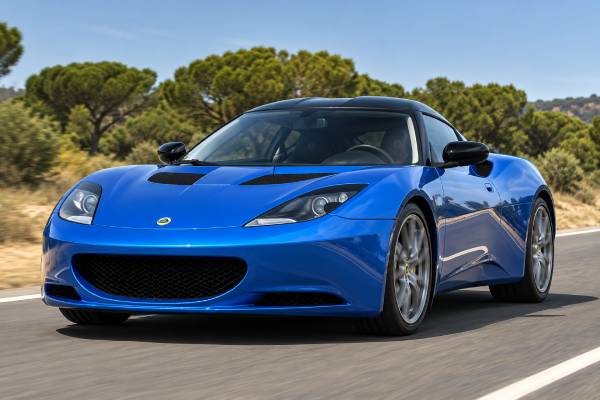
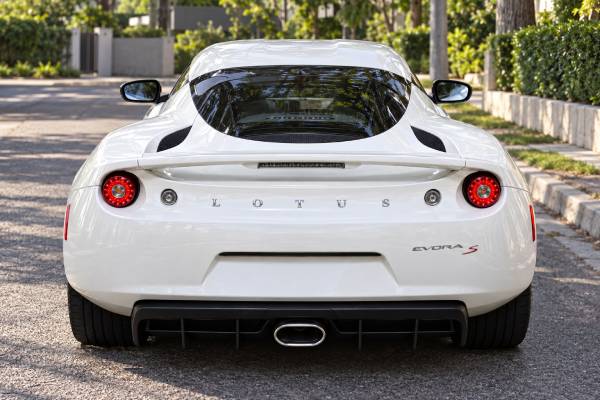
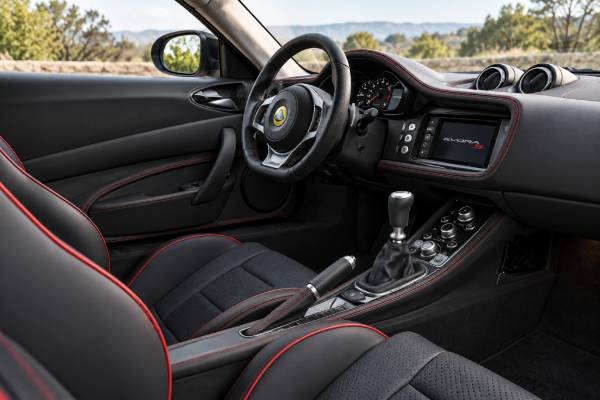
The 2012–2014 Lotus Evora S IPS is the point where two very different ideas meet: Lotus’s supercharged 345 hp Evora S and a conventional six-speed torque-converter automatic. That combination sounds less exotic than a dual-clutch gearbox, yet it created a genuinely distinct Type 122 rather than a simple transmission option. The S IPS uses the 3.5-liter 2GR-FE V6 with a Harrop HTV1320 supercharger, 400 Nm of torque, Lotus-calibrated U660E automatic control, steering-wheel paddles, Sport logic, and separate front oil-cooling circuits for the engine and transmission. It also carries the S model’s revised suspension, cross-drilled brakes, active exhaust hardware, and visual details. For buyers today, the key questions are not just whether it shifts quickly enough, but whether its cooling system, fluid history, tires, geometry, electronics, and supercharged engine have been maintained as a coordinated package. The following guide focuses only on the Evora S IPS sold for model years 2012 through 2014.
Table of Contents
- What the S IPS combines and when it arrived
- The numbers behind the 2012–2014 S IPS
- Why the torque-converter automatic works differently at 345 hp
- Two oil-cooling circuits in one nose
- What the driver actually feels
- Service history that matters on an S IPS
- Buy with evidence, not badges
What the S IPS combines and when it arrived
The Evora S IPS combines the supercharged S powertrain with Lotus’s Intelligent Precision Shift automatic, and it entered the range as a 2012-model-year derivative. Non-U.S. production was introduced in August 2011; the comparable Federal 2012MY specification followed in February 2012.
That timing matters because an S IPS is not simply an earlier Evora S converted to automatic specification. Lotus’s model-history information identifies the supercharged engine with an “S” engine-specification character in the VIN and lists the S with IPS as part of the 2012MY range. The 2012 changes also rationalized oil-cooler packaging, revised exterior details, and aligned the automatic cars with the S-type wishbones and larger rear anti-roll bar.
The supercharged side of the package had already been developed for the manual Evora S. It added the Harrop HTV1320 supercharger, higher-flow injectors, an uprated fuel pump, different spark plugs, an exhaust valve, additional oil cooling, S-specific suspension changes, and drilled brake discs. The automatic side uses Toyota’s U660E six-speed transaxle with a torque converter, but its shift logic, Sport behavior, paddle interface, and vehicle integration were developed around the Evora rather than simply copied from a Toyota application.
There are also market differences worth keeping straight. The broad mechanical identity—345 hp, 400 Nm, six-speed IPS, rear-wheel drive—remains recognizable, but emissions hardware, equipment packs, seat configuration, wheel choice, software revisions, and quoted performance can vary. Federal 2012MY cars retained an under-floor catalytic converter that non-U.S. 2012MY specifications deleted, for example. A build sheet and VIN-specific parts information are therefore more useful than assumptions based on registration year alone.
By 2013, the Sports Racer package brought a more heavily specified appearance and trim combination to selected Evora variants, including supercharged IPS cars in some markets. That does not make every 2013–2014 S IPS a Sports Racer, nor does the Sports Racer name change the core S IPS engine and transmission described here. Treat special trim packages as equipment layers over the underlying mechanical specification.
The numbers behind the 2012–2014 S IPS
The S IPS is a mid-engined, rear-wheel-drive, supercharged V6 coupe with a six-speed U660E automatic and an open differential. The important specification story is the combination of 345 hp and 400 Nm with a 1,442 kg quoted unladen mass, plus dedicated engine- and transmission-oil cooling that makes its service requirements different from both a manual Evora S and a naturally aspirated IPS.
| Item | Specification |
|---|---|
| Engine code | Toyota 2GR-FE |
| Layout | Transverse mid-mounted 60-degree V6, rear-wheel drive |
| Displacement | 3,456 cc (210.9 cu in) |
| Bore × stroke | 94.0 × 83.0 mm (3.70 × 3.27 in) |
| Valvetrain | DOHC, 24 valves, Dual VVT-i |
| Camshaft drive | Primary and secondary timing chains |
| Fuel system | Electronic multi-point port injection |
| Induction | Harrop HTV1320 supercharger using Eaton TVS technology |
| Maximum boost pressure | 0.5 bar in Lotus service data |
| Power | 257.5 kW / 350 PS / 345 hp at 7,000 rpm |
| Torque | 400 Nm (295 lb-ft) at 4,500 rpm |
| Fuel requirement | Minimum 95 RON premium unleaded; 98 RON listed as optimum in service data |
The 2GR-FE retains chain-driven camshafts and port injection, so there is no scheduled timing-belt replacement to budget for. The supercharger, fuel-system changes, spark-plug specification, oil-cooling circuit, and Lotus engine management are what distinguish this application from a naturally aspirated 2GR-FE Evora.
| Gear | Internal ratio | Final drive in Lotus service data |
|---|---|---|
| 1st | 3.300:1 | 3.685:1 |
| 2nd | 1.900:1 | 3.685:1 |
| 3rd | 1.420:1 | 3.685:1 |
| 4th | 1.000:1 | 3.685:1 |
| 5th | 0.713:1 | 3.685:1 |
| 6th | 0.608:1 | 3.685:1 |
| Reverse | 4.148:1 | 3.685:1 |
Lotus literature from this period quotes the automatic S at 4.5 seconds from 0–60 mph and 4.7 seconds from 0–100 km/h, with a maximum speed of 269 km/h (167 mph). Those figures are slightly behind the equivalent manual S at the top end, but they place the S IPS well beyond the naturally aspirated automatic in straight-line pace.
| Measure | Period quoted figure |
|---|---|
| 0–60 mph | 4.5 seconds |
| 0–100 km/h | 4.7 seconds |
| Maximum speed | 269 km/h (167 mph) |
| Urban fuel consumption | 14.4 L/100 km (19.6 mpg UK) |
| Extra-urban fuel consumption | 6.9 L/100 km (40.8 mpg UK) |
| Combined fuel consumption | 9.7 L/100 km (29.3 mpg UK) |
| Combined CO2 | 224 g/km in period European data |
The official economy figures are laboratory results, not a promise of real-world consumption. Short trips, prolonged idling, hard use, temperature, tire choice, and repeated boost can move actual fuel use substantially. What they do show is that Lotus calibrated the tall upper ratios and automatic control to make the S IPS surprisingly efficient in the old extra-urban cycle despite its output.
| Item | Specification |
|---|---|
| Body | Two-door coupe; 2+0 or optional 2+2 depending market/specification |
| Chassis | Bonded extruded-aluminum structure with composite body panels |
| Unladen mass | 1,442 kg (3,179 lb) in period European data |
| Length | 4,361 mm (171.7 in) |
| Height | 1,229 mm (48.4 in) |
| Wheelbase | 2,575 mm (101.4 in) |
| Fuel tank | 60 L (15.9 US gal) |
| Boot capacity | 160 L in period specification data |
| Suspension | Forged-aluminum double wishbones, Eibach springs, Bilstein dampers, anti-roll bars |
| Steering | Hydraulically assisted rack-and-pinion |
| Brakes | AP Racing four-piston calipers; 350 mm front and 332 mm rear ventilated, cross-drilled discs |
| Standard tires | 225/40 ZR18 front; 255/35 ZR19 rear |
| Optional Corsa tires | 235/35 R19 front; 275/30 R20 rear |
Service data is especially useful on the S IPS because the engine and transmission each interact with remote oil-cooling hardware. A drain quantity is not the same thing as total system capacity.
| Item | Verified service reference |
|---|---|
| Routine service interval | 15,000 km (9,000 mi) or 12 months under the period non-U.S. schedule |
| Engine oil | SAE 5W-40 fully synthetic; period API SL/CF and ACEA A3/B3-04 specification |
| Supercharged engine oil system | 10.1 L dry; service notes explain that about 4 L can remain in the front oil-cooler circuit during routine draining |
| Automatic transmission fluid | Toyota Genuine ATF WS or fluid meeting JWS 3324 in period Lotus data |
| Transmission and torque-converter portion | Approximately 5.3 L before accounting for external cooler circuit volume |
| Cooling system | 17 L total in period service data, using OAT ethylene-glycol coolant at the specified mixture |
| Brake fluid | DOT 4 non-mineral hydraulic fluid |
| Wheel bolt torque | 105 Nm (77 lb-ft) |
Why the torque-converter automatic works differently at 345 hp
The S IPS is not a dual-clutch Evora, and judging it as one misses both its strengths and its limitations. The U660E uses a hydraulic torque converter and planetary gearsets, while Lotus software controls how aggressively the gearbox responds to throttle position, Sport mode, and paddle requests.
That matters more with the supercharged engine because 400 Nm is available in a broad, usable part of the rev range. The gearbox does not need a dramatic ratio change every time the driver asks for acceleration; boost and torque can pull the car forward without constantly chasing the top of the tachometer. In normal Drive, this supports relaxed touring and urban use. At stronger throttle openings, the control software can hold lower gears and let the V6 use more of its output.
The automatic also changes the way power reaches the rear tires from a stop. A manual S depends on clutch engagement and driver technique. The S IPS couples through a torque converter, so launch feel is smoother and more repeatable, but some of the immediate mechanical connection of the manual is traded away. That is one reason the S IPS can be extremely quick without feeling identical to the manual car.
Paddle control does not bypass the gearbox’s protection logic. The transmission can refuse a requested downshift if it would send the engine beyond an acceptable speed, and the instrument display can warn the driver when a requested gear is inappropriate. That protection is a feature, not evidence that the paddles are malfunctioning.
Software version also influences behavior. Updated Lotus logic allows manual sequential operation in Sport to remain selected until the driver deliberately returns to Drive or switches Sport off, while earlier behavior could revert automatically after a period without paddle input. If two cars respond differently during a test drive, establish their software level before assuming one has a mechanical fault.
The key ownership point is simple: the gearbox should feel consistent. It may not deliver the seamless, instantaneous response of a modern dual-clutch unit, but it should not flare between gears, hesitate excessively when selecting Drive or Reverse, bang violently into engagement, or develop a markedly worse shift quality as it becomes hot. The best test is a long one that includes low-speed maneuvering, steady cruising, full warm-up, moderate acceleration, manual paddle commands, and Sport mode.
Two oil-cooling circuits in one nose
The 2012–2014 S IPS has two separate oil-cooling jobs at the front of the car: engine oil is cooled on the right-hand side and transmission fluid on the left-hand side. This split layout is one of the most important S IPS-specific inspection areas because hose routing, thermostatic control, front ducts, and accident repairs all affect thermal reliability.
For the 2012 model year, Lotus rationalized the earlier Evora oil-cooler arrangements. Supercharged cars use a single larger engine-oil cooler mounted ahead of the right-front wheel arch. Both naturally aspirated IPS and S IPS cars use a single larger transmission-fluid cooler ahead of the left-front wheel arch. The transmission circuit runs through long feed and return lines to a sandwich-plate/thermostat assembly at the rear bulkhead.
The transmission thermostat begins directing fluid through the cooler circuit only when the oil is hot enough; Lotus service information describes opening at roughly 72°C. This is why the official fluid-level procedure is temperature-sensitive. The gearbox needs to be running, the fluid must be circulated through the external circuit, and the vehicle must be level before the final level is judged. Treating the U660E like an old automatic with a dipstick and a cold “fill to line” check is the wrong approach.
Engine oil has a similar service nuance for a different reason. The supercharged car’s remote oil-cooling circuit retains a significant amount of oil that does not leave the system during a normal sump-and-filter service. A technician who confuses dry capacity with routine refill quantity can overfill the engine. Conversely, a car with cooler or line replacement requires a procedure that accounts for fluid lost from the remote circuit.
For a used-car inspection, look at the front corners from underneath as well as through the grilles. Check for oily staining on cooler connections, damaged hoses, crushed or improvised ducts, rubbing lines, mismatched clips, and evidence that a previous repair has altered the routing. A cosmetically tidy front bumper does not prove the cooling hardware behind it was rebuilt correctly.
This layout also makes front accident history more relevant than a paint-depth reading alone. The bonded chassis and replaceable body components can be repaired properly, but the S IPS has more heat-management hardware running to the nose than a simple naturally aspirated manual car. Documentation for any substantial front-end work should show that the oil circuits were inspected, pressure-tight, refilled correctly, and checked at temperature.
What the driver actually feels
A healthy S IPS should still feel unmistakably like an Evora: detailed hydraulic steering, controlled body motion, strong brakes, and a chassis that responds cleanly to small inputs. The automatic changes the rhythm of acceleration and corner entry far more than it changes the basic steering and suspension character.
Normal Drive is the calmer setting. It suits traffic, motorway work, and situations where the driver wants the engine’s torque without managing every ratio. Pulling a paddle gives temporary manual influence, while Sport mode moves the car toward a more assertive calibration. In Sport, throttle response becomes sharper, shift strategy favors performance, downshifts can include a throttle blip, and Lotus Dynamic Performance Management allows more slip before intervening.
The Sport button therefore affects more than the gearbox. On an Evora S it is part of a package involving engine response, stability-control thresholds, and the active exhaust behavior. A test drive should confirm that the mode indicator illuminates correctly, the exhaust character changes as expected, paddle requests register on the display, and the transmission behaves predictably after repeated shifts.
The chassis deserves an equally careful test. The S specification uses revised wishbones and the larger rear anti-roll bar, while AP Racing four-piston calipers clamp large ventilated discs. Steering that feels vague, a car that follows cambers excessively, persistent steering-wheel offset, uneven tire wear, or braking that pulls to one side should not be dismissed as normal “Lotus character.” Geometry and tire condition have an outsized effect on how an Evora feels.
Wheel and tire specification can alter the impression as well. Standard 18-inch front and 19-inch rear wheels use Pirelli P Zero sizes of 225/40 ZR18 and 255/35 ZR19 in period data. Optional 19/20-inch forged wheels use wider 235/35 and 275/30 P Zero Corsa tires. The larger setup sharpens appearance and changes tire cost and compliance, so compare like with like when judging two cars.
The S IPS is also quieter and easier to use in slow traffic than a manual S because there is no clutch pedal to manage. That convenience is one of its genuine reasons for existing, not an apology for choosing the “wrong” transmission. Buyers who commute, tour, or regularly face congestion can enjoy the Evora chassis without the manual’s clutch and cable considerations, while still using paddles when the road opens up.
Service history that matters on an S IPS
A thick invoice file is more valuable than low mileage if it proves that annual servicing, fluids, cooling hardware, tires, brakes, and diagnostic issues were handled correctly. An S IPS can cover modest mileage yet still accumulate age-related needs in seals, hoses, coolant, brake fluid, air conditioning, tires, and electrical components.
Start with the engine record. Period non-U.S. schedules call for routine service at the first occurrence of 9,000 miles, 15,000 km, or 12 months, with more frequent oil work under severe conditions. The engine should have the correct oil grade for its service specification, a clean filter history, and no evidence that a technician repeatedly filled to the dry-system figure during routine services. Check for oil seepage around the remote cooler lines and for documentation of any supercharger, belt, ignition, or fuel-system work.
The transmission deserves its own paper trail. “Sealed for life” is not a useful purchasing assumption for a 10-plus-year-old performance car. Evidence that ATF condition and level were checked correctly is preferable to a vague invoice saying “gearbox oil topped up.” Lotus specifies Toyota ATF WS/JWS 3324-type fluid and a temperature-controlled level procedure. If a cooler hose, transmission, or related component was opened, the invoice should ideally show that the circuit was brought to operating temperature and leak-checked afterward.
Coolant and brake-fluid age matter even when the odometer barely moves. The braking system is expensive enough that neglected fluid, seized hardware, badly worn discs, or mismatched pads can turn a bargain into a costly first year. Inspect cross-drilled discs for condition, measure remaining thickness rather than judging only the outer lip, and confirm that all four AP Racing calipers operate cleanly.
Tires should be evaluated by age, model, size, tread, and wear pattern—not tread depth alone. An Evora with old premium tires can feel worse than one with newer, correctly matched rubber. Uneven wear can also reveal poor geometry or accident damage. Because the chassis communicates so much through the steering, a proper alignment after suspension or tire work is worth more than cosmetic modifications.
Finally, test the ordinary equipment. Door latches, window-drop behavior, central locking, air conditioning, infotainment, parking aids, heated seats, mirrors, and the tailgate release can all turn into irritating ownership jobs. These are not reasons to reject every car with a minor fault, but they should be priced into the deal and distinguished from powertrain warnings that deserve specialist diagnosis before purchase.
Buy with evidence, not badges
The best Evora S IPS is the car that proves its specification and maintenance history, not the one with the most aggressive wheels, decals, or aftermarket parts. Start by confirming the VIN, build configuration, market, seat layout, factory options, and whether any Sports Racer or other package is genuine rather than recreated cosmetically.
A sensible pre-purchase inspection should include a cold start, full diagnostic scan, long road test to operating temperature, underbody inspection, cooler-line check, brake and tire measurement, and geometry assessment. Let the car idle and heat-soak after the drive, then look again for fresh fluid seepage. Transmission faults that are invisible during a five-minute demonstration can appear only once ATF temperature rises and the cooler circuit is active.
Pay close attention to the way Drive and Reverse engage. There should be no prolonged pause followed by a harsh slam. Run the gearbox through normal automatic operation, Sport, and repeated paddle requests. Confirm that the dash shows the expected range and gear, that rejected downshifts happen only when logically protective, and that the car returns to the intended mode according to its software behavior. Any warning light or intermittent selector fault deserves a scan before money changes hands.
The engine should pull smoothly without misfire, hesitation, persistent warning lights, or obvious overheating. Supercharger noise by itself is not a diagnosis; compare against a known healthy car if possible. More important are fluid leaks, belt condition, service evidence, stable coolant temperature, clean throttle response, and the absence of stored faults. Because the 2GR-FE is fundamentally durable, neglected peripheral systems often tell you more about an individual car than the engine family’s reputation.
Body and cabin condition can reveal how the car was treated. Inspect panel gaps, the underside of the front bumper, wheel rims, sill trim, seat bolsters, door operation, and dampness in the footwells. Evidence of repair is not automatically disqualifying, but it should make the quality of the repair—not merely the fact that it happened—the central question. On an S IPS, verify especially that front cooling ducts and oil lines were restored correctly.
Choose the transmission for your actual use. A manual S gives more direct mechanical involvement, while the S IPS removes clutch work, handles traffic well, and remains fast enough to exploit the chassis on real roads. It is an older torque-converter design rather than a modern DCT, so a buyer expecting instant contemporary paddle shifts may be disappointed. A buyer who values touring ability, repeatable acceleration, and two-pedal convenience may prefer it.
Price should reflect deferred maintenance more than odometer psychology. A cheaper car needing four tires, brakes, cooler hoses, air-conditioning work, fluid baselining, and electrical repairs can quickly cost more than a well-kept example. Conversely, a higher-mileage S IPS with specialist invoices, recent age-sensitive maintenance, correct tires, clean diagnostics, and a composed road test can be the more rational purchase.
The central test is whether the car still behaves as an integrated system. The Evora S IPS was engineered around a supercharged V6, automatic control, active chassis systems, remote oil cooling, and unusually communicative suspension. When those systems are healthy, the automatic does not erase the Evora’s character; it simply delivers it with a different kind of involvement. Buy the example that demonstrates that engineering coherence rather than asking a badge or mileage figure to substitute for evidence.
References
- Lotus Evora Range Technical Specifications (2012) 2011 (Technical specification)
- Evora model history milestones 2019 (Model history)
- Lotus Evora, Evora S Sports Car User Manual 2012 (Owner/technical data mirror)
- Lotus Evora 2009 Workshop Manual 2014 (Service Notes mirror)
- Lotus – Evora S – Workshop Manual – 2013 – 2013 2013 (Service manual mirror)
- Lotus Evora buying checkpoints 2013 (Used-car inspection)
Disclaimer
This article is for informational purposes only and is not a substitute for professional diagnosis, repair, or inspection. Specifications, torque values, service intervals, software behavior, emissions equipment, and procedures can vary by VIN, market, build date, and installed equipment. Verify all critical information against the correct official Lotus owner documentation, service notes, technical bulletins, parts data, and qualified specialist guidance for the individual car. If this guide was useful, please consider sharing it on Facebook, X/Twitter, or with another Lotus enthusiast.