
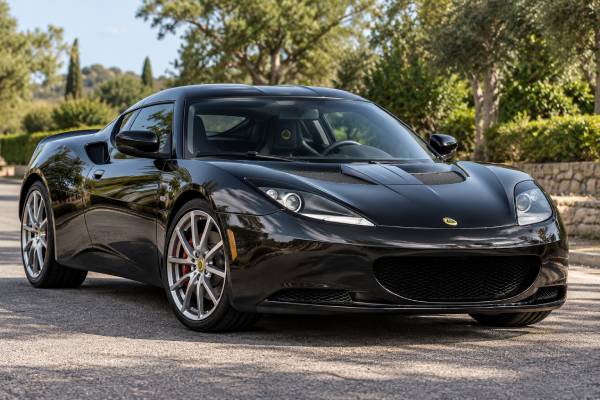
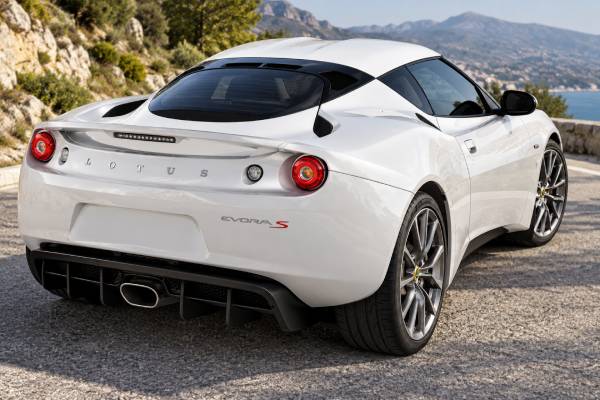
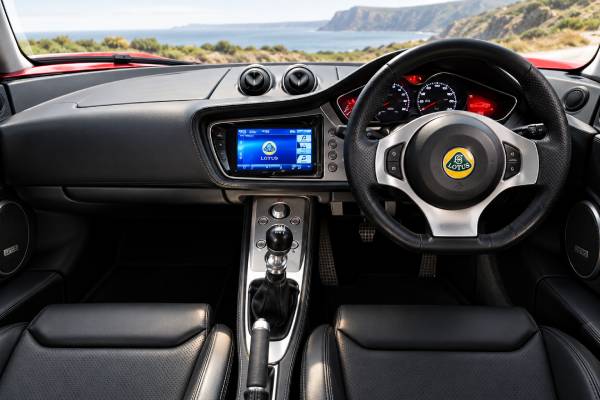
The Lotus Evora S turned the original Type 122 from a fast, flowing grand-tourer into a substantially harder-accelerating sports car without discarding the qualities that made the Evora distinctive. Its 3.5-liter 2GR-FE V6 gained a Harrop supercharger and rose to 345 hp and 400 Nm, but the factory transformation went further: revised fueling, oil cooling, a close-ratio six-speed manual, a lower-inertia flywheel, a stronger clutch, suspension changes, cross-drilled brakes, and an active exhaust all arrived with the S package. Introduced in 2010 and sold through the 2014 period covered here, the manual Evora S also evolved through the 2012 model-year update, so early and later examples are not identical in detail. This article focuses on the three-pedal Evora S, not the separately covered S IPS automatic or GP special edition. It explains what Lotus changed, how the forced-induction system works in the car, which performance and service figures are trustworthy, which early recalls matter, and how to judge a used example on condition rather than reputation alone.
Table of Contents
- How the Evora S changed the original formula
- Supercharger, fueling, cooling, and engine data
- Close-ratio manual driveline and performance
- Suspension, brakes, steering, wheels, and road behavior
- Service requirements and early safety campaigns
- Used Evora S assessment and buying priorities
How the Evora S changed the original formula
The Evora S was a coordinated factory development of the naturally aspirated car, not simply the same chassis with extra boost. Lotus introduced supercharged power together with driveline, brake, cooling, suspension, exhaust, and electronic changes intended to preserve the Evora’s balance while raising performance substantially.
Lotus unveiled the supercharged road car in 2010 and described it as the next level of the Evora experience. By 2011, public factory material quoted 350 PS, or 345 hp, and 400 Nm of torque. The increase over the standard 276 hp car was large enough to change acceleration noticeably, but Lotus kept the transverse mid-engine, rear-wheel-drive layout and the bonded-aluminum architecture.
Model-history records identify a Harrop HTV1320 supercharger, higher-flow injectors, an uprated fuel pump, revised spark plugs, and twin front-mounted air-to-oil coolers among the S-specific engine changes. The manual driveline gained the sports-ratio gearbox as standard, a lower-inertia flywheel, and a heavy-duty clutch. The rear anti-roll bar and wishbone specification were revised, and the supercharged model received cross-drilled discs and painted calipers as standard in early production.
| System | Evora S treatment |
|---|---|
| Induction | Harrop HTV1320 positive-displacement supercharger |
| Fuel system | Higher-flow injectors and uprated fuel pump |
| Engine cooling / lubrication | Front-mounted engine-oil coolers on early supercharged configuration |
| Transmission | Sports-ratio six-speed manual standard |
| Flywheel / clutch | Lower-inertia flywheel and heavy-duty clutch |
| Brakes | Cross-drilled discs and painted calipers in S specification |
| Chassis | Revised wishbones and larger rear anti-roll bar |
| Driver controls | Sport mode with throttle, rev-limit, DPM, and exhaust changes |
The 2012 model year brought further range-wide and S-specific revisions. Oil-cooler packaging was rationalized, trim and infotainment choices changed, the front bumper ducting was revised for the cooler arrangement, and the supercharged models retained their distinctive diffuser and tri-oval exhaust treatment. Federal 2012 cars also followed their own emissions specification. These details are why a 2011 car should not be judged solely by a 2014 parts diagram.
The S badge therefore represents a family of related cars rather than one frozen specification. The core power output remained 345 hp, but production changes affected cooling hardware, trim, electronics, and market-specific emissions equipment. A service record that identifies the actual model year and VIN is far more useful than a generic “Evora S” parts list.
Supercharger, fueling, cooling, and engine data
The Evora S uses a supercharged version of the 3,456 cc 2GR-FE V6 rated at 257.5 kW (350 PS / 345 hp) at 7,000 rpm and 400 Nm (295 lb-ft) at 4,500 rpm. The Harrop HTV1320 blower uses Eaton TVS technology and gives the engine immediate positive-displacement response rather than the delayed boost profile associated with many turbocharged engines.
The underlying V6 remains an aluminum, 60-degree, dual-overhead-cam, 24-valve design with chain-driven camshafts and variable valve timing. Lotus’s work is concentrated in the forced-induction installation, fueling, calibration, cooling, exhaust, and vehicle integration. The engine is mounted transversely behind the cabin and drives the rear wheels through a six-speed transaxle.
| Specification | Data |
|---|---|
| Engine family / code | Toyota 2GR-FE in Lotus supercharged application |
| Configuration | 60-degree V6, DOHC, 24 valves, VVT-i |
| Displacement | 3,456 cc (3.5 L / 210.9 cu in) |
| Induction | Harrop HTV1320 supercharger using Eaton TVS technology |
| Injection | Electronic multi-point / port fuel injection |
| Maximum power | 257.5 kW / 350 PS / 345 hp at 7,000 rpm |
| Maximum torque | 400 Nm / 295 lb-ft at 4,500 rpm |
| Camshaft drive | Timing chains |
| Engine position | Transverse mid-mounted |
Thermal management deserves as much attention as the blower. Early manual S cars use front-mounted engine-oil coolers connected by long lines running through the vehicle. Later production revised the cooler arrangement. The cooling system also has a front radiator, long coolant pipes, and heat-soak management appropriate to the mid-engine layout. That complexity is manageable, but leaks or neglected fluid changes should not be dismissed because the basic Toyota engine has a strong reputation.
The exhaust is part of the powertrain strategy. Evora S models use an active silencer arrangement, and the Sport button opens the exhaust bypass under appropriate conditions while also sharpening throttle response and changing dynamic-control parameters. The car should sound more assertive in Sport mode without rattles, vacuum-control faults, or warning lamps.
A standard S should deliver power cleanly and linearly. Hesitation, inconsistent boost, belt squeal, misfire under load, or repeated engine-management warnings deserve diagnosis before purchase. Modified pulleys, ECU calibrations, intakes, and exhausts are common in the enthusiast market; none is automatically harmful, but every modification moves the car away from the validated factory combination and should be supported by records.
Close-ratio manual driveline and performance
The manual Evora S pairs its extra torque with a six-speed sports-ratio transaxle, heavy-duty clutch, and low-inertia flywheel. This combination is central to the S character because the shorter upper ratios keep the V6 closer to its power band than the long-legged standard gearbox used on some early naturally aspirated cars.
Lotus’s 2011 public specification quoted 0–60 mph in 4.6 seconds, 0–100 km/h in 4.8 seconds, and 277 km/h (172 mph) maximum speed. Later market literature and road tests sometimes quote slightly quicker acceleration or a higher maximum speed, reflecting model-year specification, test method, and homologation differences. For comparison-shopping, it is better to associate performance numbers with their source and year than to insist on a single universal figure for every 2010–2014 S.
| Item | Specification |
|---|---|
| Transmission | Six-speed EA60 manual, sports-ratio set |
| Drive | Rear-wheel drive |
| Differential | Open bevel-gear differential with electronic stability/traction functions |
| 0–60 mph | 4.6 seconds in Lotus 2011 public specification |
| 0–100 km/h | 4.8 seconds in Lotus 2011 public specification |
| Maximum speed | 277 km/h (172 mph) in Lotus 2011 public specification |
| Unladen mass | About 1,436–1,437 kg (3,166–3,168 lb), specification dependent |
| Power-to-weight context | Approximately 179 kW per metric tonne at 1,437 kg |
The manual gearbox is one of the most important systems to assess on a used S. Remote cables, clutch hydraulics, clutch wear, gearbox condition, and adjustment all influence shift quality. A healthy car should select gears consistently once warm. Persistent baulking, inability to engage reverse cleanly, a clutch that slips under full torque, or a pedal that changes behavior with temperature warrants investigation.
Because the engine makes 400 Nm, drivetrain abuse is easier to expose than on the naturally aspirated car. Repeated hard launches, track starts, or aggressive aftermarket tuning can shorten clutch life. Mileage alone does not reveal this history; a 20,000-mile car that spent years on track can have more driveline wear than a carefully toured 60,000-mile example.
European fuel-consumption figures for early supercharged manual cars were roughly 10 L/100 km combined, varying with wheel specification and model year. Real consumption changes substantially with speed and throttle use. The S can be a competent long-distance car, but its purpose is not maximum economy; the useful buying question is whether fueling, exhaust, and engine management remain healthy enough to deliver stable consumption and clean running.
Suspension, brakes, steering, wheels, and road behavior
The Evora S retains the bonded-aluminum chassis and double-wishbone fundamentals of the base car while using revisions that support the additional power. Its best quality is not raw grip alone but the way hydraulic steering, suspension compliance, and progressive responses let the driver use the performance without the car feeling heavy or remote.
Lotus revised wishbones and the rear anti-roll bar for the supercharged car. Bilstein dampers, Eibach springs, forged-aluminum suspension arms, and hydraulic power steering remain key elements. The result is firmer and more controlled than the earliest naturally aspirated Evora but still notably road-oriented compared with many performance cars that chase lap-time stiffness.
The brakes use AP Racing four-piston aluminum calipers and large ventilated discs. Lotus service data specifies 350 x 32 mm front discs and 332 x 26 mm rear discs. Cross-drilling was standard on the S, and caliper finish varied by model year. The rear discs incorporate the parking-brake drum mechanism.
| Specification | Data |
|---|---|
| Chassis | Bonded aluminum tub with composite body panels |
| Front suspension | Independent forged-aluminum double wishbones, coil springs, dampers, anti-roll bar |
| Rear suspension | Independent forged-aluminum double wishbones with S-specific revisions |
| Steering | Hydraulically assisted rack-and-pinion |
| Front brakes | AP Racing four-piston calipers; 350 x 32 mm ventilated discs |
| Rear brakes | AP Racing four-piston calipers; 332 x 26 mm ventilated discs |
| Length | 4,361 mm (171.7 in) in later S service data |
| Width excluding mirrors | 1,848 mm (72.8 in) |
| Height | 1,229 mm (48.4 in) |
| Wheelbase | 2,575 mm (101.4 in) |
| Fuel tank | 60 L (15.9 US gal) |
Wheel specification varies. Standard 18-inch front and 19-inch rear combinations use 225/40 ZR18 and 255/35 ZR19 tires in service data, while optional forged 19/20-inch wheels use 235/35 ZR19 and 275/30 ZR20 tires. The larger set looks dramatic and offers the intended performance fitment, but it raises tire and wheel-repair cost and gives less sidewall protection from potholes.
Tire choice can alter the character of the car more than many owners expect. Lotus developed the chassis around specific high-performance tires and pressures, so mixing front and rear tire families, fitting an unsuitable load or speed rating, or running pressures chosen for a different Evora derivative can upset the balance. On a car with 19/20-inch wheels, inspect the inner sidewalls carefully because damage may not be obvious from outside the car. If an example has changed to a modern tire no longer matching the original brand, the important questions are whether all four corners are a coherent set, whether sizing is correct, and whether the alignment was checked afterward.
The S also uses Lotus Dynamic Performance Management rather than a mechanical limited-slip differential in the original manual specification. The system combines stability and traction functions with the car’s braking and engine controls. Sport mode raises intervention thresholds and changes the driver’s access to throttle response, but it does not turn the car into a different chassis mechanically. During a test drive, warning lamps should complete their normal self-check and remain extinguished; persistent ABS, traction-control, or tire-pressure warnings can point to sensor, wheel-speed, electrical, or calibration issues that need proper diagnosis.
On a test drive, the steering should feel calm around center, increase naturally in effort, and transmit road texture without kickback dominating the experience. Tramlining or nervousness may come from old tires, incorrect pressures, alignment, wheel damage, or worn suspension parts. The chassis is sensitive enough that poor setup can make an otherwise good car feel disappointing.
Service requirements and early safety campaigns
Evora S ownership depends on time-based maintenance and careful attention to the oil-cooling circuit. The engine itself has durable origins, but the supercharged installation adds heat, long oil lines, more demanding driveline loads, and early production hardware that was subject to official safety campaigns.
Lotus service information specifies routine servicing at 15,000 km (9,000 miles) or 12 months under normal conditions, with shorter oil intervals for severe use. The supercharged oil system is often misunderstood: Lotus lists a 10.1-liter dry capacity, but explains that roughly 4 liters sit in the front oil coolers and lines and are not drained during routine service. A normal oil change should therefore follow the correct procedure and dipstick level, not simply receive 10.1 liters.
| Item | Service data |
|---|---|
| Routine service interval | 15,000 km (9,000 mi) or 12 months |
| Engine oil system, dry | 10.1 L (10.7 US qt) including supercharged oil-cooler circuit |
| Oil retained in coolers / lines | Approximately 4 L is not drained during routine servicing |
| Manual gearbox oil | 2.3 L (2.4 US qt) |
| Gearbox oil grade | SAE 75W-80 API GL-4 in Lotus service data |
| Brake system fluid | DOT 4 non-mineral hydraulic fluid |
| Cooling system | Ethylene-glycol OAT coolant; service interval depends on applicable schedule |
| Wheel bolt torque | 105 Nm (77 lb-ft) |
Oil specification changed in later service literature, so viscosity should be matched to current Lotus guidance for the VIN and operating climate rather than copied from an old forum post. The same applies to coolant chemistry and transmission lubricant. On a car with a documented specialist history, invoice descriptions are useful evidence that the correct fluids were used.
Early 2011-model-year Evora S cars deserve particular recall attention. One campaign covered a three-part variable-valve-timing oil-feed pipe with a flexible section that could fail and deposit oil on the engine or exhaust. Another concerned an engine-oil-cooler hose that could chafe against the chassis/bulkhead area. A later oil-cooler-hose campaign addressed certain early hose end fittings. These actions were VIN-, date-, and market-specific, and later cars used revised components.
A buyer should obtain VIN-level confirmation from the relevant authority or Lotus service network rather than infer recall completion from model year. Evidence of completed campaigns is preferable to a seller saying the car was “checked.” Also inspect the physical system: a completed recall years ago does not prevent a different hose, union, or seal from developing an age-related leak later.
Used Evora S assessment and buying priorities
A strong Evora S purchase is one where the supercharged powertrain, manual driveline, chassis condition, and maintenance history reinforce one another. Low mileage can be attractive, but long storage, old tires, missed fluid changes, and unresolved early campaigns can make a rarely driven car less desirable than a regularly serviced example with more miles.
Begin with history. Confirm the VIN, model year, market, seating configuration, original options, and whether the car is a standard S rather than a cosmetically converted naturally aspirated Evora. Check invoices for annual servicing, cooling-system work, clutch or gearbox repairs, oil-line campaigns, and any aftermarket calibration. If major work was completed, the shop’s reputation and parts list matter.
Then inspect from cold. A seller who pre-warms the car removes useful evidence. Cold start should be prompt, idle should settle without misfire, and no unexplained mechanical noise should persist. Inspect the engine bay and underside for oil residue before a test drive, then recheck afterward. Watch coolant temperature, confirm radiator fans operate, and look for smells or fluid traces after the car is hot.
The clutch and gearbox deserve a deliberate road test. Use light and moderate loads first, then verify that the clutch holds full torque once the drivetrain is warm. Shift through every gear repeatedly. An Evora S should not require force or excuses to select gears. If the lever becomes progressively worse with heat, diagnose cables, hydraulics, clutch, and gearbox before agreeing on price.
Tires and alignment are part of the chassis, not consumable afterthoughts. Check date codes, correct sizes, inner shoulders, wheel runout, and evidence of repeated curb contact. Optional 19/20-inch forged wheels are expensive enough that a bent or cracked set changes the economics of a purchase. A four-wheel alignment printout from a knowledgeable specialist is useful if the car has recently received suspension work.
Brake inspection should include disc condition around drilled holes, remaining thickness, pad wear, fluid age, and caliper condition. On a car used hard, look for heat discoloration and ask how often brake fluid was changed. Suspension noises, worn wheel bearings, and leaking dampers should be investigated rather than masked by the assumption that a Lotus is supposed to be noisy.
Electrical and cabin systems matter because access and low-volume parts can make small faults irritating. Test air conditioning, windows, locks, mirrors, seat functions, audio/navigation, parking sensors, reversing camera, lighting, alarm, and battery charging. Weak batteries can cause misleading electrical symptoms, so a healthy electrical baseline is valuable.
Finally, separate desirable modifications from undocumented risk. Quality exhausts, dampers, or modern infotainment can improve a driver-focused car, while pulley and ECU changes directly affect engine loading. Ask who performed the work, what calibration was used, whether supporting cooling or fueling changes were required, and whether original parts are included.
The Evora S’s appeal comes from the balance Lotus achieved before the later 400-series cars raised output again. At 345 hp, it is fast enough to make the chassis work, yet still communicates through hydraulic steering and a relatively simple manual driveline. The smartest purchase is not the car with the loudest exhaust or lowest odometer; it is the one whose mechanical state lets that original integration remain intact. Verify the early oil-system campaigns, insist on evidence of fluid and cooling-system care, and choose wheel and interior specification according to intended use. A properly maintained manual S remains a rare combination of supercharged response, road comfort, and precise mid-engine handling.
References
- Lotus Evora – Drive without Compromise — Lotus Cars, current heritage page. [Model history and Evora S overview]
- Lotus New Era in New York — Lotus/The Lotus Forums, 2011. [Factory-era Evora S performance description]
- Evora model history milestones – TechWiki — SELOC TechWiki, accessed 2026. [Mechanical and model-year changes]
- Lotus – Evora S – Workshop Manual – 2013 – 2013 — Lotus service information mirror, 2013. [Technical data and capacities]
- Defect Information Report – 2011 MY Lotus Evora S — Lotus Cars Limited / NHTSA, 2012. [VVT oil-feed-pipe safety recall]
- Defect Information Report – 2011 MY Evora S Oil Cooler Hose — Lotus Cars Limited / NHTSA, 2013. [Oil-cooler-hose safety recall]
Disclaimer
This article is for general informational purposes and is not a substitute for professional diagnosis, inspection, repair advice, or official Lotus service information. Specifications, fluids, torque settings, service intervals, procedures, recall applicability, emissions equipment, and options can vary by VIN, market, model year, and production change. Verify critical details using the correct Lotus workshop documentation, owner literature, official recall records, and a qualified Lotus specialist before servicing, modifying, or purchasing a vehicle. If this guide was useful, please share it with another Evora S owner or prospective buyer.