
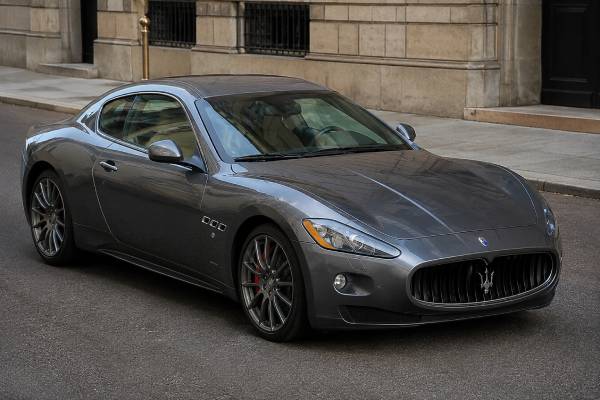
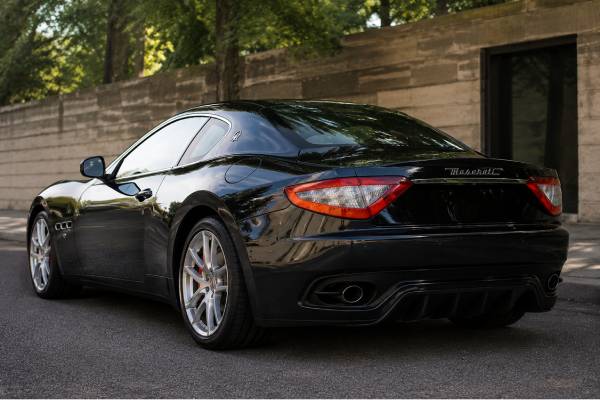
The original 4.2-liter Maserati GranTurismo is the car that introduced the M145 generation in 2007, pairing Pininfarina’s elegant four-seat coupe body with a 405 hp naturally aspirated V8 and a smooth ZF six-speed automatic. One important clarification protects buyers from misleading listings: the 4.2-liter version belongs to the early years of the GranTurismo range, even though the M145 model family continued through 2019. Later cars moved to 4.7-liter engines and different Sport, MC, and special-edition specifications. The early 4.2 is therefore not the fastest GranTurismo, but it can be one of the most coherent. Its softer chassis tune, torque-converter transmission, refined cabin, and progressive engine make it a genuine long-distance GT rather than a track-focused coupe. It also tends to be the most affordable entry into the shape, which makes inspection discipline essential. Cam-variator noise, oil leaks, cooling faults, suspension wear, old tires, sticky interior trim, and voltage-related electrical warnings can turn a tempting price into a large restoration bill. This guide separates the 4.2 from later variants, explains its engineering and road character, and shows how to buy one on condition rather than badge appeal.
Table of Contents
- The Coupe That Reset Maserati Grand Touring
- 4.2 V8 and M145 Hardware
- Early Production, Colors, Options, and Market Changes
- Pininfarina Proportions and Four-Seat Packaging
- A Refined GT, Not a Stripped Sports Car
- Age-Related F136 and Chassis Care
- How to Buy the Right 4.2
The Coupe That Reset Maserati Grand Touring
The 4.2-liter GranTurismo established the basic character of every M145 that followed: dramatic Italian styling, a front-mid-engine V8, rear-wheel drive, a long wheelbase, and space for four people. It replaced the smaller 4200 GT Coupe with a much more mature interpretation of the traditional Maserati grand tourer.
Maserati revealed the production car at the 2007 Geneva Motor Show. Pininfarina shaped it under the direction of designer Jason Castriota, using themes that connected the road car with the Birdcage 75th concept while preserving the formal presence expected of a Maserati. The result looked exotic without sacrificing the rear-seat and luggage capacity that distinguish a true GT from a two-seat sports car.
The mechanical foundation shared important architecture with the Quattroporte. The engine sat behind the front axle line as far as the package allowed, and the six-speed ZF automatic attached directly to it. That conventional arrangement made the launch car smoother and easier to use than the earlier Cambiocorsa automated-manual Maseratis. Drivers gained natural low-speed creep, calmer parking behavior, and a transmission that suited urban traffic as well as fast highways.
Its 4.2-liter F136 U V8 produced 405 hp, enough for a claimed 0–100 km/h time of about 5.2 seconds and a top speed near 285 km/h. Those figures were strong in 2007 but quickly became the lower rung of the range after the 440 hp GranTurismo S arrived with a 4.7-liter engine and rear transaxle. The later 4.7-liter automatic then offered more torque without giving up the ZF gearbox. As a result, the 4.2 is often judged only by what it lacks.
The model-year range in advertisements needs careful reading. The M145 GranTurismo remained in production through 2019, but a seller describing a late 2010s car as a 4.2-liter 405 hp model should be challenged with VIN and build data. The 4.2 was an early specification and was superseded as Maserati consolidated the range around the 4.7. Registrations, imports, and delayed first use can also produce a date that does not match the true build year. Always identify the car by VIN, engine, emissions label, and factory configuration rather than a broad range title.
Today, the 4.2 occupies an accessible but vulnerable part of the market. Good cars deliver most of the GranTurismo’s beauty, sound, cabin quality, and touring ability at a lower purchase price. Poor cars can require brakes, dampers, suspension arms, tires, cooling work, timing-related repairs, and interior restoration at once. The gap between them is much larger than the gap between their asking prices.
4.2 V8 and M145 Hardware
The launch GranTurismo combines a naturally aspirated 4,244 cc V8 with a front-mounted ZF automatic and rear limited-slip differential. Its specification favors durability and refinement, but age and maintenance history now matter more than the original brochure figures.
| Item | Specification |
|---|---|
| Engine | F136 U 90-degree V8, 4,244 cc, naturally aspirated |
| Construction | Aluminum block and cylinder heads |
| Valvetrain | DOHC, four valves per cylinder, variable valve timing |
| Fuel system | Electronic port fuel injection |
| Maximum output | 405 hp at 7,100 rpm |
| Maximum torque | 460 Nm at 4,750 rpm |
| Transmission | ZF six-speed torque-converter automatic with paddle control |
| Drivetrain | Rear-wheel drive with limited-slip differential |
| Suspension | Double wishbones front and rear; Skyhook adaptive damping optional or market dependent |
| Steering | Hydraulic power assistance |
| Brakes | Ventilated discs with Brembo calipers |
| Wheelbase | 2,942 mm |
| Length | Approximately 4,881 mm |
| Width | Approximately 1,847 mm excluding mirrors |
| Height | Approximately 1,353 mm |
| Fuel capacity | 86 liters |
| 0–100 km/h | Approximately 5.2 seconds |
| Top speed | Approximately 285 km/h |
The F136 U belongs to the Ferrari-developed family of cross-plane-crank V8s used across several Maserati models. It should not be described as simply a detuned version of every related Ferrari engine; induction, lubrication, crankshaft details, calibration, installation, and exhaust systems vary by application. In the GranTurismo, the engine uses wet-sump lubrication, which supports normal road use without the complexity of a separate dry-sump reservoir.
Power delivery is smooth and increasingly energetic above 4,000 rpm. The 460 Nm torque peak is modest by modern turbo standards, but the throttle responds immediately because no turbocharger must build boost. The engine is happy to pull through the middle of the rev range in a high gear, then changes character as it approaches 7,000 rpm. The exhaust valves and Sport mode make that transition more audible.
The ZF 6HP-family automatic is a major reason the 4.2 works in daily use. It can shift unobtrusively in normal mode, respond to steering-wheel paddles, and hold gears more aggressively in Sport. It is not a dual-clutch transmission and should not be judged by present-day shift times. Its strengths are smooth engagement, predictable low-speed behavior, and the absence of the consumable dry clutch used by MC Shift cars.
Chassis construction is steel, with aluminum suspension components used selectively. Double wishbones at all four corners maintain camber control under load. Cars fitted with Skyhook use electronically controlled dampers that vary force in response to body and wheel movement. Fixed-rate cars are mechanically simpler, while Skyhook cars offer a broader comfort-versus-control range. Option content differs by market and build date, so the dashboard button and diagnostic identification should confirm the system.
Brake dimensions and wheel specifications can vary with options, region, and later retrofits. The original 4.2 generally uses less aggressive hardware than the GranTurismo S, but healthy standard brakes are fully adequate for road touring. The key is condition: rotor thickness, pad age, fluid moisture, hose integrity, and tire grip determine real stopping performance more than caliper color.
Weight is substantial, commonly around the high-1,800 kg range depending on measurement method and equipment. That mass explains both the stable motorway behavior and the car’s reluctance to change direction like a smaller coupe. It also increases wear on front control arms, tires, wheel bearings, brakes, and dampers. Any inspection should treat the chassis as a complete system rather than replacing one noisy link and assuming the problem is solved.
Early Production, Colors, Options, and Market Changes
The 4.2-liter car is the original GranTurismo specification, and its desirability depends more on condition, color, and equipment than on a complicated sub-variant hierarchy. Buyers should still confirm build date and market because option packaging and standard equipment changed during the early production run.
Early cars can be identified by the original front bumper and grille treatment, standard GranTurismo badging, and the absence of the more aggressive side skirts and braking details associated with the S. Many use 19-inch wheels, although 20-inch designs were available or fitted later. A wheel that looks factory may belong to another M145 version, so part numbers and period build records are useful when originality matters.
Exterior colors ranged from restrained metallic grays, blues, and blacks to richer reds and whites. The shape responds strongly to color: dark paint emphasizes the glasshouse and grille, while lighter colors reveal the fender lines and long hood. Interior choices included multiple Poltrona Frau leather colors, contrasting stitching, wood, piano-black, and other trim. A tasteful original combination can add more appeal than a long list of minor options.
Useful equipment may include:
- Skyhook adaptive suspension;
- front and rear parking sensors;
- heated and power-adjustable front seats with memory;
- Bose audio, depending on market and year;
- navigation and telephone functions appropriate to the period;
- alternative wheel designs and brake-caliper colors;
- wood, aluminum-look, or piano-black interior trim;
- comfort, cold-weather, or convenience packages bundled differently by region.
Original infotainment has limited modern functionality. Navigation maps, Bluetooth behavior, and media support can feel obsolete, but the factory system also interfaces with vehicle settings and audio components. An aftermarket head unit should be judged on installation quality, reversibility, battery draw, sound-system compatibility, and whether the original unit accompanies the car.
Distinguishing the 4.2 from a 4.7 swap or misdescribed car requires more than reading the trunk badge. Check the VIN build sheet, engine identification, emissions sticker, invoice, and diagnostic data. A replacement engine is not automatically undesirable if it is correct, documented, and installed professionally, but it changes originality and may complicate registration or insurance.
The 4.2’s place in the wider M145 timeline is straightforward. The 440 hp S introduced the 4.7-liter engine and MC Shift transaxle. The S Automatic then paired 4.7 liters with the ZF gearbox. Later Sport and MC versions reached 460 hp and received styling and chassis revisions. None of those changes makes the launch car fraudulent or obsolete; they simply define it as the comfort-oriented starting point. A buyer seeking the earliest expression of the design may prefer exactly that.
Pininfarina Proportions and Four-Seat Packaging
The 4.2 GranTurismo’s greatest achievement is that it looks like an exotic coupe while functioning as a genuine four-seat touring car. The design uses its long wheelbase intelligently, giving rear passengers meaningful legroom without making the roofline awkward or the rear deck visually heavy.
The grille sits low and wide, with the Trident centered ahead of a sculpted hood. Three vents behind each front wheel reference historic Maserati road cars. A strong shoulder runs toward the tail, while the side glass narrows gradually instead of ending abruptly. The rear lights wrap into the quarter panels and keep the body looking broad without a large fixed wing.
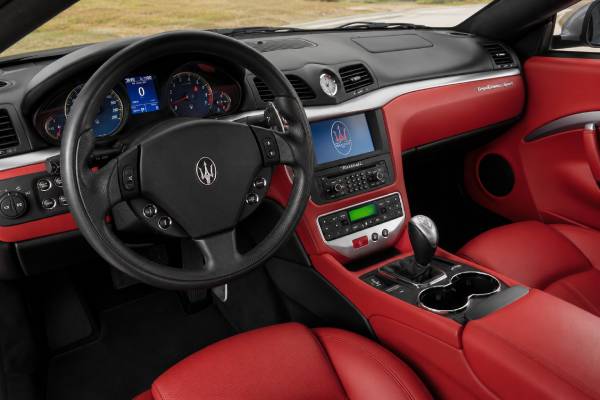
Inside, the driver sits relatively high compared with a low supercar, improving forward visibility and reducing fatigue. The steering wheel, large analog instruments, and central clock create a traditional Maserati atmosphere. Rear access requires folding the front seat, but once aboard, passengers receive shaped seats rather than a padded shelf. The trunk can handle soft luggage for a weekend, which makes the car usable for its stated mission.
Cabin materials are rich but sensitive to age and climate. Leather can shrink around the dashboard, wrinkle on bolsters, or become glossy from incorrect cleaning. Soft-touch coatings may turn sticky. Headliners can sag, wood veneer can crack, and piano-black trim scratches easily. Window seals and frameless-glass indexing must work correctly to prevent wind noise and water entry.
The engine sound is integrated into the design experience. At low load, the V8 is restrained enough for conversation. Sport mode changes throttle and transmission behavior and allows more exhaust volume. The note rises from a bass-heavy idle to a sharper, layered sound at high rpm. Because the engine does not rely on forced induction, intake and exhaust character remain closely tied to pedal position.
Aerodynamics prioritize stability and cooling rather than visible wings. The smooth roof arc, covered underbody areas, front air management, and subtle rear lip help the car remain composed at high speed. Damage to lower trays, missing fasteners, or poorly fitted bumper panels can therefore affect more than appearance. Inspect the underside and grille openings for impact damage, blocked cooling fins, and evidence of careless recovery or jacking.
Later GranTurismos became more aggressive through larger openings, carbon elements, and MC-derived styling. The original 4.2 is cleaner and more formal. That restraint is part of its appeal, especially in an elegant color combination. Modifying it to resemble an MC Stradale often creates a car that is neither authentic nor visually balanced. Preservation, quality tires, correct ride height, and subtle reversible updates usually serve it better.
A Refined GT, Not a Stripped Sports Car
The 4.2 drives best when treated as a fast touring coupe rather than a lightweight sports car. Its strengths are steering consistency, progressive power, high-speed stability, ride quality, and an engine that makes ordinary acceleration feel ceremonial.
Around town, the ZF automatic is smooth and predictable. It creeps without clutch drama, handles inclines naturally, and reduces the stress of parking a wide car. Throttle calibration is gentle in normal mode. The engine has enough low-speed torque for relaxed progress, although it does not surge forward like a modern turbo V8.
Sport mode wakes the powertrain. The gearbox downshifts sooner and holds ratios, the throttle feels more direct, and the exhaust becomes more vocal. Manual paddle commands are satisfying when planned, but the transmission may protect itself or override requests near speed limits. Shift speed is slower than in a modern dual-clutch unit, yet the pause can suit the engine’s rising, mechanical delivery.
Acceleration to 100 km/h in roughly 5.2 seconds remains brisk. More important, the car continues pulling with confidence at motorway speeds. The long wheelbase and substantial mass give it an unhurried sense of momentum. Crosswinds and rough pavement disturb it less than a short, stiff sports car, provided dampers, alignment, and tires are correct.
Hydraulic steering delivers steady effort and useful information. The nose responds accurately, but the driver feels the car’s width and weight in tight bends. Early turn-in followed by a smooth, balanced throttle works better than late, abrupt inputs. The rear-drive chassis remains predictable, and stability control provides a safety net, but old tires can make breakaway sudden and invalidate any judgment of the suspension.
Ride quality varies with wheel size and damper specification. Nineteen-inch wheels generally preserve more compliance and reduce impact risk. Twenty-inch wheels sharpen appearance and response but transmit potholes more sharply. Skyhook can keep the body controlled while allowing a comfortable baseline, although worn adaptive dampers may make the car float, crash, or feel inconsistent between corners.
Brake feel should be firm and progressive. A vibration through the wheel or pedal can come from rotor deposits, corrosion after storage, worn suspension joints, or wheel issues rather than a single “warped disc.” A healthy 4.2 can feel more harmonious than a neglected faster version. Its performance is accessible, the automatic matches the GT mission, and the chassis communicates without constant aggression. The car is rewarding precisely because it does not need a racetrack to make sense.
Age-Related F136 and Chassis Care
Maintenance risk comes from age, heat, weight, and low-use storage rather than one universal fatal flaw. A specialist familiar with early M145 cars should inspect the engine cold, scan all control modules, assess the cooling system, and evaluate the entire suspension before purchase.
Cam variators, oil leaks, and cold starts
Some early F136 engines can develop cam-variator or timing-related rattle after start-up. The important test is a true cold start after the car has sat overnight. A brief sound and a persistent metallic rattle are not the same, but either deserves expert assessment with oil pressure, service history, build date, and applicable repair updates considered. Repair can require significant labor, so a seller’s claim that “they all do that” is not enough.
Oil seepage commonly appears around cam covers, front covers, and related seals as gaskets age. Minor sweating should be monitored; active leakage onto hot components or the undertray requires repair. Use the specified oil and sensible time-based changes, especially when annual mileage is low. A car driven only for short trips may accumulate moisture and fuel dilution despite a low odometer.
Cooling and mounts
Inspect the radiator, air-conditioning condenser, expansion tank, hoses, clamps, thermostat behavior, water pump area, and electric fans. Debris trapped between heat exchangers reduces airflow. Temperature should remain stable in slow traffic with the climate system operating. Dried coolant residue, sweet smells, or repeated topping-up point to a leak.
Engine and transmission mounts soften and collapse. Symptoms include vibration at idle, a thump when selecting Drive or Reverse, or contact between exhaust and body. Replacing mounts can transform refinement and protect connected parts.
Automatic, suspension, and brakes
The ZF automatic benefits from fluid and filter service using the correct parts and temperature procedure, even when old marketing implied long-life fill. Check for delayed engagement, flared shifts, harsh downshifts, leaks, and adaptation values. The differential also needs clean lubricant and inspection for noise or seal leakage.
Front control-arm bushes, ball joints, tie rods, anti-roll-bar links, wheel bearings, and dampers carry a heavy load. One worn component can hide another. Uneven tire wear may reflect bent wheels, incorrect ride height, worn joints, or poor alignment. Skyhook dampers are expensive, and warning lights or oil leakage should affect the purchase price directly.
Measure brake rotors and inspect pads, hoses, calipers, and parking-brake hardware. Cars that sit can corrode the inner rotor faces where a quick visual inspection cannot see. Old brake fluid reduces pedal consistency and corrosion protection.
Electrical and cabin aging
A weak battery can generate multiple warnings, upset window indexing, reset the infotainment system, and create false communication faults. Test battery health, alternator output, and parasitic draw. A maintainer is helpful, but it should not disguise a battery that no longer holds capacity.
Operate every function: windows, seat motors, memory, locks, both keys, mirrors, parking sensors, climate zones, audio channels, navigation screen, lights, wipers, and trunk release. Check for damp carpets and blocked drains. Sticky buttons and sagging trim are cosmetic until disassembly or unavailable parts make them expensive.
How to Buy the Right 4.2
The best 4.2 is a correctly identified early car with continuous history, healthy cold-start behavior, sorted chassis components, recent quality tires, and no pattern of overheating or electrical neglect. Low price should be the final consideration, not the first.
Begin with a VIN-based build check. Confirm engine displacement, original market, build date, paint, interior, suspension type, wheels, and major options. Compare the VIN at all locations with registration and service documents. Be wary of a late registration presented as a late-build 4.2 without proof.
Ask the seller not to start the car before inspection. Observe warning-light self-check, cranking speed, idle stability, exhaust smoke, mechanical noise, and fluid leaks. A warm engine on arrival removes one of the most valuable tests. Scan every module, including stored and pending faults, not only the engine controller.
Review invoices in chronological order. Strong records show annual or mileage-based servicing, cooling work, battery replacement, brake-fluid changes, transmission attention, tires by date and brand, suspension repairs, and investigation of recurring faults. A stamp book without invoices provides less detail. Long periods of inactivity should prompt questions about fuel, seals, battery support, and recommissioning.
| Priority | Acceptable signs | Warning signs |
|---|---|---|
| Identity | VIN build data matches 4.2 engine and equipment | Inconsistent year claims, swapped badges, unclear engine history |
| Engine | Clean cold start, stable pressure and temperature, minor or no seepage | Persistent rattle, smoke, active leaks, overheating history |
| Automatic | Smooth engagement and shifts cold and warm | Delay, flare, slam, warning messages, no service evidence |
| Chassis | Quiet suspension, straight wheels, even premium tires | Knocks, wandering, one-edge wear, leaking dampers |
| Cabin and modules | All functions operate; battery and charging system test well | Multiple intermittent faults, dampness, hacked wiring |
| Body | Consistent paint, panel gaps, intact undertrays | Structural repair, corrosion at damaged areas, missing lower panels |
On the road, test light and heavy throttle, manual and automatic modes, braking from different speeds, rough surfaces, tight turns, and a hot restart. The steering should center naturally, the car should track straight, and temperature should remain stable. Listen for differential whine, wheel-bearing hum, suspension knocks, exhaust rattles, and wind noise around frameless glass.
Arrange a lift inspection. Look for oil and coolant residue, crushed jacking points, damaged undertrays, bent wheels, inner tire wear, brake condition, corrosion at accident repairs, and exhaust modifications. Paint-depth readings help identify refinished panels, but repair quality matters more than the mere presence of paintwork on an older GT.
Plan a first-year reserve. Even a good car may need fluids, filters, battery, tires, alignment, mounts, cosmetic corrections, or a deferred suspension item. Buying at the limit of the budget encourages postponement and undermines the experience. Insurance, secure storage, fuel, specialist travel, and parts lead time also belong in the calculation.
Choose the 4.2 because its calmer specification fits your use, not because it is the cheapest badge. It suits an owner who values the original Pininfarina form, smooth automatic behavior, V8 response, and four-seat touring comfort more than the quickest acceleration figure. A sorted example will feel expensive in the best sense: solid, sonorous, and composed. A neglected one will expose how quickly an inexpensive exotic can demand premium-car repair money.
References
- Worldwide Paris Premiere for the GranTurismo MC Stradale 2010
- Maserati product range MY 2011 2010
- Maserati Guides & Documentation 2026 (Owner Documentation)
- Maserati Owner Documentation 2026 (Owner Documentation)
- Maserati TechInfo 2026 (Technical Information)
Disclaimer
This article is for informational purposes and is not a substitute for professional diagnosis, repair, or inspection. Specifications, torque values, service intervals, and procedures can vary by VIN, market, build date, and equipment; verify all critical details against the official Maserati documentation for the individual car.
Please share this guide on Facebook, X/Twitter, or an enthusiast forum if it helped clarify the original GranTurismo 4.2.