
The Maserati GranTurismo Modena is the comfort-led combustion model in the second-generation M189 range. Its 490 hp twin-turbo 3.0-liter Nettuno V6, eight-speed automatic, rear-biased all-wheel drive, air suspension, and four adult seats make it far quicker than the old 4.7-liter V8 GranTurismo while preserving the calmer, long-distance character expected of the Modena name. Maserati quotes about 3.9 seconds from 0–100 km/h and a top speed near 302 km/h for the launch specification. Its materials, drive-mode strategy, exhaust, and chassis calibration emphasize elegant travel rather than maximum circuit response. The model has also evolved. Cars launched from 2023 use the original body and 600 Nm calibration, while the refreshed range presented in June 2026 introduced a more horizontal front design, revised cabin details, Country mode, and updated powertrain behavior while retaining 490 hp. Buyers should therefore confirm exact model year, torque specification, equipment, software, and market by VIN. Like every M189, the Modena depends on healthy electronics, a strong 12-volt battery, current software, level air suspension, matched staggered tires, and complete warranty records. This guide explains the model’s engineering, production changes, driving experience, service requirements, and the checks that matter most before purchase.
Table of Contents
- The Elegant Entry to the M189 Range
- 490 hp Nettuno and All-Wheel-Drive Hardware
- Launch Specifications, Options, and 2026 Update
- Italian GT Design With Modern Digital Systems
- Fast, Refined, and Built for Distance
- Modern Maserati Service and Reliability Priorities
- Buying the Right Modena for Real Use
The Elegant Entry to the M189 Range
The Modena is the M189 for buyers who want the Nettuno engine and GranTurismo shape without the Trofeo’s most aggressive calibration or the Folgore’s charging requirements. It remains a serious performance car, but its default character favors comfort, materials, and effortless speed.
Maserati returned to the GranTurismo segment after the M145 ended in 2019. Rather than update the old V8 platform, engineers created an architecture that could support both combustion and electric versions. The Modena, Trofeo, and Folgore share the same low 1,353 mm roof, 2,929 mm wheelbase, mixed-material body, four-seat layout, digital cabin, and air suspension.
The Modena uses the 3.0-liter Nettuno V6 at 490 hp. At launch it produced 600 Nm from around 3,000 rpm, giving much stronger low- and mid-range acceleration than the old naturally aspirated 4.7-liter engine. Its 3.9-second 0–100 km/h claim is supercar territory by the standards of the previous GranTurismo, yet the car reaches that performance without a harsh ride or a track-focused cabin.
Its role is clear when compared with the original 550 hp Trofeo. The Modena lacks Corsa mode, uses more restrained trim and exhaust tuning, and prioritizes GT and comfort behavior. Both use AWD and an eight-speed automatic, but the Trofeo’s output, response, and material choices are more performance oriented.
The Folgore comparison is equally important. The electric car is quicker and quieter, while the Modena offers rapid refueling, lower mass, an engine soundtrack, and familiar long-distance infrastructure. The right choice depends on charging access, journey type, taxation, and personal preference rather than a single acceleration figure.
For 2026, Maserati announced an updated GranTurismo range with refreshed styling and interior details. The 490 hp version remains the touring-focused combustion choice, now with Country mode that raises the air suspension for poor surfaces. Listings may call it simply GranTurismo 490 CV rather than Modena in some markets. Verify the official trim and build data instead of assuming every 490 hp car carries identical branding.
The Modena’s enduring attraction is balance. It can cover a motorway quietly, fit four occupants, and handle urban traffic, then deliver immediate boost and accurate chassis response on an open road. Its complexity requires disciplined care, but it does not demand the compromises associated with a traditional exotic.
490 hp Nettuno and All-Wheel-Drive Hardware
The Modena combines a 2,992 cc twin-turbo V6 with an eight-speed automatic and electronically managed AWD. Its hardware is shared in concept with the Trofeo, but calibration favors smooth torque, quiet shifts, and broad comfort.
| Item | Specification |
|---|---|
| Engine | 2,992 cc 90-degree twin-turbo V6 Nettuno |
| Combustion system | Pre-chamber Maserati Twin Combustion plus conventional spark ignition |
| Output | 490 hp |
| Torque | 600 Nm at approximately 3,000 rpm in launch specification |
| Transmission | Eight-speed torque-converter automatic |
| Drive | Electronically controlled all-wheel drive with rear-biased behavior |
| Suspension | Double wishbone front, multi-link rear, air springs, adaptive dampers |
| Wheels and tires | 20-inch front, 21-inch rear; 265/30 ZR20 and 295/30 ZR21 typical |
| Length | 4,959 mm |
| Width | 1,957 mm excluding mirrors |
| Height | 1,353 mm |
| Wheelbase | 2,929 mm |
| 0–100 km/h | Approximately 3.9 seconds |
| Top speed | Approximately 302 km/h |
Nettuno’s pre-chamber system uses a small chamber and dedicated spark plug above each cylinder. Burning mixture exits through holes as high-energy jets, rapidly igniting the main charge. A second spark plug permits conventional combustion when operating conditions require it. The design supports power and efficiency but depends on correct plugs, oil, cooling, fuel, and calibration.
Twin turbochargers give the Modena broad mid-range torque. The engine responds strongly from everyday speeds and does not need to reach its upper rev range before the car feels fast. It still becomes more expressive near the power peak, but the overall delivery is smoother and less urgent than Trofeo tuning.
The eight-speed automatic shifts early in comfort-oriented use and responds quickly to paddles in Sport. Its torque converter makes low-speed maneuvering smooth. Software determines much of its behavior, so a calibration update can alter shift timing without any mechanical change.
AWD sends torque forward when grip or acceleration demands it. The system is rear biased in normal driving, preserving a sense of propulsion from behind. Correct tire sizes and similar rolling circumference are essential. One incorrect or heavily worn tire can cause more than a cosmetic mismatch.
Air springs adjust height and support a wide ride range. Adaptive dampers control body movement independently of spring pressure. Launch-era cars offer Comfort, GT, and Sport strategies; later 490 hp cars introduce Country mode, which raises the body by 20 mm and keeps a road-friendly calibration for damaged or uneven surfaces.
The multi-material platform uses extensive aluminum, selected magnesium, and high-strength steel. This reduces weight relative to the equipment level, but body repair requires approved joining, corrosion prevention, and sensor calibration.
Launch Specifications, Options, and 2026 Update
The main production distinction is between original 2023–2025/early-2026 cars and the refreshed range announced in June 2026. Power remains 490 hp, but styling, mode strategy, interior details, and calibration differ.
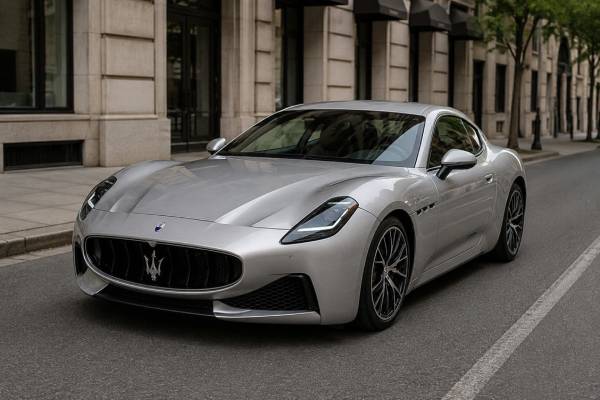
Launch cars have the original M189 nose with vertical headlamps, an oval grille, and smoother lower openings. The Modena’s exterior is less aggressive than Trofeo, with restrained trim and wheel choices. Its cabin favors leather, open-pore wood, and elegant patterns rather than extensive Alcantara and carbon.
Options vary by country and may include:
- metallic, three-layer, or Fuoriserie paint;
- several 20/21-inch wheel designs and finishes;
- colored brake calipers;
- leather, technical textile, perforation, and contrast stitching choices;
- open-pore wood, carbon, or other decorative trim;
- head-up display and advanced driver-assistance packages;
- 14-speaker 860-watt or 19-speaker 1,195-watt Sonus faber audio;
- heated, ventilated, or market-specific comfort seating;
- privacy, convenience, and connectivity equipment.
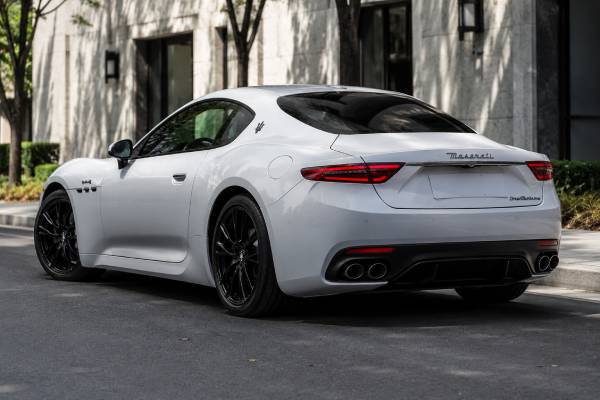
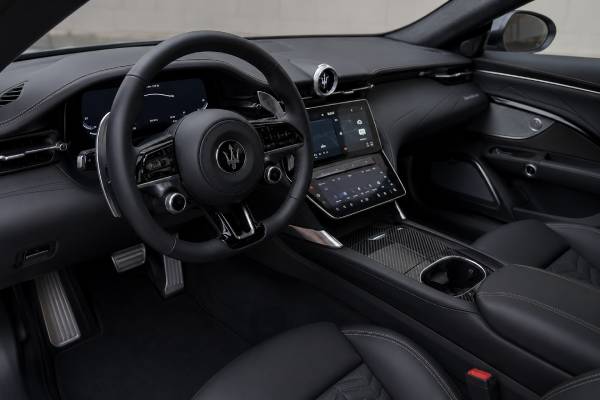
The refreshed 490 hp model adopts a more horizontal front bumper and lower fascia inspired by Maserati’s recent performance cars. Redesigned side intakes, boundary-layer slots, and an optimized splitter change airflow and appearance. Clear-lens rear lamps, new wheel choices, a revised flat-section steering wheel, updated digital clock, premium metal PRND controls, and redesigned screen graphics modernize the cabin.
Country mode is the most useful functional change for the touring buyer. It raises ride height by 20 mm and maintains the elevated position up to 120 km/h while using GT-style damping and normal traction control. It is intended for poor roads, speed bumps, and urban obstacles, not off-road driving.
Market naming can create confusion. Some current material refers to the car as GranTurismo 490 CV rather than Modena. The title on registration may remain broad. Build data, trim code, engine calibration, front design, mode menu, and original invoice identify the car accurately.
Fuoriserie personalization can produce factory combinations that appear unusual. Confirm them through the VIN record. Aftermarket wraps, colored badges, carbon overlays, and wheels should be disclosed. Original parts and finish codes improve future serviceability.
A complete history includes warranty start, campaigns, software versions, service invoices, keys, manuals, emergency equipment, tire and wheel records, and documentation for any body or glass repair. Connected-service ownership should be transferred correctly.
Italian GT Design With Modern Digital Systems
The Modena’s design joins classic Maserati proportions with a highly networked interior. It feels traditional in shape and modern in operation, which means beauty and software condition are equally important.
Four pronounced fenders, a long hood, low roof, and Trident on the rear pillar define the exterior. The hood remains long enough to create visual drama and provide engine, cooling, crash, and AWD packaging. The short rear deck and broad shoulders keep the coupe balanced despite its four-seat cabin.
At 4,959 mm long and nearly two meters wide without mirrors, the car has substantial road presence. Parking sensors and cameras are essential, but they cannot protect the low front edge or 21-inch rear wheels from every curb. Undertrays and cooling ducts should be inspected after any impact.
The body structure mixes metals to achieve stiffness and reasonable mass. Collision repair must use approved procedures for aluminum, high-strength steel, adhesives, rivets, isolation, and corrosion protection. Radar, cameras, parking systems, and ride-height sensors may need calibration afterward.
The cabin uses a 12.3-inch central display, a lower 8.8-inch comfort screen, and a configurable instrument cluster. A digital clock can display performance, compass, or status functions. Voice commands and touch controls reduce switch count, while physical paddles and a steering-wheel mode selector preserve driver focus.
Software governs navigation, media, climate interfaces, cameras, driver assistance, vehicle settings, and over-the-air functions where supported. A screen that works during a five-minute viewing can still fail after sleep, phone pairing, or heat. Test it over a complete drive and restart.
The Sonus faber system is a significant part of the luxury experience. Test every speaker, surround mode, input, microphone, and amplifier behavior. Water entry, low voltage, or software faults can affect audio and other modules simultaneously.
Rear seats are genuinely usable for adults on shorter trips and smaller occupants over distance. Front-seat easy-entry must work correctly. The trunk carries touring luggage, making the Modena practical enough for its name.
The exhaust note is more restrained than Trofeo but still changes in Sport. The V6 cannot reproduce the old F136 V8’s high-rpm timbre; instead, it offers turbocharged depth and a shorter, more urgent sound. Aftermarket exhausts may create drone, emissions faults, or warranty questions.
Fast, Refined, and Built for Distance
The Modena is easiest to appreciate when driven over a full day. Its acceleration is dramatic, but the quieter powertrain calibration, compliant air suspension, and useful cabin make sustained travel its real strength.
In Comfort or GT mode, the engine supplies torque without needing frequent downshifts. The automatic moves through ratios smoothly, steering effort remains measured, and dampers allow the body to breathe over long bumps. Tire noise depends strongly on road surface and wheel specification.
Sport mode sharpens throttle, holds gears, increases exhaust volume, and tightens damping. Launch control is available in appropriate settings and conditions. A 3.9-second run to 100 km/h makes the car objectively very fast, yet the AWD system and smooth transmission make the event less dramatic than in an old rear-drive single-clutch Maserati.
Mid-range passing performance is excellent. The engine’s 600 Nm launch torque arrives near 3,000 rpm, so overtakes require less planning than in the naturally aspirated M145. Paddles are useful on mountain descents or when the driver wants to keep the engine in its responsive range.
Electric steering is precise, though it filters some of the texture offered by the old hydraulic system. The car turns accurately and distributes torque to maintain traction. It remains wide and relatively heavy, so smooth entries and progressive power work better than abrupt steering.
Air suspension creates a broad range. A healthy car rides firmly but not harshly on 20/21-inch wheels. Repeated bouncing, one sharp crash followed by looseness, or a tilted stance indicates a problem with tires, wheels, dampers, pressure, or sensors.
Brakes should feel linear and stable. Large discs and tires provide strong stopping performance, but surface condition, fluid age, pad thickness, and wheel alignment determine real behavior. A car used for repeated launches or mountain runs may consume rear tires and brakes faster than mileage suggests.
Country mode on the refreshed car adds valuable clearance for ramps and poor roads. Drivers must still remember the long wheelbase and low aero parts. The mode raises the body; it does not make the wheels resistant to potholes.
Urban use is manageable because of smooth creep, cameras, and assistance, but width and turning circle require planning. Highway use is where the Modena feels most natural: stable, quiet, quick, and spacious enough for four. Fuel consumption rises quickly with boost, though rapid refueling makes long-distance scheduling simple.
Modern Maserati Service and Reliability Priorities
The Modena’s reliability case depends on correct maintenance, current software, stable voltage, healthy air suspension, and prompt warranty attention. It is too new for broad age-related conclusions, so buyers should favor documented condition over anecdote.
Service the Nettuno exactly by time and mileage. Approved oil supports turbo bearings, variable controls, emissions systems, and pre-chamber combustion. Inspect spark plugs, ignition coils, air filters, coolant, brake fluid, turbo plumbing, charge coolers, reservoirs, heat shields, and undertrays.
A cold engine should start cleanly, idle evenly, and produce no persistent smoke or warnings. During the drive, boost should build smoothly and temperature remain stable. Coolant odor, oil residue, misfire, hesitation, or repeated check-engine events require a dealer-level diagnosis.
The eight-speed automatic should select Drive and Reverse promptly and shift consistently hot and cold. AWD should remain quiet and free of shudder. Software updates can address calibration, but they should not be used to dismiss a mechanical or fluid problem. Follow market-specific fluid schedules and procedures.
Air suspension should remain level after overnight parking. Test every height and mode. Listen for a compressor that runs too often and inspect air struts, lines, valves, ride-height sensors, and adaptive dampers. Incorrect lifting or curb damage can affect these parts.
A weak 12-volt battery can trigger warnings across powertrain, suspension, driver assistance, infotainment, and keyless systems. Load-test it, verify charging output, and use approved support during programming. Battery replacement may require system registration.
Check for VIN-specific recalls, service campaigns, and software updates. Test adaptive cruise, blind-spot monitoring, lane systems, emergency braking status, cameras, sensors, screens, digital clock, head-up display, audio, phone integration, seats, windows, mirrors, climate, lighting, alarm, and both keys.
Inspect staggered tires for correct model, rating, age, tread-depth balance, sidewall damage, and full-width wear. Check inner wheel barrels for cracks or bends. Large differences can affect AWD. Measure brakes and inspect for heat or corrosion.
Body repair needs a mixed-material-qualified facility and post-repair calibration. Paint protection film can help but inspect for concealed chips and poor cutting. Keep records for every software update, repair, tire, battery, and alignment because the digital history may be incomplete across countries.
Warranty and service plans are valuable. Confirm transferability, territory, required intervals, exclusions, and modification rules. An approved extension can protect against expensive modules, air-suspension parts, or infotainment hardware while the car is still relatively young.
Buying the Right Modena for Real Use
Choose between the launch-era Modena and refreshed 490 hp car based on styling, features, price, and intended roads, then buy the example with the strongest warranty and diagnostic history. A newer registration alone does not guarantee the updated specification.
Obtain a VIN build sheet and original invoice. Confirm model name, 490 hp output, torque/calibration phase, front design, drive modes, paint, cabin materials, wheels, driver aids, audio, and market. Check warranty start and whether connected services can transfer.
A complete pre-purchase inspection should include:
- Cold start, full-temperature road test, and hot restart.
- Full module scan and software/campaign review.
- Turbo, cooling, transmission, AWD, and underbody inspection.
- Air-suspension height, compressor, damper, and sensor testing.
- Wheel, tire, brake, and alignment assessment.
- Mixed-material body and paint inspection.
- Operation of all screens, assistance, comfort, audio, and keys.
| Area | Positive evidence | Warning evidence |
|---|---|---|
| Identity | VIN confirms exact 490 hp production phase and options | Unclear Modena/490 CV naming or false update claims |
| Powertrain | Clean boost, stable cooling, smooth automatic and AWD | Misfire, smoke, leaks, shudder, drivetrain messages |
| Software and warranty | Current updates, closed campaigns, transferable coverage | Recurring faults, missed service, unsupported import |
| Air chassis | Level stance, quiet compressor, even tire wear | Sag, warning lights, harsh ride, impact damage |
| Body and cabin | Qualified repairs and every feature functional | Poor aluminum repair, water entry, dead screens or sensors |
Road-test in every suitable mode. Check gentle creep, full boost, paddle shifts, straight braking, ride-height changes, camera quality, and driver-assistance availability. On a refreshed car, test Country mode and verify the height increase. Let the car sit after the drive to observe suspension leveling.
Budget for premium tires, large brakes, insurance, official diagnostics, scheduled service, wheel repair, and possible air-suspension work. The Modena may cost less than Trofeo, but its core electronics and chassis are equally sophisticated. Remaining warranty can be worth more than a lower purchase price.
Avoid cars with unresolved warnings, coolant loss, mismatched tires, overnight sag, poor mixed-metal repair, unavailable connected services, or modifications that affect emissions and warranty. A former demonstrator is not automatically bad, but frequent short trips and launches should be matched by condition and service evidence.
The right Modena is the M189 most owners can use most often. It offers almost excessive performance without abandoning comfort, passenger space, or refueling convenience. Buy one with clear production identity, current software, healthy suspension, and complete care, and it can perform the traditional Maserati role exceptionally well: making a long journey feel more important than the destination.
The Modena also makes a strong case as a lightly used daily GT, but frequent short urban trips should be balanced with longer journeys that fully warm the oil, exhaust, transmission, and battery-supported electronics. Keep a log of software updates and tire replacements alongside ordinary service invoices. That record can reveal whether a recurring warning followed a weak battery, a module update, or an unresolved hardware fault and will make later diagnosis faster.
References
- The new Maserati GranTurismo 2022
- New Maserati GranTurismo 2022
- New Maserati GranTurismo, GranCabrio and Grecale 2026
- Maserati GranTurismo – Design & Features 2027 2026
- Maserati Guides & Documentation 2026 (Owner Documentation)
Disclaimer
This article is for informational purposes and is not a substitute for professional diagnosis, repair, or inspection. Specifications, torque values, service intervals, software procedures, and equipment vary by VIN, market, and production phase; verify critical details in official Maserati documentation for the individual vehicle.
Please share this guide on Facebook, X/Twitter, or a Maserati community if it helped you compare and evaluate the GranTurismo Modena.