
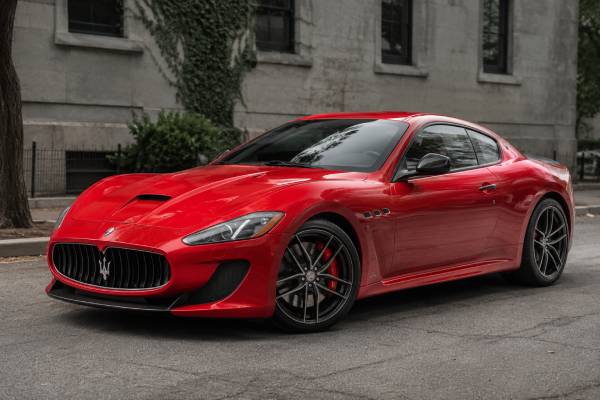
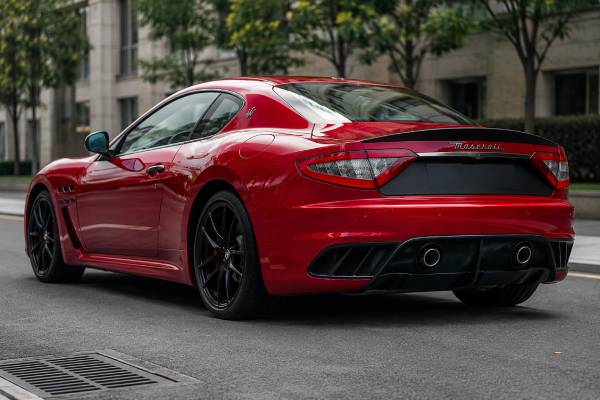
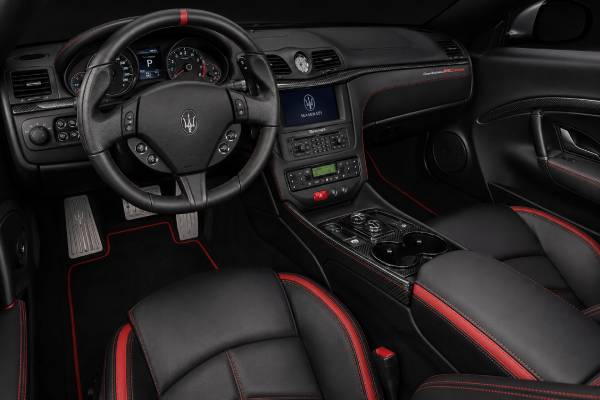
The 2014 Maserati GranTurismo MC Stradale Centennial Special Edition combines the four-seat, 460 hp evolution of the MC Stradale with a highly specific color, wheel, trim, and badge program created for Maserati’s 100th anniversary. Mechanically, it retains the naturally aspirated 4.7-liter V8, six-speed MC Race Shift rear transaxle, carbon-ceramic brakes, and 303 km/h capability of the contemporary four-seat Stradale. Its distinction lies in how Maserati linked those systems to the company’s 1914 origins through three-layer paint, centenary wheel medallions, tricolor seat detailing, carbon trim, and dedicated sill plates.
The car must be judged on two levels. It needs the same rigorous mechanical inspection as any MC Stradale, including clutch diagnostics, brake-life assessment, cold-start checks, suspension inspection, and evidence of specialist servicing. It also needs a detailed authenticity review, because rare paint, wheels, embroidered upholstery, badges, and carbon pieces are central to its value and can be costly to reproduce correctly. Sales began in July 2014, though registration dates vary. This guide explains the exact 460 hp Centennial coupé, how to separate factory specification from later cosmetic imitation, and what ownership demands beyond the anniversary story.
Table of Contents
- A Centenary Edition Built Around the MC Stradale
- 460 hp V8, Race Shift, and Technical Specification
- Centennial Colors, Trim, and Factory Identification
- Carbon Ceramics, Aerodynamics, and Four-Seat Packaging
- Driving Character Beyond the Special-Edition Details
- Preserving Mechanical and Cosmetic Condition
- Buying and Valuing a Centennial Stradale
A Centenary Edition Built Around the MC Stradale
The Centennial Special Edition is not a mechanically separate model; it is a commemorative specification of the 460 hp four-seat GranTurismo MC Stradale. Maserati created it to mark the first 100 years since the company’s founding in Bologna in 1914.
The edition appeared publicly at the New York and Beijing motor shows in 2014, with sales scheduled from July. Maserati offered Centennial treatments on both the GranTurismo MC Stradale coupé and the GranCabrio MC. The coupé retained the harder-edged rear transaxle and carbon-ceramic brake package, making it the more technically focused of the two.
Its historical context matters. By 2014, the M145 GranTurismo had been in production for seven years, and Maserati was expanding rapidly with newer sedans. The Centennial model used the established flagship coupé to represent continuity: a front-engine grand tourer with Italian coachwork, motorsport-inspired engineering, and a naturally aspirated V8 built during Maserati’s Ferrari-era partnership.
The base four-seat MC Stradale itself had arrived in 2013. It replaced the original two-seat, 450 hp Stradale with a more practical cabin, 460 hp engine, distinctive carbon-fiber hood, and retained 303 km/h top speed. The Centennial edition builds on that later configuration rather than the earlier stripped two-seater.
Collectors should understand that “Centennial” describes a coordinated factory appearance package, not merely a badge. The special paints, wheel finishes, medallion-style center caps, upholstery combinations, stitching, engraved details, carbon trim, and centenary sill plates were designed as related sets. A standard MC Stradale fitted with a few anniversary emblems does not carry the same provenance.
The edition’s current appeal comes from three layers of rarity: the already uncommon MC Stradale, the one-year anniversary specification, and the survival of its original decorative components. That last point is important. Mechanical restoration can be expensive, but a missing special wheel finish, damaged embroidered seat panel, or repainted three-layer body can be equally difficult to return to exact factory form.
460 hp V8, Race Shift, and Technical Specification
The Centennial coupé uses the 4,691 cc naturally aspirated V8 in 460 hp form, paired with a six-speed electro-actuated rear transaxle. It produces 520 Nm and reaches a quoted top speed of 303 km/h.
| Item | Specification |
|---|---|
| Engine | F136 Y 90-degree naturally aspirated V8 |
| Displacement | 4,691 cc |
| Maximum power | 460 hp at 7,000 rpm |
| Maximum torque | 520 Nm at 4,750 rpm |
| Transmission | Six-speed MC Race Shift electro-actuated transaxle |
| Clutch | Hydraulically operated dry twin-plate clutch |
| Drive | Rear-wheel drive with limited-slip differential |
| Weight distribution | Approximately 48:52 front to rear |
| Dry weight | Approximately 1,700 kg |
| Suspension | Independent double wishbones with MC calibration |
| Brakes | Brembo carbon-ceramic discs |
| Wheels | 20-inch MC or Trofeo designs in special finishes |
| Front tires | Typically 255/35 ZR20 |
| Rear tires | Typically 295/35 ZR20 |
| Wheelbase | 2,942 mm |
| Length | Approximately 4,933 mm |
| Width | Approximately 1,915 mm |
| Height | Approximately 1,343 mm |
| Fuel capacity | Approximately 90 liters |
| 0–100 km/h | About 4.5 seconds |
| Top speed | 303 km/h |
The engine is the later low-friction F136 development first used in the GranTurismo Sport. Diamond-like surface treatment in parts of the valvetrain, revised control logic, and breathing improvements help it deliver 10 hp and 10 Nm more than the earlier 450 hp Stradale while also addressing consumption and emissions.
The transaxle remains the defining mechanical difference from the automatic GranTurismo Sport and North American MC. The gearbox and differential sit at the rear, connected to the engine through a torque tube. Hydraulic actuators operate the clutch and select ratios. Race mode enables the quickest shift strategy and relaxes the electronic intervention thresholds.
The carbon-ceramic brake system combines low unsprung mass with repeated high-temperature capability. It is appropriate for the car’s speed and track intent, but it represents a major ownership liability if condition is unknown. Disc life cannot be established by looking through the wheel from a few feet away.
The four-seat layout adds practicality with only a modest quoted weight increase over the earlier two-seat car. A carbon-fiber hood helps offset the added rear seating and improves cooling and aerodynamic management. This combination is why the later Stradale can remain nearly as light while carrying four occupants.
Centennial Colors, Trim, and Factory Identification
Factory authenticity is the central collector issue. Maserati linked each Centennial exterior finish to a defined interior treatment, wheel finish, stitching color, and anniversary detailing, so a correct car should present as a coherent specification rather than a collection of isolated badges.
The most recognizable special three-layer paints are Magma Red and Inchiostro Blue. They reference the red and blue of the Maserati shield and the traditional colors associated with Bologna. Maserati also offered other approved body finishes, creating seven exterior choices in the broader Centennial program.
Wheel options included MC and Trofeo designs in four special finishes. Their center caps carried a medal-like centenary logo in Smoke Grey or Charcoal Grey depending on the wheel and color combination. Laser-engraved details and finish accents were coordinated with interior stitching.
Cabin treatments varied with paint. Key features include:
- Leather seats with full-length contrasting profiles.
- Red, white, and blue decorative elements on selected dark interiors.
- Trident embroidery integrated into the headrests.
- Contrasting thread tied to wheel or exterior detailing.
- Carbon-fiber dashboard and seat-surround inserts.
- A carbon or special kick plate carrying the centenary logo.
- Anniversary detailing on the steering wheel and cabin trim.
Inchiostro Blue could be paired with white leather and Santorini Blue accents, creating a very different appearance from the black leather and tricolor profile used with Magma Red or Pietra Grey. The existence of multiple legitimate combinations means internet photos of one car should not be used as the only authenticity standard.
Verification should begin with the factory build sheet and original invoice. The VIN record should identify the base MC Stradale and its paint, upholstery, wheels, and option codes. Supporting material may include delivery photographs, dealer correspondence, anniversary literature, spare keys, manuals, and original accessories.
Inspect every special component for restoration. Three-layer paint can be matched, but panel-to-panel depth and metallic effect are difficult to reproduce. Wheel engraving and center caps may be refinished incorrectly. Seat inserts can fade, crease, or be replaced with ordinary leather. Carbon weave, gloss, and edge finish should remain consistent.
Do not dismiss sympathetic repair. A correctly refinished wheel or professionally repaired seat can be preferable to badly preserved originality. The important points are disclosure, documentation, correct materials, and visual consistency. Undocumented imitation is the problem, not high-quality conservation.
Carbon Ceramics, Aerodynamics, and Four-Seat Packaging
The Centennial edition’s decorative theme sits on top of a genuinely specialized engineering package. The carbon hood, revised body, central exhaust, fixed sporting chassis, and carbon-ceramic brakes separate it from a normal GranTurismo Sport.
The carbon-fiber hood uses a prominent central opening and venting to release heat and manage pressure. It also saves mass at the front of the car, helping preserve balance after the rear seats returned. Hood alignment, latch operation, clear-coat condition, and mounting points deserve close inspection because replacement is expensive.
The front bumper incorporates a splitter and enlarged ducts. Revised front fenders and side treatment release wheel-well pressure and guide air along the car. At the rear, the bumper, underbody management, and central exhaust contribute to high-speed balance. The approach is integrated; Maserati sought downforce without turning the coupé into a winged race-car replica.
The suspension uses a firm MC calibration that favors response and consistency over the broader comfort range of Skyhook. Double wishbones remain at both ends, preserving camber control and steering precision. The long wheelbase provides stability, while the rear transaxle keeps more mass on the driven axle.
Carbon-ceramic discs reduce rotating and unsprung weight. That benefit helps steering and damper control as well as fade resistance. The tradeoff is cost and sensitivity to damage. A careless wheel change can chip a disc; contamination or incorrect pads can alter friction; track heat can consume life without obvious surface wear.
The return of rear seats changes how the car can be used. Adults can occupy them for shorter trips, and smaller passengers can travel comfortably. Access still requires folding the large front seats and negotiating long doors. The trunk remains useful for touring, making the four-seat Stradale much easier to justify as an only weekend car than the original two-seater.
The cabin retains physical switches and an older multimedia system. The materials feel special, but connectivity and display quality are dated. Any infotainment upgrade should be reversible and installed without cutting factory harnesses, especially on a Centennial car where preserving original trim and electrical architecture supports value.
Driving Character Beyond the Special-Edition Details
The Centennial edition drives like a four-seat 460 hp MC Stradale: fast, stable, highly vocal, and most satisfying when the driver treats the automated manual as a manual rather than a modern automatic. Its anniversary trim does not soften the underlying machine.
Low-speed behavior requires technique. The dry clutch slips during starts, reversing, and creeping. Repeated inching in traffic or holding the car on the throttle adds heat and wear. Use the brake to hold position, leave space, and make parking movements with purpose.
Manual paddle control gives the best results. In ordinary driving, a small lift during upshifts can smooth the interruption. Sport increases throttle and exhaust response. Race is intended for committed driving, where high load and proper temperature allow the transmission to deliver very fast, firm shifts.
The 460 hp V8 is linear and immediate. It provides enough midrange for road use, then becomes sharper and louder toward 7,000 rpm. There is no turbo lag and no artificial torque plateau. The car’s response can feel less explosive than a current turbo GT at low revs, but more connected when the road opens.
Hydraulic steering delivers steady weight and clear load information. The wide front track and lower, firmer setup give the nose authority, while the rear transaxle helps the chassis feel balanced under power. The car remains large, so it rewards planned lines and progressive braking rather than sudden inputs.
Carbon-ceramic brakes can be immensely strong when warm and healthy. Pedal feel should be consistent, without vibration, pulling, or grinding. Cold response varies with pad choice and condition, so a short low-speed test is not enough to judge them.
The ride is firm. It should communicate road texture and contain body movement without crashing repeatedly. Old tires, bent wheels, tired control-arm joints, incorrect alignment, or damaged dampers make the car feel nervous and brittle. Because the model has a special-edition aura, some examples are driven little; age-related deterioration can therefore be more important than odometer reading.
On track, the car offers stable braking, predictable balance, and engaging shifts, but it still carries substantial mass. Tire temperatures and pressures change quickly, and cooling laps matter. An owner who uses the car on circuit should record fluids, pad and disc condition, alignment, and tire heat cycles.
Preserving Mechanical and Cosmetic Condition
Maintaining a Centennial Stradale means protecting both expensive performance systems and irreplaceable visual details. A mechanically healthy car with damaged anniversary trim is incomplete, while a flawless display car with an unknown clutch or brake condition is financially risky.
MC Race Shift and clutch
Obtain periodic diagnostic clutch readings and keep the printouts. Monitor engagement point, hydraulic pressure, pump cycle, stored faults, and calibration values. A replacement should address associated bearings, seals, flywheel condition, and electronic setup rather than installing only the friction plates.
Hot shift faults, delayed selection, abnormal pump noise, hydraulic leakage, or excessive low-speed slip need immediate diagnosis. Continuing to drive can turn a contained repair into a gearbox or actuator problem.
Carbon-ceramic brakes
Use a specialist who understands the accepted wear criteria for the discs. Record condition at each inspection. Check pads, caliper seals, hoses, fluid, and wheel-installation practices. Never allow an impact gun or careless wheel handling near the disc faces.
Cars that sit should be stored dry. Wash chemicals, road salt, and wet parking can affect hubs, fasteners, and pad contact areas even when the ceramic friction material itself does not rust like iron.
Engine, cooling, and fluids
Listen from cold for timing noise, inspect oil leaks, and monitor coolant level. Hoses, tanks, radiators, fans, mounts, and belts age even on low-mileage cars. Use the exact fluid specifications and service intervals for the VIN and market.
The central exhaust’s valves, vacuum control, oxygen sensors, catalysts, and heat shielding need inspection. Nonstandard exhaust work can discolor the rear bumper, create warning lights, or alter legal compliance.
Chassis and tires
Check wishbones, bushings, links, tie rods, wheel bearings, dampers, springs, and alignment. The low front splitter and underbody can suffer grounding damage. Matching high-performance tires should be replaced for age and heat-cycle condition, not only tread depth.
Anniversary finishes and cabin materials
Use paint-protection methods that do not alter the texture or gloss of three-layer finishes. Document any correction work before and after repair. Preserve wheel engravings and center caps rather than refinishing them as ordinary silver wheels.
Condition leather with products appropriate for the original finish. Protect bright inserts and embroidery from aggressive cleaners. Inspect carbon trim for lifting clear coat, cracks, and edge separation. Store removed original audio or trim parts if a reversible upgrade is installed.
Electrical health begins with the battery. Use an appropriate maintainer during storage, test charging output, and scan modules when warnings appear. Low voltage can create misleading faults in the gearbox, parking, climate, and body systems.
Buying and Valuing a Centennial Stradale
A strong Centennial purchase requires proof of factory specification, complete special-edition components, and the same mechanical evidence expected from any high-performance MC Stradale. The anniversary name should raise the inspection standard, not lower it.
Follow this process:
- Obtain the factory build sheet and decode the VIN.
- Match paint, upholstery, wheels, center caps, stitching, carbon, and sill plates to the original specification.
- Inspect the engine from fully cold and scan all modules.
- Read clutch wear and hydraulic parameters.
- Professionally assess carbon-ceramic disc life and condition.
- Check suspension, tires, wheels, alignment, and underbody impact points.
- Review any paint, leather, carbon, or wheel restoration invoices.
- Verify books, keys, tools, original parts, and delivery material.
- Drive every mode after the car reaches full operating temperature.
| Factor | Supports value | Reduces confidence |
|---|---|---|
| Factory provenance | Build sheet matches the complete anniversary specification | Badges and trim lack documentation |
| Paint and wheels | Correct finish with documented quality repairs | Color mismatch or lost engraved details |
| Interior | Original profiles, embroidery, carbon, and sill plates | Generic retrim or missing anniversary pieces |
| Clutch | Current reading and smooth, calibrated operation | No data or hot engagement faults |
| Brakes | Disc life is measured and recorded | Visual claims without inspection |
| History | Continuous specialist care and transparent use | Long storage with minimal recommissioning |
Do not assume zero track use is always preferable. A carefully maintained car used at occasional events may have better fluid, brake, and alignment records than a low-mileage car stored on old tires. The key is transparency and measured condition.
Set aside a substantial reserve. Clutch work, carbon discs, rare wheels, carbon hood repair, special upholstery, or three-layer paint correction can each be significant. Agreed-value insurance may be appropriate when the car’s specification and condition are well documented.
Avoid buying a standard MC Stradale at a Centennial premium because it has anniversary-style emblems. Likewise, do not reject a correctly restored Centennial car solely because one panel was repainted. Quality, documentation, and fidelity matter more than simplistic claims of untouched originality.
The best example should feel complete: the colors and trim tell the centenary story, while the engine, gearbox, brakes, and chassis perform as Maserati intended. When both sides are preserved, the Centennial Special Edition is more than a cosmetic celebration. It is a particularly vivid version of the last naturally aspirated V8 GranTurismo era, combining commemorative craftsmanship with one of the most specialized road-going M145 configurations.
Ownership records should preserve cosmetic history as carefully as mechanical history. Keep paint-meter readings, wheel-refinishing photographs, leather repair invoices, and the part numbers of replaced anniversary items. Store any removed factory components in labeled protective packaging. This documentation helps a future specialist distinguish careful conservation from imitation and prevents a correct car from losing value simply because its rare details cannot be verified years later.
For a Centennial car, restoration decisions should be conservative. Three-layer paint, tricolor piping, dedicated wheel medallions, embroidered details, and edition-specific carbon pieces are part of the model’s identity, so replacing them with visually similar generic items can reduce value even when the car looks tidy. Before refinishing a wheel or repairing a seat, photograph the original finish and obtain factory color or material references. Keep damaged original pieces when replacement is unavoidable. A future owner can then understand what changed and why. This documentation is especially important when two otherwise similar cars differ mainly through subtle centenary details that are difficult to authenticate from auction photographs.
A traceable original paint sample or factory color record is especially valuable when repairing the complex anniversary finishes, because an approximate visual match can change noticeably in sunlight.
References
- Maserati GranTurismo MC Stradale and GranCabrio MC Centennial Special Editions 2014
- The four-seater GranTurismo MC Stradale makes its debut in Geneva 2013
- The Sensational Alfieri 2+2 Concept Steals the Spotlight alongside the Sportingly Redefined Quattroporte GTS at the Los Angeles Auto Show 2014
- Maserati highlights at Goodwood Festival of Speed 2014 2014
- Maserati TechInfo 2026 (Technical Information)
Disclaimer
This article is for informational purposes only and is not a substitute for professional diagnosis, inspection, maintenance, or repair. Specifications, torque values, fluids, intervals, and procedures can vary by VIN, market, build date, and equipment. Verify all details with the official service documentation for the specific car and use specialists experienced with MC Race Shift, carbon-ceramic brakes, carbon structures, and special-edition finishes.
Please share this article on Facebook, X/Twitter, or your preferred enthusiast community to support our work.