
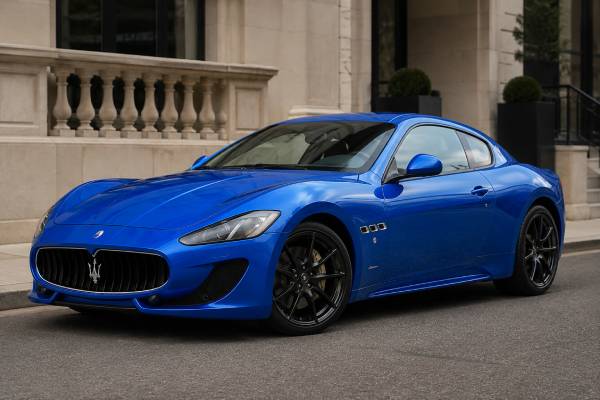
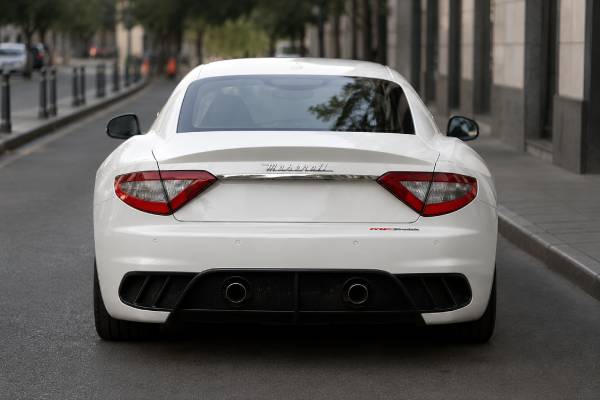
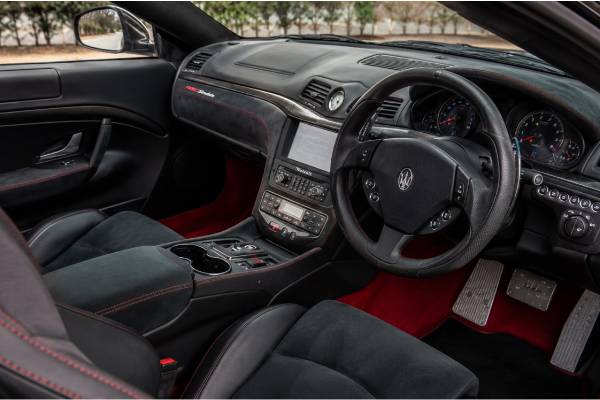
The 460 hp Maserati GranTurismo MC Stradale is the evolved, four-seat version of the most focused M145 road car. Introduced for 2013, it kept the original Stradale’s rear-mounted MC Race Shift transaxle, carbon-ceramic brakes, aggressive aerodynamics, and reduced-mass philosophy while adding 10 hp, a carbon-fiber hood, and two usable rear seats. The result is not merely a GranTurismo Sport with a louder exhaust. Its gearbox, brake system, weight distribution, body details, and cabin intent make ownership more specialized. At speed, the car offers sharp shifts, strong high-rpm response, secure balance, and braking performance suited to repeated hard use. At walking pace, the dry-clutch transmission demands sympathy, the low front structure needs care, and replacement carbon-ceramic components can be exceptionally expensive. Production and registration dates also require scrutiny because market availability, four-seat configuration, and later styling updates do not align perfectly everywhere. A correct buying decision therefore rests on factory identity, clutch and hydraulic diagnostics, carbon-ceramic brake measurements, complete service history, and evidence that the car has been used without being abused. This guide explains what makes the 460 hp MC Stradale distinct, how it drives, what fails with age, and how to inspect one before committing.
Table of Contents
- From Two-Seat Stradale to Four-Seat Flagship
- Race Shift, V8, and Carbon-Ceramic Hardware
- Production Evolution, Colors, and Authenticity
- Functional Aero, Carbon, and Cabin Packaging
- How the MC Stradale Rewards Commitment
- Clutch, Brake, and Chassis Ownership Reality
- Buying a Genuine, Well-Sorted Example
From Two-Seat Stradale to Four-Seat Flagship
The 2013 update made the MC Stradale easier to use without removing the hardware that defined it. Maserati added rear seats and raised output from 450 to 460 hp, creating a flagship that could carry four occupants while remaining more track-oriented than the GranTurismo Sport.
The original 2011 MC Stradale grew from Maserati’s Trofeo racing and GranTurismo MC programs. It used a quicker automated-manual transaxle, carbon-ceramic brakes, less sound insulation, revised aerodynamics, and a two-seat cabin in many markets. Its 450 hp engine and 110 kg reduction separated it clearly from the GranTurismo S.
For the 2013 evolution, Maserati adopted the low-friction 460 hp engine already associated with the Sport, added a carbon-fiber hood with a central air outlet, and restored two rear seats. Claimed dry weight remained about 1,700 kg, with 0–100 km/h in around 4.5 seconds and a top speed near 303 km/h. The car therefore became more practical while retaining the fastest-shifting version of Maserati’s single-clutch gearbox.
The four-seat configuration is important because it changes the car’s role. It can carry children or adults for shorter journeys and handle weekend luggage, yet the suspension, braking, exhaust, and transmission remain tuned for engagement rather than effortless commuting. It is a rare combination: a large, elegant, genuinely usable coupe with competition-influenced hardware and no turbochargers.
The MC Stradale should not be confused with the later North American GranTurismo MC trim. Both use aggressive styling and 460 hp, but many MC-market cars use the front-mounted ZF automatic and conventional road-oriented brake specification. The Stradale’s transaxle, Race mode, carbon-ceramic system, hood treatment, and identity data distinguish it.
Production continued in different markets toward the end of the M145 era, and later registrations can create inconsistent year descriptions. Some cars received model-year changes or region-specific equipment. Verify the factory build sheet, transmission layout, brake type, seat configuration, and original market. “MC Stradale look” body parts are widely fitted to ordinary cars, so appearance alone is not evidence.
Collectors value the 460 hp Stradale because it represents the final development of Maserati’s naturally aspirated, single-clutch, rear-transaxle GranTurismo. Drivers value it because its limits remain readable and its sound is inseparable from the mechanical experience. Its future desirability will depend heavily on preserved factory equipment and documented maintenance of the expensive systems that make it special.
Race Shift, V8, and Carbon-Ceramic Hardware
The 460 hp MC Stradale pairs the F136 Y V8 with a six-speed MC Race Shift transaxle and carbon-ceramic brakes. These three systems create its performance advantage and its largest potential ownership costs.
| Item | Specification |
|---|---|
| Engine | 4,691 cc naturally aspirated 90-degree V8 |
| Output | 460 hp at 7,000 rpm |
| Torque | 520 Nm at 4,750 rpm |
| Transmission | Six-speed MC Race Shift electrohydraulic automated manual transaxle |
| Drive | Rear-wheel drive with limited-slip differential |
| Weight distribution | Rear biased, approximately 48:52 |
| Suspension | Double wishbones with Stradale-specific calibration |
| Brakes | Brembo carbon-ceramic discs with multi-piston calipers |
| Wheels | 20-inch forged or lightweight MC-design alloys, specification dependent |
| Dry weight | Approximately 1,700 kg |
| Wheelbase | 2,942 mm |
| 0–100 km/h | Approximately 4.5 seconds |
| Top speed | Approximately 303 km/h |
The aluminum F136 uses dual overhead camshafts, variable valve timing, four valves per cylinder, port injection, and wet-sump lubrication. The 460 hp calibration improves breathing and friction compared with the earlier 450 hp version. Torque remains progressive, so the engine feels strongest as it passes 4,500 rpm and continues toward 7,000 rpm. That high-rpm emphasis suits a gearbox designed to deliver forceful shifts under load.
MC Race Shift operates a conventional dry clutch and manual gearset through hydraulic actuators. In Race mode, Maserati quoted shift times around 60 milliseconds under suitable high-load conditions. The dramatic interruption and reapplication of torque is part of the car’s character. At low speed, however, the system cannot mimic the seamless creep of a torque converter. The driver must minimize clutch slip and avoid using throttle to hold the car on an incline.
Mounting the transmission at the rear helps mass distribution and places the driver closer to the drivetrain’s behavior. Hydraulic pressure, pump health, accumulator condition, actuator calibration, clutch position, and release-bearing condition all affect operation. A diagnostic clutch percentage is useful but must be interpreted with engagement values and service history.
Carbon-ceramic discs reduce unsprung and rotating mass while providing high heat capacity. They can last a long time in appropriate road use, but chips, surface damage, overheating, or wear beyond limits can require replacement at a cost disproportionate to the car’s current market value. Visual shine is not enough; specialists should inspect, weigh or measure as the approved procedure requires, and assess pad compatibility.
The chassis uses double wishbones and a lower, firmer setup than the regular Sport. Steering remains hydraulically assisted. Wide tires and a rigid body give strong front-end authority, but alignment and tire condition have an outsized effect. The car’s performance figures assume healthy, matched tires and properly calibrated systems, not merely a functioning engine.
Production Evolution, Colors, and Authenticity
Authenticity requires confirmation of the complete Stradale package. Bodywork can be copied, but the factory transaxle, carbon-ceramic brakes, hood, electronics, interior specification, and VIN record are much harder to imitate coherently.
The four-seat 460 hp model debuted in 2013. Its carbon hood carries a central opening and visible or painted composite construction depending on finish. The front bumper uses a pronounced splitter and enlarged air management. Side skirts, front-fender vents, a rear lip, and diffuser contribute to the more functional stance. Oval or model-specific exhaust outlets and MC badging complete the exterior.
Cabin configurations vary. Four individual seating positions are the defining update, but materials can include leather, Alcantara, carbon trim, contrasting stitching, and different seat-shell or comfort arrangements by market. A roll cage or harness setup may appear on cars modified for track use; verify whether it was factory supplied, dealer installed, or aftermarket.
Centennial Special Editions added dedicated three-layer colors, wheel medallions, carbon details, and tricolor cabin accents in 2014. Those cars deserve separate provenance checks. Standard Stradales could also be ordered in distinctive colors, so rarity claims should be supported by build records rather than seller estimates.
Later M145 styling and infotainment revisions did not appear uniformly under the Stradale name in every country. Registration databases may use first-registration year instead of production year. Imported cars can have changed lights, speedometer coding, radio settings, or emissions equipment. Confirm compliance and parts support before valuing a late or cross-market example.
Important original items include both keys, manuals, tool kit, compressor or mobility equipment, carbon trim, correct wheels, brake hardware, factory exhaust, and service documents. Retain removed components if the car has an aftermarket infotainment unit, exhaust, suspension setup, or track equipment.
Inspect body panels for paint depth and weave consistency. The low splitter and underbody are vulnerable to ramps and curbs. Carbon hood repair can be hidden under paint. Wheels may have been refinished after track heat or curb damage, and replacement tires may not match the original size or load specification.
A genuine Stradale with evidence of careful use is more desirable than a visually perfect car whose clutch, brakes, and cooling history are unknown. Conversely, documented track days are not automatically disqualifying if maintenance, fluid changes, brake measurements, tire replacement, and warm-up practices are clear. Evidence is more useful than assumptions.
Functional Aero, Carbon, and Cabin Packaging
The MC Stradale’s design changes serve cooling, stability, and mass reduction while preserving the GranTurismo’s Pininfarina proportions. It looks aggressive because the engineering demands more air and control, not simply because Maserati added decorative trim.
The front splitter manages airflow and visually lowers the nose. Larger openings feed the radiator, condenser, brakes, and engine bay. The carbon hood reduces high-mounted front mass and helps extract hot air. Side skirts guide flow along the body, while the rear lip and diffuser stabilize the car without a tall wing.
These parts are vulnerable. Splitters scrape, mesh grilles bend, undertrays lose fasteners, and heat can cloud carbon lacquer. Inspect from below with the car raised. Poorly repaired composite panels may show uneven weave, pinholes, edge separation, or inconsistent clear coat. Replacement factory pieces can be difficult to locate.
The transaxle layout allows the engine to sit well back and distributes driveline mass toward the rear. This packaging supports balance but adds a torque tube, hydraulic hardware, and rear-mounted service points. Heat management around the gearbox, exhaust, and differential matters after hard use. Missing shields or nonstandard exhaust routing can damage nearby components.
Inside, the four-seat update is more than a marketing claim. Rear passengers have shaped seats and useful space for the class. The front seats hold occupants more firmly than standard GranTurismo chairs, yet access and long-distance comfort remain reasonable. The trunk still handles soft luggage, although emergency equipment and optional audio can reduce usable space.
The cockpit combines analog instruments, a central clock, steering-column paddles, and dedicated mode controls. Race mode changes shift strategy, traction thresholds, and exhaust behavior. Controls feel older than current cars, but their directness suits the mechanical character. Infotainment obsolescence is less damaging here than in a luxury-focused automatic, provided all vehicle functions remain available.
Leather, Alcantara, carbon, and soft-touch surfaces age differently. Look for shrinking dashboard leather, sagging headliner, worn bolsters, sticky switches, cloudy carbon, and loose trim after aftermarket installations. Frameless windows must index correctly to preserve sealing. Track-focused owners may have removed or altered cabin pieces; restoration cost should be considered before purchase.
The soundscape is one of the Stradale’s defining features. Intake resonance, valved exhaust, solid shifts, and mechanical gearbox sounds create a layered experience. A louder aftermarket exhaust can overwhelm that balance and may introduce drone or heat. Verify valve operation and retain the factory system when originality matters.
How the MC Stradale Rewards Commitment
The MC Stradale feels ordinary only when driven without understanding its gearbox. With correct inputs and temperature, it becomes more direct, balanced, and dramatic than the GranTurismo Sport, especially under braking and during high-rpm shifts.
At low speed, the clutch engages deliberately. The driver should select first, release the brake, and move away cleanly rather than feeding constant throttle while inching forward. On hills, use the brake instead of holding position through clutch slip. Smoothness improves when the driver lifts slightly during gentle shifts; full-load Race changes are designed to be firm.
The V8 builds speed in a linear arc. It lacks a turbocharged punch at 2,000 rpm, but throttle response is immediate and the final 2,500 rpm provide the reason to choose this model. The engine note sharpens as the exhaust valves open, and each shift lands the next gear close to the useful range.
Steering effort is substantial and consistent. The front tires communicate increasing load, while the rear-biased layout makes the car rotate more naturally than its size suggests. It still weighs around 1.7 tonnes dry, so the quickest route through a corner is smooth: brake in a straight line, allow the nose to take a set, and accelerate progressively.
The suspension is firmer than a Sport and less forgiving on broken pavement. Correct tire pressure matters, as does tire temperature. Cold, old, or mismatched rubber can make the car tramline and reduce traction abruptly. On a flowing road, the long wheelbase brings stability; on a tight road, width and low ground clearance demand patience.
Carbon-ceramic brakes offer strong, repeatable stopping when warm and healthy. Pedal feel can be less immediate when cold or in wet conditions, depending on pad and disc state. Noise alone does not prove failure, but vibration, pulling, deep scoring, chips, or warning data require inspection. Track use should include proper warm-up and cool-down rather than parking with very hot brakes.
Race mode is intended for suitable conditions and experienced drivers. It does not remove mass, road width, or tire limits. Stability-control intervention thresholds change, and the gearbox behaves more aggressively. Public-road use should prioritize visibility and surface quality rather than chasing the quoted shift time.
On a motorway, the Stradale remains a GranTurismo. The seats, wheelbase, climate control, rear accommodation, and luggage space support long travel. Cabin noise is higher and ride busier than in an automatic Sport, but the car is far more usable than its race-derived name suggests.
Clutch, Brake, and Chassis Ownership Reality
Ownership cost is concentrated in the components that distinguish the Stradale: clutch and hydraulics, carbon-ceramic brakes, composite body parts, and model-specific suspension. A complete specialist inspection is essential even when mileage is low.
MC Race Shift system
Request a full diagnostic report, not a dashboard check. Review clutch wear, engagement position, self-calibration, pump run time, hydraulic pressure, stored faults, and gear-selection behavior. Ask for invoices covering clutch, release bearing, pump, accumulator, actuator repairs, fluid, and calibration. A recent clutch without setup records is not automatically reassuring.
During the test, assess cold and hot engagement, reverse selection, low-speed shudder, shift consistency, and whether the car unexpectedly selects neutral. Heat can reveal faults that do not appear during a short demonstration. The clutch’s life varies dramatically with traffic, gradients, parking maneuvers, and driver technique.
Engine and cooling
Start the engine cold and listen for persistent timing or variator noise. Check cam covers, front covers, and undertrays for oil leaks. Inspect engine mounts for collapse. Stable temperature is mandatory; examine radiator and condenser blockage, fans, hoses, expansion tank, thermostat behavior, and dried coolant residue. Track use increases the importance of fresh fluids and clean heat exchangers.
Carbon-ceramic brakes and tires
Have the discs assessed using the correct Maserati/Brembo criteria. Examine both faces for chips, cracks, impact damage, unusual texture, and heat history. Confirm compatible pads and measure remaining material. A cheap purchase with worn discs can be financially irrational. Brake-fluid age and caliper condition also matter.
Tires must be matched, correctly sized, properly rated, and young enough for high-speed use. Inspect inner shoulders and sidewalls. Wheels should be checked for bends and cracks, not merely cosmetic curb marks.
Suspension, electrical systems, and trim
Inspect dampers, springs, control arms, ball joints, tie rods, anti-roll-bar links, wheel bearings, alignment, and ride height. Knocks or uneven wear often indicate several aged parts. Check front-lift equipment if fitted and scan its controller.
Low voltage causes misleading faults. Load-test the battery, verify charging output, and inspect parasitic draw. Test every window, sensor, lock, seat function, climate zone, light, audio channel, and key. Examine carbon and upholstery for heat, UV, and track-equipment damage.
Service by time, not only distance. Low-use cars still age through moisture, seals, battery cycling, tire hardening, and corrosion. Use a workshop familiar with the transaxle and carbon-ceramic procedures; general exotic experience is not enough when calibration tools and model knowledge are missing.
Buying a Genuine, Well-Sorted Example
Buy on system condition and provenance. The right car has verified Stradale identity, clean diagnostics, measurable brake life, credible clutch data, stable cooling, correct tires, intact carbon, and a history that explains how it was used.
Confirm the VIN and factory configuration before travel. Determine original market, production date, seat arrangement, transmission, brake equipment, paint, trim, and options. Check whether modifications are road legal and whether original parts remain with the vehicle.
Arrange the inspection with the engine cold. Include a lift, paint and composite assessment, full module scan, clutch interpretation, carbon-ceramic evaluation, wheel runout, tire-age check, and a road test long enough to heat the gearbox. Review service invoices in sequence and compare mileage across inspections.
| System | Evidence to seek | Major warning |
|---|---|---|
| Identity | VIN build data and complete Stradale equipment | Replica bodywork, unclear market history, missing factory parts |
| Clutch and hydraulics | Diagnostic data, clean hot operation, detailed invoices | Neutral events, shudder, slow selection, vague clutch claim |
| Carbon-ceramic brakes | Specialist measurements and undamaged discs | Chips, deep wear, incorrect pads, no remaining-life assessment |
| Cooling and engine | Cold-start stability, dry engine, stable temperature | Persistent rattle, smoke, overheating, active leaks |
| Body and chassis | Intact carbon, straight wheels, quiet suspension | Splitter damage, poor composite repair, tire-edge wear |
A track-used car can still be excellent if its owner changed fluids, measured brakes, replaced tires, documented alignment, warmed and cooled the drivetrain properly, and repaired damage correctly. A low-mileage garage car can be worse if its battery failed repeatedly, coolant aged, seals dried, and brakes corroded. Judge evidence, not stereotypes.
Budget a significant reserve. One combination of clutch hydraulics, ceramic discs, tires, suspension arms, and carbon repair can exceed the apparent saving of a cheaper car. Insurance valuation should recognize model-specific parts. Confirm that a suitable workshop and transport plan are available before purchase.
Choose based on intended use. The Stradale is ideal for open roads, occasional circuits, events, and owners who enjoy learning a single-clutch gearbox. It is a poor choice for daily crawling traffic or anyone expecting modern automatic smoothness. A GranTurismo Sport automatic may be the better car for those conditions.
Walk away from persistent transmission warnings, unverifiable identity, overheated or damaged ceramic discs, structural repair, missing cooling panels, old mixed tires, or a seller who refuses diagnostics. Cosmetic stone chips are normal; uncertainty in the expensive systems is not.
A sorted 460 hp MC Stradale is one of the most distinctive final-era naturally aspirated Maseratis. It combines four-seat practicality with a rear transaxle, quick single-clutch shifts, carbon-ceramic stopping power, and a V8 that rewards every additional revolution. Preserve its original hardware and maintain it with data rather than guesswork, and it can remain both a credible collector car and an unforgettable machine to drive.
References
- The four-seater GranTurismo MC Stradale makes its debut in Geneva 2013
- Worldwide Paris Premiere for the GranTurismo MC Stradale 2010
- Maserati GranTurismo MC Stradale and GranCabrio MC Centennial Special Editions 2014
- Maserati Guides & Documentation 2026 (Owner Documentation)
- Maserati TechInfo 2026 (Technical Information)
Disclaimer
This article is for informational purposes and is not a substitute for professional diagnosis, repair, or inspection. Specifications, torque values, service intervals, and procedures vary by VIN, market, production date, and equipment; confirm every critical detail in the official Maserati service documentation for the individual vehicle.
Please share this guide on Facebook, X/Twitter, or a specialist community if it helped you understand the MC Stradale.