
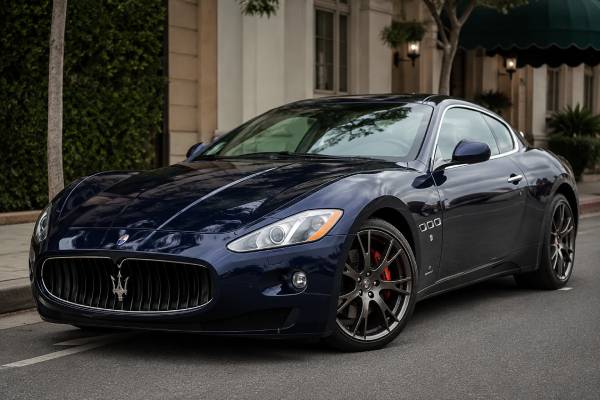
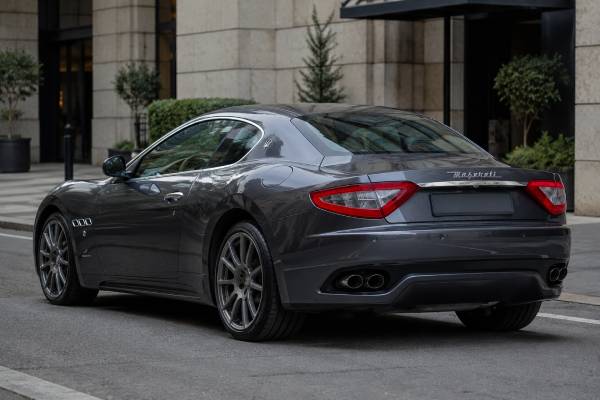
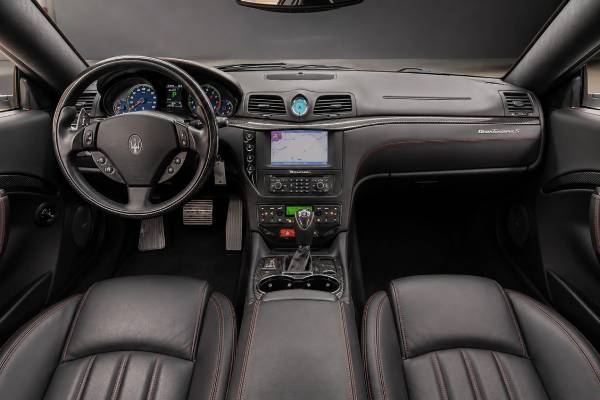
The 2011–2012 Maserati GranTurismo S with 450 hp is a short-lived late evolution of the transaxle-equipped S, positioned between the original 440 hp car and the 460 hp GranTurismo Sport that replaced it. It keeps the rear-mounted six-speed electro-actuated gearbox, dry clutch, rear-biased balance, and naturally aspirated 4.7-liter V8, but benefits from the low-friction engine development that raised output to 450 hp and torque to 510 Nm in the final phase of the model’s life.
Because the name barely changed, this version is frequently misidentified. Registration data, advertisements, and even specialist listings may use 440 hp, 450 hp, or a rounded local figure for apparently similar cars. A buyer must therefore confirm the engine specification, build date, transmission type, and original market rather than trust the badge or model year alone. The car also shares important mechanical ideas with the contemporary MC Stradale, but it is not the same machine: the S retains four seats, less extreme aerodynamics, steel brakes, and a more road-oriented setup. This guide explains what makes the 450 hp S distinct, how it drives, what tends to age, and how to buy one without confusing rarity with condition.
Table of Contents
- The Final and Rarest GranTurismo S
- 450 hp V8, Transaxle, and Key Data
- Build Period, Specification, and Authenticity
- Late-S Details and Engineering Character
- Driving the Stronger Transaxle Coupé
- Clutch, Engine, and Chassis Service Risks
- How to Buy a 450 hp S
The Final and Rarest GranTurismo S
The 450 hp GranTurismo S is best understood as the final development of the original MC-Shift S rather than a separate visual redesign. It arrived near the end of the pre-facelift period and disappeared when the 460 hp GranTurismo Sport consolidated the range for the 2012–2013 transition.
Maserati introduced the first 440 hp GranTurismo S in 2008 with two defining upgrades: the 4.7-liter V8 and a six-speed electro-actuated transaxle. The later 450 hp calibration applied engine friction-reduction ideas seen across the 2011 performance range. Output rose by 10 hp and torque by 20 Nm, giving the late car a little more response without changing its underlying naturally aspirated character.
This timing makes the model uncommon. It was produced for a narrower window than either the early 440 hp S or the later 460 hp Sport, and regional homologation data do not always label it consistently. Some markets continued to advertise the S by traditional name while technical records showed the updated 331 kW output. Others registered cars late enough that model year and calendar year appear to conflict.
The 450 hp S also sits very close to the original two-seat MC Stradale in engine output. Both use a 4,691 cc V8 rated at 450 hp and 510 Nm, and both employ an automated rear transaxle. The MC Stradale, however, adds extensive body, aerodynamic, brake, cabin, software, and weight changes. A standard late S does not become a Stradale because it has carbon trim, a loud exhaust, or the same power figure.
For enthusiasts, the attraction is subtle. The car keeps the clean early Pininfarina body and four-seat usability while offering the strongest factory form of the pre-Sport transaxle S. It remains less visually aggressive than an MC Stradale and less technologically polished than a modern dual-clutch GT. Its value lies in mechanical involvement, rarity, and the way it connects Maserati’s first GranTurismo S to the more developed 460 hp family.
450 hp V8, Transaxle, and Key Data
The late S combines a 450 hp, 510 Nm naturally aspirated V8 with a six-speed electro-hydraulic manual gearbox mounted at the rear. The layout prioritizes weight distribution and driver involvement rather than smoothness at walking speed.
| Item | Specification |
|---|---|
| Engine | F136 Y 90-degree naturally aspirated V8 |
| Displacement | 4,691 cc |
| Block and heads | Aluminum alloy |
| Valve train | DOHC, 32 valves, variable timing |
| Maximum power | 450 hp at about 7,000 rpm |
| Maximum torque | 510 Nm at about 4,750 rpm |
| Transmission | Six-speed electro-actuated manual transaxle |
| Clutch | Dry twin-plate clutch, hydraulically operated |
| Drive | Rear-wheel drive with limited-slip differential |
| Suspension | Independent double wishbones front and rear |
| Steering | Hydraulically assisted rack and pinion |
| Brakes | Brembo ventilated steel discs; dual-cast front rotors |
| Wheels | 20-inch alloys, design dependent on specification |
| Wheelbase | 2,942 mm |
| Length | Approximately 4,881 mm |
| Width | Approximately 1,847 mm |
| Height | Approximately 1,353 mm |
| Fuel capacity | Approximately 86 liters, market dependent |
| 0–100 km/h | Roughly 4.8–4.9 seconds |
| Top speed | Approximately 295–300 km/h, specification dependent |
The engine’s extra output came from detail development rather than forced induction. Low-friction treatment in the valve gear, revised control strategies, and careful breathing improvements reduced internal losses. The result does not transform the car’s straight-line performance, but it sharpens response and adds a little more force through the upper midrange.
The rear gearbox and differential share the transaxle area, placing drivetrain mass behind the cabin. This helps produce a rear-biased distribution and reduces the sense of a heavy engine sitting directly over the front axle. A torque tube and driveshaft connect the front engine to the rear gearbox.
The transmission remains a manual mechanism controlled by hydraulic actuators. The driver can select automatic operation, use the paddles, or engage the sportier shift strategy when conditions allow. Every launch and low-speed creep event uses the friction clutch. That fact must shape both driving technique and purchase inspection.
Steel Brembo brakes distinguish the S from the carbon-ceramic-equipped MC Stradale. They are more practical for road use and generally less intimidating to replace, but they are still large, model-specific components. Disc thickness, cracking, heat marks, pad quality, and caliper condition matter more than outward cleanliness.
Build Period, Specification, and Authenticity
Correct identification is the first challenge with this model. A 2011 or 2012 registration does not automatically prove 450 hp specification, and a seller’s description may repeat database information that was rounded, copied, or assigned to the wrong variant.
Start with the VIN and original build data. A Maserati dealer or qualified independent specialist can often retrieve the factory configuration, including market, engine, transmission, paint, trim, wheels, and options. Compare that information with the physical car and historical paperwork.
Useful supporting documents include:
- Original sales invoice or order sheet.
- Certificate of conformity or local homologation record.
- Service book showing delivery date and supplying dealer.
- Diagnostic printouts that identify control-unit software and gearbox type.
- Invoices for clutch replacement or engine work listing correct parts.
- Factory labels and component numbers where accessible.
The 450 hp car should retain the pre-facelift GranTurismo S appearance rather than the redesigned nose and lighting of the 460 hp Sport. Typical S cues include oval exhaust outlets, 20-inch wheels, deep leather-and-Alcantara seating, large front Brembo calipers, and the automated-manual control layout. MC Sport Line carbon pieces may be present, but their existence does not establish engine output.
Maserati offered extensive personalization. Paint colors ranged from formal metallic shades to vivid or matte finishes. Interiors could combine leather, Alcantara, contrasting stitching, carbon fiber, wood, and colored carpets. Wheels, brake-caliper finishes, and exterior carbon details varied. This breadth means two authentic cars can look very different.
Originality deserves context. A carefully installed modern audio interface or reversible exhaust modification may improve ownership without harming the car. By contrast, imitation MC Stradale body panels, poorly fitted carbon, cut wiring, nonstandard steering wheels, or altered gearbox software can create diagnostic and value problems.
Accident inspection is especially important because the long nose, low front bumper, wide body, and large wheels are vulnerable. Check the aluminum hood, front crossmembers, radiator supports, suspension pick-up areas, door apertures, floor, and rear structure. Paintwork alone does not prove structural damage, but inconsistent gaps or nonfactory welds require explanation.
Late-S Details and Engineering Character
The late 450 hp S is distinctive because it combines understated early-M145 styling with one of the most involving drivetrain layouts Maserati offered in the series. Its engineering is visible in the car’s stance and behavior rather than in dramatic external add-ons.
Pininfarina’s body places the cabin rearward behind a long hood, with a low grille and pronounced front fenders. The roofline flows into broad rear shoulders, hiding the practical size of the cabin. The wheelbase provides usable rear legroom and helps the car remain stable at very high speed.
The front engine sits well back in the chassis, while the rear transaxle shifts mass toward the driven axle. This arrangement creates a different sensation from the S Automatic. The steering feels less burdened, the car rotates more naturally under balanced throttle, and power delivery has a direct mechanical connection through the dry clutch.
The cabin remains a luxury environment despite the sporting hardware. Leather covers broad surfaces, Alcantara appears on seats and trim, and the analog clock anchors the center stack. The multimedia system and graphics have dated, but the physical switches are easy to understand. Rear seats and a useful trunk preserve the grand-touring mission.
Sound is central to the design. The intake path, high-revving V8, and valved exhaust create several layers rather than one constant volume. At low load, the car can be restrained. Under stronger throttle and in Sport operation, the exhaust valves reduce restriction and expose a harder, higher-frequency note. The acoustic change follows engine speed and load, which is why it feels mechanical rather than simulated.
The standard body produces less downforce and cooling capacity than the MC Stradale’s vented hood, revised bumpers, splitter, side treatment, and central exhaust arrangement. That is not a weakness for ordinary road use. The S has better visual discretion, simpler replacement needs, and a more traditional four-seat GT identity.
Because the model is rare, cosmetic restoration should prioritize correctness. The original wheel finish, seat materials, carbon weave, badges, and exhaust shape contribute to authenticity. A car that has been made to look like another variant may be harder to return to standard than its purchase price suggests.
Driving the Stronger Transaxle Coupé
The 450 hp S rewards smooth, intentional driving. It is not effortless at low speed, but on an open road the V8, hydraulic steering, rear transaxle, and long wheelbase create a flowing and highly communicative experience.
The first lesson is the clutch. Moving away requires the system to engage a dry friction pack without direct pedal input. Holding the car on the throttle, creeping repeatedly, or forcing slow parking maneuvers builds heat and wear. The driver should use the brake to hold position, allow gaps in traffic, and make low-speed movements decisively.
Automatic mode can handle routine travel, but it may choose awkward shift moments or soften the sense of control. Paddle operation better suits the gearbox. A slight lift during normal upshifts can smooth the torque interruption, while full-throttle MC-style shifts are fastest when the system is warm and operating within its intended conditions.
The 450 hp engine feels marginally more alert than the early 440 hp unit, but the essential character remains linear. It pulls cleanly from ordinary speeds, strengthens above the midrange, and becomes most vivid near the top of the tachometer. The extra 20 Nm helps response, yet the appeal comes from progression rather than a sudden torque spike.
Hydraulic steering gives the driver a steady sense of load through the front tires. The car is not small, and initial turn-in is not as abrupt as a mid-engine sports car, but it settles accurately. The rearward mass and limited-slip differential help the chassis feel balanced when power is applied out of a bend.
Ride quality is firm but appropriate for a performance GT when bushings, dampers, tires, and wheels are healthy. Worn suspension can make the car crash over small impacts, wander on rough roads, or follow grooves. Incorrectly lowered cars often lose the compliance that makes the long wheelbase effective.
The steel brakes provide strong road performance and a progressive pedal. Their capability depends on fluid, pads, rotors, tires, and cooling. A car used heavily on track may show heat checking, uneven pad deposits, cracked dust boots, and discolored calipers. Track history is not automatically negative, but undocumented hard use is.
On a highway, the S remains calm enough to justify four seats and luggage. The gearbox settles in top gear, the engine quiets, and the steering maintains stable straight-ahead weight. Noise from old tires, wheel bearings, door seals, or exhaust modifications can spoil this ability, so a long test drive is necessary.
Clutch, Engine, and Chassis Service Risks
The 450 hp S can be dependable when maintained, but its major systems are expensive enough that a pre-purchase inspection is mandatory. The clutch and hydraulic shift equipment, timing hardware, fluid leaks, suspension, brakes, and battery-sensitive electronics deserve separate evidence.
Clutch wear and gearbox hydraulics
Request a current diagnostic clutch reading and compare it with earlier records. The percentage is useful but not absolute; calibration quality, sensor data, clutch travel, and actual driving behavior also matter. A car with a recent clutch should have an invoice showing associated bearings, seals, flywheel inspection, and post-repair setup.
Warning signs include slow engagement, rev flare, jerky hot shifts, missed gears, “return to dealer” messages, hydraulic leaks, or a pump that runs abnormally. A failing line, accumulator, pump, actuator, sensor, or clutch can produce overlapping symptoms. Diagnosis requires equipment that can read Maserati-specific values.
F136 engine checks
Start the engine completely cold. Persistent cam-timing rattle, low oil pressure behavior, misfire, smoke, or unstable idle needs investigation. Variator and oil-retention concerns are costly because access is labor intensive. Do not treat an undocumented engine noise as acceptable simply because the car still drives.
Inspect cam-cover gaskets, front covers, seals, oil cooler connections, and the lower engine area. Look for coolant staining around hoses, radiators, the expansion tank, and fittings. Test fans and verify stable temperature after a long idle and a spirited drive.
Suspension and braking hardware
The heavy chassis wears control-arm joints, bushings, links, dampers, mounts, and wheel bearings. A lift inspection should check play under load, not only visible rubber condition. Uneven tire wear can reveal geometry problems, bent wheels, or previous impact damage.
Measure brake discs and inspect the entire friction surface. Verify that pads are appropriate for the rotor and intended use. Replace brake fluid on time, because moisture affects pedal feel and high-temperature performance.
Electrical and cabin condition
Low voltage causes disproportionate trouble. Test the battery, alternator, grounds, and sleep current. A battery maintainer is sensible for a car that sits, but it should not hide a failing battery or parasitic drain.
Operate every feature: windows, seat motors, locks, mirrors, parking sensors, climate control, audio, lights, trunk release, and steering-wheel buttons. Check for sticky switch coatings, lifting leather, sagging headliner, worn seat bolsters, and water entry. These issues are repairable, but high-quality restoration is costly.
Time matters as much as mileage. Follow official VIN-specific intervals, but expect annual oil service and regular attention to brake fluid, coolant, gearbox and differential fluids, belts, filters, air conditioning, and rubber components. A rarely driven car still needs a complete inspection.
How to Buy a 450 hp S
Buy the 450 hp S only after proving both its identity and its condition. Rarity is valuable when documented, but it does not compensate for a worn clutch, noisy engine, damaged body, or incomplete history.
A useful purchase process is:
- Decode the VIN and obtain the factory specification.
- Confirm the 331 kW or 450 hp engine data in original records.
- Verify the six-speed rear transaxle and correct S equipment.
- Inspect the car cold before any seller warm-up.
- Run a complete diagnostic scan and save the report.
- Read clutch wear and hydraulic parameters.
- Test every shift mode after the drivetrain reaches temperature.
- Inspect the underbody, suspension, brakes, tires, and structure on a lift.
- Compare service invoices with the car’s current needs.
| Area | Buy with confidence when | Investigate further when |
|---|---|---|
| Identity | VIN and factory data confirm 450 hp specification | Only the advertisement states the output |
| Clutch | Wear, calibration, and invoices form a clear record | No diagnostic reading is available |
| Engine | Cold start is clean and fluids stay contained | Rattle, smoke, seepage, or coolant loss appears |
| Chassis | It tracks straight with even tire wear | It knocks, wanders, or has repeated wheel repairs |
| Brakes | Rotors are measured and pedal response is consistent | Vibration or heat damage is present |
| History | Specialist records continue through recent years | Low mileage is used to explain service gaps |
Set the budget around the inspected needs, not an optimistic resale guide. Allow for a baseline service, correct tires, battery, brake work, and one major mechanical event. A clutch or timing-related repair can exceed the difference between a cheap car and an excellent one.
Choose modifications conservatively. A documented exhaust or reversible connectivity upgrade may be acceptable. Unknown engine mapping, nonfactory shift software, deleted warning functions, cheap suspension parts, or imitation Stradale panels add uncertainty. Ask for original components.
The late S suits a driver who enjoys operating the car rather than simply pointing it. It demands sympathy in traffic and rewards confidence on open roads. For a buyer who values the early body, four-seat cabin, rare 450 hp specification, and direct transaxle feel, a sorted example is one of the most interesting M145 configurations. The decisive word is sorted: mechanical condition and proof of care should outweigh paint color, odometer reading, or claimed rarity.
The ownership plan should also include storage and use. Keep the battery supported with an appropriate maintainer, but drive the car long enough to reach full temperature rather than starting it briefly in a garage. Exercise the exhaust valves, climate system, windows, and gearbox regularly. After long storage, inspect tire pressures, fluid levels, and the floor beneath the car before moving. Cars that remain stationary can develop flat-spotted tires, sticking parking-brake components, dried seals, and electrical faults even when the mileage barely changes. A disciplined routine protects both the mechanical systems and the evidence of care that future buyers will expect.
A final point for this short-run 450 hp S is parts identification. Many service catalogues and online advertisements default to the more common 440 hp S or the later 460 hp Sport when a VIN is not entered. That can produce the wrong engine-management component, exhaust part, brake item, or trim reference even when the seller describes it as compatible with every 4.7-liter GranTurismo. Record the engine code, transmission layout, build date, and original option numbers before ordering. When a repair involves software or calibration, confirm that the workshop recognizes the 450 hp update rather than loading a generic earlier file. This discipline protects both drivability and the historical accuracy of a version whose identity is easy to blur.
References
- Maserati product range MY 2011 2010
- Worldwide preview at the Geneva Auto Show for the Maserati GranCabrio Sport 2011
- Worldwide Paris Premiere for the GranTurismo MC Stradale 2010
- Geneva premiere for the new Maserati GranTurismo Sport 2012
- Maserati TechInfo 2026 (Technical Information)
Disclaimer
This article is provided for informational purposes and is not a replacement for professional diagnosis, inspection, service, or repair. Specifications, torque values, fluid requirements, intervals, and procedures can differ by VIN, market, production date, and fitted equipment. Verify all details in the official service documentation for the individual vehicle and use a qualified Maserati specialist.
Please share this article on Facebook, X/Twitter, or your preferred automotive community to support our work.