
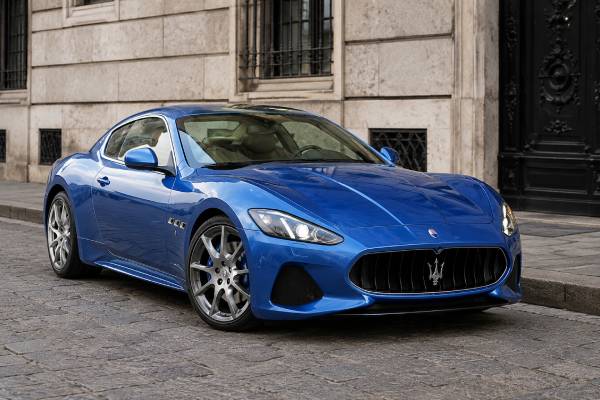
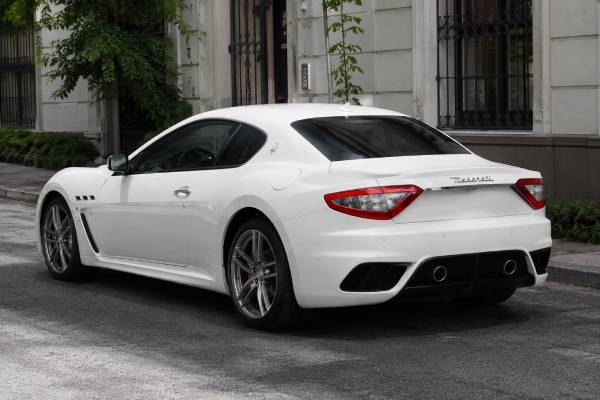
The 2019 Maserati GranTurismo Sport Edizione V8 Aspirato is a 23-car Australia and New Zealand farewell to the naturally aspirated F136 V8. Built from the final GranTurismo production run, it combines the 460 hp 4.7-liter engine, six-speed automatic, late-model touchscreen cabin, Sport Skyhook suspension, and carefully selected exterior and interior specifications. Its Italian name—“naturally aspirated V8 edition”—states the reason it exists: to mark the end of a powertrain lineage that had defined modern Maserati coupes and sedans for nearly two decades. The edition is collectible because of regional scarcity and final-run provenance, but mechanically it remains a GranTurismo Sport rather than a unique high-output derivative. Buyers should therefore value its plaque, documentation, original color combination, and completeness while inspecting it with the same discipline required for any late M145. Low mileage does not protect Skyhook dampers, tires, batteries, cooling components, leather, or seals from age. The automatic transmission also needs correct service despite its smoother operation and lack of a dry clutch. This guide explains the Edizione V8 Aspirato’s place in Maserati history, identifies its distinguishing equipment, and sets out a practical plan for preserving and buying one.
Table of Contents
- A 23-Car Farewell to the F136
- Late Sport Mechanicals and Performance Data
- Regional Allocation, Colors, and Edition Details
- Final-Run Styling and Hand-Finished Cabin
- A V8 Grand Tourer for Real Distance
- Preserving a Low-Volume Late-Production Car
- Buying for Provenance, Condition, and Use
A 23-Car Farewell to the F136
The Edizione V8 Aspirato matters because it closes a chapter rather than introducing a new mechanical formula. Maserati allocated only 23 examples to Australia and New Zealand from the last GranTurismo manufacturing run, creating a regional marker for the end of the naturally aspirated V8 coupe.
The M145 GranTurismo had debuted in 2007 with a 4.2-liter V8. Through S, Sport, MC Stradale, and MC derivatives, output rose and chassis tuning became more focused, but the core experience remained a front-engine, rear-drive four-seat GT with a high-revving engine and Pininfarina body. Production ended in 2019 after more than a decade.
The final factory car was presented in the one-off Zéda treatment, whose gradient bodywork symbolized transition. The Edizione V8 Aspirato drew from that final production context but used customer-ready color and trim combinations. Its small allocation gave local enthusiasts a defined farewell model instead of leaving the end of the range to ordinary stock.
Mechanically, the edition is based on the GranTurismo Sport. It uses the 4.7-liter F136 Y engine producing 460 hp and 520 Nm, the ZF six-speed MC Auto Shift gearbox, rear-wheel drive, and adaptive Sport Skyhook dampers. It does not have the MC Stradale’s rear transaxle or carbon-ceramic brake system. That distinction protects buyers from inflated claims.
The edition’s significance has grown as Maserati moved to twin-turbo V6 and battery-electric GranTurismos. The later cars are faster, more efficient, and technologically advanced, but their sound and torque delivery are different. The Edizione V8 Aspirato captures the older experience in the most mature M145 cabin, including the 2018-on touchscreen and smartphone integration.
Rarity should be described accurately. Twenty-three regional cars is a meaningful allocation, but scarcity alone does not guarantee appreciation. Value depends on preserved specification, edition paperwork, original paint and trim, low but healthy use, and consistent servicing. A damaged plaque, lost books, repaint without documentation, or years of inactivity can weaken the case significantly.
For an owner, the best interpretation is a usable collector GT. It is rare enough to preserve carefully but practical enough to drive across long distances. Mechanical exercise, full warm-up, clean fluids, battery support, and regular inspections will protect it better than static display.
Late Sport Mechanicals and Performance Data
The Edizione V8 Aspirato uses the fully developed automatic GranTurismo Sport drivetrain. Its 460 hp V8 and six-speed ZF gearbox prioritize progressive response, smooth touring, and a dramatic high-rpm finish rather than modern turbocharged thrust.
| Item | Specification |
|---|---|
| Engine | F136 Y 4,691 cc naturally aspirated 90-degree V8 |
| Output | 460 hp at 7,000 rpm |
| Torque | 520 Nm at 4,750 rpm |
| Transmission | Six-speed ZF MC Auto Shift torque-converter automatic |
| Drive | Rear-wheel drive with limited-slip differential |
| Suspension | Double wishbones with Sport Skyhook adaptive dampers |
| Brakes | Brembo ventilated iron discs; dual-cast front rotors |
| Wheels | 20-inch staggered alloy wheels |
| Wheelbase | 2,942 mm |
| Length | Approximately 4,910 mm in late-model form |
| Fuel capacity | 86 liters |
| 0–100 km/h | Approximately 4.8 seconds |
| Top speed | Approximately 298 km/h |
The F136 uses aluminum block and heads, dual overhead camshafts, four valves per cylinder, variable valve timing, port injection, and wet-sump lubrication. Its 520 Nm peak arrives at 4,750 rpm, so it feels measured below 3,000 rpm and increasingly alive as revs rise. There is no turbo lag, and pedal movement produces an immediate change in intake and exhaust sound.
The ZF automatic mounts behind the engine. A torque converter allows smooth creep and protects the driver from the low-speed clutch management required by MC Shift. Paddle control and Sport programming keep gears engaged longer and provide quicker downshifts. It remains a six-speed transmission from an earlier era, but its behavior suits a large GT.
Sport Skyhook uses sensors and electronically controlled dampers to adjust force. The normal setting allows compliance over touring roads; Sport limits body movement. The system cannot erase the car’s mass, and worn dampers can create a misleading mix of harsh impacts and loose body control.
Brembo brakes use iron friction surfaces rather than the Stradale’s ceramics. Dual-cast front rotors combine an iron ring with a lighter hat. They provide strong road stopping power and manageable replacement costs by exotic-car standards, though correct components and specialist labor remain important.
The staggered tire setup contributes to traction and steering response. Australian road heat, long storage, and low annual mileage can age rubber before tread wears out. Tire manufacturing date, sidewall condition, matching model, and correct pressure matter more than a superficial tread check.
Regional Allocation, Colors, and Edition Details
A genuine Edizione V8 Aspirato should be supported by regional delivery documents and edition-specific presentation, not merely a late 2019 registration. Because only 23 were allocated across Australia and New Zealand, provenance is one of the car’s central assets.
Maserati offered the edition in a curated group of exterior colors drawn from the final production palette. Published regional material identified seven color choices, allowing the small run to retain individual variety rather than appearing as one uniform fleet. Interior leather, stitching, wheel finish, and carbon or piano-black details were coordinated with the selected paint.
The late Sport body includes the large Alfieri-inspired grille introduced for model year 2018, revised front air management, reshaped rear bumper, oval exhaust outlets, and 20-inch wheels. Edition badging or plaques should match original photographs and sales documents. Inspect mounting, typography, finish, and surrounding trim for signs of replacement.
A complete provenance file can include:
- original dealer invoice and order sheet;
- VIN-specific factory specification or window label;
- edition certificate, plaque information, or launch material supplied at delivery;
- stamped service book and itemized invoices;
- both keys, manuals, tool kit, compressor, and accessories;
- original registration history and mileage records;
- photographs from delivery or early ownership;
- retained factory parts after any reversible change.
The last-production-run claim should also be supported rather than assumed from registration. Build date, VIN sequence, compliance plate, and dealer paperwork establish where the car falls. A vehicle first registered in 2020 could still be a 2019 build; conversely, a normal late Sport does not become an Edizione simply because it was sold at the end of the model’s life.
Modifications deserve careful treatment. Paint protection film, a hardwired battery-maintainer lead, or a reversible phone solution can support preservation. A loud exhaust, lowered suspension, aftermarket wheels, carbon replicas, or nonstandard software may reduce collector appeal. Original parts should remain with the car and installation should avoid cutting factory wiring.
Accident repair is not automatically disqualifying, but edition-specific body panels and colors require excellent workmanship. Use paint-depth readings, inspect panel gaps, check carbon and undertrays, and review invoices and photographs. A correctly repaired stone-damaged bumper is less concerning than an undocumented structural repair.
Final-Run Styling and Hand-Finished Cabin
The Edizione preserves the mature version of Pininfarina’s original shape while adding the technology and visual weight of the final facelift. Its design value comes from continuity: the 2019 car still looks clearly related to the 2007 debut, yet it feels less dated inside.
The long hood, low glasshouse, three fender vents, broad rear shoulders, and short deck create classic front-engine proportions. The 2018-on hexagonal grille gives the nose a more aggressive focal point. Functional openings direct air to heat exchangers and brakes, and the lower bumper remains vulnerable to steep driveways and parking stops.
Unlike the carbon-hood MC, the Sport emphasizes painted elegance. The body’s large surfaces make preparation and color matching important. Check for stone chips around the nose, paint wear at door edges, distortion from previous repairs, and corrosion where damaged metal was left exposed. Undertrays should be intact and correctly fastened.
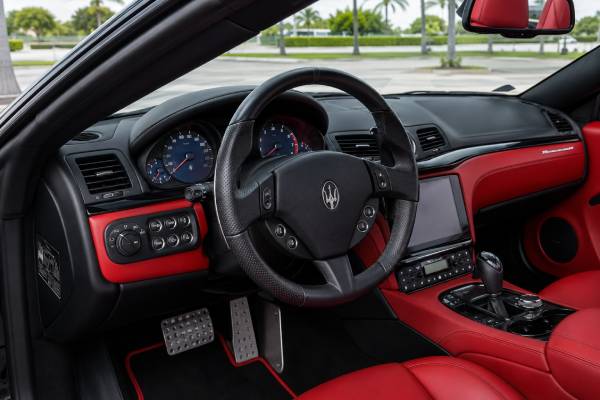
The cabin uses four individual seating positions and a practical trunk. Poltrona Frau leather, analog instruments, the central clock, and sculpted dashboard maintain the traditional Maserati atmosphere. The late 8.4-inch touchscreen adds Apple CarPlay and Android Auto, a rotary controller, and a cleaner center console. This makes the edition easier to tour in than early M145 cars.
Hand-finished materials still age. Leather can shrink at seams, dry on bolsters, or discolor from incorrect products. Headliners may sag, soft-touch surfaces can become sticky, and glossy trim scratches. Rear-seat areas should be inspected even when unused because heat and UV affect them too.
Frameless windows must lower slightly as doors open and rise into the seal after closing. Slow indexing can result from battery voltage, regulators, switches, or calibration. Water entry can damage carpet and modules. Check seals with evidence from washing or rain rather than relying only on a dry showroom.
The F136 sound completes the design. Normal mode keeps the exhaust suitable for distance; Sport increases valve opening, throttle response, shift activity, and damper control. The note changes from a deep idle to a hard metallic sweep at high rpm. A healthy factory exhaust offers enough theater without drone or artificial enhancement.
A V8 Grand Tourer for Real Distance
The Edizione is most convincing on an open road, where its smooth automatic, long wheelbase, supportive seats, and progressive V8 can work together. It is not the lightest or fastest final-era coupe, but it makes distance feel like an occasion.
In town, the ZF gearbox moves away naturally and manages stop-start traffic without clutch wear anxiety. The steering is heavier than many modern systems but consistent. Parking sensors and the reverse camera matter because the hood is long, the rear quarters broad, and the turning circle large.
Normal mode favors calm shifts and compliant damping. The engine remains quiet enough for conversation. Sport transforms response: the gearbox holds ratios, paddles react more firmly, exhaust valves open, and Skyhook tightens body control. The car feels more alert without becoming nervous.
Acceleration to 100 km/h in about 4.8 seconds is still serious. The distinctive part occurs after the initial launch, as the engine passes 4,500 rpm and continues pulling to 7,000. A modern turbo car may be faster with less effort; the Maserati asks the driver to choose a gear and enjoy the climb.
Hydraulic steering builds weight naturally. The front end is accurate when tires and alignment are correct, and the long wheelbase gives high-speed stability. The car carries significant mass, so abrupt mid-corner corrections are less effective than smooth braking and progressive throttle. The rear limited-slip differential helps deploy power without making the car feel edgy.
Skyhook offers genuine comfort, especially compared with fixed, track-oriented setups. Twenty-inch wheels still transmit sharp potholes. Crashing, bouncing, tramlining, or steering vibration should prompt inspection of tires, rims, dampers, arms, and bearings rather than being dismissed as Italian character.
The brakes deliver strong road performance. Fluid condition and rotor surface determine pedal consistency. After storage, corrosion or pad deposits can cause vibration. Repeated mountain descents require appropriate gear selection and cooling rather than relying solely on the pedal.
Rear seats and luggage space allow couples, families, or friends to tour. Fuel use is heavy and premium petrol is essential. Highway range is more practical than city consumption suggests because of the 86-liter tank. The Edizione’s real luxury is the ability to share the sound and experience with passengers over a full journey.
Preserving a Low-Volume Late-Production Car
Preservation means keeping the car mechanically exercised and fully documented, not avoiding mileage at all cost. Time affects fluids, batteries, tires, seals, dampers, leather, and cooling components even when the odometer barely changes.
Start with annual oil and filter service at the official intervals for the car’s market and usage. Inspect cam covers, front covers, oil lines, and undertrays for seepage. A cold start should be clean, without persistent timing or variator noise. Engine mounts soften and can produce vibration or a thump when selecting Drive.
Cooling checks should include radiators, condenser, debris between cores, expansion tank, hoses, clamps, fans, thermostat behavior, and water-pump area. The temperature must remain stable during slow traffic with air conditioning operating. Any coolant smell or residue deserves prompt investigation.
The ZF automatic should engage promptly and shift smoothly hot and cold. Fluid and pan/filter service may be appropriate based on age and history, using the correct specification and procedure. Investigate flare, harsh downshifts, delayed Reverse, leaks, or shudder. Differential fluid and mounts require their own inspection.
Skyhook dampers should be dry and responsive. Scan the suspension controller, then inspect control arms, bushes, ball joints, tie rods, anti-roll-bar links, wheel bearings, ride height, and alignment. A low-mileage car can still have hardened bushings or leaking dampers.
Measure dual-cast rotors and pads, inspect both surfaces, test the parking brake, and replace brake fluid by time. Check wheels for inner-barrel bends. Tires must match by axle and should be replaced for age, cracking, flat spotting, or hardening even when tread remains.
Battery health is crucial. A weak 12-volt supply can cause window-indexing faults, parking-sensor messages, touchscreen resets, and module communication errors. Load-test the battery, verify alternator output, use a quality maintainer during storage, and investigate parasitic drain rather than repeatedly replacing batteries.
Test every electronic and comfort function. Update infotainment software where applicable through qualified channels. Check camera, phone integration, USB, audio, seats, locks, keys, mirrors, climate control, lights, and trunk release. Preserve any removed original parts.
Storage should be dry, ventilated, and protected from rodents and UV. Avoid leaving the car on underinflated tires or with old fuel. Drive it long enough to bring oil, gearbox, brakes, and exhaust fully to temperature. Record every service, battery, tire, repair, and cosmetic correction; documentation is part of the edition’s value.
Buying for Provenance, Condition, and Use
The best Edizione V8 Aspirato has complete regional provenance, original edition equipment, consistent annual care, healthy low-mileage exercise, and no unresolved warning systems. Buy the evidence, not only the number “23.”
Confirm identity before inspection. Match VIN, compliance plate, build date, registration, factory specification, edition plaque, paint, leather, wheels, and dealer records. Ask Maserati or an informed regional dealer to confirm the edition where possible. Determine whether the car was originally allocated to Australia or New Zealand and whether import history affects warranty, compliance, or resale.
Arrange a cold-start pre-purchase inspection with a Maserati specialist. It should include a full module scan, lift inspection, cooling pressure assessment where appropriate, automatic operation, Skyhook testing, brake measurement, wheel and tire condition, battery analysis, paint-depth readings, and confirmation of all cabin equipment.
| Area | Best evidence | Reason to reconsider |
|---|---|---|
| Provenance | Dealer invoice, edition documents, VIN confirmation, complete accessories | Late Sport claimed as an edition without records |
| Use and service | Regular mileage and annual itemized invoices | Long storage gaps with only a stamp book |
| Powertrain | Clean cold start, stable cooling, smooth automatic | Rattle, leaks, overheating, harsh or delayed shifts |
| Chassis | Dry dampers, quiet joints, recent matching tires | Warning lights, knocks, old rubber, bent wheels |
| Originality | Correct paint, trim, plaque, exhaust, wheels, and retained parts | Poor repaint, missing edition items, irreversible modifications |
On the road, test normal and Sport modes, manual paddles, full operating temperature, braking at several speeds, rough-surface response, parking systems, and a hot restart. The car should track straight, hold temperature, and remain free of warnings. Examine tire shoulders after the drive for alignment clues.
Set aside a reserve for baseline work. A battery, fluids, tires, brake service, alignment, mounts, and one Skyhook component can arrive together. Rarity does not make parts cheaper. Insurance should use an agreed or informed value and recognize the edition’s limited regional supply.
Avoid cars with uncertain plaque history, incomplete documents, structural repair, persistent module faults, overheating, old mixed tires, or sellers who refuse specialist diagnostics. Do not overpay solely for extremely low mileage if inactivity has replaced maintenance.
The right owner will preserve originality while continuing to drive the car. The Edizione was created to celebrate the V8 as a living experience, not only as a static artifact. Keep its history complete, its systems warm and healthy, and its modifications reversible. Done properly, it remains a scarce regional finale and one of the most emotionally satisfying ways to close the original GranTurismo story.
Because the regional fleet is so small, owners can strengthen provenance collectively without exposing private information. Recording VIN-confirmed specification, build month, original dealer, color, and broad service milestones through a recognized owners’ club can help identify lost edition pieces and discourage ordinary Sports from being represented as Edizione cars. Any registry should distinguish verified factory data from owner recollection. It should also record reversible changes and retained original parts. Over time, this kind of disciplined record can be more useful than unsupported claims about which color is rarest.
Prospective owners should also decide how much mileage they are willing to add. Extremely low use may preserve cosmetics but can narrow the car’s purpose and encourage mechanical stagnation. A planned annual program of full-temperature drives, scheduled services, battery support, tire checks, and careful event participation keeps the V8 exercised while maintaining documentation. Mileage added under such conditions is easier to defend than deterioration caused by long storage.
Before export or interstate transfer, verify that the edition paperwork, compliance plate, immobilizer keys, and emissions equipment satisfy the destination authority. Regional rarity does not remove ordinary registration requirements, and replacing missing compliance evidence after purchase can be slow.
Preserve everything.
References
- Maserati GranTurismo Sport Edizione V8 Aspirato 2019
- Maserati GranTurismo model Year 2018 makes its world debut in New York 2017
- Maserati celebrates the V8 engine at Goodwood Festival of Speed 2023 2023
- Maserati Guides & Documentation 2026 (Owner Documentation)
- Maserati TechInfo 2026 (Technical Information)
Disclaimer
This article is for informational purposes and is not a substitute for professional diagnosis, repair, or inspection. Specifications, torque values, service intervals, and procedures vary by VIN, market, model year, and equipment; verify critical information against official Maserati service documentation for the individual vehicle.
Please share this guide on Facebook, X/Twitter, or a Maserati owners’ community if it helped preserve knowledge of this limited final-run edition.