
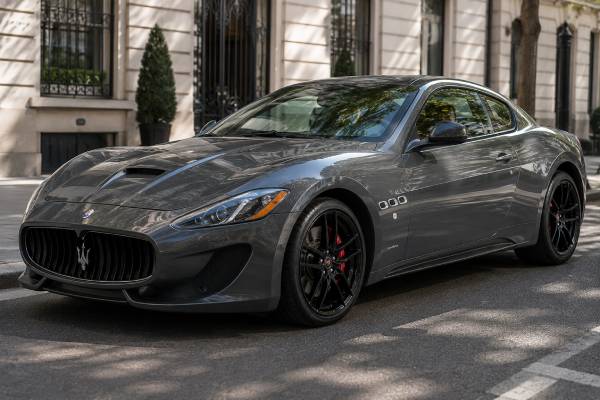
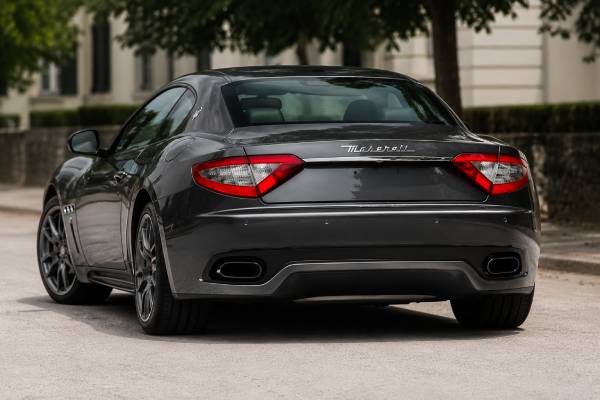
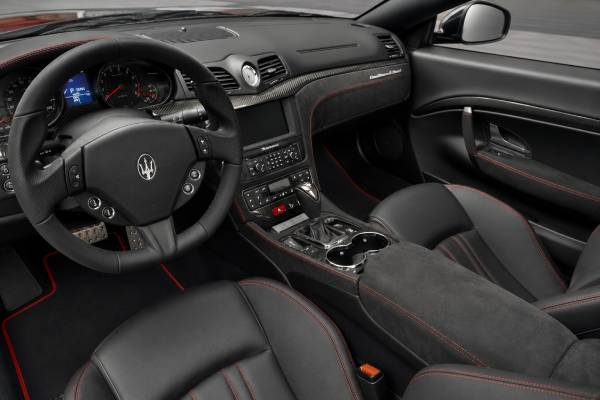
The 2017 Maserati GranTurismo Sport Special Edition is a late-production celebration of two milestones: 60 years since the 3500 GT established Maserati’s road-going grand-touring identity, and the enduring appeal of the naturally aspirated V8 GranTurismo. Limited to 400 cars worldwide across GranTurismo and GranCabrio body styles, it added distinctive paint, carbon-fiber details, commemorative badging, and a numbered cabin plaque to the familiar 460 hp Sport mechanical package. That means the Special Edition is not a radically different performance model. Its value lies in combining the most mature version of the M145 platform with unusually clear factory provenance and a design brief tied directly to Maserati history. Buyers still need to distinguish between MC Shift and MC Auto Shift cars, because the two transmissions change both the driving experience and the ownership risks. Condition also matters more than mileage alone: a documented, regularly exercised car with healthy suspension, cooling, electronics, brakes, and trim is preferable to a neglected low-mileage example. The following guide explains the Special Edition’s specification, identification details, road character, maintenance priorities, and the checks that protect a buyer from expensive surprises.
Table of Contents
- An Anniversary GT With Real Provenance
- F136 V8, Chassis, and Core Specifications
- Four Hundred Cars and How to Identify One
- Rosso Italiano, Carbon, and Pininfarina Form
- Two Transmissions, Two Distinct Personalities
- Maintaining a Late M145 Correctly
- Buying the Special Edition on Condition
An Anniversary GT With Real Provenance
The Special Edition is best understood as a factory-finished collector specification of the GranTurismo Sport, not as a separate homologation model. Maserati unveiled it in 2017 to mark the 60th anniversary of the 3500 GT, the elegant six-cylinder coupe that helped move the company from limited competition-derived road cars into series-produced luxury grand tourers. The timing also nodded to Juan Manuel Fangio’s 1957 Formula One world championship for Maserati, linking the road-car anniversary with one of the marque’s most important racing seasons.
By 2017, the M145 GranTurismo had been in production for roughly a decade. Its basic proportions and Pininfarina body remained compelling, while continuous updates had brought stronger brakes, revised suspension calibration, modernized electronics, and the 460 hp version of the 4.7-liter F136 V8. The Special Edition therefore arrived at a useful point in the model’s life: late enough to benefit from accumulated development, but before the model-year-2018 front and rear restyle changed the original visual language more noticeably.
Its appeal rests on three layers. First, it retains the classic front-engine, rear-drive, four-seat GT layout that made the GranTurismo unusually usable among exotic Italian coupes. Second, it carries a naturally aspirated V8 with instant response and a sound that later turbocharged Maseratis could not reproduce in the same way. Third, its plaque, paint choices, wheel treatment, and carbon details make it identifiable as a genuine factory edition rather than a dealer-created appearance package.
Today, the Special Edition attracts two kinds of buyer. One wants a late, richly specified M145 to drive on road trips and weekend outings. The other wants a limited-production V8 Maserati whose originality can be documented. Both should resist treating the plaque alone as proof of quality. A Special Edition with deferred maintenance, repainted carbon panels, missing trim, or an incomplete history can be less desirable than an exceptional standard Sport. Rarity adds context; it does not erase condition.
F136 V8, Chassis, and Core Specifications
Mechanically, the Special Edition uses the established GranTurismo Sport formula: a 4.7-liter naturally aspirated V8, rear-wheel drive, a long-wheelbase steel monocoque, and electronically controlled suspension. Buyers should verify the transmission because Maserati offered two layouts whose service needs and road behavior differ substantially.
| Item | Specification |
|---|---|
| Engine | F136 Y 90-degree V8, 4,691 cc, naturally aspirated |
| Valvetrain and fuel system | DOHC, four valves per cylinder, variable valve timing, port fuel injection |
| Maximum output | 460 hp at 7,000 rpm |
| Maximum torque | 520 Nm at 4,750 rpm |
| Transmission choices | Six-speed MC Auto Shift torque-converter automatic or six-speed MC Shift automated manual transaxle, market dependent |
| Drivetrain | Rear-wheel drive with limited-slip differential |
| Suspension | Double wishbones; Sport Skyhook adaptive dampers |
| Brakes | Ventilated Brembo discs; dual-cast front rotors with six-piston front calipers |
| Wheels | 20-inch MC-design alloy wheels in glossy black |
| Wheelbase | 2,942 mm |
| Length | Approximately 4,881 mm |
| Width | Approximately 1,847 mm excluding mirrors |
| Height | Approximately 1,353 mm |
| Fuel capacity | 86 liters |
| 0–100 km/h | About 4.8 seconds automatic; 4.7 seconds MC Shift |
| Top speed | About 298 km/h automatic; 300 km/h MC Shift |
The F136 Y engine is central to the experience. Its oversquare dimensions, free-breathing cylinder heads, and lack of forced induction produce a linear power curve rather than the strong low-rpm surge of a turbocharged engine. Peak torque arrives at 4,750 rpm and maximum power near 7,000 rpm, so the car feels progressively more urgent as the tachometer climbs. That character encourages deliberate downshifts and makes the upper half of the rev range part of normal enthusiastic driving.
Transmission layout changes weight distribution. MC Shift cars place the electrohydraulically operated gearbox at the rear in a transaxle arrangement, helping create a rear-biased balance. The driver commands a conventional single dry clutch through paddles; there is no clutch pedal. MC Auto Shift cars use a ZF torque-converter automatic mounted with the engine at the front. They are smoother in traffic and easier to maneuver, while still offering paddle control and a Sport calibration.
The chassis uses steel construction and a notably long wheelbase. That supports stable high-speed behavior and real rear-seat space, but the car is large and heavy compared with a focused sports coupe. Double-wishbone suspension at all four corners controls wheel movement precisely, and Skyhook varies damper force to balance body control with ride comfort. The hydraulic steering retains more natural weight and texture than many later electrically assisted systems.
Braking hardware is strong for road use, yet condition matters. Dual-cast front discs combine an iron friction ring with an aluminum hat to reduce unsprung mass. Replacement cost is higher than for ordinary one-piece rotors, and the correct parts should be fitted in axle pairs. Tire quality is equally important. Old, mismatched, or budget tires can make the steering nervous, increase tramlining, and overwhelm the suspension calibration even when tread depth appears legal.
Four Hundred Cars and How to Identify One
Authenticity depends on the complete factory package, not a single badge. Maserati limited the 2017 Special Edition program to 400 GranTurismo and GranCabrio cars worldwide, and the numbered plate on the central tunnel is the clearest starting point for identification. The plate should sit in a carbon-fiber holder and correspond with the car’s build records and original invoice.
The most recognizable launch color is Rosso Italiano, a three-layer red created for the edition. It connects visually with Italian competition colors and gives the large body more depth than a simple solid red. Maserati also offered Bianco Birdcage, Grigio Lava, and other regular palette choices, so a car does not need to be red to be genuine. Paint code, option data, and factory documentation are more reliable than assumptions based on photographs.
Factory equipment included:
- 20-inch MC-design wheels finished in glossy black, with dedicated center caps;
- carbon-fiber door-sill inserts carrying a Special Edition logo;
- a numbered commemorative plaque on the center tunnel;
- exterior carbon-fiber details, including the hood on coupe versions and selected trim pieces;
- Poltrona Frau leather or a leather-and-Alcantara cabin;
- edition-specific stitching combinations and coordinated interior accents;
- the 460 hp Sport powertrain and Sport Skyhook suspension.
A buyer should inspect whether these pieces remain present and undamaged. Carbon door sills can be scratched by shoes, wheel faces can be refinished incorrectly, center caps can be replaced with ordinary Trident items, and the plaque surround can suffer from lifting clear coat or UV haze. None of those faults makes the car unusable, but original edition-specific components may be difficult or costly to source.
Transmission choice is another identification point. In some markets, especially North America, most cars use the conventional automatic. Other markets could receive MC Shift versions. A seller’s use of terms such as “MC gearbox” can be imprecise because Maserati also used “MC Auto Shift” for a sportier calibration of the ZF automatic. The physical layout, VIN build data, gear selector, and diagnostic system remove doubt. This distinction should appear in the purchase contract because clutch life, service procedures, and valuation may differ.
Documentation should include the original sales invoice, option list, service book, manuals, two keys, toolkit, tire compressor where supplied, and records for any warranty or campaign work. Special-edition literature, delivery photographs, and the original window sticker add confidence. Aftermarket carbon, black-painted wheels, or red paint can imitate parts of the appearance, which is why a complete paper trail matters.
Rosso Italiano, Carbon, and Pininfarina Form
The Special Edition succeeds because its commemorative details support the GranTurismo’s existing shape instead of disguising it. The long hood, low glasshouse, short rear deck, and cab-rearward profile remain the work of Pininfarina, while carbon and darker wheels sharpen the stance without turning the car into a visual replica of the MC Stradale.
The carbon-fiber hood is more than decorative. Its central form helps manage airflow and visually lowers the nose, while the material reduces mass high and forward in the body. The front splitter, mirror housings, door handles, and rear lip treatment add contrast on lighter colors. Owners should check panel weave, gloss, and edge alignment in daylight. Cloudy lacquer, yellowing, stone impacts, or mismatched weave can reveal repair work. A carbon panel that has been painted after damage may look acceptable but weaken the originality case unless the repair is fully documented.
Cooling dictated much of the nose architecture. The large central grille feeds the radiator and air-conditioning condenser, while side openings support brake and engine-bay airflow. Debris can collect between heat exchangers, reducing cooling efficiency. The lower front edge is vulnerable to parking curbs, steep ramps, and road damage, so inspection from below is important even when the upper paint looks excellent.
Inside, the GranTurismo’s greatest engineering achievement is packaging. Four adults can use the car for more than a token journey, and the trunk accepts weekend luggage. The dashboard wraps around the occupants rather than presenting a sparse sports-car shelf. Poltrona Frau leather gives the cabin a rich smell and soft touch, while Alcantara inserts add grip where fitted. The Special Edition’s stitching and plaque provide visual focus without changing the basic ergonomics.
Age reveals where beauty and durability diverge. Soft-touch coatings on switches and trim can become sticky, leather on seat bolsters can dry or crease, and the headliner can loosen. Carbon clear coat near doors and sills can mark easily. The center-stack infotainment feels dated by modern standards, but replacing it with a poorly integrated aftermarket unit can reduce originality and introduce electrical noise or battery drain. A reversible, professionally installed upgrade is preferable when smartphone integration matters.
The exhaust is a major part of the car’s identity. In normal mode, valves help keep cruising civilized. Sport mode opens the system more readily, increases throttle response, stiffens damper behavior, and changes shift logic. The resulting V8 note is deep at low speed and hardens into a metallic tenor near the redline. It is theatrical without relying on synthetic cabin sound. Exhaust-valve actuators, vacuum lines, and muffler condition should therefore be checked; a permanently open or silent system can indicate a fault rather than a desirable modification.
Two Transmissions, Two Distinct Personalities
The gearbox determines how the Special Edition feels more than any paint or trim choice. The automatic is the relaxed, fluid grand tourer; the MC Shift is the more mechanical and demanding car. Prospective owners should drive the exact transmission they plan to buy rather than assuming the faster specification is automatically better.
With the ZF automatic, the car moves away smoothly and creeps naturally in traffic. Normal mode favors early upshifts and keeps the V8 subdued. Pressing Sport sharpens response, holds gears longer, and gives the paddles more authority. Full-throttle acceleration is strong rather than shocking by current supercar standards, but the engine’s linear build makes speed easy to judge. The gearbox suits urban use, parking garages, and long journeys, and it does not have a consumable dry clutch in the MC Shift sense.
The MC Shift transaxle asks for more driver participation. At low speed, the clutch engages in a deliberate step, so smooth progress requires a light lift or carefully timed throttle rather than letting the car creep against the clutch. Fast shifts at high engine speed can feel dramatic and tightly connected, especially in the quickest modes. Poor technique in traffic creates heat and wear. The system is rewarding on open roads but less forgiving during repeated parking maneuvers or congested commuting.
Steering is one of the M145’s enduring strengths. It is not ultra-light or hyperactive. Instead, it builds effort through a corner and communicates front-tire load in a way that helps place the long nose. The wheelbase gives the car calm direction changes, while the rear-biased balance of MC Shift versions can make them feel especially settled under power. The automatic remains predictable and secure, though its front-mounted gearbox gives a slightly different sense of mass distribution.
Skyhook allows genuine dual-purpose behavior. In the softer setting, the car breathes with broken pavement and handles highway expansion joints without losing composure. Sport mode reduces float and keeps the body flatter, but it cannot hide the car’s weight. On a narrow road, the driver must respect the width and allow the chassis to settle before asking for another direction change. Smooth inputs work better than abrupt corrections.
The brakes provide strong initial response and progressive stopping power when healthy. Heavy repeated use exposes the importance of fluid condition, pad compound, rotor thickness, and cooling. A long pedal, vibration, or steering shake under braking deserves diagnosis rather than being dismissed as a characteristic. Cars stored for long periods may develop rotor corrosion or pad deposits that feel like warped discs.
Visibility is reasonable forward, but the rear quarters and low nose demand care. Parking sensors should work consistently. Seat comfort is excellent for long distances, and the rear seats make the car practical for children or adults on shorter trips. Fuel consumption is high, range falls quickly during enthusiastic use, and the turning circle reminds the driver that this is a large GT. Those compromises are easier to accept when the car is used for its intended purpose: fast, resonant travel over meaningful distances.
Maintaining a Late M145 Correctly
A well-maintained 2017 car can be dependable, but deferred work becomes expensive because several systems age together. The best ownership strategy is preventive: service by time as well as mileage, keep the battery fully supported, inspect known wear points before symptoms grow, and use a specialist who can read Maserati-specific diagnostic data.
Engine and cooling priorities
The late F136 is generally more mature than early 4.2- and 4.7-liter installations, yet it still needs correct oil, regular changes, and attention to leaks. Inspect cam-cover perimeters, front-cover areas, oil lines, and the underside for seepage. A brief mechanical sound at start-up should be assessed while the engine is stone cold; warm-start demonstrations can conceal timing or oil-pressure-related noise.
Cooling health is critical. Check radiator and condenser faces for blockage, the expansion tank for staining, hoses for swelling or crusted residue, and electric fans for proper operation. Temperature should remain stable in traffic with the air conditioning engaged. A small leak can become serious quickly in a high-output aluminum engine, and repeated overheating may damage gaskets, wiring, and plastic fittings.
Engine mounts soften with age. Excess vibration at idle, a thump during gear engagement, or exhaust contact can indicate collapsed mounts. Replacing them restores refinement and reduces stress on adjacent components. Access and labor matter, so a low parts price does not always mean a low invoice.
Transmission-specific service
For MC Shift cars, obtain a diagnostic clutch-wear reading and ask how it was measured. The percentage alone is not absolute; engagement parameters, clutch position, driving history, and calibration quality also matter. Examine records for clutch, release bearing, hydraulic pump, accumulator, actuator, and fluid service. Avoid a car that shudders badly, selects gears slowly, drops into neutral, or shows transmission warnings.
For ZF automatic cars, smooth operation does not justify ignoring fluid. A sensible specialist service can include fluid, pan or filter, leak inspection, adaptation checks, and software status, using the correct specification. Harsh downshifts, delayed Drive or Reverse engagement, or a flare between gears require diagnosis. Transmission and differential mounts also influence perceived shift quality.
Chassis, brakes, and electrics
Skyhook dampers are costly. Look for oil misting, knocking, unequal ride height, and warning messages. Inspect upper and lower control-arm bushes, ball joints, tie rods, anti-roll-bar links, and wheel bearings. A car that pulls or wears a front tire on one edge may need more than an alignment. Bent 20-inch wheels are possible after pothole impacts.
Measure rotor condition rather than judging only through the spokes. Confirm pad thickness, parking-brake operation, brake-fluid age, and hose condition. Tires should match by model and axle, carry appropriate ratings, and be replaced for age even when tread remains.
Low battery voltage can trigger unrelated warnings, parking-sensor faults, window indexing problems, and infotainment resets. A quality battery maintainer is useful for an intermittently driven car. Test the alternator, inspect the battery date, and scan all modules before purchase. Check every switch, key, seat motor, mirror, window, lock, light, climate function, and audio channel. Small electrical defects are useful clues to how the car has been stored and maintained.
Service records should show annual attention even when mileage is modest. Fluids absorb moisture, tires harden, seals dry, and fuel deteriorates while a car sits. Originality matters, but reliability-friendly reversible upgrades—such as an approved battery connector or discreet protective film—can preserve the car without changing its character.
Buying the Special Edition on Condition
Buy the best documented and most original example you can inspect, not simply the lowest-numbered plaque. A proper pre-purchase inspection should combine a cold start, paint and carbon assessment, underbody examination, road test, full diagnostic scan, and confirmation of factory build data.
Start with identity. Match the VIN on the body, dashboard, documents, and diagnostic report. Confirm the Special Edition option content, plaque, paint code, wheels, center caps, carbon sills, interior trim, transmission type, and original market. Ask for evidence if the car has been imported, because lighting, emissions equipment, radio frequencies, warranty coverage, and registration requirements may differ.
Then evaluate history. A thick folder is valuable only when invoices describe the actual work, mileage, parts, and dates. Look for repeated unresolved complaints, long gaps, accident repairs, clutch replacements without related hydraulic checks, or frequent battery replacements that may hide a parasitic drain. Verify that the odometer progression is logical across inspections and services.
| Area | What to verify | Why it matters |
|---|---|---|
| Edition authenticity | Plaque, build data, paint code, carbon sills, wheels, interior specification | Replacement trim can mimic the appearance but not factory provenance |
| Cold engine | Immediate oil pressure behavior, stable idle, no persistent rattle, smoke, or warning lights | Warm engines can conceal start-up faults |
| Transmission | Clutch data for MC Shift; fluid history and smooth engagement for automatic | Major repairs can dominate first-year ownership cost |
| Carbon and paint | Consistent weave, gloss, panel gaps, paint depth, front-edge condition | Special components are expensive and originality affects value |
| Suspension and wheels | Dry dampers, quiet joints, straight wheels, even tire wear | Multiple worn parts can make the car feel vague and create a large bill |
| Electronics | Battery test, module scan, all accessories, no stored recurring faults | Voltage problems can mask or create complex symptoms |
During the road test, use both normal and Sport modes. The engine should pull cleanly without hesitation, temperature should remain stable, the steering should track straight, and the brakes should stop without vibration. Listen for suspension knocks over a known rough surface. On MC Shift cars, test low-speed engagement after the drivetrain is warm. On automatics, test gentle and full-throttle shifts, manual paddle response, and Reverse engagement.
Budget beyond the purchase price. Immediate needs may include a full fluid service, battery, tires, alignment, brakes, mounts, sticky-trim correction, or paint protection. A reserve prevents the owner from postponing work that protects larger systems. Insurance, specialist access, storage, and fuel should also fit the intended use.
Value is strongest when rarity, specification, and usability align. Rosso Italiano may attract collectors, but an unusual factory color with complete records can be equally compelling. MC Shift cars may appeal to enthusiasts seeking the most involved drivetrain, while automatic cars suit owners who will actually tour, commute, or drive in traffic. Neither choice is inherently superior; the right car is the one whose condition and transmission fit the owner’s use.
Avoid examples with unexplained warning lights, incomplete edition trim, poorly repaired carbon, heavy accident history, old mixed tires, overheated paint around exhaust outlets, or sellers who refuse a specialist inspection. Be cautious when very low mileage is paired with no annual servicing. Storage is not maintenance.
A correctly bought Special Edition delivers what its anniversary theme promises: an elegant four-seat Maserati that connects the 3500 GT tradition with the final naturally aspirated V8 era. Its best qualities emerge through use, not display alone. Preserve the factory details, maintain the mechanical systems proactively, and it can serve as both a meaningful limited edition and a genuinely capable long-distance grand tourer.
References
- Maserati GranTurismo “Special Edition” and Levante Ermenegildo Zegna Show Car debuts at Geneva International Motor Show. Massimo Bottura: Maserati’s guest star 2017
- MASERATI UNVEILS NEW SPECIAL EDITION GHIBLI “NERISSIMO” AT NEW YORK INTERNATIONAL AUTO SHOW 2017
- Geneva premiere for the new Maserati GranTurismo Sport 2012
- Maserati Guides & Documentation 2026 (Owner Documentation)
- Maserati TechInfo 2026 (Technical Information)
Disclaimer
This article is for informational purposes and is not a substitute for professional diagnosis, repair, or inspection. Specifications, torque values, service intervals, and procedures can vary by VIN, market, transmission, and equipment; verify every critical detail against official Maserati service documentation for the individual vehicle.
Please share this guide on Facebook, X/Twitter, or your preferred enthusiast community if it helped you make a better-informed decision.