
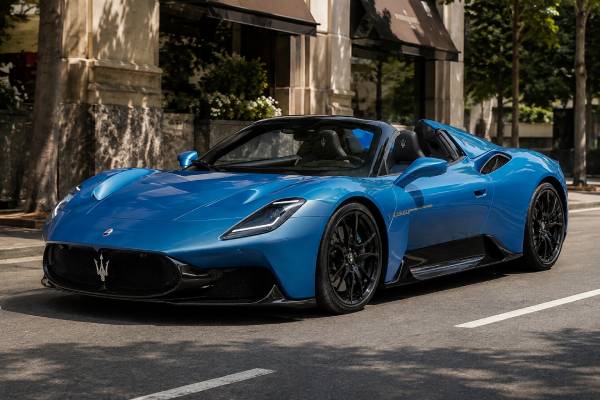
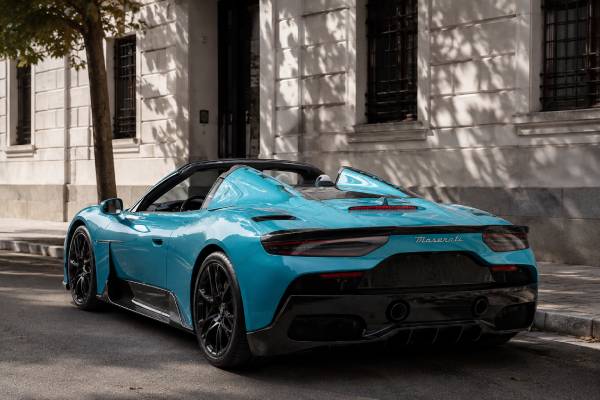
The Maserati MCPURA Cielo is the open-roof version of the 2025 MCPURA evolution, combining revised styling and an Alcantara-rich interior with the MC20 Cielo platform’s retractable smart-glass roof. Its polymer-dispersed liquid-crystal panel changes from clear to opaque in about one second, opens or closes in roughly 12 seconds, and can operate at speeds up to 50 km/h. Behind the cabin sits Maserati’s 3.0-liter twin-turbo Nettuno V6, rated at 630 CV and 720 Nm in launch material, driving the rear wheels through an eight-speed dual-clutch transmission.
The model preserves the carbon-fiber monocoque, butterfly doors, adaptive double-wishbone suspension, and mid-engine balance of its predecessor while adding a sharper shark-nose front, revised lower fascia, GT2 Stradale-influenced rear, new steering wheel, expanded Alcantara, and new Fuoriserie colors. Those updates do not simplify ownership. A buyer must assess the carbon structure, folding roof, glass switching, seals, drains, body alignment, battery voltage, software, tires, brakes, and individual factory specification. This guide explains the MCPURA Cielo’s development, technical data, options, roof engineering, road performance, maintenance, and purchase checks for 2025 and 2026 examples.
Table of Contents
- The Open-Sky Evolution of MC20 Cielo
- 630-CV Powertrain and Cielo Chassis Specs
- Launch Colors, Equipment, and Fuoriserie Choices
- Smart-Glass Roof, New Bodywork, and Interior
- Three Roof Experiences and Road Performance
- Roof Maintenance, Service, and Electrical Health
- Buying or Ordering an MCPURA Cielo
The Open-Sky Evolution of MC20 Cielo
MCPURA Cielo is the updated successor to MC20 Cielo, retaining its carbon architecture and retractable glass roof while adopting the MCPURA coupe’s new design and cabin materials. It debuted with the coupe at Goodwood Festival of Speed in July 2025.
The original MC20 Cielo arrived in 2022 and proved that Maserati’s carbon monocoque had been planned for both fixed- and open-roof applications. Rather than adding heavy reinforcements to a finished coupe, engineers varied the carbon type, quantity, and layup to create the rigidity required by the convertible version.
MCPURA continues that strategy. Its roof mechanism and three cabin states remain central: closed and opaque, closed and transparent, or fully open. The update focuses on how the body and interior express the model rather than replacing the mechanical concept.
The name combines Maserati Corse, the idea of purity, and “Cielo,” Italian for sky. Maserati presented the new line as a concentrated expression of speed, elegance, and direct driving feel. The Cielo adds sensory variety without becoming a relaxed four-seat grand tourer.
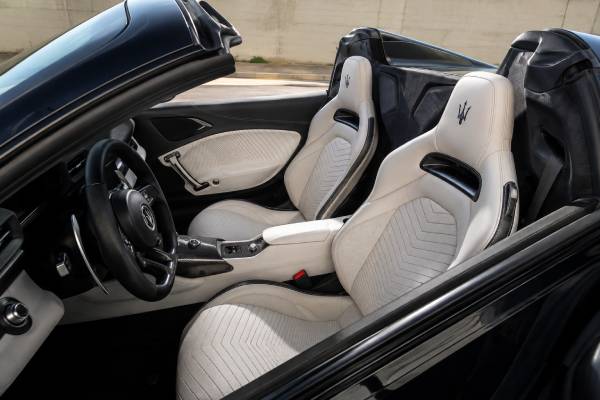
At Goodwood, the convertible appeared in gloss Ai Aqua Rainbow, while the coupe used a matte form of the same color. The pigment creates changing blue and rainbow effects in sunlight. Magenta details with blue mica appeared on the Trident, badges, and wheel centers, and Alcantara Ice seats used laser-etched graphics and iridescent backs.
The 2025 reveal leads into customer cars commonly described as 2026 models in some markets. Production date, model-year coding, first registration, and warranty start may therefore differ. The assignment’s 2025-present range includes both 2025 and 2026.
MCPURA Cielo is built at the historic Modena plant, where Maserati also produces Nettuno engines. Fuoriserie paint and bespoke work can be completed through the new Officine Maserati Fuoriserie operation. Unusual specifications should have detailed factory records.
The car sits beside, not below, the coupe. It offers a different experience with modest additional mass and a slightly different aerodynamic profile. GT2 Stradale remains the more circuit-focused 640-CV model, while MCPURA Cielo prioritizes open-air performance and road versatility.
For owners of MC20 Cielo, the new model is familiar in structure and operation but not identical in body parts, trim, software, or quoted torque. Repairs and ordering should always use the exact VIN rather than assuming interchangeability.
630-CV Powertrain and Cielo Chassis Specs
MCPURA Cielo uses a 2,992 cc, 90-degree twin-turbo V6 with 630 CV at 7,500 rpm and 720 Nm in the launch specification. An eight-speed dual-clutch gearbox drives the rear wheels through an electronically controlled differential.
| Specification | MCPURA Cielo |
|---|---|
| Engine | 2,992 cc, 90-degree, twin-turbocharged V6 |
| Bore and stroke | 88 mm × 82 mm |
| Compression ratio | 11:1 |
| Maximum power | 630 CV at 7,500 rpm |
| Maximum torque | 720 Nm from approximately 3,000 rpm in launch data |
| Transmission | Eight-speed dual-clutch |
| Drive | Rear-wheel drive with electronic limited-slip differential |
| Roof | Electrically retractable PDLC glass hardtop |
| Roof cycle | Approximately 12 seconds |
| Roof operating speed | Up to approximately 50 km/h |
| Front/rear tires | 245/35 R20 and 305/30 R20 |
Nettuno’s pre-chamber combustion system is its defining technology. A small chamber with a dedicated spark plug sits above each main combustion chamber. Flame jets pass through calibrated holes under suitable operating conditions, while a second spark plug supports normal combustion elsewhere in the map.
The fuel system combines high-pressure direct injection with port injection. Twin turbochargers use electronic wastegate control, and the dry-sump lubrication system supports oil supply under high acceleration, braking, and cornering. The dry sump must be checked using official temperature and engine-running instructions.
The dual-clutch transaxle provides automatic operation and manual shifts through large fixed paddles. The electronic differential, gearbox, exhaust, dampers, and stability systems respond to Wet, GT, Sport, Corsa, and ESC Off modes.
The Cielo-specific monocoque uses the same basic architecture as the coupe but a different carbon-fiber distribution to maintain torsional stiffness without a fixed roof. Composite body panels and aluminum subframes keep mass controlled. Published European data for open-roof variants can approach approximately 1,560 kg depending on the measurement and equipment.
Double-wishbone suspension with adaptive dampers controls all four wheels. A front lift may be available and is highly useful on ramps. Standard or optional brake hardware varies by market, including large iron discs or carbon-ceramic systems.
MCPURA Cielo’s official maximum-speed claim remains above 320 km/h, and acceleration stays in the sub-three-second class under suitable conditions. Exact test figures can vary by market and specification. The roof position, wind, temperature, tires, fuel, and surface all affect results.
The fuel tank holds about 60 liters. Front luggage capacity is approximately 50 liters, with additional rear storage depending on packaging. Heat near the powertrain makes soft, heat-tolerant luggage the practical choice.
Launch Colors, Equipment, and Fuoriserie Choices
MCPURA Cielo can vary significantly through paint, lower-fascia finish, wheels, brakes, interior materials, carbon packages, lift, audio, and driver-assistance equipment. The individual build sheet is more reliable than a generic model-year list.
Ai Aqua Rainbow is the best-known launch configuration. The Cielo’s gloss surface lets the blue base and prism-like color shift move across the curved rear body and roof cover. Magenta badges with blue mica and specific burnished diamond-cut wheels complete the debut theme.
Other palette choices include Grigio Incognito, Blu Infinito, Winning Red, Giallo Genio, Devil Orange, Verde Royale, and Night Interaction, depending on country. Fuoriserie expands the range with solid, metallic, three-layer, four-layer, and matte paint.
The lower fascia can appear in gloss black, Hyper Dark Myron matte, or carbon fiber. Since the fascia sits near road debris and ramps, buyers should balance appearance with repairability. A damaged multi-finish bumper can require extensive blending.
MCPURA’s optional larger rear spoiler may be offered on the Cielo depending on market configuration. Confirm factory availability, mounting, and roof-cover clearance. An aftermarket wing should not be accepted as factory equipment without documentation.
Inside, Alcantara is more prominent than in MC20 Cielo. It can cover seats, dashboard, door panels, and steering-wheel sections. Launch seats use laser-etched Trident graphics and two-tone iridescent backs. Leather and alternative Fuoriserie combinations remain possible.
The new steering wheel has a flat upper section and integrated start and launch-control buttons. Coupe-only LED-shift-light options may not be offered identically on Cielo, so verify the build rather than assuming. Paddles can be aluminum or carbon with the relevant package.
Driver assistance may include parking sensors, rear and surround cameras, blind-spot monitoring, emergency braking, and traffic-sign information depending on market. Audio, connected services, navigation region, radio frequency, and telematics can differ on imports.
Special or one-off configurations need a documentary file. Keep the Fuoriserie consultation, color sample, renderings, invoice, factory correspondence, delivery photographs, and option codes. A visually similar repaint or wrap is not equivalent.
For used cars, check whether film, wheel refinishing, seat retrimming, or badge changes have altered the original composition. Tasteful work can still reduce provenance when it is undocumented.
Smart-Glass Roof, New Bodywork, and Interior
The retractable PDLC glass roof remains MCPURA Cielo’s central engineering feature, while revised bumpers, lower bodywork, shark nose, and cabin materials distinguish it from MC20 Cielo. Roof and body alignment must be inspected as one system.
Polymer-dispersed liquid-crystal technology changes the panel from clear to opaque in about one second. Electrical current alters how microscopic particles transmit light. The complete glass roof then retracts into the rear housing through a synchronized sequence lasting about 12 seconds.
Roof movement involves side-window indexing, header unlatching, rear-cover motion, panel travel, and position sensors. The system can operate up to around 50 km/h, but stationary operation reduces load and makes unusual sounds easier to detect.
A complete test should include several open-close cycles, clear/opaque switching, both windows, header latches, rear cover, warning messages, seals, and drains. Repeat after the car is warm. Check for scraping, hesitation, asymmetric movement, or a panel that fails to sit flush.
Water management requires clean drains and undamaged seals. Inspect carpets, seat-belt areas, header trim, rear compartments, and luggage spaces for dampness or staining. A leak can originate from blocked drainage, damaged seals, poor body alignment, or previous glass work.
The body update emphasizes Maserati’s shark-nose tradition. The front bumper uses GT2 Stradale influence in a less aggressive form. Side skirts and lower surfaces are revised, and the rear bumper is reshaped. Aerodynamic work remains concentrated below the clean upper body.
The floor uses a central hump, vortex generators, channels behind the front wheels, side inlets, and a large diffuser. Damaged undertrays, generic fasteners, or incorrect ride height can affect airflow. Inspect the underside after transport, ramp contact, or road debris.
Butterfly doors expose the carbon sills and ease entry. Their hinges, struts, latches, wiring, seals, and window indexing depend on stable voltage and correct body geometry. A door that drops or needs force may indicate adjustment or previous repair.
Inside, the new Alcantara surfaces improve grip and reduce reflections but need careful cleaning. The flat-top steering wheel, digital displays, central drive selector, cameras, and infotainment should all be tested. Roof-open ultraviolet exposure can age trim, so use shade and compatible protection.
Three Roof Experiences and Road Performance
MCPURA Cielo offers three distinct cabin environments while retaining supercar performance. Roof position changes light, sound, wind, and refinement, but the rear-wheel-drive chassis and 630-CV engine remain demanding in every configuration.
With the roof closed and opaque, the cabin is closest to a conventional coupe. Wind noise should remain controlled, the header should not creak, and the glass should sit flush. Excessive seal noise or body movement can indicate adjustment or structural issues.
Clear mode provides overhead light without wind. The panel should change evenly across its surface. Persistent cloudy patches, flickering, slow response, or fault messages need diagnosis because the smart-glass layer is integrated into the roof component.
With the roof open, induction, turbo, exhaust, and transmission sounds become more obvious. Airflow is managed well at ordinary speeds but cannot eliminate buffeting at high speed. Loose objects should be secured, and occupants should consider sun and hearing protection on long drives.
GT mode gives the smoothest shifts and softest damper setting. It is appropriate for traffic and rough roads, though the car remains low and wide. Cameras, sensors, and the front lift are important for parking and steep entrances.
Wet mode limits response and keeps electronic controls active. Sport sharpens acceleration, shifts, and sound. Corsa reduces intervention and prepares launch control. ESC Off should be reserved for a controlled environment with suitable driver skill.
The V6 builds strong torque from the midrange. Full acceleration can reach illegal speed almost immediately, especially with the roof open when wind masks velocity. Rear tires must be warm, correctly inflated, and matched.
Steering should remain precise without pull or vibration. Compare behavior with the roof open and closed if a rattle or flex concern exists. A carbon tub should feel rigid; persistent movement at the windshield or rear cover deserves inspection.
Brakes should stop straight with a consistent pedal. Iron discs can suit road use, while carbon-ceramics provide repeated high-temperature performance at greater replacement cost. Roof-open sound can conceal brake or tire noise, so repeat tests closed.
Track use is possible, but roof closure, latch confirmation, oil level, brake fluid, tires, wheel torque, cooling openings, and underbody security should be checked first. Afterward, inspect the glass, windshield frame, rear cover, drains, paint, and diffuser for debris.
Roof Maintenance, Service, and Electrical Health
MCPURA Cielo maintenance follows the platform’s engine and chassis schedule while adding regular roof, seal, drain, glass, and calibration checks. Battery condition is especially important because low voltage can interrupt roof movement and trigger faults across the vehicle.
Follow the VIN-specific schedule for engine oil and filter, air and cabin filters, spark plugs, belts, gearbox filters, brake fluid, inspections, and diagnostic updates. Exact intervals vary by market. As a current model, service information can change, so use the latest official documents.
The dry-sump engine needs approved oil and the proper level-check process. Inspect turbo connections, breathers, coolant plumbing, reservoirs, and underbody lines. Repeated top-ups, smoke, odors, or temperature variation require investigation.
Keep the roof tracks and seals free of grit. Use only approved seal products. Clear drain entrances gently and avoid compressed-air methods that may disconnect tubing. Do not cycle a frozen, obstructed, or heavily contaminated roof.
If movement stops, follow the owner-manual recovery procedure. Do not force the glass or rear cover by hand. A specialist should read roof-module faults, position data, and calibration status before replacing parts.
The 12-volt battery should be maintained with approved equipment during storage and load-tested at service. Doors, windows, roof, cameras, infotainment, transmission, differential, dampers, and engine controls all depend on stable supply voltage. Save scan reports before clearing low-voltage faults.
Check recalls and campaigns through Maserati using the VIN. MCPURA Cielo is new, and public databases may not yet show all market actions. Software updates should be recorded with the reason, version, and outcome.
Tires age even when mileage is low. Verify matching model, date codes, repairs, pressure, and inner-edge wear. A roof-equipped collector car may sit for long periods and develop flat spots. Drive it properly rather than relying on brief starts.
Inspect brake discs, pads, lift system, door struts, seals, cameras, floor panels, and paint film at routine service. Smart-glass replacement, complex paint, and composite repair require specialist handling.
Store the car dry and ventilated with the roof fully latched unless Maserati directs otherwise. Keep records of roof tests, leak checks, battery support, service, and paint protection. A detailed history is valuable even during warranty.
Buying or Ordering an MCPURA Cielo
The best MCPURA Cielo combines a specification suited to actual use with a fully functioning roof, undamaged carbon structure, stable electronics, and complete factory documentation. New-car excitement should not replace a careful delivery inspection.
When ordering, decide whether the car will tour, attend shows, or see track use. Lift, cameras, durable gloss paint, comfort seats, and iron brakes may suit road mileage. Carbon-ceramics, lightweight trim, exterior carbon, and a more dramatic Fuoriserie finish may fit a collection or performance focus.
Operate a similar roof before selecting the car. Assess headroom, wind, seat fit, controls, and luggage. Confirm that the chosen seat and steering-wheel combination works for every intended driver.
Preserve Fuoriserie documentation. Complex paint can be hard to repair, so obtain color references, renderings, and factory confirmation. Have paint-protection film installed only after inspecting and photographing the delivery finish.
For a used example, request the VIN, build sheet, invoice, service and campaign records, diagnostic reports, roof work, tire dates, paint history, and repair disclosure. Confirm model-year coding and warranty start.
Inspect the carbon monocoque, aluminum subframes, windshield frame, door openings, floor, jacking points, rear roof housing, splitter, diffuser, and optional spoiler. Any accident near the roof or tub requires structural measurement and specialist repair evidence.
Start cold and scan every module. Test both keys, doors, windows, clear/opaque glass, repeated roof cycles, lift, cameras, climate, infotainment, audio, seats, drive modes, dampers, differential, paddles, lights, and connected functions. Check for water staining.
On the road, evaluate clutch take-up, automatic and manual shifts, boost delivery, steering center, brakes, suspension, temperature, roof noise, and wind management. Repeat the roof and diagnostic tests after warm-up.
Budget for tires, brake choice, battery, annual service, paint-film care, roof adjustment, and transport to a qualified center. A minor roof or smart-glass problem can be expensive if parts and expertise are distant.
Treat modifications cautiously. Engine tunes, exhaust changes, lowering, wheel spacers, aftermarket wings, or altered roof electronics can affect warranty, emissions, aero, and reliability. Keep original parts for any reversible work.
Complete the transaction with a written inspection and contract listing the VIN, exact specification, mileage, accessories, repairs, and outstanding issues. A thoughtfully specified, well-documented Cielo is more valuable to use than an elaborate car whose roof or history creates uncertainty.
References
- Maserati MCPURA – Press Kit July 2025 | Maserati | Stellantis Media (2025, official technical and roof information)
- Maserati MCPURA: the essence of performance debuts at Goodwood | Maserati | Stellantis Media (2025, official world premiere)
- Maserati MCPURA Cielo – Hardtop Convertible | Maserati (accessed 2026, official model overview)
- Get to know your Maserati: Guides & references | Maserati UK (accessed 2026, official owner resources)
- Maserati Owner Documentation (accessed 2026, official manuals)
Disclaimer
This article is for general informational and educational use and is not a substitute for professional diagnosis, repair, structural inspection, or legal advice. Specifications, torque values, intervals, procedures, software, recalls, roof adjustments, and equipment can vary by VIN, market, production date, and installed options. Verify all work and purchase decisions using current official Maserati service documentation and qualified specialists. Share this guide with other MCPURA Cielo owners and buyers who may find it useful.