
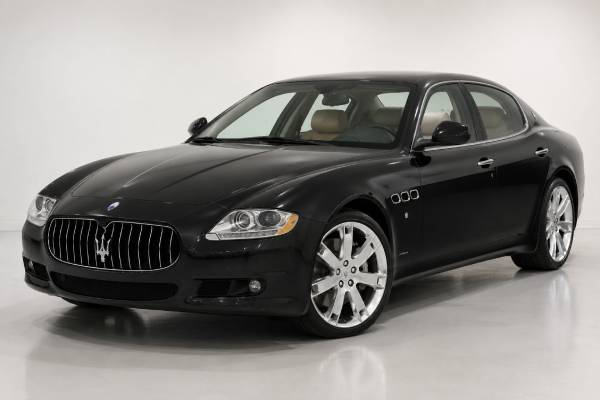
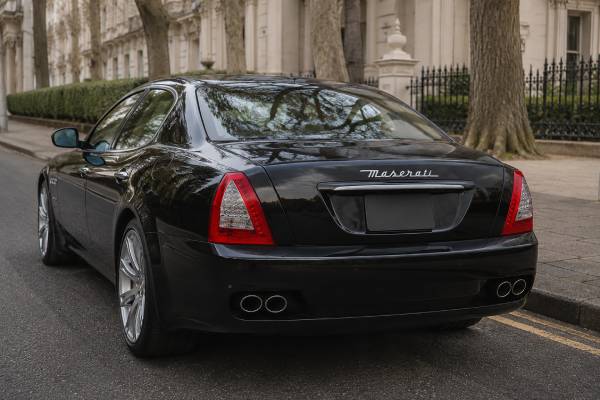
The 2009 Maserati Quattroporte Centurion Edition is a rare, market-specific version of one of the most charismatic luxury sedans of its era. Created for eligible American Express Centurion card members in the United Kingdom, it paired the facelifted M139 Quattroporte with a tightly defined black-and-ivory presentation and discreet Centurion branding. This article focuses on the 4.2-liter, 400 hp version, not the more powerful 4.7-liter alternative offered through the same program. Mechanically, it is close to the standard facelift Quattroporte: a naturally aspirated Ferrari-Maserati V8, rear-wheel drive, and a conventional six-speed ZF automatic rather than the earlier DuoSelect automated manual. That combination makes the car easier to use than early M139s while preserving the sound, steering feel, and Pininfarina shape that made the fifth-generation Quattroporte special. Rarity alone does not guarantee value, however. Condition, documentation, correct Centurion details, and evidence of expert maintenance matter far more than an unverified claim of exclusivity.
Table of Contents
- The Centurion Edition in Context
- V8, Chassis, and Key Specifications
- Production Details and Authenticity
- Pininfarina Form and Centurion Trim
- How the 4.2 Drives
- Ownership Risks and Maintenance
- Inspection and Purchase Strategy
The Centurion Edition in Context
The Centurion Edition is best understood as an exclusive specification package, not a separate engineering program. It arrived in 2009 after Maserati had refreshed the M139 Quattroporte and introduced the 4.7-liter Quattroporte S, giving invited buyers a choice between the familiar 4.2-liter model and the newer, stronger S.
The fifth-generation Quattroporte had already earned a distinct place in luxury-car history. Introduced for the 2004 model year and styled by Pininfarina, it placed a high-revving Italian V8 in a four-door body with the proportions of a grand tourer. Early cars used the rear-mounted DuoSelect transmission, which delivered a dramatic mechanical character but could be awkward in traffic and expensive when clutch wear was ignored. Maserati later installed a ZF automatic behind the engine, broadening the car’s appeal. By the time the Centurion Edition appeared, the automatic Quattroporte had become the more usable expression of the concept.
The Centurion project came from Maserati GB and American Express Centurion. Eligibility, ordering, and market context were central to its identity. The visual specification reportedly included a black exterior, pale leather, Centurion emblems on the head restraints, and a special dashboard plaque designed to echo the card. Cars were built to order, so small detail differences may exist. That makes original sales documentation especially important today.
The 4.2-liter version occupies an interesting position. It lacks the extra displacement and torque of the 4.7, but it is not merely the lesser car. Its F136-family V8 is smooth, rev-hungry, and sonorous, and the lighter power delivery suits the Quattroporte’s flowing chassis. It also represents the last phase of Maserati’s naturally aspirated 4.2-liter flagship sedan before the M139 gave way to the larger, turbocharged M156 generation.
Collectors still care because the car joins three stories: the Pininfarina M139, Maserati’s naturally aspirated V8 era, and an unusual private-client collaboration. The buying market remains selective. A correct, documented example can be intriguing; a standard Quattroporte dressed with badges is simply a modified car.
V8, Chassis, and Key Specifications
The 4.2-liter Centurion Edition uses the same essential mechanical package as the facelifted 400 hp Quattroporte. Its strongest points are the free-breathing V8, balanced rear-drive layout, hydraulic steering, and the smooth ZF automatic.
| Item | Specification |
|---|---|
| Chassis code | M139 |
| Engine family | F136, wet-sump V8 |
| Displacement | 4,244 cc |
| Induction | Naturally aspirated |
| Fuel system | Sequential multipoint injection |
| Maximum output | 400 hp at about 7,000 rpm |
| Peak torque | About 460 Nm at 4,250 rpm |
| Transmission | Six-speed ZF automatic |
| Drivetrain | Rear-wheel drive with limited-slip differential |
| Front suspension | Double wishbones with coil springs |
| Rear suspension | Multi-link arrangement with coil springs |
| Damping | Skyhook electronically controlled dampers |
| Steering | Hydraulic power-assisted rack and pinion |
| Brakes | Ventilated discs with ABS and stability control |
| Wheelbase | 3,064 mm |
| Length | About 5,052 mm |
| Fuel capacity | About 90 liters |
| Claimed 0–100 km/h | About 5.6 seconds |
| Claimed top speed | About 270 km/h |
The engine is an all-aluminum, 90-degree V8 with four valves per cylinder and continuously variable timing on the intake camshafts. In automatic M139 applications it uses a wet-sump lubrication system, an important distinction from some earlier Ferrari-Maserati installations. The cross-plane crank gives the engine a deep pulse at low speed, while the cylinder heads and intake system let it sharpen as it approaches the 7,000 rpm power peak.
The ZF 6HP automatic sits at the front rather than in a rear transaxle. That changes the weight distribution from the DuoSelect layout, but the M139 remains notably well balanced for a large sedan. Maserati calibrated the gearbox for smooth automatic operation and more assertive behavior in Sport mode. Steering-wheel paddles give the driver manual control, though shift speed and logic are still those of a refined torque-converter automatic, not a modern dual-clutch unit.
Skyhook damping varies damper force according to body movement, steering input, braking, and road conditions. It allows the standard Quattroporte to remain supple without becoming loose. The brakes are strong for road use, but repeated high-energy stops expose the car’s mass and can accelerate disc and pad wear. Wheel and tire specification may differ by order, so the correct size should be confirmed from the car’s original build information and tire placard.
Period acceleration figures vary slightly by market and test method. The important point is that the 4.2 feels quicker than its numbers suggest once the engine is above the midrange, yet it demands revs in a way the 4.7 does not.
Production Details and Authenticity
Authenticity is the central issue with a Centurion Edition. Because the package was subtle and based on a regular production Quattroporte, a convincing replica can be assembled more easily than a mechanical limited edition with unique body panels or engine hardware.
The known program was announced for the UK market in 2009 and was open to qualifying Centurion members. Buyers could select either the 4.2-liter Quattroporte or the 4.7-liter Quattroporte S, and individual cars were built to order. Publicly available material does not establish a universally accepted production total for each engine version. A seller who describes a car as “one of” a specific number should provide documentary evidence for that claim.
Look for several layers of proof:
- The original order form or sales invoice naming the Centurion Edition.
- A build sheet or dealer record matching the VIN, color, trim, and options.
- Period correspondence from Maserati GB, American Express, or the supplying dealer.
- Correctly embroidered or embossed Centurion head restraints.
- The special dashboard plaque and any serial or owner-specific details.
- Original handbooks, keys, leather wallet, tool kit, and delivery accessories.
- A continuous ownership trail showing that the car was not converted later.
Black paint and pale leather alone prove nothing because both were available on ordinary Quattroportes. Inspect the branding closely. Stitching should look factory-level, with consistent thread, spacing, and placement. A plaque should fit cleanly and show appropriate aging. Fresh logos on worn leather, newly drilled trim, or mismatched fonts deserve investigation.
The 2009 facelift brought a reshaped grille, revised bumpers, updated lights, and cabin changes. Ensure the car is genuinely a facelift model, not an earlier car retitled or modified. The VIN, build date, engine number, and market specification should agree. A right-hand-drive UK car with the expected equipment and dealer history is easier to authenticate than a vehicle that has moved through several countries without records.
Factory options matter to usability and desirability but should not be confused with Centurion content. Common choices included Skyhook settings, wheel designs, colored brake calipers, rear comfort features, wood or piano-black trim, upgraded audio, and various seat configurations. Originality generally supports value, though discreet, reversible updates such as a modern Bluetooth interface may improve daily use.
Pininfarina Form and Centurion Trim
The Centurion Edition succeeds because its special trim sits on one of Pininfarina’s most resolved four-door designs. The M139 has a long hood, short front overhang, strong rear haunches, and a cabin set well back from the front axle, giving it a sports-car stance despite its size.
Three oval fender vents, a low shield grille, frameless side glass, and a high rear deck create a clear Maserati identity. The body is steel with aluminum used in selected panels and suspension components. Aerodynamic priorities were not expressed through large wings or visible ducts. Instead, the shape manages high-speed stability through its underbody, controlled lift, and clean surfacing.
The 2009 facelift sharpened the nose without erasing the original design. Vertical grille bars, revised lamps, and new bumper treatments made the car appear wider and more formal. On the Centurion Edition, the black finish emphasizes the body’s reflections and hides some of the facelift’s visual complexity. It also demands excellent paint condition: swirl marks, sanding trails, repainted edges, and poor color matching are easy to see under strong lighting.
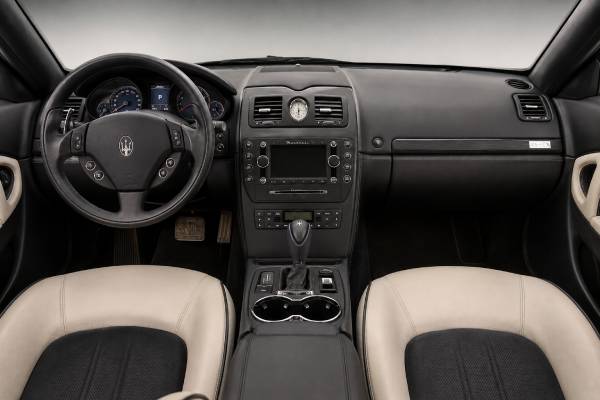
Inside, the M139 mixes traditional luxury with an unusually intimate driving position for a large sedan. The dashboard curves toward the occupants, the center stack is narrow, and the analog instruments sit beneath a deep hood. The infotainment system is dated by current standards, but the cabin’s appeal rests more on leather, shape, switch feel, and the view over the sculpted hood.
The Centurion treatment creates contrast between the dark exterior and light upholstery. Its success depends on preservation. Pale leather shows dye transfer, bolster wear, cracking, and poorly matched repairs quickly. Check the head-restraint logos for distortion caused by leather shrinkage or past retrimming. Examine the dashboard plaque, door sills, carpets, and luggage compartment for details that align with period descriptions.
Sound is a major engineering feature. At low speed, the 4.2 V8 is subdued enough for a chauffeur-style sedan. Sport mode changes throttle, gearbox, damping, and exhaust behavior, revealing a hard-edged tenor as revs rise. The exhaust should be resonant, not metallic or boomy. Aftermarket systems can be entertaining, but they reduce originality and may mask leaks, failed valves, or poor repairs.
The M139 also carries unusual packaging compromises. Rear space is generous in legroom but less limousine-like than the exterior suggests, and the sloping roof can limit headroom for tall passengers. The trunk is useful rather than enormous. These compromises reflect the car’s purpose: a grand tourer with four doors, not a conventional long-wheelbase luxury saloon.
How the 4.2 Drives
The 4.2-liter Centurion Edition feels graceful and responsive rather than brutally fast. Its appeal comes from steering accuracy, progressive power, and the way a large sedan seems to shrink around the driver on a flowing road.
Throttle response is crisp because there are no turbochargers to fill. Below about 3,000 rpm, the engine is smooth and adequate rather than forceful. The car’s weight is evident when leaving a junction or climbing in a high gear. Above the midrange, the V8 becomes more urgent, and the last 2,000 rpm deliver the sound and personality buyers expect. Drivers who rarely use the upper rev range may prefer the 4.7, which produces more torque with less effort.
The ZF automatic is central to the car’s usability. In normal mode it moves away cleanly, absorbs low-speed traffic, and shifts without the clutch-management technique required by DuoSelect. Sport mode holds gears longer, responds more quickly to throttle input, and makes paddle use worthwhile. It will not match the instant response of a recent eight-speed automatic, but a healthy unit should not flare, bang into gear, or hesitate excessively when selecting Drive or Reverse.
Hydraulic steering gives the front axle a natural buildup of effort. Initial response is not nervous, and the long wheelbase adds stability. Once loaded into a bend, the car communicates grip clearly and maintains a rear-driven balance. The limited-slip differential helps it leave slower corners cleanly, though worn rear tires or aggressive throttle can still overwhelm traction.
Skyhook is most convincing on fast, uneven roads. Normal mode allows noticeable body movement but preserves tire contact and comfort. Sport mode firms the damping, reduces float, and adds control without fully disguising the car’s mass. Sharp potholes can produce a hard impact, especially on large wheels with old or overinflated tires. A car that crashes over bumps may have worn dampers, damaged suspension joints, incorrect tires, or a previous owner who chose appearance over compliance.
The brakes offer good modulation in normal use. Pedal vibration, steering shake, or a long pedal after repeated stops points to warped or worn components, contaminated fluid, or sticking calipers. The Quattroporte can cover distance at very high speed with little drama, but wind noise, wheel balance, and alignment must be correct. On urban roads its width, low nose, turning circle, and limited rear visibility require care.
A proper test drive should include a cold start, slow parking maneuvers, rough surfaces, sustained motorway speed, repeated moderate braking, and full-throttle acceleration once warm. The car should feel cohesive. A collection of small noises, warnings, and delayed responses usually signals deferred maintenance rather than harmless age.
Ownership Risks and Maintenance
The 4.2 Centurion Edition can be dependable when maintained by a knowledgeable specialist, but neglect compounds quickly. The purchase price may resemble that of an ordinary used luxury sedan; parts prices, diagnostic needs, and labor time do not.
The best-known engine concern is camshaft variator wear. A brief light noise at startup is different from a pronounced diesel-like rattle that persists. Updated components and oil-feed measures were developed during the M139 era, and repair can be labor intensive. Ask whether the variators were replaced, which parts were used, and whether supporting oil-system work was completed.
Other engine-area checks include:
- Cam-cover and timing-cover oil leaks.
- Coolant seepage from hoses, the expansion tank, radiator, thermostat housing, or water pump.
- Weak cooling fans or fan-control faults.
- Aging engine mounts that allow vibration or driveline movement.
- Misfires from coils, plugs, injectors, or intake leaks.
- Exhaust manifold or joint leaks that create ticking noises.
- Low-voltage faults caused by an old battery or poor charging system.
Oil quality matters because the engine’s timing system and variators depend on clean, correctly specified lubricant. Annual oil service is sensible for a lightly used collector car even when mileage is low. Warm the engine fully on each drive rather than repeatedly moving it short distances.
The ZF six-speed is generally strong. Despite lifetime-fluid language common in the period, many specialists favor periodic fluid and filter service using the correct specification and procedure. Harsh shifts can result from low voltage, adaptations, worn mounts, contaminated fluid, valve-body wear, or deeper internal problems. Diagnosis should come before parts replacement.
Suspension wear is common because the car is heavy and often runs low-profile tires. Front control-arm bushes, ball joints, tie rods, rear links, wheel bearings, and Skyhook dampers all deserve inspection. A dashboard suspension warning may indicate a damper, sensor, wiring, or control issue. Replacing random components without a Maserati-capable scan tool becomes expensive.
Electrical irritations include window regulators, door locks, seat modules, parking sensors, infotainment hardware, switchgear, and alarm or key problems. Soft-touch coatings can become sticky. Leather can shrink around the dashboard and rear shelf. Air-conditioning performance should be tested in every mode, including fan speeds and temperature zones.
Brake discs, pads, and correct tires are major consumables. Tires should match across each axle, carry suitable load and speed ratings, and be replaced for age as well as tread. A car driven only a few hundred miles per year may still need four tires. Budget for wheel refinishing if corrosion or poor prior repairs are present, but avoid machining away identifying marks or changing an original Centurion finish without documentation.
Parts availability is mixed. Routine filters and many service items are obtainable, while unique trim, electronics, and special-edition pieces can require patient searching. A specialist who understands both M139 mechanical systems and trim authenticity is more valuable than a general exotic-car workshop learning on the job.
Inspection and Purchase Strategy
Buy the best-documented, most original Centurion Edition you can verify, not the cheapest car carrying the name. A complete pre-purchase inspection should treat authenticity and mechanical condition as equal priorities.
Begin with the paperwork before traveling. Request clear images of the VIN, build labels, engine bay, head-restraint emblems, dashboard plaque, service invoices, original sales documents, and every key. Compare dates, names, registration numbers, and mileage. Gaps are not automatically fatal, but a rare edition needs stronger proof than an ordinary Quattroporte.
Use this inspection order:
- Confirm the VIN and build date with a Maserati dealer, recognized specialist, or documented factory record.
- Establish that the Centurion specification was present at first delivery.
- Review service history for annual maintenance, variator work, cooling repairs, suspension replacement, brakes, tires, and battery care.
- Scan every control module with Maserati-compatible diagnostics and save the report.
- Inspect the car cold on a lift, checking leaks, corrosion, underbody damage, bushings, exhaust, and previous accident repair.
- Road-test it until fully warm, then repeat the scan and inspect for fresh leaks.
| Encouraging evidence | Reason to pause |
|---|---|
| Original Centurion invoice and matching build record | Edition claim based only on badges or seller history |
| Documented variator and oil-system work | Persistent cold-start rattle with no diagnosis |
| Specialist invoices showing preventive maintenance | Long gaps followed by cosmetic preparation for sale |
| Matching premium tires with recent date codes | Mixed, old, or budget tires on a high-speed sedan |
| Clean module scan and stable charging voltage | Multiple warning lights dismissed as battery issues |
| Original interior details in preserved condition | Fresh retrim that removes or imitates special features |
Set aside a meaningful first-year reserve even for a good car. Fluids, tires, alignment, battery, minor suspension work, and age-related seals can easily overlap. A purchase inspection cannot guarantee the future, but it can separate a fundamentally sound example from one that needs a mechanical restoration.
Value should be judged against ordinary 4.2-liter Quattroportes, verified special-edition provenance, and the quality of the individual car. The Centurion link may add interest to the right collector, yet the buyer pool is narrower than for a universally recognized factory performance model. Avoid paying a large premium unless the car is exceptionally complete and the documentation is convincing.
The right 4.2 Centurion Edition is a distinctive way to own the M139: elegant, usable, rare, and rich in period character. The wrong one is an expensive standard Quattroporte with uncertain trim. Documentation decides which is which.
References
- Centurion special edition Quattroporte honors AmEx Black cardholders 2009
- Maserati unveils new Quattroporte Sport GT S on the 70th anniversary of its first Indianapolis 500 win 2009
- Maserati Guides & Documentation for your vehicle 2026 (Owner’s Manual Portal)
Disclaimer
This article is for informational purposes only and is not a substitute for professional diagnosis, inspection, maintenance, or repair. Specifications, torque values, service intervals, procedures, software requirements, and equipment can vary by VIN, production date, market, and configuration. Before buying, servicing, or modifying any vehicle, verify the relevant details against its official service documentation and consult a qualified Maserati specialist when necessary.
Please share this article on Facebook, X/Twitter, or another platform to support our work and help other owners and enthusiasts find it.