
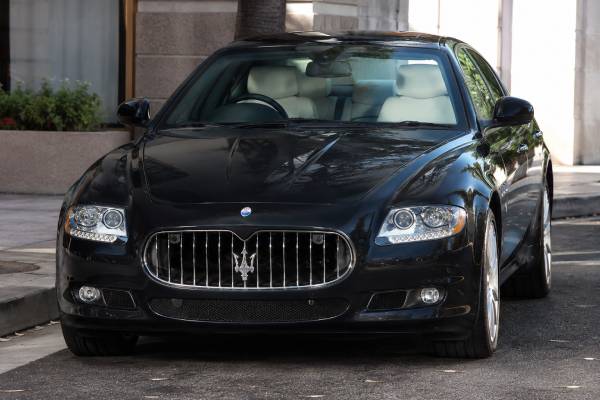
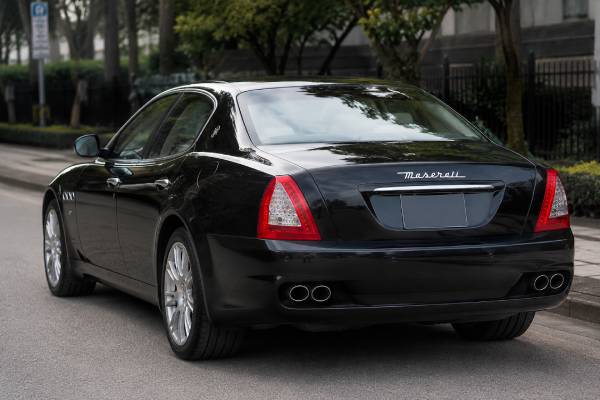
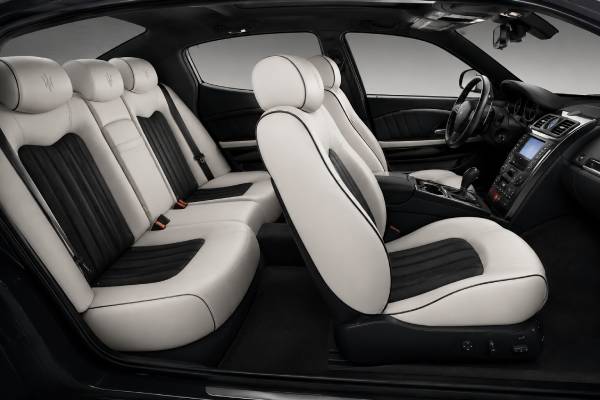
The 2009 Maserati Quattroporte Centurion Edition with the 4.7-liter V8 is the more powerful of two specially commissioned versions offered to eligible American Express Centurion members in the United Kingdom. It combines the discreet exclusivity of the Centurion package with the mechanical specification of the facelifted Quattroporte S: 430 hp, rear-wheel drive, Skyhook adaptive damping, and a six-speed ZF automatic. That makes it materially different from the 4.2-liter Centurion car, not merely a more expensive trim choice. The larger F136Y engine produces stronger midrange torque, carries the heavy M139 body with less effort, and better matches the car’s grand-touring mission. Its rarity is appealing, but the edition’s value depends on evidence. Black paint, pale leather, embroidered head restraints, and a dashboard plaque can be reproduced. A genuine car should have period ordering records, a matching VIN trail, and consistent factory-quality details. Mechanically, buyers must approach it as a complex hand-finished Italian flagship whose running costs remain tied to its original price and engineering.
Table of Contents
- Why the 4.7 Centurion Matters
- F136Y Powertrain and Chassis Data
- Commissioning, Options, and Identification
- Special Trim Over Pininfarina Shape
- Road Character of the Centurion S
- Service Realities and Failure Points
- Buying a Genuine 4.7 Centurion
Why the 4.7 Centurion Matters
The 4.7-liter Centurion Edition is essentially a privately targeted Quattroporte S with a distinctive delivery specification. It matters because it joins the most balanced road-going M139 powertrain with one of the generation’s least common factory-sanctioned collaborations.
Maserati launched the Pininfarina-designed M139 in the early 2000s as a different answer to the German luxury sedan. Instead of isolating the driver, it used a high-revving V8, rear-biased proportions, hydraulic steering, and a cabin that felt closer to a grand-touring coupe. The earliest DuoSelect cars placed the transmission at the rear, but the automated clutch demanded sympathy in town. The later ZF automatic moved the gearbox to the front and traded a little theoretical purity for much better everyday behavior.
The 2008 facelift brought a cleaner grille, revised lighting, fresh bumpers, and a reorganized range. The Quattroporte S introduced the 4.7-liter F136Y engine, giving the sedan 430 hp and about 490 Nm. The Centurion program followed in 2009. Maserati GB and American Express offered eligible card members a built-to-order Quattroporte with an exclusive black-and-light interior theme and Centurion insignia. Both 4.2- and 4.7-liter versions were available.
For many buyers, the 4.7 is the more convincing pairing. It makes the M139 feel less dependent on high revs in normal traffic, yet it remains naturally aspirated and responsive. It also receives the S model’s larger front braking hardware and 19-inch wheel package in typical specification. Compared with the later Sport GT S, it is softer, quieter, and more luxurious, which suits the Centurion brief.
Today, the edition sits outside the usual collector hierarchy. The Sport GT S and Awards Edition have clearer performance identities, while the Centurion’s appeal is cultural and provenance-driven. That can work in a buyer’s favor. A well-documented car may be overlooked by shoppers who only compare horsepower, but a weakly documented example should not command a meaningful premium.
F136Y Powertrain and Chassis Data
The 4.7 Centurion uses the Quattroporte S mechanical package: an aluminum 4.7-liter V8, six-speed automatic, limited-slip differential, adaptive suspension, and rear-wheel drive. It is quick enough to feel special without sacrificing the relaxed behavior expected of a flagship sedan.
| Category | Specification |
|---|---|
| Platform | M139 four-door sedan |
| Engine code | F136Y |
| Configuration | 90-degree naturally aspirated V8 |
| Displacement | 4,691 cc |
| Block and heads | Aluminum alloy |
| Valvetrain | DOHC, four valves per cylinder, variable intake timing |
| Maximum power | 430 hp at approximately 7,000 rpm |
| Peak torque | Approximately 490 Nm at 4,750 rpm |
| Lubrication | Wet sump |
| Transmission | ZF six-speed torque-converter automatic |
| Final drive | Rear-wheel drive with limited-slip differential |
| Suspension | Double wishbone front, multi-link rear |
| Dampers | Skyhook electronically variable |
| Steering | Hydraulic rack and pinion |
| Front brakes | Brembo dual-cast ventilated discs, six-piston calipers |
| Wheelbase | 3,064 mm |
| Overall length | Approximately 5,052 mm |
| Fuel tank | Approximately 90 liters |
| Claimed 0–100 km/h | Approximately 5.4 seconds |
| Claimed maximum speed | Approximately 280 km/h |
The F136Y is not simply a bored version of the 4.2. Its 94 mm bore and 84.5 mm stroke increase displacement while preserving the engine family’s rev-hungry character. The cross-plane crankshaft gives the exhaust note its deep, uneven cadence. Variable intake cam timing helps spread torque across the range, and the larger displacement means the driver does not need to chase the final 2,000 rpm every time the car accelerates.
The ZF 6HP automatic uses a conventional torque converter and planetary gearsets. In normal mode it prioritizes smoothness; Sport changes shift points, throttle response, damping, and exhaust behavior. Manual control comes through fixed steering-column paddles on many cars, a layout that keeps the paddles in the same place while the wheel turns. A healthy gearbox should engage promptly, shift without flare, and make clean rev-matched downshifts within the limits of period software.
The Quattroporte S’s braking package is a meaningful upgrade over the base 4.2. Dual-cast front discs use an iron friction ring with an aluminum hat to reduce unsprung mass and manage heat. Six-piston front calipers provide a firm, progressive pedal when the system is in good order. Skyhook damping remains standard, unlike the fixed-rate setup of the Sport GT S.
Weight figures vary with equipment and market, but the car is roughly two tonnes in running condition. That mass explains why tire quality, alignment, bush condition, and brake health have such a large effect on the driving experience.
Commissioning, Options, and Identification
A Centurion Edition must be authenticated as a complete commissioned car, not judged by one emblem. The edition’s defining elements are largely trim and provenance, so paperwork carries unusual weight.
The program’s public announcement described a black exterior and ivory-colored interior, Centurion logos on the head restraints, and a special dashboard plaque styled after the Centurion card. Cars were built to order, and the 4.7 version was based on the Quattroporte S. The absence of a widely accepted engine-by-engine production figure means sellers should avoid unsupported “one of ten” or similar statements.
Useful evidence includes:
- A first invoice that names the Centurion program and the 4.7-liter Quattroporte S.
- Dealer correspondence confirming the private-member ordering route.
- A build record with the VIN, factory colors, trim codes, and option list.
- Original registration documents showing the first owner and supplying dealer.
- Period photographs taken at delivery.
- Matching Centurion embroidery, plaque, and any presentation accessories.
- An uninterrupted service file from recognized Maserati workshops.
The physical inspection should be forensic but respectful. Compare stitching density and thread color across both front head restraints. Check that the leather grain and age match the seat. Inspect the reverse side of trim where practical for non-factory fasteners or adhesive. A dashboard plaque should sit squarely and use type, finish, and engraving consistent with period promotional material. Signs of fresh work are not proof of fraud, but they require an explanation.
The car’s standard option content also needs decoding. Maserati offered a broad palette of leather colors, contrast piping, wood veneers, piano-black trim, wheel designs, caliper colors, rear-seat controls, climate features, audio upgrades, and convenience equipment. A Centurion order may combine special-edition content with normal personalization. That variation is acceptable when documented.
Verify that the car is a genuine Quattroporte S. The engine number, VIN data, 4.7-liter intake and labels, brake package, exhaust layout, and software identification should agree. A base 4.2 car converted cosmetically cannot become a 4.7 Centurion. Equally, an ordinary S with copied trim remains an ordinary S.
Originality should be considered in context. Replacement tires, batteries, fluids, and improved internal transmission components are maintenance, not loss of authenticity. Non-original wheels, loud exhausts, retrimmed seats, modern steering wheels, and removed special plaques affect collector value more seriously. Reversible infotainment improvements are easiest to accept when the original hardware accompanies the car.
Special Trim Over Pininfarina Shape
The Centurion specification works because it does not compete with the M139’s shape. Its dark exterior and pale cabin heighten the car’s formal character while leaving the Pininfarina design readable.
The long hood begins behind a low oval grille and flows into a cabin positioned well rearward. A pronounced shoulder runs through the doors toward muscular rear arches. Three vents behind each front wheel serve as visual punctuation and a direct Maserati signature. Frameless windows reduce the sedan-like heaviness of the side view, while the short rear deck gives the car a coupe-like finish.
The facelifted nose is more assertive than the original 2004 design. Vertical grille bars and revised lamp internals make the front look taller, but the basic proportions remain delicate. Black paint adds depth and ceremony, though it is unforgiving. Inspect under daylight and point lighting for holograms, machine-polishing trails, sinkage over filler, overspray on seals, and texture changes between panels. Because these cars are now old enough to have suffered parking damage, a paint-depth survey is sensible.
The cabin is hand-finished but not immune to age. Light leather makes the Centurion interior visually dramatic and also exposes wear. The driver’s outer bolster, steering-wheel rim, door pulls, seat belt contact points, and rear-seat fronts deserve close attention. A good leather specialist can improve color and texture, but heavy coating can cover cracks and erase the original grain. Preservation generally looks better than over-restoration.
The M139 cockpit is arranged around the driver. Large analog dials, a central clock, slender pillars, and a low beltline create a sense of occasion. Switchgear comes from several supplier families and the multimedia system was not advanced even when new. Those practical shortcomings matter less in a collector car, but every feature should work. Dead pixels, a nonfunctional navigation screen, broken seat controls, or inoperative rear climate equipment can require difficult parts searches.
The 4.7 engine’s sound contributes as much as the Centurion logos. In normal driving the exhaust is muted, allowing induction and mechanical texture to dominate. Sport mode opens the car up, adding a sharper bark at each downshift and a richer note under load. A standard exhaust has layered tone without constant drone. A car that is loud at all times may have modified mufflers, stuck valves, or leaks.
Packaging remains more sporting than limousine-like. Rear passengers receive a long wheelbase and substantial legroom, but headroom and door openings are not class-leading. The driving position is excellent once adjusted, although the low nose is hard to judge from the seat. The Centurion Edition is therefore best seen as a special grand-touring sedan, not a chauffeur car with decorative branding.
Road Character of the Centurion S
The 4.7 Centurion is at its best on a long, fast road, where the stronger torque and adaptive chassis make the M139 feel fluid rather than heavy. It is more effortless than the 4.2 and more compliant than the Sport GT S.
At low engine speed, the F136Y pulls cleanly and allows the gearbox to use taller ratios. Urban response is immediate without being abrupt. From roughly 3,500 rpm, the engine gathers pace with increasing urgency, and the final run to 7,000 rpm feels genuinely exotic for a large sedan. The power delivery is linear, so speed can build without the obvious surge that warns a driver in a turbocharged car.
The transmission suits this broad character. In automatic mode it is smooth enough for city work and quiet cruising. Sport keeps the engine ready and reduces the pause between throttle request and acceleration. Paddle shifts are satisfying when planned, especially on downshifts into a bend, but the gearbox remains slower than current units. Repeatedly pulling a paddle cannot cure worn fluid, lazy solenoids, or poor adaptations.
Steering feel is a major reason to choose the M139 over a newer luxury sedan. The hydraulic rack is calm near center, loads naturally in a corner, and communicates front-tire grip. It is not light in parking maneuvers, and the car’s width becomes obvious in narrow streets. On open roads, however, the steering and long wheelbase create confidence.
Skyhook gives the S a broad operating range. Normal mode lets the body breathe over long undulations and isolates passengers from rough surfaces. Sport tightens vertical movement and improves control during quick direction changes. It does not turn the car into a lightweight sports sedan, but it keeps mass from arriving all at once. Worn dampers or bushings destroy that polish, producing secondary motions and knocks that sellers sometimes dismiss as “Italian character.”
The dual-cast brakes have strong initial authority and good modulation. They should stop straight, with no pulsing through the pedal or shake through the wheel. Heat capacity is adequate for spirited road use, but a two-tonne car on old fluid and worn discs will fade. Track use is possible only with careful preparation and realistic expectations.
Rear-drive balance is progressive. On dry premium tires, the car has more grip than most drivers will use on the road. In rain, the combination of 490 Nm, a limited-slip differential, and stability-control settings demands smooth throttle. The electronic systems are helpful but less predictive than modern torque-vectoring all-wheel drive.
Visibility forward is good; rear-quarter awareness is less so. Parking sensors must work, and wheel rims are vulnerable. A proper test should include tight turns, broken pavement, hard acceleration, steady 110–130 km/h cruising where legal, and several stops from moderate speed. The car should feel quiet, straight, and settled rather than merely fast.
Service Realities and Failure Points
The 4.7 Centurion is not inherently fragile, but it punishes deferred maintenance. Its weak points are well understood, and a specialist inspection can identify many of them before purchase.
Camshaft variator wear is the headline engine concern. A pronounced rattle at cold start can indicate worn variators or related oil-retention problems. Repairs involve significant labor and should be documented with part numbers, dates, mileage, and supporting work. Listen from a true overnight cold start; a warmed engine can hide the symptom.
Engine and cooling concerns also include:
- Oil seepage from cam covers, timing covers, and seals.
- Coolant loss from hoses, radiator end tanks, expansion tank, thermostat, or water pump.
- Aging fan motors and control modules.
- Cracked or hardened vacuum and breather hoses.
- Coil, plug, and injector faults that produce intermittent misfires.
- Collapsed engine mounts that transmit vibration into the cabin.
- Exhaust leaks near manifolds, joints, or valve assemblies.
Annual engine-oil service is prudent even for low-mileage use. Short trips allow condensation and fuel dilution, while long storage periods leave seals and hydraulic systems inactive. A battery maintainer helps, but it should not be used to excuse an old battery or weak alternator.
The ZF automatic is durable when healthy. Ask about fluid and pan/filter replacement, not just “sealed for life” claims. Correct fluid temperature and filling procedure matter. Jerky engagement, shudder under light throttle, flared shifts, or repeated transmission warnings warrant diagnosis with live data. Software adaptation, mounts, valve-body wear, and torque-converter issues can create similar symptoms.
Chassis expenses accumulate through weight and age. Inspect front lower-arm bushes, ball joints, tie rods, rear links, anti-roll-bar hardware, wheel bearings, and Skyhook dampers. Uneven tire wear can come from alignment, bent wheels, worn joints, or prior accident damage. A suspension warning needs module-level diagnosis rather than parts guessing.
Brake costs are significant. Measure disc thickness and condition, inspect caliper dust seals, and test the parking brake. Confirm that the car wears matched premium tires with recent date codes. Old tires can feel acceptable at low speed while becoming dangerous in rain or during high-speed braking.
Electrical and trim faults are often smaller individually but time-consuming in combination. Test every window, lock, mirror, seat function, parking sensor, climate zone, audio source, steering-wheel control, key, alarm feature, and dashboard display. Sticky buttons, shrinking leather, sagging headlining, worn door seals, and corroded trunk connections all appear with age.
Special-edition trim raises the stakes. Damaged Centurion embroidery, a missing plaque, or heavily cracked ivory leather may be impossible to restore perfectly without losing originality. Mechanical parts can often be sourced through specialists; one-off presentation pieces may not be available at any price.
Buying a Genuine 4.7 Centurion
A strong purchase combines verifiable Centurion provenance, a healthy Quattroporte S, and a realistic maintenance reserve. Compromise on color or minor options before compromising on records or mechanical condition.
Ask the seller for a digital dossier before arranging an inspection. It should include the VIN, odometer, cold-start video, underbody photographs, diagnostic report, service invoices, original order paperwork, and close-ups of every edition-specific feature. Confirm that the engine is 4.7 liters and that the vehicle was delivered through the Centurion program.
A specialist pre-purchase inspection should cover:
- VIN, engine identity, build specification, and ownership history.
- Cold-start noise and hot oil-pressure behavior where measurable.
- Cooling-system pressure and evidence of dried coolant.
- Transmission engagement, shift quality, fluid history, and fault memory.
- Suspension play, damper operation, alignment, and tire condition.
- Brake measurements, caliper function, and fluid condition.
- Full electronic scan before and after the road test.
- Paint-depth readings and structural inspection for accident repair.
- Detailed authentication of the Centurion trim and documents.
| Priority | What good looks like | What creates risk |
|---|---|---|
| Provenance | Period invoice, matching VIN records, original special trim | Story-based claim with newly added badges |
| Engine | Quiet cold start, dry exterior, stable temperature | Variator rattle, coolant loss, misfire history |
| Gearbox | Prompt engagement and smooth, consistent shifts | Flare, thump, shudder, or “lifetime fluid” neglect |
| Chassis | Recent matched tires, tight joints, functioning Skyhook | Knocks, uneven wear, old tires, warning messages |
| Interior | Preserved ivory leather and complete controls | Heavy recoloring, missing plaque, damaged embroidery |
Do not spend the entire budget on the purchase. A first-year reserve should cover baseline fluids, battery, tires if dates are old, alignment, small leaks, and at least one unexpected electronic or suspension repair. Insurance valuation should reflect documented edition status rather than an optimistic asking price.
The 4.7 Centurion Edition will not suit a buyer seeking modern driver-assistance systems, low running costs, or anonymous transport. It suits an enthusiast who values provenance, naturally aspirated response, Pininfarina design, and an unusual piece of late-2000s luxury culture. With records and expert care, it is a deeply satisfying flagship. Without them, rarity becomes a distraction from expensive problems.
References
- Centurion special edition Quattroporte honors AmEx Black cardholders 2009
- Maserati unveils new Quattroporte Sport GT S on the 70th anniversary of its first Indianapolis 500 win 2009
- Maserati Guides & Documentation for your vehicle 2026 (Owner’s Manual Portal)
Disclaimer
This article is for informational purposes only and is not a substitute for professional diagnosis, inspection, maintenance, or repair. Specifications, torque values, service intervals, procedures, software requirements, and equipment can vary by VIN, production date, market, and configuration. Before buying, servicing, or modifying any vehicle, verify the relevant details against its official service documentation and consult a qualified Maserati specialist when necessary.
Please share this article on Facebook, X/Twitter, or another platform to support our work and help other owners and enthusiasts find it.