
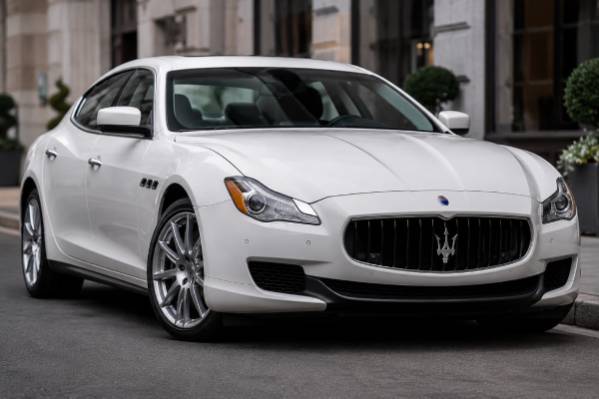
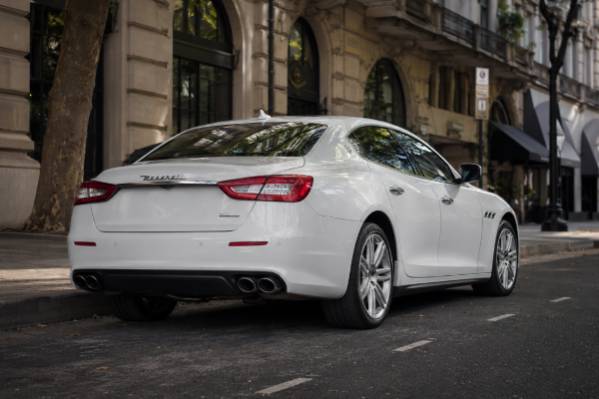
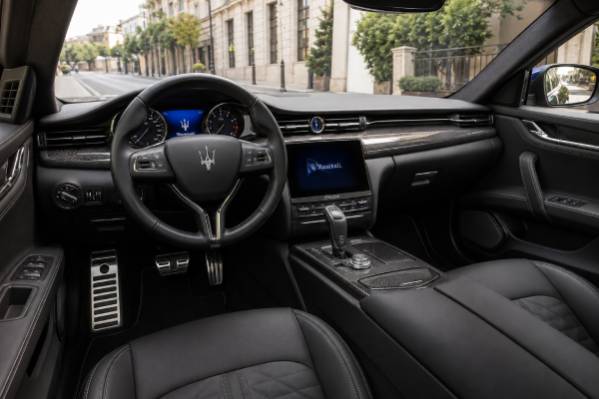
The 2016–2020 Maserati Quattroporte Diesel with 250 hp is the Italian-market tax-focused version of the M156 diesel flagship. It uses the same 2,987 cc A630 HP turbo-diesel V6 architecture and substantial 600 Nm torque as the better-known 275 hp model, but with a lower peak-power calibration. An eight-speed automatic and rear-wheel drive remain standard, while claimed performance is about 6.8 seconds to 100 km/h and 240 km/h. The lower rating does not make the car mechanically simple: it still relies on common-rail injection, a variable-geometry turbocharger, EGR, a diesel particulate filter, and later emissions hardware that needs correct temperature and regular long journeys. Most examples are linked to the Italian market, so identity, import documents, emissions compliance, and software specification deserve special attention. The 2017 facelift improved the touchscreen, smartphone integration, aerodynamics, and trim choices; later cars gained electric steering and more active assistance. A strong 250 hp Diesel is an understated, torquey long-distance sedan. A weak one can hide urban-use soot loading, AdBlue or NOx faults, low coolant temperature, injector imbalance, or a modified emissions system behind a low purchase price.
Table of Contents
- Italy’s 250 hp Quattroporte
- Same Torque, Different Calibration
- Facelift Years, Trims, and Imports
- How the Diesel System Works
- Driving with 600 Nm
- Preventing Diesel-Related Expense
- Buyer Checks for the 250 hp Car
Italy’s 250 hp Quattroporte
The 250 hp Diesel exists because local taxation and market positioning can matter as much as mechanical capacity. It gives Italian buyers the full Quattroporte body and 600 Nm torque while staying below the output of the regular 275 hp diesel.
Maserati’s M156 Quattroporte was conceived as a global full-size sedan. Introduced for 2013, it was longer and roomier than the previous M139 and could support gasoline V6, gasoline V8, all-wheel-drive, and diesel configurations. The diesel joined the range for customers who covered high annual distances and valued range over maximum engine speed.
The A630 HP V6 was developed by VM Motori to Maserati requirements and built in Cento. In its mainstream Quattroporte application it produced 275 hp. The 250 hp version retained the same headline 600 Nm torque figure but limited peak output through calibration, matching the needs of the Italian market.
That means the driving difference appears most clearly above the middle of the rev range. At ordinary road speeds, both versions use similar low-rev torque. During sustained acceleration, the 275 hp engine continues with more force, while the 250 hp car reaches its power ceiling earlier. For motorway travel, the difference is less dramatic than the figures suggest.
The version is sometimes poorly documented outside Italy. Listings may describe it as 275 hp, convert metric and mechanical horsepower inconsistently, or assume that an ECU tune has restored a “missing” factory output. Buyers should treat the 250 hp identity as a specific homologated configuration, not an error to be corrected automatically.
Its rarity in export markets can be appealing, but it adds practical questions. Navigation, radio, instruments, lighting, emissions approval, registration taxation, and dealer software support may differ. A complete Italian history is more valuable than a translated sales description.
The car’s current reputation should be based on use. A 200,000 km example that has spent its life traveling between cities may have a healthier DPF and intake system than a 60,000 km car used only for short urban trips. Mileage alone cannot reveal whether the diesel aftertreatment has operated under suitable conditions.
Same Torque, Different Calibration
The 250 hp Quattroporte keeps the 3.0-liter V6 diesel’s most useful feature: 600 Nm at low engine speed. It sends that torque through a ZF eight-speed automatic to the rear axle and uses the full M156 adaptive chassis.
| Item | Specification |
|---|---|
| Platform | M156 |
| Engine code | A630 HP |
| Engine layout | 60-degree turbo-diesel V6 |
| Displacement | 2,987 cc |
| Induction | Single variable-geometry turbocharger |
| Fuel injection | Common rail, up to 2,000 bar |
| Maximum power | 250 hp at approximately 4,000 rpm |
| Peak torque | 600 Nm at approximately 2,000–2,600 rpm |
| Transmission | Eight-speed ZF automatic |
| Driven wheels | Rear |
| Front suspension | Double wishbone with Skyhook dampers |
| Rear suspension | Five-link with Skyhook dampers |
| Overall length | 5,262 mm |
| Wheelbase | 3,171 mm |
| Width without mirrors | 1,948 mm |
| Height | 1,481 mm |
| Trunk capacity | 530 liters |
| Fuel tank | 80 liters |
| Claimed 0–100 km/h | Approximately 6.8 seconds |
| Claimed top speed | Approximately 240 km/h |
A variable-geometry turbo changes vane angle with engine speed and load. At low speed the vanes accelerate exhaust flow for quick response. At higher load they open to control pressure and flow. Carbon deposits, actuator faults, vacuum or electronic control problems, and split charge hoses can all disrupt this operation.
The 2,000-bar common-rail system uses multiple injection events to manage noise, emissions, and combustion pressure. Fuel cleanliness is critical. Water or contamination can damage the high-pressure pump and injectors, spreading debris through the system. Fuel-filter history should therefore be visible in the records.
Maserati’s double-wall exhaust-manifold design retains heat, helping turbo response and exhaust treatment. That thermal strategy depends on correct coolant temperature and sensor readings. A thermostat that leaves the engine too cool can increase fuel use, soot production, and regeneration difficulty without creating an obvious overheating warning.
The eight-speed automatic keeps the diesel in its narrow, effective range. At light throttle it shifts early and uses torque. In Sport mode it holds lower gears and responds faster, though revving past the useful power band offers little. Manual paddles are most helpful for planning an overtake or controlling speed downhill.
Rear-wheel drive avoids the weight and service points of Q4. A limited-slip differential supports traction, while Skyhook adaptive dampers vary body control. The lower power calibration does not mean smaller or cheaper chassis parts in every market; verify brakes and wheels by VIN.
A 250 hp car modified to 275 hp or beyond may feel stronger, but the tune changes emissions, thermal, insurance, and legal assumptions. Ask whether the engine and transmission software are original, and compare control-unit identification with factory records.
Facelift Years, Trims, and Imports
Most 250 hp cars belong to the facelift era, but build and registration dates can overlap. Confirm whether a 2016-registered car has the original design or the revised 2017-model-year equipment.
The facelift introduced a reshaped grille and bumpers, plus an active Air Shutter that manages cooling airflow and reduces drag when conditions allow. The changes made the large body more efficient without altering its 5,262 mm length or 3,171 mm wheelbase.
Inside, the updated 8.4-inch capacitive touchscreen added Apple CarPlay and Android Auto. A rotary controller and revised console improved operation while driving. These features are valuable on an imported car because built-in navigation maps or connected services may not transfer easily between countries.
GranLusso and GranSport themes allowed different personalities. GranLusso emphasized leather or available Zegna silk, wood, chrome, and comfort equipment. GranSport used a more assertive bumper design, sport seats, darker details, and available carbon trim. Both could be combined with the diesel powertrain.
From the 2018 model year, electric power steering supported Lane Keeping Assist, Highway Assist, and active blind-spot functions when optioned. Earlier cars use hydraulic steering. The later system is lighter at parking speed and easier to integrate with assistance software; the earlier system often feels more natural through the wheel.
Italian-market equipment can differ from northern European or export specifications. Verify heated features, rear climate, adaptive cruise, lighting, cameras, audio, seat ventilation, and driver-assistance content rather than assuming a trim name includes them.
Emissions hardware also evolved. Later Euro 6 applications may include AdBlue selective catalytic reduction, NOx sensors, and associated tank, pump, heater, and injector components. Confirm the exact emissions standard and hardware before ordering parts or registering the car elsewhere.
An imported vehicle should come with original registration records, conformity documents, service invoices, and a clear tax history. Check whether odometer records align across Italian inspections, dealer visits, and export paperwork. Language changes to the cluster do not prove that every module has been correctly configured.
How the Diesel System Works
The 250 hp engine stays clean only when several systems cooperate: accurate injection, correct turbo airflow, warm coolant, controlled EGR, functioning sensors, and successful DPF regeneration. Treating each warning as an isolated part failure leads to poor repairs.
EGR routes a measured amount of exhaust back into the intake to lower combustion temperature and nitrogen-oxide formation. Soot and oil vapor can form deposits in the valve, cooler, intake passages, and swirl-control hardware. Symptoms may include hesitation, rough idle, smoke, low boost, or fault codes.
The diesel particulate filter captures soot. The control unit estimates loading from pressure, temperature, fuel use, and operating history. During active regeneration, it raises exhaust temperature to burn soot into ash. Ash remains in the filter and gradually reduces capacity over long mileage.
A regeneration can fail because the journey ends too soon, fuel level is low, coolant is too cold, a sensor is implausible, an injector is faulty, or the engine has another active code. Repeated forced regeneration without finding the cause may dilute engine oil and overheat the filter.
Later selective catalytic reduction systems inject AdBlue into the exhaust. Heat converts the fluid into ammonia, which reacts with nitrogen oxides in the catalyst. Crystallized injector deposits, weak pumps, failed heaters, contaminated fluid, and inaccurate NOx sensors can trigger a countdown that eventually prevents restart.
The turbo, EGR, DPF, and SCR systems are linked through temperature and airflow. A boost leak can increase soot. An EGR fault can alter oxygen levels. A thermostat fault can prevent correct exhaust heat. A poor injector can overload the filter. Diagnosis should therefore compare air mass, boost request, rail pressure, injector corrections, EGR command, exhaust temperatures, and DPF pressure together.
The Quattroporte’s active sound system and extensive insulation reduce diesel harshness in the cabin. During inspection, open the hood and listen outside as well. A polished interior can hide injector knock, exhaust leakage, auxiliary-belt noise, or a turbo actuator cycling abnormally.
Driving with 600 Nm
The 250 hp Diesel feels stronger than its peak-power figure in normal traffic because full torque arrives early. It gives away speed mainly when acceleration continues toward the upper end of the rev range.
The first throttle movement is smooth, and the torque converter helps the heavy sedan leave cleanly. Once boost arrives, the engine produces a broad push through the middle gears. The gearbox normally upshifts before 3,000 rpm, where the engine is quiet and efficient.
A claimed 6.8 seconds to 100 km/h is sufficient for confident merging and overtaking. The 275 hp version gains more speed after the middle range, while the 250 hp car settles earlier. On a motorway, both feel relaxed because the difference in peak torque is small or nonexistent in period specifications.
Normal mode suits passengers and wet roads. Sport mode sharpens shifts, firms Skyhook response, and adds a more assertive sound. The diesel still prefers one well-chosen gear to repeated high-rpm shifting. Paddles are useful for keeping the turbo ready before passing.
Hydraulic-steering cars deliver heavier, continuous feedback. Later electric-steering cars isolate more road texture but support active guidance. In either case, steering should be smooth and consistent. Pulling or an off-center wheel warrants checks of tires, alignment, brakes, control arms, and previous collision repair.
The long wheelbase creates excellent motorway stability. The car rides best on 19-inch wheels, where tire sidewalls can absorb sharp edges. Twenty- and 21-inch choices improve appearance but increase wheel damage and tire expense. Bent inner rims can cause vibration that appears only at certain speeds.
Rear-drive behavior remains balanced. Six hundred newton-meters can overwhelm poor rear tires, especially on a cold wet surface. Stability control should intervene predictably. A diesel buyer should spend on four high-quality tires rather than assuming lower horsepower makes grip unimportant.
Brakes should stop the car without pulse, pull, or a changing pedal. Low-use vehicles can suffer corrosion; high-mileage vehicles may wear inner pads or wheel bearings. Test after the system has warmed and inspect both faces of each disc.
The 80-liter tank and efficient cruising are the model’s strongest practical qualities. Frequent short trips remove that advantage. The engine takes time to warm, the DPF may not regenerate, and cold fuel use rises. This is a car for sustained journeys.
Preventing Diesel-Related Expense
Prevention begins with the correct use pattern and continues with live-data diagnosis. A warning-free dashboard is not enough if soot load, injector correction, coolant temperature, or AdBlue pressure is already marginal.
Cold-start and lubrication checks
Start the engine after it has sat overnight. It should fire promptly without extended cranking, uneven combustion, heavy smoke, or a strong raw-fuel smell. Glow plugs, injectors, compression, battery condition, and rail pressure all influence cold behavior.
Use only low-ash oil approved for the exact emissions specification. Check whether the level is rising between services, which can indicate fuel dilution from repeated regeneration attempts. Annual oil and filter changes are prudent even when mileage is modest.
Listen for timing-drive or accessory noise and inspect for oil, coolant, and fuel leaks. The engine’s packaging can make labor expensive, so an early seep is better addressed before it reaches hot exhaust components or damages surrounding parts.
DPF and emissions diagnosis
A specialist scan should record calculated soot and ash, differential pressure at idle and raised speed, regeneration frequency, distance since completion, exhaust-temperature sensor plausibility, and relevant fault history. Recently cleared codes remove useful evidence and reset some readiness information.
Professional off-car DPF cleaning may restore a filter loaded with ash if its ceramic core is intact. It will not fix a cracked substrate, oil contamination, or the engine fault that created excess soot. Replacement decisions should follow measurement.
EGR and intake cleaning can help when deposits are confirmed, but indiscriminate chemical treatment carries risk. Check actuator movement, cooler condition, swirl control, air mass, and intake leakage. Replace only the components that fail testing.
For SCR-equipped cars, use fresh AdBlue from a clean source and avoid overfilling around the neck. Test dosing pressure and NOx conversion before replacing sensors. Crystals around the injector or filler indicate leakage, spillage, or evaporation that needs attention.
Transmission, chassis, and electrical care
The ZF eight-speed should engage without delay and change gears smoothly. Fluid and filter service requires the correct specification and temperature-controlled level procedure. Diesel torque can reveal worn engine mounts, gearbox mounts, differential bushings, and propeller-shaft couplings through clunks.
Inspect Skyhook dampers, control arms, rear links, wheel bearings, brake discs, and inner tire shoulders. Test battery reserve and alternator output. Low voltage can create false warnings in emissions, transmission, suspension, steering, and body systems.
Campaign and recall status varies by VIN. Confirm it through official channels, especially after import. Keep software records because engine, emissions, transmission, and assistance modules may need market-correct programming.
Buyer Checks for the 250 hp Car
A worthwhile 250 hp Diesel must be both mechanically healthy and legally understandable in its destination market. Verification of identity, emissions equipment, and history is as important as the road test.
Ask for the VIN, Italian registration history, certificate of conformity, original invoice, service invoices, inspection records, export paperwork, and any ECU or emissions work. Confirm that factory data lists 250 hp rather than 275 hp.
| Subject | Positive evidence | Reason to reject or reprice |
|---|---|---|
| Identity | VIN-linked 250 hp factory specification | Unverified remap or conflicting registration data |
| Use history | Regular motorway mileage and annual maintenance | Low-mileage urban pattern with repeated DPF warnings |
| DPF | Normal pressure, credible soot and ash values | Deleted filter, failed readiness, or frequent forced regens |
| Fuel system | Balanced injectors and stable rail pressure | Hard start, knock, smoke, or excessive correction |
| Temperature | Prompt warm-up and stable operating value | Runs cold, loses coolant, or overheats in traffic |
| AdBlue | Correct dosing with no countdown | NOx faults, crystallization, or bypass software |
| Import status | Complete conformity and tax records | Unclear emissions class or registration eligibility |
Have the car inspected from cold by a Maserati or A630 specialist with factory-level diagnostics. The technician should review live data, inspect the underbody, measure brakes and tires, check wheel runout, pressure-test cooling, and road-test until the engine is fully warm.
Avoid emissions deletion. A removed DPF, disabled EGR, or defeated AdBlue system may be illegal, can hide underlying faults, and complicates resale. Restoring software and missing hardware can exceed the price difference to a compliant car.
Decide whether your own use will allow the system to stay healthy. Weekly motorway travel or regular long trips suit the engine. Repeated five-kilometer journeys do not. Buying a diesel and then relying on occasional “clean-out” drives is not a sound operating plan.
A facelift car with smartphone integration is easier to use daily. A later electric-steering car may provide useful driver aids. Those benefits should not override emissions-system condition. A clean earlier car can be the better purchase.
Prepare a reserve for baseline fluids, fuel filter, battery, tires, brakes, suspension, and cooling, plus diesel-specific items. DPF cleaning, EGR work, injectors, turbo actuators, NOx sensors, or AdBlue parts can appear together when maintenance has been delayed.
The 250 hp Quattroporte Diesel is most appealing as a discreet, unusual touring car. Its lower rating preserves torque while addressing a specific market need. Bought with complete records and used for long journeys, it can deliver the full M156 luxury experience with practical range. Bought without verification, it can become a complicated import with expensive emissions problems.
References
- World Debut for the Quattroporte Ermenegildo Zegna Limited Edition 2013
- The new Quattroporte: restyling and range strategy for a new product experience 2016
- Maserati Quattroporte MY19 Press Kit 2018
- Maserati Guides & Documentation for your vehicle 2026 (Owner’s Manual Portal)
Disclaimer
This article is for informational purposes only and is not a substitute for professional diagnosis, inspection, maintenance, or repair. Specifications, torque values, service intervals, procedures, software requirements, and equipment can vary by VIN, production date, market, and configuration. Before buying, servicing, or modifying any vehicle, verify the relevant details against its official service documentation and consult a qualified Maserati specialist when necessary.
Please share this article on Facebook, X/Twitter, or another platform to support our work and help other owners and enthusiasts find it.