
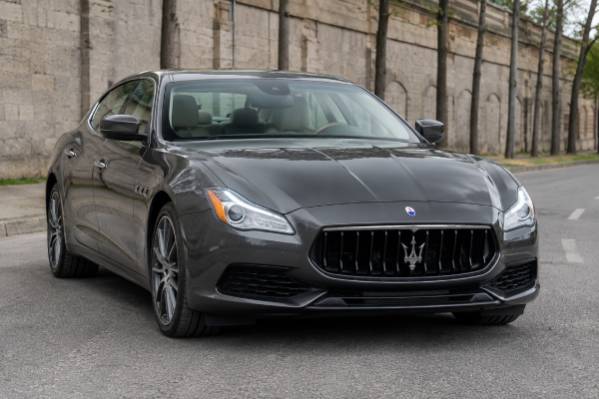
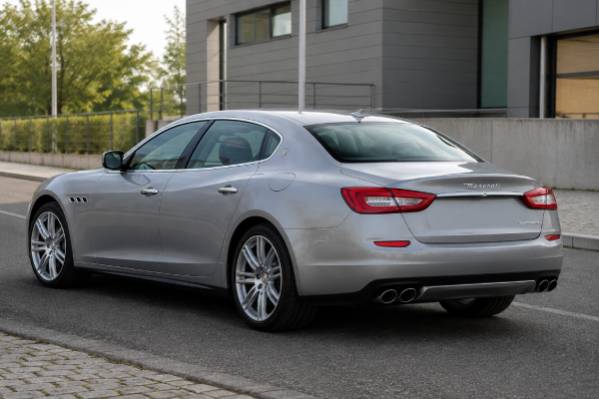
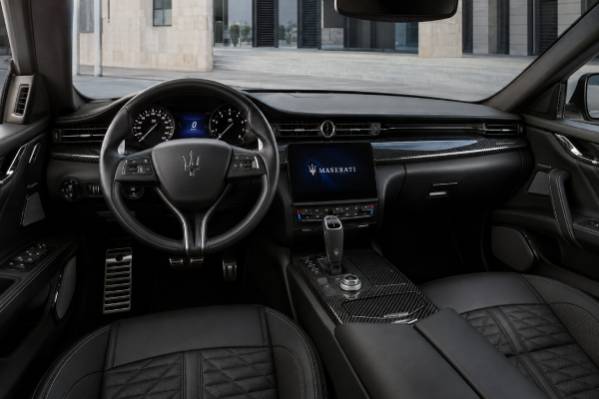
The 2014–2020 Maserati Quattroporte Diesel is the long-distance specialist of the M156 range. Its 3.0-liter A630 HP turbo-diesel V6 produces 275 hp and 600 Nm, sending power to the rear wheels through an eight-speed automatic. It cannot match the gasoline GTS for speed or sound, but it delivers strong low-rev thrust, a claimed 0–100 km/h time of about 6.4 seconds, and much better touring range. The model also carries diesel-specific ownership risks: short trips can prevent diesel particulate filter regeneration, low operating temperature can increase soot loading, and age can affect the EGR system, variable-geometry turbocharger, injectors, intake tract, NOx sensors, and later AdBlue equipment. The 2017 facelift improved aerodynamics, infotainment, and trim choices; later cars added electric steering and more active driver aids. A good Diesel suits frequent motorway use and high annual mileage. A poor one may have spent years making short urban journeys while accumulating hidden emissions-system faults. Buyers should examine operating history, not just service stamps, and require a cold start, full diagnostic scan, DPF data, stable coolant temperature, smooth gearbox operation, and evidence of correct oil and fuel-system care.
Table of Contents
- Maserati’s Long-Range Quattroporte
- A630 Diesel and Rear-Drive Chassis
- Production Updates and Luxury Trims
- Diesel Technology with Italian Character
- Touring Performance and Daily Use
- Emissions Systems and Service Reality
- Buying a Healthy Quattroporte Diesel
Maserati’s Long-Range Quattroporte
The 275 hp Diesel was created for buyers who wanted Quattroporte presence and rear-seat space with lower fuel use and much greater range. It works best as a regularly driven intercity car, not as a low-mileage urban accessory.
The M156 generation arrived in 2013 with a longer wheelbase, a larger cabin, and more global ambitions than the M139. Maserati offered twin-turbo gasoline V6 and V8 engines first, then added the turbo-diesel in European and other selected markets. That move reflected the period’s strong demand for diesel executive sedans.
The A630 HP engine was produced by VM Motori in Cento to Maserati requirements. It used common-rail injection at up to 2,000 bar, a variable-geometry turbocharger, and a 3.0-liter V6 layout. Its 600 Nm torque peak exceeded the early gasoline S V6’s 550 Nm, though the diesel made much less power and reached its limit at lower engine speed.
This version changed the way a Quattroporte could be used. The 80-liter fuel tank and lower cruising consumption supported long stages between stops. At motorway speed, the engine turned quietly in a high gear and needed little throttle to pass. Fleet users and high-mileage private owners could enjoy the flagship body without V8 fuel bills.
The tradeoff is complexity in the exhaust and intake systems. Diesel particulate filters, exhaust-gas recirculation, temperature sensors, pressure sensors, turbo controls, and later selective catalytic reduction equipment all depend on suitable operating conditions. A car driven only a few kilometers at a time may look cosmetically preserved while its emissions system is heavily stressed.
The Diesel remained available through the M156’s mid-cycle and later years in relevant markets. It received the same 2017 exterior and infotainment changes as gasoline cars and later adopted electric power steering and active assistance features. Output stayed at 275 hp while emissions controls evolved.
Today, its reputation is divided. Owners who cover long distances often value the torque and range. Buyers who purchase solely because it is the cheapest Quattroporte may encounter DPF, EGR, AdBlue, injector, or turbo bills that erase fuel savings. The car is most rational when its use pattern matches the engine’s needs.
A630 Diesel and Rear-Drive Chassis
The Quattroporte Diesel uses a 2,987 cc single-turbo V6 with 275 hp and 600 Nm, an eight-speed automatic, rear-wheel drive, Skyhook adaptive dampers, and the same full-size M156 dimensions as the gasoline range.
| Item | Specification |
|---|---|
| Generation | M156 |
| Engine code | A630 HP |
| Engine type | 60-degree V6 turbo-diesel, common-rail direct injection |
| Displacement | 2,987 cc |
| Maximum power | 275 hp at approximately 4,000 rpm |
| Peak torque | 600 Nm at approximately 2,000–2,600 rpm |
| Turbocharger | Ball-bearing variable-geometry unit |
| Fuel system | Common rail, up to 2,000 bar |
| Transmission | Eight-speed ZF automatic |
| Drivetrain | Rear-wheel drive |
| Front suspension | Double wishbone with Skyhook adaptive dampers |
| Rear suspension | Five-link with Skyhook adaptive dampers |
| Length | 5,262 mm |
| Wheelbase | 3,171 mm |
| Width without mirrors | 1,948 mm |
| Height | 1,481 mm |
| Luggage capacity | 530 liters |
| Fuel capacity | 80 liters |
| Claimed 0–100 km/h | Approximately 6.4 seconds |
| Claimed top speed | Approximately 250–252 km/h |
The variable-geometry turbo changes the angle of internal vanes to provide fast response at low speed and sufficient flow at higher load. A ball-bearing center section reduces friction. The system gives the engine its broad torque plateau, but vane deposits or actuator faults can cause overboost, underboost, or limp mode.
High-pressure injectors divide fuel into multiple events for smoother combustion and lower noise. They demand clean fuel and an effective filter. Poor spray pattern, excessive return flow, or leaking seals can create hard starting, smoke, rough idle, piston damage, or oil dilution.
The exhaust manifolds use double-wall Air Gap construction to retain heat and energize the turbo and aftertreatment. Keeping exhaust temperature high also supports DPF regeneration. Thermostat faults that leave the engine running cool can therefore affect both efficiency and soot control.
The eight-speed automatic is well matched to diesel torque. It keeps the engine between roughly 1,500 and 3,000 rpm during most driving. Sport mode holds lower ratios and increases response, while the fixed paddles allow manual control on descents or winding roads.
Rear-wheel drive keeps the drivetrain simpler than an S Q4. A limited-slip differential assists traction. The front suspension uses double wishbones and the rear has five links, both with adaptive damping. Wheel and brake specifications vary, but replacement remains expensive enough to justify measurement before purchase.
Published fuel and performance figures differ by homologation cycle, wheel package, and model year. Real condition matters more. A blocked DPF, weak boost, dragging brake, or old transmission fluid can make a healthy-looking car feel slow and inefficient.
Production Updates and Luxury Trims
The 2017 facelift and the 2018 steering and driver-assistance changes divide the production run. The engine’s basic 275 hp output stayed constant, but the user experience became more modern.
Early 2014–2016 cars carry the original grille, bumpers, center console, and infotainment system. They use hydraulic power steering, which gives a natural, weighted feel. Option levels vary widely by country and original customer.
For 2017, Maserati reshaped the front and rear, fitted an active Air Shutter behind the grille, and improved aerodynamic drag. Inside, the 8.4-inch capacitive touchscreen gained Apple CarPlay and Android Auto, while a rotary controller cleaned up the console.
GranLusso and GranSport themes became prominent. GranLusso focused on fine leather or available Zegna silk, wood, chrome details, and comfort. GranSport used more assertive bumpers, sport seats, darker trim, and available carbon fiber. The Diesel could wear either theme in many markets, so appearance does not indicate engine output.
Electric power steering arrived for 2018. It enabled Lane Keeping Assist, Highway Assist, and active blind-spot steering intervention when fitted. Integrated Vehicle Control added predictive stability management. These systems depend on camera, radar, sensor, wheel-alignment, and calibration accuracy.
Later diesel emissions equipment can include AdBlue selective catalytic reduction. The system injects urea solution into the exhaust to reduce nitrogen oxides. Tank heaters, pumps, injectors, level sensors, NOx sensors, and software add service points. Exact equipment depends on market and build date.
Options worth verifying include adaptive cruise control, surround-view cameras, premium audio, four-zone climate control, power rear seats, rear entertainment, ventilated seats, soft-close doors, sunshades, and full-LED lighting. A long feature list has value only when every item works.
Nineteen-inch wheels best support comfort and range. Twenty- and 21-inch wheels sharpen appearance but increase tire cost, impact risk, and rolling resistance. Confirm correct load and speed ratings; a large diesel sedan places heavy demands on tire construction.
Import history matters. A car moved between emissions regimes may have software, AdBlue, navigation, lighting, or registration complications. Verify original market, compliance documents, and availability of the correct diagnostic and parts support.
Diesel Technology with Italian Character
Maserati worked to make the Diesel feel more special than a conventional fleet engine. Strong torque, active sound tuning, rear-drive proportions, and a luxury cabin distinguish it, even though the powertrain is optimized for efficiency.
The exterior does not advertise diesel power loudly. It retains the long hood, concave grille, three fender vents, frameless glass, and tapered rear. Quad exhaust outlets and trim can make it look close to gasoline versions. Verification should rely on records and under-hood details, not visual assumptions.
The M156 structure uses aluminum in the hood, doors, trunk lid, front subframe, and suspension pieces. This helps manage mass and contributes to balanced handling. Collision repair must respect material-specific joining and corrosion protection. Diesel front-axle weight also makes suspension alignment and tire wear important.
Under the hood, the A630 packaging includes turbo, EGR, intake control, high-pressure fuel hardware, and extensive heat shielding. Access can be labor-intensive. Oil or fuel residue should never be dismissed simply because the upper engine cover looks clean.
The diesel aftertreatment system operates as a chain. EGR reduces combustion temperature and nitrogen-oxide formation but adds soot to the intake. The DPF catches particulate matter and periodically burns it off. Later SCR uses AdBlue to treat nitrogen oxides downstream. A fault in temperature control, sensors, fueling, or driving pattern can disrupt the entire chain.
Maserati also used active sound management to give the car a stronger exhaust character. The result is more polished and purposeful than a raw diesel clatter, especially under acceleration. It should not hide injector knock, exhaust leaks, turbo whistle, or abnormal mechanical noise during inspection.
The cabin remains recognizably Quattroporte. Leather, an analog clock, column paddles, and a broad center console create a traditional atmosphere. Rear space is generous enough for chauffeur use. Early infotainment feels dated, while facelift systems integrate modern phones better.
The design’s emotional success depends on using the car as intended. On a long trip, the engine’s low-rev torque and range suit the body perfectly. In repeated short journeys, the same aftertreatment hardware can become a source of warnings and forced regeneration.
Touring Performance and Daily Use
The Diesel is at its best on highways, where 600 Nm provides easy passing and the engine can remain hot enough to manage emissions systems. Its weaknesses appear during short, cold, stop-start use.
From rest, the torque converter allows a smooth launch. The engine reaches peak pulling force early, so the first half of the rev range feels strong. Above about 4,000 rpm, there is little benefit in holding a gear, and the automatic shifts into the next torque band.
The claimed 6.4-second acceleration to 100 km/h is quick for a large diesel luxury sedan. It does not have the sustained upper-speed thrust of the 410 hp gasoline S, but real-world overtakes require little effort. Sport mode makes the gearbox more willing to downshift and firms the damping.
Steering differs by year. Hydraulic cars provide heavier road feel; electric-steering cars are lighter at low speed and support active lane systems. Both should track straight and return smoothly. Pulling can indicate alignment, tire, brake, or suspension issues rather than steering design.
Ride comfort is generally strong on 19-inch wheels. Large optional wheels reduce sidewall compliance and can bend on sharp impacts. Skyhook keeps body movement controlled on undulating roads. A corner that continues bouncing after a bump may have a weak damper.
The diesel’s extra engine mass can be felt during rapid direction changes. It remains balanced and stable, but it prefers smooth inputs. The rear-drive layout allows gentle throttle adjustment through a bend. Stability control manages excess torque on wet roads, though fresh tires remain essential.
Brakes should provide a firm, progressive pedal. Urban cars may show corrosion from light use, while high-mileage motorway cars can have a healthy brake surface but worn inner pads. Measure all components and check the electronic parking brake.
A proper DPF regeneration typically needs sufficient exhaust temperature and uninterrupted driving. Owners should not chase a universal “regeneration drive” recipe; the control unit decides based on soot estimate, temperature, fuel level, faults, and other conditions. Repeated failed attempts require diagnosis, not ever-faster driving.
Fuel economy improves greatly on a warm motorway journey and falls during cold city use. A thermostat stuck open can worsen both consumption and regeneration. Monitor actual coolant temperature through diagnostic data if the gauge appears normal but the car rarely completes regeneration.
Emissions Systems and Service Reality
A healthy Diesel needs correct oil, clean fuel, proper temperature, regular long runs, and prompt repair of emissions faults. Removing or disabling aftertreatment is illegal in many places and can create inspection, resale, software, and engine-management problems.
DPF, EGR, and AdBlue
Ask for live DPF data: calculated soot load, ash load, differential pressure, regeneration history, exhaust temperatures, and distance since the last completed event. Soot can be burned; ash accumulates over time and eventually requires professional cleaning or replacement.
High differential pressure can result from a loaded filter, damaged pressure hoses, or a faulty sensor. A forced regeneration should not be the first response when the engine has injector, turbo, EGR, temperature, or oil-level problems. Excess fuel during repeated failed regeneration can dilute the oil.
EGR valves and coolers can accumulate deposits or leak. Symptoms include rough running, poor response, smoke, coolant loss, or fault codes. Intake manifolds and swirl mechanisms also deserve inspection where diagnosis points there. Cleaning must avoid sending debris into the engine.
On AdBlue-equipped cars, check fluid quality, tank level sensing, heater operation, injector crystallization, pump pressure, and NOx sensor readings. A countdown-to-no-start warning requires prompt action. Randomly replacing NOx sensors without testing the system can be expensive and ineffective.
Fuel, turbo, and engine health
Replace the fuel filter with the correct part and drain contamination as specified. Hard starting, uneven idle, excessive correction values, smoke, or diesel knock can point to injector wear. Return-flow testing and rail-pressure data help identify the cause.
The variable-geometry turbo should deliver smooth boost. Actuator or vane faults may produce surging, limp mode, overboost, or slow response. Inspect charge hoses for splits and oil contamination. A failed hose can imitate turbo failure.
Use low-ash oil meeting the exact specification because the DPF depends on it. Annual oil service is sensible even when mileage is low. Rising oil level, fuel smell, or thinning may indicate regeneration-related dilution and should be investigated.
Cooling temperature is foundational. Test the thermostat, fans, expansion tank, water pump, radiators, and EGR cooler. Pressure loss and low running temperature can create different problems, and both matter.
Chassis, transmission, and electronics
The ZF eight-speed should shift cleanly. Consider fluid and filter service based on official guidance, use, and specialist assessment. Diesel torque can expose worn mounts, couplings, differential bushings, or propeller-shaft problems as clunks and vibration.
Inspect Skyhook dampers, control arms, rear links, wheel bearings, brakes, and tire wear. Test the battery and charging system before diagnosing a cluster of network warnings. Scan every module, including emissions, transmission, suspension, steering, parking brake, infotainment, and ADAS.
Parts support is strongest through diesel and Maserati specialists who understand the A630 installation. A generic workshop may know the engine family but not the Quattroporte’s software, packaging, or adaptation procedures.
Buying a Healthy Quattroporte Diesel
Buy the Diesel only when the previous use pattern and future use pattern make sense. A high-mileage motorway car with strong records can be healthier than a low-mileage city car with repeated incomplete regenerations.
Request invoices, not only stamps. Look for regular oil and filter changes, fuel-filter service, brake fluid, coolant work, transmission attention, battery replacement, tires, alignment, and documented repair of emissions faults. Ask specifically about DPF regeneration and AdBlue warnings.
| Area | Healthy evidence | Warning sign |
|---|---|---|
| Use pattern | Regular long journeys and consistent mileage history | Very low annual mileage with mostly urban use |
| DPF | Plausible pressure, soot, ash, and regeneration data | Frequent forced regens, high pressure, or deleted system |
| Engine | Clean cold start, stable temperature, balanced injectors | Smoke, knock, oil rise, coolant loss, low temperature |
| Turbo | Smooth boost and accurate actuator response | Surging, siren noise, underboost, split hoses |
| AdBlue | No countdown, correct dosing and sensor data | Crystallization, repeated NOx faults, no-start warning |
| Chassis | Straight wheels, matched tires, dry dampers, measured brakes | Bent rims, old tires, leaks, or suspension knock |
| Diagnostics | Full-system scan with monitors complete | Recently cleared codes or disabled emissions monitors |
Insist on a cold start. Glow-plug, injector, compression, battery, and timing-related symptoms can be less obvious when warm. Watch the exhaust, listen for uneven combustion, and confirm that the oil level is not above maximum.
During the road test, monitor coolant temperature, boost, rail pressure, gearbox behavior, and DPF values if the specialist can log them safely. Include steady cruising, moderate acceleration, and full operating temperature. Re-scan afterward.
Check legal compliance. A removed DPF, disabled EGR, or defeated AdBlue system can cause inspection failure, fines, insurance problems, and difficult resale. Restoring missing hardware and original software can cost more than buying a compliant car.
Choose model year based on need. Early hydraulic-steering cars offer more traditional feel. The 2017 facelift improves infotainment. Later electric-steering cars provide active assistance but add calibration and sensor complexity. Condition and emissions health should outrank equipment.
Budget for immediate baseline service and a diesel-specific reserve. Tires, brakes, suspension, battery, fluids, and cooling work can coincide with DPF cleaning, EGR repair, injectors, NOx sensors, or AdBlue components. The cheapest example rarely remains cheapest.
For frequent long-distance travel, the 275 hp Diesel can be a persuasive Quattroporte: torquey, quiet at speed, spacious, and capable of covering large distances between fuel stops. For short urban duty, a gasoline version may be simpler and more appropriate. Match the engine to the journey, then buy on evidence.
References
- World Debut for the Quattroporte Ermenegildo Zegna Limited Edition 2013
- The new Quattroporte: restyling and range strategy for a new product experience 2016
- Maserati Quattroporte MY19 Press Kit 2018
- Maserati Guides & Documentation for your vehicle 2026 (Owner’s Manual Portal)
Disclaimer
This article is for informational purposes only and is not a substitute for professional diagnosis, inspection, maintenance, or repair. Specifications, torque values, service intervals, procedures, software requirements, and equipment can vary by VIN, production date, market, and configuration. Before buying, servicing, or modifying any vehicle, verify the relevant details against its official service documentation and consult a qualified Maserati specialist when necessary.
Please share this article on Facebook, X/Twitter, or another platform to support our work and help other owners and enthusiasts find it.