
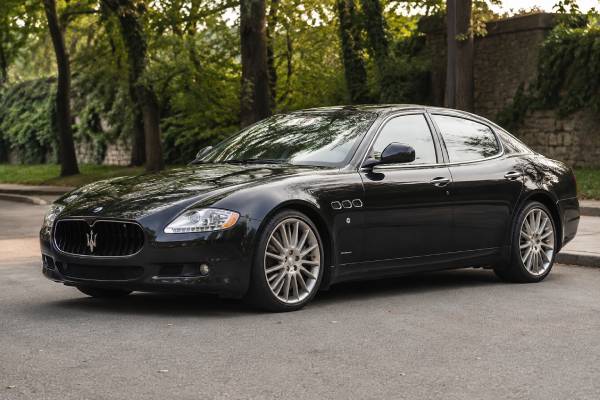
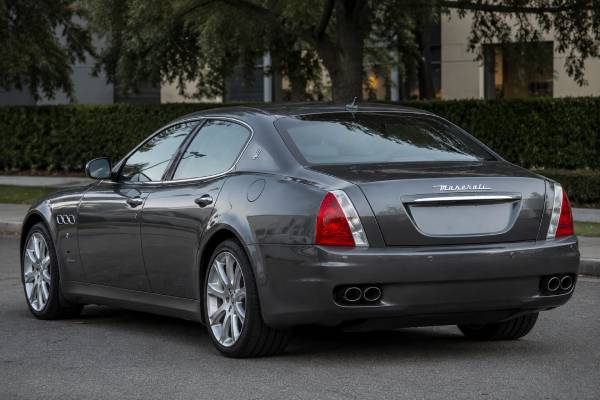
The facelifted 2008–2012 Maserati Quattroporte 4.2 is the most approachable way into the later M139 generation. It retains the naturally aspirated 400 hp Ferrari-Maserati V8, Pininfarina body, hydraulic steering, and rear-wheel-drive balance that define the model, but it uses a smooth six-speed ZF automatic instead of the demanding DuoSelect transmission associated with many early cars. The result is a large luxury sedan that can commute calmly, cross countries at speed, and still feel alive on a winding road. It is not the fastest M139; the 4.7-liter S and Sport GT S have more torque and stronger brakes. Yet the 4.2 has a lighter, rev-focused personality and often costs less to buy. That low entry price can be misleading. Correct maintenance, camshaft-variator history, suspension condition, brake wear, tires, electronics, and interior preservation determine whether a car is a rewarding bargain or a deferred-maintenance project. A thorough inspection by an M139 specialist is essential.
Table of Contents
- The Facelifted 4.2 in Maserati History
- Engine Layout and Essential Numbers
- Model Years, Equipment, and Variations
- Pininfarina Design and Mechanical Character
- Behind the Wheel of the 4.2
- Known Problems and Service Planning
- How to Buy the Right M139
The Facelifted 4.2 in Maserati History
The 2008–2012 4.2-liter Quattroporte represents the mature, more usable phase of the fifth-generation flagship. It keeps the original car’s design and naturally aspirated engine while benefiting from the later automatic drivetrain and facelift updates.
Maserati introduced the M139 Quattroporte for the 2004 model year. Pininfarina gave it proportions closer to a coupe than a limousine: a long hood, cabin set behind the front axle, frameless windows, and muscular rear shoulders. The first cars used the DuoSelect automated manual, with the gearbox mounted at the rear for excellent weight distribution. That layout gave fast shifts when driven hard but required deliberate clutch management at low speed. Heavy urban use could consume the clutch quickly.
The Quattroporte Automatic arrived later with a conventional ZF transmission mounted behind the engine. It made the car far easier to live with and broadened the audience without removing its rear-driven handling or high-revving V8. The 2008 facelift refined the exterior with a revised grille, new bumpers, updated lights, and a clearer model hierarchy. The 4.2 remained the entry version, sitting below the 4.7-liter S and the firmer Sport GT S.
Its F136-family engine links the sedan to Maserati’s most celebrated modern naturally aspirated cars. Although Ferrari contributed engineering and manufacturing expertise to the broader engine family, the Quattroporte’s calibration, intake, exhaust, wet-sump lubrication, and sedan mission are distinctly Maserati. The engine produces power through revs rather than turbocharged torque, which shapes the entire driving experience.
The model still attracts enthusiasts because no current executive sedan offers the same combination of Pininfarina styling, hydraulic steering, naturally aspirated V8 sound, and genuinely usable rear seating. Depreciation has made purchase prices tempting, but values separate sharply by condition. A low-mileage car with no recent maintenance may be less desirable than a higher-mileage example with documented variator, cooling, suspension, and transmission work.
This version is especially suitable for drivers who value steering and engine response more than maximum acceleration. It also makes a compelling long-distance car when the suspension, wheel alignment, climate system, and tires are correct.
Engine Layout and Essential Numbers
The 4.2 combines a 4,244 cc naturally aspirated V8 with a six-speed ZF automatic and rear-wheel drive. Its output is modest by modern performance-sedan standards, but the chassis and power delivery make the car feel more special than the figures imply.
| Item | Specification |
|---|---|
| Generation | M139, facelift |
| Body | Four-door, five-seat luxury sedan |
| Engine family | F136 90-degree V8 |
| Displacement | 4,244 cc |
| Induction | Naturally aspirated |
| Construction | Aluminum block and cylinder heads |
| Valvetrain | DOHC, four valves per cylinder, variable intake timing |
| Maximum power | 400 hp at about 7,000 rpm |
| Peak torque | About 460 Nm at 4,250 rpm |
| Transmission | Six-speed ZF 6HP automatic |
| Drivetrain | Rear-wheel drive, limited-slip differential |
| Front suspension | Double wishbones |
| Rear suspension | Multi-link |
| Dampers | Skyhook electronically variable |
| Steering | Hydraulic power assistance |
| Wheelbase | 3,064 mm |
| Length | Approximately 5,052 mm |
| Fuel capacity | Approximately 90 liters |
| Claimed 0–100 km/h | Approximately 5.6 seconds |
| Claimed top speed | Approximately 270 km/h |
The engine uses a cross-plane crankshaft, which gives it a deep idle and a layered exhaust note. Its character changes dramatically with speed. At 2,000 rpm it is smooth and restrained; above 4,000 rpm it becomes more urgent; near the redline it sounds closer to a sports car than a traditional luxury sedan.
The wet-sump system is appropriate for road use and differs from the dry-sump arrangements found in some earlier or more track-focused F136 applications. Oil level, specification, and service frequency remain important because the variable cam timing system relies on clean oil and stable pressure.
The ZF 6HP automatic replaces a clutch with a torque converter, making stop-start driving much easier. It offers Normal, Sport, and manual paddle operation. Sport mode changes throttle mapping, shift strategy, exhaust behavior, and damper calibration. The transmission should feel smooth but decisive. A slow engagement into Drive, flare between ratios, or shudder under light load is not normal aging and deserves diagnosis.
The standard 4.2 braking system is adequate for road use, though less substantial than the six-piston dual-cast front setup on the 4.7 S. Brake condition matters because the car’s mass turns worn discs, glazed pads, old fluid, and budget tires into a noticeable loss of confidence.
Dimensions and curb weight differ slightly by market and options. Verify local registration and manufacturer data rather than relying on a single internet figure, especially for taxation, towing, wheel-load, or transport calculations.
Model Years, Equipment, and Variations
The 2008–2012 4.2 changed less mechanically than it did cosmetically and electronically. Buyers should focus on build date, market specification, option content, and evidence that updates or repairs were completed correctly.
The facelift went into production during 2008 and is commonly sold as a 2009 model in some markets. Identifying features include the grille with vertical bars, revised front and rear bumpers, updated headlamp graphics, and changes to trim and multimedia equipment. Registration year alone can be misleading, particularly with cars first sold after sitting in dealer stock.
The base Quattroporte could be extensively personalized. Depending on region, equipment might include:
- Skyhook adaptive suspension.
- Multiple 18-, 19-, or 20-inch wheel designs.
- Colored brake calipers.
- Poltrona Frau leather in a wide range of colors.
- Contrast piping and stitching.
- Wood, piano-black, or technical dashboard trim.
- Heated, ventilated, or massaging seats in selected markets.
- Rear climate and comfort controls.
- Upgraded Bose audio and navigation.
- Electric rear blinds, side blinds, and privacy glass.
- Parking sensors and, on later cars, improved connectivity options.
Option complexity creates both appeal and risk. A richly specified car can be more desirable, but every powered seat, blind, climate actuator, and audio component must work. Replacement modules may require coding, and trim pieces can be difficult to source in the correct color and grain.
The car’s identity should be confirmed through its VIN and build sheet. Check engine displacement, original paint, leather code, wheel specification, and market configuration. Imported cars may have lighting, radio, emissions, speedometer, and certification differences. A properly documented import can be fine; an incomplete conversion can become a registration or parts problem.
Do not confuse the 4.2 with the Quattroporte S. The S uses the 4.7-liter engine and normally carries upgraded front brakes and different wheel details. Exterior badges are easy to change, so mechanical verification is more reliable than appearance.
Late production can be attractive because suppliers and software revisions often improve through a model cycle. Yet a late car is not automatically healthier. Storage, climate, driving pattern, and service quality have more influence now than a one- or two-year age difference.
Originality matters most in visible, difficult-to-replace areas. Factory wheels, exhaust, interior trim, steering wheel, and infotainment hardware support value. Sensible hidden maintenance improvements, such as updated variator components or refreshed transmission internals, are positives when documented.
Pininfarina Design and Mechanical Character
The M139’s design makes it feel special before the engine starts. Pininfarina gave a full-size sedan the stance and visual rhythm of a grand-touring coupe, then Maserati reinforced that shape with unusually driver-focused hardware.
The front axle sits well ahead of the cabin, allowing a long hood and a low roofline. The grille is positioned low and wide, while three fender vents break up the front quarter. Frameless side glass reduces visual mass. The rear body narrows around the lamps and trunk, avoiding the upright form common among luxury rivals.
This shape is not only decorative. The cabin placement helps give the driver a clear sense of the front axle, and the long wheelbase supports high-speed stability. The body uses steel with aluminum for selected closures and chassis components. Double-wishbone front suspension provides precise geometry control, while the rear multi-link system balances traction and ride.
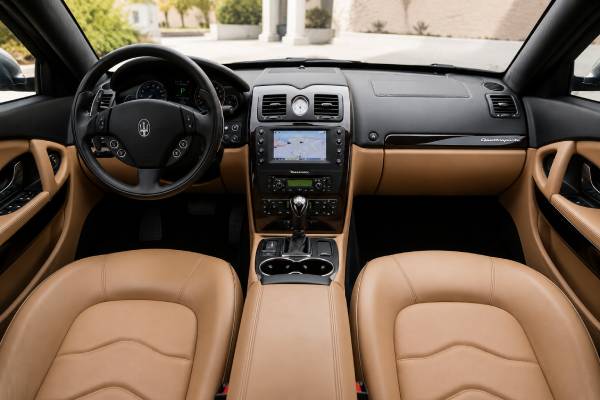
The interior follows a different philosophy from a contemporary German flagship. It has fewer layers of menus and more visible leather, wood, metal, and stitching. The central analog clock, oval vents, sweeping dashboard, and large instruments create warmth. Material quality is variable in hidden areas, and some shared switches feel ordinary, but the overall environment remains distinctive.
Ergonomic quirks include small buttons, an aging navigation interface, limited cupholder logic, and controls that demand familiarity. The low roof and sloping rear door openings can make access less graceful than in a boxier sedan. Rear legroom is generous, yet the car feels intimate rather than limousine-like.
Mechanical character comes from the way systems interact. Hydraulic steering transmits road texture that modern electric systems often filter out. The naturally aspirated engine responds directly to pedal movement. Skyhook damping allows meaningful body motion rather than clamping the chassis flat. The result is a car that communicates its mass instead of hiding it.
The exhaust is central to the design experience. In Normal mode it remains restrained enough for business use. Sport mode opens the bypass system and lets the V8’s higher harmonics emerge. A factory system should sound rich and clean without constant drone. Poorly chosen aftermarket exhausts can overwhelm the cabin and erase the contrast between calm and dramatic modes.
Paint and trim condition require careful assessment. The long flanks reveal waviness and previous repairs, while dark colors show polishing damage. Check panel gaps around the aluminum hood, door edges, trunk floor, and radiator support. Inside, inspect leather shrinkage, sticky switch coatings, sagging headlining, cracked wood, and color loss on frequently touched areas.
Behind the Wheel of the 4.2
The 4.2 is not effortless in the way a large turbocharged sedan is; it rewards revs and deliberate driving. That is precisely why many enthusiasts prefer it.
In town, the engine pulls smoothly but does not produce a large torque surge. The gearbox often shifts early in Normal mode, keeping noise and fuel use down. Pressing the accelerator deeply prompts a downshift and reveals the engine’s real pace. Drivers accustomed to modern turbo engines may initially mistake the low-rev calm for weakness.
Sport mode changes the relationship. The transmission holds lower gears, the throttle feels more immediate, the exhaust opens, and the dampers reduce float. The V8 then builds power in a linear sweep. Acceleration is strong rather than violent, and the lack of turbo lag makes corner exits easy to judge.
The hydraulic steering is one of the car’s best features. It has moderate weight, stable on-center behavior, and a natural increase in effort as lateral load grows. Front-end response is measured rather than sharp, which suits the long wheelbase. Once the car takes a set, it tracks accurately and communicates remaining grip.
Skyhook gives the 4.2 a more relaxed ride than the Sport GT S. Normal mode is comfortable on motorways and broad undulations, although short sharp impacts pass through large wheels. Sport improves control on a twisting road, but it cannot compensate for worn dampers, tired bushes, or old tires. A healthy car feels elastic and composed; an unhealthy one feels heavy and busy.
The brakes offer a progressive pedal and enough performance for fast road driving. Repeated hard stops reveal the limitations of mass and standard hardware. Fresh fluid, quality pads, straight discs, and correct tires are essential. A soft pedal, vibration, pulling, or a strong lip on the discs should be priced into the purchase.
At motorway speed the Quattroporte settles into its grand-touring role. The engine turns quietly in sixth gear, the wheelbase resists nervous movement, and the cabin remains comfortable. Wind noise around frameless glass can increase if seals are worn or windows are misaligned. Wheel imbalance often appears only above normal urban speeds, so the test drive must include a sustained faster section where legal.
City drawbacks include width, a long nose, modest rear visibility, and expensive wheels vulnerable to curbs. Parking sensors are not optional in practical terms and must be tested. The low front bumper is vulnerable to ramps and steep driveways.
A good 4.2 should feel mechanically consistent from cold start to full operating temperature. The steering, gearbox, brakes, and suspension should all become smoother as the car warms, not develop warnings, odors, or new noises.
Known Problems and Service Planning
The M139 4.2 can cover substantial mileage, but it needs preventive maintenance rather than reactive repairs. The most expensive cars are often those bought cheaply after years of minimal use and incomplete servicing.
Camshaft variators are the signature concern. Wear can produce a loud rattle at startup, sometimes described as a diesel sound. A very brief noise after long storage is not automatically a failed variator, but persistent or repeated clatter requires expert assessment. Updated parts and oil-retention modifications were used in repairs. Documentation should show what was replaced, by whom, and at what mileage.
Engine and cooling checks should include:
- Cam-cover and front-cover oil leaks.
- Oil around the alternator or accessory drive.
- Coolant staining at the radiator, expansion tank, hoses, thermostat, and water pump.
- Correct fan operation with the air conditioning running.
- Stable temperature in traffic and after a hard drive.
- Smooth idle with no stored misfire counts.
- Condition of engine mounts and exhaust hangers.
- Battery voltage, charging output, and ground connections.
Annual oil changes are sensible for low-mileage cars. Brake fluid should be changed by time, not just distance. Coolant age matters because corrosion protection degrades even if the car is stored. Specialists commonly recommend servicing the ZF transmission rather than treating its fluid as permanent. Correct fluid, pan/filter, temperature, and fill procedure are essential.
Suspension wear changes the car gradually, so owners can adapt without noticing. Front control-arm bushes, ball joints, tie rods, rear links, anti-roll-bar bushes, wheel bearings, and Skyhook dampers all need inspection. Knocks over small bumps, wandering, steering shimmy, and uneven tire wear are clues. A four-wheel alignment is valuable only after worn components are replaced.
Electrical systems are sensitive to low voltage. A weak battery can trigger multiple warnings, but repeated warning lights should not be dismissed without a scan. Test the infotainment unit, instrument display, parking sensors, windows, mirrors, locks, seat motors, memory, heated functions, climate zones, rear blinds, trunk release, and both keys.
Interior aging includes sticky soft-touch coatings, leather shrinkage, bolster wear, headliner sag, and delaminating trim. Water entry through seals or drains can damage modules and create odors. Inspect under carpets and in the trunk, especially around the battery and electronic components.
Brake and tire costs should be included in annual planning. Measure disc thickness rather than judging by appearance. Use matched premium tires with appropriate load and speed ratings. Replace by age even when tread remains. The chassis was calibrated around quality tires; budget rubber can make the steering vague and stability control intrusive.
Parts availability is generally manageable for service items but less predictable for trim and electronics. An independent Maserati specialist with factory-capable diagnostics usually offers better value than a general workshop. Keep invoices and part numbers because future buyers will value evidence of correct work.
How to Buy the Right M139
The correct buying strategy is to prioritize history and current condition over mileage, color, or a low advertised price. A carefully used 100,000 km car can be a better purchase than a neglected 40,000 km example.
Before viewing, request the VIN, service book, invoices, cold-start video, latest diagnostic report, tire date codes, and photographs of the underside. Confirm whether the car is the facelifted 4.2 automatic, not an earlier DuoSelect or a 4.7 S. Check registration and emissions requirements for your market.
A professional inspection should include:
- True cold start after the car has sat overnight.
- Full module scan with a Maserati-compatible diagnostic system.
- Cooling-system pressure test and fan operation.
- Engine leak inspection from above and below.
- Transmission engagement, adaptation behavior, and fluid history.
- Suspension play, damper function, wheel condition, and alignment clues.
- Brake measurements and tire age.
- Paint-depth readings and structural inspection.
- Operation of every electrical and comfort feature.
- A long road test followed by a second leak and fault check.
| Area | Good evidence | Warning sign |
|---|---|---|
| Service history | Annual invoices with specialist detail | Stamped book without supporting work records |
| Engine | Quiet cold start, stable temperature, dry covers | Variator rattle, coolant odor, repeated misfires |
| Transmission | Prompt engagement and smooth shifts hot or cold | Flare, shudder, delayed reverse, warning messages |
| Chassis | Tight joints, matched recent tires, straight wheels | Knocks, shimmy, mixed tires, uneven wear |
| Electronics | Clean scan and fully working equipment | Multiple faults blamed solely on the battery |
Build a first-year reserve for fluids, battery, tires, alignment, suspension details, and unexpected electronics. Even a well-inspected car may reveal age-related needs once used regularly. Insurance, fuel, tax, and specialist labor should be calculated before purchase, not after.
The 4.2 makes sense for an owner who will drive it enough to keep systems active and who enjoys using revs. It is less suitable as a neglected ornament or as cheap daily transport with no repair fund. With the right example, the reward is substantial: elegant design, a responsive V8, exceptional steering, and a sense of occasion that newer sedans rarely duplicate.
References
- Maserati at the Bologna Motorshow under the flag of its sporty DNA 2008
- Maserati unveils new Quattroporte Sport GT S on the 70th anniversary of its first Indianapolis 500 win 2009
- Maserati Guides & Documentation for your vehicle 2026 (Owner’s Manual Portal)
- Check for Recalls: Vehicle, Car Seat, Tire, Equipment | NHTSA 2026 (Recall Database)
Disclaimer
This article is for informational purposes only and is not a substitute for professional diagnosis, inspection, maintenance, or repair. Specifications, torque values, service intervals, procedures, software requirements, and equipment can vary by VIN, production date, market, and configuration. Before buying, servicing, or modifying any vehicle, verify the relevant details against its official service documentation and consult a qualified Maserati specialist when necessary.
Please share this article on Facebook, X/Twitter, or another platform to support our work and help other owners and enthusiasts find it.