
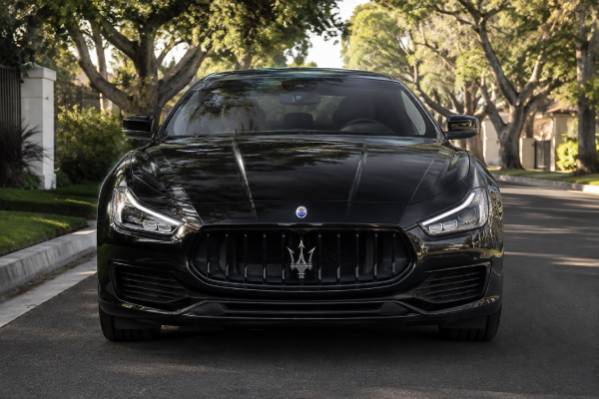
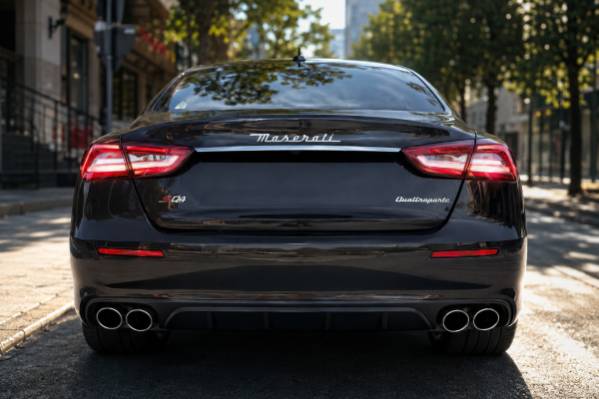
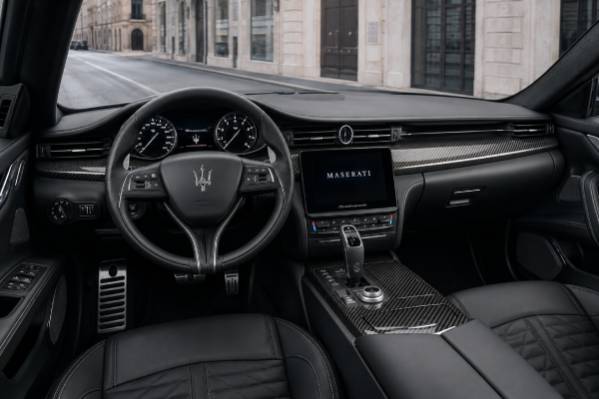
The 2018–2021 Maserati Quattroporte with 350 hp is the later, rear-wheel-drive entry version of the M156 gasoline range. Its 3.0-liter F160 twin-turbo V6 produces 500 Nm, works with an eight-speed ZF automatic, and delivers factory performance of about 5.5 seconds to 100 km/h and 270 km/h. These years combine the 2017 facelifted body and infotainment with electric power steering, Integrated Vehicle Control, and broader active driver-assistance availability. The result is more modern and easier to use than the early 330 hp car while preserving the long-wheelbase cabin, Skyhook adaptive dampers, limited-slip differential, and rear-drive proportions. For 2021, revised logos, rear lamp graphics, and later infotainment details can distinguish the newest examples, while the 2022 GT naming belongs to the next assignment period. Used prices often make this version attractive, but maintenance remains that of a large Italian luxury sedan. Buyers should verify cooling health, oil leaks, plugs and coils, turbo plumbing, smooth transmission operation, adaptive dampers, wheel condition, battery capacity, and correct calibration of cameras and driver-assistance sensors.
Table of Contents
- The Modern Entry M156
- 350 hp F160 Specifications
- Trim Choices and Yearly Changes
- EPS, IVC, and Refined Design
- Driving the Rear-Drive 350
- Ownership Risks and Service Priorities
- Selecting a 2018 to 2021 Car
The Modern Entry M156
The 350 hp Quattroporte is the sensible gasoline version of the later M156: quick enough to feel special, less demanding than the V8, and equipped with the generation’s most useful mid-life technology.
Maserati introduced the 350 hp calibration with the facelifted Quattroporte range. It replaced the 330 hp base gasoline version in relevant markets and raised output by 20 hp while keeping peak torque at 500 Nm. The claimed top speed increased to 270 km/h, and the 0–100 km/h time improved to 5.5 seconds.
By 2018, the car had also moved beyond the original M156’s hydraulic steering. Electric power steering supported active lane assistance and allowed Maserati to integrate predictive chassis controls. The change made low-speed maneuvering lighter and reduced hydraulic service points, though some enthusiasts prefer the earlier steering’s natural texture.
The model sat below the 430 hp S and S Q4 and the 530 hp GTS. It was rear-wheel drive only, giving it a simpler driveline than Q4 and a more traditional balance. In ordinary use, the 500 Nm torque figure matters more than the power gap. The car can pass quickly without needing high revs.
Its appeal is also practical. The M156 has a 3,171 mm wheelbase, generous rear legroom, a 530-liter trunk, and an 80-liter fuel tank. It can function as a chauffeur car, family grand tourer, or owner-driven executive sedan. Few rivals combine that space with frameless windows, Italian styling, and a vocal twin-turbo V6.
The 2018–2021 period covers the mature part of the platform. Early manufacturing issues had largely been addressed through updates, while the design had not yet moved to the MY22 GT, Modena, and Trofeo trim structure. That does not mean every later car is automatically better. Complex assistance systems, large wheels, and aging electronics create their own inspection needs.
Today, this version often offers the best balance of purchase price and equipment. It lacks the headline speed of the GTS or Trofeo, but it can be easier on rear tires, brakes, fuel, and insurance. A well-maintained 350 hp car is preferable to a neglected higher-output example bought for the badge.
350 hp F160 Specifications
The powertrain consists of a 2,979 cc twin-turbo V6 with 350 hp and 500 Nm, a ZF eight-speed automatic, rear-wheel drive, and a limited-slip differential. Its broad torque curve gives stronger real-world performance than the base label suggests.
| Item | Specification |
|---|---|
| Platform | M156 facelift |
| Engine family | F160 |
| Configuration | 60-degree twin-turbo V6, direct injection |
| Displacement | 2,979 cc |
| Maximum power | 350 hp at approximately 5,500 rpm |
| Peak torque | 500 Nm from approximately 1,750–4,500 rpm |
| Transmission | Eight-speed ZF automatic |
| Drive | Rear-wheel drive |
| Rear differential | Mechanical limited-slip |
| Front suspension | Double wishbone with Skyhook adaptive dampers |
| Rear suspension | Five-link with Skyhook adaptive dampers |
| Steering | Electric power assistance |
| Typical front brakes | 345 × 28 mm ventilated discs with four-piston fixed calipers |
| Typical rear brakes | 330 × 22 mm ventilated discs |
| Length | 5,262 mm |
| Wheelbase | 3,171 mm |
| Width without mirrors | 1,948 mm |
| Height | 1,481 mm |
| Trunk capacity | 530 liters |
| Fuel capacity | 80 liters |
| Claimed 0–100 km/h | 5.5 seconds |
| Claimed top speed | 270 km/h |
The F160 was developed for Maserati and assembled in Maranello. It uses aluminum construction, direct fuel injection, twin turbochargers, variable intake and exhaust timing, and high-turbulence cylinder heads. The 350 hp mapping provides 90 percent of peak torque from roughly 1,600 rpm, so response is strong before maximum boost.
The eight-speed automatic spreads ratios widely. Lower gears help move the large body quickly, while eighth reduces engine speed on long trips. Normal mode prioritizes smoothness and economy. Sport mode sharpens throttle response, opens the exhaust valves under relevant conditions, and holds ratios longer.
The limited-slip differential helps the rear axle distribute torque during acceleration. It is mechanical rather than brake-only in concept, but the stability system also uses individual brakes and engine control. Differential oil, seals, mounts, and propeller-shaft condition remain part of maintenance.
Skyhook adjusts each damper independently. A separate suspension button allows firmer damping without necessarily selecting the most aggressive powertrain setting. That flexibility is useful on a winding road where the driver wants body control but a calmer throttle.
Electric steering uses a rack-mounted actuator. It reduces parasitic load and supports active steering corrections. The system should feel smooth and consistent; notches, warning messages, or an off-center wheel can indicate alignment, sensor, rack, or calibration issues.
The standard brake package is adequate for road use, but exact hardware varies with market and option packs. Performance brake packages may bring larger drilled discs and different calipers. Confirm parts through the VIN before ordering.
Trim Choices and Yearly Changes
The principal configurations are GranLusso and GranSport, followed by small annual changes and a more visible 2021 refresh. Mechanical output remains 350 hp throughout this assignment.
GranLusso emphasizes formal luxury. Depending on market and options, it can include fine leather or Zegna silk, wood trim, chrome exterior details, comfort seats, and additional rear-cabin equipment. Its softer visual treatment suits chauffeur use and long-distance comfort.
GranSport brings sportier bumpers, black or body-color details, more supportive seats, larger wheels, carbon-fiber availability, and dark cabin trim. It does not increase engine power, though wheel, brake, and tire packages can change the driving feel.
Nerissimo appearance packages add black window surrounds, grille bars, exhaust tips, wheels, and other dark accents. Verify a claimed factory package through the build record. Painted aftermarket trim can look similar but may have lower finish quality or incomplete coverage.
Adaptive full-LED lighting, surround-view cameras, premium audio, four-zone climate control, rear-seat adjustment, ventilation, soft-close doors, sunshades, and driver aids were available in different combinations. A used car’s value depends more on whether these features work than on the length of the original option list.
The 2021 model year introduced revised visual details in many markets, including new rear lamps with a boomerang-inspired graphic and updated Maserati symbols and lettering. Infotainment and connected functions may also differ by region. The formal GT naming and new trim badge above the fender vents were announced for MY22, so a 2021 registration should be checked carefully before being described as the later GT.
Wheels typically range from 19 to 21 inches. Nineteen-inch wheels give the best comfort and lower replacement cost. Twenty-inch wheels are a balanced choice. Twenty-one-inch wheels sharpen the stance but expose inner barrels and short sidewalls to pothole damage.
Option coding matters after collision repair. Radar, camera, adaptive light, and parking sensor hardware may be present but uncalibrated. Compare the build sheet with installed components, scan relevant modules, and test each function on a suitable road.
EPS, IVC, and Refined Design
The later Quattroporte’s engineering identity comes from the combination of electric steering, predictive stability control, active damping, and a body refined by the 2017 aerodynamic update.
The facelift retained the long hood, rearward cabin, three fender vents, frameless glass, and tapered rear. A reshaped grille and bumpers modernized the face. The active Air Shutter behind the grille regulates airflow, closing when cooling demand is low and opening when the powertrain needs more air.
A shutter fault may produce a warning, poor warm-up behavior, or reduced cooling margin. Dirt and leaves can also collect in the radiator stack behind it. Inspect the system physically and through diagnostics rather than assuming an open grille guarantees airflow.
Integrated Vehicle Control works within the stability system. Instead of waiting for a major loss of grip, it predicts vehicle behavior and makes small engine or brake corrections. The intervention is intended to be smoother than conventional emergency stability control.
Electric power steering enables Lane Keeping Assist and Active Blind Spot Assist to apply steering torque. Highway Assist can combine adaptive cruise with lane centering on suitable roads. These systems remain driver assistance, not autonomous operation. Their performance depends on clear lane markings, clean sensors, correct wheel alignment, and driver attention.
The body uses aluminum for major closures and the front subframe, while the core structure uses high-strength steels and other materials. After a crash, correct joining, corrosion protection, and measurement are essential. Misalignment can cause tire wear and driver-aid calibration problems even when panels look good.
The cabin’s analog clock and leather dashboard preserve a traditional Maserati atmosphere. The 8.4-inch touchscreen supports smartphone integration, while physical controls and a rotary selector reduce the need to touch the screen. Later systems are more usable than the launch interface but can still suffer software, screen, or connection faults.
Exhaust valves give the V6 two voices. Normal mode remains discreet. Sport mode opens a shorter path and produces a harder, more prominent note. A stuck valve, failed actuator, or vacuum leak may leave one outlet quiet or create rattling.
The 350 hp car also deserves a complete electronics demonstration. Electric steering, stability control, camera systems, adaptive cruise functions, and infotainment all depend on sound voltage and compatible calibration. Windshield replacement, alignment work, or front-end repair can leave assistance features apparently present but poorly aimed. Test them individually rather than accepting a seller’s statement that no warning light means every system is correct.
Driving the Rear-Drive 350
The 350 hp car feels quick, balanced, and calmer than the S. It rewards smooth driving with clear rear-drive behavior while remaining comfortable enough for long trips.
At low speed, the throttle and torque converter make progress gentle. The engine responds well from below 2,000 rpm, so the gearbox does not need constant downshifts. A sudden full-throttle request can create a brief pause as the transmission selects a lower ratio and boost rises.
Sport mode reduces that delay by keeping the engine in a more responsive range. The fixed column paddles are easy to find, and manual mode works well for passing or descending a mountain road. The gearbox should still protect itself from an unsafe shift.
A 5.5-second 0–100 km/h time is fast enough to make full use rare in daily driving. The rear tires must be warm and healthy for a clean launch. Stability-control intervention on dry pavement under modest throttle often points to poor tires or alignment rather than excessive engine output.
Electric steering is lighter than the early hydraulic system. It gives consistent weighting and easy parking, though it filters some fine road texture. The rack should not feel sticky or suddenly change assistance. Driver-aid corrections should be gentle and should stop when the indicator is used appropriately.
Skyhook provides good body control. Comfort depends heavily on wheel and tire selection. A 19-inch car can ride with real compliance, while 21-inch wheels send more impact into the body. Incorrect pressures, cheap tires, bent rims, or worn dampers can make any version feel harsh.
The long wheelbase creates impressive stability in fast bends and crosswinds. On a narrow road, the car’s width and mass require deliberate placement. It prefers a clean entry, one steering input, and progressive throttle rather than abrupt changes.
Braking performance is strong for road use. Pedal vibration can arise from disc runout, deposits, wheel damage, or worn suspension joints. Test both light and firm braking when warm. If the car has active cruise, confirm that it can brake smoothly without warnings.
Visibility is acceptable forward but limited behind. Surround-view cameras are valuable in tight parking. Frameless windows should lower slightly when a door opens and seal correctly when closed; poor indexing can create wind noise and water entry.
Ownership Risks and Service Priorities
The 350 hp version reduces some consumable costs compared with a GTS, but it still needs specialist care. Cooling, ignition, turbo plumbing, oil sealing, transmission service, adaptive suspension, batteries, and electronics are the priority systems.
Engine and cooling
Start from cold and listen for extended rattle, misfire, belt noise, or exhaust leaks. Check for oil around cam covers, timing-cover joints, turbo lines, and the lower engine. A clean upper cover is not proof that the engine is dry underneath.
Pressure-test the cooling system and inspect the expansion tank, cap, hoses, thermostat, water pump, radiators, and intercooler connections. The temperature should remain stable in traffic with air conditioning operating. A thermostat fault can cause slow warm-up; restricted airflow can create heat only under load.
Spark plugs and coils can fail under boost before showing symptoms at idle. Injectors, high-pressure pumps, air leaks, and sensors can create similar misfires. Use cylinder counters, fuel-pressure data, and smoke testing rather than replacing all ignition parts blindly.
Annual oil changes with the exact approved specification protect turbo bearings and variable timing hardware. Verify oil level correctly. Overfilling can be as harmful as running low.
Transmission, differential, and chassis
The ZF eight-speed should engage promptly and shift smoothly hot and cold. Fluid and filter service can be valuable when performed with correct parts, temperature, and level procedure. Shudder, flare, or harsh shifts require diagnosis before service.
Inspect the rear differential, propeller shaft, couplings, and mounts for leaks, clunks, or vibration. Check Skyhook dampers for seepage, control arms and links for play, and wheel bearings for drone. Correct mechanical wear before alignment.
Measure brake discs and pads, test the parking brake, and renew brake fluid by time. Inspect inner wheel barrels and tire shoulders. Large wheels can crack where damage is not visible from outside.
Voltage, software, and ADAS
A weak battery can trigger faults across steering, transmission, suspension, parking brake, infotainment, and assistance systems. Load-test the battery, verify charging output, and use a maintainer during long storage.
Scan every module. Check camera, radar, blind-spot sensors, parking sensors, adaptive lighting, and surround-view operation. Windshield replacement, bumper work, alignment, or ride-height changes may require calibration.
Confirm recall and service-campaign completion through the VIN and market. Software history matters because control updates can affect shifting, infotainment, driver aids, and fault logic.
Selecting a 2018 to 2021 Car
The best 350 hp Quattroporte is a documented, unmodified car with a healthy battery, clean scan, matched tires, straight wheels, stable cooling, and evidence of regular use. A later year or larger wheel does not compensate for poor fundamentals.
Request the VIN, build sheet, service invoices, recall status, diagnostic report, and accident history. Confirm the 350 hp rear-drive specification and distinguish a late 2021 car from the MY22 GT trim through factory data.
| Area | Positive evidence | Concern |
|---|---|---|
| Powertrain | Clean cold start, stable boost, smooth eight-speed shifts | Misfire, smoke, reduced power, harsh engagement |
| Cooling | Pressure holds and temperature stays stable | Residue, repeated top-ups, fan or shutter faults |
| Chassis | Dry dampers, straight wheels, matched recent tires | Knocks, bent rims, mixed tires, inner wear |
| Brakes | Measured discs, even pads, firm pedal | Vibration, corrosion, warning, overdue fluid |
| Electronics | Strong battery and clean module scan | Communication faults or recently cleared codes |
| ADAS | All sensors work with calibration records after repair | Disabled functions, windshield or bumper work without calibration |
| History | Annual specialist invoices | Long gaps or unsupported seller claims |
The inspection should begin cold and include underbody access, brake measurements, tire dates, wheel runout, suspension play, cooling pressure, and full-system diagnostics. Drive long enough to test normal, Sport, manual, cruise, camera, and driver-assistance behavior.
Choose GranLusso for understated comfort and GranSport for appearance and seat support. Decide wheel size based on local roads, not photographs. A 19- or 20-inch car often gives a better ownership experience than a damaged 21-inch setup.
Avoid structural repair around suspension mounts, persistent coolant loss, repeated misfire, heavy oil smoke, harsh transmission behavior, multiple inaccessible modules, or aggressive ECU tuning without documentation. A low price rarely covers the combined cost of several such issues.
Budget for catch-up maintenance after purchase. Common first-year items include battery, fluids, plugs, filters, tires, wheel repair, alignment, brakes, suspension arms, and minor cooling parts. Completing them as a baseline can make the car feel dramatically better.
The 350 hp Quattroporte suits an owner who values space, style, and rear-drive balance more than maximum output. It offers a mature version of the M156 with useful modern systems and enough performance for any public road. Buy on evidence, and it can be one of the generation’s most rational choices.
References
- The new Quattroporte: restyling and range strategy for a new product experience 2016
- Maserati debuts Nerissimo Package for Levante, Ghibli and Quattroporte at Los Angeles Auto Show 2017
- Maserati Quattroporte MY19 Press Kit 2018
- Maserati Guides & Documentation for your vehicle 2026 (Owner’s Manual Portal)
Disclaimer
This article is for informational purposes only and is not a substitute for professional diagnosis, inspection, maintenance, or repair. Specifications, torque values, service intervals, procedures, software requirements, and equipment can vary by VIN, production date, market, and configuration. Before buying, servicing, or modifying any vehicle, verify the relevant details against its official service documentation and consult a qualified Maserati specialist when necessary.
Please share this article on Facebook, X/Twitter, or another platform to support our work and help other owners and enthusiasts find it.