
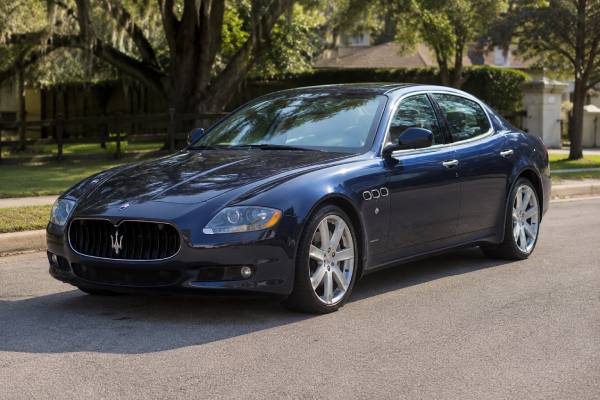
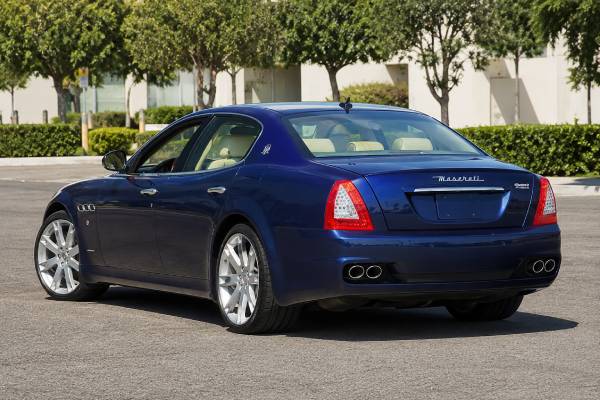
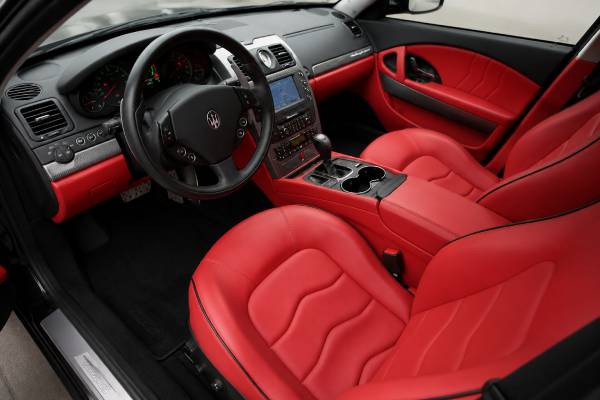
The 2008–2012 Maserati Quattroporte S is the comfort-oriented sweet spot of the facelifted M139 range. Its 4.7-liter, 430 hp naturally aspirated V8 adds the torque the large sedan needs, while Skyhook adaptive damping and the six-speed ZF automatic preserve the relaxed behavior expected from a flagship. It is faster and better braked than the 4.2-liter Quattroporte, yet less uncompromising than the lowered, fixed-damper Sport GT S. That balance makes the S an appealing road car and a strong long-distance choice. It also makes condition difficult to judge from a short drive: tired control arms, aging Skyhook dampers, old tires, marginal batteries, and slowly developing cooling leaks can hide beneath an otherwise polished experience. The most important engine concern is camshaft-variator wear, usually revealed by a pronounced startup rattle. A documented service history, correct diagnostics, and a true cold inspection matter far more than low mileage or cosmetic preparation.
Table of Contents
- The Quattroporte S Brief
- 4.7-Liter Hardware and Performance
- Range Position, Options, and Model Changes
- A Luxury Sedan Built Like a GT
- What the S Feels Like on Road
- Maintenance Patterns and Expensive Faults
- Choosing and Checking a Quattroporte S
The Quattroporte S Brief
The Quattroporte S was created to give the M139 more effortless performance without sacrificing its grand-touring comfort. It arrived with the 2008 facelift and sat between the 4.2-liter base car and the more focused Sport GT S.
The M139 itself had already changed expectations for four-door Maseratis. Pininfarina’s design placed a long hood ahead of a compact-looking cabin, while frameless glass and broad rear haunches made the car read as a coupe with extra doors. Early versions used the DuoSelect automated manual and a rear transaxle. Enthusiasts admired the balance and shift drama, but low-speed operation and clutch wear limited mainstream appeal.
The later automatic model used a ZF torque-converter gearbox behind the engine. It was easier in traffic, smoother at parking speeds, and better suited to a luxury sedan. The facelift then updated the grille, bumpers, lights, interior details, and range structure. The new S received the 4.7-liter F136Y V8, larger dual-cast front brakes, 19-inch wheels in common specification, and Skyhook adaptive suspension.
The S is often overshadowed by the Sport GT S because the latter carries more aggressive styling, a louder exhaust, lower suspension, and ten additional horsepower. On public roads, however, the S can be the more complete car. Skyhook keeps the ride compliant, the exhaust remains discreet in Normal mode, and the 430 hp engine still delivers the sound and response buyers expect.
Its current reputation is mixed because purchase values fell much faster than service costs. Well-maintained cars can be robust and deeply satisfying. Neglected examples accumulate faults across the engine, cooling system, suspension, electronics, brakes, and interior. A cheap S with no invoices is not a bargain simply because the engine sounds healthy during a warm dealer demonstration.
For buyers who want the M139 as a usable classic rather than a weekend performance special, the 430 hp S deserves close attention. Its strongest virtues are balance, midrange flexibility, steering feel, and the absence of forced induction.
4.7-Liter Hardware and Performance
The Quattroporte S uses a 4,691 cc F136Y V8 paired with the ZF 6HP automatic and rear-wheel drive. The larger engine transforms everyday response while preserving a high-revving, naturally aspirated character.
| Category | Specification |
|---|---|
| Chassis | M139 facelift |
| Engine code | F136Y |
| Configuration | 90-degree V8, naturally aspirated |
| Displacement | 4,691 cc |
| Bore × stroke | 94.0 × 84.5 mm |
| Valvetrain | DOHC, 32 valves, variable intake timing |
| Maximum output | 430 hp at about 7,000 rpm |
| Peak torque | Approximately 490 Nm at 4,750 rpm |
| Lubrication | Wet sump |
| Transmission | Six-speed ZF automatic |
| Drive | Rear-wheel drive with limited-slip differential |
| Front suspension | Double wishbone |
| Rear suspension | Multi-link |
| Damping | Skyhook adaptive dampers |
| Front brakes | 360 mm dual-cast discs, six-piston calipers |
| Rear brakes | Ventilated discs |
| Wheelbase | 3,064 mm |
| Length | Approximately 5,052 mm |
| Fuel capacity | Approximately 90 liters |
| Claimed 0–100 km/h | Approximately 5.4 seconds |
| Claimed maximum speed | Approximately 280 km/h |
The engine’s aluminum block and heads keep mass manageable, while the cross-plane crankshaft creates the deep V8 note associated with the car. Four valves per cylinder and continuously variable intake cam timing help the engine breathe at high speed. Unlike a turbocharged unit, it produces power in a smooth, predictable rise rather than a sudden swell.
The 4.7’s main advantage over the 4.2 is not the headline horsepower difference. It is the extra torque available through normal road speeds. The S requires fewer downshifts when overtaking and feels less burdened when carrying passengers. It still rewards a run to 7,000 rpm, but it does not demand one to make useful progress.
ZF’s six-speed automatic is a conventional planetary transmission with a torque converter. Normal mode favors early upshifts and quiet operation. Sport sharpens response, holds ratios, adjusts damping, and changes exhaust-valve behavior. Column-mounted paddles allow manual selection. The system is intuitive once learned, though the shift speed is deliberate compared with a recent eight-speed unit.
The dual-cast front brakes use an iron ring attached to an aluminum center. This reduces unsprung mass and improves heat management. A firm, consistent pedal is expected. Pulsation, steering shake, or a long pedal points to wear, poor fluid, sticking hardware, or incorrect bedding.
Curb weight varies with equipment, but the S is a large, heavy sedan. Wheel and tire condition therefore influence acceleration, braking, ride, and steering more than they might on a lighter car.
Range Position, Options, and Model Changes
The 430 hp S remained mechanically consistent through most of its production run, but equipment and market specification varied widely. Buyers should identify the exact build rather than assume every S has the same wheels, seats, technology, or emissions hardware.
At launch, the S was distinguished from the 4.2 by its 4.7-liter engine, chrome grille treatment in many markets, 19-inch V-design wheels, larger front brakes, and model badging. The Sport GT S later added fixed-rate dampers, lower and stiffer suspension, a freer exhaust, Titantex trim, darker exterior accents, and 440 hp.
Maserati offered extensive personalization. Typical options and regional packages included:
- Poltrona Frau leather in numerous colors.
- Contrast stitching, piping, and embroidered head restraints.
- Wood veneers, piano-black trim, or technical finishes.
- Multiple wheel sizes and designs.
- Painted or polished brake calipers.
- Heated, ventilated, and memory seats.
- Rear-seat heating, climate, entertainment, or comfort controls.
- Electric blinds and privacy glass.
- Bose audio, navigation, Bluetooth, and media interfaces.
- Front and rear parking assistance.
- Sunroof and convenience packages.
Because the model spans several registration years, a late-registered car may have been built earlier. Decode the VIN and obtain a build record. Confirm original paint, upholstery, engine, wheel specification, and delivery market. Imports can be worthwhile, but radio frequencies, navigation maps, lights, emissions equipment, and speedometer units may differ.
The 2012-only 440 hp Quattroporte S listed in some markets should not be confused with the earlier 430 hp version. That later calibration belongs to a specific end-of-run update and is covered separately. A seller may describe any 4.7 S as 440 hp based on online listings; verify the model year, software, and factory documentation.
Modifications require judgment. Aftermarket exhausts and wheels are common because they change the car’s appearance and sound quickly. They can also introduce drone, poor tire fitment, suspension interference, and reduced originality. Lowering springs may compromise Skyhook operation and alignment. A modern hidden audio interface is less concerning if installation is reversible and the original components remain.
Factory options do not compensate for weak maintenance. A simple car with good records is usually preferable to a heavily equipped example with dead modules, broken blinds, and no evidence of preventive work.
A Luxury Sedan Built Like a GT
The Quattroporte S looks and feels different from a conventional executive sedan because it was conceived around grand-touring proportions. Its design makes the driver aware of the hood, front axle, and rear-driven stance.
Pininfarina’s body stretches more than five meters but avoids slab-sided bulk. The low grille, three fender vents, frameless glass, and tapering tail create movement even when parked. The cabin sits rearward, visually connecting the car to front-engined Maserati coupes. The 2008 facelift adds a more formal vertical-bar grille and revised lamps without disturbing the underlying shape.
The chassis uses double wishbones at the front and a multi-link layout at the rear. Aluminum is used in selected suspension and body components to control weight. The steering remains hydraulically assisted, giving a direct mechanical relationship that has become uncommon. Skyhook reads body and wheel movement and adjusts damper force continuously, with a firmer calibration selected in Sport mode.
The cabin emphasizes craft over digital spectacle. Leather covers broad surfaces, an analog clock sits centrally, and oval forms repeat through the vents and instruments. Some buttons and infotainment graphics reveal the car’s age, but the basic architecture is elegant and easy to understand once familiar.
Front seats combine a low position with broad cushioning. The steering wheel and pedals align naturally, and the large paddles remain fixed to the column. Rear passengers receive generous legroom, though the roofline and door opening are less accommodating than those of a traditional limousine. The trunk is practical but not class-leading.
Sound engineering is part of the S model’s appeal. With the exhaust valves closed, the car can travel quietly. Sport mode adds volume and sharper overrun character without the constant theatricality of the Sport GT S. Intake noise increases as the engine approaches its power peak, giving the driver a clear reason to use the upper rev range.
Aerodynamic design favors stability and low visual drama rather than obvious wings. The long wheelbase and smooth underbody help the car remain settled at speed. Cooling relies on clear radiator and condenser airflow; leaves, debris, bent fins, or a poorly repaired front end can raise temperatures and stress the air-conditioning system.
Condition can either preserve or erase the design’s quality. Check frameless-window alignment, door seals, paint consistency, headlamp moisture, wheel finish, leather shrinkage, sticky coatings, and sagging headlining. A beautifully detailed exterior should not distract from structural or underbody evidence of damage.
What the S Feels Like on Road
The Quattroporte S feels fast, fluid, and unusually communicative for its size. Its key advantage over the Sport GT S is breadth: it can absorb poor roads and still deliver genuine involvement when the route opens.
The 4.7 responds immediately from idle and builds speed with a linear pull. It has enough low- and midrange torque to move the car without drama, then changes character above 4,000 rpm. The last third of the rev range brings a harder induction note and a stronger rush, but never the abrupt step of a turbo engine.
In Normal mode, the gearbox selects high ratios early and the throttle is measured. This suits traffic and relaxed travel. Sport wakes the car by holding gears, making downshifts more available, firming the dampers, and opening the exhaust more often. Manual mode works best when the driver anticipates shifts rather than expecting dual-clutch speed.
Steering is the defining control. It has more weight than most modern luxury cars and transmits a clear sense of front-tire loading. Initial turn-in is calm, not darting. The car then settles onto the outside tires and maintains a balanced line. The long wheelbase creates stability, while the limited-slip differential helps traction on corner exit.
Skyhook allows visible body movement in Normal mode, but that movement is controlled. The car breathes over long crests and dips rather than skipping across them. Sport reduces float and improves response during quick direction changes. If the car continues bouncing after a bump, knocks over broken pavement, or tramlines heavily, inspect dampers, arms, alignment, and tires.
The brakes are powerful enough for fast road use and easier to modulate than their size suggests. They must be judged hot as well as cold. A test drive should include repeated moderate stops and one firm stop where safe. Vibration, pulling, odor, or a changing pedal deserves attention.
The S is excellent on motorways. Sixth gear keeps the engine quiet, the wheelbase settles the body, and the seats support long journeys. Wind noise around the frameless windows can increase with worn seals. A wheel that feels smooth at 50 km/h may reveal a bend or imbalance at 120 km/h.
Urban use exposes the compromises: large turning circle, broad body, low front bumper, expensive wheel rims, and limited rear-quarter visibility. Parking sensors, mirrors, and window regulators are therefore core usability systems, not minor luxuries.
Wet-road behavior is progressive on correct tires. Stability control intervenes effectively, but the rear axle can still move under careless throttle. Old or mixed tires make the car feel nervous and should disqualify any performance claim made during a test drive.
Maintenance Patterns and Expensive Faults
The S responds well to regular use and scheduled care, but age-related repairs now matter as much as mileage. A car that has covered very few kilometers may still need extensive rubber, fluid, electrical, and cooling work.
Camshaft variators are the most discussed engine issue. Listen from cold after an overnight rest. A harsh rattle that persists beyond the immediate firing moment can indicate wear or oil-drainback concerns. Proper repair may involve updated variators and supporting oil-feed components. A verbal claim that “they all do it” is not sufficient.
Other engine and cooling risks include:
- Oil leaks from cam covers, timing covers, and seals.
- Coolant seepage at the radiator, expansion tank, hoses, thermostat, or pump.
- Weak cooling fans and fan-control faults.
- Cracked breather, vacuum, or intake hoses.
- Coil, plug, or injector faults causing misfires.
- Failed engine mounts and driveline vibration.
- Exhaust valve, hanger, or joint problems.
Use the correct oil and change it by time as well as mileage. Low annual mileage does not protect oil from condensation and contamination. The cooling system should hold pressure, maintain stable temperature in traffic, and operate both fans correctly with the air conditioning engaged.
ZF 6HP transmissions are generally robust. Fluid and filter service is sensible despite period lifetime-fill language, especially where history is unknown. Correct procedure is important because fluid level depends on temperature. Shudder at light throttle can involve the torque converter; harsh engagement can involve adaptations, mounts, voltage, fluid, or valve-body wear.
The chassis contains many wear points. Front control-arm bushes, lower ball joints, tie rods, rear links, anti-roll-bar bushes, wheel bearings, and Skyhook dampers can all contribute to noise or poor alignment. Replacement with quality parts followed by a proper four-wheel alignment can transform a tired car.
Brake discs and pads are expensive, and the dual-cast front rotors should be measured. Inspect caliper seals, hoses, fluid condition, and parking-brake operation. Premium tires must match by axle, carry correct ratings, and have recent date codes. Tire age is a safety item even on a low-mileage collector car.
Electrical systems require stable voltage. A weak battery may produce false warnings, but a new battery is not a universal cure. Scan all modules, record stored and current faults, and test charging behavior. Common trouble areas include parking sensors, window regulators, door locks, seat modules, infotainment, climate actuators, alarm systems, and keys.
Trim restoration can be costly. Sticky buttons, shrinking leather, lifting dashboard edges, headliner sag, cracked veneers, and worn pale upholstery are common. Unique colors may be difficult to match. Water leaks must be investigated quickly because modules and connectors often sit low in the body or trunk.
Choosing and Checking a Quattroporte S
The best Quattroporte S is the car with the strongest evidence of continuous care, not the smallest odometer reading. Documentation should show that owners addressed problems as systems aged rather than simply resetting warnings before sale.
Start by confirming that the car is the 430 hp 4.7 S and that its model years match the assignment. Obtain the VIN and build record. Review invoices for annual oil service, coolant, brake fluid, transmission work, variators, suspension, brakes, tires, battery, air conditioning, and electronic repairs.
Commission a specialist inspection with these minimum checks:
- Overnight cold start with the hood open.
- Full scan of engine, transmission, suspension, body, climate, and infotainment modules.
- Cooling-system pressure test and verification of both fans.
- Lift inspection for oil leaks, bush wear, damaged undertrays, exhaust condition, and corrosion.
- Brake-disc measurement and tire date inspection.
- Transmission test from cold through full operating temperature.
- Paint-depth survey and structural check.
- Operation of every powered and comfort feature.
- A road test on rough roads and at motorway speed.
- Post-drive check for fresh leaks, odors, warnings, or stored faults.
| Buy with confidence when | Renegotiate or walk away when |
|---|---|
| Variator history is documented or cold start is clean | The engine is pre-warmed and startup noise cannot be tested |
| ZF service and shift quality are consistent | There is flare, shudder, delayed engagement, or no diagnosis |
| Matched recent tires and tight suspension are fitted | Uneven wear and knocks are dismissed as normal |
| Cooling temperature remains stable in traffic | Coolant smell, staining, or fan faults are present |
| All modules scan cleanly and equipment works | Multiple warnings are blamed on “Italian electrics” |
Reserve money after purchase for baseline servicing and age-related surprises. Fuel use is high, especially in town. Insurance, tax, brakes, tires, and specialist labor should be included in the ownership budget. A car that needs four tires, front discs, suspension arms, and variators can consume more than the purchase price advantage over a better example.
The S is ideal for someone who wants one car to provide V8 theater, long-distance comfort, and genuine steering feel. It is not ideal for a buyer who expects appliance-like running costs or intends to postpone maintenance. Choose carefully, and the 430 hp Quattroporte S is one of the most complete expressions of the M139.
References
- Maserati at the Bologna Motorshow under the flag of its sporty DNA 2008
- Maserati unveils new Quattroporte Sport GT S on the 70th anniversary of its first Indianapolis 500 win 2009
- Maserati Guides & Documentation for your vehicle 2026 (Owner’s Manual Portal)
- Check for Recalls: Vehicle, Car Seat, Tire, Equipment | NHTSA 2026 (Recall Database)
Disclaimer
This article is for informational purposes only and is not a substitute for professional diagnosis, inspection, maintenance, or repair. Specifications, torque values, service intervals, procedures, software requirements, and equipment can vary by VIN, production date, market, and configuration. Before buying, servicing, or modifying any vehicle, verify the relevant details against its official service documentation and consult a qualified Maserati specialist when necessary.
Please share this article on Facebook, X/Twitter, or another platform to support our work and help other owners and enthusiasts find it.