
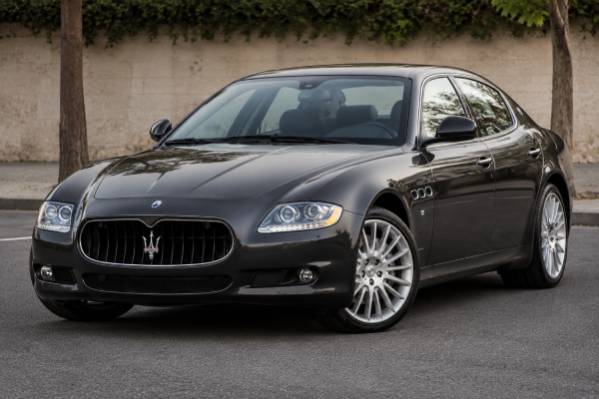
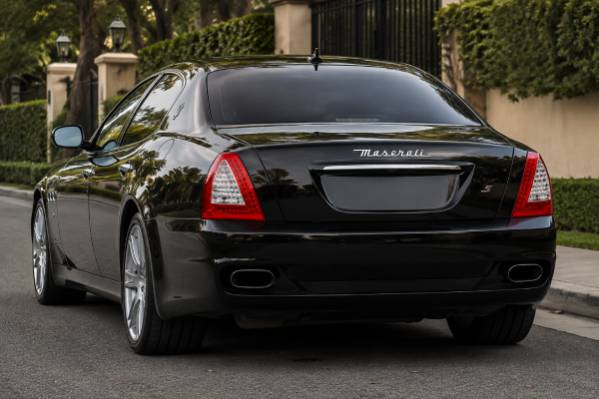
The 2012 Maserati Quattroporte S with 440 hp is an end-of-run evolution of the M139’s comfort-focused 4.7-liter model. It should not be confused with the more common 430 hp Quattroporte S sold during the preceding facelift years or with the fixed-damper Sport GT S. The 2012 S keeps Skyhook adaptive suspension, the six-speed ZF automatic, rear-wheel drive, and a refined luxury specification, while receiving the stronger late calibration of the naturally aspirated F136Y V8. Its appeal lies in maturity: by this point, Maserati had spent years developing the M139, and the car combined the Pininfarina body with the most usable drivetrain and a richer torque curve. Rarity and market differences can make identification difficult, so a buyer must verify the VIN, build date, factory engine rating, and local-market brochure rather than trusting a badge or advertisement. Condition remains decisive. Variator noise, cooling leaks, worn adaptive dampers, tired brakes, old tires, and low-voltage electronic faults can turn a desirable late car into an expensive project.
Table of Contents
- The Late Quattroporte S Explained
- 440 hp Engine and Luxury Chassis
- One-Year Specification and Identification
- Mature M139 Design and Technology
- How the 2012 S Behaves
- Late-Car Maintenance and Ageing
- Buying the Correct 440 hp S
The Late Quattroporte S Explained
The 440 hp Quattroporte S represents the final development of the adaptive-suspension M139 before production ended. It combines the softer, broader chassis of the S with an engine output previously associated with the Sport GT S.
The fifth-generation Quattroporte began as a bold attempt to merge an Italian grand tourer with a four-door body. Its Pininfarina design, naturally aspirated V8, hydraulic steering, and rear-driven layout stood apart from the more insulated German competition. Early DuoSelect cars emphasized rear weight distribution and rapid high-load shifts, but their automated clutch could be awkward in traffic.
Maserati later installed a ZF automatic behind the engine. The change made the car dramatically easier to use. The 2008 facelift refined the exterior and introduced the 4.7-liter Quattroporte S with 430 hp. Above it sat the 440 hp Sport GT S, which used fixed dampers, lower springs, darker trim, and a sports exhaust.
For the 2012 end-of-run period, some markets listed a 440 hp Quattroporte S. This car retained the S model’s Skyhook adaptive damping and luxury orientation while receiving the higher-output late V8 calibration. Production dates, model years, and registrations may not align perfectly, so the specification must be confirmed through factory records.
The late S is desirable for buyers who want the stronger engine without the Sport GT S ride. It delivers a more compliant response on rough roads, quieter visual presentation, and broader option choices. At the same time, it remains a rare and often poorly documented variant. Some advertisements simply round a 430 hp figure upward, while others use metric horsepower and mechanical horsepower inconsistently.
Today, its reputation rests on being a mature M139. Late production does not make it immune to age, however. Rubber, seals, battery systems, suspension electronics, and cabin materials deteriorate with time regardless of mileage. A low-mileage 2012 car can need more work than a regularly used 2009 example.
440 hp Engine and Luxury Chassis
The 2012 S uses the 4.7-liter F136Y V8 with approximately 440 hp, a six-speed ZF automatic, rear-wheel drive, a limited-slip differential, Skyhook damping, and the large Brembo front brakes associated with the 4.7 S.
| Category | Specification |
|---|---|
| Generation | M139 facelift, end-of-run |
| Engine code | F136Y |
| Configuration | 90-degree naturally aspirated V8 |
| Displacement | 4,691 cc |
| Bore × stroke | 94.0 × 84.5 mm |
| Valvetrain | DOHC, 32 valves, variable intake timing |
| Maximum output | Approximately 440 hp at 7,000 rpm |
| Peak torque | Approximately 490 Nm at 4,750 rpm |
| Transmission | Six-speed ZF automatic |
| Drive | Rear-wheel drive with limited-slip differential |
| Front suspension | Double wishbone |
| Rear suspension | Multi-link |
| Dampers | Skyhook electronically variable |
| Front brakes | 360 mm dual-cast discs, six-piston calipers |
| Wheelbase | 3,064 mm |
| Overall length | Approximately 5,052 mm |
| Fuel tank | Approximately 90 liters |
| Claimed 0–100 km/h | Approximately 5.3 seconds |
| Claimed top speed | Approximately 285 km/h |
The F136Y uses aluminum construction, a cross-plane crankshaft, four valves per cylinder, and variable timing on the intake camshafts. It remains wet-sump lubricated in this application. The additional output over the earlier 430 hp S is modest, but the late calibration gives the car stronger high-rpm performance without changing its smooth low-speed character.
Torque remains around 490 Nm, so the 440 hp S does not feel radically different below the middle of the rev range. The benefit appears as the engine continues pulling toward 7,000 rpm. It is a naturally aspirated experience: response is immediate, and acceleration builds progressively instead of arriving in a turbocharged surge.
The ZF 6HP automatic favors refinement. In Normal mode it upshifts early and uses the engine’s torque. Sport mode holds gears, sharpens pedal response, changes exhaust behavior, and firms Skyhook damping. Manual shifts through the column paddles are satisfying, though slower than those of a dual-clutch gearbox.
Skyhook is the key distinction from the Sport GT S. Sensors monitor vehicle movement and the control system adjusts damper force. This gives the S a comfortable long-distance ride while maintaining useful control in Sport. The system must be healthy; one tired damper or failed sensor can upset the entire chassis.
The dual-cast front brake discs use aluminum hats and iron rings. They reduce unsprung mass but are expensive. Measure thickness and inspect for cracking, corrosion, and uneven deposits. The rear brakes and parking brake also require attention, particularly on cars stored for long periods.
One-Year Specification and Identification
Correct identification is the main challenge with the 2012 440 hp S. Market brochures, build dates, and output units differ, and many sellers use model names loosely.
Begin with the VIN and a factory or dealer build record. Confirm the car is a Quattroporte S, not a standard 4.2, Sport GT S, or earlier 430 hp S registered late. The engine code, emissions label, software identification, brake package, wheels, and original invoice should align.
Important questions include:
- What is the actual production date?
- Which market received the car when new?
- Is the stated output metric horsepower, mechanical horsepower, or a rounded figure?
- Does the build sheet identify the late engine calibration?
- Is Skyhook present and functioning?
- Are the body and interior details consistent with an S rather than a Sport GT S?
- Have any ECU, exhaust, or intake modifications altered the output claim?
The S normally uses a more traditional luxury presentation than the Sport GT S. Bright exterior trim, Skyhook suspension, wood or piano-black cabin finishes, and a quieter exhaust are common. Individual options can blur the visual boundary, so appearance alone is not enough.
Maserati’s personalization choices were extensive. Leather colors, stitching, headlining, wood, wheels, calipers, rear comfort equipment, audio, navigation, blinds, sunroof, and seat functions varied by order. A rare color or trim combination can add appeal when documented and preserved.
Late cars may have updated multimedia or connectivity details, but the basic platform remained rooted in the previous decade. Check that navigation, Bluetooth, audio, screen, buttons, and steering controls work. A modern aftermarket head unit can improve usability but may disrupt original amplifiers, vehicle settings, or dashboard appearance.
Imported cars require extra scrutiny. Lighting, radio frequencies, emissions certification, speed display, alarm equipment, and service parts can differ by region. Confirm that conversion work was legal and reversible where appropriate.
The 2012 model year also overlaps with the final 450 hp Sport GT S in some records. That car uses a different power and torque rating and a more focused chassis. Do not allow a seller to combine the highest numbers from both specifications into one advertisement.
Because this specification belongs to a narrow end-of-production window, date evidence should be read carefully. A late registration does not by itself prove the 440 hp configuration, and an early build date does not automatically exclude it when national model-year conventions differ. Useful evidence includes the complete VIN record, factory option codes, original market invoice, emissions label, engine identification, and period service entries. Compare those records with the intake, exhaust, brake, wheel, and trim hardware actually fitted. A car assembled from desirable later parts can look convincing while remaining a different factory derivative. Conversely, a correct example may have replacement wheels or cosmetic repairs after more than a decade. The aim is not to reject every changed component, but to separate documented maintenance from an unsupported claim that the car is the one-year 440 hp Quattroporte S.
Mature M139 Design and Technology
The late Quattroporte S preserves the M139’s original design strengths while incorporating the facelift’s more formal appearance. It remains one of the few large sedans that looks as though it was drawn around a front-engined sports car.
Pininfarina placed the cabin behind a long hood and gave the body frameless windows, a rising shoulder, muscular rear arches, and a tapering tail. The facelifted grille uses vertical bars and a more pronounced shield shape. Three vents behind each front wheel break up the long front quarter and reinforce Maserati identity.
The platform uses a steel body with aluminum in selected panels and suspension parts. Double wishbones control front-wheel geometry, while the rear multi-link layout supports traction and ride. Hydraulic steering offers direct feedback. The limited-slip differential gives the rear axle predictable behavior under power.
Skyhook is the S model’s signature technology. In Normal mode, it allows the body to move with the road and protects passengers from sharp inputs. Sport increases damping and reduces float. The system does not make the car light, but it lets the chassis choose comfort or control without the fixed compromise of the Sport GT S.
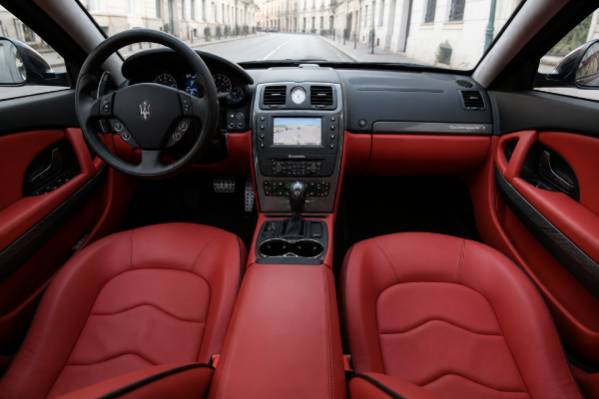
The cabin mixes hand-finished leather, an analog clock, wood or lacquer trim, and large instruments. Its architecture feels warm and personal compared with the screen-heavy interiors that followed. Some switchgear and graphics were already dated by 2012, but ergonomics are straightforward once learned.
Rear legroom is generous, though the low roof and door opening can limit headroom and access. The trunk is usable but not huge for a five-meter sedan. Front occupants sit lower than in many rivals, giving the driver a clearer sense of the car’s shape and front axle.
The exhaust retains a dual character. Normal operation is discreet. Sport mode opens the system more readily, allowing the V8 to produce a deeper, harder note. A late S should not sound permanently as loud as a modified Sport GT S. Constant drone often indicates aftermarket work or failed valve control.
Age now affects the design. Frameless windows can lose alignment, seals can harden, headlamps can haze, paint can shrink over repairs, and light leather can wear. Sticky coatings, lifting leather, sagging headliners, and cracked veneers are common. Preservation quality often distinguishes a truly collectible late car from a merely low-mileage one.
How the 2012 S Behaves
The 2012 S delivers its best performance through smoothness and speed rather than aggression. It feels more relaxed than the Sport GT S while retaining the same high-revving appeal.
At low speed, the 4.7-liter engine produces enough torque to move the car without frequent downshifts. The throttle is progressive, and the torque converter makes parking and traffic easy. Normal mode keeps noise low and allows the car to behave like a formal luxury sedan.
Sport mode reveals the late engine calibration. The transmission holds lower ratios, throttle response sharpens, the dampers firm, and exhaust volume increases. Above 4,000 rpm the engine becomes noticeably more urgent. The final stretch to 7,000 rpm feels clean and continuous, with no turbo delay or sudden torque spike.
The hydraulic steering is calm around center and builds weight naturally. The car turns in with measured precision rather than immediate nervousness. Once the outside tires load, the chassis feels balanced and stable. The rear axle can be adjusted with throttle, but the long wheelbase and stability control keep responses progressive.
Skyhook gives the S a broad ride range. On a rough urban road, Normal mode is more forgiving than the fixed-damper Sport GT S. On a fast road, Sport reduces pitch and roll. A healthy car should not bounce, knock, or wander. Those symptoms usually point to tired dampers, worn arms, alignment, wheels, or tires.
The brakes provide strong stopping power with a clear pedal. Test them after they are warm. Steering vibration under braking can come from disc deposits, warped or worn rotors, wheel issues, or suspension play. A soft pedal can indicate old fluid, air, hose deterioration, or caliper problems.
High-speed cruising is a core strength. The engine settles into sixth gear, the long wheelbase resists crosswinds and road movement, and the seats support long journeys. Wind noise from frameless glass should be moderate. Whistling or excessive noise can indicate poor window adjustment or hardened seals.
Urban compromises remain significant. The body is wide, the nose is long and low, the turning circle is large, and rear-quarter visibility is limited. Parking sensors and mirrors must function. Large wheels are easily damaged and should be inspected on both inner and outer rims.
A road test should last long enough to heat the gearbox, brakes, cooling system, and tires. The car should feel better as it warms. A warning that appears only after twenty minutes may be more important than a flawless first five minutes.
Late-Car Maintenance and Ageing
A 2012 build is younger than earlier M139s but is still an aging exotic luxury sedan. Maintenance should be based on time, condition, and system history, not only mileage.
Camshaft variator wear remains the major engine concern. A true cold start is essential. A persistent rattle can indicate worn variators or oil-drainback problems. Proper repair should use updated components where applicable and be supported by an itemized invoice.
Check the powertrain for:
- Oil leaks from cam covers and front covers.
- Coolant residue at hoses, radiator, expansion tank, thermostat, and pump.
- Cooling-fan operation and condenser condition.
- Misfires, coil faults, or injector imbalance.
- Aging engine and transmission mounts.
- Exhaust leaks and valve-control faults.
- Battery, alternator, and grounding weakness.
Annual oil service is sensible even at low mileage. Brake fluid and coolant should be changed by time. Air-conditioning refrigerant loss needs leak diagnosis rather than repeated top-ups. The ZF transmission benefits from correct fluid and pan/filter service, especially when history is incomplete.
Skyhook needs careful evaluation. Scan the suspension controller, check each damper for leakage and response, inspect wiring and sensors, and compare ride height. Front control arms, ball joints, tie rods, rear links, anti-roll-bar bushes, wheel bearings, and top mounts all wear. Alignment should follow mechanical repair, not substitute for it.
Brake costs are substantial. Measure dual-cast front discs, inspect rear rotors and parking brake, and check caliper seals. Tires must be matched, recent, premium, and correctly rated. Low-mileage cars often retain old tires because tread appears deep.
Electrical systems depend on stable voltage. A weak battery can trigger many warnings, but repeated faults should be scanned and traced. Test windows, locks, seats, memory, steering controls, parking sensors, climate zones, infotainment, audio, blinds, trunk release, alarm, and both keys.
Interior preservation affects value. Leather shrinkage, dye transfer, bolster cracking, sticky switches, sagging headlining, cloudy trim, and worn carpets are common. Water entry can damage modules and produce hidden corrosion. Inspect the trunk, battery area, footwells, and door seals.
Parts supply for routine service is manageable through specialists. Late-model-specific trim, electronic modules, and original wheels may require patient sourcing. Keep records of part numbers, software updates, and replaced components for the next owner.
Buying the Correct 440 hp S
A successful purchase starts by proving that the car is the late 440 hp S described, then assessing it as a complete M139 rather than focusing on the output figure.
Ask for the VIN, factory build record, original invoice, registration history, service invoices, cold-start video, diagnostic report, tire dates, brake measurements, and photographs underneath. Compare the claimed production year with the build label and first-registration date.
A specialist inspection should include:
- Confirmation of model, engine rating, market, and original options.
- Overnight cold start and variator assessment.
- Full module scan before and after the road test.
- Cooling-system pressure test and fan verification.
- ZF engagement, shift quality, fluid history, and adaptation review.
- Skyhook operation and inspection of arms, links, bearings, and ride height.
- Brake-disc measurements and tire-age check.
- Paint-depth readings and structural inspection.
- Operation of all comfort and electrical equipment.
- Extended road test through urban, rough-road, and high-speed conditions.
| Positive evidence | Reason for caution |
|---|---|
| Factory documentation confirms 440 hp S specification | Output claim appears only in an advertisement |
| Quiet cold start or detailed variator repair | Seller refuses an overnight cold inspection |
| Working Skyhook and tight suspension | Suspension warning, bounce, knocks, or uneven stance |
| Recent matched tires and measured brakes | Old tires, thin discs, or cracked wheels |
| Clean scan and complete service file | Cleared faults and long gaps in history |
Do not pay a major rarity premium until the specification is independently verified. The 440 hp number is less important than the car’s actual condition, and the market may not value obscure output distinctions as strongly as a seller expects.
Keep a first-year reserve for baseline fluids, battery, tires, alignment, leaks, and electronics. A well-bought late S can deliver the M139’s best blend of comfort and character. A poorly documented car with the right badge can be far less desirable than an earlier 430 hp S with exemplary maintenance.
References
- Strong representation of Maserati Benelux at Brussels Motor Show 2012 2012
- Maserati unveils new Quattroporte Sport GT S on the 70th anniversary of its first Indianapolis 500 win 2009
- Maserati Guides & Documentation for your vehicle 2026 (Owner’s Manual Portal)
- Check for Recalls: Vehicle, Car Seat, Tire, Equipment | NHTSA 2026 (Recall Database)
Disclaimer
This article is for informational purposes only and is not a substitute for professional diagnosis, inspection, maintenance, or repair. Specifications, torque values, service intervals, procedures, software requirements, and equipment can vary by VIN, production date, market, and configuration. Before buying, servicing, or modifying any vehicle, verify the relevant details against its official service documentation and consult a qualified Maserati specialist when necessary.
Please share this article on Facebook, X/Twitter, or another platform to support our work and help other owners and enthusiasts find it.