
The 2009–2012 Maserati Quattroporte Sport GT S is the sharpest regular-production version of the facelifted M139 before the final 450 hp update. It uses a 440 hp 4.7-liter naturally aspirated V8, revised transmission software, lower and stiffer suspension with fixed-rate dampers, and a valve-controlled sports exhaust. The changes are more meaningful than the ten-horsepower increase over the Quattroporte S suggests. The Sport GT S turns the elegant Pininfarina sedan into a more immediate, louder, and better controlled driver’s car, while retaining four proper doors and a six-speed ZF automatic. Its compromises are equally real: a firmer ride, expensive brakes and tires, less tolerance for poor roads, and greater risk that previous owners have modified or driven it hard. Buyers should verify cold-start camshaft-variator behavior, suspension originality, dual-cast brake condition, exhaust-valve operation, and the presence of model-specific interior and exterior details. A strong example is one of the most charismatic performance sedans of its period; a neglected one can require a restoration-sized budget.
Table of Contents
- The Sport GT S Mission
- 440 hp V8 and Chassis Specification
- Factory Evolution and Correct Details
- How Maserati Sharpened the M139
- Driving the Sportiest Quattroporte
- Wear Points, Repairs, and Service Costs
- Buying a 440 hp Sport GT S
The Sport GT S Mission
The Sport GT S was designed to make the Quattroporte behave like a true driver’s car without abandoning the luxury-sedan format. Maserati changed the engine calibration, gearbox logic, suspension, exhaust, styling, and cabin materials rather than relying on badges alone.
The M139 Quattroporte had already established a unique formula. Pininfarina wrapped a five-meter sedan around a naturally aspirated V8, hydraulic steering, and rear-wheel drive. Early DuoSelect models offered a rear transaxle and aggressive shifts but demanded careful clutch management. The later ZF automatic made the car easier to use, then the 2008 facelift refreshed the styling and introduced the 4.7-liter Quattroporte S.
The Sport GT S debuted at the 2009 North American International Auto Show. Maserati described it as a driving machine in the form of a luxury sedan. Power rose from 430 to 440 hp through revised mapping, intake and exhaust work. Transmission software became more responsive. Skyhook adaptive dampers were replaced by fixed-rate units, the springs became stiffer, and the ride height dropped. Pneumatically controlled exhaust valves gave the car a deeper voice.
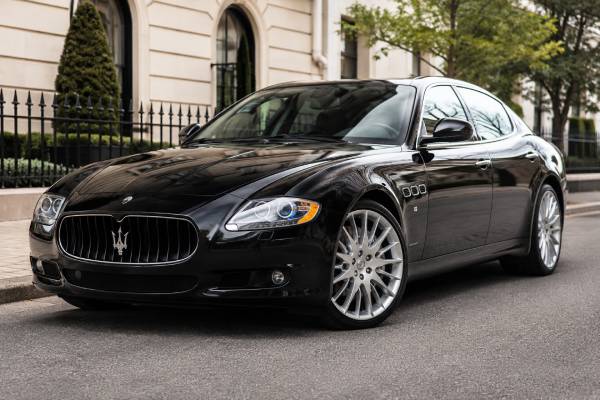
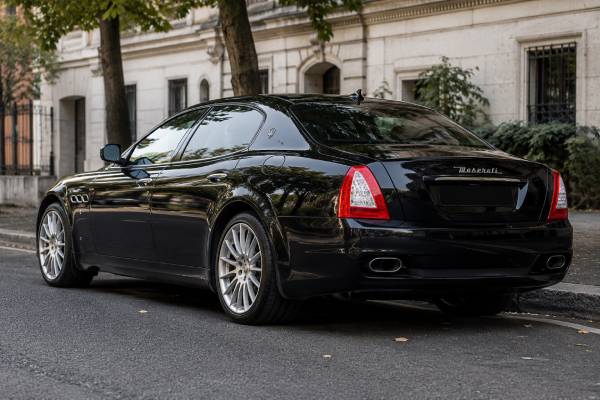
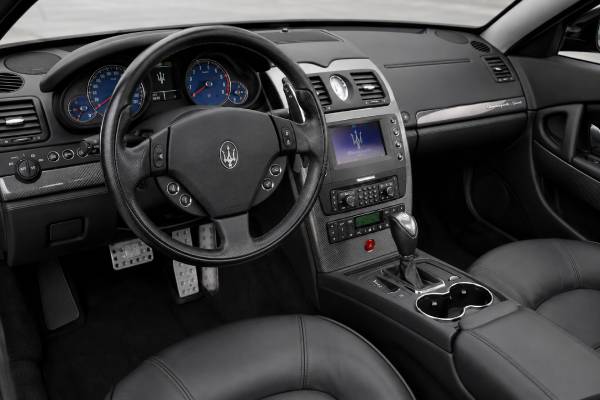
Visual changes communicated the mechanical intent. The grille used concave vertical fins in black, the Trident gained red accents, headlights received a darker metallic treatment, chrome was reduced, and the exhaust outlets became dark oval pieces. Inside, perforated Alcantara and leather covered the sport seats, while Titantex composite trim replaced traditional wood.
The result is not simply a louder S. The fixed suspension removes a layer of isolation and makes body control more consistent during rapid inputs. The driver feels road texture and tire behavior more directly. That focus makes the car desirable, but it also means worn dampers, poor tires, or nonstandard springs are especially damaging.
The 440 hp version was produced through most of the Sport GT S run and formed the basis of the Awards Edition. A final 450 hp evolution appeared for 2012 in selected markets. Buyers must identify which specification they are considering rather than assume every late-registered car has the final engine tune.
440 hp V8 and Chassis Specification
The Sport GT S combines the F136Y 4.7-liter V8 with a six-speed ZF automatic, rear-wheel drive, a limited-slip differential, fixed dampers, stiffer springs, and large Brembo brakes. Its performance improvement comes from the whole package, not only engine output.
| Item | Specification |
|---|---|
| Chassis code | M139 facelift |
| Engine code | F136Y |
| Engine type | 90-degree naturally aspirated V8 |
| Displacement | 4,691 cc |
| Bore × stroke | 94.0 × 84.5 mm |
| Valvetrain | DOHC, 32 valves, variable intake timing |
| Maximum output | 440 hp at about 7,000 rpm |
| Peak torque | Approximately 490 Nm at 4,750 rpm |
| Transmission | ZF six-speed automatic with revised software |
| Drivetrain | Rear-wheel drive, limited-slip differential |
| Front suspension | Double wishbone, stiffer springs, fixed dampers |
| Rear suspension | Multi-link, stiffer springs, fixed dampers |
| Ride height | Lower than Quattroporte S |
| Front brakes | 360 mm dual-cast discs, six-piston calipers |
| Rear brakes | 330 mm ventilated discs |
| Wheels | 20-inch Multi Trident design in common specification |
| Wheelbase | 3,064 mm |
| Length | Approximately 5,052 mm |
| Claimed 0–100 km/h | Approximately 5.1 seconds |
| Claimed top speed | Approximately 285 km/h |
The all-aluminum V8 uses a cross-plane crankshaft and four valves per cylinder. It remains smooth at low speed but grows dramatically more vocal as revs rise. The additional ten horsepower over the S comes with freer breathing and calibration changes, while torque remains broadly similar. That is why the car’s stronger sensation comes as much from throttle, shift, exhaust, and chassis response as from outright acceleration.
The ZF 6HP is still a torque-converter automatic, but the Sport GT S software reduces hesitation and holds gears more aggressively. Column-mounted paddles are the best way to exploit the engine on a winding road. Shift times are quick for the period but not comparable with a modern dual-clutch transmission.
Maserati’s decision to delete Skyhook is important. Fixed-rate dampers provide predictable control and avoid the changing character of an adaptive system, but they make the car less forgiving. Original damper specification matters; generic replacements can upset ride and handling. Lower springs reduce body movement and lower the center of gravity, while the 20-inch wheels sharpen response at the cost of impact harshness.
The dual-cast Brembo brakes use iron friction rings with aluminum hats at the front. They reduce unsprung weight and handle repeated road use well when healthy. Replacement cost is high, and polished or painted calipers can hide neglect. Measure discs and inspect for heat cracking, grooves, corrosion, and lip.
Performance figures vary by market and test method. The factory’s 5.1-second 0–100 km/h claim and 285 km/h top speed are credible reference points, but tire condition, temperature, fuel, road surface, and vehicle health affect real results.
Factory Evolution and Correct Details
A genuine 440 hp Sport GT S should present a coherent set of mechanical and visual features. Because standard Quattroportes are often fitted with Sport GT S-style wheels, grilles, exhausts, or badges, a buyer must verify the VIN and build data.
Production began after the model’s January 2009 debut. The core 440 hp specification continued into the early 2010s and served as the basis for the limited Awards Edition. The final 450 hp version appeared for the 2012 end-of-run period in some markets, using a revised engine specification with about 510 Nm. Registration dates can overlap, so build records are more useful than advertisements.
Expected 440 hp Sport GT S identifiers include:
- Black grille with concave vertical fins.
- Red accents in the Trident emblems.
- Darker headlamp treatment.
- Reduced bright exterior trim.
- Body-color handles in many specifications.
- Dark oval exhaust outlets with valve control.
- 20-inch Multi Trident wheels.
- M-design seats in leather and perforated Alcantara.
- Alcantara headlining in typical specification.
- Titantex technical trim rather than glossy wood.
- Sport GT S badging and correct model designation in diagnostic data.
- Fixed-rate dampers and lowered spring package.
Some details vary by region and individual order. Maserati’s personalization program allowed paint, leather, stitching, caliper, and trim variations. An unusual color is not automatically incorrect, but it should be supported by a build sheet.
The Awards Edition adds its own paint, burnished exterior finishes, polished brake calipers, special trim, and B-pillar plaque. It should not be valued as an Awards Edition unless all relevant features and documentation are present.
Factory option content can include rear comfort equipment, upgraded audio, navigation, blinds, heated or ventilated seats, and parking assistance. These features increase complexity. Test everything because a dead rear blind or climate actuator can require extensive disassembly.
Common modifications include louder exhausts, wheel spacers, lowering springs, ECU tunes, darkened lamps, carbon-look trim, and modern infotainment. Some improve personal enjoyment, but they can conceal faults or reduce collector value. A nonstandard exhaust may remove the valve system; a tune may complicate emissions testing; spacers can stress bearings or create rubbing.
Documentation should establish the original specification and explain every change. Original parts supplied with the car are valuable. Avoid examples whose identity depends on an online decoder alone; obtain a dealer or specialist build record and compare it with the physical vehicle.
How Maserati Sharpened the M139
The Sport GT S is distinctive because Maserati sharpened the feedback paths between driver and car. The steering, seat, suspension, exhaust, and transmission all deliver clearer information than in the standard S.
Pininfarina’s basic M139 shape remains untouched. The long hood, low grille, frameless windows, rearward cabin, and broad haunches already give the sedan a sporting stance. Dark trim makes the Sport GT S look lower and more concentrated. The black grille visually deepens the nose, while the oval exhausts and reduced chrome make the rear less formal.
The fixed-damper chassis is the major engineering change. Skyhook in the S continuously alters damping according to sensor inputs. The Sport GT S uses a single calibration chosen for control. Stiffer springs reduce roll and pitch, and the lower ride height changes both appearance and weight transfer. The setup is not track-car rigid, but it is noticeably more connected.
The steering remains hydraulically assisted. Its ratio and geometry work with the firmer front axle to provide clear load buildup. The front tires communicate texture and camber changes, especially on the original wheel dimensions. Incorrect offsets, oversized tires, or cheap compounds can add kickback and tramlining.
Inside, the M-design seats use perforated Alcantara where grip is useful and leather where durability and visual richness matter. Titantex trim creates a technical atmosphere without pretending to be exposed racing carbon fiber. The fixed column paddles are large and easy to find during cornering.
The exhaust system uses pneumatic valves to change flow and sound. In quieter operation, the car remains suitable for long journeys. In Sport mode, the valves open more readily, producing a deeper idle, sharper downshift bark, and a hard-edged note near 7,000 rpm. The system should change audibly and consistently; rattling valves, vacuum leaks, or seized mechanisms are common age-related issues.
Cooling and airflow remain important because the front bumper and grille sit low. Inspect radiators and condensers for debris, corrosion, stone damage, and poor prior repair. A blocked cooling stack can affect both engine temperature and air-conditioning performance.
The cabin still offers genuine rear-seat space, but the model’s priorities are clear. Ride firmness, tire noise, and low-speed steering effort are higher than in the S. The design makes a strong emotional case, yet buyers should decide whether they actually want the sharper setup rather than choosing it solely because it sits at the top of the range.
Driving the Sportiest Quattroporte
The Sport GT S feels more alert than the Quattroporte S from the first kilometer. Its body settles faster, the exhaust is more present, and the transmission responds with less delay.
The 4.7-liter V8 pulls cleanly from low speed, but its best work begins in the middle of the rev range. Throttle response is immediate and proportional. There is no turbo boost step, so the driver can meter power precisely on corner exit. Above 5,000 rpm, acceleration and sound intensify together, making the final approach to 7,000 rpm the defining experience.
Normal automatic mode remains usable in traffic, though the suspension never becomes as soft as Skyhook-equipped cars. Sport mode keeps the engine in its active range and encourages paddle use. Downshifts should occur cleanly with a brief rise in revs. Hesitation, flare, shudder, or harsh engagement suggests a gearbox, adaptation, mount, fluid, or voltage issue.
The chassis is at its best on smooth, fast roads. Initial turn-in is deliberate, followed by strong front-end support. Once loaded, the car maintains a neutral attitude and communicates rear-axle movement progressively. The limited-slip differential helps deploy torque, while stability control provides a safety net without completely erasing the rear-driven feel.
On rough roads, the compromises emerge. The 20-inch tires have limited sidewall, and fixed dampers cannot relax. Sharp impacts enter the cabin, and broken surfaces can make the car follow grooves. A healthy example still feels controlled, not brittle. Crashing, repeated bouncing, clunks, or steering shake point to worn joints, bent wheels, old tires, incorrect pressures, or non-original suspension parts.
The brakes provide strong deceleration and a firm pedal. Their endurance depends on disc thickness, pad material, fluid condition, and cooling. A car used for repeated high-speed runs may show heat checking or uneven deposits. The hand-polished appearance of some calipers or cosmetic refinishing says nothing about internal condition.
The Sport GT S is an excellent high-speed tourer when the road is smooth. It tracks straight, holds a line with little correction, and produces a sense of mechanical calm beneath the noise. Frameless-window seals, alignment, and wheel balance must be correct to achieve that refinement.
Visibility is reasonable forward but limited over the rear quarters. The low front bumper and wide body require care in cities. Parking sensors should be checked individually, and the underside of the nose should be inspected for scrapes or damaged air guides.
A complete road test must begin cold and continue until the engine, gearbox, brakes, and tires are fully warm. The car should become more cohesive with temperature. New rattles, warning lights, odors, or a rising coolant gauge are not acceptable.
Wear Points, Repairs, and Service Costs
A Sport GT S costs more to restore than a standard Quattroporte because several model-specific components are expensive or scarce. Preventive care protects both performance and authenticity.
Camshaft variator wear remains the best-known engine risk. Demand an overnight cold start. A pronounced diesel-like rattle can mean worn variators or oil-retention issues. Correct repair is labor intensive and should be supported by detailed invoices. Do not accept a warm start as proof.
Other powertrain concerns include:
- Oil leaks from cam and timing covers.
- Coolant seepage from hoses, radiator, expansion tank, thermostat, and pump.
- Fan-control faults and poor condenser airflow.
- Misfires from coils, plugs, injectors, or intake leaks.
- Aging engine and transmission mounts.
- Exhaust-valve vacuum leaks, seized valves, or rattling components.
- Battery and alternator weakness causing module faults.
The ZF 6HP responds well to correct fluid and filter service. Period lifetime-fill claims should not be treated as a reason to ignore old fluid. A specialist should assess adaptation values, fluid condition, pan leaks, and torque-converter behavior. Transmission faults are easier to manage before they progress.
Chassis wear is especially important. Original fixed dampers, springs, and bump stops define the model. Inspect front arms, ball joints, tie rods, rear links, anti-roll-bar bushes, wheel bearings, and top mounts. Replacing only one worn component can leave the car inconsistent. After repairs, use a four-wheel alignment by a shop familiar with Maserati specifications.
The dual-cast brakes are costly. Measure front and rear discs, inspect pads and hoses, check caliper seals, and verify parking-brake operation. Surface corrosion on a stored car may clean off, but deep pitting, cracking, or severe lips require replacement. Brake fluid should be changed by time.
Tires are part of the suspension. Fit a matched premium set with correct load and speed ratings. Check manufacturing dates, not just tread. A low-mileage Sport GT S on ten-year-old tires is not road-ready. Inspect 20-inch wheels for bends, cracks, welds, poor refinishing, and damaged bolt seats.
Electrical and cabin faults include window regulators, parking sensors, seat modules, climate actuators, infotainment, keys, alarm components, and sticky switch coatings. Alcantara can become matted, leather can shrink, and Titantex trim can scratch or delaminate. Model-specific interior pieces may be difficult to replace.
A strong battery and clean grounds are essential, but persistent warnings need module-level diagnosis. Clear fault codes before a test only after recording them; then rescan after the drive. Multiple unrelated faults can reveal voltage history, water entry, or communication-bus problems.
Buying a 440 hp Sport GT S
Buy a Sport GT S for its complete factory package, not for a badge or exhaust note. The best car will have verified specification, original key components, specialist maintenance, and a clean diagnostic picture.
Request the VIN, build sheet, service invoices, cold-start video, underbody images, tire dates, wheel details, and brake measurements before viewing. Confirm that it is the 440 hp version rather than a 430 hp S with cosmetic parts or a later 450 hp car described incorrectly.
The pre-purchase inspection should follow this sequence:
- Verify model identity, engine specification, and original options.
- Start the engine from fully cold and listen for variator noise.
- Scan all modules before the road test.
- Pressure-test the cooling system and inspect the cooling stack.
- Inspect fixed dampers, springs, arms, bushes, links, and ride height.
- Measure brake discs and inspect calipers, pads, hoses, and fluid.
- Check wheels for cracks or repairs and record tire dates.
- Test exhaust-valve operation in all relevant modes.
- Drive on smooth and rough roads, then at sustained speed where legal.
- Rescan and inspect for fresh leaks after the drive.
| Strong candidate | High-risk candidate |
|---|---|
| Factory build record matches all GT S features | Identity relies on grille, wheels, and badges |
| Original fixed suspension is tight and correctly aligned | Unknown lowering parts, uneven height, or repeated knocking |
| Cold start is quiet or variator work is documented | Car is warmed before every viewing |
| Recent premium tires and measured brakes | Old tires, cracked wheels, thin discs, cosmetic caliper paint |
| Exhaust valves work and factory system is present | Constantly loud exhaust with missing controls |
Budget beyond the purchase price. A first-year fund may need to cover fluids, battery, tires, wheel repair, alignment, suspension joints, brake parts, and an unexpected electrical issue. A car needing variators and major brakes can absorb a five-figure sum quickly in many markets.
The right Sport GT S is worth the effort. It delivers a combination of naturally aspirated response, hydraulic steering, fixed-damper discipline, four-door usability, and Pininfarina elegance that is unlikely to return. The wrong one can still sound wonderful while hiding years of expensive neglect, which is why evidence must lead emotion.
References
- Maserati unveils new Quattroporte Sport GT S on the 70th anniversary of its first Indianapolis 500 win 2009
- Geneva Motor Show 2010 – Worldwide debut for the Maserati Quattroporte Sport GT S Awards Edition 2010
- Maserati Guides & Documentation for your vehicle 2026 (Owner’s Manual Portal)
Disclaimer
This article is for informational purposes only and is not a substitute for professional diagnosis, inspection, maintenance, or repair. Specifications, torque values, service intervals, procedures, software requirements, and equipment can vary by VIN, production date, market, and configuration. Before buying, servicing, or modifying any vehicle, verify the relevant details against its official service documentation and consult a qualified Maserati specialist when necessary.
Please share this article on Facebook, X/Twitter, or another platform to support our work and help other owners and enthusiasts find it.