
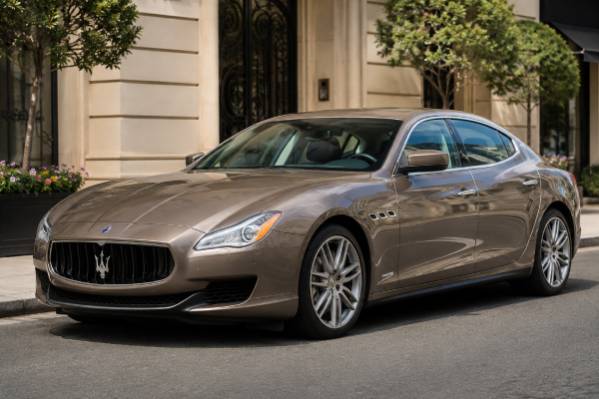
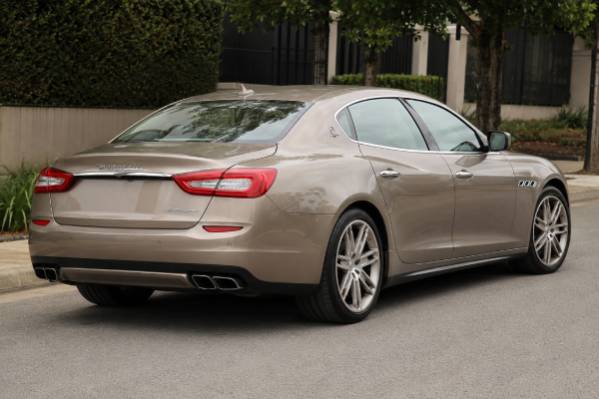
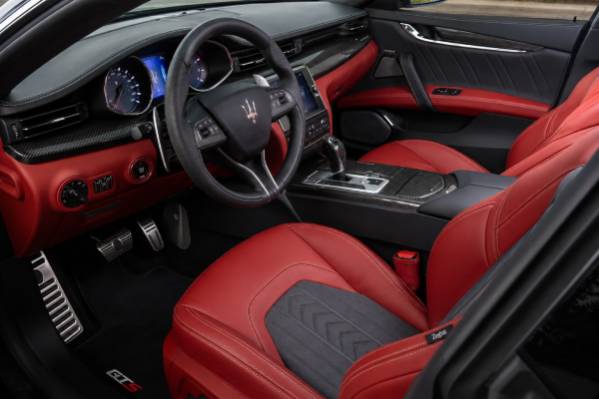
The 2015 Maserati Quattroporte Zegna Limited Edition is a 100-car flagship that combines the M156 Quattroporte GTS powertrain with an unusually detailed Ermenegildo Zegna interior and a model-specific Platinum Silk finish. Beneath the tailoring sits Maserati’s 3.8-liter twin-turbo V8, an eight-speed automatic, rear-wheel drive, Skyhook adaptive suspension, and the long-wheelbase architecture of the sixth-generation Quattroporte. Its 530 hp and 710 Nm make it genuinely fast, but rarity and craftsmanship matter more than raw numbers here. The silk-blend upholstery, numbered identification, supplied Owner’s Collection, and correct exterior treatment distinguish an authentic car from a standard GTS with similar colors. That also changes the buying process: condition must be judged as both a complex performance sedan and a collectible design collaboration. Replacement trim can be difficult to source, while neglected cooling, turbocharging, suspension, brake, tire, battery, and electronic systems can create large bills. The best examples retain complete provenance, original accessories, careful service records, and an interior protected from stains, abrasion, and poor repair.
Table of Contents
- A Tailored M156 Flagship
- V8 Performance and Chassis Data
- One Hundred Cars and Their Details
- Zegna Materials Meet Maserati Engineering
- How the Zegna Drives
- Preserving a Complex Limited Edition
- Buying an Authentic Zegna Quattroporte
A Tailored M156 Flagship
The Zegna Limited Edition is best understood as a fully specified Quattroporte GTS transformed by materials, color, and provenance rather than by a separate mechanical package. It occupies the point where Maserati’s fastest executive sedan met Italian luxury tailoring.
Maserati introduced the M156 Quattroporte for the 2013 model year. Compared with the outgoing M139, it was longer, roomier, more aerodynamic, and built with extensive aluminum to control weight. It also moved from naturally aspirated V8 power to direct-injected twin-turbo V6 and V8 engines paired with an eight-speed automatic. The change made the Quattroporte more competitive with modern high-performance luxury sedans while preserving rear-wheel-drive proportions and hydraulic steering.
The Ermenegildo Zegna collaboration first appeared as a concept before reaching production. The 100 production cars used the 530 hp GTS as their foundation and were presented in 2015. Their purpose was not to make the Quattroporte louder or more aggressive. Instead, Zegna applied textile expertise to an automobile cabin through a special silk-blend fabric, carefully coordinated leather, model-specific trim, and a restrained exterior finish.
That approach gives the car a different appeal from a conventional limited-edition performance model. There is no large rear wing, bright stripe, or major power increase. Its distinction is tactile and subtle. A casual observer may see a dark metallic Quattroporte; an informed buyer notices the Platinum Silk paint, Moka leather, Greige silk material, numbered identity, and matching accessories.
V8 Performance and Chassis Data
Mechanically, the Zegna Limited Edition uses the Quattroporte GTS formula: a 3,799 cc twin-turbo V8 with 530 hp and 710 Nm, an eight-speed torque-converter automatic, rear-wheel drive, adaptive dampers, and a limited-slip rear differential. It is a very fast full-size sedan, not merely a cosmetic special.
| Item | Specification |
|---|---|
| Generation | M156 Quattroporte |
| Mechanical basis | Quattroporte GTS |
| Engine family | F154 |
| Engine type | 90-degree twin-turbocharged V8, direct injection |
| Displacement | 3,799 cc |
| Bore × stroke | 86.5 × 80.8 mm |
| Maximum power | 530 hp at 6,500–6,800 rpm |
| Peak torque | 710 Nm in overboost; 650 Nm normal maximum |
| Transmission | Eight-speed ZF automatic |
| Drivetrain | Rear-wheel drive with limited-slip differential |
| Front suspension | Double wishbone with Skyhook adaptive damping |
| Rear suspension | Five-link with Skyhook adaptive damping |
| Steering | Hydraulic power assistance |
| Brakes | Large ventilated Brembo discs with multi-piston calipers |
| Overall length | 5,262 mm |
| Wheelbase | 3,171 mm |
| Width without mirrors | 1,948 mm |
| Height | 1,481 mm |
| Luggage capacity | 530 liters |
| Fuel capacity | 80 liters |
| Claimed 0–100 km/h | 4.7 seconds |
| Claimed top speed | 307 km/h |
The F154 V8 was developed for Maserati and built in Maranello. It uses an aluminum block and heads, direct fuel injection, variable valve timing, and two turbochargers. The compact 3.8-liter displacement produces far more low- and mid-range torque than the naturally aspirated 4.7-liter V8 in the previous Quattroporte. Maximum overboost torque arrives across a broad band, so the car accelerates hard without requiring high engine speed.
The eight-speed automatic suits that torque curve. In normal driving it selects high gears early and keeps the engine quiet. Sport mode sharpens throttle mapping, holds ratios longer, speeds shifts, and allows the exhaust to speak more clearly. Manual commands through the steering-column paddles are useful on a winding road, although the transmission remains a refined automatic rather than a dual-clutch unit.
The M156 chassis uses aluminum extensively in body panels and suspension components. Double wishbones at the front help maintain tire geometry under cornering, while the five-link rear layout separates different wheel-control forces. Skyhook changes damper firmness electronically. The result is a wide operating range, though large wheels and low-profile tires still transmit sharp impacts.
One Hundred Cars and Their Details
Authenticity depends on the complete Zegna specification, because the edition was limited to 100 cars and many of its defining parts are trim rather than mechanical components. A normal GTS in a similar palette is not equivalent.
The production edition followed a concept shown during the early M156 period. Maserati and Zegna then created a numbered series for selected global markets. Allocation practices differed, so documentation may include importer correspondence, dealer certificates, event material, or a numbered plaque depending on market and delivery.
The exterior color is commonly described as Platinum Silk. It was engineered to create a deep, liquid metallic effect through fine aluminum pigments over a dark base. In sunlight, the surface can shift between graphite, bronze, and silvery tones rather than reading as a flat gray. That subtle variation is difficult to reproduce after poor body repair.
Inside, Moka dark-brown leather is paired with Greige material containing fine Zegna silk. The woven sections appear on seats, door panels, headlining, and other carefully selected areas. The fabric is not ordinary synthetic upholstery with a luxury badge. Its weave, sheen, hand, and edge construction are central to the edition.
A complete car was also associated with a 19-piece Owner’s Collection. Depending on delivery documentation, this could include fitted luggage, accessories, and a bolt of ZegnaSilk. These pieces are easy to separate from the car over time. Their absence does not make the automobile mechanically worse, but it affects collector completeness and should influence value.
What to verify
- The VIN and original build specification identify the car as a factory Zegna Limited Edition.
- The exterior finish matches the model-specific Platinum Silk code and shows consistent metallic behavior.
- Seat centers, door inserts, headlining, and trim retain the correct Greige silk-blend material.
- Moka leather color and stitching remain consistent across original panels.
- Numbered or edition-specific identification agrees with supporting records.
- Original books, keys, window sticker or invoice, delivery certificate, and Owner’s Collection are present where applicable.
- Wheels, brake-caliper finish, exterior brightwork, and interior trim match period documentation.
Options can complicate comparison. Market equipment varied, and individual cars could carry rear entertainment, four-zone climate control, power rear seats, privacy glass, driver-assistance features, premium audio, or different wheel specifications. A missing option is not evidence of a fake, but the original order sheet should explain the car.
Paintwork deserves specialist evaluation. A repaired panel may be acceptable when the work is disclosed and excellent, yet a color mismatch can become obvious under changing light. Measure paint depth across the body, inspect panel edges, and view the car indoors, outdoors, and under direct sun. Repainting an entire side to blend one panel can preserve appearance but reduces originality.
The textile interior creates another identification challenge. Damaged sections may have been replaced with ordinary leather, Alcantara-like material, or a visually close fabric. Such repairs can look reasonable in photographs but lose the correct weave and sheen. Original spare material is scarce, so even a small stain or tear can become a major restoration problem.
Zegna Materials Meet Maserati Engineering
The edition’s strongest feature is the contrast between a hand-finished, fashion-derived cabin and the hard engineering of a 307 km/h sedan. Neither side feels incidental when the car is complete and well preserved.
The M156’s exterior was designed around a long hood, set-back passenger compartment, frameless side glass, and three fender vents. The Zegna color softens the aggressive proportions without hiding them. The concave grille, Trident, side vents, and tapered rear lamps retain Maserati identity, while the paint gives the broad surfaces more visual depth.
Aerodynamic work is integrated rather than theatrical. A smooth underbody, carefully managed front openings, and the body’s tapered rear help reduce drag and lift. Cooling remains demanding because the twin-turbo V8, transmission, air-conditioning condenser, and charge-air system all reject heat through the front of the car. Clean radiator faces and unobstructed ducts matter to reliability as much as styling.
The powertrain sits behind the front axle line as far as practical, helping distribute mass through the long chassis. The gearbox is mounted conventionally behind the engine rather than at the rear, unlike the early M139 transaxle cars. That packaging supports greater cabin room and a more familiar automatic layout.
Zegna’s contribution is most obvious where occupants touch the car. Silk-blend fabric reduces the visual weight of an all-leather cabin and changes how the seats feel against clothing. Its matte, textured surface contrasts with smooth leather and glossy trim. The headlining creates a warmer atmosphere than conventional woven cloth.
That material choice also requires different care. Leather cleaners, steam, aggressive extraction machines, and stiff brushes can damage natural-fiber textile or leave water marks. Cleaning should begin with dry, low-force methods and products tested in an unseen area. A specialist familiar with luxury automotive textiles is preferable to a high-volume detailer.
The cockpit itself is simpler than the later facelifted Quattroporte. It uses an 8.4-inch central interface with physical controls around the console. The analog clock, broad leather dashboard, and column-mounted paddles provide visual character. Some switchgear is less special than the upholstery, but the overall cabin succeeds through color and material harmony.
How the Zegna Drives
On the road, the Zegna drives like an early M156 GTS: extremely quick, stable, and more communicative than its size suggests, yet still tuned as a grand luxury sedan rather than a track car.
Throttle response is progressive in the normal setting. The first part of pedal travel moves the car smoothly, which helps in traffic and when carrying passengers. A deeper input wakes both turbochargers and produces a strong, sustained push. Because maximum torque is available well below the power peak, overtaking rarely requires full revs.
Sport mode changes the personality more than the exterior suggests. The gearbox holds lower ratios, throttle response becomes sharper, damper control tightens, and the exhaust becomes more audible. The car then feels smaller from the driver’s seat, particularly on a broad, fast road where its wheelbase and body control can work together.
The steering has real weight and useful self-centering. It is not as delicate as the M139’s best setup, but it communicates front-tire load more naturally than many electrically assisted rivals. The long hood requires judgment in narrow streets, while parking sensors and cameras become important because the car is more than 5.2 meters long.
Ride quality depends heavily on wheels, tires, and damper condition. On smooth pavement, Skyhook keeps the body composed without constant movement. Broken urban surfaces can make large-wheel cars feel abrupt. Old run-flat-like tires, excessive pressure, bent wheels, or tired dampers worsen the problem and are sometimes mistaken for inherent harshness.
The rear-drive chassis is balanced but not foolproof. With 710 Nm available, worn or cold rear tires can allow rapid wheelspin. Stability control intervenes effectively in normal use, yet a driver should not treat electronic assistance as a substitute for fresh matched tires. Wet-weather behavior depends strongly on tread depth and compound age.
Braking performance is strong when the system is healthy. Pedal travel should remain consistent, without vibration or steering pull. A car that has spent long periods parked can develop disc corrosion, seized parking-brake mechanisms, or flat-spotted tires. A short test drive may not reveal heat-related vibration, so the inspection should include several controlled stops after the brakes are warm.
At highway speed, the Zegna is in its natural setting. It settles into a quiet cruise, offers generous rear room, and has immediate passing power. Wind noise around frameless glass should be modest; whistles may point to window alignment or seal problems. The fuel tank provides reasonable touring range, although real consumption rises sharply when boost is used.
Preserving a Complex Limited Edition
The greatest ownership risk is not one famous defect; it is the combination of a high-output V8, tightly packaged cooling system, adaptive chassis, aging electronics, and irreplaceable trim. Preventive work and careful storage are cheaper than deferred repair.
Engine, turbochargers, and cooling
The F154 should start promptly, idle evenly, and pull without misfire or warning messages. Inspect for oil seepage around cam covers, timing covers, turbo oil lines, and lower engine areas. A small leak can spread over hot components and become harder to trace after the underside has been cleaned.
Cooling-system condition is critical. Check the expansion tank, cap, hoses, radiator connections, thermostat operation, water-pump area, and the stacked heat exchangers behind the grille. Dirt, leaves, and bent fins reduce airflow. The temperature should remain stable in traffic with the air conditioning running. Any unexplained coolant loss deserves pressure testing rather than repeated topping up.
Turbochargers depend on clean oil, sound lines, and proper heat management. Blue smoke after idling, unusual whistle, low boost, or oil in excessive quantity within intake plumbing requires investigation. Letting the engine warm under light load and avoiding immediate shutdown after sustained hard use are sensible habits, though they do not replace scheduled maintenance.
Spark plugs and ignition coils work hard under boost. Misfires may appear first during heavy acceleration. Continued driving can overheat catalytic converters. Fuel injectors, high-pressure pumps, oxygen sensors, and boost-control hardware can also create similar symptoms, so diagnosis should use fault data, live values, and pressure tests rather than parts swapping.
Transmission, differential, and chassis
The ZF eight-speed is generally durable when healthy, but “sealed for life” should not be interpreted as immune to fluid aging. Service history, operating conditions, and specialist advice should guide fluid and filter replacement. Delayed engagement, harsh shifts, flare, shudder, or leaks need attention before purchase.
Inspect the limited-slip differential for noise and leakage. Suspension checks should cover front control-arm bushings, ball joints, rear links, wheel bearings, anti-roll-bar components, and Skyhook dampers. A leaking adaptive damper can be expensive, and replacing one corner with an unsuitable part can upset the car’s balance.
Large wheels are vulnerable to inner-barrel bends and cracks. Remove or closely inspect each wheel rather than judging only the visible face. Confirm that all four tires are a matched premium set with correct load and speed ratings, even wear, and recent date codes. The car’s electronics and handling assume closely matched rolling dimensions.
Brake discs should be measured for thickness and runout. Caliper seals, hoses, and electronic parking-brake operation also matter. Low annual mileage does not preserve brake fluid; time-based replacement remains important because moisture lowers boiling resistance and can corrode hydraulic components.
Electrical systems and the Zegna cabin
A strong, correctly specified battery prevents many false warnings. Low voltage can trigger messages from suspension, transmission, parking brake, steering, and body-control systems. Test battery health and charging output, then scan every control module. Clearing codes before sale is not proof that the causes are gone.
Operate the infotainment screen, navigation, audio, Bluetooth, cameras, parking sensors, climate zones, heated and ventilated functions, rear controls, seat motors, sunshades, soft-close features, locks, windows, mirrors, lights, and keyless entry. Module failures can require coding, and intermittent faults may be more difficult than a complete failure.
Interior preservation needs its own plan:
- Keep food, dark denim dye, cosmetics, and liquid cleaners away from the Greige textile.
- Vacuum with low suction and a protected nozzle rather than rubbing grit into the weave.
- Control cabin humidity during storage to reduce odor, mildew, and adhesive failure.
- Use a breathable cover only on a clean, dry car.
- Document any textile repair with photographs and retained original material.
- Avoid recoloring leather without matching its sheen and stitching contrast.
Parts availability differs sharply by category. Routine filters and many mechanical components are shared with other M156 cars. Edition-specific fabric, luggage, plaques, and trim may require used stock, specialist reconstruction, or direct contact with marque networks. That scarcity makes preservation more sensible than cosmetic experimentation.
Buying an Authentic Zegna Quattroporte
Buy the best-documented, most complete, least altered example rather than the cheapest car advertised as a Zegna. A pre-purchase inspection must cover provenance, textiles, paint, diagnostics, and mechanical condition with equal seriousness.
Start before viewing the car. Request the VIN, original invoice or build sheet, service invoices, ownership history, photographs of all edition identifiers, and a list of accessories. Ask whether the Owner’s Collection remains with the car and whether any fabric or body panels have been repaired. Vague answers should lower expectations, not end the conversation; records sometimes emerge after focused questions.
At the inspection, compare cold-start behavior with a fully warmed drive. A seller who preheats the car may be hiding noise, smoke, weak battery performance, or cold misfire. Scan modules before and after the road test. Review stored, pending, and historical faults, plus readiness status where applicable.
| Area | Best evidence | Warning sign |
|---|---|---|
| Identity | VIN-linked factory build record and edition documentation | Only a seller-written description |
| Paint | Consistent Platinum Silk finish and measured repair history | Mismatched metallic tone or unclear full respray |
| Textile | Clean original Greige Zegna fabric with correct weave | Staining, thinning, replacement material, or aggressive cleaning marks |
| Accessories | Complete documented Owner’s Collection | Missing pieces priced as though complete |
| Powertrain | Stable temperatures, clean diagnostic report, smooth full-load pull | Coolant loss, misfire, smoke, boost faults, or harsh shifts |
| Chassis | Dry dampers, straight wheels, matched tires, measured brakes | Mixed tires, vibration, warning lights, or uneven ride height |
| History | Dated invoices from experienced specialists | Long gaps supported only by stamps |
A complete service file is more useful than low mileage by itself. Cars driven regularly and maintained annually may be healthier than display pieces with old fluids, flat-spotted tires, corroded brakes, weak batteries, and dried seals. Confirm oil changes, brake-fluid service, coolant work, spark plugs, air and cabin filters, transmission attention, tire dates, alignment, and recall or campaign completion relevant to the VIN and market.
Budget separately for mechanical correction and collector completeness. Mechanical jobs can often be priced by a Maserati specialist. Missing Zegna luggage or damaged silk is harder to value because replacement depends on availability. A purchase reserve should therefore include a conventional repair fund plus an additional allowance for rare trim.
Modifications usually reduce this edition’s appeal. ECU tunes, loud exhausts, oversized wheels, darkened trim, retrimmed seats, and aftermarket infotainment may suit an ordinary used performance sedan but conflict with the Zegna’s design-led identity. Reversible changes with original parts retained are less damaging than permanent alterations.
The ideal buyer has secure indoor storage, access to an M156 specialist, tolerance for high running costs, and interest in preservation. Someone seeking the cheapest route to 530 hp will find many easier choices. Someone who values the meeting of Maserati engineering and Zegna craft may find this one of the most distinctive modern Quattroportes.
A strong car should deliver four things at once: verified status among the 100, a preserved textile interior, a mechanically healthy GTS platform, and complete history. Compromise on one may be reasonable at the right price. Compromise on all four turns a rare opportunity into an expensive restoration with uncertain access to the parts that make it special.
References
- Ermenegildo Zegna and Maserati at Harrods 2015
- One of 100 to celebrate the Maserati Quattroporte Zegna Limited Edition 2015
- World Debut for the Quattroporte Ermenegildo Zegna Limited Edition 2013
- All-new Maserati Quattroporte Unveiled at NAIAS 2013 2013
- Maserati Guides & Documentation for your vehicle 2026 (Owner’s Manual Portal)
Disclaimer
This article is for informational purposes only and is not a substitute for professional diagnosis, inspection, maintenance, or repair. Specifications, torque values, service intervals, procedures, software requirements, and equipment can vary by VIN, production date, market, and configuration. Before buying, servicing, or modifying any vehicle, verify the relevant details against its official service documentation and consult a qualified Maserati specialist when necessary.
Please share this article on Facebook, X/Twitter, or another platform to support our work and help other owners and enthusiasts find it.