

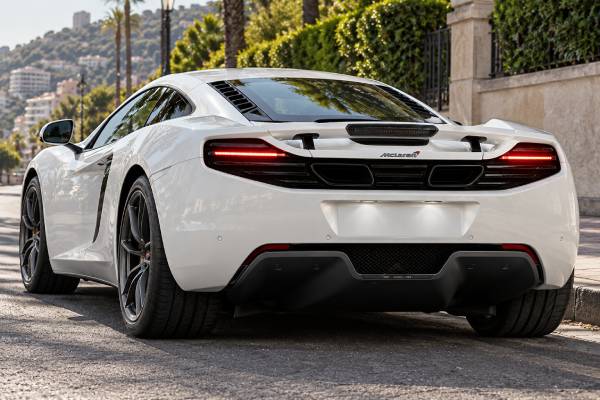
By the time McLaren shortened MP4-12C to 12C, the car had become more than the startling first product of a new road-car company. The 625 PS calibration, sharper transmission software, revised controls, and accumulating factory updates turned it into a distinct later-production specification that deserves to be judged on its own terms. This guide covers the 616 hp 12C coupe across the 2012–2014 period, while recognizing that registration dates, calendar build dates, and model-year labels do not always align between markets. Under the skin is the familiar P11 architecture: a carbon-fiber MonoCell, a 3.8-liter twin-turbocharged M838T V8, a seven-speed dual-clutch transmission, rear-wheel drive, and the hydraulically interconnected ProActive Chassis Control suspension. The important ownership question is therefore not simply whether a used example is “a 12C.” It is whether its build history, software level, service record, options, and present mechanical condition support the specification its badges and paperwork appear to promise.
Table of Contents
- From MP4-12C to 12C: What the 2012–2014 Car Covers
- Technical Specifications and Vehicle Layout
- How the 12C Chassis Creates Its Unusual Road Character
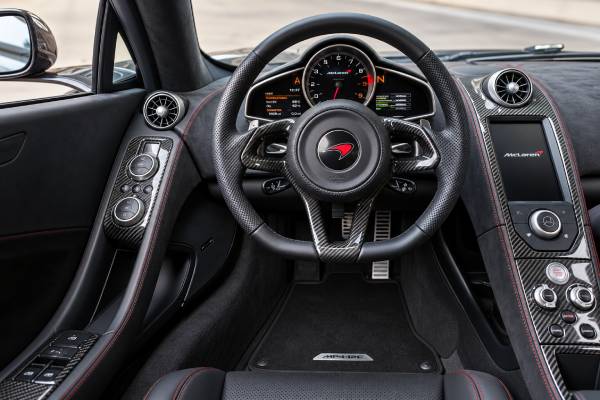
- Cabin, Controls, and Everyday Usability
- Maintenance by System, Not Just by Mileage
- Known Trouble Areas, Recalls, and Sensible Remedies
- How to Buy a 12C by Evidence Rather Than Appearance
From MP4-12C to 12C: What the 2012–2014 Car Covers
The later 12C is fundamentally the evolved MP4-12C coupe, not a clean-sheet successor. McLaren dropped the “MP4” portion of the name as the 625 PS specification arrived, while the underlying P11 platform, carbon MonoCell, M838T engine family, and core suspension concept remained intact.
That apparently simple naming change can make used-car research surprisingly messy. Contemporary material may call essentially the same evolved car an MP4-12C, a 12C, a 2013 model, or a 2012-built car depending on publication date and market. McLaren’s June 2012 enhancement announcement is the useful technical dividing point: output increased from 600 PS to 625 PS, equivalent to roughly 592 bhp and 616 hp respectively, and the company described the higher-output configuration as 2013 model-year specification. Existing owners were offered the power increase and related software changes as a complimentary update. A car first registered in 2012 can therefore have the later calibration without being a factory-built “2012 616 hp” specification in every administrative sense.
For this guide, 2012–2014 describes the requested production-era scope of the 616 hp coupe. A buyer should still use the VIN, build documentation, dealer history, and invoices to establish the individual car’s chronology. Badges alone are weak evidence because McLaren made meaningful running changes and allowed important upgrades to be retrofitted.
The 2014 car represents a mature point in the 12C’s short life. Contemporary road tests noted detail changes such as more conventional door-opening controls, continued transmission and software refinement, and a stronger sense of theatre than on the earliest examples. The 650S then arrived using the same broad architecture with more power and revised styling, effectively drawing the 12C era to a close. That short development cycle is one reason provenance matters: two outwardly similar cars can differ in infotainment hardware, lift equipment, software, factory campaigns, brake configuration, wheels, seats, and the history of later updates.
The best way to classify a candidate is consequently in layers. First confirm body style and VIN. Then establish build and first-registration dates. Next confirm whether the 625 PS engine software and associated gearbox calibration are documented. Finally record options and subsequent factory or specialist work. That produces a more useful identity than relying on a single model-year field in an advertisement.
Technical Specifications and Vehicle Layout
The 616 hp 12C uses a mid-mounted 3,799 cc twin-turbocharged gasoline V8 driving the rear wheels through a seven-speed Seamless Shift Gearbox. Its headline numbers are 625 PS, 616 hp, and 600 Nm, but the low mass, long torque plateau, and compact carbon structure are just as important to the way those numbers translate to the road.
| Specification | 12C coupe |
|---|---|
| Engine | M838T, 90-degree V8, twin turbocharged, dry-sump lubrication |
| Displacement | 3,799 cc (3.8 L) |
| Bore × stroke | 93.0 × 69.9 mm |
| Compression ratio | 8.7:1 |
| Valve gear | DOHC, 32 valves, variable valve timing |
| Maximum power | 625 PS / 460 kW / 616 hp at 7,500 rpm |
| Maximum torque | 600 Nm (443 lb-ft) at 3,000–7,000 rpm |
| Maximum engine speed | 8,500 rpm |
The M838T is an internal-combustion gasoline engine with port fuel injection, two turbochargers, and a dry-sump oil system. The later calibration does not add torque; instead, it sustains power farther toward the top of the rev range. That distinction matters on a test drive because a healthy 616 hp car should feel strong above midrange without needing a larger low-speed torque hit than the original version.
| Specification | Details |
|---|---|
| Transmission | 7-speed dual-clutch McLaren SSG with Pre-Cog function |
| Drive | Rear-wheel drive |
| Differential strategy | Open differential supported by Brake Steer |
| 1st / 2nd / 3rd | 4.0 / 2.6 / 1.9 |
| 4th / 5th / 6th / 7th | 1.5 / 1.2 / 0.9 / 0.7 |
| Final drive | 3.3:1 |
| Measure | Factory figure |
|---|---|
| Maximum speed | 333 km/h (207 mph) |
| 0–100 km/h | 3.3 s; 3.1 s with Corsa tires |
| 0–200 km/h | 9.0 s; 8.8 s with Corsa tires |
| 0–60 mph | 3.2 s; 3.0 s with Corsa tires |
| Standing quarter-mile | 10.8 s at 218 km/h (135 mph) |
| Combined consumption | 11.7 L/100 km (24.2 mpg UK) |
| CO₂ | 279 g/km |
Those acceleration figures are factory data for the 625 PS coupe and illustrate another 12C characteristic: traction and shift speed matter as much as the nominal power increase. Independent testing can produce different numbers because tires, surface, temperature, fuel, rollout methodology, and launch procedure all affect results. Treat the factory table as a specification reference, not a guarantee that an aging road car will duplicate it.
| Component | Specification |
|---|---|
| Structure | Carbon-fiber MonoCell with aluminum body structures and panels |
| Suspension | Double wishbones with ProActive Chassis Control hydraulic interconnection |
| Handling modes | Normal, Sport, Track |
| Steering | Variable-rate electrohydraulic power assistance; 2.66 turns lock-to-lock |
| Front wheels / tires | 8.5J × 19; 235/35 R19 |
| Rear wheels / tires | 11J × 20; 305/30 R20 |
| Standard brakes | 370 mm front / 350 mm rear cast-iron discs |
| Optional carbon-ceramic brakes | 394 mm front / 380 mm rear |
| Measure | Specification |
|---|---|
| DIN weight | 1,434 kg (3,161 lb) |
| Dry weight | 1,336 kg (2,945 lb) |
| Lightest dry specification | 1,301 kg (2,868 lb) |
| Weight distribution | 42.5% front / 57.5% rear |
| Fuel tank | 72 L |
| Engine oil system | 8.0 L |
| Cooling system | 20.0 L |
| Washer system | 4.0 L |
Period owner documentation specifies high-octane unleaded fuel for full performance: 98 RON is the preferred rating, with 95 RON identified as the minimum fallback where 98 is unavailable. Fluid brands and specifications in period manuals are useful historical references, but an owner should verify current approved products against VIN-specific McLaren information rather than assuming a 2011 document is the final authority for every later car.
How the 12C Chassis Creates Its Unusual Road Character
The defining engineering feature of the 12C is not the engine but the way its suspension separates wheel control from roll control. ProActive Chassis Control links hydraulic dampers across the car so McLaren could limit body roll without relying on conventional anti-roll bars in the usual way, allowing a level of ride compliance that was unusual in a supercar of this performance.
That architecture explains why a 12C can feel supple in Normal mode yet become tightly controlled when the handling selector is moved toward Sport or Track. It is not an adaptive-damper system in the simple sense of making four dampers merely “soft” or “hard.” Hydraulic circuits contribute to heave, roll, and pitch management, so condition of the accumulators, actuators, fluid system, and control hardware matters to both comfort and handling.
The steering follows the same philosophy of preserving useful feedback rather than chasing a fashionable technology label. Its electrohydraulic assistance gives the front axle a more organic weighting than many later electric systems. On a healthy car, the nose responds cleanly without nervousness and the wheel communicates tire loading well enough to make the car approachable at ordinary road speeds.
Brake Steer is another McLaren solution that is easy to misdescribe. The 12C does not use a conventional mechanical limited-slip differential. Instead, the braking system can apply an inside rear brake under certain cornering conditions to help the car rotate and to manage wheelspin. The objective is agility without the weight and friction of a traditional limited-slip unit. A driver does not normally perceive the system as a separate intervention; it is part of the car’s integrated behavior.
Aerodynamics add another visible layer. The rear Airbrake changes angle under heavy braking, adding drag and rear downforce while also influencing aerodynamic balance. Its movement is therefore more than theatre. During a pre-purchase inspection, the Airbrake should cycle correctly, sit evenly, and show no warning messages because its operation is tied into the wider control network.
Power delivery is deliberately broad. Peak torque is available from 3,000 through 7,000 rpm, while the 625 PS calibration holds output to 7,500 rpm. There can still be a perceptible turbocharged character at low revs, but once the engine is loaded the 12C covers ground with very little interruption. The dual-clutch gearbox is central to that sensation. Later software made changes smoother and quicker, and manual paddle shifts should be decisive rather than accompanied by abnormal flare, hesitation, or warning lights.
Normal mode can make the 12C deceptively calm as speed rises, but it remains a powerful rear-drive car. Correct tires, alignment, and functioning electronic systems are essential to the approachable behavior McLaren engineered into it.
Cabin, Controls, and Everyday Usability
A 12C is more usable than its carbon structure and 200-plus-mph capability suggest, but its day-to-day experience depends heavily on equipment version and software history. Visibility, ride quality, compact controls, and a relatively restrained cabin help; early infotainment and some touch-sensitive interfaces can do the opposite.
The narrow center stack and upright portrait display were intended to keep the cabin focused on the driver. The climate controls migrate to the doors, leaving the central area visually simple. The rocker-style transmission controls and single-piece shift paddle reinforce the functional theme. Compared with many exotics, the view forward is unusually expansive, which reduces the intimidation of placing the car on a narrow road.
Getting in is a different story. The deep carbon sill is structural, and the dihedral door opening changes the motion required to enter or leave. Seat condition matters because repeated sliding across the bolster and sill area can reveal how a car has been used. Check the carbon trim and painted edges for cosmetic damage, but distinguish superficial wear from actual structural harm; any suspected MonoCell damage warrants specialist assessment.
Infotainment deserves its own inspection rather than a casual “screen turns on” check. Early IRIS systems became one of the car’s better-known frustrations, and later hardware/software versions improved functionality. Some cars received IRIS 2 upgrades while others remain closer to original configuration. Neither state is automatically superior for every owner: a collector may value original equipment, whereas a frequent user may care more about dependable navigation, audio, Bluetooth, and camera operation. What matters is knowing exactly which hardware is fitted and confirming that it works through a full heat cycle.
Door opening is another date-sensitive detail. Earlier touch or gesture-based exterior access could be temperamental in practice; later cars gained more conventional buttons. A seller who says a feature is “just how they all are” should still demonstrate it. Test both keys, exterior and interior releases, window indexing, mirror functions, central locking, seat controls, and any vehicle-lift system.
Low-voltage history matters because the 12C’s electronics and access systems benefit from disciplined battery support. Confirm battery age, maintainer use, and whether any low-voltage incidents are documented. The car’s good visibility, front luggage space, and compliant ride make longer trips realistic, but only when climate control, access systems, charging equipment, and cabin electronics all work correctly.
Maintenance by System, Not Just by Mileage
The safest maintenance strategy for a 12C is system-based and history-led: verify scheduled servicing, then separately audit the powertrain, hydraulic chassis, brakes, cooling system, electrical supply, and software status. Low annual mileage does not remove the effects of age, fluid deterioration, seal condition, battery stress, or long storage.
Period specialist guidance commonly describes a 12-month or 10,000-mile service rhythm for the 12C. That is a useful screening rule, but invoices are more valuable than stamps because they show what was actually done. A decade-old supercar may need age-related work that never appears in a simple distance schedule.
Start with the engine. The dry-sump system holds about 8.0 liters, and period owner literature listed Mobil 1 New Life 0W-40 as the approved engine oil. That historical specification helps identify whether past servicing was informed, but current oil approval should be checked through McLaren or a qualified specialist for the specific VIN and market. Look for recorded oil changes, correct filter use, clean drain-plug areas, and investigation of any seepage around turbo oil lines rather than accepting fresh cleaning as proof of health.
The cooling system is large at roughly 20 liters. Check fluid condition and level only according to safe cold-engine procedures, inspect visible hoses and joints, and study invoices for coolant work. Overheating history deserves particular attention because a supercar with tightly packaged turbo hardware can generate significant thermal load. Transmission service history is similarly important. McLaren maintenance documentation identifies clutch oil and filter replacement at 30,000 km (20,000 miles). On a lightly used car, confirm how age and service history were handled by the servicing facility rather than assuming mileage alone controls every task. During the drive, test pull-away, reverse, low-speed maneuvering, automatic mode, and repeated manual shifts after the drivetrain is warm.
ProActive Chassis Control should be treated as its own maintenance domain. Ask whether hydraulic accumulators or corner actuators have been replaced, inspect for leaks, and scan the car for stored faults. A car that visibly changes ride height unexpectedly, presents a PCC warning, or behaves differently side to side needs diagnosis, not a promise that it “settles after driving.”
Brakes require a hardware-specific record. Standard steel rotors and optional carbon-ceramic discs have different wear patterns and replacement costs. Identify which system is fitted, measure or assess it using the correct procedure, and check pad condition, fluid history, calipers, and parking-brake operation. Period documentation specifies DOT 5.1 brake fluid and calls for replacement at service intervals; modern service work should use the currently approved specification.
Finally, verify tires by more than tread depth. The 12C was developed around specific Pirelli fitments, and age, heat cycling, sidewall damage, repairs, and mixed specifications can undermine the chassis long before the tread appears worn out. Compare date codes across all four corners and budget for a matched set if there is any uncertainty.
Known Trouble Areas, Recalls, and Sensible Remedies
Most 12C concerns are manageable when diagnosed early, but deferred faults can become expensive because the car combines bespoke hydraulics, a dual-clutch transaxle, carbon structure, and networked electronics. The right response is evidence and diagnosis, not either panic or blanket reassurance.
Hydraulic suspension faults are among the better-documented ownership issues. Wear in a corner actuator or related hydraulic component can trigger a PCC warning or cause unusual self-leveling behavior. If a fault is present, scan the appropriate modules and inspect the hydraulic circuit. Replacing parts speculatively without identifying the failed component can waste money, while continuing to drive a car that is clearly behaving incorrectly can hide a broader problem.
Transmission oil leakage also deserves inspection. Specialist buying guidance has reported leakage associated with gearbox seals on some cars. A clean undertray does not prove absence of a leak if the car was recently detailed, so inspect before and after a meaningful test drive and review prior invoices. Shift quality should be assessed cold and hot.
Lighting and cabin electronics provide less dramatic but useful clues. Rear lamp condensation is reported on the model; brief misting that clears differs from persistent water intrusion or an electrical warning. IRIS 1 infotainment can be unstable, particularly compared with later hardware, so exercise every function rather than relying on a seller’s description. A documented IRIS 2 conversion may be useful for regular use, while originality can matter to a different kind of buyer.
Battery management is another recurring theme. A discharged battery can create a cascade of low-voltage symptoms that obscure diagnosis. Confirm battery type, age, maintainer use, and charging health. Do not assume that multiple warning messages after a flat battery are harmless, but do establish stable voltage before condemning unrelated modules.
Bodywork needs supercar-specific scrutiny. Look for stone damage, paintwork, corrosion at vulnerable panel edges, door alignment, and evidence of wheel or underside contact. The carbon MonoCell is highly rigid, but accident history is not something to assess from panel gaps alone. If repairs are suspected, use a facility that understands composite structures and can inspect documented repair methods.
Recall status is VIN-specific. U.S. 12Cs fall within Takata passenger-airbag recall activity for affected vehicles, and McLaren also issued a windshield-wiper recall covering certain cars in hot, humid U.S. states. Recall populations and remedies depend on VIN and market, so use the relevant manufacturer or government lookup rather than assuming every 12C has the same campaign status. Safety recalls should be completed through the appropriate authorized route.
A pre-purchase scan is valuable because the absence of a dashboard warning at one moment is not the same as a clean history. Stored faults, readiness information, module communication issues, and repeated cleared codes can tell a more complete story. Interpret scan results with a technician familiar with McLaren systems; generic code readers do not provide the same depth.
How to Buy a 12C by Evidence Rather Than Appearance
The strongest 12C purchase is the car whose identity, upgrades, maintenance, and current condition all agree with one another. Color, mileage, and option count matter less than a coherent paper trail backed by a specialist inspection.
Begin before seeing the car. Ask for the VIN, build information, service invoices, recall documentation, and a precise list of factory options and later modifications. For a 616 hp example, determine whether it left production in the later specification or received the complimentary powertrain update afterward. Either can be legitimate; the point is to remove ambiguity.
Then inspect the chronology. A long gap between services may matter even if only a few thousand miles were covered. Cross-check mileage entries, invoice dates, tire date codes, battery replacements, brake work, hydraulic repairs, and software updates. A history that tells a consistent story is more persuasive than a freshly stamped book with no supporting detail.
The physical inspection should start cold if possible. Listen for abnormal noises at startup, watch for smoke beyond normal condensation, and confirm stable warning-light behavior. Examine fluids and visible leaks without opening hot systems. Inspect the front underbody, wheel rims, tire sidewalls, brake hardware, paint edges, glass, lamps, and door operation. Look inside for wear that makes sense for the stated mileage.
During the drive, use Normal mode first. The car should ride with remarkable compliance for its class, track straight, brake cleanly, and shift smoothly. Work through the powertrain and handling modes only when conditions permit and the car is warm. Check full steering lock at parking speed, low-speed clutch behavior, reverse engagement, lift operation if fitted, climate control, infotainment, and active rear-wing behavior. A brief high-speed burst proves very little compared with twenty minutes of varied, legally appropriate operation.
After the drive, inspect again. Fresh fluid traces, smells, unequal ride height, persistent lamp misting, fans that behave unusually, or new warnings deserve explanation. A specialist should then place the car on a lift, scan all accessible modules, assess suspension hydraulics, examine the gearbox and engine for leakage, measure brakes using procedures appropriate to their material, and look for evidence of collision or composite repair.
Do not treat modifications as automatically good or bad. Exhausts, wheels, software, paint-protection film, infotainment changes, and cosmetic additions should be evaluated for installation quality, legality, reversibility, and documentation. For engine software in particular, distinguish McLaren’s own 625 PS update from unrelated aftermarket tuning.
A final budget should include near-term work identified during inspection rather than only the purchase price. Tires, brake components, annual service, battery support, hydraulic repairs, and deferred cosmetic work can quickly erase the apparent saving of the cheapest example. Conversely, a car with documented remedial work may be a better proposition than a lower-mileage car that has simply sat.
The 12C’s enduring appeal comes from a combination that remains unusual: compact dimensions, carbon construction, an exceptionally broad turbo V8, hydraulic ride control, and very little visual excess. Buying well means preserving that integration. The objective is not to find a car with no history; it is to find one whose history explains why it operates today as McLaren intended.
References
- Even more powerful and usable: the enhanced McLaren MP4-12C 2012
- First Drive: 2014 McLaren 12C Coupe 2014
- Buy McLaren 12C Price, PPC or HP | Top Gear 2019
- MCLAREN MP4-12C USER INSTRUCTIONS Pdf Download | ManualsLib 2011
- MCLAREN MP4-12C AUTOMOBILE MAINTENANCE MANUAL | ManualsLib 2014
- Takata Air Bag Recall Spotlight | NHTSA 2026
Disclaimer
This article is for general information and vehicle-research purposes only. It is not a substitute for diagnosis, repair instructions, or maintenance performed by a qualified McLaren technician. Specifications, fluid approvals, torque values, service intervals, recall coverage, and procedures can vary by VIN, market, equipment, software level, and later factory updates; verify them against current official McLaren documentation before servicing or operating a specific vehicle.
If this guide helped you understand the later 12C coupe, share it with another owner or buyer who is comparing histories, specifications, and inspection findings.