
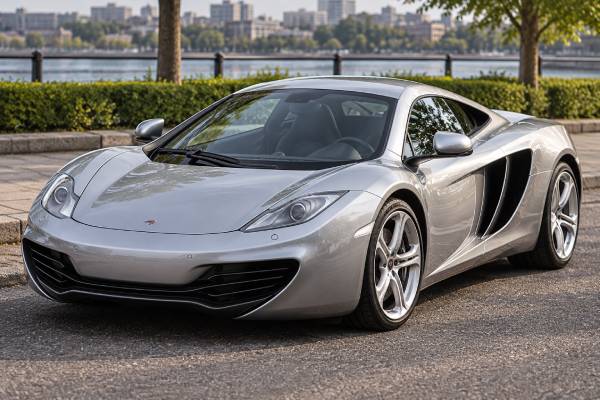
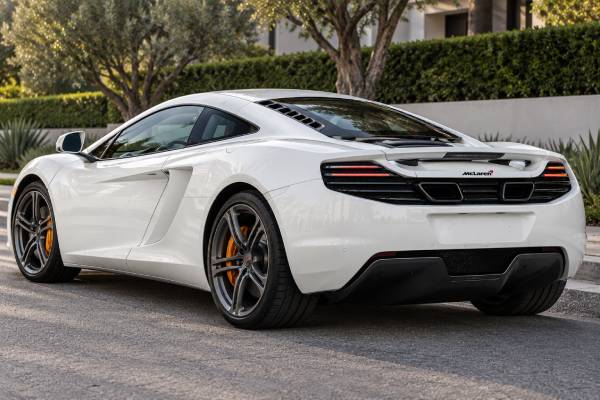
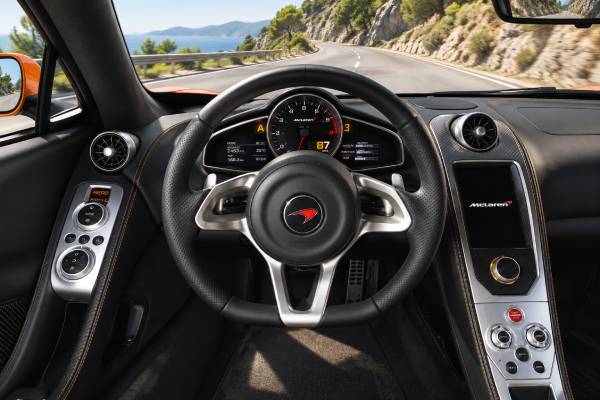
The 592 hp McLaren MP4-12C is the original production form of McLaren Automotive’s first modern series-built road car. Introduced with a 3.8-liter twin-turbo V8, a one-piece carbon-fiber MonoCell, a seven-speed dual-clutch transmission, and hydraulically linked ProActive Chassis Control, it was engineered to combine supercar pace with unusually compliant road manners. That combination still defines the early 12C today, but buyers need to understand one important detail: McLaren announced a 625 PS/616 hp update in June 2012 and offered the powertrain software package to existing owners. An early car may therefore have been built as a 592 hp example but later updated. For anyone trying to preserve original specification, verify the car’s build records and software history rather than relying only on a seller’s description. This guide focuses on the launch-specification 600 PS/592 bhp version and explains its performance, engineering, service needs, age-related risks, and inspection priorities.
Table of Contents
- What Defines the 592 hp Launch-Spec MP4-12C
- MP4-12C Technical Data and Core Specifications
- How the MonoCell, Suspension, Aero, and Driveline Work
- Performance and Everyday Road Behavior
- Maintenance Priorities for an Early 12C
- Known Age-Related Issues and Warning Signs
- How to Inspect and Buy a 592 hp MP4-12C
What Defines the 592 hp Launch-Spec MP4-12C
The launch-spec MP4-12C is the 600 PS car, equivalent to about 592 bhp, with peak power at 7,000 rpm and 600 Nm (443 lb-ft) of torque from 3,000 to 7,000 rpm. It is the version represented by McLaren’s original 2011 technical release and the specification in which the car first reached customers.
That distinction matters because the later 625 PS update was software-led and was offered to existing owners. A car built in the 592 hp period can therefore be mechanically original but no longer run its original engine and transmission calibration. For a driver who simply wants the best-performing early 12C, the update is not necessarily a disadvantage. For a collector who specifically wants the first production tune, documentation is more important than a badge, registration date, or advertised horsepower figure.
The early car’s underlying hardware already contains the main ideas that made the 12C unusual. Its M838T engine is a 3,799 cc, 90-degree, twin-turbocharged V8 with dry-sump lubrication, dual overhead camshafts, four valves per cylinder, and variable valve timing. The engine sits longitudinally behind the passenger compartment and drives the rear wheels through McLaren’s seven-speed Seamless Shift Gearbox, or SSG.
The carbon MonoCell is the structural center of the car. Aluminum structures carry crash loads and suspension hardware at the front and rear, while the passenger cell is a one-piece carbon-fiber tub. Instead of using conventional anti-roll bars as the main tool for controlling cornering roll, McLaren linked the dampers hydraulically. The result is a car that can be supple over uneven pavement while remaining tightly controlled when lateral loads build.
Early cars also have several period-specific ownership traits. The first-generation IRIS infotainment system can feel dated and some cars have since received later hardware. Door entry uses capacitive sensing rather than a conventional exposed handle. Battery condition matters because the car has many electronic control modules, and low voltage can create misleading fault messages. These details do not make the car inherently fragile, but they reward careful storage, correct charging, and service by people familiar with the platform.
MP4-12C Technical Data and Core Specifications
This version is a gasoline-only, rear-wheel-drive ICE supercar. Its defining technical package is the 3.8-liter M838T twin-turbo V8, seven-speed dual-clutch SSG, carbon MonoCell, hydraulic ProActive Chassis Control, and active rear Airbrake.
| Specification | Value |
|---|---|
| Engine code | M838T |
| Engine layout | Longitudinal mid-mounted 90° V8 |
| Displacement | 3,799 cc (3.8 L) |
| Induction | Twin turbochargers with intercooling |
| Valvetrain | 32-valve DOHC with variable valve timing |
| Bore × stroke | 93.0 × 69.9 mm (3.66 × 2.75 in) |
| Compression ratio | 8.7:1 |
| Maximum power | 600 PS / 441 kW / 592 bhp at 7,000 rpm |
| Maximum torque | 600 Nm (443 lb-ft) at 3,000–7,000 rpm |
| Maximum engine speed | 8,500 rpm |
| Recommended fuel | 98 RON/88 MON unleaded to EN 228; 95 RON/85 MON minimum when 98 RON is unavailable |
| Fuel-tank capacity | 72 L (15.8 UK gal; 19.0 US gal) |
| Specification | Value | Condition |
|---|---|---|
| Maximum speed | 330 km/h (205 mph) | Manufacturer figure |
| 0–100 km/h (0–62 mph) | 3.3 s | 3.1 s with optional P Zero Corsa tires |
| 0–200 km/h (0–124 mph) | 9.1 s | 8.9 s with optional P Zero Corsa tires |
| 400 m / quarter mile | 10.9 s at 216 km/h (134 mph) | Manufacturer figure |
| 100–0 km/h braking | 30.5 m (100 ft) | Manufacturer figure |
| 200–0 km/h braking | 123 m (403 ft) | Manufacturer figure |
| EU combined fuel consumption | 11.7 L/100 km (24.2 mpg UK) | Period European figure |
| CO₂ emissions | 279 g/km | Period European figure |
| Specification | Value |
|---|---|
| Transmission | 7-speed dual-clutch Seamless Shift Gearbox (SSG) with Pre-Cog |
| Drive type | Rear-wheel drive |
| Final-drive ratio | 3.3:1 |
| Differential strategy | Open differential with Brake Steer |
| Suspension | Independent double wishbones with ProActive Chassis Control |
| Handling modes | Normal, Sport, and Track; Winter mode also provided through vehicle controls |
| Steering | Rack-and-pinion with variable-rate electro-hydraulic assistance |
| Steering turns lock-to-lock | About 2.66 |
| Turning circle | 12.3 m (40.4 ft) |
| Active aerodynamics | Rear Airbrake/spoiler |
| Specification | Value |
|---|---|
| Body style | 2-door, 2-seat coupe |
| Structure | Carbon-fiber MonoCell with aluminum front and rear structures |
| Length | 4,507 mm (177.4 in) |
| Width | 1,909 mm (75.2 in) |
| Height | 1,199 mm (47.2 in) |
| Wheelbase | 2,670 mm (105.1 in) |
| Front/rear track | 1,656 / 1,583 mm (65.2 / 62.3 in) |
| DIN weight | 1,434 kg (3,161 lb) |
| Dry weight | 1,336 kg (2,945 lb) |
| Lightest quoted dry weight | 1,301 kg (2,868 lb) with lightweight options |
| Weight distribution | 42.5% front / 57.5% rear |
| Specification | Value |
|---|---|
| Front wheels | 8.5J × 19 in |
| Rear wheels | 11J × 20 in |
| Front tires | 235/35 R19 Pirelli P Zero |
| Rear tires | 305/30 R20 Pirelli P Zero |
| Standard brake discs | 370 mm front / 350 mm rear, iron rotors with forged aluminum hats |
| Optional carbon-ceramic discs | 394 mm front / 380 mm rear |
| Engine-oil capacity | 8.0 L (8.5 US qt) |
| Period handbook engine oil | Mobil 1 New Life 0W-40 |
| Cooling-system capacity | 20.0 L (21.1 US qt) |
| Period handbook power-steering fluid | Pentosin CHF202 |
| Period handbook brake fluid | Pentosin DOT 5.1 |
| Wheel-bolt torque | 130 Nm (96 lb-ft) |
The service-product names above reflect period documentation. Product formulations and approved replacements can change, so an owner should use the current McLaren service information for the exact VIN before ordering fluids.
How the MonoCell, Suspension, Aero, and Driveline Work
The 12C’s most important engineering achievement is not its power output; it is the way several systems work together to create speed without making the car constantly harsh. The carbon structure, hydraulic suspension, brake-based cornering aid, active rear wing, and dual-clutch gearbox all support that goal.
The MonoCell gives the suspension a stable platform
A stiff central structure lets suspension engineers tune wheel movement without having to compensate for flex in the passenger cell. McLaren’s one-piece carbon MonoCell weighs roughly 75 kg in period descriptions, yet it provides the structural backbone for the entire car. Aluminum frames at each end support the suspension, cooling hardware, and crash structures.
For a used-car buyer, that construction changes how accident history should be judged. Cosmetic damage to bolt-on panels is one thing; impact damage involving the tub or its bonded and bolted interfaces is another. A pre-purchase inspection should look for repair evidence around suspension pick-up points, underbody panels, and the front and rear structures rather than stopping at paint-depth readings.
ProActive Chassis Control separates ride and roll behavior
Conventional sports cars use anti-roll bars to connect left and right suspension movement. The 12C instead uses interconnected hydraulic circuits in its adaptive damper system. When both wheels on an axle move in the same direction over a bump, the system can allow compliance. When the body tries to roll in a corner, hydraulic pressure resists that motion.
That is why a healthy 12C can feel unexpectedly calm on a rough road in Normal mode yet become much more tied down in Sport or Track. It also explains why accumulator or hydraulic faults are important. If the pressure-control side of the system is unhealthy, ride quality can become abnormally stiff and the differences between handling modes may shrink or disappear.
Brake Steer substitutes control logic for a mechanical limited-slip differential
The rear differential is open. During certain cornering conditions, Brake Steer can apply a rear brake individually to help the car rotate and manage inside-wheel behavior. It is not the same thing as a clutch-type limited-slip differential, and it should not be evaluated as though the 12C simply lacks traction hardware. The brake system is part of the car’s yaw-management strategy.
The Airbrake is both aerodynamic and dynamic
The active rear wing can rise for aerodynamic effect and deploy more aggressively under heavy braking. In addition to increasing drag, its position changes rear axle loading. On a test drive, warning lights or inactive aero functions deserve proper diagnosis because the system is integrated into the car’s broader dynamics package.
The SSG rewards a deliberate driving style
The seven-speed dual-clutch transmission offers automatic operation and paddle control. McLaren’s Pre-Cog concept allows the driver to partially load a paddle to signal an intended shift. In practice, the gearbox feels best when treated as a performance dual-clutch system rather than a torque-converter automatic. Low-speed maneuvering can feel more mechanical, while full-throttle shifts are extremely quick for the period.
Performance and Everyday Road Behavior
Even in 592 hp form, the MP4-12C is genuinely modern-fast rather than merely historically interesting. Period instrumented testing recorded roughly 3.2 seconds to 60 mph and an 11.1-second quarter mile in one MotorTrend test, while McLaren’s own Corsa-tire figures were quicker.
The important point is how accessible the speed feels. Peak torque arrives at 3,000 rpm and remains available across a very broad band, so the car does not need to be held near 8,500 rpm to accelerate hard. Turbo response is more noticeable than in later McLarens, but the engine still builds speed with remarkable urgency once boost is established.
Steering is a major part of the early car’s appeal. The electro-hydraulic system preserves more texture than many later fully electric systems. The steering wheel itself is intentionally simple, leaving drive-mode controls on the center console rather than covering the rim with switches.
Normal mode is the correct starting point for broken public roads. The suspension’s ability to absorb single-wheel bumps without excessive body motion is one reason the 12C made such an impression when new. Sport firms the responses without turning the car into a track-only device, while Track asks more from the tires, driver, and road surface.
The standard iron brakes are not a budget alternative in the usual sense. They were engineered as lightweight two-piece assemblies and provide strong road performance. Carbon ceramics were optional and bring lower unsprung mass and better repeated high-temperature capability, but replacement cost is far higher. A buyer should judge actual disc and pad condition rather than assuming the carbon option is automatically preferable.
Practicality is relative, but the 12C can be used regularly. Visibility forward is good for a low supercar, the ride is unusually forgiving, and the transmission can operate automatically. The compromises are familiar: wide bodywork, low clearance, expensive tires, limited luggage space, attention-demanding doors, and the need to manage battery state if the car sits.
Fuel economy is also unusually respectable for the era. The European combined figure was 11.7 L/100 km, and U.S. testing sources list an EPA rating around 15 mpg city and 22 mpg highway for the 2012 car. Hard use changes those numbers quickly, but the car was engineered with efficiency as one of its performance targets.
Maintenance Priorities for an Early 12C
The best maintenance strategy is calendar-conscious, battery-conscious, and documentation-heavy. Low annual mileage does not eliminate fluid aging, seal aging, hydraulic wear, or the need to keep software and recall work current.
Start with the service history. The original maintenance system includes scheduled inspections as well as periodic fluid and filter work. A specialist should be able to show what was done, not simply stamp a book. For a car now well beyond its original warranty period, invoices are often more useful than a sequence of generic “annual service” entries.
Pay particular attention to these areas:
- Engine oil and dry-sump system: use the correct current approved oil and verify level using the prescribed procedure. The early handbook lists an 8.0-liter capacity and Mobil 1 New Life 0W-40, but current service guidance should take priority where superseded.
- Cooling system: the engine is densely packaged and heat management matters. Inspect hoses, radiators, condensers, expansion tank areas, and evidence of coolant loss. The period handbook lists a 20-liter cooling-system capacity.
- Brake fluid: moisture lowers boiling point, which matters especially on a car capable of very high brake temperatures. Check when it was last replaced, not just pad thickness.
- Transmission service: look for evidence that gearbox fluid and filter work has been performed at the appropriate mileage/time points. A clean shift during a short test is not a substitute for service history.
- PCC hydraulic system: any suspension warning, unusually harsh ride, self-leveling oddity, or lack of distinction between modes deserves diagnosis before purchase.
- Battery: a maintained battery is basic preventive care. If the car sits, use the correct conditioner and connection point described for the vehicle rather than improvising.
- Tires: age matters as much as tread depth. A lightly used supercar can have visually healthy tires that are too old for confident wet or high-speed use.
Track use raises the maintenance burden. Brake fluid, tire condition, wheel torque, temperatures, and post-event inspection deserve more attention. The car’s capability can make a short circuit session much harder on consumables than ordinary mileage suggests.
Known Age-Related Issues and Warning Signs
The most important used-12C problems are usually system-specific rather than evidence that the whole platform is unreliable. A careful buyer should separate normal aging from expensive deferred repair.
Hydraulic suspension faults
ProActive Chassis Control depends on pressurized hydraulic components and accumulators. As these age, a car can develop a very firm ride, suspension warnings, inconsistent ride height, or little change between Normal, Sport, and Track. Do not assume a hard-riding 12C is “just a supercar.” A healthy car should have a clear compliance advantage in its softer setting.
Transmission fluid leaks and shift quality
Specialist buying guides have reported gearbox oil-seal concerns on some cars. Inspect the underside with panels removed where practical, because a clean garage floor does not prove the driveline is dry. During the drive, test low-speed engagement, manual shifts, automatic operation, reverse selection, and behavior after the car is fully warm.
Door-entry and window behavior
The 12C’s touch-sensitive door entry is elegant but can become frustrating when sensors or related electronics misbehave. Confirm both doors unlock from outside, rise correctly, latch cleanly, and coordinate with the side-glass drop. Test the key fobs as well as interior releases.
IRIS infotainment
The early IRIS system is a known weak point in usability. Some cars were upgraded to later hardware. Decide whether originality or functionality matters more to you, then verify exactly what is installed. Navigation, Bluetooth, audio, screen response, and reboot behavior should all be tested during the inspection.
Battery-related false alarms
A weak battery can cause a cascade of warning messages that disappear after voltage is restored, but that does not mean every warning should be dismissed as “just the battery.” Check battery health first, then scan the car with McLaren-compatible diagnostics so stored faults can be judged properly.
Recalls and campaigns
U.S.-market cars can be affected by Takata passenger-airbag recalls, and certain 2012–2014 cars in hot and humid U.S. states were included in a windshield-wiper-motor recall. Recall completion should be checked by VIN. A seller’s statement that “all recalls are done” is not sufficient documentation.
How to Inspect and Buy a 592 hp MP4-12C
A good early MP4-12C is bought on condition, provenance, and system health, not on mileage alone. The most valuable inspection is one performed by a shop that can access McLaren diagnostics and understands PCC, SSG, carbon structure, and the car’s software history.
Before committing, verify the following:
- Build and power specification. Establish whether the car was delivered in 592 hp form and whether the complimentary 625 PS/616 hp update was later installed. If original calibration matters to you, ask for documentary evidence rather than a verbal claim.
- Service chronology. Review invoices by date and mileage. Look for fluid changes, filters, brake work, hydraulic repairs, battery replacements, tires, campaign work, and any gearbox or cooling-system attention.
- Cold start. Arrange to see the car genuinely cold. Listen for abnormal mechanical noise, watch for persistent smoke, and check that warning lights complete their normal self-test.
- PCC operation. Drive over a mixed road surface and switch handling modes. A rock-hard ride, fault messages, or no meaningful change between settings warrants specialist investigation.
- Gearbox behavior. Test reverse, parking maneuvers, automatic mode, manual shifts, and full operating temperature. Check underneath for leaks.
- Brakes and tires. Measure remaining brake material and inspect carbon-ceramic discs carefully if fitted. Confirm tire dates, matching specification, sidewall condition, and even wear.
- Body and structure. Inspect panel fit, underbody damage, front lift or lower-edge scrapes where fitted, suspension pick-up areas, and evidence of repair near the MonoCell interfaces.
- Electronics. Test doors, windows, mirrors, climate control, IRIS, parking sensors, lighting, active aero, seat functions, key fobs, and instrument warnings.
- Recall status. Check the VIN with the relevant national recall authority or McLaren retailer.
- Ownership setup. Budget for a battery conditioner, correct tires, specialist servicing, and a contingency fund. Purchase price is only one part of owning a low-volume carbon-tub supercar.
For enthusiasts, the 592 hp car has a specific historical appeal because it represents McLaren Automotive’s first customer calibration before the rapid factory evolution that followed. That does not automatically make it better or worse than an updated car. It simply means buyers should know which experience they are paying for. The strongest example is one whose specification is clearly documented, whose hydraulic and electrical systems work properly, and whose owner has serviced it by time as well as mileage.
References
- Official performance data and technical specification for new McLaren MP4-12C announced 2011
- 2012 McLaren MP4-12C First Test 2012
- Even more powerful and usable: the enhanced McLaren MP4-12C 2012
- MCLAREN MP4-12C USER INSTRUCTIONS Pdf Download | ManualsLib 2011 (Owner’s Manual)
- MCLAREN MP4-12C AUTOMOBILE MAINTENANCE MANUAL | ManualsLib 2014 (Maintenance Manual)
- Takata Air Bag Recall Spotlight | NHTSA 2026 (Recall Database)
Disclaimer
This article is for informational purposes only and is not a substitute for professional diagnosis, repair, or inspection. Specifications, torque values, service intervals, fluids, software, and procedures can vary by VIN, market, production date, and equipment; verify all work against current official McLaren service documentation for the specific vehicle.
If this guide was useful, please consider sharing it on Facebook, X/Twitter, or another enthusiast community to support our work.