
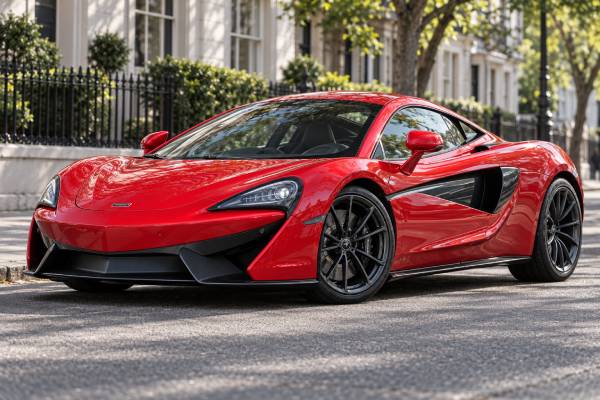
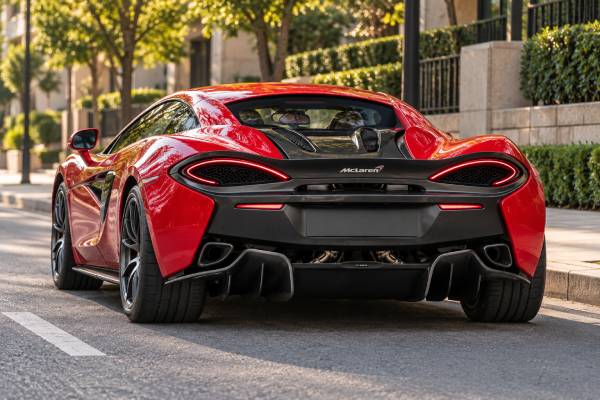
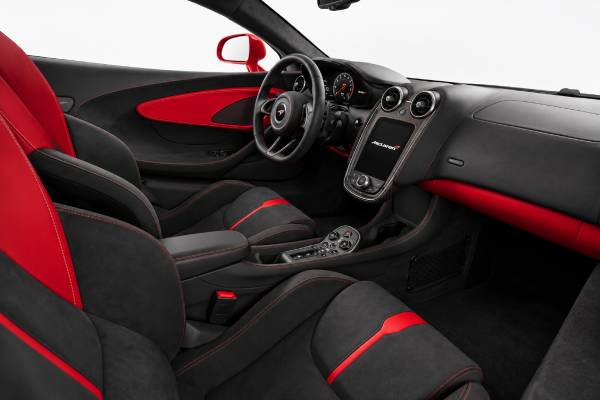
The McLaren 540C Coupé was conceived as the most accessible route into the Sports Series, but “entry level” is misleading if it suggests ordinary engineering. Underneath its cleaner, less aggressive specification is the same basic formula that made the range unusual: a carbon-fibre MonoCell II passenger cell, a mid-mounted 3.8-litre twin-turbo V8, a seven-speed dual-clutch transmission and hydraulic-assisted steering. The 540C produces 540 PS, equivalent to 533 bhp, and McLaren quoted 0–100 km/h in 3.5 seconds with a 320 km/h top speed. Its real distinction is how that performance is delivered. Compared with the 570S and later Longtail derivatives, the 540C deliberately puts more emphasis on road compliance, lower running-cost pressure and usable performance. That makes specification, condition and maintenance history especially important when shopping today: a sound 540C can be an appealing driver’s car without the consumable appetite of the hardest Sports Series variants, while a neglected one can still generate full supercar-sized repair bills.
Table of Contents
- Where the 540C Fits in the Sports Series
- McLaren 540C Technical Data and Specifications
- M838TE Engine, Turbocharging, and Seven-Speed SSG
- Carbon Chassis, Suspension, Brakes, and Road Manners
- Routine Maintenance and Low-Mileage Ownership
- Age-Related Checks and Pre-Purchase Risk Areas
- Choosing and Buying a Used 540C
Where the 540C Fits in the Sports Series
The 540C is the road-biased starting point of McLaren’s first Sports Series generation, not a stripped-down version of a conventional luxury coupé. It shares the core carbon structure and mid-engine layout of its faster relatives while using a lower-output engine calibration, cast-iron brakes and a more compliant chassis specification.
McLaren unveiled the 540C at the 2015 Shanghai motor show as the second Sports Series model after the 570S. Its name follows the company’s usual output convention: approximately 540 metric horsepower rather than the 570 PS of the 570S. That 30 PS gap is noticeable on paper, yet the cars share far more than they separate. Both use the M838TE V8, both drive the rear wheels through the seven-speed Seamless Shift Gearbox, and both place the occupants in a carbon-fibre MonoCell II tub.
The important differences are about purpose. The 540C’s standard cast-iron braking system is less exotic than the carbon-ceramic hardware associated with the 570S, and its suspension tune was intended to suit everyday road use. Those choices are not simply cost reductions. Cast rotors are generally less financially intimidating to replace, and a road-focused setup can make more sense for an owner who does not spend weekends chasing lap times.
Its exterior treatment also avoids some of the 570S’s more assertive details, but the proportions remain unmistakably mid-engined. Dihedral doors open upward and outward, the low nose gives good forward sightlines for this class, and the engine sits behind the two-seat cabin. The front luggage compartment provides useful storage for soft bags even though the 540C was never intended to behave like a conventional grand tourer.
That context matters in the used market. Some buyers instinctively treat the 540C as the model to move past on the way to a 570S. Others recognize that it can offer much of the same steering feel and structural character with lower initial cost and potentially simpler brake expenditure. The right choice depends less on badge hierarchy than on intended use, local parts support, option content and the condition of the individual car.
McLaren 540C Technical Data and Specifications
The 540C is a non-hybrid, rear-wheel-drive coupé powered by McLaren’s 3,799 cc M838TE twin-turbo V8. Factory technical data lists 540 PS, 540 Nm and an 8,500 rpm maximum engine speed, with a seven-speed SSG dual-clutch transmission.
| Specification | Factory data |
|---|---|
| Engine code | M838TE |
| Configuration | 90-degree V8 |
| Displacement | 3,799 cc (3.8 L) |
| Induction | Twin turbochargers |
| Lubrication | Dry sump |
| Valvetrain | 32-valve DOHC with variable valve timing |
| Maximum power | 540 PS (533 bhp / 397 kW) at 7,500 rpm |
| Maximum torque | 540 Nm (398 lb-ft) at 3,500–6,500 rpm |
| Maximum engine speed | 8,500 rpm |
| Transmission | 7-speed Seamless Shift Gearbox plus reverse |
| Drive | Rear-wheel drive |
| Measure | Factory figure |
|---|---|
| 0–100 km/h (0–62 mph) | 3.5 seconds |
| 0–60 mph | 3.4 seconds |
| 0–200 km/h (0–124 mph) | 10.5 seconds |
| Quarter mile | 11.3 seconds |
| Maximum speed | 320 km/h (199 mph) |
| 100–0 km/h braking | 32 m (105 ft) |
| 200–0 km/h braking | 138 m (453 ft) |
| Specification | Factory data |
|---|---|
| Primary structure | Carbon-fibre MonoCell II |
| Suspension | Double wishbones with adaptive dampers |
| Differential | Open differential with Brake Steer |
| Front brakes | Cast discs with 4-piston aluminium calipers |
| Rear brakes | Cast discs with 4-piston aluminium calipers |
| Front wheel | 8J x 19 |
| Rear wheel | 10J x 20 |
| Front tire | 225/35 R19 |
| Rear tire | 285/35 R20 |
| Factory tire type | Pirelli P Zero |
| Specification | Factory data |
|---|---|
| Dry weight | 1,353 kg (2,983 lb) |
| DIN kerb weight | 1,449 kg (3,194 lb) |
| US curb weight | 1,454 kg (3,206 lb) |
| Length | 4,530 mm (178.3 in) |
| Width at widest point | 2,095 mm (82.5 in) |
| Height, doors closed | 1,202 mm (47.3 in) |
| Front luggage capacity | 150 L |
| Fuel capacity | 72 L (15.8 UK gal / 19.0 US gal) |
| Test cycle | Published figure |
|---|---|
| NEDC urban | 16.7 L/100 km (16.9 UK mpg) |
| NEDC extra-urban | 7.9 L/100 km (35.8 UK mpg) |
| NEDC combined | 11.0 L/100 km (25.7 UK mpg) |
| NEDC combined CO₂ | 249 g/km |
| Later WLTP combined | 12.2 L/100 km (19.3 UK mpg) |
| Later WLTP combined CO₂ | 276 g/km |
The different fuel-consumption values are not a contradiction: they come from different regulatory test cycles and publication periods. They are useful for comparing certified cars under the same procedure, not for predicting what a particular owner will see in city traffic or enthusiastic driving.
M838TE Engine, Turbocharging, and Seven-Speed SSG
The 540C’s engine is deliberately less highly rated than the 570S version, but it keeps the same fundamental high-revving, twin-turbo character. Its broad 540 Nm torque plateau begins at 3,500 rpm, while maximum power is produced at 7,500 rpm, so there is a strong reason to use the upper half of the tachometer rather than relying only on low-speed boost.
The dry-sump lubrication system is significant in a mid-engined performance car because it separates oil storage from a deep conventional sump and supports reliable oil control under sustained acceleration, braking and cornering. It also helps package the engine low in the chassis. For owners, however, dry-sump architecture is a reminder that routine fluid service should follow the correct McLaren procedure rather than a generic drain-and-fill approach.
The twin turbochargers give the 540C serious mid-range acceleration without turning it into a lazy torque-first GT. Throttle response builds as revs rise, and the final part of the rev range remains useful. On a proper test drive, the engine should pull cleanly through the range once fully warm, without repeated warning messages, misfire behavior or abrupt loss of boost.
The seven-speed SSG is a dual-clutch transmission, not a torque-converter automatic. In normal driving it can shift unobtrusively, while the more aggressive powertrain settings speed up responses and hold gears differently. The manual paddles suit the car particularly well because the steering and engine encourage deliberate inputs. Low-speed behavior should still be assessed carefully: clutch-based gearboxes can feel different from conventional automatics when creeping, parking or reversing, but severe shudder, refusal to engage or persistent drivetrain warnings deserve diagnosis.
Launch Control is part of the factory driver-aid suite, alongside ABS, traction control and stability control. Its presence does not mean repeated launches are harmless. A used-car inspection cannot prove how often a car has been launched merely from exterior appearance, so diagnostic history, drivetrain behavior, tires and service records should be considered together.
The 540C’s performance figures remain substantial even beside newer cars. A claimed 3.5 seconds to 100 km/h and 10.5 seconds to 200 km/h mean there is little opportunity to explore full acceleration responsibly on public roads. That shifts the ownership emphasis toward response, visibility, steering accuracy and brake confidence rather than headline speed alone. It is one reason the lower-output Sports Series variant can make sense: it preserves the architecture and sensation without depending on the final few tenths of a second to justify itself.
Carbon Chassis, Suspension, Brakes, and Road Manners
The 540C’s defining hardware is arguably its carbon tub rather than its engine. MonoCell II gives the two-seat cabin a rigid central structure while allowing aluminium crash structures and body panels to be attached around it, a layout that was highly unusual at the 540C’s original price point.
A stiff central cell gives suspension engineers a consistent platform. The 540C uses double wishbones at each corner with adaptive dampers, and its steering uses McLaren’s hydraulic-assisted philosophy rather than the fully electric systems common in many competitors. The result is valuable to a buyer because chassis condition is easy to feel: poor alignment, tired tires and damaged wheels can disturb a car that should otherwise track cleanly and communicate accurately.
The open differential works with Brake Steer, a McLaren system that can brake an inside rear wheel to influence yaw and traction rather than relying on a conventional mechanical limited-slip differential. That arrangement helps keep the driveline light, but it also places importance on brake condition and correct electronic operation. Warning lights should never be dismissed as a normal feature of an ageing exotic.
The 540C’s cast brakes distinguish it from the 570S’s standard carbon-ceramic specification. For road use, that can be an advantage. Steel-based friction hardware is familiar to service shops and generally avoids the exceptional replacement cost of carbon-ceramic discs. It still needs proper inspection: look for cracks, heavy lips, uneven wear, corrosion after long storage and vibration under braking. Pad choice also matters because inappropriate compounds can change noise, feel and rotor wear.
Wheel and tire condition is especially important on a car with 19-inch fronts and 20-inch rears. The original sizing is 225/35 R19 ahead and 285/35 R20 at the rear. Matching tire model, age and condition across an axle matters more than simply seeing adequate tread. A car that has sat for years may have visually deep tread on rubber that is no longer appropriate for high-speed use.
Ride-height realities deserve consideration before purchase. The nose is low, the doors require vertical and lateral clearance, and wide rear bodywork can make tight urban spaces awkward. A front lift system, where fitted, is therefore a meaningful usability option rather than cosmetic equipment. Operate it repeatedly during inspection and confirm the car rises and returns evenly without warning messages.
Because the 540C was calibrated as the most road-oriented Sports Series coupé, it should not feel harsh simply for the sake of drama. Impacts, rattles or instability over ordinary surfaces can point toward tire, wheel, alignment, damper or trim issues. Evaluating the car on the type of roads you actually use is more informative than a five-minute drive around a dealership.
Routine Maintenance and Low-Mileage Ownership
A 540C still needs time-based servicing even if it covers very little annual mileage. McLaren’s Sports Series literature specified service every 12 months or 10,000 miles (15,000 km), whichever comes first; later service-plan documents retain the annual principle while some markets quote 9,000 miles for the mileage trigger.
The annual interval matters because ageing is not measured only at the odometer. Engine oil spends time exposed to heat cycles and contaminants, brake fluid absorbs moisture, batteries discharge, tires harden and seals can deteriorate. A car that has traveled 1,000 km in three years has not earned a three-year holiday from maintenance.
Battery care is particularly relevant to infrequently driven cars packed with control modules. A weak 12-volt supply can cause starting difficulties and a cascade of electronic warnings that obscure the actual condition of the vehicle. Ask how the car was stored and whether a compatible conditioner was used. During inspection, confirm battery state rather than accepting the explanation that every warning is “just low voltage.” Clear the cause, scan the modules and see what returns.
Service records should show more than dates. Good invoices identify mileage, parts and work performed, allowing a buyer to reconstruct the car’s actual care. A gap in dealer stamps may be explainable if a recognized independent McLaren specialist maintained the car, but verbal assurances are not a substitute for invoices.
Useful routine ownership checks include:
- Fluids and leaks: inspect for engine oil, coolant and gearbox-fluid traces before and after a test drive. Any leak deserves source identification rather than a quick wipe-down.
- Cooling operation: allow the car to reach normal operating temperature and confirm fans, temperatures and warning systems behave normally in stationary and moving conditions.
- Brakes: measure rotor and pad condition, check for vibration, and look at brake-fluid service history. Long storage can be as relevant as hard driving.
- Tires: record brand, specification, production date, tread and inner-edge wear. Alignment problems can hide on the shoulders that are hardest to see.
- Air conditioning and cabin electronics: test them all. A performance car is no less expensive to repair because a fault is “only” convenience equipment.
- Door operation and seals: dihedral doors should open, latch and seal correctly; look for evidence of adjustment after impact or body repair.
Owners who use the car hard should shorten their inspection rhythm even if they keep the formal service interval. A mountain trip or track session adds heat to tires, brakes and fluids that ordinary mileage does not capture. Post-event checks are cheap compared with finding a damaged tire or depleted pad during the next high-speed drive.
Age-Related Checks and Pre-Purchase Risk Areas
A 540C inspection should focus on condition, stored faults and evidence of previous repair rather than assuming a universal model defect. The cars are now old enough that storage quality, climate, maintenance discipline and individual use can create more variation than the badge on the engine cover.
Begin with the carbon-fibre MonoCell II. The tub is designed as a highly rigid structure, but that does not make accident history irrelevant. Inspect jacking areas, underbody panels and mounting points, then review any repair documentation. Cosmetic damage to an exterior carbon piece is different from structural damage to the tub, and only a competent McLaren specialist should make that distinction where there is uncertainty.
Next examine the cooling and intake areas. The front openings sit low enough to collect road debris, while radiators and condensers live in areas where cleanliness and airflow matter. Look for bent fins, contamination, signs of coolant residue and repairs to ducts or mounting hardware. Temperature stability during a full warm test drive is more valuable than a brief cold start in a showroom.
Paint and body-panel fit deserve methodical attention. Aluminium and composite exterior panels can be repaired or refinished without implying tub damage, but the history should make sense. Use paint-depth measurement where appropriate, inspect panel fasteners and compare finish under strong light. Stone chips on a low, fast car are normal; inconsistent gaps, overspray and undocumented structural work are different issues.
Electronic diagnosis should be part of the pre-purchase inspection. Scan all available modules, record active and historic fault codes and compare them with the seller’s story. If codes are cleared immediately before inspection, a second scan after an extended test drive can be useful. Warning messages related to damping, stability control, transmission, lift equipment or tire-pressure monitoring should be resolved before purchase rather than priced as vague “sensor issues.”
The 540C was sold in fewer markets than some other Sports Series models, so recall and campaign status should be checked through McLaren using the VIN and the car’s original market. Do not assume that a campaign affecting a related 570 model also applies to the 540C, and do not assume that a lack of results in a country-specific public database proves the car has no outstanding factory action. Imported examples deserve extra care because software, lighting, emissions equipment and documentation may reflect a different homologation region.
Finally, verify keys, books, charger/conditioner accessories where supplied, tools and original option documentation. Missing peripheral items are not mechanical failures, but replacing model-specific equipment can be costly and they often reveal how complete the ownership history really is.
Choosing and Buying a Used 540C
The strongest 540C purchase is a car whose condition, history and configuration suit its intended role. Mileage matters, but it should rank behind service continuity, accident history, tire and brake age, diagnostic health and evidence that the car has been stored correctly.
Start with use case. If the car will live mainly on public roads, the 540C’s standard road-focused setup is part of the attraction. Prioritize front lift if your local roads demand it, comfortable seat specification, effective air conditioning and tires suited to your climate. If you plan occasional track days, budget for fresh brake fluid, careful pad and rotor inspection, alignment checks and more frequent tire replacement rather than trying to convert the car into a 600LT imitation.
Specification influences both enjoyment and resale, but there is no universally correct option list. Carbon exterior trim can look special yet adds replacement cost in low-impact zones. Lightweight seats can improve support but may not suit every driver. Upgraded audio, cameras and parking aids matter more to some owners than headline performance options. Sit in the exact car, set the seat and mirrors, test visibility and operate every fitted feature.
Then build a first-year budget before negotiating. Include an annual service if due, tires if they are old regardless of tread depth, brake work if measurements are marginal, alignment if wear patterns are uneven and a contingency for age-related electrical or trim repairs. A cheaper car that needs all of those at once can quickly exceed the cost of a better-documented example.
A proper pre-purchase inspection should be independent of the seller whenever practical. Ask for a cold start, a fully warm road test, underside inspection, diagnostic scan and documented measurements of key consumables. The inspector should understand Sports Series construction and know how to distinguish ordinary wear from evidence of improper repair.
The 540C’s appeal is ultimately straightforward. It delivers the architecture that made the Sports Series distinctive—carbon structure, mid-engine balance, hydraulic steering and a fast dual-clutch gearbox—without making maximum circuit intensity its defining goal. That can make it one of the more rational ways to experience this generation of McLaren. Rational, however, is relative: parts, specialist labor and neglected maintenance remain supercar costs. Buy the best history you can verify, reserve money for preventive care and judge the actual car rather than its position in the original price list.
References
- McLaren 540C – Performance Sports Car with Smart Storage 2026 (Manufacturer Specifications)
- 540C Technical specification 2018 (Factory Technical Data)
- McLaren Owners 2026 (Owner Documentation)
- Sports Series 2017 (Manufacturer Brochure)
- Extended Service Plans 2026 (Maintenance Program Information)
- McLaren Service Portal 2026 (Technical Service Portal)
Disclaimer
Use this guide for informational purposes only, not as a substitute for professional diagnosis or repair. On a 540C, specifications, torque values, intervals, and procedures can change with VIN, market, and fitted equipment; confirm the exact car in official McLaren service documentation before acting.
If you found the article useful, please share it with an owner group, enthusiast forum, Facebook community, or X/Twitter audience where it may help another 540C buyer.