


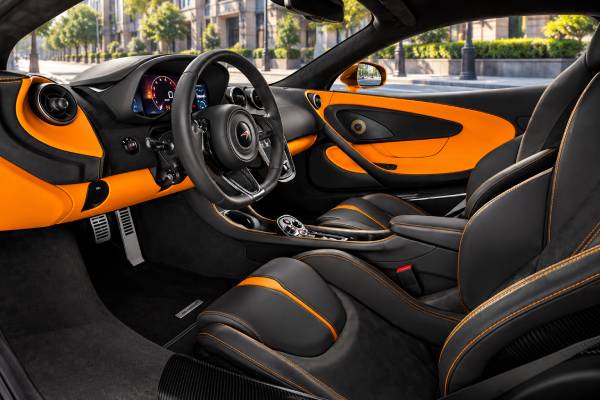
The McLaren 570S Coupé was the car that established the Sports Series as a distinct, more usable branch of McLaren’s road-car range without abandoning the company’s carbon-fibre core. Launched with a 3.8-litre twin-turbo V8 producing 570 PS, or 562 bhp, it combined a MonoCell II carbon passenger cell, rear-wheel drive, a seven-speed dual-clutch SSG and hydraulic-assisted steering in a package intended to work on ordinary roads as well as fast ones. Factory performance remains serious: 0–100 km/h in 3.2 seconds, 0–200 km/h in 9.5 seconds and 328 km/h at the top end. The 570S is now old enough that the buying conversation has shifted from headline numbers to condition, servicing, age-sensitive consumables and recall status. Early U.S.-market 570-family cars can also intersect with the Takata airbag campaign, while a small later recall population involved brake-hose banjo bolts. A careful buyer should therefore evaluate the individual VIN, not rely on the model name alone.
Table of Contents
- Why the 570S Became the Sports Series Benchmark
- 570S Coupé Factory Technical Data
- Steering, Carbon Structure, and Chassis Balance
- Twin-Turbo V8, SSG, and Real-World Performance
- Daily Use, Storage, Fuel, and Equipment
- Service History, Recalls, and Condition Checks
- How to Evaluate a Used 570S Coupé
Why the 570S Became the Sports Series Benchmark
The 570S was the first Sports Series model and set the mechanical template for the range: carbon-fibre central structure, mid-mounted M838TE V8, seven-speed SSG, rear-wheel drive and double-wishbone suspension. Later 540C, GT, Spider, LT and 620R variants changed the emphasis, but the 570S is the reference point they developed from.
That matters when shopping because the 570S sits in the middle of the family philosophically. It is more performance-focused than the 540C and more direct than the 570GT, yet it is less specialized than a 600LT or 620R. It can therefore make sense for an owner who wants the core Sports Series experience without committing to Longtail tires, aero and track-oriented compromises.
The MonoCell II gives the 570S an unusual foundation for its market position. Rather than using a conventional steel or aluminium unibody, McLaren built the passenger cell from carbon fibre and attached aluminium crash structures and body panels around it. The tub contributes stiffness and low mass, while the body can be repaired in sections after ordinary cosmetic incidents. Structural damage is still a major concern, so accident history should be documented rather than inferred from shiny paint.
The driving position is part of the engineering appeal. A low cowl, visible front fender peaks and relatively narrow cabin help the driver place the car. The electro-hydraulic steering system provides more texture than many fully electric racks, and the brake pedal is designed around firm, progressive response. Those characteristics make condition easy to feel: mismatched tires, poor alignment or worn suspension components can turn a precise car into a nervous one.
The 570S was also offered with a wide range of options. Front lift, cameras, audio, seat designs, interior carbon and exterior carbon all affect usability and cost. A sparse car may be lighter and visually clean; a heavily optioned example may be easier to live with. The right specification depends on the owner, but every option should work before purchase because convenience-system repairs can still require McLaren-specific parts and diagnostics.
Model-year context is useful as well. A 570S built early in the production run may carry different software revisions, trim details or campaign history from a later car even when headline performance is unchanged. That does not make a later example automatically superior. It means the buyer should inspect the documentation for that VIN, confirm that applicable updates were completed and avoid assuming that advice written for one production year covers every 570S.
The car’s age also changes what “original” means. Original paint can be attractive to collectors, but a professionally refinished front bumper after years of stone chips may be preferable to badly scarred factory paint. Original tires, on the other hand, are not a virtue when they are too old for high-speed use. Preserve provenance where it matters, but do not confuse untouched consumables with well-maintained consumables.
570S Coupé Factory Technical Data
The 570S Coupé is a non-hybrid, rear-wheel-drive sports car with a 3,799 cc twin-turbo V8. Later factory listings quote a 1,313 kg lightest dry weight and 1,452 kg DIN kerb weight, while early technical sheets also published a 1,344 kg dry figure depending on specification and measurement convention.
| Specification | Factory figure |
|---|---|
| Engine code | M838TE |
| Configuration | 90-degree V8 |
| Displacement | 3,799 cc (3.8 L) |
| Induction | Twin turbochargers |
| Lubrication | Dry sump |
| Valvetrain | 32-valve DOHC with variable valve timing |
| Maximum power | 570 PS (562 bhp / 419 kW) at 7,500 rpm |
| Maximum torque | 600 Nm (443 lb-ft) at 5,000–6,500 rpm |
| Maximum engine speed | 8,500 rpm |
| Transmission | 7-speed Seamless Shift dual-clutch Gearbox |
| Measure | Factory figure |
|---|---|
| 0–100 km/h (0–62 mph) | 3.2 seconds |
| 0–200 km/h (0–124 mph) | 9.5 seconds |
| Quarter mile | 10.9 seconds |
| Maximum speed | 328 km/h (204 mph) |
| 100–0 km/h braking | 31 m (102 ft) in later published data |
| 200–0 km/h braking | 126 m (413 ft) |
| Specification | Factory figure |
|---|---|
| Body structure | Carbon-fibre MonoCell II |
| Suspension | Double wishbones with adaptive dampers |
| Differential | Open differential with Brake Steer |
| Front brakes | Carbon-ceramic, 6-piston aluminium calipers |
| Rear brakes | Carbon-ceramic, 4-piston aluminium calipers |
| Front wheels | 8.0 x 19 in |
| Rear wheels | 10.0 x 20 in |
| Front tires | 225/35 R19 |
| Rear tires | 285/35 R20 |
| Specification | Factory figure |
|---|---|
| Lightest dry weight | 1,313 kg (2,895 lb) |
| DIN kerb weight | 1,452 kg (3,201 lb) |
| Length | 4,530 mm (178.3 in) |
| Width with mirrors | 2,095 mm (82.5 in) |
| Height | 1,202 mm (47.3 in) |
| Wheelbase | 2,670 mm (105.1 in) |
| Fuel tank | 72 L (15.8 UK gal / 19.0 US gal) |
| Front luggage capacity | 150 L |
| Cycle | Figure |
|---|---|
| NEDC combined fuel consumption | 10.7 L/100 km (26.6 UK mpg) |
| NEDC combined CO₂ | 249 g/km |
| WLTP combined fuel consumption | 12.2 L/100 km (19.3 UK mpg) |
| WLTP combined CO₂ | 276 g/km |
Published values changed as homologation methods and specification sheets evolved, so a buyer should not treat every historical brochure number as directly comparable. Weight figures in particular depend on whether the car is dry, in a lightest option configuration or measured with fluids and fuel.
Steering, Carbon Structure, and Chassis Balance
The 570S is notable less for one exotic component than for how its low-mass structure, hydraulic-assisted steering and conventional double-wishbone suspension work together. The car feels light on its feet because it does not need extreme steering ratios or artificial heaviness to communicate direction changes.
Adaptive dampers allow the car to change body control without replacing the basic passive geometry. In its softer settings, the 570S can absorb imperfect roads more effectively than its appearance suggests. Firmer modes reduce movement for fast driving, but they do not transform the car into a Longtail. That distinction is useful: if a standard 570S rides brutally on ordinary surfaces, check tire pressures, tire type, wheel damage and suspension condition before calling it normal.
Brake Steer substitutes targeted braking intervention for a mechanical limited-slip differential in some cornering situations. The system can help the car rotate and manage traction by acting on an inside wheel. It depends on correct brake and stability-control operation, so ABS or ESC warnings are not minor annoyances. They can affect systems that contribute directly to the car’s dynamic behavior.
Alignment is particularly important because the steering communicates road camber and tire condition clearly. Uneven inner-edge wear may come from geometry, previous curb impact or track-biased settings. Ask for alignment records after suspension work or wheel damage, and inspect all four tires from the inside as well as the visible outer shoulders.
The carbon-ceramic brakes have strong heat capacity and low unsprung mass but make a used-car inspection more financially important. A short test drive may show powerful braking even when pads are near replacement or discs have damage. Ask a specialist to measure consumables and look for chips, abnormal surface condition or evidence of careless wheel handling.
Underbody condition provides another useful history check. The 570S is low, and its front splitter, floor panels and jacking points can show contact with steep ramps or improper lifting. Cosmetic abrasion is common on a driven car; cracked components, missing fasteners or damage near structural mounting areas deserve deeper investigation.
Twin-Turbo V8, SSG, and Real-World Performance
The M838TE gives the 570S a distinctly rev-oriented turbocharged character. Peak torque arrives between 5,000 and 6,500 rpm rather than at diesel-like low revs, and maximum power is reached at 7,500 rpm, so the engine rewards drivers who keep it working above the middle of the range.
Dry-sump lubrication supports high lateral loads and helps package the V8 low in the chassis. It also means fluid service is not a place for generic assumptions. Oil level and service procedures should follow the correct McLaren documentation for the specific model year and market.
The seven-speed SSG is a dual-clutch transmission. It can handle daily traffic in automatic mode, but the steering-wheel paddles make the car feel more cohesive because the driver can keep the engine in its strongest range. During inspection, evaluate engagement from a stop, low-speed maneuvering and full-temperature shifts. Some clutch feel at parking speeds is inherent to the transmission type; repeated warnings, severe shudder or reluctance to select gear is not a feature to ignore.
Factory acceleration is still modern-supercar quick. The 3.2-second 0–100 km/h claim and 9.5-second 0–200 km/h time mean that full-throttle performance arrives too quickly for most public-road environments. That places more value on transient response, brake modulation and steering clarity than on testing the last few percent of output during a road viewing.
Engine-bay heat is normal in a compact mid-engine car, but evidence of leakage is not. After a full warm drive, inspect accessible areas for coolant residue, oil traces and unusual smells. Cooling fans should cycle normally, temperatures should remain stable and no persistent warning should appear. A car that has just been washed or detailed may hide small leaks, so service invoices can be as informative as the inspection itself.
Modification history matters. ECU tuning, exhaust changes and non-standard intake hardware can alter thermal load, noise and emissions legality. A modified car is not automatically poor, but the parts should be documented, the calibration should come from a credible source and the buyer should understand how changes affect warranty eligibility, inspection rules and resale in the local market.
Daily Use, Storage, Fuel, and Equipment
The 570S is more practical than its shape suggests, but it remains a low, two-seat mid-engine car. Its 150-litre front compartment works best with soft luggage, while dihedral doors, limited rearward visibility and wide rear bodywork can complicate tight parking spaces.
The front lift system is one of the most valuable convenience options in areas with steep driveways and speed humps. Test it more than once. The car should rise and lower consistently and should not leave a warning on the display. A seller who says the system is “slow because they all are” should still allow a specialist to confirm normal operation.
Cameras and parking sensors can reduce stress around expensive bodywork. Verify image quality, sensor response and the infotainment interface. Similarly, test climate control, audio, window operation, seat adjustments and every steering-wheel control. A fault in a non-performance system may not stop the car, but it can still require expensive trim removal or model-specific electronic diagnosis.
Official fuel-consumption figures range from 10.7 L/100 km on the older NEDC cycle to 12.2 L/100 km on later WLTP data. Real consumption changes drastically with traffic and boost use. Fuel range should therefore be treated as a touring-planning issue rather than a promise from the laboratory figure.
Storage quality matters as these cars age. A battery conditioner is useful when the car sits for long periods because low voltage can produce misleading electronic symptoms. Tires should be checked for age and flat spotting, brakes for corrosion after damp storage, and the cabin for signs of moisture. A car with very low mileage may need more age-related recommissioning than one used regularly and serviced correctly.
Door clearance also needs to be tested where the car will actually live. Dihedral doors help in some narrow spaces because they rise, but they still move outward. Measure garage width and ceiling fixtures rather than assuming the exotic door design solves every parking problem.
Long-distance comfort depends heavily on seat choice and driving position. The standard and optional seats offer different combinations of adjustment, support and weight, so an option that looks desirable in a build sheet may not fit every driver. Spend enough time in the seat to check hip, shoulder and helmet clearance if track use is planned. A correct driving position also makes the heavy-use controls—brake pedal, paddles and steering—feel more natural and reduces the temptation to compensate with awkward wheel or seat settings.
Service History, Recalls, and Condition Checks
A complete 570S history should combine annual service evidence with VIN-specific recall verification. McLaren’s Sports Series literature recommended servicing every 12 months or 10,000 miles (15,000 km), whichever came first, even if a collector car covered little mileage.
Annual servicing is only the framework. Brake fluid, tires, battery condition, coolant-system health, alignment and carbon-ceramic brake wear should be assessed according to age and use. Track days may justify more frequent fluid and consumable inspection, while prolonged storage makes battery and tire age more important.
U.S. buyers of early cars should pay particular attention to Takata airbag status. NHTSA’s Takata recall material lists 2016–2017 McLaren 570 vehicles among affected models. Because public campaign descriptions can group related 570 variants and because repair status is VIN-specific, the correct approach is to enter the individual VIN into the official recall lookup and confirm completion records with McLaren.
A separate 2021 McLaren safety campaign concerned certain brake flexi-hose banjo bolts that may have been incorrectly manufactured. The service bulletin lists the 570S among affected model lines, but the population was limited rather than every 570S ever built. Again, verify the VIN rather than assuming inclusion or exclusion from model name alone.
For the physical inspection, use a repeatable sequence:
- insist on a cold start and record any warning messages before they are cleared;
- scan all control modules after the drive, not only the engine ECU;
- inspect the underside, splitter and jacking points on a lift;
- measure brake and tire condition rather than relying on seller estimates;
- check radiator and condenser areas for debris, impact and signs of leakage;
- inspect paint, panel alignment and carbon-fibre components under strong light;
- verify both keys, manuals, charger equipment and build documentation where available.
Paintwork deserves context. Stone chips and refinished bumpers can be normal on a low sports car. What matters is whether the repair quality matches the claim and whether any structural or suspension damage accompanied it. A paint-depth gauge, alignment measurement and underbody inspection together tell a better story than paint alone.
How to Evaluate a Used 570S Coupé
A used 570S should be chosen on evidence, not simply mileage or option count. The best candidate is the car whose history explains its condition and whose first-year maintenance needs are already understood before money changes hands.
Start with provenance and market. Confirm VIN, model year, original selling region and build specification. Imported cars can differ in lighting, emissions equipment, recall history and paperwork. Ensure the registration market can support the car correctly and that any modifications made for import are documented.
Next decide which options genuinely matter. Front lift may be essential in one city and unnecessary in another. Carbon exterior pieces can be visually desirable but expensive to repair. Lightweight seats can sharpen the experience yet reduce comfort for long trips. Cameras may add little on track but a great deal in a narrow garage. Paying for the right equipment is more sensible than buying a long option list you do not use.
Then price the consumables. Old tires, worn carbon-ceramic brakes, overdue service and poor alignment can turn a lower asking price into false economy. Obtain actual replacement estimates from a retailer or established specialist before negotiating rather than relying on internet averages.
The pre-purchase inspection should include a full warm road test. The car should steer cleanly, brake without vibration, shift consistently and hold stable temperatures. Every active or historic diagnostic code should be understood. If a seller will not permit an independent specialist inspection on a car of this value and complexity, that refusal is itself useful information.
Ownership planning should include where the car will actually be serviced. Distance to a McLaren retailer or established independent specialist can matter as much as purchase price, especially when diagnosis requires brand-specific tools or when a campaign must be completed by an authorized network. Ask prospective workshops about transport options, parts lead times and their experience with Sports Series cars before the first fault occurs.
Insurance and storage deserve the same advance work. Agree on how modifications, track use and declared value are treated by the insurer, and make sure the garage has enough door and nose clearance. A secure, dry parking space with reliable battery conditioning can prevent avoidable problems while also making the car easier to use spontaneously.
The 570S remains appealing because it occupies a sweet spot in the Sports Series. It is fast enough to feel exceptional, light enough to communicate clearly and road-focused enough to be used without the constant compromises of the most extreme derivatives. None of that makes it cheap to neglect. Buy the individual car with the strongest documentation, verify recalls by VIN and reserve enough budget to keep its tires, brakes, electronics and annual servicing at the level the chassis deserves.
References
- McLaren 570S Coupé – The Lightest Sportscar In Its Class 2026 (Manufacturer Specifications)
- 570S Technical Specification 2015 (Factory Technical Data)
- McLaren Owners 2026 (Owner Documentation)
- Takata Air Bag Recall Spotlight | NHTSA 2026 (Safety Recall Information)
- SAFETY RECALL NOTICE 2021 (Brake Hose Banjo Bolt Campaign)
- Extended Service Plans 2026 (Maintenance Information)
Disclaimer
Treat this article as informational guidance rather than a substitute for professional diagnosis or repair. Specifications, torque values, intervals, and procedures can differ by VIN, market, and equipment; check the applicable official McLaren service documentation for the individual 570S before making service decisions.
If this 570S guide was useful, please share it with an enthusiast group, Facebook community, X/Twitter audience, or another owner who may benefit from the research.