
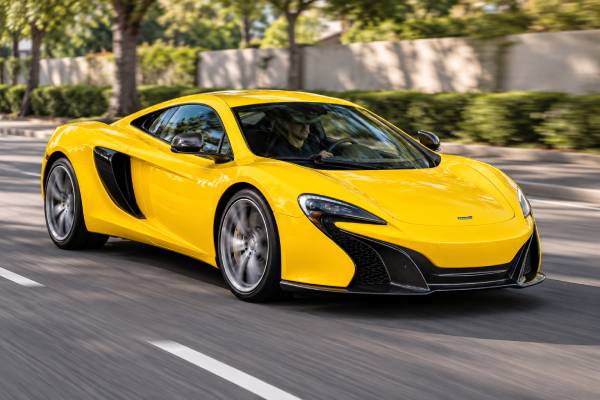
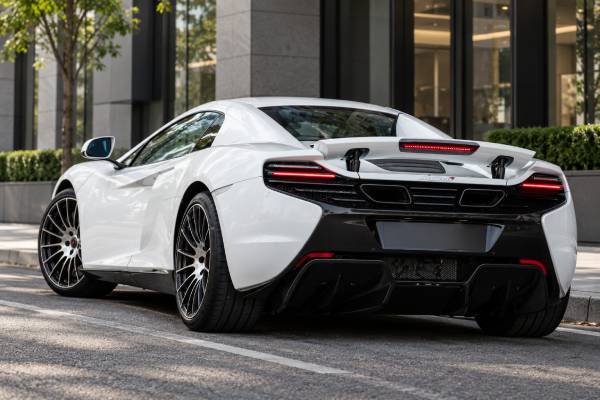
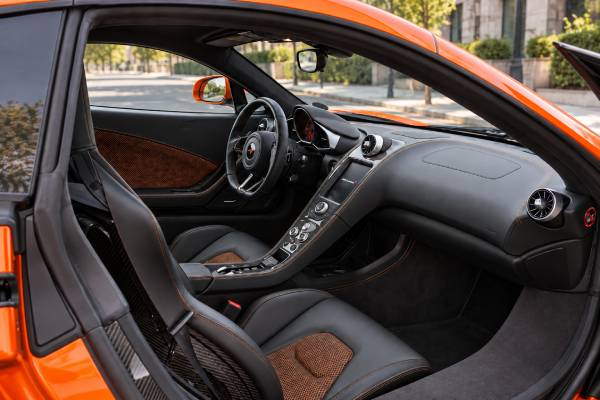
The McLaren 625C Coupé is the comfort-oriented branch of the original Super Series: a 650S-derived, Asian-market model with 625 PS (616 bhp), 610 Nm of torque, revised ProActive Chassis Control tuning, softer rear springing, and cast-iron brakes. Introduced in 2014 and sold in selected Asia-Pacific markets, it was not conceived as a cheaper 650S with power removed. McLaren described the “C” as Club and deliberately changed the chassis calibration to make the car more compliant in everyday use while retaining the carbon MonoCell, seven-speed SSG transmission, active Airbrake, and 333 km/h top speed. That combination makes the 625C unusual today: it is technically close to the better-known 650S yet rarer in many markets and frequently encountered as an import. Buyers therefore need to verify both mechanical condition and market provenance. This guide covers exact Coupé specifications, the engineering changes behind its character, age-related service priorities, and the checks that matter before purchase.
Table of Contents
- Why McLaren Built the 625C Coupé
- 625C Coupé Specifications and Technical Data
- Comfort-Focused Chassis Engineering
- Performance With a Different Brief
- Maintenance for a Regionally Tailored Car
- Buying and Import Checks
- Ownership Fit and Value Factors
Why McLaren Built the 625C Coupé
The 625C Coupé was McLaren’s first regionally tailored road car, created for customers in Asian markets who wanted the performance and technical sophistication of the 650S with a more compliant ride. Its significance is therefore in calibration and intended use, not in a radically different body or engine architecture.
McLaren announced the 625C in September 2014 as an Asia-focused model, initially for Hong Kong and then selected Asia-Pacific markets. At the time, the company’s presence in Asia was expanding quickly, and the regional brief emphasized day-to-day usability. The model name explains the concept neatly: 625 refers to its output in metric horsepower, while C stands for Club, signaling a less extreme character than the 650S.
The underlying platform remains familiar. A carbon-fiber MonoCell passenger cell is joined to aluminum front and rear structures, with the M838T 3.8-liter twin-turbocharged V8 mounted longitudinally behind the cabin. Drive goes to the rear wheels through McLaren’s seven-speed Seamless Shift Gearbox. The hydraulic ProActive Chassis Control system, active Airbrake, and Normal/Sport/Track chassis modes are all present.
What changed was the way those systems were tuned. McLaren revised both the hydraulic chassis control and mechanical suspension hardware. New dampers and a softer rear spring rate were intended to reduce harshness in Normal mode without deleting the more aggressive Sport and Track settings. Period material also specifies cast-iron brake discs rather than the 650S’s carbon-ceramic setup. That choice matters because it changes pedal feel, replacement economics, heat behavior, and what a prospective owner should expect to see during an inspection.
It is tempting to describe the 625C as a detuned 650S, but that misses the point. Output dropped by 25 PS and torque by 68 Nm, yet top speed remained 333 km/h. The engineering objective was a broader operating envelope on public roads, not simply a lower number on the engine cover. For buyers today, that means condition and originality should be judged against 625C specifications, rather than assuming every difference from a 650S represents a modification.
625C Coupé Specifications and Technical Data
The 625C Coupé uses McLaren’s M838T 3,799 cc twin-turbo V8 producing 625 PS (616 bhp) and 610 Nm, paired with a seven-speed SSG and rear-wheel drive. Factory technical data lists a 1,336 kg dry weight, a 3.1-second 0–100 km/h time with the specified optional Pirelli P Zero Corsa tires, and a 333 km/h maximum speed.
| Item | McLaren 625C Coupé specification |
|---|---|
| Engine code | M838T |
| Configuration | 90-degree V8, twin turbocharged |
| Displacement | 3,799 cc (3.8L) |
| Installation | Longitudinal mid-engine |
| Maximum power | 625 PS / 616 bhp (460 kW) at 7,250 rpm |
| Maximum torque | 610 Nm (450 lb-ft) from 3,000–7,000 rpm |
| Transmission | 7-speed Seamless Shift Gearbox (SSG) |
| Driven wheels | Rear-wheel drive |
| Measure | 625C Coupé |
|---|---|
| 0–100 km/h (0–62 mph) | 3.1 seconds with optional P Zero Corsa tires |
| 0–200 km/h (0–124 mph) | 8.8 seconds with optional P Zero Corsa tires |
| 0–300 km/h (0–186 mph) | 26.7 seconds with optional P Zero Corsa tires |
| 400 m / quarter mile | 10.6 seconds at 136 mph |
| Maximum speed | 333 km/h (207 mph) |
| Item | Specification |
|---|---|
| Body structure | Carbon-fiber MonoCell with aluminum front and rear frames |
| Suspension system | ProActive Chassis Control |
| Chassis modes | Normal / Sport / Track |
| 625C-specific tuning | Revised dampers and softer rear spring rate |
| Front brakes | 370 mm cast-iron discs with forged aluminum hubs |
| Rear brakes | 350 mm cast-iron discs with forged aluminum hubs |
| Active aerodynamics | McLaren Airbrake |
| Measure | Metric | Imperial |
|---|---|---|
| Length | 4,512 mm | 177.6 in |
| Width including mirrors | 2,093 mm | 82.4 in |
| Height | 1,199 mm | 47.2 in |
| Wheelbase | 2,670 mm | 105.1 in |
| Front / rear track | 1,656 / 1,583 mm | 65.2 / 62.3 in |
| Dry weight | 1,336 kg | 2,945 lb |
| Position | Wheel | Tire |
|---|---|---|
| Front | 19 x 8.5J | Pirelli P Zero 235/35 R19 |
| Rear | 20 x 11J | Pirelli P Zero 305/30 R20 |
| Performance test tire | Optional Pirelli P Zero Corsa specified for quoted acceleration figures | |
| Measure | Factory figure |
|---|---|
| Combined fuel consumption | 24.2 mpg UK (approximately 11.7 L/100 km) |
| CO2 emissions | 275 g/km |
| Power-to-weight with lightweight options | 480 PS per tonne (473 bhp per tonne) |
Those numbers should be read in context. The 3.1-second acceleration claim was published with optional Corsa tires, so tire specification and conditions affect whether a particular car can reproduce it. Likewise, dry weight excludes operating fluids and should not be compared directly with curb or DIN figures from other cars.
Comfort-Focused Chassis Engineering
The defining engineering change in the 625C is its suspension calibration. McLaren retained ProActive Chassis Control but used new dampers and a less stiff rear spring rate so Normal mode could absorb poor surfaces more cleanly while Sport and Track still delivered the body control expected from the Super Series.
PCC differs from a conventional anti-roll-bar layout because the hydraulic system links the dampers and controls roll stiffness without relying on traditional mechanical anti-roll bars in the same way. That lets McLaren separate vertical compliance from resistance to body roll more effectively than a simple spring-and-bar setup. In the 625C, the concept was used to create more breathing room for road imperfections rather than chase a softer car everywhere.
This is why the condition of the hydraulic system is central to whether a used 625C still feels as intended. A car with tired accumulators, hydraulic pressure problems, or faults in the suspension control system can feel harsh, inconsistent, or locked into behavior that has little to do with the original calibration. A buyer should not assume that a very firm ride is normal because the badge says McLaren. The 625C was specifically engineered to be the more compliant choice.
The standard cast-iron brakes are another intentional distinction. Iron discs add unsprung mass compared with carbon-ceramic hardware, but they are straightforward to evaluate and can be less costly to replace. On a road-oriented car, cold response and predictable daily use can be advantages. During inspection, confirm that the car still has the correct brake setup or that any conversion is fully documented. A 625C wearing later carbon-ceramic components may be a legitimate owner upgrade, but it is no longer exactly as delivered.
Steering remains a hydraulic system, one of the defining qualities of this McLaren generation. The useful inspection question is not whether it feels heavy or light in isolation, but whether assistance is smooth, consistent, and free of noises, leaks, or warning messages. Geometry also matters. Bent wheels, old tires, poor alignment, or impact damage can make the steering seem nervous even when the rack itself is healthy.
The Airbrake should be treated as functional hardware rather than styling. It contributes to aerodynamic control and braking behavior. Check that it completes its startup and operating movements without hesitation or warning messages, and inspect the panel and hinges for evidence of repair. Because the car may have spent years in dense urban environments, cosmetic impact history around the nose, wheels, undertrays, and rear bodywork deserves more attention than mileage alone suggests.
Performance With a Different Brief
The 625C is only modestly slower than the 650S in straight-line acceleration, and its 333 km/h top speed is the same as the 650S Coupé’s published figure. What changes more noticeably is the shape of its response and the calmer chassis setting available for ordinary roads.
Peak torque is 610 Nm rather than the 650S’s 678 Nm, but the 625C’s torque plateau runs from 3,000 to 7,000 rpm. That broad delivery matters more on the road than the headline reduction might suggest. The engine still produces enough midrange thrust to overwhelm normal speed limits quickly, and the seven-speed dual-clutch gearbox keeps the V8 in its useful range with little interruption.
The 625C’s 8.8-second 0–200 km/h time demonstrates how little performance was surrendered for the more comfort-oriented brief. It remains a serious high-speed car, which means tire age, pressure, balance, brake condition, and aerodynamic integrity cannot be treated casually. The fact that the car is less aggressive in Normal mode is not permission to defer basic chassis maintenance.
Transmission behavior should be evaluated in several conditions. From cold, engagement may feel more mechanical than in a conventional torque-converter automatic, but shifts should become clean as the car reaches operating temperature. Test manual commands, automatic operation, reversing, low-speed maneuvering, and full-throttle shifts if conditions permit. Hesitation, repeated warnings, abnormal noises, or fluid leakage require diagnosis rather than being dismissed as “supercar behavior.”
Cooling-system performance also deserves a proper road test. The M838T is compact and heavily turbocharged, and heat management is critical. Bring the car fully to temperature, observe coolant behavior, allow the fans to operate, and inspect afterward for odor or residue. A car that has only been moved around a showroom may hide problems that appear after sustained load.
The most rewarding way to judge a 625C is therefore to test its range. In Normal chassis mode it should make a clear case for why McLaren built it, with more compliance over broken surfaces. In Sport and Track, the car should tighten without becoming unsettled or generating suspension faults. The engine should pull progressively, the gearbox should respond consistently, and the brake pedal should remain stable. If the car cannot demonstrate that breadth, it needs attention before its specification can be appreciated.
Maintenance for a Regionally Tailored Car
A 625C should be maintained by age, condition, and VIN-specific requirements rather than by mileage alone. Many examples are now more than a decade old, and time-sensitive items such as fluids, tires, batteries, seals, hydraulic components, and cooling-system parts can deteriorate even on lightly used cars.
Begin with service records. The official McLaren handbook index provides market-specific owner documentation, while a McLaren retailer or marque specialist can identify the correct service schedule and software information for a particular chassis. Because the 625C was not sold universally, workshops outside its original market may be less familiar with the exact brake and suspension specification. Give the technician the VIN and model details rather than allowing the car to be treated automatically as a 650S.
Battery condition is a practical priority. Modern McLarens rely on multiple control modules and can produce misleading warnings when voltage falls. A battery conditioner is sensible when the car is parked for extended periods. Before authorizing replacement of expensive electronic components, confirm resting voltage, charging performance, grounds, and fault history with the correct diagnostic equipment.
The suspension hydraulic circuit deserves scheduled observation even when no warning light is present. Look for fluid leakage, an unusually hard ride, asymmetry, or a failure of the chassis modes to produce distinct behavior. Accumulator condition can materially affect ride quality. Since refinement is one of the 625C’s reasons for existing, loss of compliance is not merely a comfort issue; it is evidence that the car may no longer be operating correctly.
Cooling-system checks should include hose connections, radiators, expansion-tank level, and any dried residue beneath the car. A pressure test is sensible if coolant level changes without an obvious leak. Inspect the front heat exchangers for debris and damage, especially on cars used in hot climates or urban traffic where cooling fans work hard.
Brake servicing differs from the 650S assumption many owners bring to the car. The factory 625C specification uses cast-iron discs with forged aluminum hubs, 370 mm at the front and 350 mm at the rear. Measure disc thickness and condition, inspect the friction surfaces for cracking or severe scoring, verify pad life, and check the brake fluid by time. If carbon-ceramic hardware is fitted, document the conversion and follow the service procedure for those components rather than applying iron-disc limits.
Tires are both a performance item and an age item. Check manufacturing dates, sidewalls, tread depth, inner shoulders, and whether sizes and load/speed ratings are appropriate. The published acceleration figures used optional P Zero Corsa tires, while the technical specification lists P Zero road tires. A modern equivalent may be entirely reasonable, but mixed generations, old rubber, or mismatched axles undermine the chassis more than a small difference in brand preference.
Storage should protect rather than immobilize the car. Keep the battery conditioned and the environment dry, but avoid repeated short starts that never bring the drivetrain to operating temperature. Periodic proper use, followed by inspection for leaks and fluid levels, gives the hydraulic, braking, cooling, and sealing systems a chance to work. If the car has sat for months, treat the first drive as a recommissioning exercise, not a performance run.
Buying and Import Checks
Buying a 625C Coupé requires two parallel checks: establish that the car is an authentic 625C in its original market specification, then assess it mechanically like a high-performance McLaren. This is especially important when the vehicle has moved from its original Asia-Pacific market into Europe, the Middle East, or another region.
Start with the VIN, original sales market, build specification, and service history. Confirm the car through a McLaren retailer or specialist who can access appropriate records. Check that registration documents, chassis identity, engine information, and model description agree. A listing that casually calls the car a “650S 625C” may simply reflect unfamiliarity, but documentation should still identify what was actually built.
Market migration can create practical issues beyond provenance. Verify that lighting, speedometer units, navigation or infotainment configuration, radio frequencies, emissions equipment, and any required compliance modifications suit the country where the car is now registered. Inspect the quality of conversion work if lights or instrumentation have been altered. Do not assume that because the vehicle is physically roadworthy, every administrative or emissions requirement has been satisfied.
A pre-purchase inspection should include a cold start and diagnostic scan before stored faults are cleared. Then evaluate the car at full operating temperature. The inspection should cover hydraulic suspension operation, chassis modes, Airbrake movement, gearbox behavior, engine performance, cooling-system pressure, steering, wheel bearings, brakes, tires, underbody panels, and signs of fluid leakage.
Body condition requires informed examination. The MonoCell is carbon fiber, while aluminum structures and composite exterior panels surround it. Look for inconsistent panel gaps, paint texture differences, damaged fasteners, replaced undertrays, and repairs around suspension pickup areas. Minor cosmetic refinishing is not automatically serious, but structural impact history needs specialist assessment. Ask for repair photographs and invoices rather than relying only on a generic history report.
Pay particular attention to the low front and underside. Scraped splitters, damaged floor panels, and marks around lift points reveal how the car has been handled. Wheels should be checked for bends and cracks, not just curb rash. On a vehicle that may have lived in a congested city, repeated low-speed impacts or poorly executed wheel repairs can be more relevant than high-speed use.
The correct brake hardware is worth confirming visually and through documentation. Factory technical information specifies iron discs; a seller may advertise carbon-ceramic brakes as though they were original simply because that hardware is associated with the 650S. If the car has been upgraded, identify the components, installation history, and calibration implications. Original parts supplied with the sale can add confidence for an owner who values factory specification.
Finally, judge service continuity instead of chasing the lowest odometer. A 625C with modest but regular use, annual attention, recent tires, healthy hydraulics, and complete invoices can be preferable to a static collection car with decade-old consumables. Imports with gaps in history deserve a price and inspection strategy that reflects that uncertainty rather than optimistic assumptions.
Ownership Fit and Value Factors
The 625C Coupé best suits an owner who wants early McLaren Super Series engineering with a road-biased factory calibration and does not need the better-known 650S badge. Its appeal is the combination of rarity, hydraulic chassis sophistication, full supercar performance, and a specification created for daily usability rather than maximum theater.
For some buyers, the 650S will remain the simpler choice because it has broader market recognition, more plentiful documentation in Western markets, and the stronger 650 PS output. The 625C counters with a distinct engineering story and, when healthy, a more compliant Normal-mode ride. Neither distinction makes one universally preferable; it simply changes what should be valued during a search.
Ownership costs still belong to the Super Series category. The lower-output engine does not transform tires, hydraulic servicing, cooling repairs, bodywork, or transmission diagnosis into ordinary-car expenses. Budget for specialist labor and maintain a reserve for age-related repairs. Rare-market status can also lengthen parts or diagnostic research if a workshop has never encountered the model.
Originality can influence desirability because the 625C’s technical identity is subtle. Correct iron brakes, suspension specification, wheels, interior equipment, and market documentation help distinguish an authentic, unmodified example from a 650S-style conversion. At the same time, sensible reversible upgrades should be evaluated on quality rather than rejected automatically. What matters is knowing exactly what changed and retaining evidence.
The most useful ownership records are detailed ones. Keep annual service invoices, diagnostic reports, tire receipts, alignment printouts, battery replacement dates, photographs of body repair, and records of any cross-market compliance work. If a component is replaced because of age rather than failure, note why. That history helps a later buyer understand how the car has been treated and can be more persuasive than a short service-stamp list.
A strong 625C Coupé should ultimately feel coherent: compliant enough in Normal mode to justify the Club brief, controlled in the firmer chassis settings, relentlessly fast once the V8 is on boost, and free of hydraulic or electrical drama. When the VIN, market history, correct 625C hardware, service record, and mechanical inspection all support one another, the car offers a particularly interesting interpretation of McLaren’s first-generation Super Series—one shaped around real roads rather than simply higher output.
References
- The McLaren 625C Coupe, A regionally Tailored Vehicle 2014 (Technical and Performance Data)
- New McLaren 625C revealed | Autocar India 2014
- McLaren previews Asia-only 625C | evo 2014
- 2014 McLaren 625C Spider – Images, Specifications and Information 2014 (Company Press Release Archive)
- McLaren Owners 2026 (Owner Documentation Index)
- McLaren 625C – Search Used McLaren Qualified Cars For Sale 2026 (Manufacturer Pre-Owned Programme)
Disclaimer
This guide is informational only and does not replace professional diagnosis, inspection, servicing, import-compliance advice, or repair. Specifications, torque settings, service intervals, procedures, equipment, and market requirements can differ by VIN, country, and build configuration; verify the exact car against official McLaren documentation before ordering parts or carrying out work. If you found the guide useful, please share it on Facebook, X/Twitter, or another platform to help others researching the 625C.