

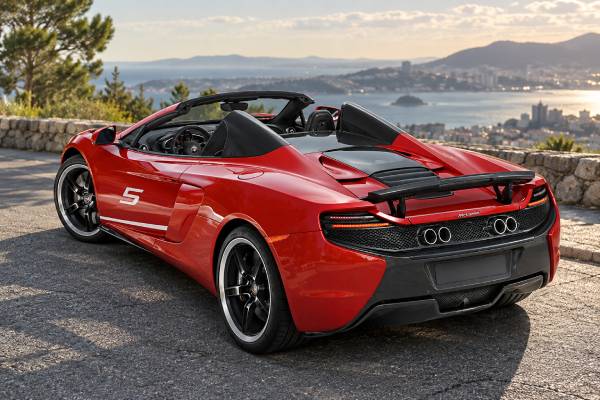
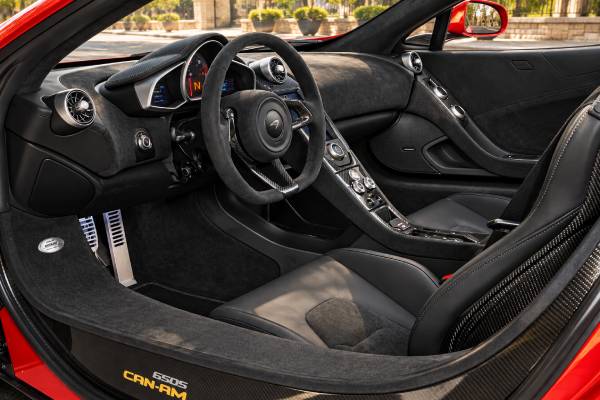
The McLaren 650S Can-Am is a 50-car MSO tribute built entirely from the 650S Spider, created for the 50th anniversary of the Canadian-American Challenge Cup’s first season. Its mechanical output stayed at the standard Spider’s 650 PS (641 bhp) and 678 Nm, but the commemorative hardware was unusually specific: a carbon-fiber retractable hardtop, carbon bonnet and active Airbrake, louvred front wings, bespoke five-spoke wheels with titanium bolts, P Zero Corsa tires, carbon-ceramic brakes, and a polished quad-exit exhaust. Deliveries began in 2016, exactly half a century after the series started. For an owner or buyer, that means the car must be evaluated on two levels. It needs to be mechanically healthy as a P11-generation Spider, and its Can-Am-specific MSO content must be present, correctly finished, and traceable to factory records. The following guide covers the exact production specification, the functional ideas behind the heritage details, the maintenance issues that come with the Spider platform, and an authentication process suited to a 50-example model.
Table of Contents
- From Can-Am Racing to an MSO Road Car
- 650S Can-Am Specifications
- Heritage Details That Do Real Work
- Spider Architecture and Road Character
- Maintenance of Can-Am-Specific Hardware
- Authentication and Pre-Purchase Process
- Preserving a 50-Car Edition
From Can-Am Racing to an MSO Road Car
The 650S Can-Am was conceived as a historical interpretation rather than a higher-output derivative. McLaren Special Operations used the 650S Spider as the base and changed materials, exterior details, wheels, exhaust, colors, and cabin identifiers to connect the road car with McLaren’s Can-Am period.
The Canadian-American Challenge Cup began in 1966 and became a showcase for high power, light structures, and unrestricted aerodynamic experimentation. McLaren’s team went on to win five consecutive championships from 1967 through 1971. The road-going Can-Am was announced in October 2015 for spring 2016 delivery, marking 50 years since that inaugural season.
Every one of the 50 examples was based on the 650S Spider. That point is important because the assignment name often appears without “Spider,” and a casual listing can obscure the fact that there was no factory Can-Am Coupé counterpart in this run. The retractable hardtop is part of the model’s identity, and McLaren made the roof panel itself from carbon fiber for this edition.
The powertrain did not receive a Can-Am-specific output increase. The familiar M838T twin-turbo V8 retained 650 PS and 678 Nm, which explains why the published 0–100 km/h and top-speed figures match the normal 650S Spider. The special edition’s engineering interest instead lies in how MSO translated racing-era themes into contemporary lightweight materials and functional airflow details.
Three base colors were announced: Mars Red, Papaya Spark, and Onyx Black. Mars Red referenced the M1B raced by Bruce McLaren and Chris Amon in the first Can-Am season; Papaya Spark reinterpreted McLaren Orange in metallic form; Onyx Black recalled the darker base colors used by customer teams later in the era. Corresponding racing liveries could also be specified, so exterior graphics should be checked against the individual build sheet rather than assumed from photographs of another car.
The cabin received leather and Alcantara sports seats, extensive carbon trim, and a dedicated Can-Am plaque on the driver’s door. These identifiers are subtle compared with the exterior carbon and exhaust, which makes documentation essential. A replica could imitate several visible details, but factory records establish whether the chassis left McLaren Special Operations as one of the 50.
650S Can-Am Specifications
The 650S Can-Am retains the standard Spider powertrain: a 3,799 cc twin-turbo V8 with 650 PS (641 bhp), 678 Nm, and a seven-speed SSG driving the rear wheels. Factory data quotes 3.0 seconds to 100 km/h, 8.6 seconds to 200 km/h, and 329 km/h maximum speed.
| Item | 650S Can-Am specification |
|---|---|
| Engine code | M838T |
| Layout | 90-degree V8, longitudinal mid-engine |
| Displacement | 3,799 cc (3.8L) |
| Induction | Twin turbochargers |
| Valvetrain | 32-valve DOHC with variable valve timing |
| Compression ratio | 8.7:1 |
| Maximum power | 650 PS / 641 bhp (478 kW) at 7,250 rpm |
| Maximum torque | 678 Nm (500 lb-ft) at 6,000 rpm |
| Transmission | 7-speed Seamless Shift Gearbox |
| Measure | Factory figure |
|---|---|
| 0–60 mph (0–97 km/h) | 2.9 seconds |
| 0–100 km/h (0–62 mph) | 3.0 seconds |
| 0–100 mph (0–161 km/h) | 5.8 seconds |
| 0–200 km/h (0–124 mph) | 8.6 seconds |
| 400 m / quarter mile | 10.6 seconds at 222 km/h (138 mph) |
| 1,000 m | 19.0 seconds at 279 km/h (173 mph) |
| Maximum speed | 329 km/h (204 mph) |
| 100–0 km/h | 30.7 m (101 ft) |
| 200–0 km/h | 124 m (407 ft) |
| Area | Specification |
|---|---|
| Front wheel size | 8.5 x 19 in |
| Rear wheel size | 11 x 20 in |
| Front tire | Pirelli P Zero Corsa 235/35 R19 |
| Rear tire | Pirelli P Zero Corsa 305/30 R20 |
| Front brake disc | 394 x 36 mm carbon ceramic |
| Rear brake disc | 380 x 34 mm carbon ceramic |
| Calipers | Six-piston front / four-piston rear |
| Can-Am wheel detail | MSO five-spoke forged design with titanium bolts |
| System | Factory configuration |
|---|---|
| Core structure | Carbon-fiber MonoCell |
| Suspension | Independent double wishbone with ProActive Chassis Control |
| Damping / roll modes | Normal / Sport / Track |
| Differential strategy | Open differential with Brake Steer |
| Driver systems | ABS, traction control, ESC, launch control, Brake Steer |
| Steering | Variable-rate electro-hydraulic, 2.66 turns lock-to-lock |
| Turning circle | 12.3 m |
| Measure | Factory figure |
|---|---|
| Lightest dry weight | 1,341 kg (2,956 lb) |
| Dry weight | 1,370 kg (3,020 lb) |
| DIN weight | 1,468 kg (3,236 lb) |
| Weight distribution | 42% front / 58% rear |
| Fuel tank | 72 L |
| Engine oil | 8.0 L |
| Coolant system | 26 L |
| Washer fluid | 4 L |
| Measure | Published figure |
|---|---|
| Combined fuel consumption | 11.7 L/100 km (24.2 mpg UK) |
| CO2 emissions | 275 g/km |
| Power-to-weight | 485 PS per tonne (478 bhp per tonne) |
Factory figures are useful baselines, but age and configuration affect a used car. A decade-old Corsa tire should not be retained simply because it matches the launch specification, and a measured curb weight will not equal the published lightest dry figure. Safety and current condition take priority over reproducing catalogue numbers.
Heritage Details That Do Real Work
Several Can-Am styling cues are functional rather than decorative. The louvred front wings relieve pressure in the wheelhouses, the carbon components reduce mass, and the active Airbrake remains part of the car’s braking and aero strategy.
The front-wing louvres are among the easiest identifiers to see. McLaren’s period release explicitly described them as a way to reduce pressure over the front wheels and increase downforce. Their condition therefore matters beyond visual originality. Check the louvres for cracks, repaired mounting points, poor paint edges, and distortion around the surrounding carbon or composite panel.
MSO used carbon fiber widely: retractable hardtop, bonnet, Airbrake, front splitter, rear bumper center, door blades, and branded sill covers were all part of the treatment. Because exposed carbon can be refinished after chips or UV damage, inspection should distinguish normal clearcoat work from structural repair. Look at weave continuity, edges, fasteners, and the backside of accessible panels, not only the glossy outer surface.
The forged five-spoke wheels were created to evoke 1960s racing wheels, with gloss-black spokes, diamond-cut rims, and titanium wheel bolts. That combination is highly visible and expensive to replace accurately. Inspect for refinishing that has softened the machined edge, incorrect replacement bolts, bends on the inner barrels, and repaired cracks. A cosmetically perfect wheel can still be structurally compromised.
The quad-exit polished stainless-steel exhaust is another defining feature. Its four round outlets reference the visual drama of historic intake trumpets, while giving the road car its own appearance and sound. Check the system cold and hot for rattles, misalignment, cracking, repaired welds, or contact with the rear grille. Aftermarket exhausts may be appealing to an owner, but the original system should ideally accompany the car.
Carbon-ceramic brakes with black calipers were standard in the Can-Am specification. Because the visible wheel design makes the brakes easy to photograph, mismatched caliper colors or later rotor changes can sometimes be spotted before an inspection. Do not rely on color alone, however. Confirm components and condition physically and compare them with build records.
The Can-Am color story is similarly specific. Mars Red, Papaya Spark, and Onyx Black were the announced choices, with corresponding racing liveries available. Repainting a damaged panel in the correct color is not automatically disqualifying; undocumented full-color changes or vinyl schemes passed off as factory livery are different. The build sheet should settle what the car originally carried.
Spider Architecture and Road Character
Every 650S Can-Am is an open-top car, so roof operation is a core part of the model rather than an optional secondary feature. The carbon retractable hardtop must cycle correctly, seal properly, and align cleanly with the glass and rear deck.
The carbon MonoCell central structure is inherently stiff, allowing the Spider conversion without the large structural reinforcement penalty typical of older convertibles. McLaren’s standard 650S Spider data puts the lightest dry mass at 1,341 kg, which is also the lightest figure published on the Can-Am technical page. The roof mechanism still adds complexity, but the car does not rely on a flexible steel floorpan for its basic rigidity.
Test the roof more than once during a pre-purchase inspection. Begin with a fully charged battery, watch every stage of panel movement, and confirm that the warning system recognizes both open and closed positions. Inspect seals for tears, flattening, pinching, or contamination. Water marks around the headliner, rear shelf, side trim, or carpets need a cause, not just cleaning.
The rear glass and cabin airflow controls should also be operated independently where the system allows. Open-top driving is part of the Can-Am experience, and a non-functioning rear window or persistent wind noise can make that experience considerably less enjoyable. Electrical symptoms that appear together with roof issues should prompt a battery and charging-system test before parts are replaced.
Mechanically, the Can-Am drives like a 650S Spider because its output and core chassis calibration are unchanged. The V8 delivers 678 Nm, the SSG shifts through seven ratios, and ProActive Chassis Control varies damping and roll behavior between Normal, Sport, and Track. A special-edition plaque does not alter what healthy systems should feel like.
That makes the road test a useful reality check. Steering should be consistent, the suspension modes should be distinct, the gearbox should behave correctly cold and warm, and the Airbrake should function without warnings. If the car rides brutally over small bumps, develops hydraulic messages, or shifts erratically, rarity does not make those traits acceptable.
The standard Corsa tire specification also demands judgment. Modern replacement choices should suit the intended use and be approved or appropriate in size, rating, and axle pairing. For a road-driven collector car, fresh high-quality rubber is more important than retaining aged original-spec tires for visual authenticity.
Maintenance of Can-Am-Specific Hardware
Maintaining a Can-Am requires ordinary 650S Spider discipline plus deliberate care of limited-edition carbon, wheels, exhaust, roof pieces, and identifiers. Mechanical servicing can be routine for a knowledgeable McLaren workshop; replacing damaged MSO-specific hardware may be much less routine.
Start with annual service history and VIN-specific documentation. Engine oil, filters, brake fluid, coolant, and other time-sensitive items should be managed by the manufacturer schedule for the exact market. If the car has spent years in a collection, inspect it as an aging machine rather than rewarding the low mileage automatically.
Battery support is essential during storage because voltage instability can trigger warnings across unrelated modules. The roof, Airbrake, chassis system, infotainment, and drivetrain controllers all depend on a healthy electrical foundation. Use the specified conditioner, record battery age, and obtain a full diagnostic scan before clearing old faults.
ProActive Chassis Control deserves attention when the ride changes. Accumulators and hydraulic components can age, producing harshness or system warnings. Check for leaks, compare the chassis modes, and use proper diagnostic equipment to assess pressures and faults. A Can-Am that no longer rides or rolls as designed is mechanically compromised regardless of how complete its carbon package is.
Cooling-system inspection should include radiator faces, hose connections, expansion-tank level, and underbody residue. The M838T’s heat load makes unexplained coolant loss a priority. After a full-temperature test drive, let the car heat-soak and inspect again; some leaks appear only when pressure and temperature are high.
The carbon-ceramic brakes require condition measurement appropriate to the material. Check pads, discs, edges, and calipers, and obtain service records from any track use. The large open wheel design leaves the discs exposed to accidental impact during tire service, so look for chips as well as wear.
Can-Am wheels should be serviced by a shop that understands diamond-cut finishes and titanium hardware. Incorrect tightening procedures or substitute bolts can damage expensive components. Keep any replaced original fasteners with the vehicle and record wheel refinishing, because repeated machining of a diamond-cut rim is not infinitely repeatable.
The quad exhaust deserves inspection at mounting points and around the carbon rear grille. Stainless steel changes dimension with heat; a system that is aligned cold should not strike surrounding trim when hot. Any welding or replacement sections should be photographed and documented, particularly because the exhaust is a model-specific visual feature.
Carbon surfaces benefit from careful cleaning and UV-conscious storage, but cosmetic care should not hide physical damage. Chips in clearcoat can be repaired; cracks through a structural panel or mount require specialist assessment. Avoid aggressive polishing that removes excessive clearcoat or rounds the crisp edges of exposed weave.
Authentication and Pre-Purchase Process
Authentication should precede valuation. A genuine 650S Can-Am is one of 50 factory MSO cars, all Spider-based, so a seller should be able to connect the VIN to McLaren build information rather than relying on the presence of louvres, wheels, or a plaque.
Request the original build sheet, delivery documents, service file, and any MSO paperwork. Confirm original exterior color, livery, interior treatment, wheel specification, and the dedicated door plaque. If the car has changed countries, trace the ownership and registration sequence as well. Gaps do not automatically invalidate the car, but they increase the amount of independent verification needed.
A physical authenticity review should examine:
- carbon-fiber retractable hardtop and its finish;
- carbon bonnet, Airbrake, splitter, rear bumper center, door blades, and Can-Am sill covers;
- louvred front wings and their functional openings;
- MSO five-spoke forged wheels, diamond-cut rims, and titanium bolts;
- P Zero Corsa-size tire fitment, while judging current tire age separately;
- carbon-ceramic brakes with the expected hardware;
- polished quad-exit stainless-steel exhaust and carbon rear grille;
- leather/Alcantara sports-seat treatment, interior carbon, and Can-Am door plaque;
- factory color and any documented racing livery.
Once identity is established, perform a conventional but thorough mechanical PPI. Start from cold, scan every available module, test battery condition, inspect fluid levels, then drive long enough to bring the engine, transmission, cooling system, brakes, and hydraulics to operating temperature. Re-scan afterward if the workshop procedure allows.
Cycle the roof completely and inspect for water entry. Operate the Airbrake using appropriate test procedures. Check ride-height behavior, hydraulic warnings, steering, brake feel, wheel bearings, gearbox engagement, turbo response, and coolant pressure. Lift the car to inspect the floor, jacking points, front splitter mounts, radiator areas, suspension arms, and evidence of leakage.
Accident history deserves special scrutiny because limited-edition body parts can be difficult to source. A repaired painted bumper is different from a damaged carbon roof, louvred wing, or structural MonoCell. Ask for photographs from before repair, parts invoices, and details of the facility that did the work. A generic vehicle-history report cannot explain the quality of a composite repair.
For U.S.-market or U.S.-registered cars, verify recall status by VIN, including applicable passenger-airbag campaigns affecting this McLaren generation. Recall completion should be documented rather than inferred from age or prior dealer servicing.
Preserving a 50-Car Edition
The best preservation strategy for a 650S Can-Am is to protect its unique parts without turning the car into a static display object. Its systems were designed to move, pressurize, heat, cool, and cycle; inactivity can age a low-mileage car in ways that a polished exterior will not reveal.
Keep every original component removed for a reversible change. That includes exhaust pieces, wheel hardware, trim, seats, badges, carbon items, and even replaced but identifiable model-specific parts where storage is practical. Label them with dates and mileage. Future owners can then distinguish a thoughtful upgrade from a missing piece of the original specification.
Storage should include stable battery conditioning, controlled humidity, clean seals, appropriate tire pressures, and protection from UV exposure. Do not repeatedly start the engine for a few minutes without driving. If the car has been inactive for an extended period, inspect fluids, tires, brakes, coolant system, and hydraulics before recommissioning it gradually.
Event use can add to the car’s historical context, but prepare for it mechanically. Before a concours, owners’ gathering, or road tour, check the roof, wheel bolts, tire age and pressures, carbon splitter clearance, coolant, brakes, and battery. If enclosed transport is used, ensure loading angles protect the front carbon and tie-down procedures do not damage suspension or body components.
Insurance should account for the cost and scarcity of the Can-Am-specific hardware, not just the replacement value of a normal 650S Spider. Dated photographs of the carbon roof, louvres, wheels, exhaust, sill covers, plaque, color, and any factory livery can help establish specification before an incident. Discuss agreed value and repairer choice with a specialist insurer where available.
Documentation should be equally detailed. Keep service invoices, diagnostic reports, records of roof or hydraulic work, wheel refinishing information, carbon repairs, tire receipts, and photographs of any paintwork. Because only 50 cars were made, even minor deviations from factory condition are easier to understand when a paper trail explains them.
A separate condition file for the unique exterior pieces is worthwhile. Photograph each wheel face and inner barrel, the titanium bolts, every louvred wing section, the underside of the front splitter, the quad exhaust outlets, and the exposed-carbon roof at regular intervals. This is not only for resale. It gives an owner a reference after transport, tire service, detailing, or body work and can reveal small changes before they develop into expensive damage. The more model-specific the component, the more useful a dated baseline becomes.
The Can-Am’s appeal ultimately comes from specificity rather than extra horsepower. It uses the ordinary 650S Spider engine tune but surrounds it with a tightly defined MSO package that references one of McLaren’s most important racing periods. A strong example is therefore one where the historical details, factory paperwork, carbon components, wheels, exhaust, roof systems, and underlying 650S mechanical health all agree. When they do, the car remains both usable and legible as the 2016 tribute McLaren intended, rather than simply a decorated Spider with a famous name.
References
- McLaren 650S Can-Am Spider Edition 2026 (Manufacturer Specifications)
- McLAREN CELEBRATES 50 YEARS OF HISTORIC US RACE SERIES WITH LIMITED RUN 650S CAN-AM 2015 (McLaren Media Information)
- McLaren 650S Spider Can-Am | | evo 2015
- McLaren goes retro with £255,000 ‘Can-Am’ special edition 650S | Top Gear 2015
- McLaren Owners 2026 (Owner Documentation Index)
- Takata Air Bag Recall Spotlight | NHTSA 2026 (U.S. Recall Information)
Disclaimer
This article is informational and does not replace professional authentication, diagnosis, servicing, inspection, or repair. Factory equipment, recall applicability, torque settings, maintenance intervals, procedures, livery, and market specification can vary by VIN and original order, so verify a particular 650S Can-Am against official McLaren and MSO records before making purchasing or repair decisions. If it helps with your research, consider passing the article along on Facebook, X/Twitter, or another platform so other 650S Can-Am owners and buyers can find it.