
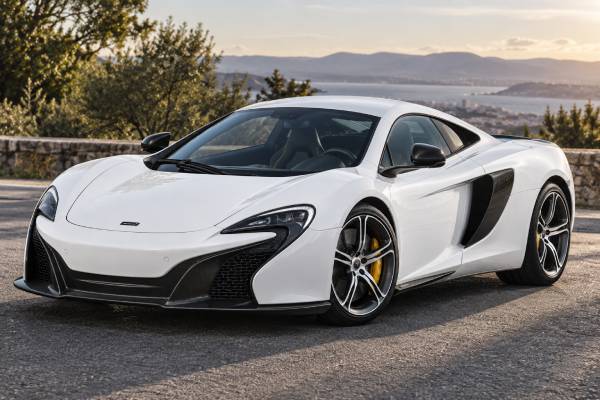
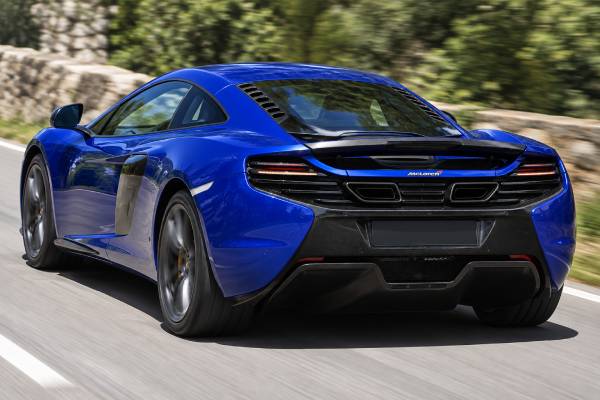
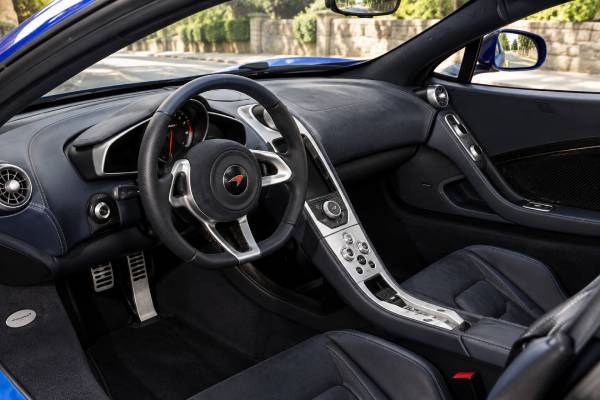
The McLaren 650S Coupé is the point where the original 12C architecture matured into the character most buyers associate with the first Super Series. Launched in 2014, it kept the 75 kg carbon MonoCell and hydraulically linked suspension concept but added 650 PS (641 bhp), 678 Nm, quicker transmission logic, stiffer spring rates, stronger carbon-ceramic brakes, P1-influenced bodywork, and substantially more aerodynamic load. Factory figures of 3.0 seconds to 100 km/h, 8.4 seconds to 200 km/h, and 333 km/h still describe an exceptionally fast road car. The used-car question is more complicated. These Coupés are now old enough for hydraulic accumulators, batteries, cooling components, tires, brakes, electronics, and prior body repairs to matter more than an attractive odometer reading. Specification also varies widely because carbon trim, lift systems, exhausts, audio, seats, and MSO options were frequently ordered. This guide establishes the standard mechanical baseline first, then explains how to inspect, maintain, and choose a 2014–2017 650S Coupé without confusing condition, options, and genuine engineering quality.
Table of Contents
- The 650S Step Beyond the 12C
- 650S Coupé Specifications
- ProActive Chassis and Active Aero
- Powertrain and Real-World Use
- Maintenance by System
- Used 650S Coupé Inspection
- Choosing the Right Example
The 650S Step Beyond the 12C
The 650S was an extensive development of the MP4-12C rather than an all-new platform. McLaren retained the carbon MonoCell and M838T architecture, then changed engine components, transmission software, suspension settings, brakes, aerodynamics, interior technology, and exterior design to create a faster and more communicative car.
Visually, the most obvious change is the P1-inspired front treatment. It was not only a styling exercise. Revised bodywork increased aerodynamic performance, while the active rear Airbrake continued to alter its position for braking and aero control. Period testing and technical accounts put the increase in downforce at roughly a quarter over the 12C, depending on the cited condition.
Under the rear deck, the 3.8-liter twin-turbo V8 received revised pistons, cylinder-head and valve-related changes, altered cam timing, cooling revisions, and a lighter exhaust. Output rose to 650 PS and torque to 678 Nm. McLaren also reshaped the torque delivery and rewrote gearbox logic so Sport and Track modes felt more immediate. The seven-speed SSG hardware remained central to the car’s character, but calibration helped make shifts more dramatic and faster.
The suspension changes were just as important. Front and rear spring rates increased compared with the 12C while ProActive Chassis Control was recalibrated to retain compliance in the softer setting and add precision in the firmer modes. This combination—strong body control without conventional anti-roll bars—remains one of the 650S’s defining technical features.
The Coupé is the simpler body configuration within the range. It avoids the powered roof mechanisms of the Spider and has the lower published mass, making it attractive to buyers who prioritize structural simplicity and maximum performance. The official lightest dry figure is 1,330 kg, with a DIN kerb figure of 1,428 kg.
Because the 650S served as the basis for later derivatives such as the 675LT and several MSO special editions, aftermarket cars can wear components inspired by those models. That does not turn a standard Coupé into an LT or factory limited edition. VIN-linked build data should always define what the car actually is.
650S Coupé Specifications
The standard 650S Coupé uses a 3,799 cc M838T twin-turbo V8 producing 650 PS (641 bhp) and 678 Nm, with a seven-speed SSG and rear-wheel drive. McLaren’s official legacy data lists 333 km/h maximum speed, 1,330 kg lightest dry weight, and a 3.0-second 0–100 km/h time.
| Item | 650S Coupé specification |
|---|---|
| Engine code | M838T |
| Configuration | 90-degree V8, twin turbocharged, dry sump |
| Displacement | 3,799 cc (3.8L) |
| Valvetrain | 32-valve DOHC with variable valve timing |
| Maximum power | 650 PS / 641 bhp (478 kW) at 7,250 rpm |
| Maximum torque | 678 Nm (500 lb-ft) at 6,000 rpm |
| Transmission | 7-speed Seamless Shift Gearbox |
| Driven wheels | Rear |
| Measure | Factory figure |
|---|---|
| 0–60 mph | 2.9 seconds |
| 0–100 km/h (0–62 mph) | 3.0 seconds |
| 0–100 mph | 5.7 seconds |
| 0–200 km/h (0–124 mph) | 8.4 seconds |
| Maximum speed | 333 km/h (207 mph) |
| Item | Specification |
|---|---|
| 100–0 km/h braking distance | 30.5 m (100 ft) |
| 200–0 km/h braking distance | 123 m (404 ft) |
| Suspension | Double wishbone with ProActive Chassis Control |
| Chassis modes | Normal / Sport / Track |
| Differential strategy | Open differential with Brake Steer |
| Active aerodynamics | McLaren Airbrake |
| Core structure | Carbon-fiber MonoCell with aluminum front and rear structures |
| Measure | Metric | Imperial |
|---|---|---|
| Lightest dry weight | 1,330 kg | 2,932 lb |
| DIN kerb weight | 1,428 kg | 3,148 lb |
| Length | 4,512 mm | 177.6 in |
| Width excluding mirrors | 1,908 mm | 75.1 in |
| Wheelbase | 2,670 mm | 105.1 in |
| Height | 1,199 mm | 47.2 in |
| Axle | Wheel | Tire size |
|---|---|---|
| Front | 8.5 x 19 in | 235/35 R19 |
| Rear | 11 x 20 in | 305/30 R20 |
| Factory performance tire | Pirelli P Zero Corsa listed in period technical specifications | |
| Measure | Published figure |
|---|---|
| Urban | 16.1 mpg UK (17.5 L/100 km) |
| Extra urban | 33.2 mpg UK (8.5 L/100 km) |
| Combined | 24.2 mpg UK (11.7 L/100 km) |
| CO2 | 275 g/km |
The numbers above establish a standard-car baseline, not a universal build sheet. Lightweight seats, carbon options, lift systems, audio equipment, and other choices can change equipment and mass. Any used example should be compared with its own original specification rather than with the minimum catalogue weight alone.
ProActive Chassis and Active Aero
The 650S chassis is defined by hydraulically interconnected dampers that manage roll without conventional anti-roll bars. When healthy, the system can offer a surprisingly compliant ride in Normal while tightening body control in Sport and Track; when unhealthy, the same architecture can become a major source of faults and expense.
ProActive Chassis Control uses hydraulic circuits and accumulators to influence how the car responds to heave and roll. The 650S calibration was made more aggressive than the 12C’s, including stiffer springs, but McLaren sought to preserve vertical compliance. That is why a sound 650S can feel both low and tightly controlled without crashing over every broken surface.
Accumulator condition changes that experience. Loss of hydraulic pressure or charge can produce a suspension warning and a very hard ride. A buyer should therefore test all chassis modes rather than judging the system from one smooth road. If the car suddenly feels wooden or identical in every setting, it warrants diagnostic work.
Hydraulic steering is another important part of the platform. It should load naturally, return cleanly, and remain consistent as tires and fluids warm. Pulling under braking, kickback beyond what the road surface explains, or an off-center wheel can result from alignment or tire problems rather than a defective steering rack, so geometry belongs in the diagnostic sequence.
The Airbrake adds an active component at the rear. It changes position for braking and aerodynamic requirements and should complete its movements without hesitation or fault messages. Inspect its hinges, actuator area, panel fit, and finish. A repaired rear deck can leave the wing functional but misaligned, so both motion and surrounding bodywork deserve attention.
Underbody condition is part of the aero system too. Missing floor fasteners, damaged ducts, scraped panels, or poorly fitted repairs can alter airflow and cooling. The low nose makes front splitter contact common, but repeated impact can damage hidden mounts. A lift inspection should include the complete floor rather than ending at the engine and suspension.
Powertrain and Real-World Use
The M838T gives the 650S far more performance than can be routinely used on public roads, but its drivability depends on more than peak output. Turbo response, gearbox calibration, cooling, and electrical health determine whether the car feels cohesive or temperamental in ordinary use.
McLaren arranged the torque curve so most of the 678 Nm output is available across a broad section of the rev range. Below full boost, the car can be driven smoothly; once the turbos are working hard, acceleration builds with startling speed. Because 200 km/h arrives in a quoted 8.4 seconds, a test drive does not need extreme speed to reveal whether the engine pulls cleanly.
Start the inspection from cold. Listen for abnormal mechanical noise, observe idle quality, and note warning messages before they are cleared. After warm-up, check throttle response and boost delivery, then inspect for fresh fluid residue. An engine that behaves well for five minutes in a showroom can reveal cooling, ignition, or pressure-related problems only after heat soak.
The seven-speed SSG should engage reverse and drive consistently and make clean shifts once warm. Some low-speed mechanical feel is inherent to a dual-clutch transmission, but severe shudder, slipping, repeated fault messages, or delayed engagement are not traits to accept without diagnosis. Check manual paddle commands as well as automatic operation.
Cooling-system health matters because the compact twin-turbo installation generates substantial heat. Monitor temperature during city-speed driving and after stronger acceleration, check fan operation, and inspect radiators for debris or damage. Unexplained coolant loss should lead to a pressure test, not regular topping-up as an ownership routine.
The infotainment and electrical systems are less glamorous but strongly affect daily use. Warning messages can sometimes follow low voltage or recover after the control units complete a proper shutdown, yet recurrent faults still need investigation. A healthy battery and conditioner are foundational on a car that may sit for days or weeks between drives.
The fixed-roof Coupé has one practical advantage over the Spider: there is no powered folding roof to diagnose. That reduces moving parts and water-sealing interfaces, though door seals, side glass, air conditioning, infotainment, lift system, soft-close functions where fitted, and cabin electronics still need to be checked individually.
Maintenance by System
A useful 650S maintenance plan is organized by system and time, not by odometer alone. The cars are old enough that calendar age can expose weak accumulators, old tires, tired batteries, moisture-contaminated brake fluid, cooling leaks, and degraded seals even when annual mileage is very low.
For the engine, use the oil grade, filter, procedure, and interval specified for the car’s VIN and market. Check oil level exactly as the handbook instructs because dry-sump systems are sensitive to procedure. Investigate consumption changes or leaks rather than assuming they are normal for a high-performance V8.
For the cooling system, inspect the front heat exchangers, hose connections, reservoirs, and underbody after the car has reached full temperature. Debris lodged in radiator areas can reduce performance over time. Coolant residue around connectors is an early reason to diagnose the system before a small leak becomes an overheating event.
For the hydraulic chassis, record how the car rides from one service to the next. A gradual loss of accumulator charge can be easy for an owner to normalize. Compare mode behavior, scan for stored faults, and inspect hydraulic lines and dampers. Replacement should follow diagnosis rather than a guess based solely on age.
For brakes, remember that carbon-ceramic discs are expensive and cannot be judged simply by whether they look smooth. Measure and assess them using the correct McLaren criteria, inspect pads and calipers, and replace brake fluid on time. Cars that have done track days need a wear history that accounts for temperature and use, not just road mileage.
For wheels and tires, read date codes on all four tires and inspect the inner edges where wear can hide. Diamond-cut wheels have a finite number of refinishing cycles before their profile is changed, so ask what work has already been done. Bends or cracks on the inner barrel can exist without obvious curb rash outside.
For electrical systems, maintain a strong battery and use the proper conditioner during storage. Document replacement date and type. If multiple unrelated warnings appear together, voltage and grounds are logical first checks before expensive modules are condemned. Store the car in a way that still allows access if battery voltage falls.
For bodywork, keep drains and seals clean and correct chips before corrosion or moisture works beneath finishes on metal substructures. Autocar has noted reports of oxidation on the underside of aluminum bonnet and wing areas on some cars. Inspect those surfaces directly rather than assuming carbon construction means the entire vehicle is immune to corrosion.
Annual servicing should also include a diagnostic record. Saving scan results alongside invoices can show whether an intermittent code is new or longstanding. For a complex car that may change owners and specialists, that continuity is valuable maintenance information.
Used 650S Coupé Inspection
A good pre-purchase inspection should determine three things separately: whether the car is the specification the seller claims, whether its structure and body repairs are sound, and whether its mechanical systems function correctly at full operating temperature. Combining those questions into a quick visual check is where expensive surprises begin.
Use the VIN to obtain the original build specification. Confirm factory exterior color, interior, wheels, seats, lift system, exhaust, carbon packages, audio, cameras, and MSO content where relevant. A modified car can still be excellent, but its current parts should not be represented as original equipment without evidence.
Before starting, inspect fluid levels and battery voltage and perform an initial diagnostic scan. Cold-start behavior can reveal faults that disappear after clearing codes or warming the engine. Listen, watch the exhaust, and allow the car to complete its startup checks without rushing into the road test.
During the drive, test the gearbox at low speed and under moderate load, then use stronger acceleration only after temperatures are stable. Switch the chassis through Normal, Sport, and Track, observing whether the ride changes coherently. Test the lift system if fitted, braking from several speeds, steering around center, air conditioning, cameras, and infotainment.
After the drive, inspect for newly visible leaks and heat-related odors. Check coolant level behavior, the rear engine area, hydraulic components, and transmission underside. A second diagnostic scan can show faults that only set under load or temperature.
On the lift, inspect the splitter and floor for grounding, radiators and ducts for damage, wheel barrels, suspension arms, brake discs, and every visible fluid path. Poorly placed jacks or transport straps can damage underbody components even when the exterior appears perfect.
Body repair needs McLaren-specific knowledge. The MonoCell itself is carbon fiber, while surrounding frames and panels use other materials. Paint-depth readings are only one part of the picture. Examine panel fit, fasteners, composite edges, aluminum structures, mounting points, and repair documentation. Ask for pre-repair images when significant work is disclosed.
For U.S. cars, verify recall completion by VIN. NHTSA’s Takata documentation includes 650S vehicles within specified 2014–2016 production ranges; a 2017-registered car may have an earlier build date, so model-year shorthand should not replace a VIN lookup. Safety campaign status is a factual check, not something to infer from a service stamp.
A final estimate should separate immediate safety work from near-term maintenance and cosmetic wants. Tires older than their safe service window, weak brakes, coolant leaks, or hydraulic faults belong in the first category. Carbon trim, wheel refinishing, or minor paint correction can be budgeted separately. That distinction makes purchase decisions clearer.
Choosing the Right Example
The strongest 650S Coupé is not automatically the newest, lowest-mileage, or most heavily optioned one. A better selection criterion is coherence: factory identity is clear, maintenance is continuous, the chassis and drivetrain work properly, body repairs are documented, and the current specification suits how the next owner will use the car.
Mileage should be interpreted alongside time. A car driven a few thousand kilometers each year may have received regular fluid changes, tires, battery attention, and fault correction. A display car with fewer kilometers can still need accumulators, coolant work, aged tires, brake service, and recommissioning. The odometer cannot describe storage quality.
Options influence experience but should not distract from fundamentals. A front lift can be extremely useful on real roads; carbon packages and special paint change appearance; a sports exhaust changes sound; seats alter comfort and support. None compensates for poor hydraulics or accident history. Build the purchase around condition first, then choose equipment.
Service-history quality is worth reading line by line rather than reducing it to “full history.” Look for dates, mileage, workshop identity, exact fluids and parts, advisories, and evidence that reported faults were actually resolved. Repeated invoices for the same warning can reveal an intermittent problem that was never diagnosed. Conversely, a record showing accumulator replacement, cooling repairs, fresh tires, brake measurements, and follow-up checks can make a higher-mileage car easier to understand. Ask whether invoices survive from every ownership period and whether dealer records can fill gaps. A stamped book without supporting detail proves far less about the current condition of a complex hydraulic supercar.
Consider local service access before buying. A McLaren retailer or established specialist with the right diagnostic equipment and experience can make ownership substantially easier. Ask about parts lead times, hydraulic service capability, carbon-ceramic brake assessment, and transport options before a fault occurs.
Budgeting should include more than scheduled annual service. Keep a reserve for tires, hydraulic repairs, cooling components, batteries, wheel work, and unexpected electronics. A discounted example with several deferred systems can consume its purchase-price advantage quickly, whereas a thoroughly maintained car may cost more up front and less in disruption.
Also price transport and specialist inspection realistically. Moving a non-running 650S safely is not the same as towing an ordinary car, and a thorough PPI may require lift time, diagnostics, brake assessment, and a long road test. Spending on verification before purchase can prevent far larger corrective costs afterward.
If the car will see track use, establish a separate consumables plan for brake fluid, pads, rotor monitoring, tires, alignment, and post-event inspection. If it will be used mainly for touring, prioritize road tire age, air conditioning, lift function, cabin electronics, and luggage practicality. The same 650S can support both patterns when maintained for the actual duty cycle.
The fixed-roof 650S has a clear place in the P11 range: it gives the full 641 bhp, 333 km/h performance package with fewer body mechanisms than a Spider and without the rarity premiums of the special editions. Its engineering remains sophisticated enough that buying on price alone is risky. A well-documented Coupé with healthy PCC, stable cooling, a strong battery, measured brakes, fresh tires, sound bodywork, and a clean diagnostic picture is the baseline worth seeking.
References
- McLaren 650S Coupe – Interior, Specs, HP, 0-60, Engine 2026 (Manufacturer Specifications)
- Used McLaren 650S (2014 – 2017) review – a 207mph supercar for Audi RS3 money | evo 2025
- Used car buying guide: McLaren 650S | Autocar 2020
- Used McLaren 650S Spider 2014-2016 review | Autocar 2026 (Shared 650S Engineering)
- McLaren Owners 2026 (Owner Documentation Index)
- Takata Air Bag Recall Spotlight | NHTSA 2026 (U.S. Recall Information)
Disclaimer
This material is for general information and does not replace professional diagnosis, inspection, servicing, structural assessment, or repair. Specifications, torque values, service intervals, recall coverage, software, procedures, and optional equipment vary by VIN and market; verify the individual 650S against official McLaren documentation before maintenance, parts ordering, or safety decisions. If this guide helped, please consider sharing it on Facebook, X/Twitter, or another platform.