
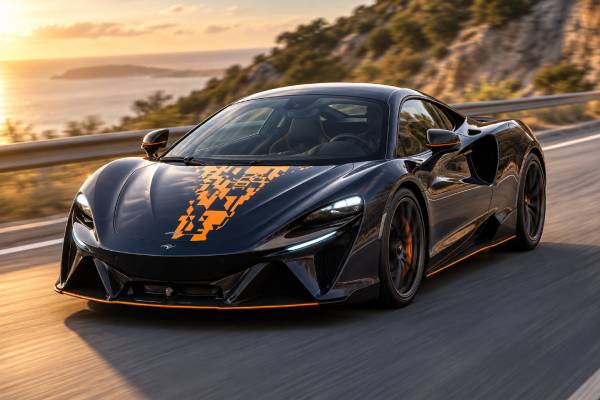
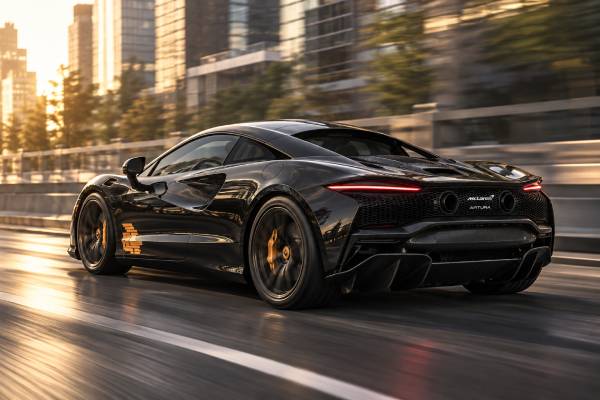
The 2026 McLaren Artura 1000GP by MSO is a ten-car road-going marker for a milestone that took six decades to reach. McLaren Racing made its Formula 1 debut at Monaco in 1966 and returned there in 2026 for its 1,000th Grand Prix. McLaren Special Operations translated that moment into a fixed-roof Artura whose graphics echo the special MCL40 race-car livery used for the celebration. The package is visual and historical rather than a higher-output derivative: McLaren has not announced a 1000GP-specific powertrain or chassis tune, so the car retains the current Artura’s 700 PS (690 bhp) plug-in-hybrid system, carbon-fibre architecture, and 330 km/h top speed. Its scarce production, hand-applied details, and metallic-papaya dedication plaque make provenance as important as mechanical condition. This guide separates the commemorative specification from the standard Artura hardware, explains the engineering underneath it, and identifies what owners and buyers should preserve, verify, and service.
Table of Contents
- Why the 1,000th Grand Prix matters
- How MSO translated the MCL40 livery to the Artura
- Artura 1000GP technical specifications
- Why standard Artura mechanics are important here
- Charging, hybrid use, and real-world operation
- Preservation and service priorities
- Buying, documentation, and authenticity checks
Why the 1,000th Grand Prix matters
The 1000GP exists because Monaco closed a historical circle for McLaren: the team’s first Formula 1 start came there in 1966, and the 2026 Monaco Grand Prix became its 1,000th. McLaren was only the second team in Formula 1 history to reach that figure. The road car therefore commemorates a specific race weekend rather than a round-number anniversary of the automotive company.
McLaren Racing marked the occasion with the MCL40 in a special metallic-papaya and anthracite scheme. The race-car design contained references to milestones across the team’s history, including its first race, victories, championships, the Triple Crown, and a world-record pit stop. Lando Norris and Oscar Piastri drove the MCL40 with that visual treatment in Monaco, providing the direct source for the Artura’s 1000GP theme.
McLaren Automotive then commissioned the road-car interpretation through McLaren Special Operations. Production was capped at 10 client cars worldwide. That is the number that matters when judging rarity; it should not be confused with 1,000, the race-start milestone, or with a larger conventional model-year production run.
| Item | Detail |
|---|---|
| Model | McLaren Artura 1000GP by MSO |
| Model year | 2026 |
| Body style | Two-seat fixed-roof supercar |
| Production | 10 client cars worldwide |
| Creator | McLaren Special Operations (MSO) |
| Commemorated event | McLaren Racing’s 1,000th Formula 1 Grand Prix, Monaco 2026 |
| Design reference | Special-livery McLaren MCL40 Formula 1 car |
The 2026 milestone also came at a point when the team’s official tally stood at more than 200 Grand Prix victories and 10 Constructors’ Championships. Those statistics help explain why the design references more than a single race. The MCL40 celebration livery was intended to compress several eras of McLaren history into one contemporary surface, while the Artura version takes only selected visual cues from that language. That difference is worth preserving in descriptions: the road car is inspired by the milestone race car, but it is not a literal road-legal copy of every MCL40 graphic or historical reference.
The location strengthens the connection. Monaco was not chosen retrospectively for marketing convenience; it was both the setting of Bruce McLaren’s team debut in Formula 1 and the venue where the 1,000th Grand Prix was reached sixty years later. For collectors, that makes period documents dated around the 2026 Monaco event especially useful context for the car’s provenance.
The number ten also gives the 1000GP a different collecting proposition from mass-produced appearance packages. There are too few cars for broad market data to establish a reliable price trend quickly, and individual specification can matter heavily. Buyers should therefore resist treating an asking price as proof of value. The stronger evidence is the combination of factory provenance, original MSO work, condition, and a traceable history from delivery onward.
How MSO translated the MCL40 livery to the Artura
The defining 1000GP feature is not a badge placed on an otherwise standard paint scheme. MSO carried a fragmented racing graphic over several body zones so the Artura reads as a road-car interpretation of the MCL40 celebration livery.
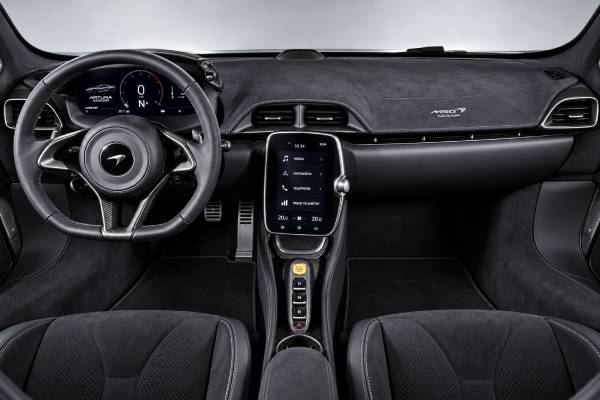
The 1000GP graphic covers the bonnet, lower body sides, and wing-mirror casings. Contrasting pinstripes appear on the front splitter and rear diffuser, with the detail intentionally referencing historic McLaren liveries. Inside, an anodised or metallic-papaya dedication plaque records the milestone. McLaren’s launch material emphasized the work of MSO craftspeople, which is important when assessing the car later: the finish should be judged as bespoke factory work, not as ordinary vinyl decoration.
The MCL40 design is visually complex because its camouflage-like geometry works at more than one viewing distance. Up close it is fragmented; from farther away, the papaya forms create a stronger graphic field. On the Artura, that treatment follows sculpted panels rather than the flat surfaces of a race car. Alignment around panel edges, mirror housings, intakes, and the lower body is therefore part of the original execution.
That makes cosmetic repair unusually sensitive. A conventional body shop may be able to match a base color yet still fail to reproduce the position, scale, edge treatment, or finish of an MSO graphic. Even a technically excellent repaint can reduce originality if it erases factory-applied work.
For inspection, divide the exterior into zones:
- Bonnet: check the large 1000GP graphic for consistent finish, stone-chip correction, and evidence of localized repainting.
- Lower sides: inspect edges near road-debris impact areas, where protective film or previous refinishing may be present.
- Mirror casings: look for chips and replacement parts; small removable components are easy to swap without preserving the original.
- Front splitter and rear diffuser: verify the heritage-inspired pinstripes, then inspect the underlying carbon for curb or impact damage.
- Cabin plaque: confirm that the metallic-papaya dedication plaque is present, secure, and consistent with the car’s documented build.
There is also a practical reason to document protection work before it begins. Paint-protection film can bridge panel gaps or overlap a graphic edge, making later inspection harder. A future technician or buyer should be able to distinguish a factory line from the edge of aftermarket film. A simple photo set taken under neutral light before installation can preserve that evidence. If a panel later needs repair, those images can also help a McLaren retailer or specialist understand how the car originally presented.
The dedication plaque should be treated as part of the car’s identity, not merely interior jewelry. Photograph its placement, finish, and surrounding trim and keep those images with the delivery records. If the cabin is ever disassembled for unrelated work, this creates a reference for correct reinstallation without inviting unnecessary handling of a scarce component.
McLaren publicized the Artura 1000GP in multiple color combinations, so a car should not be rejected simply because its base color differs from the most widely circulated press images. The correct question is whether that exact chassis left MSO in that configuration.
Artura 1000GP technical specifications
Mechanically, the 1000GP uses the contemporary 690 bhp Artura platform. McLaren’s announcement did not identify unique engine, battery, transmission, suspension, brake, or aerodynamic hardware for the special edition. The appropriate technical reference is therefore the current P16 Artura specification rather than an imagined “1,000 GP tune.”
At its center is the M630 3.0-litre V6, set at a wide 120-degree angle and fitted with twin electrically actuated turbochargers and dry-sump lubrication. An axial-flux electric motor works with the combustion engine through the transmission, giving an official combined maximum of 700 PS (690 bhp) and 720 Nm.
| Specification | Value |
|---|---|
| Engine | M630 3.0L 120-degree twin-turbocharged V6 |
| Lubrication | Dry sump |
| Electric motor | Axial-flux motor |
| Combined system output | 700 PS (690 bhp) |
| Combined maximum torque | 720 Nm (531 lb-ft) |
| Traction battery | Refrigerant-cooled lithium-ion, 7.4 kWh |
| Transmission | 8-speed + E-Reverse Seamless Shift Gearbox |
| Drive | Rear-wheel drive |
The electric motor performs several jobs. It supplies immediate torque, supports the V6 during transient response, enables electric-only movement, and provides reverse motion so the gearbox does not need a conventional reverse gear. The compact hybrid arrangement helps keep the wheelbase and mass under control compared with a layout that uses a separate electric axle.
| Measure | Claimed figure |
|---|---|
| 0–100 km/h (0–62 mph) | 3.0 seconds |
| 0–200 km/h (0–124 mph) | 8.3 seconds |
| Standing 400 m / quarter mile | 10.7 seconds |
| Maximum speed | 330 km/h (205 mph), electronically limited |
| 100–0 km/h braking distance | 31 m (101.7 ft) |
| 200–0 km/h braking distance | 124 m (406.8 ft) |
The chassis is built around McLaren Carbon Fibre Lightweight Architecture, or MCLA, with aluminium hot-formed body panels. Unlike the hydraulic cross-linked suspension used on some other McLarens, the Artura employs a double-wishbone front arrangement and a multi-link rear with electronically controlled damping.
| Specification | Value or configuration |
|---|---|
| Core structure | McLaren Carbon Fibre Lightweight Architecture (MCLA) |
| Front suspension | Double wishbone |
| Rear suspension | Multi-link |
| Damping | Proactive Damping Control |
| Differential | Electronically locking E-Differential |
| Brakes | Carbon-ceramic; 6-piston front and 4-piston rear aluminium calipers |
| Lightest dry weight | 1,395 kg (3,075 lb) |
| DIN kerb weight | 1,498 kg (3,303 lb) |
| Front luggage capacity | 160 L |
| Fuel tank | 65 L (17.14 US gal) |
The weight figures are standard Artura values. McLaren has not published a separate 1000GP weight, so it would be misleading to claim that the bespoke treatment makes the special edition lighter or heavier by a specific amount.
| Specification | Figure |
|---|---|
| Electric range | 33 km (21 miles), EU WLTP |
| Weighted fuel consumption | 4.8 L/100 km, EU WLTP |
| Combined CO2 emissions | 108 g/km, EU WLTP |
| Battery capacity | 7.4 kWh |
These plug-in-hybrid figures are test-cycle results. They depend on a charged battery and the WLTP weighting method; they should not be read as a fixed fuel-consumption result for every journey.
Why standard Artura mechanics are important here
The absence of a bespoke power increase is a strength of the 1000GP concept rather than an omission. Its historical meaning sits in the MSO execution, while the mechanical package is the matured 700 PS Artura specification already developed for series production.
That matters for three reasons. First, the special edition avoids a one-off engine calibration that could complicate future diagnosis. Second, performance remains substantial: 690 bhp in a sub-1.5-tonne dry-weight hybrid already puts the Artura in genuine supercar territory. Third, owners can use established McLaren service procedures and parts pathways for the underlying drivetrain rather than relying on unique mechanical components for routine maintenance.
The current Artura tune is also more than a simple headline remap compared with the earliest cars. McLaren’s later calibration raises peak output while retaining 720 Nm of combined torque, and the platform revisions introduced with the higher-output generation included faster transmission response and updated dynamic control. Those changes belong to the contemporary Artura itself, not specifically to the 1000GP.
On the road, the hybrid layout fills in torque as the V6 and turbochargers build their contribution. The 120-degree engine architecture keeps the power unit low and compact, while the E-Differential manages rear-axle traction electronically. Electro-hydraulic steering preserves a more direct steering feel than fully electric-assist systems typically provide.
The carbon-ceramic braking system is similarly performance-focused. Owners accustomed to regenerative one-pedal driving in electric cars should not assume the Artura behaves the same way. McLaren prioritizes a consistent brake-pedal relationship and a sports-car style of deceleration rather than maximizing lift-off regeneration.
None of that turns the 1000GP into a track-only derivative. Electric operation and the plug-in battery allow short quiet journeys, while the front luggage compartment remains available for soft bags. The contrast is central to the car’s identity: a ten-unit commemorative finish wrapped around a road-usable high-performance hybrid.
The fixed-roof P16 also matters to the way the car communicates its performance. Compared with the Spider, it avoids a powered roof mechanism and carries the lower published Artura dry weight. That does not make the 1000GP a stripped competition model; the benefit is simply that the commemorative package sits on the lighter of the two regular Artura body forms. The cabin, front luggage space, hybrid system, and road-oriented equipment remain part of the normal ownership experience.
At full performance, the battery and combustion engine operate as one powertrain. Quoting the V6 and motor outputs separately can be useful for engineering context, but adding their peaks arithmetically would be misleading because those peaks do not necessarily occur at the same operating point. The published 700 PS system figure is the correct number for comparing the 1000GP with another Artura or with a rival plug-in-hybrid supercar.
Charging, hybrid use, and real-world operation
The 1000GP rewards being plugged in because the electric system is part of the performance strategy, not merely an emissions device. Starting with usable battery charge gives the car greater flexibility for silent local driving and lets the control system deploy electric assistance as intended.
Electric mode can cover short urban trips within the limits of temperature, accessory load, battery condition, and driving style. The official EU figure is 33 km (21 miles), but no owner should expect that exact distance every time. Cold weather, cabin heating or cooling, high speeds, gradients, and battery age all change electric range.
For longer trips, the hybrid controls coordinate the V6 and motor. The driver can select operating modes that change how readily the combustion engine runs and how aggressively the powertrain responds. The useful owner habit is to think of the battery as an active system that should be exercised and charged appropriately, not as a component to ignore because the car also has a fuel tank.
Charging discipline is especially relevant to a low-mileage collectible. A car that sits for extended periods can still experience electrical problems unrelated to odometer reading. The high-voltage battery and the separate low-voltage system have different functions, and a healthy traction-battery state does not guarantee a healthy 12-volt supply.
Before a long storage period, follow the current McLaren documentation for charging and battery support. Avoid improvising with generic storage advice from unrelated plug-in hybrids because acceptable state-of-charge ranges, support equipment, and wake-up behavior can differ by vehicle and software version.
When returning a stored car to service:
- check tire pressures and tire age before driving at speed;
- confirm there are no hybrid, charging, cooling, or low-voltage warnings;
- inspect beneath the car for fluid loss or evidence of animal damage around wiring;
- bring brakes and tires gradually back to operating temperature;
- verify charging operation rather than assuming it worked because the plug was connected;
- allow the car to complete normal system checks before demanding full performance.
The point is not to make the Artura fragile. It is to recognize that low use is not the same as zero maintenance, especially on a high-voltage supercar with multiple control modules and a valuable bespoke exterior.
Preservation and service priorities
The 1000GP has ordinary serviceable hardware and extraordinary cosmetic hardware, so maintenance records should cover both. Engine oil, cooling circuits, brakes, tires, battery systems, and software belong to the first group. The livery, pinstripes, plaque, and original MSO-finished pieces belong to the second.
For mechanical work, use the schedule and procedures applicable to the exact VIN and market. Service intervals can be time-based as well as mileage-based, which is particularly relevant to a car that may spend much of its life in a collection. Brake fluid, lubricants, seals, tires, and 12-volt batteries age even if the odometer barely moves.
High-voltage diagnosis requires trained personnel and proper isolation procedures. The Artura’s refrigerant-cooled battery and associated electrical hardware should never be approached as a conventional 12-volt repair. Likewise, the dry-sump V6 has service procedures and fluid requirements that must be verified against current factory information rather than inferred from another McLaren engine family.
Cosmetic preservation needs a documented plan. Before applying paint-protection film, ceramic coatings, or correction work, establish exactly how the 1000GP graphic is constructed on that car. Photograph panel edges and the condition of the graphic first. If film is later removed, an installer must understand that pulling on a bespoke finish can create damage worth far more than the film itself.
Keep removed original parts. If a mirror casing, wheel, trim piece, or splitter is replaced after minor damage, storing the original component preserves the car’s history and may help future authentication. The same principle applies to labels, book packs, keys, covers, charging equipment, and delivery accessories.
A useful service file should include chronological invoices, diagnostic reports, software updates, tire dates, alignment records, protection-film invoices, and photographs before and after any cosmetic work. For a ten-car model, that paper trail can answer questions that a future buyer cannot resolve from a generic vehicle-history report.
Buying, documentation, and authenticity checks
A 1000GP purchase should begin with documentary verification, because the easiest part of this model to imitate is the visual theme. A standard Artura can be wrapped in papaya graphics; it cannot become one of the ten factory-client cars through appearance alone.
Ask for the VIN, original order or build specification, delivery documentation, and confirmation from an authorized McLaren source where available. The car should show the expected 1000GP graphic on the bonnet, lower sides, and mirror housings; heritage-inspired pinstriping on the front splitter and rear diffuser; and the dedicated metallic-papaya cabin plaque. Do not rely on a plaque photograph without verifying that it belongs to the same chassis.
Then inspect the base Artura as rigorously as any other used high-performance hybrid. A rare specification does not cancel ordinary wear. Check the front underbody, carbon-ceramic brakes, wheel rims, tire age and matching fitment, suspension condition, charging behavior, diagnostic history, air-conditioning performance, fluid leaks, and warning messages. A professional pre-purchase inspection should include a full electronic scan.
Cosmetic clues can be equally revealing. Uneven texture, unusual masking lines, inconsistent clear coat, or a graphic that does not align correctly across panel boundaries may indicate repair. That is not automatically disqualifying—a responsibly documented repair can be preferable to hidden damage—but it changes the originality story and should be reflected in the paperwork.
Because only ten client cars were announced, market comparisons may be sparse. Avoid creating a value formula from normal Artura asking prices plus an arbitrary “rarity percentage.” A more defensible assessment considers the specific car’s provenance, configuration, mileage, service history, paint originality, accident history, regional taxes, and whether all unique MSO elements remain with it.
Insurance should also be discussed before money changes hands. Replacement-cost assumptions for a normal Artura may not cover the difficulty of reproducing bespoke graphics or replacing edition-specific pieces. Depending on jurisdiction, a specialist agreed-value policy may better reflect the actual asset.
The 1000GP is best understood as a documented artifact built on a mature Artura platform. Its 690 bhp powertrain provides the driving substance, but the reason this particular 2026 McLaren is scarce lies in the ten-car MSO program and its link to Monaco. A sound purchase preserves both halves of that identity: the hybrid supercar must function correctly, and the commemorative work must remain traceable to the factory.
References
- マクラーレン・レーシングのFormula 1出走1000回という歴史的瞬間を記念して、McLaren Artura 1000GP by MSOが誕生 2026
- McLaren Artura 1000GP by MSO celebrates milestone moment for McLaren Racing 2026
- 1000th GP 2026
- McLaren Racing to celebrate historic 1000th Formula 1 Grand Prix with special livery and grid moment 2026
- McLaren Artura Hybrid Supercar – Interior & Specifications 2026
- MSO Creates Exclusive Artura 1000GP Honoring McLaren Racing’s 1,000th Grand Prix Ahead Of Monaco GP 2026
Disclaimer
The 1000GP material here is intended for research and ownership context, not for mechanical diagnosis, repair, appraisal, or authentication. Before servicing or modifying a particular car, check its VIN-specific McLaren documentation because technical specifications, torque requirements, intervals, procedures, and installed equipment may differ between markets and individual vehicles.
If this helped document the 1000GP edition clearly, you can support our work by sharing it on Facebook, X/Twitter, or with other McLaren enthusiasts.