
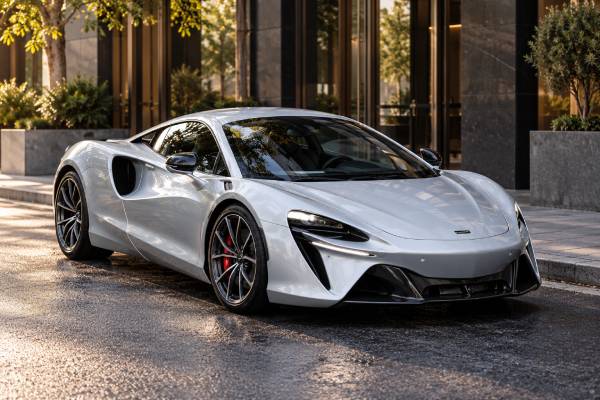
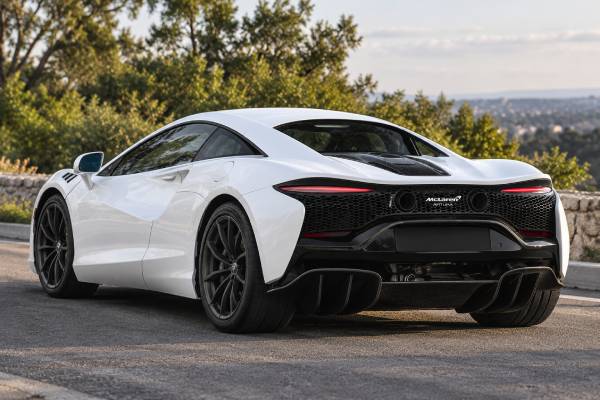
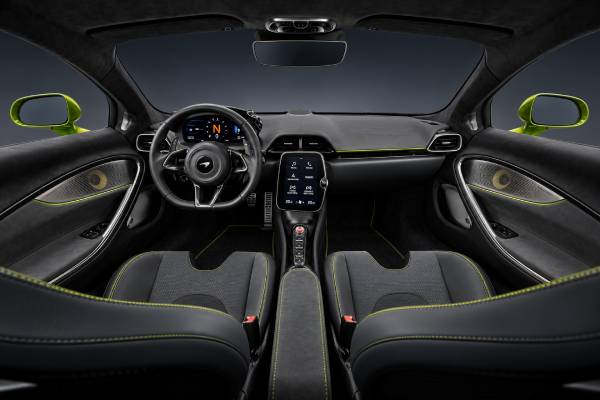
The 690 hp McLaren Artura Coupé is the version that turned the original Artura concept into a more mature, sharper supercar without changing its basic formula. Announced in February 2024 alongside the first Artura Spider and sold in many markets as a 2025-model-year car, the updated coupé keeps the carbon-fibre MCLA chassis, 3.0-litre twin-turbo V6, axial-flux electric motor, plug-in battery and rear-wheel drive. What changed is the execution: combined output rose to 700 PS (690 bhp), gearshifts became quicker, the adaptive damping electronics and calibration were revised, powertrain movement was better controlled, brake cooling improved and the exhaust was reworked. The result matters to buyers because an earlier 671 hp Artura with McLaren’s free power software update is not automatically identical to a factory-built updated car. This guide separates those distinctions, explains the 2024-onward specification, and shows what to verify before buying or maintaining one.
Table of Contents
- Why the 2024 Update Matters
- How the 690 hp Hybrid Powertrain Works
- Transmission, Chassis, Brakes, and Exhaust Changes
- McLaren Artura 690 hp Technical Specifications
- Electric Mode, Charging, and Daily Use
- Maintenance, Software, and Recall Checks
- Buying a 2024–Present Artura Coupé
Why the 2024 Update Matters
The important point is that the 690 hp Artura is more than the original coupé with a higher power figure. McLaren used the launch of the Artura Spider to introduce a package of powertrain, suspension, braking, electronics and acoustic changes to the coupé at the same time.
There is a naming wrinkle. The revised car was announced in February 2024 and deliveries were scheduled from the middle of 2024, but McLaren and U.S. publications commonly identify the revised coupé as a 2025 model-year Artura. That is why an advertisement saying “2024 Artura” does not, by itself, prove which technical specification is underneath. Registration date, production date and model year are different things, especially across markets.
For a buyer, the cleanest dividing line is the vehicle’s build specification rather than the date in a classified listing. The updated factory package introduced 700 PS (690 bhp) combined output and 720 Nm (531 lb-ft) of system torque. The additional output came from revised V6 calibration; the electric motor itself remained essentially the same 70 kW/95 PS unit. McLaren also altered the shape of the engine’s power delivery so the V6 pulls harder toward the upper end of its rev range rather than simply posting a larger peak number.
That distinction matters because McLaren offered owners of earlier Artura coupés a complimentary software upgrade to the new 700 PS calibration. An early car that has received that update can therefore make the same headline combined power as the later specification. It does not follow that the car also gained every other improvement introduced with the revised generation. Hardware and calibration changes such as updated powertrain mounts, damper components, brake-cooling revisions and the later exhaust specification need to be identified separately.
The update also addressed how quickly the car reacts. McLaren’s Proactive Damping Control system received revised damper valving and new control hardware with communication that the company said could improve response speed by as much as 90 percent. The eight-speed dual-clutch transmission gained a pre-fill function intended to reduce shift time by 25 percent. These percentages describe specific system response improvements, not a blanket 25- or 90-percent increase in the car’s overall performance.
From behind the wheel, the combined changes are aimed at the areas that shape confidence rather than just straight-line acceleration: steadier powertrain location under load, faster damping decisions, cleaner high-rpm delivery, stronger cooling support and more decisive shifts. The Artura remains a light, rear-drive, mid-engined PHEV, but the updated specification is the one to target when a buyer wants the full package rather than only the 690 hp software figure.
How the 690 hp Hybrid Powertrain Works
The Artura’s hybrid system is built to improve response and performance while still allowing genuine plug-in electric driving. Its petrol engine and electric motor work through a compact eight-speed transaxle, with the motor filling torque, providing EV propulsion and performing the reverse-drive function.
At the centre is the M630 3.0-litre V6, a 120-degree twin-turbocharged, dry-sump engine mounted behind the cabin. The wide bank angle helps lower the engine and creates room for the two turbochargers in the “hot-V” between the cylinder banks. Electrically actuated turbo hardware and the electric motor’s immediate torque help the powertrain respond quickly without requiring a large-displacement engine.
The axial-flux motor sits within the transmission housing and contributes up to 95 PS and 225 Nm. It draws from a refrigerant-cooled 7.4 kWh lithium-ion battery positioned low in the carbon structure. Because the electric motor also provides reverse, the gearbox can devote its eight mechanical ratios to forward travel. An electronically controlled differential manages torque distribution across the rear axle.
For the updated car, the combined rating is 700 PS, equivalent to 690 bhp, with maximum system torque of 720 Nm. The increase over the original 671 hp version came from engine calibration rather than a larger motor or battery. That is why McLaren could offer the power increase to earlier cars through an authorised software update. The revised factory car, however, was developed as a coordinated package around that output.
The driver can separate powertrain character from chassis character. E-Mode prioritizes electric propulsion where conditions and battery state allow, while Comfort, Sport and Track progressively change how readily the combustion engine is involved and how aggressively the powertrain responds. Chassis settings can also be adjusted, which is useful because a driver may want a responsive powertrain without the firmest damping setting on a rough road.
Hybrid operation also changes how owners should think about “full performance.” A PHEV supercar is not simply a petrol car carrying an auxiliary battery. Temperature, battery state of charge, system protection logic and selected mode can influence when electric assistance is available. The Artura is engineered to manage those variables automatically, but repeated high-load track use still makes warm-up, cool-down and battery strategy relevant. If consistent lap-to-lap performance matters, follow the current owner documentation rather than assuming the car will behave identically at every displayed battery percentage.
One unusual feature of the updated software package is Spinning Wheel Pull-Away. It permits deliberate wheelspin when the appropriate stability settings are selected. It is entertainment rather than a quicker launch strategy, and it should be treated accordingly: tire temperature, surface grip, legal conditions and the cost of rear tires all matter more than the novelty.
Transmission, Chassis, Brakes, and Exhaust Changes
The updated Artura’s strongest engineering case is the way several small systems were improved together. Quicker shifts, revised damping, stiffer powertrain mounts, better brake cooling and a new exhaust character target response and consistency rather than turning the car into a different platform.
The eight-speed Seamless Shift Gearbox uses a pre-fill strategy that prepares the next hydraulic action before the driver or control logic completes the shift request. McLaren stated that this reduced shift times by 25 percent. The benefit is most obvious when the powertrain is being worked hard: the change from one ratio to the next interrupts the acceleration experience for less time and makes manual paddle inputs feel more immediate.
The powertrain mounts were also revised. A mid-engined car generates large longitudinal and rotational loads when it accelerates, decelerates and changes gear. Allowing too much powertrain movement can soften response and feed unwanted motion into the chassis. The updated mounts control that movement more tightly, supporting more precise steering and vehicle behavior without changing the basic rear-wheel-drive layout.
Suspension remains double wishbone at the front and multi-link at the rear with electronically controlled adaptive dampers. The 2024 update revised internal damper valving and the control strategy. McLaren paired that hardware with faster electronic communication for Proactive Damping Control, claiming up to a 90-percent improvement in response speed. This is especially relevant on broken roads, where a supercar must manage rapid wheel movement without making the body feel nervous.
Braking continues to rely on carbon-ceramic discs and lightweight aluminium calipers—six pistons at the front and four at the rear—but the updated car received revised cooling ducts and recalibrated control systems. McLaren’s current specification quotes 31 m from 100 km/h to rest and 124 m from 200 km/h. Those are manufacturer figures measured under controlled conditions; actual stopping distance depends heavily on tire condition, road surface, brake temperature and weather.
The exhaust received its own engineering attention. A revised valved system and tuned resonator were designed to give the V6 a cleaner, stronger sound as revs build. An optional sports exhaust adds a sound symposer that channels genuine acoustic energy toward the cabin. The practical ownership point is that an exhaust option is not the same thing as the 690 hp engine calibration: sound hardware and power software should be verified independently when decoding a used car.
Steering remains hydraulically assisted, an increasingly uncommon choice that McLaren preserves for feedback. The update did not replace the Artura’s core steering concept or MCLA carbon structure. Instead, it refined the components around them. That continuity is useful in the used market because the revised car still feels recognizably like an Artura; the challenge is identifying exactly which updates a particular example actually has.
McLaren Artura 690 hp Technical Specifications
This Artura is a rear-wheel-drive plug-in hybrid (PHEV) coupé using a twin-turbo V6, one axial-flux traction motor, a rechargeable lithium-ion battery and an eight-speed dual-clutch transaxle. The specifications below describe the updated 690 bhp/700 PS factory configuration; regional homologation figures can differ, so market-specific documentation remains the final authority.
| Item | Specification |
|---|---|
| Engine | M630 120-degree 3.0L twin-turbocharged V6, dry sump |
| Hybrid type | Plug-in hybrid electric vehicle (PHEV) |
| Combined maximum power | 700 PS (690 bhp) |
| Combined maximum torque | 720 Nm (531 lb-ft) |
| Electric motor | Axial-flux motor integrated with transmission |
| E-motor contribution | Up to 95 PS (70 kW) and 225 Nm |
| Battery | 7.4 kWh refrigerant-cooled lithium-ion |
| Drive | Rear-wheel drive |
| Item | Specification |
|---|---|
| Transmission | 8-speed Seamless Shift Gearbox with E-Reverse |
| Differential | Electronically locking rear differential |
| Front suspension | Double wishbone |
| Rear suspension | Multi-link |
| Damping | Proactive Damping Control, Comfort/Sport/Track settings |
| Body structure | McLaren Carbon Fibre Lightweight Architecture with aluminium hot-formed body panels |
| Measure | Manufacturer figure |
|---|---|
| 0–100 km/h (0–62 mph) | 3.0 seconds |
| 0–200 km/h (0–124 mph) | 8.3 seconds |
| Quarter mile (0–400 m) | 10.7 seconds |
| Top speed | 330 km/h (205 mph) |
| 100–0 km/h | 31 m (101.7 ft) |
| 200–0 km/h | 124 m (406.8 ft) |
| Item | Specification |
|---|---|
| Brakes | Carbon-ceramic discs |
| Front calipers | 6-piston aluminium |
| Rear calipers | 4-piston aluminium |
| Wheel format | 19-inch front / 20-inch rear |
| Typical road tire sizes | 235/35ZR19 front / 295/35ZR20 rear |
| Item | Specification |
|---|---|
| Lightest dry weight | 1,395 kg (3,075 lb) |
| DIN kerb weight | 1,498 kg (3,303 lb) |
| Fuel tank | 65 L |
| Front luggage compartment | 160 L |
| Seating | 2 |
| Measure | Figure |
|---|---|
| WLTP electric range | 33 km (21 miles) |
| WLTP weighted fuel consumption | 4.8 L/100 km |
| WLTP CO2 | 108 g/km |
Official PHEV efficiency numbers require context. The 4.8 L/100 km weighted WLTP figure assumes the standardized test cycle and regular charging; it should not be read as the fuel consumption of a battery-depleted 690 hp supercar on a long motorway or track session. Likewise, McLaren’s 33 km/21-mile figure is a WLTP electric-range claim. U.S. test labeling and independent publications can show a different all-electric number because the procedure and definition are different.
Electric Mode, Charging, and Daily Use
The Artura’s electric system is most useful for short low-speed trips, quiet departures and filling gaps in the V6’s response—not for replacing a long-range EV. Owners who plug in regularly get more value from the PHEV hardware than owners who carry the battery but rarely charge it.
With a full battery and suitable conditions, McLaren quotes up to 33 km (21 miles) of electric range under WLTP. E-Mode lets the car move without deliberately starting the V6, although temperature, battery condition, power demand and system-protection logic can still affect operation. The distance is modest, but it can cover parking structures, neighborhood roads or the first part of a commute without combustion noise.
The battery is small by modern EV standards, which is intentional. Its role is to add performance while keeping mass under control. The Artura’s 1,395 kg lightest dry figure and 1,498 kg DIN kerb figure are unusually low for a plug-in hybrid with this level of performance. A larger battery might add electric range but would also add mass, alter packaging and work against the car’s dynamic brief.
Charging is AC rather than high-power DC fast charging. The onboard system is sized for a compact traction battery, so the practical routine is to connect the car at home or at its regular parking location rather than treat public rapid-charging infrastructure as a central part of ownership. Use charging equipment that meets the requirements in the handbook for the exact market, and keep the cable and inlet dry, undamaged and free from contamination.
Daily usability is better than the silhouette suggests. The front luggage compartment holds 160 litres, enough for soft bags or carefully sized carry-on luggage. Visibility is comparatively generous for a mid-engined supercar, and the carbon tub’s narrow structural sections around the cabin help make the car easier to place. The updated range also added or expanded assistance features in some markets, including lane-departure warning and road-sign recognition, with blind-spot monitoring and cross-traffic functions available depending on specification.
The low nose remains a concern on ramps and abrupt driveway transitions. A vehicle-lift option is therefore worth confirming on a used example if the owner’s normal routes include underground parking or steep entrances. Wheel and tire condition matter just as much: the staggered 19-inch front and 20-inch rear setup uses performance tires that should match McLaren’s approved specification and have adequate tread, age and pressure.
Hybrid ownership introduces one more habit: do not evaluate the car after a short, cold start and assume that behavior represents a fault. Battery temperature, engine warm-up, brake temperature and control strategies can change the first minutes of a drive. What matters is whether warnings persist, whether charging completes normally, whether transitions between electric and combustion operation remain smooth, and whether stored diagnostic faults are present when the car is inspected properly.
Maintenance, Software, and Recall Checks
A 690 hp Artura should be maintained as an integrated hybrid supercar, not as a conventional V6 with an added battery. Service history, software level, recall completion and high-voltage system condition are as important as fluid changes and visible mechanical wear.
Start with the maintenance schedule in the handbook for the exact VIN and market. McLaren publishes model-year-specific owner handbooks, and procedures can differ with region, production date and equipment. A car that has covered little mileage still deserves time-based servicing because brake fluid, engine oil, coolant systems, seals, battery management and software do not become irrelevant when the odometer moves slowly.
For the high-voltage system, owner maintenance should be limited to the inspections and charging practices McLaren authorizes. Orange high-voltage cabling, battery cooling and power electronics require trained personnel. Physical damage under the car, charging faults, isolation warnings or evidence of water intrusion justify specialist diagnosis rather than experimentation.
Software history deserves unusually close attention. The Artura is electronically complex, and the 690 hp update itself demonstrates how much behavior can be changed through calibration. On an earlier car advertised as “updated to 690 hp,” ask an authorised retailer to confirm the campaign or software installation against the VIN. Then establish which later hardware revisions, if any, are physically present. A seller’s statement that a car “has the update” is too vague to answer both questions.
Recall status is another VIN-level check. In the United States, NHTSA recall 25V-216 covered 29 potentially affected McLaren vehicles across several models, including certain Arturas, after McLaren identified the possibility that left and right rear brake pipes had been connected incorrectly at the ABS/ESP module. The concern was that intervention near the limit of grip could brake the opposite rear wheel and potentially lead to wheel lock. McLaren’s remedy is inspection and correction if necessary. The recall population is small and spans several models, so it should not be generalized to every Artura; check the specific VIN in the applicable national recall database.
An inspection before purchase should also look beyond fault codes. Carbon-ceramic discs need examination for condition and remaining service life using the correct procedure; visual appearance alone can be misleading. Tires should be checked for inner-edge wear, cuts, age and consistent specification. Inspect the underside and aerodynamic panels for curb or ramp damage. Confirm that the nose lift, air conditioning, infotainment, cameras, driver-assistance functions, charging port, both keys and every fitted option work correctly.
Service paperwork should show who performed the work and when. A complete authorised-retailer record is especially valuable on a technically unusual car because it helps establish software campaigns, recall completion and warranty decisions, not just oil-change dates. If documentation is incomplete, budget for a comprehensive inspection before agreeing on price.
Buying a 2024–Present Artura Coupé
The best way to buy this generation is to identify the exact build specification first, then judge condition, history and options. Do not use the displayed 690 hp figure alone to decide whether a car is a full updated-generation Artura.
A sensible shopping process begins with the VIN. Ask a McLaren retailer to confirm model year, production specification, open campaigns, service history that can be verified in the network and whether the car originally left the factory with the later 700 PS package. If it is an earlier 671 hp car that received the complimentary power recalibration, that is not inherently a problem; it is simply a different proposition and should be described accurately.
Next, establish the hardware. The factory update included changes to powertrain mounting, damper valving and control, brake cooling, exhaust tuning and transmission behavior. Some of those are software-dependent, some are physical parts, and not all should be assumed to transfer to an earlier car merely because its engine map was updated. A parts-by-VIN check is more reliable than trying to identify every revision visually in a showroom.
Then inspect the expensive consumables. Measure tire tread and note manufacture dates, check for mismatched brands or specifications, and look at the inner shoulders where wear may be easy to miss. Have carbon-ceramic brakes assessed by someone familiar with McLaren’s procedure. A low-mileage car can still need costly tires because of age, flat spotting or damage, while track use can consume brakes and tires rapidly even when the odometer remains modest.
Hybrid operation should be tested from both a charged and partially depleted battery if practical. The car should accept a charge without persistent faults, switch modes correctly and deliver smooth transitions. Warning messages that disappear after a restart are still worth documenting and diagnosing; intermittent electronic faults are not made harmless by being intermittent.
Road testing should cover more than full-throttle acceleration. Listen for suspension knocks at low speed, check that the steering self-centres naturally and does not pull, verify brake response from cold and warm conditions, and feel for vibration under acceleration. Try Comfort, Sport and Track chassis settings where legal and sensible. The point is not to stress someone else’s car, but to confirm that electronically controlled systems actually change behavior as intended.
Options can materially affect everyday value. Vehicle lift may matter more than decorative carbon if the car will see real roads. Seat type deserves a physical test because comfort and ingress vary by body shape. Parking cameras, technology packages, upgraded audio and exterior carbon pieces can be desirable, but their value is secondary to provenance and mechanical condition. Confirm expensive cosmetic carbon for chips or impact damage because replacement costs can be disproportionate to the apparent size of the mark.
For a car still within original coverage, verify the in-service date and the warranty terms applicable to its market rather than assuming a fixed global expiration. McLaren Qualified pre-owned cars can include additional warranty, inspection and roadside-assistance benefits, but program terms vary by country. Obtain the actual contract rather than relying on an advertisement summary.
Finally, price the car you are actually buying. A pristine early coupé with the authorised 690 hp software calibration may be attractive at the right price, while a factory-updated car offers the complete development package. Neither description should be blurred. The updated Artura’s appeal lies in how thoroughly McLaren refined the original concept: it combines the same lightweight carbon architecture and compact hybrid layout with faster reactions, stronger high-rpm performance and more polished control. A buyer who verifies the build specification, software, campaigns and service record can make that engineering distinction work in their favor instead of paying for a badge-level assumption.
References
- McLaren Artura Hybrid Supercar – Interior & Specifications 2026
- McLaren Ownership – Owner’s Handbooks | McLaren Automotive 2026 (Owner’s Handbook)
- 2025 McLaren Artura Review, Pricing, and Specs 2025
- 2025 McLaren Artura Spider Is an Exotic Droptop with a 690-HP Hybrid V-6 2024
- McLaren Artura 2025 review – the ultimate entry-level supercar 2025
- Part 573 Safety Recall Report 25V-216 2025 (Recall Database)
Disclaimer
Use this updated Artura guide for information and purchase research, not as a diagnostic or repair manual. A car’s VIN, market homologation, production date, and options can alter specifications, torque data, maintenance intervals, campaigns, and workshop procedures, so the current official McLaren service information for that vehicle takes priority.
If the distinction between the uprated coupé and earlier cars was useful, sharing this article on Facebook, X/Twitter, or another automotive platform helps support our work.