
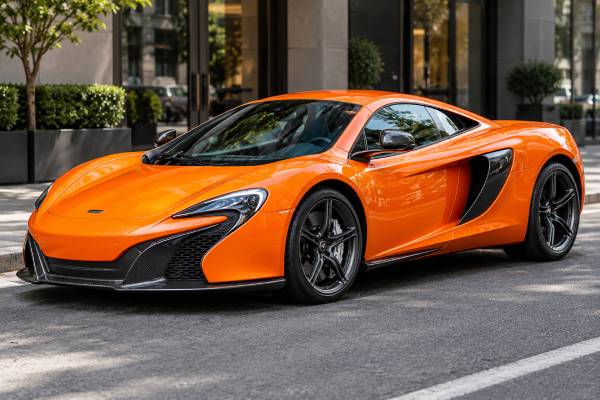
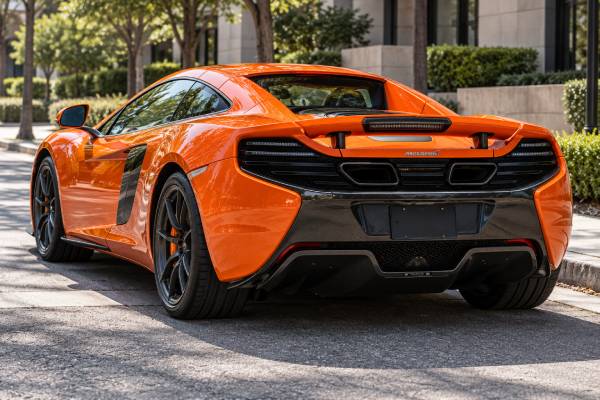
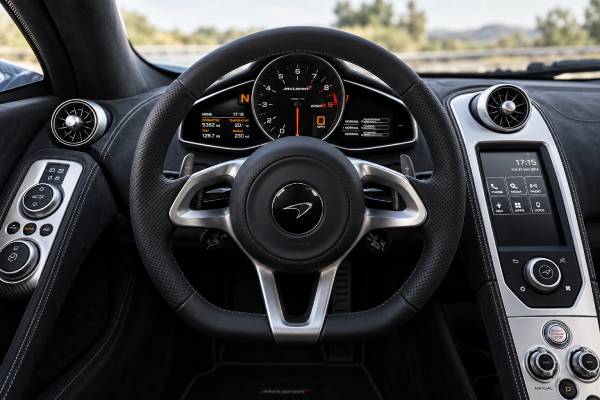
The McLaren MSO 650S Coupé is best understood as a factory-bespoke interpretation of the 650S rather than a separate high-output derivative. Its 3.8-liter M838T twin-turbo V8, seven-speed dual-clutch transmission, rear-wheel drive layout, carbon-fiber MonoCell, and core performance figures remain those of the standard 650S Coupé. What changes is rarity, visual specification, material use, and the importance of provenance. McLaren Special Operations announced a production run of just 50 MSO 650S cars globally, split between Coupé and Spider body styles, after the response to an MSO concept shown in 2014. The package brought satin-finish carbon-fiber exterior pieces, distinctive lightweight wheels with titanium bolts, exclusive colors, and a more individually finished cabin. That makes the buying question different from an ordinary 650S: condition and service history still matter, but so do original MSO parts, documentation, and a build specification that can be verified. This guide focuses specifically on the fixed-roof Coupé.
Table of Contents
- What Makes the MSO 650S Coupé Different
- MSO 650S Coupé Specifications and Technical Data
- Performance and Chassis Character
- Ownership and Maintenance Priorities
- Inspection and Buying Strategy
- Originality, Provenance, and Collector Detail
- Who This Version Suits Best
What Makes the MSO 650S Coupé Different
The MSO 650S Coupé is a limited-production design and personalization model, not a mechanically uprated 650S. It therefore delivers the same 650 PS (641 bhp) and 678 Nm (500 lb-ft) as the regular Coupé, while adding factory MSO components that make originality central to the car’s identity.
McLaren Special Operations developed the production car from the MSO 650S Concept. The announced run comprised only 50 cars worldwide across Coupé and Spider forms. The production specification included extended MSO carbon-fiber side blades, a more aggressive rear diffuser and rear bumper center section, and other exposed-carbon details finished in satin rather than the gloss treatment more commonly seen on production supercars. The effect is subtle at first glance: it does not convert the 650S into a visibly different model in the manner of the later 675LT, but it gives the lower body and tail more visual definition.
Three MSO paint finishes were promoted with the production series: Papaya Spark, Agrigan Black, and Sarigan Quartz. Buyers could also encounter individually commissioned details, so a surviving car should be judged against its own factory specification rather than against an assumed universal color-and-trim formula. The interior typically combines Carbon Black leather, Alcantara, and carbon-fiber trim, with a model-specific dedication plaque. Contemporary material also described a signed sketch from then McLaren Automotive design director Frank Stephenson and an MSO-branded leather holdall as part of the customer package.
The ten-spoke lightweight wheels are especially important. They were approximately 4 kg (9 lb) lighter as a set than the standard wheels and used titanium wheel bolts. That mass reduction is small compared with a full lightweight engineering program, but it occurs at the wheels, where reducing unsprung and rotating mass can sharpen response. More importantly for a buyer today, genuine MSO wheels and their correct finish are part of what distinguishes the car. A replacement wheel set may be perfectly usable, but it should not be represented as equivalent to an intact original configuration.
This is why the model deserves to be inspected as both a 650S and a limited MSO object. Mechanically, the established 650S checks dominate. Commercially and historically, the details unique to the MSO build can matter just as much.
MSO 650S Coupé Specifications and Technical Data
The MSO 650S Coupé uses the standard 650S Coupé’s core powertrain and chassis: a mid-mounted M838T 3,799 cc twin-turbo V8, seven-speed Seamless Shift dual-clutch gearbox, rear-wheel drive, and hydraulically interconnected ProActive Chassis Control suspension. The fixed-roof carbon MonoCell structure gives the Coupé the lighter baseline of the two 650S body styles, while the MSO package changes trim, exterior components, and wheels rather than the engine calibration.
| Specification | Value |
|---|---|
| Engine | M838T 90° V8, mid-mounted |
| Displacement | 3,799 cc (3.8 L) |
| Induction | Twin turbochargers, dry-sump lubrication |
| Valvetrain | 32-valve DOHC with variable valve timing |
| Bore × stroke | 93.0 × 69.9 mm |
| Compression ratio | 8.7:1 |
| Maximum power | 650 PS (478 kW; 641 bhp) at 7,250 rpm |
| Maximum torque | 678 Nm (500 lb-ft) at 6,000 rpm |
| Maximum engine speed | 8,500 rpm |
| Specification | Value |
|---|---|
| Transmission | 7-speed Seamless Shift dual-clutch gearbox (SSG) |
| Drive | Rear-wheel drive |
| Differential | Open differential with Brake Steer |
| Suspension | Double wishbones with ProActive Chassis Control |
| Handling modes | Normal, Sport, Track |
| Steering | Variable-rate electro-hydraulic power steering |
| Stability functions | ABS, traction control, ESC, launch control |
| Active aerodynamics | Rear Airbrake with drag-reduction function |
| Measure | Value |
|---|---|
| 0–100 km/h (0–62 mph) | 3.0 seconds |
| 0–200 km/h (0–124 mph) | 8.4 seconds |
| 0–60 mph | 2.9 seconds |
| 0–100 mph | 5.7 seconds |
| Maximum speed | 333 km/h (207 mph) |
| 100–0 km/h braking | 30.5 m (100 ft) |
| 200–0 km/h braking | 123 m (404 ft) |
| Specification | Value | Notes |
|---|---|---|
| Factory wheel size | 19 × 8.5 in front; 20 × 11 in rear | MSO production cars used a special lightweight ten-spoke design |
| MSO wheel feature | Approximately 4 kg (9 lb) lighter per set than standard | Titanium wheel bolts used |
| Factory tire size | 235/35 R19 front; 305/30 R20 rear | Pirelli P Zero Corsa specification was published for 650S |
| Brake type | Carbon-ceramic discs | Ventilated |
| Front disc size | 394 × 36 mm | Six-piston calipers |
| Rear disc size | 380 × 34 mm | Four-piston calipers |
| Specification | Value |
|---|---|
| Body | 2-door, 2-seat Coupé |
| Structure | Carbon-fiber MonoCell with aluminum front and rear structures |
| Length | 4,512 mm (177.6 in) |
| Width excluding mirrors | 1,908 mm (75.1 in) |
| Height | 1,199 mm (47.2 in) |
| Wheelbase | 2,670 mm (105.1 in) |
| Standard 650S Coupé dry weight | 1,330 kg (2,932 lb) |
| Standard 650S Coupé DIN kerb weight | 1,428 kg (3,148 lb) |
| Turning circle | 12.3 m (40.4 ft) |
| Specification | Value |
|---|---|
| Official combined fuel consumption | 11.7 L/100 km (24.2 mpg UK), NEDC |
| CO₂ emissions | 275 g/km, NEDC |
| Fuel tank | 72 L (19.0 US gal) |
| Engine oil capacity | 8.0 L (8.5 US qt) |
| Cooling-system capacity | 26 L (6.9 US gal) |
| Washer-fluid capacity | 4 L (1.1 US gal) |
The historical NEDC consumption figure is useful for identification and comparison, not as a promise of real-world economy. Driving style, tire choice, traffic, temperature, and use of boost can move fuel consumption dramatically in a 641 bhp supercar.
Performance and Chassis Character
The MSO treatment does not make the Coupé quicker on paper, but the underlying 650S is already extremely fast and unusually broad in character. The more meaningful distinction is that the MSO car wraps those dynamics in a rarer factory specification without sacrificing the standard car’s road usability.
The M838T’s defining characteristic is the way boost builds into a long, forceful mid-range rather than trying to imitate a large naturally aspirated engine. Peak torque arrives at 6,000 rpm, yet McLaren stated that 95 percent of the torque is available through much of the 3,000–7,000 rpm range. That spread matters on the road: the car does not need to sit at redline to feel urgent. The seven-speed SSG keeps the engine in its effective range and supports both automatic operation and manual shifts.
ProActive Chassis Control is equally central to the car. Instead of relying on conventional anti-roll bars to resist body roll, the hydraulically interconnected dampers allow McLaren to manage heave and roll more independently. In Normal mode the 650S can ride with surprising compliance for a car on low-profile 19- and 20-inch tires; Sport and Track progressively tighten the body control. The result is not simply a softer-or-harder damper switch. The system is part of the reason the 650S can feel composed over broken roads and still remain flat and precise when loaded hard in a corner.
The steering also deserves attention. This generation uses electro-hydraulic assistance, which gives more road texture than many later fully electric systems. Combined with the low cowl, visible front fender peaks, and compact carbon tub, it makes the car easy to place by supercar standards. The active Airbrake at the rear contributes under heavy braking and changes position as part of the aerodynamic strategy.
The special wheels should not be treated as a cosmetic footnote. Lower rotating and unsprung mass can improve the suspension’s ability to follow the road and slightly reduce rotational inertia. The effect is not a transformation, but it is one of the few MSO changes with a direct dynamic rationale. If a car wears non-original heavy aftermarket wheels, it may still drive well, but that substitution removes part of the original engineering intent.
Ownership and Maintenance Priorities
A good MSO 650S Coupé should be maintained like a complex, aging hydraulic supercar, not like a low-mileage collectible that can simply sit. Calendar-based servicing, battery care, fluid condition, tire age, and operation of the hydraulic chassis systems all matter even when annual mileage is low.
McLaren publishes owner handbooks for the legacy 650S, and those documents should be the starting point for operating procedures, fluid requirements, warning messages, jacking and towing rules, and market-specific service information. Because individual cars may differ by VIN and optional equipment, the handbook and current dealer or specialist service data take priority over generic web specifications.
For routine ownership, several areas deserve consistent attention:
- Battery condition: The 650S contains many electronic control modules and is sensitive to low voltage. A proper conditioner is sensible when the car is stored, and a weak battery should be corrected before chasing unrelated warning messages.
- Hydraulic suspension health: ProActive Chassis Control uses accumulators and hydraulic components that age. A suspension warning, unusually harsh ride, or inconsistent chassis behavior needs diagnosis rather than repeated fault clearing.
- Cooling system: The engine is tightly packaged and heavily turbocharged. Look for dried coolant traces, odor, pressure loss, or evidence of aged hoses and connectors, and treat any recurring temperature warning seriously.
- Transmission and driveline: Check for fluid seepage, clean engagement from rest, consistent shifts when hot, and a documented service record. A pre-purchase scan is more useful than judging the gearbox only during a short cold test drive.
- Carbon-ceramic brakes: Inspect disc surfaces, measure wear as specified by the manufacturer, and confirm pad condition. Replacement costs can be substantial, so “brakes look fine” is not enough on a valuable limited-production car.
- Tires: Verify correct size, matching high-performance type, tread condition, and date codes. Old tires can have deep tread and still be unsuitable for the performance available.
The car also benefits from regular exercise. Full operating temperature, careful use of the brakes, roofless storage avoidance, and periodic function checks of the Airbrake and vehicle lift can reveal problems before they become immobilizing. Track use is not inherently a reason to reject a car, but it changes the inspection priorities: brake wear, tire heat history, front-splitter damage, underbody impact, cooling condition, and fluid service should then be examined more closely.
Inspection and Buying Strategy
Buy the MSO 650S Coupé on evidence, not mileage alone. A slightly higher-mileage car with continuous specialist care, correct MSO components, clean diagnostics, and documented repairs can be a stronger purchase than a static low-mileage example with gaps in its history.
Start before the physical inspection by obtaining the VIN, build sheet or factory specification record, service invoices, recall evidence, and photographs of the unique MSO details. The United States Takata campaign included 2014–2016 McLaren 650S vehicles within specified production ranges, so any U.S.-market example should be checked by VIN for campaign applicability and completion rather than assumed clear because of model year.
At the car, a useful sequence is:
- Inspect cold. Ask that the engine not be started before arrival. Listen for abnormal mechanical noise, watch for warning messages, and note the quality of the first transmission engagement.
- Check every hydraulic function. Exercise the nose lift if fitted, cycle chassis modes, observe the Airbrake, and look for suspension faults or a ride that is unexpectedly rigid in Normal mode.
- Scan all modules. A McLaren-capable diagnostic scan can reveal stored faults and recurring systems issues that a clean dashboard may not show.
- Inspect underneath. Look for splitter damage, undertray impact, leaks, repair evidence, and scraped structural or suspension components.
- Assess brakes and tires with measurements. Confirm disc condition, pad life, tire dates, and whether the fitted wheels are genuine MSO pieces in the correct specification.
- Verify cosmetics as provenance. Examine paint depth, panel alignment, exposed carbon, side blades, rear diffuser, wheel finish, interior plaque, and any accompanying MSO items against the build documentation.
A specialist pre-purchase inspection is especially valuable because the expensive problems are rarely the ones visible in a dealer’s beauty photographs. The carbon MonoCell itself is extremely stiff, but accident damage to surrounding structures and composite panels can be costly and should be understood before purchase. Likewise, minor warning messages can be trivial voltage events or the first symptom of a hydraulic or electronic repair. Proper diagnosis separates the two.
Do not budget only for the purchase price. Establish a first-year reserve for overdue fluids, battery, tires, brakes, hydraulic work, cosmetic correction, and missing original pieces. If the car has sat for long periods, assume time-sensitive items need closer scrutiny regardless of odometer reading.
Originality, Provenance, and Collector Detail
On an MSO 650S Coupé, provenance has unusually high practical value because the limited edition is defined mostly by specification rather than by a unique engine or chassis. The closer a car remains to its documented MSO configuration, the easier it is to authenticate and understand.
The most useful file is not a glossy sales brochure but a chain of documents that connects the VIN to the original build. Ideally that includes the factory build specification, original sales invoice, MSO paperwork, numbered or dedication plaque details, service invoices, recall records, and evidence for any paint or carbon repairs. Original books, keys, charger, luggage, and the signed design sketch are worthwhile supporting items when they were supplied with that particular car.
Pay special attention to parts that are easy to remove. Wheels are the obvious example. The special ten-spoke set and titanium bolts are part of the edition, yet wheels are commonly changed for style, tire availability, or damage. A car sold on standard 650S wheels may be mechanically fine, but the missing MSO set should be acknowledged. The same applies to satin carbon pieces: replacements should have a credible parts and repair trail, particularly if a front splitter or side blade has been damaged.
Paint requires nuance. A high-quality refinish of a stone-chipped front bumper is not the same as concealed accident repair, and obsessing over untouched paint can reward neglect. What matters is knowing what was done, why it was done, and whether the result matches McLaren’s original finish and geometry. Use paint-depth readings as a clue, not a verdict, because composite and aluminum panels do not always read like conventional steel bodywork.
There is also a useful distinction between MSO 650S production cars and ordinary 650S cars later personalized with MSO parts. McLaren Special Operations has always offered individual components and bespoke work. A standard 650S with genuine MSO upgrades can be an appealing car, but it should not be confused with one of the announced 50-car MSO 650S production run. Documentation is what resolves that distinction.
For buyers who intend to drive rather than preserve the car, originality still matters because it simplifies future resale and parts sourcing. Keep every removed factory part, record reversible changes, and avoid modifications that require cutting or permanently altering limited-edition carbon trim.
Who This Version Suits Best
The MSO 650S Coupé suits someone who wants the standard 650S’s full performance with a rarer factory design specification, but who does not need the harder, lighter, more extensively re-engineered character of a 675LT. It is a collector-interest car that can still function as a road car, provided maintenance is treated seriously.
Compared with a standard 650S Coupé, the rational reasons to seek the MSO version are exclusivity, factory provenance, special materials, and the satisfaction of owning an early showcase for McLaren Special Operations. The rational reasons to choose a standard 650S instead are simpler replacement-part concerns and the freedom to prioritize condition without paying for scarce edition-specific details. Performance alone does not justify the MSO premium because the engine output and headline acceleration figures are the same.
Compared with the 650S Spider, the Coupé is lighter and removes the retractable-roof mechanism from the ownership equation. Buyers who value open-air use may still prefer the Spider, but the Coupé provides the cleaner fixed-roof package and the lowest standard 650S dry-weight baseline. Compared with the 675LT, the MSO 650S is less track-centered: it lacks the LT’s 100 kg weight-reduction program, 675 PS engine, larger aero package, faster steering, and more aggressive suspension hardware.
For long-term ownership, storage conditions also deserve the same discipline as servicing. A dry, temperature-stable garage reduces moisture exposure, but the car should still be kept on its approved conditioner and moved often enough to avoid flat-spotted tires and brake corrosion. Before a period of inactivity, clean road salt and insect residue from the bodywork, avoid parking with wet brakes, and do not leave the fuel level extremely low. When returning the car to use, check tire pressures cold, inspect the ground for fluid traces, allow temperatures to rise progressively, and test the braking system before demanding performance.
Insurance should reflect the car’s limited-production specification rather than simply the value of an ordinary 650S. An agreed-value policy can be worth discussing with a specialist insurer, especially where documented MSO components would be expensive or difficult to replace after a claim. Photograph the wheels, carbon pieces, plaque, cabin trim, and any unique accessories, and retain copies of the factory specification away from the car. Those records help both with claims and with future provenance.
The deciding factor should therefore be the individual car. An MSO 650S Coupé with complete documentation, correct wheels and carbon pieces, strong battery and hydraulic health, recent tires, measured brake condition, and a clean specialist inspection is the version to pursue. A rare badge does not compensate for missing provenance or deferred work. When the underlying car and the limited-edition details are both right, however, the MSO Coupé occupies an appealing position: familiar 650S usability, 207 mph capability, and a factory-bespoke specification produced in exceptionally small numbers.
References
- McLaren 650S Coupe – Interior, Specs, HP, 0-60, Engine 2026 (Manufacturer Specifications)
- McLaren 650S MSO confirmed for production | evo 2014
- It’s the McLaren MSO 650S! | Top Gear 2014
- McLaren Owners 2026 (Owner’s Handbook Index)
- Takata Air Bag Recall Spotlight | NHTSA 2026 (Recall Information)
- Used car buying guide: McLaren 650S | Autocar 2020
Disclaimer
Use this guide as background information, not as a workshop diagnosis or repair instruction. Before servicing or ordering parts for an MSO 650S Coupé, confirm VIN-specific specifications, torque settings, fluids, service intervals, procedures, equipment, and recall status in current official McLaren documentation because market and build specification can change the applicable data. A qualified McLaren technician should inspect faults, damage, or safety concerns in person. Please share the article on Facebook, X/Twitter, or another platform if it helps another owner or buyer.