
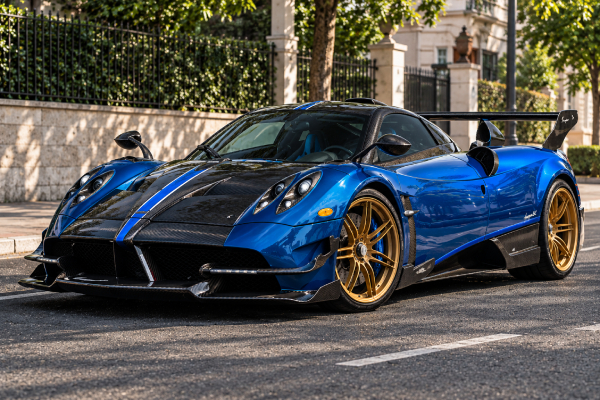
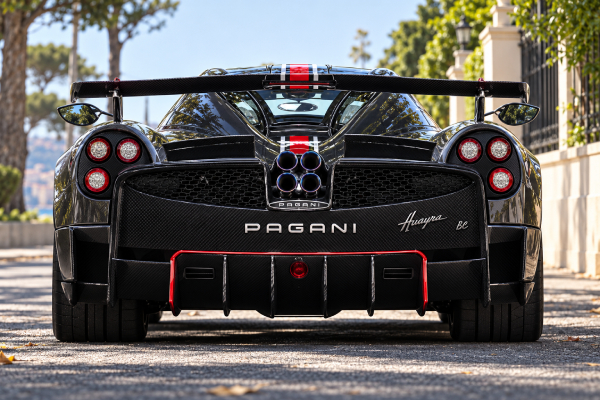
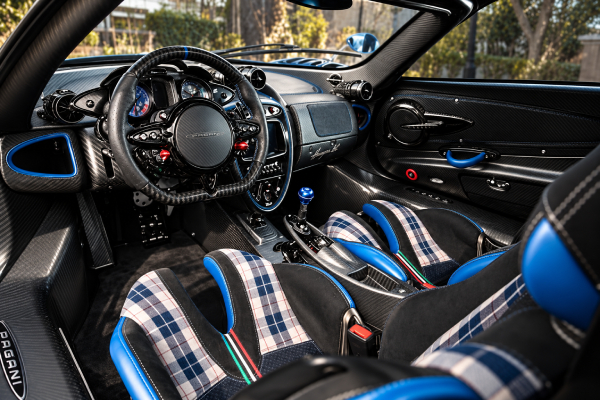
The Pagani Huayra BC turned the elegant Huayra Coupé into a much more focused road-and-track machine. Its changes were deeper than extra power or a fixed rear wing: Pagani revised the transmission, suspension, aerodynamics, brakes, wheels, tires, composite construction, and weight-saving strategy, then used the BC as a development bridge to later Huayra variants. The model also creates an important specification trap. The assignment identifies the BC as an 800 hp car, yet Pagani’s own standard-BC technical page lists 764 CV at 6,200 rpm and 1,000 Nm at 4,000 rpm. Later factory Tempesta upgrades lift the BC to 827 hp and 1,100 Nm. That means a buyer cannot judge a car from a headline power number alone. The exact engine software, aero package, suspension specification, exhaust, and factory upgrade history all need to be documented. This guide keeps those configurations separate while explaining what made the BC special, what wears under hard use, and what to verify before purchase.
Table of Contents
- What BC Changed in the Huayra Formula
- Huayra BC Specifications and Output Labeling
- Lightweight Materials and the 1,218 kg Target
- Xtrac AMT, Brakes, Wheels, and Tires
- Aero, Suspension, and Track-Day Behavior
- Tempesta Upgrades and Configuration History
- Maintenance, Inspection, and Buyer Due Diligence
What BC Changed in the Huayra Formula
The BC was conceived as a road-legal Huayra that could deliver a more intense experience during track days and special events. Pagani explicitly says it was inspired by the Zonda R and Zonda Cinque and was not merely a restyled standard Coupé.
The initials honor Benny Caiola, Pagani’s first customer and a close friend of Horacio Pagani. That personal origin fits the car’s role: the BC was both a tribute and an engineering exercise that pushed the C9 platform toward lower mass, faster responses, greater aero load, and more direct chassis behavior.
The easiest way to understand the BC is to compare engineering priorities rather than styling. The original Huayra balanced refinement, long-distance usability, active aerodynamics, and high performance. The BC moved the center of gravity toward track capability. Pagani reduced mass to a published 1,218 kg, revised the seven-speed AMT with Xtrac, added carbon-fiber synchronizers, changed the clutch-control strategy, fitted adjustable Öhlins dampers, offered a dedicated track wheel size, and reshaped the body around more aggressive aero requirements.
The result is still a road car. Pagani’s own description stresses road use first, with track days as an intended second environment. That distinction matters when inspecting one today. A BC should not automatically be treated like a non-homologated race car with disposable components, yet a car that has spent meaningful time on circuits will need a different inspection from one used only for road tours and display.
Model-year language can also be misleading. The assignment covers 2017 through 2019, but a hand-built BC can have a specification date, production date, delivery date, first-registration date, and later upgrade dates that do not align neatly. Build documentation should establish the chronology for the individual chassis. The same applies to “standard BC,” “Tempesta,” and other labels: identify the actual Pagani work performed rather than relying on a dealer’s shorthand.
For collectors, this engineering evolution is part of the appeal. Pagani later stated that the BC spearheaded new technology and composite-material development that flowed into the Huayra Roadster. It therefore sits at an important point in the C9 family: more specialized than the original Coupé, but still the basis for further factory development rather than the final word.
Huayra BC Specifications and Output Labeling
The standard Huayra BC is an internal-combustion, rear-wheel-drive C9 with a 5,980 cc Mercedes-AMG twin-turbo V12 and a seven-speed Xtrac automated manual. Pagani’s model page gives the standard production specification as 764 CV at 6,200 rpm, 1,000 Nm at 4,000 rpm, and 1,218 kg.
The “800 hp” wording in the assignment is best treated as an 800-hp-class identifier, not as the exact standard factory output. Pagani’s own data should control technical calculations and purchase descriptions. A later BC fitted with the factory Tempesta package is a different case: Pagani states 827 hp and 1,100 Nm for that upgraded configuration.
| Specification | Factory value |
|---|---|
| Engine | Mercedes-Benz AMG V12, 60°, 36 valves |
| Displacement | 5,980 cc (6.0 L) |
| Induction | Twin turbochargers |
| Maximum power | 764 CV at 6,200 rpm |
| Maximum torque | 1,000 Nm (738 lb-ft) at 4,000 rpm |
| Layout | Longitudinal mid-engine |
| Driven wheels | Rear |
Output units deserve care. CV, PS, and mechanical horsepower are close but not identical units, and websites sometimes convert or round them inconsistently. For valuation, insurance, or a technical inspection, use the value and unit on the relevant Pagani document rather than converting casually and then presenting the result as a factory number.
| Configuration | Published power | Published torque |
|---|---|---|
| Standard Huayra BC | 764 CV at 6,200 rpm | 1,000 Nm at 4,000 rpm |
| BC with 2021 Tempesta upgrade | 827 hp | 1,100 Nm |
Do not use the assignment’s rounded 800 hp label to calculate power-to-weight ratio or to order calibration-sensitive parts. First identify whether the car is in standard form, has a Pagani Tempesta update, carries another documented factory personalization, or has non-factory engine software.
Lightweight Materials and the 1,218 kg Target
The BC’s 1,218 kg published weight is one of its most important specifications because the car’s performance strategy depended heavily on mass reduction. Pagani did not simply chase a larger engine number; it revised components throughout the vehicle to make responses sharper and reduce inertia.
Pagani lists a Carbo-Titanium monocoque with front and rear frames made from chrome-molybdenum-vanadium steel tubing. The company also developed new composite technologies around the BC program, and later publications credit the project with advancing material knowledge used in subsequent Huayras.
Weight reduction affects more than acceleration. A lighter car asks less of the brakes during repeated stops, changes how quickly the chassis responds to steering, reduces load transfer, and allows suspension components to control the body with less energy. On track, those effects accumulate over a lap and can matter more than a modest peak-power increase.
For inspection, low weight creates its own priorities. Thin, optimized, expensive components should not be treated like conventional stamped steel. Underbody scrapes, splitter impacts, diffuser damage, repaired carbon edges, and altered mounting points can all matter. A car that looks perfect at eye level can still have evidence of repeated curb strikes or transport damage beneath it.
Composite repairs need documentation. A cosmetic clear-coat repair is different from a structural laminate repair, and neither should be described vaguely as “carbon touched up.” Ask which panel or structure was affected, whether it was repaired or replaced, who performed the work, and whether Pagani supplied the procedure or component. Photographs before repair are valuable because the finished surface can hide the original extent of damage.
The 1,218 kg figure should also be handled as a factory specification, not a scale-ticket guarantee for every privately configured car. Fuel, fluids, options, later upgrades, protection film, alternative wheels, and measurement method can all affect an actual weighing. If a seller makes a specific measured-weight claim, ask for the scale method and conditions.
| Specification | Factory description |
|---|---|
| Monocoque | Pagani Carbo-Titanium |
| Front and rear frames | CrMoVanadio steel tubes |
| Published weight | 1,218 kg (2,685 lb) |
| Suspension layout | Independent double wishbones at all four wheels |
| Dampers | Adjustable Öhlins units with coil springs |
| Control arms | HiForg forged and CNC-machined components |
Xtrac AMT, Brakes, Wheels, and Tires
The BC’s transmission was substantially reworked, and its condition is central to both driving quality and ownership cost. Pagani describes a next-generation seven-speed AMT developed with Xtrac, using new electro-hydraulic actuation, carbon-fiber synchronizers, and revised clutch-control software.
This remains a single-clutch automated manual rather than a dual-clutch gearbox. A torque interruption during a shift is part of the design. What should concern a buyer is inconsistency: delayed engagement that changes from one attempt to the next, refused gears, repeated warning messages, excessive clutch slip, or a large difference between cold and hot behavior.
Track use adds another layer. Repeated full-throttle upshifts, aggressive downshifts, launch-style starts, and low-speed paddock creeping all load different parts of the system. Ask for diagnostic data, clutch-adaptation history where available, and any record of actuator, clutch, or gearbox service. A low odometer is not proof of low clutch wear if the car spent much of its mileage in traffic or maneuvering at events.
The brake package uses Brembo carbon-ceramic material with 380 x 34 mm discs front and rear, six-piston monobloc calipers at the front and four-piston monobloc calipers at the rear. Carbon-ceramic discs should be assessed using the correct manufacturer or Pagani criteria; a simple visual glance or conventional iron-disc thickness assumption is not enough.
| Component | Factory specification |
|---|---|
| Front brakes | 380 x 34 mm Brembo CCM discs, 6-piston monobloc calipers |
| Rear brakes | 380 x 34 mm Brembo CCM discs, 4-piston monobloc calipers |
| Road wheels | 20 in front / 21 in rear forged APP monobloc alloy |
| Track-kit wheels | 19 in front / 20 in rear |
| Road tire family | Pirelli P Zero Corsa |
| Track-focused tire family | Pirelli P Zero Trofeo R |
Tire history is especially important on a BC because the car may have alternated between road and track setups. Confirm wheel part numbers, tire sizes, production dates, homologation markings where required, repairs, and whether the original wheel set remains with the car. A second set of genuine track wheels can be valuable; a mismatched set of unknown history is a liability.
After any heavy circuit use, brakes and tires should be inspected before the next road trip. Look for pickup, cuts, flat spots, heat damage, unusual wear across the tread, and evidence that alignment changed after curb contact. Brake-fluid condition and pedal consistency also deserve attention because a car can leave a track day with plenty of pad material but heat-aged fluid.
The transmission choice is central to that philosophy. Rather than use a dual-clutch unit simply because it can deliver extremely smooth shifts, Pagani kept an automated manual architecture and concentrated on reducing mass and sharpening the shift event. Xtrac supplied a new electro-hydraulic actuation system and carbon-fiber synchronizers, while the clutch-control program was reworked for the higher torque load. Period technical material also describes the gearbox and electronic differential assembly as roughly 40 percent lighter than a contemporary dual-clutch alternative. On a mid-engine car, that saving is valuable not only on the scale: keeping the transaxle compact and mass concentrated toward the center helps the chassis change direction with less rotational inertia.
The electronic mechanical differential deserves equal attention during a road test. Its job is broader than maximizing launch traction; it has to meter torque as grip changes across road surfaces and during hard corner exits. A healthy BC should therefore be evaluated through progressive loads rather than a single full-throttle run. Binding, repeated warning messages, abrupt behavior that changes from one drive mode to another, or a mismatch between diagnostic data and the seller’s description warrants specialist investigation. Because gearbox, clutch control, differential logic, and engine calibration interact, replacing one symptom with a software reset is not a meaningful diagnosis.
Aero, Suspension, and Track-Day Behavior
The BC generates its character through mechanical grip and more aggressive aerodynamic management, not power alone. Pagani reshaped the body and underbody, added a prominent fixed rear wing, and retained the Huayra family’s active aerodynamic philosophy while tuning the car for faster response.
Adjustable Öhlins dampers and forged suspension components allow the chassis to operate with the BC’s lower mass and increased aero load. Alignment becomes critical. Small changes in toe, camber, or ride height can influence tire temperature, braking stability, and the way the aero platform sits at speed.
Before a track day, obtain the Pagani-approved setup for the tire and wheel combination being used. Do not assume the road alignment is identical to the recommended circuit setting, and do not copy a setup from another chassis simply because both are BCs. Individual factory configuration, updates, tire generation, and owner use can differ.
A useful pre-track sequence includes checking tire age and pressures cold, inspecting brake condition, confirming fluid levels, scanning for stored faults, testing active aero, checking wheel fasteners to the official procedure, and examining the underbody for loose or damaged aero pieces. After the session, repeat the visual inspection and record tire pressures and any warning messages before they are cleared.
Heat management is part of track ownership. Allow the car to warm progressively rather than applying maximum load to cold oil and tires. After hard running, avoid immediately trapping heat with prolonged stationary idling in a confined paddock. Follow the factory’s cool-down guidance and give the brakes, engine bay, turbochargers, and transmission time to stabilize.
Driver technique should respect the AMT. Smooth throttle modulation during low-speed maneuvering reduces unnecessary clutch slip, while deliberate paddle inputs help the system complete shifts cleanly. The BC is fast enough that a driver can overwhelm tire temperature or braking margins before feeling mechanically dramatic symptoms, so professional instruction is a sensible part of track use even for experienced owners.
The car’s track capability should not encourage buyers to treat every visible sign of use as abuse. Stone chips, replaced tires, or documented brake consumables can be normal on a properly maintained BC. The greater concern is hidden or undocumented use: repeated circuit events with no fluid, brake, alignment, or diagnostic records.
The fixed aerodynamic pieces also change the ownership equation. Their exposed edges sit close to the road and are expensive composite structures, so cosmetic condition should be judged together with mounting integrity. Inspect the splitter, dive-plane areas, side surfaces, rear wing supports, diffuser, and the transitions where panels meet the underfloor. The important question is not whether a driven BC has a mark; it is whether any impact changed alignment, cracked a mounting point, or led to a repair whose materials and finish are undocumented. On a car designed around aero balance, a visually acceptable repair can still be technically important.
Suspension inspection should be similarly systematic. The BC uses independent double wishbones, upper rocker arms, adjustable Öhlins dampers, anti-roll hardware, and forged HiForg components. Measure rather than eyeball ride height and alignment, compare left-to-right values, and look for evidence of curb strikes around wheel barrels and suspension pickups. If the car has a history of track setup changes, ask for alignment sheets. They can show whether aggressive settings were deliberate and returned to road specification afterward, rather than leaving the next owner to interpret unusual tire wear without context.
Road and track wheel packages should be treated as calibrated systems, not styling alternatives. Pagani lists 20-inch front and 21-inch rear forged wheels for road use and a 19/20-inch track kit, paired with Pirelli P Zero Corsa or Trofeo R tires. Switching between them changes tire construction, sidewall behavior, pressure targets, and the way the chassis communicates load. That is why a buyer should verify the complete wheel-and-tire set, including correct hardware and any factory setup instructions, before assuming an included second set is ready for immediate use.
Tempesta Upgrades and Configuration History
A Tempesta-equipped BC should be treated as a distinct factory-developed configuration, not as a standard BC with a few cosmetic add-ons. Pagani’s 2021 package combined aerodynamic, exhaust, suspension, comfort, and powertrain changes, raising published output to 827 hp and torque to 1,100 Nm.
The package included a new front splitter and dedicated air intake, a new rear wing with an integrated central fin, a six-pipe exhaust system, and revised suspension. Pagani also added a Soft Driving mode and offered new interior details. These changes affect how the car looks, sounds, drives, and should be valued.
| Area | Factory Tempesta update |
|---|---|
| Power | 827 hp |
| Torque | 1,100 Nm |
| Front aero | New splitter and dedicated air intake |
| Rear aero | New rear wing with integrated central fin |
| Exhaust | Six-pipe system |
| Suspension | Revised Tempesta specification |
| Drive mode | Soft Driving mode added |
A buyer should obtain invoices and factory correspondence that identify exactly when a Tempesta conversion was performed and whether all associated components were installed. Photographs alone cannot confirm the powertrain software, and a six-pipe exhaust by itself does not prove the complete package.
Retained original components matter. Some collectors may prefer the later factory development, while others may value the option to return a car to its earlier build state. Pagani has emphasized reversibility in some factory update programs, so ask whether removed parts were kept, labeled to the chassis, and stored correctly.
Registration and insurance records should reflect the current configuration where local law requires it. Increased output, revised exhaust hardware, and changed aero can affect noise, emissions, inspection, or declared-value questions in some jurisdictions. A seller’s statement that an upgrade is “factory” does not automatically answer those local compliance issues.
Maintenance, Inspection, and Buyer Due Diligence
BC maintenance has to account for age, low-volume hardware, and possible track use at the same time. Exact fluids, capacities, torque values, software procedures, and intervals should come from the specific Pagani service documentation; public model pages are not a workshop manual.
Start with evidence. A strong history file should show routine service, tires, brakes, battery work, alignment, software updates, clutch or AMT work, aero repairs, bodywork, and any Tempesta installation. Track-day records are a positive when they are paired with inspection and service, because they explain wear rather than hiding it.
A pre-purchase inspection should include a true cold start if possible. Verify that the engine was not warmed before arrival, then watch oil-pressure behavior, idle quality, smoke, warning messages, and coolant temperature as the car reaches operating conditions. The road test should progress from gentle clutch engagement to normal shifts and then higher-load operation only after all systems are warm.
Inspect the underside on a lift. The BC’s low aero surfaces can suffer from loading ramps, road crests, curbs, and track excursions. Check splitter mounts, floor edges, diffuser sections, suspension pickups, wheel barrels, brake cooling areas, and any fastener that looks newer or different from surrounding hardware. A clean replacement part is not necessarily suspicious, but it should have a paper trail.
Carbon-ceramic brakes, tires, and wheels need measured condition notes. Ask the inspector to record tire date codes, tread condition, wheel damage, disc condition, pad life, brake-fluid state, and signs of track heat. If a seller includes both road and track wheel sets, inspect both; a spare set can hide the more heavily used tires and wheels.
Electronics deserve a full diagnostic scan before codes are cleared. Low battery voltage can create secondary faults, but recurring aero, gearbox, suspension, or sensor codes should be investigated rather than attributed automatically to storage. Confirm the correct battery-maintenance procedure and whether the car has been kept on an appropriate conditioner.
Pagani’s Puro authenticity program is useful for a car with this level of factory evolution because it uses company records and an extensive inspection process. Puro can help establish whether parts and configuration correspond with Pagani’s records, while the pre-purchase inspection answers a different question: what condition are those parts in today?
Storage history can be as revealing as mileage. Long periods of inactivity can age tires and fluids, discharge batteries, leave seals without regular heat cycles, and allow minor faults to remain unnoticed until recommissioning. Ask for dated invoices and odometer readings that show how the car was exercised between services. A low-mileage BC that received disciplined annual attention can be easier to understand than one with fewer kilometers but multi-year gaps followed by a quick pre-sale service.
A specialist inspection should also separate consumable condition from originality. Pads, tires, fluids, filters, and some protective films are expected to be replaced; damaged aero or composite structures, altered software, non-factory exhaust parts, and undocumented wheel repairs raise different questions. This distinction prevents two opposite mistakes: rejecting a properly used car because it consumed service parts, or accepting a cosmetically immaculate car whose more consequential changes are hidden. For a BC, the strongest history explains both use and intervention in sequence.
| Question | Best evidence |
|---|---|
| What was the car when delivered? | VIN-specific build sheet and original invoice |
| Which factory upgrades were added? | Pagani invoices and dated correspondence |
| How much track use did it see? | Owner log, tires, brakes, alignment and service records |
| Has carbon been repaired? | Before/after photos and repair documentation |
| What is the AMT condition? | Road test, diagnostic data and service history |
| Are both wheel sets correct? | Part identification, condition and tire records |
| Is the present configuration authentic? | Factory records and, where available, Pagani Puro certification |
The final purchase decision should describe the car precisely: standard BC, Pagani-upgraded Tempesta BC, or another documented factory configuration. That wording is more useful than arguing over an “800 hp” label, because it tells the next owner what hardware, calibration, and history actually belong to the car.
References
- Huayra BC | Pagani 2016
- Huayra | Pagani 2011
- Pagani Automobili celebrates the tenth anniversary of the Huayra at Monterey Car Week 2021 | Pagani 2021
- PAGANI AUTOMOBILI AT THE GOODWOOD FESTIVAL OF SPEED 2022 WITH THE NEW PAGANI HUAYRA CODALUNGA, DESIGNED IN PARTNERSHIP WITH CUSTOMERS | Pagani 2022
- “Pagani Puro”, the program created to certify the authenticity and enhance the value of our exclusive cars over time | Pagani 2021
- Pagani Unico | Pagani 2022
Disclaimer
Configuration is the first safety check on a Huayra BC, particularly when factory upgrades are present. This article is informational only and cannot replace professional diagnosis or repair. Confirm the VIN, market specification, installed equipment, and update history before relying on any torque value, service interval, technical specification, or procedure; the applicable official Pagani service documentation for that exact chassis must take precedence.
Collectors comparing standard and factory-updated BCs are welcome to share this article on Facebook, X/Twitter, or within an appropriate enthusiast community.