
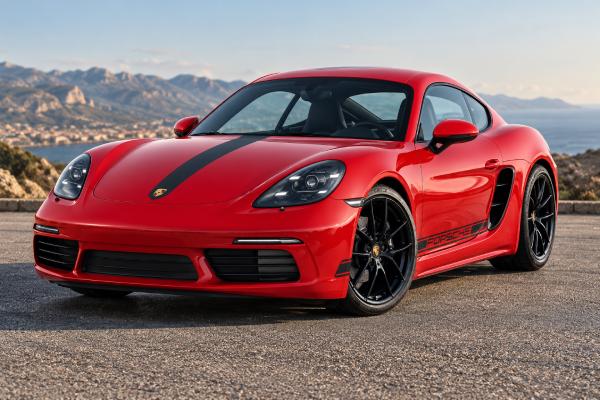
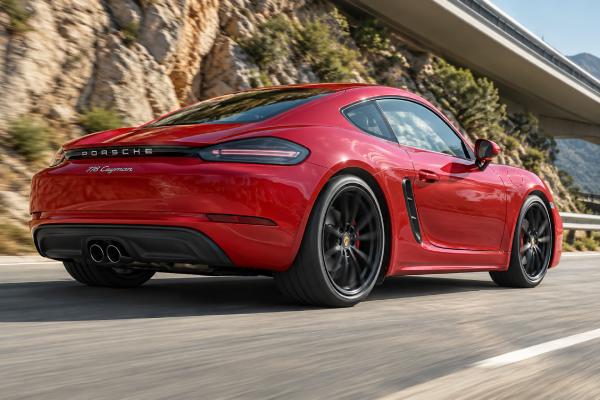
The 300 hp Porsche 718 Cayman Style Edition is a 982-generation Cayman whose appeal comes from specification rather than a new engine tune. Porsche announced it in November 2022, gave it the base Cayman’s 2.0-liter turbo flat-four with 300 hp and 280 lb-ft in U.S. form, and offered both the six-speed manual and seven-speed PDK. Around that familiar mid-engine, rear-wheel-drive platform, the Style Edition adds 20-inch Spyder-design wheels, coordinated black or white contrast themes, richer interior trim, and a stronger standard-equipment list.
For buyers, the important question is not whether the Style Edition is “faster than a Cayman.” It is which Cayman Style Edition is being described. Manual and PDK cars have different acceleration and weight figures; U.S. and European publications use different power units; and 2022 is the announcement year even though U.S. retail availability followed later. This guide keeps those distinctions visible, then concentrates on the coupe’s fixed-roof practicality, drivetrain choices, service evidence, and the checks that separate an attractive specification from a genuinely well-kept car.
Table of Contents
- Decode the variant before comparing cars
- What the Style Edition changes—and what it does not
- Specifications for the 300 hp Cayman Style Edition
- Manual versus PDK in the same 300 hp coupe
- Fixed-roof packaging, cargo, and daily use
- Service life: tires, cooling, fluids, and storage
- Records, recalls, and the final purchase check
Decode the variant before comparing cars
The Style Edition name spans markets that do not all share one powertrain specification. In the United States, Porsche announced the Cayman Style Edition with 300 hp, 280 lb-ft, rear-wheel drive, and a six-speed manual as standard, with seven-speed PDK optional. Current U.S. Porsche model pages continued to list the 2025 Cayman Style Edition at 300 hp with manual or automatic transmission.
European Porsche material describes the same output class as 220 kW (300 PS) and 380 Nm. The shared 220 kW figure is useful for identifying the relationship, but 300 PS is not numerically identical to 300 SAE hp. When comparing technical data, retain the unit system Porsche used for the market rather than copying numbers across columns and relabeling them.
There is also a separate China-market Style Edition rated at 184 kW (250 PS), paired with PDK. It wears the same Style Edition badge but is not the car covered here. A used-car advertisement that gives 250 PS, 310 Nm, and PDK-only data is describing that regional specification, not a U.S.-type 300 hp Cayman.
The assignment supplies the engine code MA2.20. The public Porsche sources used here generally identify the engine by layout and displacement—1,988 cc turbocharged boxer four—rather than printing that internal code. For parts and workshop procedures, use the VIN-linked Porsche engine identification and service documentation instead of relying on a headline code alone.
Finally, distinguish the date types. Porsche revealed the Style Edition in late 2022 and stated that Europe would receive it first in early 2023, with other markets following. A U.S. car described as model year 2024 can therefore belong to a variant first announced in 2022 without having been sold new in the U.S. during calendar 2022. Production date and first registration add two more dates that should be recorded separately.
What the Style Edition changes—and what it does not
Porsche did not position the Style Edition as a higher-output Cayman. Its launch material says the Style Edition models are based on the entry-level 718 Cayman and Boxster powertrain and chassis. The factory transformation is concentrated in appearance and equipment, which makes originality easier to evaluate when the original build data are available.
The most obvious exterior change is the 20-inch 718 Spyder wheel in high-gloss black with a colored Porsche crest. Black sport tailpipes and high-gloss-silver Porsche lettering at the rear continue the theme. Ruby Star Neo was the promotional centerpiece, but buyers could choose other colors, so a Style Edition in white, silver, black, or another factory paint is not inherently less authentic.
Black and white contrast packages added coordinated graphics, including a stripe on the front luggage-compartment lid and large Porsche lettering along the side. Those graphics are useful identifiers but not absolute proof: Porsche Finder cars demonstrate that some decorative items could be deleted through the build. A removed decal can also be replaced later. The option record is therefore more authoritative than a photograph.
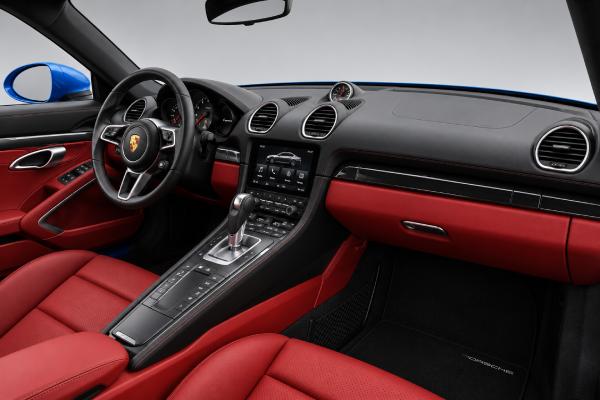
Inside, Porsche added a black leather package with Chalk contrast stitching, Porsche crests on the headrests, illuminated stainless-steel door-sill guards, a heated leather multifunction steering wheel, and complementary floor-mat details. The U.S. Style Edition also came with useful standard equipment such as front and rear ParkAssist with reversing camera, Apple CarPlay, heated seats, cruise control, and two-zone automatic climate control.
| Area | Factory theme | Why inspection matters |
|---|---|---|
| Wheels | 20-inch 718 Spyder wheels in high-gloss black | Refinishing, replacement, and curb damage can obscure originality |
| Exterior graphics | Black or white contrast package available | Factory deletion or later removal is possible |
| Rear details | Black sport tailpipes; silver Porsche script | Badges and exhaust finish can be changed cheaply |
| Cabin | Leather and Chalk contrast details with Porsche crests | Optional upholstery can supersede the basic presentation |
| Convenience equipment | Camera, ParkAssist, climate control, heated seats, Apple CarPlay | Presence on an equipment list does not prove current function |
The Style Edition can also carry performance-related options such as PASM or Sport Chrono. Those options can meaningfully change the way an individual car drives, but they remain separate from the Style package. A buyer comparing two cars should identify them independently rather than treating every Style Edition as mechanically identical.
Specifications for the 300 hp Cayman Style Edition
This is a gasoline ICE sports coupe with a mid-mounted turbocharged flat-four and rear-wheel drive. The engine data are common to manual and PDK cars, while acceleration, curb weight, and some published figures depend on transmission and equipment.
| Specification | U.S. Porsche data |
|---|---|
| Engine configuration | Turbocharged horizontally opposed 4-cylinder |
| Displacement | 1,988 cc (2.0 L) |
| Bore × stroke | 3.58 × 3.01 in (approximately 91.0 × 76.4 mm) |
| Maximum power | 300 hp / 220 kW at 6,500 rpm |
| Maximum torque | 280 lb-ft at 2,150–4,500 rpm |
| Maximum engine speed | 7,500 rpm on Porsche Finder technical data |
| Drive type | Rear-wheel drive |
| Manual transmission | 6-speed |
| Automatic transmission | 7-speed Porsche Doppelkupplung (PDK) |
| Assignment engine code | MA2.20; confirm through VIN-linked Porsche documentation |
| Configuration or source | 0–60 mph | Top speed |
|---|---|---|
| 6-speed manual | 4.9 s | 170 mph at launch; later listings may state 171 mph |
| 7-speed PDK | 4.7 s | 171 mph in later Porsche Finder data |
| 7-speed PDK with Sport Chrono | 4.5 s | Same 171 mph later listing figure |
The 170-versus-171-mph difference appears across Porsche publications and should be treated as a documentation difference unless a model-year technical source identifies a mechanical reason. It is too small to justify a claim of a performance upgrade on its own.
| Measure | Figure |
|---|---|
| Length | 172.4 in |
| Body width | 70.9 in |
| Width with mirrors | 78.5 in |
| Height | 51.0 in |
| Wheelbase | 97.4 in |
| Turning circle | 36.1 ft |
| Measure | Manual example | PDK example |
|---|---|---|
| Porsche-listed curb weight | 2,943 lb on a new-car listing | 3,009 lb on a new-car listing |
| Gross vehicle weight rating | 3,649 lb | 3,715 lb |
| Maximum load | 608 lb | 611 lb |
Used Porsche listings can show additional DIN, EC, or curb-weight conventions that do not match the simplified new-car value exactly. When comparing weight, use the same definition for both cars; otherwise the comparison can exaggerate or understate the transmission difference.
| Area | Published volume |
|---|---|
| Front luggage compartment | about 5.2–5.3 cu ft |
| Rear luggage compartment measurement | 6.5 cu ft |
| Alternative/open rear measurement | 9.7 cu ft |
| Rear luggage volume with the applicable cargo configuration | 9.6 cu ft |
Porsche’s multiple rear-volume labels reflect measurement/configuration conventions, so they should not be casually added together. What matters in practice is that the Cayman provides both a front trunk and a hatch-accessed rear storage area, making it substantially different from judging a two-seat coupe by one trunk number.
Manual versus PDK in the same 300 hp coupe
The manual and PDK cars share the same 300 hp engine rating, so the decision is about control, response, weight, and use rather than buying a different power level. Porsche’s own data show the transmission choice changing acceleration by two-tenths before Sport Chrono enters the equation.
A manual Cayman asks the driver to manage the clutch and six ratios directly. On inspection, focus on clutch engagement, smooth take-up, consistency when hot, shift quality across all gears, and any signs of synchro or linkage trouble. A high bite point alone is not a diagnosis, but slipping under load, grinding, refusal to engage a gear, or abnormal noises need investigation.
The PDK car adds weight but shortens the quoted 0–60 mph run to 4.7 seconds. With Sport Chrono, Porsche lists 4.5 seconds. Test both automatic and manual shift modes, reverse engagement, parking maneuvers, and warm operation. PDK’s clutch-based low-speed behavior can feel more direct than a conventional automatic; the meaningful warning signs are repeated abnormal hesitation, harshness beyond normal characteristics, warning messages, or stored faults.
Sport Chrono should be confirmed from the build sheet and hardware rather than inferred from the quickest performance number in an advertisement. A listing that quotes 4.5 seconds does not prove the car has the package. Conversely, a manual Style Edition can have Sport Chrono without receiving the PDK-specific 4.5-second acceleration figure.
The engine’s torque plateau from 2,150 to 4,500 rpm suits both transmissions. A manual driver can hold a gear through the broad middle of the rev range, while PDK can keep the engine close to the strongest zone with rapid changes. Peak power at 6,500 rpm gives room above the torque plateau for sustained acceleration without making high-rpm operation necessary for everyday progress.
Fixed-roof packaging, cargo, and daily use
The Cayman body brings a practical advantage that the Style Edition’s cosmetic emphasis can distract from: it is a compact two-seat sports car with luggage capacity at both ends. The front compartment works well for deeper bags, while the hatch gives access to a broader rear space over and behind the drivetrain area. For a weekend trip, splitting luggage into smaller soft bags often uses the available volume more effectively than trying to fit one large suitcase.
Inspect the rear hatch as carefully as any exterior panel. The glass, seals, latch, struts, demister, trim, and optional rear-wiper equipment should all work correctly. Water staining or damp rear carpeting deserves investigation even though the car has a fixed roof. Hatch seals and body openings can still leak, and previous body repair can alter sealing or alignment.
The fixed roof also changes what a buyer should prioritize compared with a Boxster. There is no fabric top, roof motor, or convertible drainage system to evaluate. Instead, attention shifts toward glass, headliner condition, hatch trim, cargo-area wear, and evidence that heavy or poorly secured items have damaged the rear interior.
The Style Edition’s 20-inch wheels deserve disproportionate attention because they are both a visual signature and a common contact point with bad roads. Inspect inner and outer rims, not only the face. Check tire date codes, sidewalls, puncture repairs, and tread across the full width. Inside-edge wear can reveal an alignment problem that is easy to miss while standing beside the car.
A PASM-equipped example should be identified as such before a road test. Porsche Finder listings show Style Edition cars with PASM lowered by 10 mm. Damper condition, alignment, ride height, and future replacement cost are therefore configuration-dependent. Do not judge a standard-suspension car against a PASM car as though the Style Edition badge promises one setup.
Parking sensors and the reversing camera are worth testing individually. Bumper repainting, sensor replacement, or wiring repairs can leave one system partially functional even when no obvious warning is present. The same applies to optional lighting and audio equipment: test the actual car rather than trusting an old dealer-specification sheet.
Service life: tires, cooling, fluids, and storage
Maintenance planning starts with the car’s VIN, model year, transmission, and market. The 982 generation has been in production longer than the Style Edition itself, and older service schedules found online may not be the current instruction for a 2023–2025 car. Use Porsche’s model-year documentation and service system rather than copying an interval from an earlier 718 simply because the engine displacement is the same.
Engine-oil history should be documented by date, mileage, and oil specification. A turbocharged engine places meaningful thermal demands on its lubricant, but the solution is not an invented “enthusiast interval.” Follow the applicable Porsche requirement and adjust only on the basis of documented severe-use guidance or professional advice.
The cooling system benefits from regular visual attention. The 718’s front openings can collect leaves, insects, and road debris around heat-exchanger surfaces. Inspect what is safely visible, look for damaged fins, and investigate coolant odor, staining, or recurring level loss. Repeatedly adding coolant without finding the cause is not maintenance.
Brake-fluid age matters even on a low-mileage car. So do pad and disc condition, especially if the car sits for long periods or has seen aggressive use. A brief test drive cannot substitute for measuring wear and looking at both inner and outer friction surfaces.
Battery condition can influence the diagnosis of many modern-car complaints. A Style Edition stored for weeks at a time may develop a low state of charge, leading to slow cranking or low-voltage faults. Establish battery health and charging performance before assuming that several electronic warnings represent several failed control units.
For manual cars, clutch wear is use-dependent rather than a simple age-based service item. For PDK cars, obtain evidence of any transmission-specific scheduled work and make sure the invoice clearly identifies what fluid or service was performed. The word “gearbox serviced” is too vague to establish that the correct Porsche procedure was followed.
Tires combine age, condition, and geometry. A car can have only a few thousand miles but still be running on several-year-old rubber. Conversely, a recently replaced set can hide previous alignment or wheel-damage issues if no history is available. Compare tire dates and wear patterns with the claimed mileage and service record.
Records, recalls, and the final purchase check
The purchase process should begin on paper. Obtain the VIN, build specification, service invoices, warranty-repair history, recall completion records, and any documentation for modifications or paintwork. Then use the physical inspection to test whether the car matches that history.
For U.S.-market model-year-2024 cars, Porsche’s ARA7/NHTSA 24V-343 campaign is a good example of why recall checks must be VIN-specific. The campaign covered only 14 identified 2024 718 Boxster/Cayman vehicles and concerned a PDK shift-cable issue that could prevent Park from engaging properly. Porsche’s remedy was replacement of the shift cable. The campaign does not justify saying all 2024 Caymans—or all Style Editions—have the defect, and manual cars are not described by a PDK shift-cable campaign. Verify the individual VIN.
A diagnostic scan should be part of a serious pre-purchase inspection. Read fault memory across control modules, not just engine codes. Then interpret the results alongside battery voltage, test-drive behavior, and service history. A stored historical fault that has not returned is different from an active fault accompanied by symptoms.
Body inspection should concentrate on the low nose, bumper corners, rocker panels, wheel arches, underbody contact points, and hatch alignment. Paint-meter readings and fastener condition can help identify prior repair, but they require interpretation. Factory variation, cosmetic refinishing, and collision repair are not automatically equivalent.
The road test should cover cold start if possible, low-speed maneuvering, urban speeds, highway speed, braking, and enough operating time for temperatures to stabilize. Confirm straight tracking, steering-wheel centering, absence of persistent vibration, normal brake feel, and the correct operation of the selected transmission. Test every major electrical feature while the car is running.
A Style Edition deserves a premium only to the extent that its factory-specific content, condition, and provenance remain intact and matter to the buyer. A perfect set of decals cannot compensate for unresolved drivetrain faults or poor repair work; equally, a mechanically excellent car with a documented cosmetic repair can be a rational purchase if its price and history reflect that fact. The useful comparison is not “Style Edition versus ordinary Cayman” in the abstract, but one VIN’s equipment and condition versus another’s.
References
- The Porsche 718 heads into 2023 in Style – Porsche Newsroom USA — 2022. U.S. launch source for 300 hp/280 lb-ft output, manual and PDK availability, Style Edition design, and standard equipment.
- Porsche 718 Models and Configurator | Porsche USA — Current U.S. model overview confirming the 2025 Cayman Style Edition, 300 hp, rear-wheel drive, and manual/automatic availability.
- New Porsche 718 Cayman Style Edition for sale at Porsche Chantilly — 2025 Porsche Finder manual example confirming 300 hp, 7,500 rpm maximum engine speed, 2,943-lb listed curb weight, dimensions, and cargo figures.
- New Porsche 718 Cayman Style Edition for sale at Porsche Fresno — Porsche Finder data for a PDK example, including 4.7-second and Sport Chrono 4.5-second acceleration figures.
- The new Porsche 718 Style Edition models – Porsche Newsroom — 2022. Global specifications, 300 PS/220 kW and 380 Nm presentation, and Cayman Style Edition WLTP context.
- ARA7 Recall Campaign – Replace shift cable — 2024. NHTSA-hosted Porsche campaign document defining the limited 14-vehicle model-year-2024 718 Boxster/Cayman PDK recall population.
Disclaimer
The article is intended for specification and ownership research, not for making workshop decisions by itself. Transmission choice, market, production date, VIN, and factory options can change the applicable maintenance interval, software, fluid, procedure, or torque specification, so service work needs the official Porsche documentation for the individual Cayman and appropriate professional diagnosis. If the manual-versus-PDK and coupe-specific checks were useful, consider sharing the guide with another 718 shopper.