
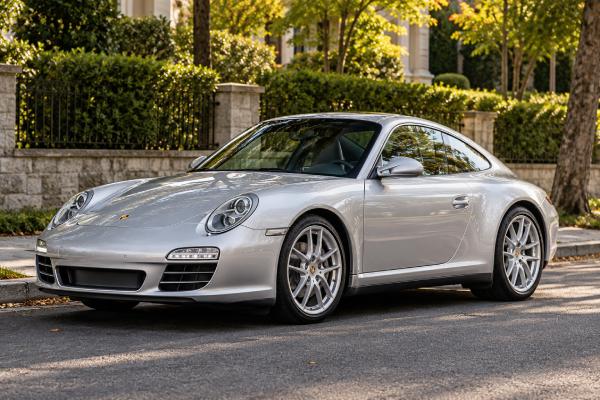
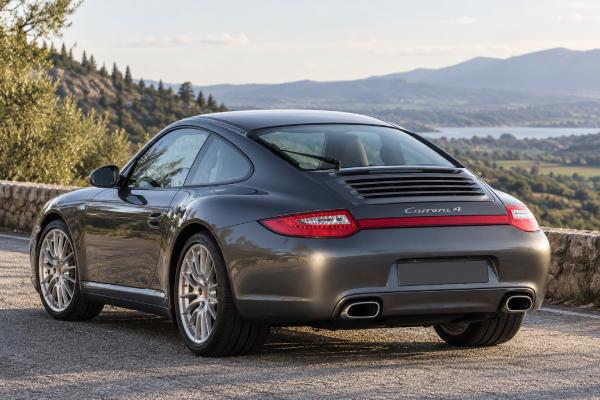
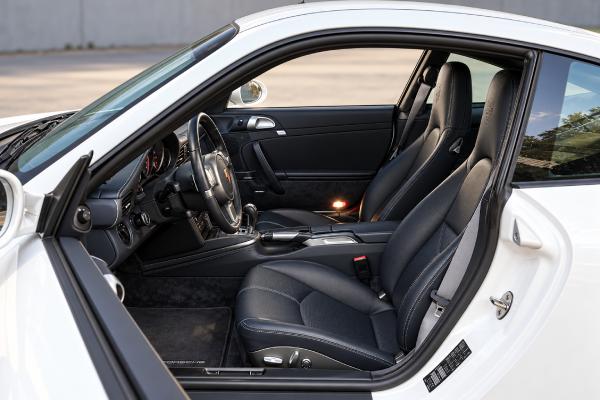
The 2009–2012 Porsche 911 Carrera 4 in this guide is the facelifted 997.2 Coupé with the 3.6-litre MA1.02 direct-injected flat-six, 254 kW (345 PS), and electronically controlled Porsche Traction Management all-wheel drive. It is not the earlier 997.1 Carrera 4 with a passive viscous coupling, and it should not be confused with the 3.8-litre Carrera 4S. The 997.2 update brought three major changes together: direct fuel injection, optional seven-speed PDK in place of Tiptronic, and active PTM for the all-wheel-drive Carrera. The Carrera 4 also uses the broad 1,852 mm body and wider rear tire package, so ownership adds front driveline components and tire-matching concerns that do not exist on the rear-drive 3.6 Carrera. This article concentrates on how those differences affect specifications, driving behavior, maintenance and inspection, with particular attention to the PTM transfer system, prop shaft, front final drive and the need to diagnose an AWD car as a complete four-tire system.
Table of Contents
- What the 997.2 Carrera 4 adds
- Carrera 4 factory data
- How PTM all-wheel drive works
- Manual, PDK, and road performance
- Wide body, tires, and chassis
- AWD service and age-related care
- Carrera 4 pre-purchase inspection
What the 997.2 Carrera 4 adds
The Carrera 4 takes the 345 PS 3.6-litre 997.2 Carrera powertrain and adds an active front driveline plus the wider Carrera 4 body. Those two changes affect far more than wet-weather traction: they alter tires, fuel capacity, weight, service items and what a buyer needs to inspect underneath the car.
Porsche’s earlier 997.1 Carrera 4 used a passive viscous multi-plate coupling. For the second-generation 997 Carrera 4 introduced with the facelift, Porsche adopted the electronically controlled Porsche Traction Management system developed from the 997 Turbo architecture. PTM can alter front-axle torque transfer through a controlled multi-plate clutch rather than waiting only for a viscous element to react.
The distinction is important when shopping by year. A listing that says “2009 Carrera 4” should be verified by VIN and build specification because registration dates and model years can overlap around a facelift. The 345 PS direct-injected engine, PDK availability and active PTM are the defining mechanical markers for the car covered here.
Body width is another immediate clue. The Carrera 4 is 1,852 mm wide, compared with 1,808 mm for the narrow rear-drive Carrera. The rear wheel/tire package is correspondingly broader. That does not mean every wide-body 997 is a Carrera 4—special models such as the rear-drive GTS and Sport Classic also use broad rear bodywork—but on this specific variant the width accompanies a complete AWD driveline.
The 4S sits one level above with the 3.8-litre 385 PS engine and larger standard wheels. A Carrera 4 should therefore be evaluated on its own specification instead of being treated as a 4S with less power. In particular, the standard 18-inch rear tire size and performance figures differ.
Carrera 4 factory data
The 997.2 Carrera 4 is a naturally aspirated gasoline ICE car with a rear-mounted engine and an active all-wheel-drive system. Both six-speed manual and seven-speed PDK versions were offered, and Porsche published different acceleration and top-speed figures for each transmission.
| Specification | Value | Notes |
|---|---|---|
| Engine family | MA1.02 / 9A1 | 997.2 direct-injection generation |
| Configuration | 3.6 L naturally aspirated flat-six | Rear-mounted |
| Displacement | 3,614 cc | 97 mm bore × 81.5 mm stroke |
| Fuel system | Direct fuel injection | Introduced with facelift Carrera engines |
| Maximum power | 254 kW (345 PS; 340 hp SAE) at 6,500 rpm | Porsche rating |
| Maximum torque | 390 Nm (288 lb-ft) at 4,400 rpm | Factory figure |
| Compression ratio | 12.5:1 | Premium-fuel engine |
| Maximum engine speed | 7,500 rpm | Factory limit |
| Component | Specification | Purpose |
|---|---|---|
| Drive type | Active all-wheel drive | Rear-engine AWD layout |
| System | Porsche Traction Management (PTM) | Variable torque transfer to front axle |
| Center coupling | Electronically controlled multi-plate clutch | Replaces 997.1 passive viscous concept |
| Front driveline | Prop shaft, front final drive, front half-shafts | Additional Carrera 4 hardware |
| Stability control | Porsche Stability Management | Works alongside PTM |
| Configuration | 0–60 mph | Top speed |
|---|---|---|
| 6-speed manual | 4.8 s | 285 km/h (177 mph) |
| 7-speed PDK | 4.6 s | 282 km/h (175 mph) |
| 7-speed PDK with applicable Sport Chrono launch function | 4.4 s | 282 km/h (175 mph) |
| Specification | Value | Context |
|---|---|---|
| Body style | 2-door 2+2 Coupé | Wide-body Carrera 4 |
| Length | 4,466 mm (175.8 in) | 997.2 Carrera family |
| Width | 1,852 mm (72.9 in) | Wide rear body |
| Wheelbase | 2,350 mm (92.5 in) | 997 platform |
| Fuel tank | 67 L (17.7 U.S. gal) | Larger than rear-drive Carrera |
| Front luggage volume | 125 L (4.4 cu ft) | Factory figure |
| Axle | Wheel | Tire |
|---|---|---|
| Front | 8J × 18 | 235/40 ZR18 |
| Rear | 11J × 18 | 295/35 ZR18 |
| Area | Check | Reason |
|---|---|---|
| Tires | Matched size, construction, wear and rolling circumference | All four tires participate in one driveline |
| Front final drive | Leaks, noise and fluid-service history | Additional AWD component |
| Prop shaft/couplings | Vibration, mounts and joints | Transfers torque forward |
| Front half-shafts | Boots, joints and leakage | Wear item absent from RWD Carrera |
| PTM diagnostics | Stored faults and system operation | Electronically controlled clutch system |
How PTM all-wheel drive works
PTM is the central engineering difference between the Carrera 4 and Carrera. The 997.2 system uses an electronically controlled multi-plate clutch to vary how much engine torque is sent through the front driveline, while the rear axle remains the natural starting point of the rear-engined layout.
Porsche describes PTM as integrating information such as wheel speeds and vehicle dynamics to improve traction and stability. The practical result is not a fixed 50:50 split. On dry pavement the car can preserve the rear-driven feel expected of a 911, while the front axle can be engaged more strongly when acceleration, surface conditions or dynamic demands justify it.
For an owner, the system should be understood as hardware plus control electronics. A healthy front final drive does not prove the multi-plate clutch is functioning correctly, and the absence of warning lamps does not guarantee there are no stored faults. A Porsche-capable scan, road test and physical inspection are complementary.
Tire condition is unusually important because the AWD system links axles that may otherwise show different wear rates. Replace tires according to Porsche’s approved sizing and service guidance, and avoid running large rolling-circumference differences front to rear. Matching brand/model within the intended staggered setup is the cleanest baseline. A car with two new tires and two heavily worn tires should prompt a discussion about why the set was split and whether the resulting circumference difference is appropriate.
Vibration diagnosis also needs an AWD mindset. A speed-related vibration can come from wheels and tires, but the prop shaft, couplings, front driveshaft joints or final drive add possibilities not present on a rear-drive Carrera. Testing the car after it is fully warm can reveal noises or behavior that a five-minute demonstration misses.
Manual, PDK, and road performance
Both transmissions suit the Carrera 4’s 345 PS engine, but they change the way the car reaches its factory performance figures. PDK is quicker from rest, particularly with Sport Chrono, while the manual retains direct clutch control and a slightly higher published top speed.
The 4.8-second manual 0–60 mph figure is only one tenth slower than the equivalent rear-drive Carrera’s period factory claim, illustrating that the AWD hardware was not primarily about adding straight-line speed. Its purpose is torque distribution and traction. PDK cuts the factory Carrera 4 figure to 4.6 seconds, or 4.4 seconds with the relevant Sport Chrono launch strategy.
On a manual car, check clutch engagement after the drivetrain is warm. Load the engine enough to detect slip without abusive launches, and make sure the gearbox enters every ratio cleanly. Look for evidence of clutch or flywheel replacement in the records if mileage and use suggest it, but do not assume replacement is required at a fixed distance.
On PDK, assess creeping, reverse engagement, normal automatic shifts and manual commands. A dual-clutch transmission can feel different from a conventional automatic at very low speed, but pronounced shudder, delayed engagement or inconsistent behavior deserves diagnosis. Service history should use the correct 997 PDK schedule for that market rather than an interval borrowed from a later eight-speed unit.
All-wheel drive also changes launch behavior. A hard standing start can use available traction more effectively, but repeated launch-control demonstrations are unnecessary during a purchase inspection. More useful evidence comes from smooth acceleration, stable straight-line behavior, consistent shifts and a clean diagnostic scan.
Wide body, tires, and chassis
The Carrera 4’s broad rear body is not just a styling cue: it accommodates an 11-inch-wide rear wheel and 295/35 ZR18 tire in the standard 18-inch configuration. That rear contact patch, combined with AWD, influences steering balance, replacement cost and the information visible in tire wear.
Inspect all four tires across their full width. Inner-shoulder wear can be easy to miss on a low sports car and may indicate alignment, worn suspension joints or simply a geometry setup that has not been monitored. Compare date codes; a matched tread pattern can still hide a pair installed years earlier than the other axle.
The basic suspension layout remains MacPherson-strut type at the front and multi-link at the rear. PASM availability depends on the car’s equipment. If present, check mode response and dampers for leakage. If absent, the car should not be criticized for lacking a feature that was not mandatory to the base Carrera 4 specification.
Brake specification likewise varies with options. Steel brakes are normal; PCCB was optional. Verify what is actually fitted and compare it with factory build information. Incorrect assumptions are especially easy when calipers have been refinished.
The wider shell merits careful body inspection because rear-quarter repair can be expensive to correct. Measure paint, inspect seams and underbody coatings, and look for evidence that suspension pickup points or driveline mounts were disturbed in a collision. A repaired bumper is a different ownership issue from structural work around the rear quarters or front driveline tunnel.
AWD service and age-related care
Maintenance for a Carrera 4 has two layers: the same engine, brake, cooling and transmission work required by the 3.6 Carrera, plus fluids, boots, joints and seals associated with the front driveline. A complete service history should make both layers visible.
Porsche’s regional maintenance plans differ in exact timing and mileage. Use the schedule linked to the VIN and market for engine oil, filters, spark plugs, drive belt, brake fluid and gearbox work. On an AWD car, confirm whether front final-drive or related 4WD oil service is specified and whether it has actually been carried out. “Full service history” can still omit driveline fluids if invoices are not itemized.
Inspect the front final drive for leaks and listen for whine that changes with road speed or load. Check front axle boots for cracking or grease escape. Examine the prop shaft and its supports/couplings for play or damage, and investigate vibration rather than balancing wheels repeatedly without checking the rest of the system.
The front cooling pack remains a late-997 maintenance point. Debris can collect between radiators and air-conditioning condensers, so careful cleaning and corrosion inspection are worthwhile. Cooling-system condition should be judged through pressure integrity, visible residue, stable operating temperature and documented repairs rather than age alone.
Battery and electrical health influence modern Porsche diagnostics. A weak battery after storage can generate confusing low-voltage faults, so establish battery condition before interpreting a long fault list. Clear only after documenting what was present, then determine which codes return under proper voltage.
Carrera 4 pre-purchase inspection
A Carrera 4 pre-purchase inspection should deliberately include components that a rear-drive 997 checklist can miss. The extra time is justified because AWD faults can hide behind otherwise normal engine and gearbox behavior.
Verify the exact car first. The engine should correspond to the 3.6-litre facelift Carrera 4, and the transmission, wheel package and optional systems should match the build data. Confirm that the wide body has not led to a mistaken 4S advertisement; the 4S should have the 3.8-litre 385 PS engine.
On a lift, trace the driveline from the transmission toward the front. Look at the prop shaft, joints/couplings, front final drive, seals, half-shafts and CV boots. Inspect underbody protection for impact damage and signs of prior removal. A dry housing does not need to look new, but fresh cleaning immediately before sale can obscure leak history.
Then inspect tires as a set. Record make, model, size, date and tread depth at several points on each tire. If the set is mixed, ask when and why each tire was replaced. Confirm wheel sizes and offsets are appropriate for the car; visual fit alone is not enough.
During the road test, use tight low-speed turns, steady cruising and moderate acceleration to expose different driveline conditions. Listen for clicking, groaning, humming or vibration. Test the brakes from a safe speed, confirm steering returns naturally and note whether the car tracks straight on a level road.
Finish with diagnostics and history. Scan PTM, PSM, PDK if fitted, engine and chassis control units. Compare recorded faults with invoices. Check recall status through the authority applicable to the car’s current market. A well-bought Carrera 4 is one whose AWD equipment is documented and quiet enough to be unremarkable—not one where the inspection simply confirms that all four wheels turn.
References
- The 997: Technology offensive, new design and great variety for the 911 – Porsche Newsroom 2018
- From the Lohner-Porsche to the 911 Turbo – Porsche Newsroom 2018
- Porsche Traction Management for greater agility, stability and traction – Porsche Newsroom 2018
- Technical Specifications – Porsche Newsroom USA 2026
- Wartung und Verschleiß | Porsche Deutschland 2026 (Maintenance Plans)
- Check for Recalls: Vehicle, Car Seat, Tire, Equipment | NHTSA 2026 (Recall Database)
Disclaimer
This material is informational and cannot replace a hands-on professional diagnosis or repair procedure. Specifications, fluid requirements, torque values, intervals and service methods may differ by VIN, market and equipment; use the official Porsche service documentation for the individual Carrera 4 before performing work.
If this AWD-specific guide was useful, please share it on Facebook, X/Twitter, or with a Porsche community to support our work.