
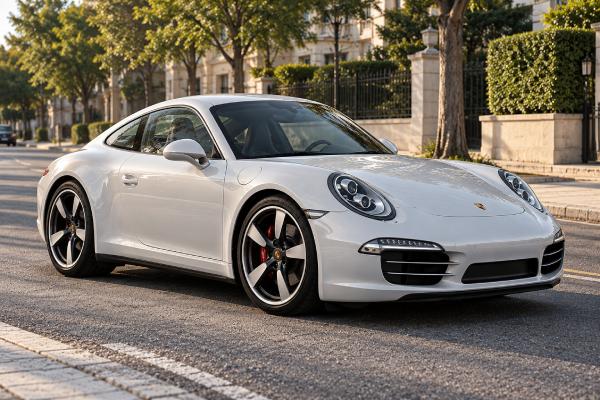
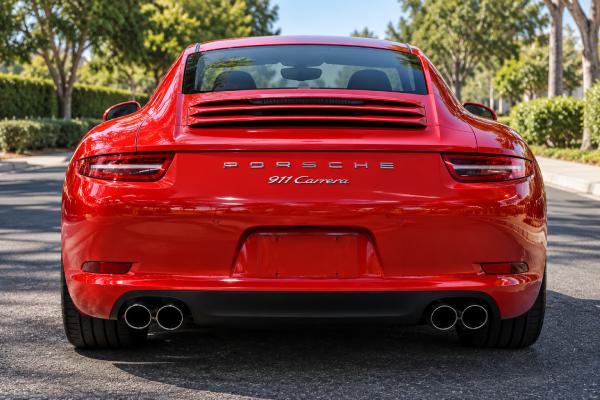
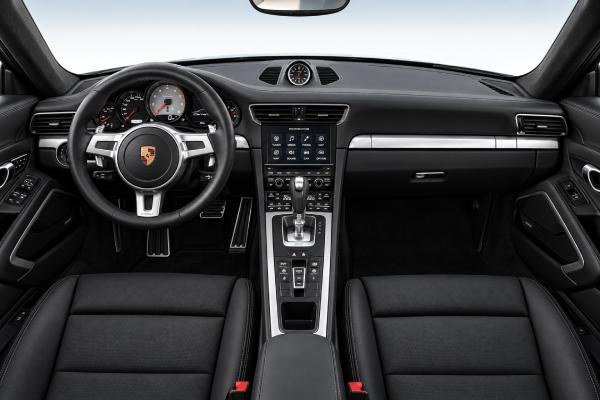
The Porsche 911 Carrera covered here is the naturally aspirated 991.1 base Carrera with the 3.4-litre MA1.04 flat-six, rated at 257 kW (350 PS). It launched for the 2012 model year and represented a major engineering break from the 997 despite retaining the rear-engine, rear-wheel-drive 911 format. A 100 mm-longer wheelbase, aluminium-steel body construction, electromechanical steering, adaptive aerodynamics and the world’s first seven-speed manual transmission all arrived with the 991 generation; seven-speed PDK remained the alternative gearbox. One scope point is essential: Porsche introduced the facelifted 991.2 Carrera in September 2015 with a 3.0-litre twin-turbo engine. Therefore, a car first registered or marketed in 2016 belongs in this article only if it is still the naturally aspirated 3.4-litre 991.1 MA1.04 variant. The later 3.0-litre turbo Carrera is outside scope. With that boundary fixed, this guide explains the 3.4 Carrera’s factory data, chassis changes, transmission choices, age-related maintenance and the checks that matter when buying one now.
Table of Contents
- Define the 991.1 before you buy
- MA1.04 Carrera specifications
- A new 911 platform, not a stretched 997
- The 3.4-litre engine and its character
- Seven-speed manual or PDK
- Maintenance priorities as the 991.1 ages
- Pre-purchase checks and model-year traps
Define the 991.1 before you buy
The 991 generation arrived for the 2012 model year with a new platform and a base Carrera engine reduced from the preceding 997.2’s 3.6 litres to 3.4 litres. Porsche nevertheless raised output to 350 PS. The first-phase car is commonly called the 991.1, although that shorthand is more useful to owners and specialists than it is as a formal badge on the decklid.
The assignment’s 2012–2016 date span crosses an important technical boundary. Porsche publicly introduced the revised Carrera on September 7, 2015. That facelift brought 3.0-litre twin-turbo engines, with the base Carrera rising to 370 hp/PS depending on market convention. Those turbocharged cars are generally called 991.2 and are not the MA1.04 3.4-litre Carrera described here. Depending on market, inventory and registration practices, a naturally aspirated 991.1 can appear with a later first-registration date, including 2016. Confirm the VIN, engine type and production information rather than deciding generation from registration year alone.
A genuine 991.1 base Carrera should also be separated from the 3.8-litre Carrera S and the all-wheel-drive Carrera 4. The base car is rear-wheel drive and, in standard form, uses 19-inch wheels. PASM was optional on the early base Carrera rather than an automatic identifying feature. The S, 4, GTS and special models have different engines, chassis hardware or body details and should not be used to fill gaps in a base Carrera specification sheet.
This distinction is especially important in used-car advertising. Sellers may use “991 Carrera” without stating phase, drivetrain or engine. The fastest way to avoid a category error is to verify three items before discussing price: naturally aspirated 3.4-litre engine, rear-wheel drive and pre-facelift 991 body/electronics specification. Once those match, the rest of the inspection can focus on condition rather than identity.
MA1.04 Carrera specifications
The 991.1 Carrera is a gasoline-powered, naturally aspirated internal-combustion sports car with a rear-mounted flat-six and rear-wheel drive. The figures below describe the Coupé in period European specification unless noted; market equipment and test standards can differ.
| Specification | Value | Notes |
|---|---|---|
| Engine designation | MA1.04 / 9A1 family | Direct-injection naturally aspirated flat-six |
| Displacement | 3,436 cc (3.4 L) | Base 991.1 Carrera engine |
| Maximum power | 257 kW (350 PS) at 7,400 rpm | Factory European rating |
| Maximum torque | 390 Nm (287 lb-ft) at 5,600 rpm | Factory rating |
| Compression ratio | 12.5:1 | High-compression naturally aspirated design |
| Maximum engine speed | 7,800 rpm | Factory limit |
| Fuel delivery | Direct fuel injection | Electronic engine management |
| Item | Specification | Context |
|---|---|---|
| Driven wheels | Rear | Base Carrera layout |
| Manual gearbox | 7-speed | First seven-speed manual in a production car |
| Automatic gearbox | 7-speed PDK | Dual-clutch option |
| Stability system | Porsche Stability Management | ABS and traction/stability functions integrated |
| Steering assist | Electromechanical | Major change from 997 hydraulic assistance |
| Configuration | 0–100 km/h | Top speed |
|---|---|---|
| 7-speed manual | 4.8 s | 289 km/h (180 mph) |
| 7-speed PDK | 4.6 s | 287 km/h (178 mph) |
| 7-speed PDK with Sport Plus | 4.4 s | 287 km/h (178 mph) |
| Transmission | Combined fuel use | CO₂ |
|---|---|---|
| 7-speed manual | 9.0 L/100 km (31.4 mpg UK) | 212 g/km |
| 7-speed PDK | 8.2 L/100 km (34.4 mpg UK) | 194 g/km |
| Measure | Value | Notes |
|---|---|---|
| Length | 4,491 mm (176.8 in) | 991.1 Carrera Coupé |
| Width | 1,808 mm (71.2 in) | Excluding mirrors |
| Height | 1,303 mm (51.3 in) | Specification can vary slightly with equipment |
| Wheelbase | 2,450 mm (96.5 in) | 100 mm longer than 997 generation |
| DIN curb mass | 1,380 kg manual / 1,400 kg PDK | Equipment changes actual vehicle mass |
| Drag coefficient | Cd 0.29 | Coupé factory figure |
| Item | Standard specification | Buyer relevance |
|---|---|---|
| Front tires | 235/40 ZR19 | Confirm matching approved high-performance tires |
| Rear tires | 285/35 ZR19 | Inspect inner shoulders and date codes |
| Front luggage compartment | 135 L | Check trim and signs of water ingress/repair |
| Rear seat/luggage area | 205 L quoted storage volume | One reason for Carrera everyday usability |
| Fuel tank | 64 L | Factory base specification |
The figures should be treated as model-level references, not a substitute for the build data of a particular car. Wheels, suspension, Sport Chrono, brakes and comfort equipment could all change the way an individual Carrera is configured.
A new 911 platform, not a stretched 997
The 991’s longer wheelbase is the obvious dimensional change, but Porsche redesigned far more than the spacing between the axles. Its own retrospective states that almost 90 percent of components were newly developed or substantially revised. The aluminium-steel body reduced body-structure mass while increasing stiffness, and the wider tracks changed the car’s stance and available chassis geometry.
The steering system moved from the 997’s hydraulic assistance to electromechanical assistance. That change is often discussed in subjective terms, but for ownership it creates a practical distinction: diagnosis belongs in the electrical and mechanical steering system as a whole. Steering that feels notchy, inconsistent or off-center should prompt checks of alignment, tires, suspension joints and steering faults rather than a blanket judgment that all electric-assist 991s feel that way.
Porsche also introduced adaptive aerodynamics to the 991. The rear spoiler deploys according to operating conditions, contributing to cooling and aerodynamic balance. Check that its movement is smooth and that there are no spoiler or body-control warnings. A damaged mechanism can be overlooked when inspecting a parked car because the spoiler is normally retracted.
The wheelbase increase improved high-speed stability and cabin packaging without changing the essential rear-engine layout. For a buyer moving from a 997, the 991 can feel more spacious and settled, but worn dampers, poor alignment or unsuitable tires can make that advantage disappear. Chassis condition should therefore be judged against how the car was engineered, not against expectations formed from an older 911.
PASM availability needs careful wording on the base Carrera. Many used examples have adaptive damping, especially cars ordered with performance options, but it was not universal on early base cars in every market. Verify the option list and then test the equipment that is actually present. The same applies to Sport Chrono, sports exhaust, larger wheels, dynamic engine mounts and upgraded seats.
The braking system is conventional high-performance steel equipment unless an optional higher specification was ordered. Measure disc and pad condition rather than judging from appearance through the wheel. Cars that have spent time on track may show heat checking, accelerated pad wear or evidence of frequent fluid changes; none of those facts alone defines a bad car, but they should fit the maintenance history.
The 3.4-litre engine and its character
Porsche reduced displacement for the base 991 Carrera yet increased output to 350 PS. The engine still belongs to the direct-injection 9A1 family introduced during the 997.2 era, but the MA1.04 calibration and 3,436 cc displacement are specific to this application. Peak power arrives at 7,400 rpm and the engine can spin to 7,800 rpm, so its performance character depends on revs rather than a large low-speed torque surge.
A sound example should start promptly, settle into a stable idle and pull progressively as engine speed rises. Because maximum torque is 390 Nm at 5,600 rpm, drivers coming from a turbocharged 991.2 may initially interpret the 3.4 as less forceful at low revs. That is normal. Misfire, surging, a persistent flat spot or an engine warning lamp is not.
The 9A1 architecture is distinct from the M96/M97 designs that dominate discussions of earlier water-cooled 911 reliability. A buyer should resist importing failure assumptions from a different engine family. Instead, inspect the MA1.04 that is actually in front of you. Look for oil seepage, coolant staining, evidence of overheating, damaged condensers or radiators, poor cold-start behavior and unresolved fault codes. Service invoices should show regular oil changes using an appropriate Porsche-approved lubricant and should make clear when routine ignition and filter work was completed.
Direct injection means the fuel system uses high-pressure components, and fuel does not wash the intake valves in the same way as port injection. Deposits can therefore become a diagnostic consideration if an engine develops airflow-related faults or persistent roughness. Cleaning should follow evidence, not a mileage superstition. The same is true for injectors and ignition coils: replace what testing supports rather than treating every rough idle with a parts cannon.
Cooling performance deserves particular attention because the 911’s front heat exchangers live behind openings that can collect leaves, grit and road debris. Condenser corrosion and radiator contamination can develop out of sight. A pre-purchase inspection should examine those areas, check fan operation and look for any history of unexplained coolant loss.
Exhaust condition affects both sound and emissions readiness. Factory sports exhaust was optional on many cars, and aftermarket systems are common. Verify what the car was built with, inspect valves and mounts, and make sure modifications have not created warning lights or compromised local inspection compliance.
Seven-speed manual or PDK
The 991 Carrera made transmission choice unusually interesting because both gearboxes have seven forward ratios but achieve that in very different ways. The manual was the first seven-speed manual fitted to a production car. Its seventh gear is primarily an economy/cruising ratio, while the lower gears provide the performance work. PDK uses two clutches and computer-controlled gear selection to shift more quickly and to deliver the better factory acceleration figures.
A manual inspection should focus on the complete shift path rather than only clutch slip. The seven-speed gate demands clear centering and correct interlock behavior. Check selection when cold and warm, listen for drivetrain noises, feel for notchiness that changes with temperature and assess clutch take-up under both gentle and brisk use. A previous clutch replacement is useful information only when the invoice identifies what was actually changed.
PDK should be tested over a wider range than a short demonstration drive. Observe engagement into Drive and Reverse, low-speed maneuvering, light-throttle shifts, kickdown and operation at full temperature. Hesitation or harshness needs proper diagnosis. Stored transmission or drivetrain codes can exist even if no warning remains on the cluster, so a pre-purchase scan adds information that the road test cannot.
Sport Chrono changes the context for PDK because it adds more aggressive drive modes and, where equipped, launch-oriented performance functions. A seller may quote the 4.4-second 0–100 km/h figure without stating that it refers to PDK with Sport Plus. The normal PDK factory figure is 4.6 seconds, while the manual is 4.8 seconds. Keeping those conditions attached to the numbers prevents an option-dependent figure from being presented as universal.
Transmission preference should ultimately follow use and condition. The manual is distinctive and engaging, but an abused clutch or shift mechanism can erase the romance quickly. PDK is faster and well suited to daily traffic, but fault diagnosis is more specialized. A well-documented example of either is preferable to choosing by gearbox reputation alone.
Maintenance priorities as the 991.1 ages
The earliest 991 Carreras are now well beyond the stage where a low odometer reading is a complete maintenance story. Porsche’s official service information should remain the schedule baseline, but owners also need to account for elapsed time, environment and how the car has been used. Fluids, tires, rubber parts, batteries and corrosion-sensitive hardware continue to age while a car is parked.
Build a chronology from invoices. Confirm engine-oil and filter services, brake-fluid work, spark plugs, air and cabin filters, drive-belt attention and transmission service applicable to the specific gearbox. The purpose is not to replace everything preemptively; it is to remove uncertainty about items whose condition or time history matters.
Front-end cooling and air-conditioning hardware deserves visual access rather than a flashlight through the bumper grille. Debris packed around condensers and radiators can hold moisture and reduce heat transfer. Cleanliness, corrosion and leakage should be evaluated together. If air conditioning is weak, do not assume a simple refrigerant top-up is the answer before checking condenser condition and system leakage.
Tires have an outsized influence on a 911. Match model, size and broadly similar age across each axle, and inspect the inner tread shoulders. Large optional wheels may sharpen appearance but raise replacement cost and vulnerability to pothole damage. A car that has repeatedly worn one tire edge needs alignment and suspension investigation, not another set of tires without diagnosis.
Brakes, dampers and suspension joints should be checked as one dynamic system. A worn control-arm joint can create steering imprecision; a tired damper can reduce body control; an old brake hose or moisture-laden fluid can change pedal consistency. Replacing only the component that makes the loudest noise may leave the underlying handling problem intact.
Electrical condition matters more than many 997-era buyers expect. The 991 integrates more body, infotainment and chassis electronics, and a weak battery can create confusing symptoms. Check battery health, charging performance and fault memory before treating every stored voltage-related code as evidence of a failed control unit. PCM operation, window indexing, spoiler actuation, parking-brake behavior and optional seat or lighting functions should all be exercised during inspection.
Use the VIN to check recalls and campaigns in the relevant jurisdiction. Model-year summaries are helpful for research, but applicability and completion depend on the individual vehicle. Keep proof of completed work with the service file.
Pre-purchase checks and model-year traps
Begin a 991.1 Carrera purchase by proving what the car is. On any example advertised as a 2016 Carrera, this is non-negotiable: verify that the engine is the naturally aspirated 3.4-litre MA1.04 and not the 3.0-litre twin-turbo unit introduced with the facelift. Decklid badges and registration dates do not settle the question. VIN-based production data does.
Once identity is clear, inspect the body with the 991’s mixed aluminium-steel construction in mind. Cosmetic repainting is not automatically a problem, but repair quality and structural accuracy matter. Look for inconsistent paint depth, disturbed fasteners, uneven gaps, damaged undertrays and repairs around suspension mounting areas. Aluminium panel work requires appropriate techniques, so invoices from a competent repairer add confidence when accident history is disclosed.
Start the mechanical inspection from cold. Watch oil-pressure and temperature behavior as the engine warms, listen for abnormal sustained noises, check exhaust smoke and verify that all warning lamps perform their self-test and extinguish correctly. After the road test, scan the car for faults and reinspect for fresh leakage.
Use the road test to evaluate systems in layers. First judge straight-line steering, ride and brake feel. Then work the engine through a useful portion of its rev range. Test the manual gate or PDK at different loads. Exercise PASM, sports exhaust, Sport Chrono functions and the rear spoiler if fitted or accessible through the correct control procedure. A complex car can appear fine if only one driving mode is sampled.
Review the service file after the drive, not before, so the paperwork can answer questions generated by the car. Does a recent alignment explain fresh tires? Does a brake invoice match the visible hardware? Are claimed major services itemized? Do mileage records progress logically? A thick folder is useful only when its contents describe this vehicle consistently.
Finally, price the car as configured. Desirable options can influence value, but condition of the base mechanical systems matters more than a long equipment list. A standard 19-inch, non-PASM Carrera with excellent history may be a better ownership proposition than a heavily optioned car needing tires, dampers, cooling-system work and transmission diagnosis.
The 3.4-litre 991.1 Carrera remains distinctive because it combines the broader, more modern 991 platform with a naturally aspirated engine and a choice of seven-speed manual or PDK. Buying the right one depends on respecting the generation boundary, then judging the actual engine, gearbox, chassis and documentation instead of assuming that every car carrying a 991 badge belongs to the same technical specification.
References
- 7th Generation Porsche 911 (991), 2011-2019 – Porsche Newsroom — Porsche Newsroom, accessed 2026.
- The 991: the 911 passes the one million mark – Porsche Newsroom — Porsche Newsroom, 2018.
- The new Porsche 911 Carrera – Porsche Newsroom — Porsche Newsroom, 2015.
- Technical Specifications – Porsche Newsroom USA — Porsche Newsroom USA, accessed 2026.
- Wartung und Verschleiß | Porsche Deutschland — Porsche service information, accessed 2026.
- Check for Recalls: Vehicle, Car Seat, Tire, Equipment | NHTSA — National Highway Traffic Safety Administration, accessed 2026.
Disclaimer
This article is general technical and purchasing information, not a diagnosis or substitute for Porsche workshop documentation. Specifications, option availability, service intervals, tightening procedures and campaign applicability vary by VIN, production date and market. In particular, verify any 2015–2016 car’s engine and generation before applying 991.1 data. Safety-critical inspection and repair should be performed by a qualified Porsche specialist using current vehicle-specific service information.
Share this guide with a 991 buyer who needs to distinguish the naturally aspirated 3.4-litre Carrera from the later turbocharged facelift before comparing condition or price.