
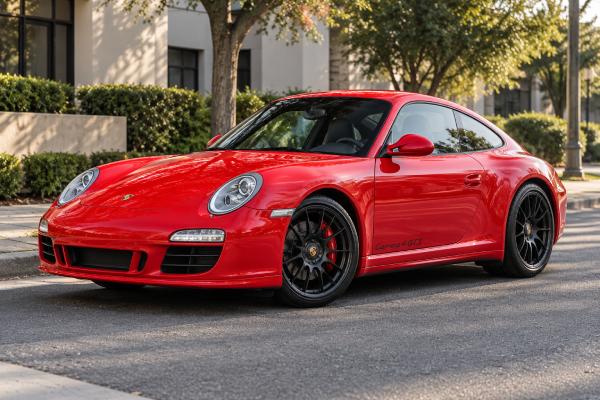
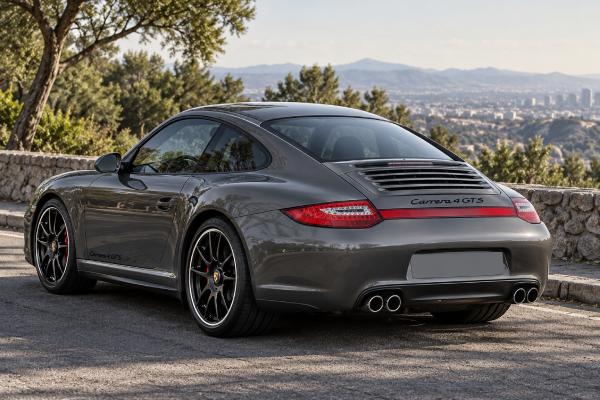
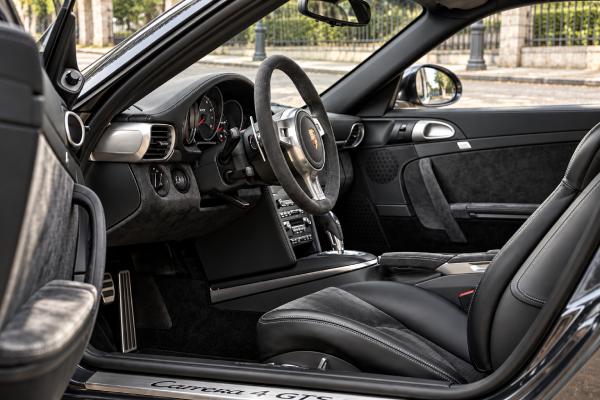
The Porsche 911 Carrera 4 GTS (997.2) sits at an unusually specific point in the final years of the 997 generation. Introduced in 2011 and sold chiefly as a 2012 model, it combines the GTS version of the direct-injected 3.8-litre flat-six with Porsche Traction Management all-wheel drive, the 44 mm-wider Carrera 4 body and the equipment package that placed the GTS above the Carrera 4S. Factory output is 300 kW (408 PS), delivered without turbocharging, and buyers could pair it with either a six-speed manual or seven-speed PDK. The car is therefore not simply a Carrera 4S with cosmetic trim: its revised intake system, standard sports exhaust, model-specific exterior details and GTS wheel/interior treatment matter when establishing authenticity and value. It also carries ownership demands that a rear-drive GTS does not, especially around the PTM driveline and matched tires. This guide isolates the 997.2 Carrera 4 GTS and concentrates on the hardware, performance figures, service priorities and purchase checks that distinguish it from adjacent 997 models.
Table of Contents
- What makes the 4 GTS distinct
- Carrera 4 GTS factory specifications
- Powerkit engine and torque curve
- PTM, wide body, and road behavior
- GTS hardware that needs special care
- Service strategy for an aging 4 GTS
- How to buy the right Carrera 4 GTS
What makes the 4 GTS distinct
The Carrera 4 GTS arrived near the end of 997 production after Porsche had already established the rear-wheel-drive Carrera GTS. Its formula was direct: retain the 408 PS GTS engine and equipment, then add the electronically controlled PTM all-wheel-drive system used by facelift Carrera 4 models. Porsche’s own historical material describes the 997 Carrera 4 GTS as the higher-performance addition to the all-wheel-drive 997 family and records the 3.8-litre, 408 PS specification.
That positioning matters when shopping because several nearby models can look similar. A normal 997.2 Carrera 4S has the same 3.8-litre displacement and wide rear body but is rated at 385 PS. A rear-drive Carrera GTS shares the 408 PS engine and GTS styling but does not have the front driveline. The later 991 Carrera 4 GTS is a different generation with different dimensions, electronics and chassis architecture. A correct 997.2 Carrera 4 GTS should therefore make sense as a complete package, not merely display GTS badges.
The GTS visual treatment is purposeful rather than extravagant. Porsche Classic identifies the 4 GTS by its continuous red rear reflector, black front spoiler lip, revised front cooling openings, darker side-skirt and rear lower trim, and standard 19-inch RS Spyder wheels. The interior specification typically uses extensive Alcantara on driver touch points and sports-oriented trim. Optional equipment still varied by market and individual order, so a build sheet or Porsche production data is more reliable than assumptions based on photographs.
There is also a model-year nuance. Porsche announced the Carrera 4 GTS during 2011, while some official model histories list the Coupé and Cabriolet under 2012. That makes registration year alone a poor identification method. For an individual car, use the VIN, production data and original option record to establish whether it is the genuine factory variant covered here.
Carrera 4 GTS factory specifications
The 997.2 Carrera 4 GTS is a gasoline-powered, naturally aspirated internal-combustion sports car. It uses the facelift 9A1/MA1.01 3.8-litre direct-injection engine with the GTS/Powerkit intake specification, a rear-mounted engine and active all-wheel drive.
| Specification | Factory value | Context |
|---|---|---|
| Engine | MA1.01 / 9A1 flat-six | Rear-mounted, naturally aspirated |
| Displacement | 3,800 cc (3.8 L) | 102.0 mm bore × 77.5 mm stroke |
| Fuel system | Direct fuel injection | 997.2 engine generation |
| Maximum power | 300 kW (408 PS) at 7,300 rpm | GTS Powerkit specification |
| Maximum torque | 420 Nm (310 lb-ft) at 4,200–5,600 rpm | Broad rated-torque plateau |
| Compression ratio | 12.5:1 | High-compression naturally aspirated engine |
| Maximum engine speed | 7,500 rpm | Factory limit |
| Item | Specification | Notes |
|---|---|---|
| Drive layout | Active all-wheel drive | Porsche Traction Management |
| PTM coupling | Electronically controlled multi-plate clutch | Variable front-axle engagement |
| Manual transmission | 6-speed | Factory choice |
| Automatic transmission | 7-speed PDK | Dual-clutch factory choice |
| Stability functions | PSM with ABD/ASR integration | Works with the AWD system |
| Configuration | 0–100 km/h | Top speed |
|---|---|---|
| 6-speed manual | 4.6 s | 302 km/h (188 mph) |
| 7-speed PDK | 4.4 s | 300 km/h (186 mph) |
| 7-speed PDK with Sport Chrono launch function | 4.2 s | 300 km/h (186 mph) |
In period NEDC testing, Porsche quoted 11.0 L/100 km for the manual Carrera 4 GTS Coupé and 10.5 L/100 km for the PDK version. These historical laboratory figures are useful for comparing factory configurations, not for predicting current real-world consumption.
| Specification | Value | Ownership relevance |
|---|---|---|
| Body | Wide Carrera 4 shell | 44 mm wider than rear-drive Carrera body |
| Suspension | Independent front and rear with PASM adaptive damping | Check damper operation and leaks |
| Standard wheels | 19-inch RS Spyder design | GTS-identifying equipment |
| Rear tire size | 305-section on GTS wide-body specification | Confirm correct matched tires and approved sizing |
| Standard exhaust | Sports exhaust | Black tailpipe treatment is part of GTS presentation |
| System | Specification | Inspection point |
|---|---|---|
| Service brakes | Ventilated, cross-drilled performance discs | Measure disc condition and pad life |
| PCCB | Ceramic-composite brakes were available | Verify option code and inspect costly discs carefully |
| PASM | Adaptive damping | Confirm both modes operate without warnings |
| PSM | Electronic stability management | Warning lamps need diagnosis, not clearing |
| TPMS | Tire-pressure monitoring | Sensor age can become a routine maintenance item |
The figures above describe the Coupé where body style changes performance. Cabriolet data differ slightly because of mass and aerodynamics. Equipment can also vary by market, so the original build record remains the authority for an individual car.
Powerkit engine and torque curve
The most important mechanical distinction from a Carrera 4S is the engine’s breathing system. Porsche did not obtain the extra output by adding forced induction. The 3.8-litre direct-injected flat-six uses a revised intake path and resonance system to improve cylinder filling, raising maximum output from the regular S specification to 300 kW (408 PS) at 7,300 rpm. Factory period material also emphasizes the broader torque delivery: approximately 320 Nm is already available from low engine speed, while the full 420 Nm is sustained across 4,200–5,600 rpm.
That character is central to how a healthy 4 GTS should feel. It should pull cleanly through the mid-range and continue building toward the upper rev band without a turbo-style step in power. Hesitation, misfire under load, an unstable idle or recurring engine warning lights are therefore reasons for diagnosis rather than traits to dismiss as normal GTS behavior.
The facelift 9A1 architecture also means buyers should avoid importing problem narratives from the earlier M96/M97 engines without evidence. The 997.2 direct-injection engine is a different design. That does not make every 9A1 immune to age, neglect or wear; it means inspection should target the engine actually installed. Look for oil or coolant leaks, evidence of overheating, fault-memory history, intake contamination, ignition condition and signs of poor previous repairs. A cold start is especially useful because the seller has less opportunity to mask noises or starting irregularities.
The standard sports exhaust is part of the GTS experience and should switch correctly where the car’s control logic permits. Rattles from exhaust valves, corroded hardware or aftermarket bypass work deserve documentation. An aggressive exhaust modification may sound appealing, but it can obscure other noises and can create emissions or inspection complications in some jurisdictions.
For transmission choice, the six-speed manual offers a conventional clutch and direct mechanical interaction; clutch take-up, pedal behavior, synchro quality and shift feel should all be tested. PDK brings faster shifts and the strongest factory acceleration figures. It should engage Drive and Reverse cleanly, shift consistently at low speed and under load, and show no drivetrain warnings. Neither transmission should be judged solely from a five-minute urban test drive.
PTM, wide body, and road behavior
The “4” in Carrera 4 GTS changes more than wet-weather traction. In the 997.2 generation, Porsche replaced the earlier passive AWD arrangement with electronically controlled Porsche Traction Management. Engine torque goes primarily through the rear driveline, while a multi-plate clutch can connect the front axle as the control system responds to acceleration, wheel slip and vehicle dynamics. Porsche describes PTM as working in concert with PSM, anti-slip regulation and the automatic brake differential.
For a buyer, that architecture creates several additional inspection points. The front final drive, propeller shaft, couplings, front axle shafts and related seals should be checked for leaks, noise and impact damage. During a road test, listen for speed-sensitive hums, vibration under load and binding sensations during tight turns. A diagnostic scan is worthwhile because a mechanically quiet system can still carry stored faults from wheel-speed, stability or AWD components.
Tires are particularly important. AWD systems depend on predictable rolling circumference, and a high-performance 911 is sensitive to tire condition even before drivetrain concerns enter the discussion. The four tires should be the correct sizes, compatible model and similar wear level. A mixture of old and new tires, different brands or markedly different tread depths suggests that cost rather than system integrity drove maintenance decisions.
The 44 mm-wider body provides space for the larger rear wheel-and-tire package and gives the 4 GTS its planted stance. Inspect the rear quarters, bumper interfaces and underbody carefully for repair evidence. Wide-body panels and GTS trim can be expensive to put right, and a cosmetic repair that looks acceptable in photographs may hide poor panel alignment or previous structural work.
On the road, the best reason to buy the 4 GTS is not that PTM magically defeats physics. It is that the combination of naturally aspirated response, rear-biased AWD and a broad rear tire footprint can put power down with confidence while retaining the steering and compact dimensions associated with the 997. Tire age, alignment and damping condition have a larger effect on that experience than the badge alone.
GTS hardware that needs special care
The 4 GTS has several pieces of equipment that deserve more attention than ordinary visual inspection. The 19-inch RS Spyder wheels are a major example. Many 997 GTS cars use Porsche’s center-lock wheel system rather than conventional five-lug hubs. If the car is center-lock equipped, wheel removal and installation require the correct Porsche procedure, appropriate tools and exact service information. Improvised torque methods or damaged locking hardware are not minor cosmetic issues. Before purchase, establish when the wheels were last removed, who performed the work and whether the lock, hub and wheel interfaces are in proper condition.
Wheel condition also matters because wide rear tires and large forged wheels are expensive. Inspect inner barrels for cracks or bends, not just visible curb rash. Check tire date codes, sidewalls and inside shoulders. Uneven inner-edge wear can reveal alignment problems that a quick glance at the outer tread misses.
PASM dampers are another age-sensitive system. A car can still drive acceptably with tired dampers, especially on smooth roads, yet feel less controlled over crests and repeated bumps. Look for leakage, listen for knocks and verify that the dashboard control produces a meaningful change in damping behavior without warnings. Bushings, top mounts and anti-roll-bar links should be evaluated as part of the same chassis inspection rather than replaced piecemeal based only on noise.
Brake specification must be identified before estimating costs. Steel brakes are straightforward to measure for disc thickness, cracking around drilled holes and pad life. If PCCB is fitted, inspection should be more specialized because replacement ceramic components are costly. Yellow calipers alone are not sufficient proof of original PCCB equipment; option data and the installed hardware should agree.
Finally, confirm the GTS-specific appearance pieces. Black exterior accents, front lip, side treatment, rear trim, sports exhaust outlets and interior materials can be refinished or substituted. On a collectible late-997 derivative, originality affects more than aesthetics. A missing piece may be easy to notice but unexpectedly difficult or expensive to source correctly.
Service strategy for an aging 4 GTS
A good maintenance plan starts with the Porsche schedule for the correct 997 model year, then adjusts for age, usage and condition. At this point, every surviving Carrera 4 GTS is old enough that elapsed time matters alongside odometer reading. A low-mileage example can still need brake fluid, aging tires, deteriorated rubber components, battery attention and fluids that have exceeded sensible time limits.
Engine oil history should be easy to understand. Look for invoices showing the correct oil specification, filters and dates rather than accepting a vague “fully serviced” claim. The cooling system deserves a pressure and visual check, including radiators and condensers behind the front openings where debris can accumulate. Ignition coils and spark plugs are normal service considerations; recurrent misfire codes should be diagnosed rather than automatically blamed on plugs.
Manual cars need clutch assessment and evidence that shifting issues have not been ignored. PDK cars benefit from service records that show the transmission was maintained according to the applicable Porsche schedule and that any warning or shift-quality concern was investigated. The PTM system adds front-driveline fluid and hardware considerations that a rear-drive GTS does not have.
Brake fluid condition, PASM operation, steering components, wheel bearings and alignment should all be incorporated into a baseline inspection. On a car used for track days, ask specifically about track use, brake temperatures, tire cycles and center-lock service. Track use is not automatically disqualifying—careful owners may maintain such cars exceptionally well—but it changes what should be inspected and how much documentary detail is reasonable to expect.
Electronic diagnosis belongs in routine pre-purchase work. Scan the engine, PDK where fitted, PSM/PTM, PASM and other accessible control modules. Faults should be interpreted in context, with stored and present codes distinguished. Clearing fault memory immediately before a sale reduces useful evidence and should prompt further questioning.
A sensible first service after purchase is often a condition-based baseline rather than an indiscriminate replacement spree. Confirm fluids, filters, brakes, tires, battery health, cooling integrity, chassis wear and outstanding campaign or recall status using the VIN. That creates a documented starting point for future ownership.
How to buy the right Carrera 4 GTS
Authenticity comes first because the 4 GTS can be visually imitated. Confirm the VIN and factory model designation, then compare the option list with the installed engine, transmission, brakes, wheels, interior and exterior equipment. A genuine car with substituted parts is different from a Carrera 4S modified to resemble a GTS, and the price should reflect that distinction.
Next, inspect the car as an AWD performance system rather than as a collection of independent components. Four mismatched tires, neglected front-driveline leaks, tired PASM dampers and worn brakes can transform an apparently attractive purchase into a large catch-up bill. A Porsche specialist familiar with 997.2 cars should drive the vehicle from cold, inspect it on a lift and perform a diagnostic scan.
Body history deserves equal weight. Use paint-depth readings and close inspection around quarter panels, front structure, undertrays and mounting points. Ask for repair invoices where paintwork is disclosed. Minor cosmetic work is common on an older sports car; undocumented structural repair or poorly aligned wide-body panels is a different matter.
Then decide which transmission suits the intended use. A manual 4 GTS has scarcity and tactile appeal but clutch and synchro condition matter. PDK delivers faster factory acceleration and is excellent when healthy, yet diagnosis and repair require specialist knowledge. Buy the condition and history of the individual transmission rather than assuming one is universally safer.
Finally, value provenance. Original books, service invoices, diagnostic records, option documentation, two keys and evidence of correct wheel and tire service all make future maintenance easier. Check the VIN for applicable recalls or campaigns in the relevant market and verify that completed work is documented.
The strongest Carrera 4 GTS purchase is not necessarily the lowest-mileage example or the one with the brightest cosmetic preparation. It is the car whose identity is clear, whose special GTS hardware remains coherent, whose PTM and chassis systems work as designed, and whose records explain how it has been maintained. That combination preserves what makes this late 997 unusual: the 408 PS naturally aspirated GTS engine paired with active all-wheel drive in the compact 997 platform.
References
- Modelo 911 con tracción total (tipo 997) | Porsche España — Porsche Classic, accessed 2026.
- History of the 911 Carrera GTS – Porsche Newsroom — Porsche Newsroom, accessed 2026.
- Porsche Traction Management for greater agility, stability and traction – Porsche Newsroom — Porsche Newsroom, 2018.
- The 997: Technology offensive, new design and great variety for the 911 – Porsche Newsroom — Porsche Newsroom, 2018.
- Wartung und Verschleiß | Porsche Deutschland — Porsche service information, accessed 2026.
- Check for Recalls: Vehicle, Car Seat, Tire, Equipment | NHTSA — National Highway Traffic Safety Administration, accessed 2026.
Disclaimer
This article is for general informational and buying-guide purposes. Specifications, equipment, maintenance operations, torque procedures and service intervals can vary by VIN, model year, market and factory options. Have an individual 911 Carrera 4 GTS inspected and diagnosed by a qualified Porsche specialist, and verify procedures against the current Porsche workshop and service information for that vehicle before performing maintenance or repairs.
If this guide was useful, share it with another 997 buyer or owner who is trying to separate the Carrera 4 GTS from the many similar-looking late-997 variants.