
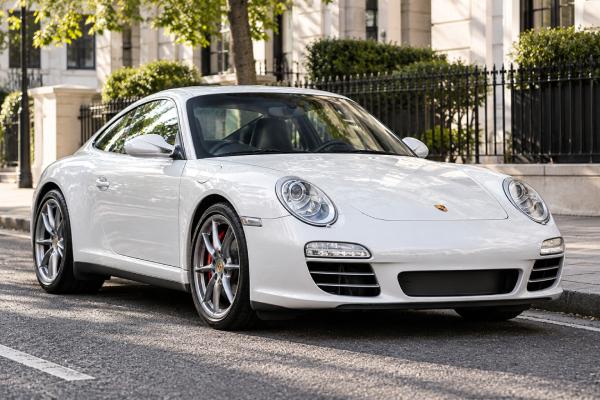
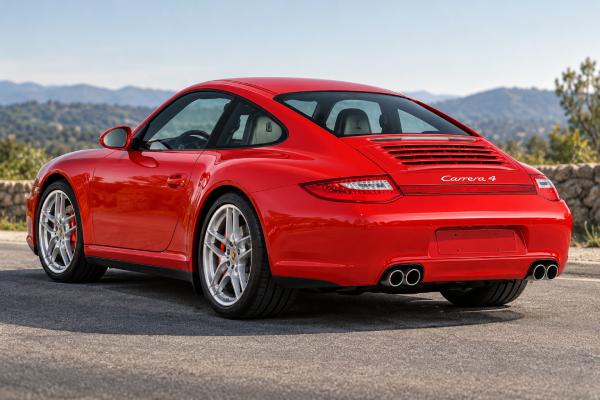
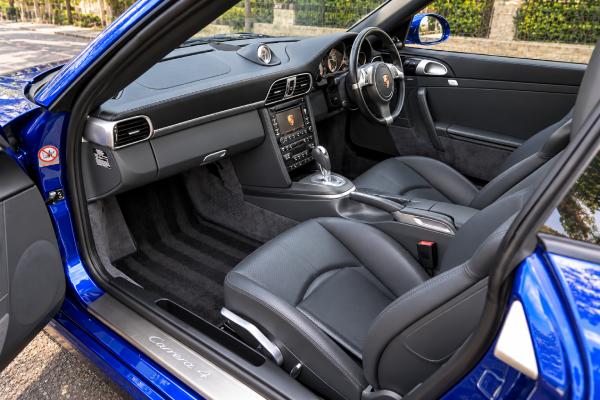
The 2009–2012 Porsche 911 Carrera 4S (997.2) combines the facelift Carrera S’s 3.8-litre direct-injected flat-six with active Porsche Traction Management all-wheel drive and the 44 mm-wider Carrera 4 body. Porsche rated the MA1.01 engine at 283 kW (385 PS) and offered either a six-speed manual or seven-speed PDK. Compared with the 3.6-litre Carrera 4, the 4S adds 40 PS, more torque, 19-inch standard wheels, 295-section rear tires, PASM and the S model’s larger braking specification; compared with the rear-drive Carrera S, it adds the PTM front driveline and a slightly different ownership burden. That makes the 4S a useful case where the headline engine specification tells only half the story. A thorough assessment needs to include tire matching, front final-drive condition, PASM operation, brake hardware and transmission history alongside the 3.8-litre engine. This guide keeps those systems within the exact 997.2 4S scope and avoids mixing in pre-facelift viscous-coupling AWD or later 991 data.
Table of Contents
- Carrera 4S position in the 997 range
- 997.2 Carrera 4S specifications
- The 385 PS engine in practice
- PTM and the four-wheel driveline
- PASM, brakes, wheels, and tires
- Maintenance cost drivers
- Buying a Carrera 4S with confidence
Carrera 4S position in the 997 range
The Carrera 4S is the naturally aspirated wide-body AWD S model of the 997.2 Carrera family. Its identity rests on three factory elements that should all be present: the 3.8-litre 385 PS engine, active PTM all-wheel drive, and the wider Carrera 4 body.
Porsche’s 2008 facelift replaced the earlier naturally aspirated engine range with direct-injected units. The 3.8-litre output rose to 385 PS, while seven-speed PDK became available and the AWD Carrera adopted electronically controlled PTM. Those changes make a facelift 4S materially different from a visually similar early 997.1 Carrera 4S.
The broad body measures 1,852 mm across, and the 4S uses 19-inch wheels with 295/30 ZR19 rear tires in the standard factory setup. PASM was standard on the S model, and red brake calipers identify the conventional high-performance steel system, although PCCB could be specified. A buyer should still verify the build record because caliper color, wheels and suspension can be modified later.
The 4S should not be confused with the later Carrera 4 GTS. Both are wide-body AWD cars using a 3.8-litre engine, but the GTS receives the 408 PS Powerkit, model-specific appearance details and other equipment. The 4S’s 385 PS engine is the regular facelift Carrera S specification.
This positioning helps explain the 4S ownership profile. It offers additional traction and standard performance hardware without the low-volume parts of a Sport Classic or Speedster, but it has more serviceable components than a rear-drive Carrera S. The best examples are therefore not simply those with the cleanest paint; they are cars where engine, PDK or clutch, AWD hardware, dampers, brakes and tires have been maintained as one integrated system.
997.2 Carrera 4S specifications
The 997.2 Carrera 4S is a gasoline-only, naturally aspirated ICE sports car with a rear-mounted 3.8-litre flat-six and active all-wheel drive. Transmission choice changes acceleration and top speed, while the basic wide-body dimensions and 19-inch staggered tire package are common identifying characteristics.
| Specification | Value | Notes |
|---|---|---|
| Engine family | MA1.01 / 9A1 | 997.2 direct-injection architecture |
| Configuration | Rear-mounted naturally aspirated flat-six | DOHC, 4 valves per cylinder |
| Displacement | 3,800 cc (3.8 L) | 102 mm bore × 77.5 mm stroke |
| Fuel system | Direct fuel injection | Facelift Carrera S engine |
| Maximum power | 283 kW (385 PS; 380 hp SAE) at 6,500 rpm | Factory rating |
| Maximum torque | 420 Nm (310 lb-ft) at 4,400 rpm | Factory rating |
| Compression ratio | 12.5:1 | High-compression naturally aspirated engine |
| Maximum engine speed | 7,500 rpm | Factory limit |
| Item | Specification | Condition |
|---|---|---|
| Drive | Active all-wheel drive | Porsche Traction Management |
| Center coupling | Electronically controlled multi-plate clutch | 997.2 system |
| Manual | 6-speed | Factory option |
| Automatic | 7-speed PDK dual-clutch | Factory option |
| Stability control | Porsche Stability Management | Integrated with vehicle dynamics systems |
| Configuration | 0–60 mph | Top speed |
|---|---|---|
| 6-speed manual | 4.5 s | 298 km/h (185 mph) |
| 7-speed PDK | 4.3 s | 294 km/h (183 mph) |
| 7-speed PDK with Sport Chrono launch function | 4.1 s | 294 km/h (183 mph) |
| Specification | Value | Notes |
|---|---|---|
| Front suspension | MacPherson-strut type | Independent |
| Rear suspension | Multi-link | Independent |
| Adaptive damping | Porsche Active Suspension Management | Standard 4S equipment |
| Standard brakes | Ventilated, cross-drilled steel discs | 330 mm discs; red calipers |
| Optional brakes | PCCB ceramic-composite | Option; verify build specification |
| Specification | Value | Context |
|---|---|---|
| Length | 4,466 mm (175.8 in) | 997.2 Coupé |
| Width | 1,852 mm (72.9 in) | Wide body |
| Wheelbase | 2,350 mm (92.5 in) | 997 platform |
| Fuel tank | 67 L (17.7 U.S. gal) | AWD Carrera family |
| Front wheels/tires | 8J × 19; 235/35 ZR19 | Standard S fitment |
| Rear wheels/tires | 11J × 19; 295/30 ZR19 | Wide-body stagger |
| System | Check | Why it matters on a 4S |
|---|---|---|
| PTM/front drive | Leaks, vibration, axle boots, diagnostic faults | Additional hardware versus Carrera S |
| PASM | Damper leakage, mode operation, ride-height consistency | Standard adaptive suspension |
| Brakes | Disc condition, pad wear, fluid age | S-spec hardware can be costly |
| Tires | Matching set, age, inner-shoulder wear | AWD and 295-section rear fitment |
| Transmission | Clutch/manual behavior or PDK service and diagnostics | Condition changes purchase cost significantly |
The 385 PS engine in practice
The 3.8-litre MA1.01 gives the 4S its performance advantage over the 3.6 Carrera 4 without changing the basic naturally aspirated character. Maximum torque is 420 Nm at 4,400 rpm and maximum power arrives at 6,500 rpm, so the engine rewards revs rather than relying on low-rpm turbo boost.
Porsche’s direct-injection update improved both output and fuel efficiency relative to the earlier 997.1. The engine also uses VarioCam Plus to manage valve timing and lift. For the driver, the result should be a clean, progressive pull through the midrange into the upper rev band. Flat spots, repeated misfires or a reluctance to rev are diagnostic prompts, not characteristics of the model.
The 997.2 engine architecture is a meaningful ownership boundary. It is not the same M97 engine used in the earlier 997 Carrera S/4S. A pre-purchase discussion that treats all 997s as mechanically identical can lead to misplaced concern or missed inspection work. Evaluate the MA1/9A1 unit on its own evidence: leaks, cooling condition, oil-use history, ignition health, stored faults, prior repairs and the quality of servicing.
Cold-start observation is useful because a seller cannot easily hide all transient behavior once the car has sat overnight. After initial start-up, idle should settle and warning lights should follow their normal self-check behavior. Once warm, the engine should maintain stable temperature and accept load without detonation-like noise, misfire or abnormal smoke.
If records are incomplete or symptoms justify it, deeper testing can include compression, leak-down, borescope inspection or oil analysis. Those are tools for answering specific questions, not mandatory proof that every engine is defective until tested.
PTM and the four-wheel driveline
The 4S’s electronically controlled PTM is a major improvement over the passive viscous arrangement used on the first-generation 997 Carrera 4. It can vary front-axle torque through a controlled multi-plate clutch based on current driving conditions.
This does not turn the 911 into a permanently equal-split AWD car. Its rear-engine layout and system calibration preserve a rear-biased character while allowing the front axle to contribute when traction or stability requires it. Porsche integrated PTM with its broader vehicle-dynamics electronics, which is why diagnostic checks matter in addition to mechanical inspection.
The driveline adds a prop shaft, front final drive and front half-shafts. Each adds seals, bearings, joints and fluid or lubrication considerations. Inspect for oil residue around housings, torn CV boots, damaged undertrays and vibration that changes with speed. A humming noise can be tire-related, wheel-bearing-related or driveline-related; do not replace parts by guesswork.
Tire circumference is part of driveline health. The factory setup is intentionally staggered—235/35 ZR19 front and 295/30 ZR19 rear—but it is engineered as a matched combination. Substituting incorrect sizes or running large wear differences can alter effective rolling circumference. Record tread depth and tire type on all four corners rather than viewing each axle in isolation.
On a road test, include low-speed tight turns, steady highway speed and moderate acceleration. Different conditions load joints and the center coupling differently. A quiet, smooth PTM car should not draw attention to its front driveline in normal driving.
PASM, brakes, wheels, and tires
The 4S’s standard PASM, larger brake package and 19-inch wheels are central to its S specification, and all three are expensive enough that condition should influence a purchase decision. A glossy exterior cannot compensate for four tired dampers, worn brakes and aged tires.
PASM varies damper control electronically. Switch modes during the road test and look for a consistent, believable change rather than a warning. Inspect damper bodies for leaks and check ride height side to side. Knocking can come from links, mounts or control arms rather than the adaptive damper itself, so a lift inspection is better than assuming the most expensive part is at fault.
The standard steel brakes use 330 mm ventilated, drilled discs with red calipers. Inspect for cracking beyond normal superficial drill-hole marking, excessive lips, uneven pad wear and signs of overheating. Brake-fluid replacement is time-based in Porsche schedules, so a low-mileage collector car still needs fluid history.
PCCB changes the inspection method. Ceramic discs should be checked for chips, impact damage and surface condition using Porsche-specific criteria. If the car was converted to steel discs, establish whether original parts remain with it and whether the change was documented. A conversion can be practical but should not be represented as untouched factory specification.
The 295-section rear tires are costly and can hide inner-edge wear. Turn the steering where possible to inspect fronts and use a lift or mirror for the rear inner shoulders. Compare date codes as carefully as tread depth; a 4S driven only occasionally can carry tires that look unworn but have aged substantially.
Maintenance cost drivers
Routine Carrera 4S maintenance is understandable, but deferred work can stack quickly because several high-value systems reach age-related needs at the same time. Budgeting should therefore be based on condition and records rather than a generic annual figure.
Start with the official service schedule for the car’s market. Engine oil and filters, spark plugs, air filtration, drive belt, brake fluid and transmission work are governed by time and/or mileage. Porsche publishes different schedules by region, so copy-and-pasting a single interval from another country is less reliable than using the car’s service booklet and current official maintenance plan.
For a manual car, clutch wear is condition-based. A clutch that engages cleanly and does not slip need not be replaced simply because of mileage. For PDK, confirm the relevant oil/fluid services and use diagnostics if behavior is questionable. The two transmissions have different cost profiles, but neither should be judged solely by reputation.
AWD adds front-drive maintenance. Ask for evidence of any specified 4WD/front final-drive fluid service and inspect seals. Chassis costs depend on PASM condition, while brake costs depend heavily on steel versus PCCB. Tires are another predictable expense because the 19-inch staggered set is performance-oriented and the rear pair is wide.
Age affects components that service stamps do not always capture: batteries, coolant hoses and fittings, engine/transmission mounts, air-conditioning condensers, window seals and suspension bushings. A detailed recent inspection is often more informative than a long list of routine oil changes with no notes about condition.
Buying a Carrera 4S with confidence
The strongest Carrera 4S purchase is one where the advertised specification, diagnostic condition and service record all tell the same story. Begin by proving it is a facelift 3.8-litre 4S, then inspect the systems that distinguish it from cheaper neighboring variants.
Match the VIN and build data to engine, transmission, PASM, brake option and wheel package. Check that body width and rear tire fitment are plausible, but do not authenticate the car from exterior appearance alone. A Carrera 4 can wear 4S-style wheels, and a modified Carrera S can look wide-body after body work.
Body inspection should include the rear quarters and the front floor/tunnel areas that support the AWD driveline. Look for disturbed factory seams, repair welds, inconsistent undercoating or heavily replaced suspension hardware that lacks an explanation. Paint-depth readings are helpful but should be interpreted alongside structural evidence.
Drive the car from cold to fully warm. Test manual clutch and shift quality or PDK engagement and changes. Listen for front-driveline noise, feel for speed-related vibration, and confirm PASM mode operation. Brake hard enough in a safe environment to assess straightness and pedal behavior, then recheck the car for leaks.
Use diagnostics to interrogate engine, PDK if fitted, PTM, PSM and PASM. Stored intermittent faults can explain a seller’s “occasional light” better than guesswork. If a fault has been cleared immediately before viewing, drive cycles may be needed before readiness and recurrent codes become meaningful.
Finally, compare service dates to the car’s age. A 4S can have low mileage but overdue brake fluid, old tires, original dampers and long-neglected driveline fluids. Conversely, a higher-mileage car with recent suspension, tires, brakes and documented AWD service may need less immediate work. Condition does not erase mileage, but it determines what ownership will demand next.
References
- Modelo 911 con tracción total (tipo 997) | Porsche España 2026
- From the Lohner-Porsche to the 911 Turbo – Porsche Newsroom 2018
- Porsche Traction Management for greater agility, stability and traction – Porsche Newsroom 2018
- Technical Specifications – Porsche Newsroom USA 2026
- Wartung und Verschleiß | Porsche Deutschland 2026 (Maintenance Plans)
- Check for Recalls: Vehicle, Car Seat, Tire, Equipment | NHTSA 2026 (Recall Database)
Disclaimer
This article is an informational ownership guide, not a substitute for professional mechanical diagnosis or repair. Technical specifications, service procedures, fluid requirements, torque values and intervals may vary with VIN, equipment and market; verify every service decision against official Porsche documentation for the exact car.
If this 997.2 Carrera 4S guide helped your research, please share it on Facebook, X/Twitter, or a Porsche enthusiast group to support our work.